
Brand comparison
Jackery vs OUPES: which one is built for you?
Jackery is built for the mainstream first-time buyer who wants one simple box. OUPES is built for the price-first buyer comparing watt-hours on a marketplace listing. The tables below use 12 Jackery and 4 OUPES stations on file — pick the brand whose buyer story matches yours before you chase $/Wh.
Jackery
The outdoor-lifestyle brand that made "portable power station" a mainstream American purchase, and still optimizes for the buyer who does not want to research inverters.
- Buyer archetype
- The mainstream first-time buyer who wants one simple box
- Best for
- A first power station that must be simple, safe and easy to live with.
- When not to buy
- Buyers chasing maximum watt-hours per dollar, or maximum solar input.
- Models tracked
- 12
OUPES
A price-attack brand: large capacity and output figures at the lowest end of the market, aimed squarely at first-time buyers shopping on price.
- Buyer archetype
- The price-first buyer comparing watt-hours on a marketplace listing
- Best for
- Buyers who need maximum capacity for the least money and accept the trade-offs.
- When not to buy
- Buyers who value support, app quality or long-term resale.
- Models tracked
- 4
What only each brand brings
Jackery
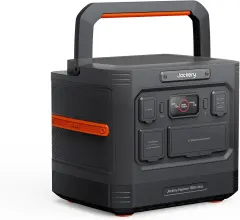
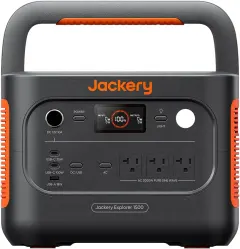
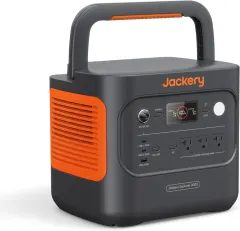
- Explorer: The core camping/road-trip line, smallest to largest single units.
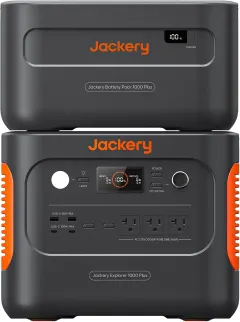
- Explorer Plus: Expandable versions for buyers who want to grow capacity later.
- Who buys: US households buying their first power station
- Who buys: Campers, road-trippers and tailgaters who want one box that just works
OUPES
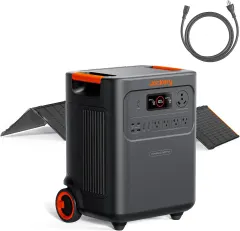
- Mega / Titan: Large-capacity, high-output units and home-backup kits.
- Portable units: Smaller camping-class stations.
- Who buys: First-time buyers whose main filter is price
- Who buys: Marketplace shoppers comparing capacity figures side by side
When not to buy
Skip Jackery if…
Buyers chasing maximum watt-hours per dollar, or maximum solar input.
Skip OUPES if…
Buyers who value support, app quality or long-term resale.
Head to head on value
| Measure | Jackery | OUPES |
|---|---|---|
| Average $/Wh across range | $0.78 | $0.77 |
| Models in dataset | 12 | 4 |
| LiFePO4 models | 11 | 4 |
| Largest capacity available | 5.04 kWh | 1.02 kWh |
Band by band
| Band | Jackery | OUPES | Cheaper per Wh |
|---|---|---|---|
| Compact under 500 Wh | Explorer 300 v2 $1.00/Wh | Exodus 350 $0.87/Wh | OUPES |
| Mid-size 500–1,200 Wh | Explorer 1000 v2 $0.52/Wh | Mega 1 Lite $0.48/Wh | OUPES |
| Large 1,200–2,500 Wh | Explorer 2000 v2 $0.49/Wh | no model in band | Jackery |
| Extra large 2,500 Wh and up | HomePower 3600 Plus $0.53/Wh | no model in band | Jackery |
All Jackery models
All models →| Model | Capacity | AC output | Weight | List price | $/Wh |
|---|---|---|---|---|---|
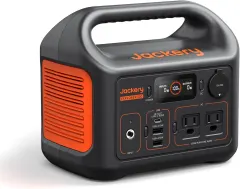
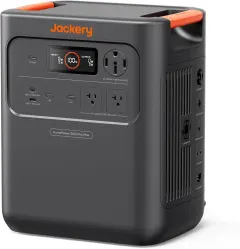
Explorer 300 v2Jackery | 288 Wh | 300 W | 8.2 lb | $289 | $1.00 |
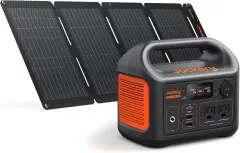
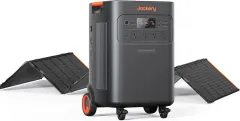
Solar Generator 300 andJackery | 292 Wh | 300 W | 12.9 lb | $379 | $1.30 |
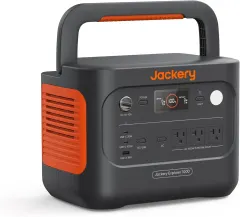
Explorer 1000 v2Jackery | 1.07 kWh | 1.5 kW | 23.8 lb | $559 | $0.52 |
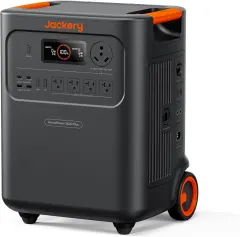
Explorer 1000 PlusJackery | 1.26 kWh | 2 kW | 32.0 lb | $1,589 | $1.26 |
Explorer 1500 UltraJackery | 1.54 kWh | 1.8 kW | 38.6 lb | $1,199 | $0.78 |
Explorer 1500 v2Jackery | 1.54 kWh | 2 kW | 32.0 lb | $949 | $0.62 |
Explorer 2000 v2Jackery | 2.04 kWh | 2.2 kW | 39.5 lb | $999 | $0.49 |
| 3.58 kWh | 3.6 kW | 77.2 lb | $2,729 | $0.76 | |
HomePower 3600 Pro MaxJackery | 3.58 kWh | 4 kW | 74.0 lb | $2,099 | $0.59 |
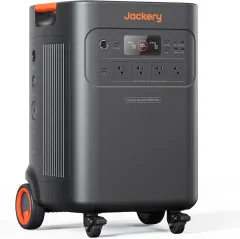
HomePower 3600 PlusJackery | 3.58 kWh | 3.6 kW | 77.2 lb | $1,899 | $0.53 |
Explorer 5000 PlusJackery | 5.04 kWh | 3.6 kW | 134.5 lb | $3,499 | $0.69 |
JE-5000AJackery | 5.04 kWh | 7.2 kW | 145.0 lb | $4,344 | $0.86 |
All OUPES models
All models →| Model | Capacity | AC output | Weight | List price | $/Wh |
|---|---|---|---|---|---|
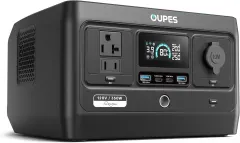
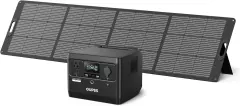
Exodus 350OUPES | 288 Wh | 350 W | 9.2 lb | $249.99 | $0.87 |
Exodus 700OUPES | 576 Wh | 700 W | 13.9 lb | $699.99 | $1.22 |
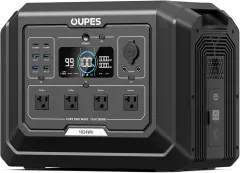
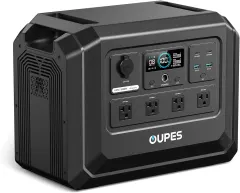
Mega 1OUPES | 1.02 kWh | 2 kW | 27.8 lb | $549 | $0.54 |
Mega 1 LiteOUPES | 1.02 kWh | 2 kW | 26.8 lb | $489 | $0.48 |
Known trade-offs
Jackery
- Capacity per dollar is usually mid-pack; the brand premium is real
- Solar input ceilings are often below what rivals allow at the same capacity
- Expandability is limited on the non-Plus units
- Fewer pro features — buyers who want app control, schedules or deep telemetry often look elsewhere
OUPES
- Documentation and app quality are usually behind the mainstream brands
- Firmware and support responsiveness are the usual risks at this price
- Spec-sheet claims deserve more scrutiny than on a premium unit
- Resale value and long-term parts availability are weaker