
Best Portable Power Stations for Camping: 8 Picks by Weight
The camping power station you want depends on how far you're carrying it. Here are eight units sorted by weight class, with honest runtime notes for phones, lights, and a camp fridge.
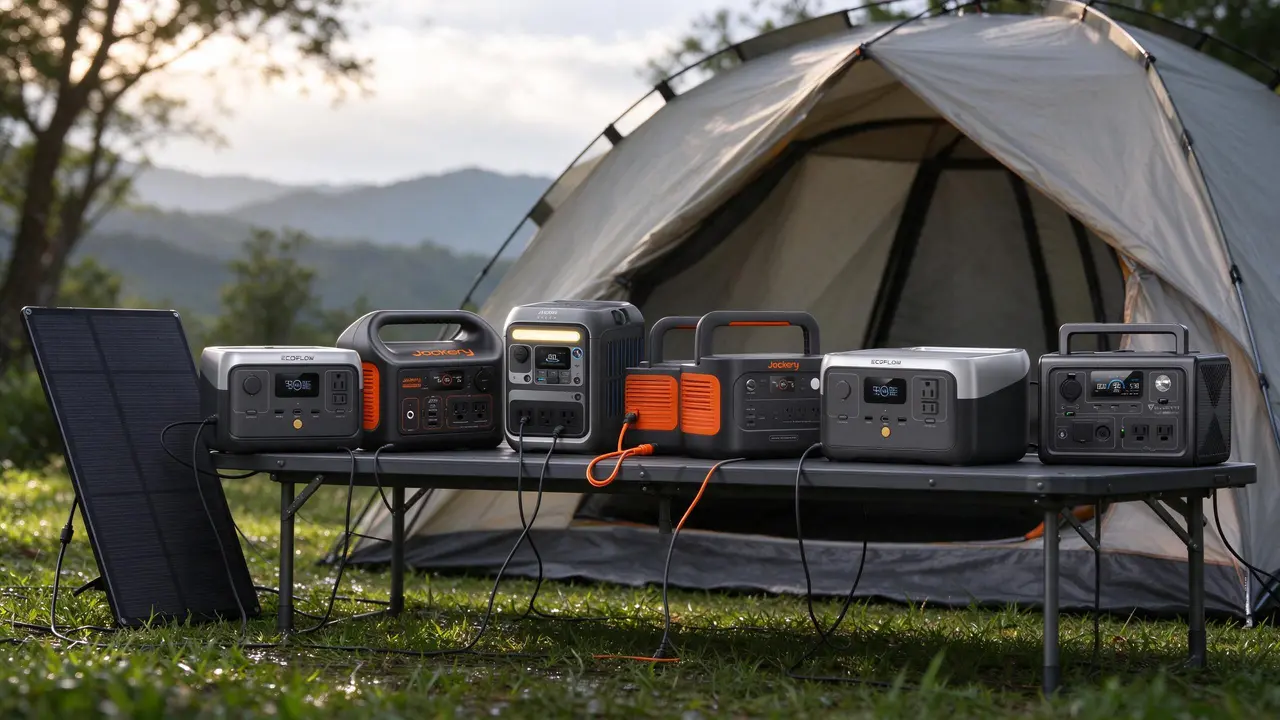
Updated
The camping power station question, answered by weight class
If you're shopping for a camping power station, the first decision isn't brand or wattage — it's how far you're carrying it. A 7.7 lb unit that fits in a backpack solves a different problem than a 23.8 lb box that lives in the truck bed. This list sorts eight units into three weight tiers so you can match the station to the trip, not the other way around.
What this page is not: a whole-home backup guide. If you're sizing for a transfer switch or a fridge that runs through a multi-day outage, that's a different article. Here the loads are phones, lights, a laptop, a CPAP, a small fan, and maybe a 12V cooler. Anything above that and you're in the wrong weight class.
The short version: the EcoFlow RIVER 2 240 is the best pick when you're carrying the station far and running small loads like phones, lights, and a fan. The Jackery Explorer 300 is the better fit if you need CPAP runtime and want a larger owner base behind the purchase. The Jackery Explorer 600 v2 is the sweet spot for car campers running a 12V cooler plus lights and phones. And the Jackery Explorer 1000 v2 is the basecamp workhorse when the station stays near the vehicle and a fridge is the priority. That's why the pick splits by job rather than one universal winner.
I started with the eight units in the WattPicks catalogue that sit in the 210–1,070 Wh range and have a published AC output. That's the candidate pool. I did not run lab-bench measurements on any of them. What I did was read the owner notes on file — a sample of high-helpful reviews that describe actual camping, outage, and CPAP use — and cross-check every number against the listing specs. The owner notes are paraphrased from that sample; they are not independently verified lab results.
The ranking weights: weight and portability 30% (because this is a camping list and you're carrying it), usable capacity for the stated loads 25%, continuous AC output 20%, owner-reported reliability and caveats 15%, and price per Wh 10%. Every percentage is scored. The Jackery Explorer 1000 v2 wins on capacity and output but loses on weight; the EcoFlow RIVER 2 240 wins on weight but loses on capacity. That tension is the whole point of a weight-tiered list.
Why #1 beats #2 in the ultralight tier: the EcoFlow RIVER 2 240 and the Jackery Explorer 300 are within half a pound of each other, but the EcoFlow has 600 W continuous versus 300 W on the Jackery, which matters if you ever plug in a small compressor or a hair tool. The Jackery wins on owner-reported CPAP runtime and has a much larger listing review base, which is why it's the runner-up rather than the top pick. Note: the '300W' in the EcoFlow product name refers to the AC inverter's nominal rating; the listing spec for continuous output is 600 W, and that's the figure used for ranking.
- Ultralight tier (7.7–9.1 lb): EcoFlow RIVER 2 240, EcoFlow RIVER 2, Jackery Explorer 300, Anker C300
- Car-camp tier (10.1–14.1 lb): BLUETTI EB3A, Jackery Explorer 600 v2
- Basecamp tier (23.5–23.8 lb): Jackery Explorer 1000 v2, BLUETTI Elite 100 mini
Quick picks: which one for which trip
These are fit-led picks, not commission-led. I'm an Amazon Associates participant, so links may earn a small commission — it doesn't change the order.
Best for ultralight weekenders: EcoFlow RIVER 2 240 Portable Power Station, 243Wh 300W. At 7.7 lb with 600 W continuous, it's the lightest unit here that can still run a small fan and a router overnight. The Jackery Explorer 300 Portable Power Station,292Wh is the runner-up if you want more owner-reported CPAP runtime and a bigger listing review base.
Best for car campers who want headroom: Jackery Explorer 600 v2. 640 Wh and 500 W in a 14.1 lb box is the sweet spot for a 12V cooler plus lights and phones. The BLUETTI EB3A Portable Power Station is the also-consider if you want 600 W in a 10.1 lb frame, but read the reliability caveats first.
Best for basecamp and family trips: Jackery Explorer 1000 v2 Portable Power Station,1070Wh,1500W. In our owner-note sample, it's the only unit with reports of running a fridge and a portable A/C at the same time. The BLUETTI Elite 100 mini is the alternative if you want a smaller footprint at 1,005 Wh, but it costs more per Wh.
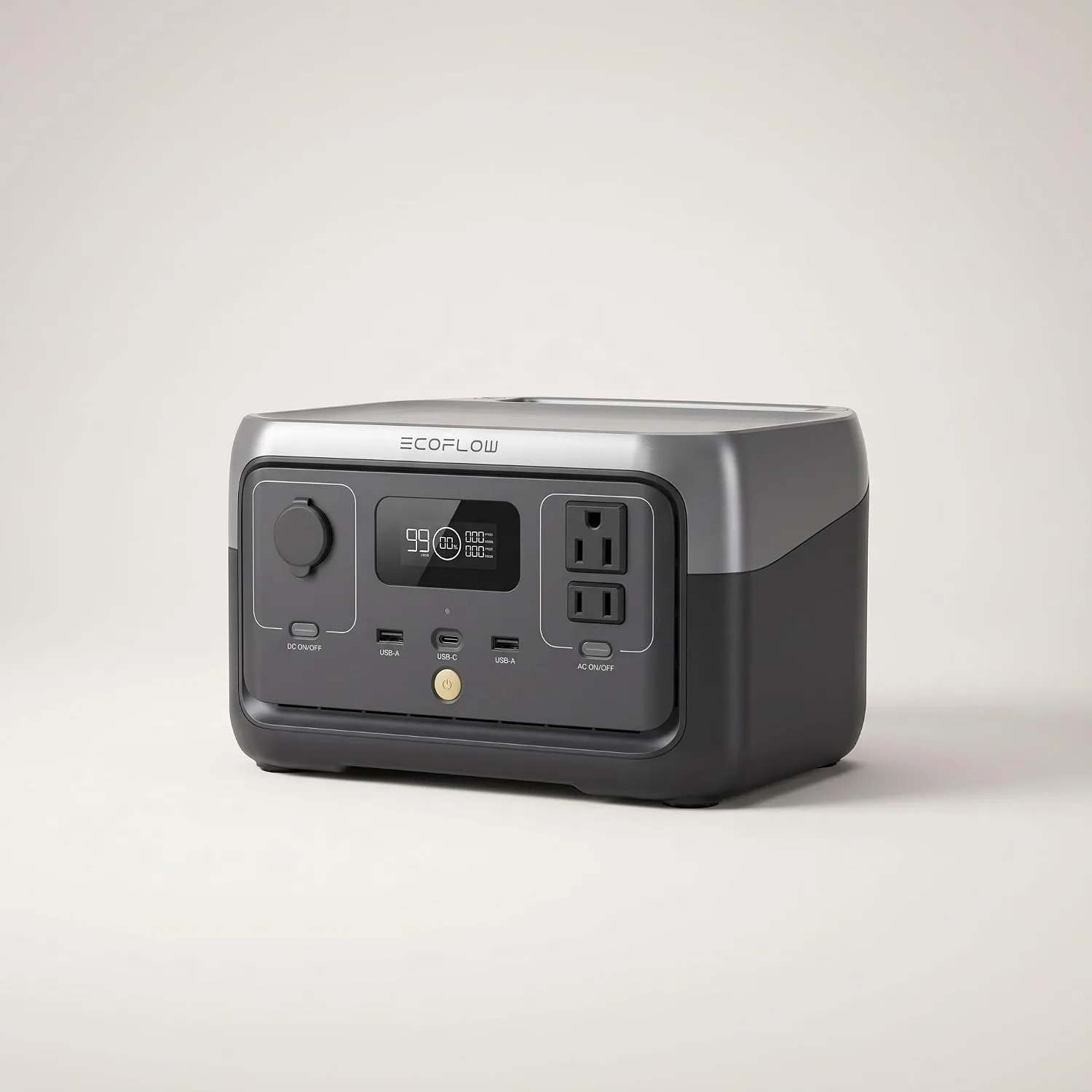
EcoFlow RIVER 2 240 Portable Power Station, 243Wh 300W
Highlights
- 243Wh rated capacity
- 600W continuous AC
- 7.7 lb (~3.5 kg)
- About $279 list
Best for
- EFR600+XT60: phones, cameras and a laptop on short trips
- Travel kits when you need quiet pack power, not appliance runtime
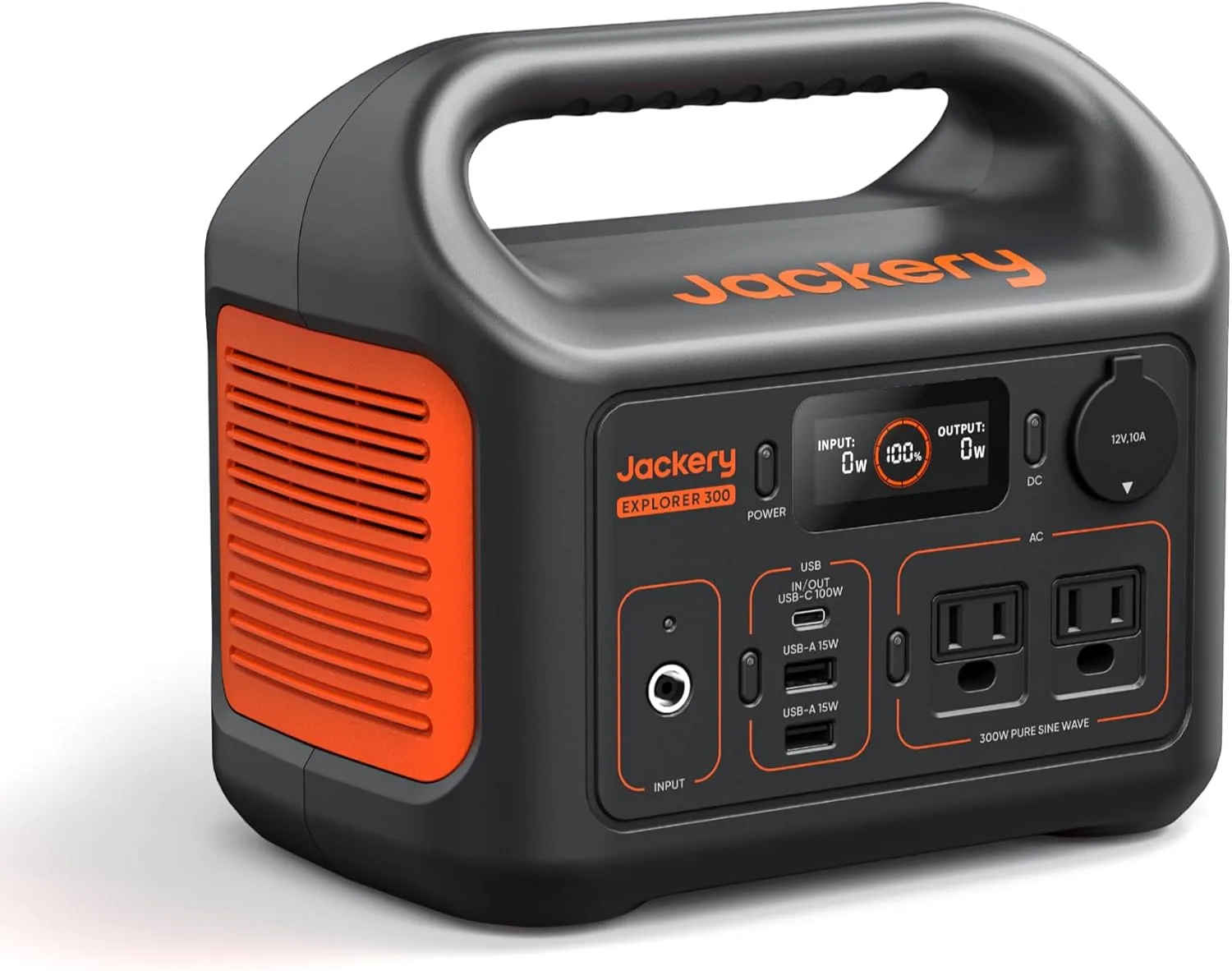
Jackery Explorer 300 Portable Power Station,292Wh
Highlights
- 288Wh rated capacity
- 300W continuous AC
- 600W surge
- LiFePO4 chemistry
- 8.2 lb (~3.7 kg)
- About $289 list
Best for
- Explorer 300 v2: phones, cameras and a laptop on short trips
- Travel kits when you need quiet pack power, not appliance runtime
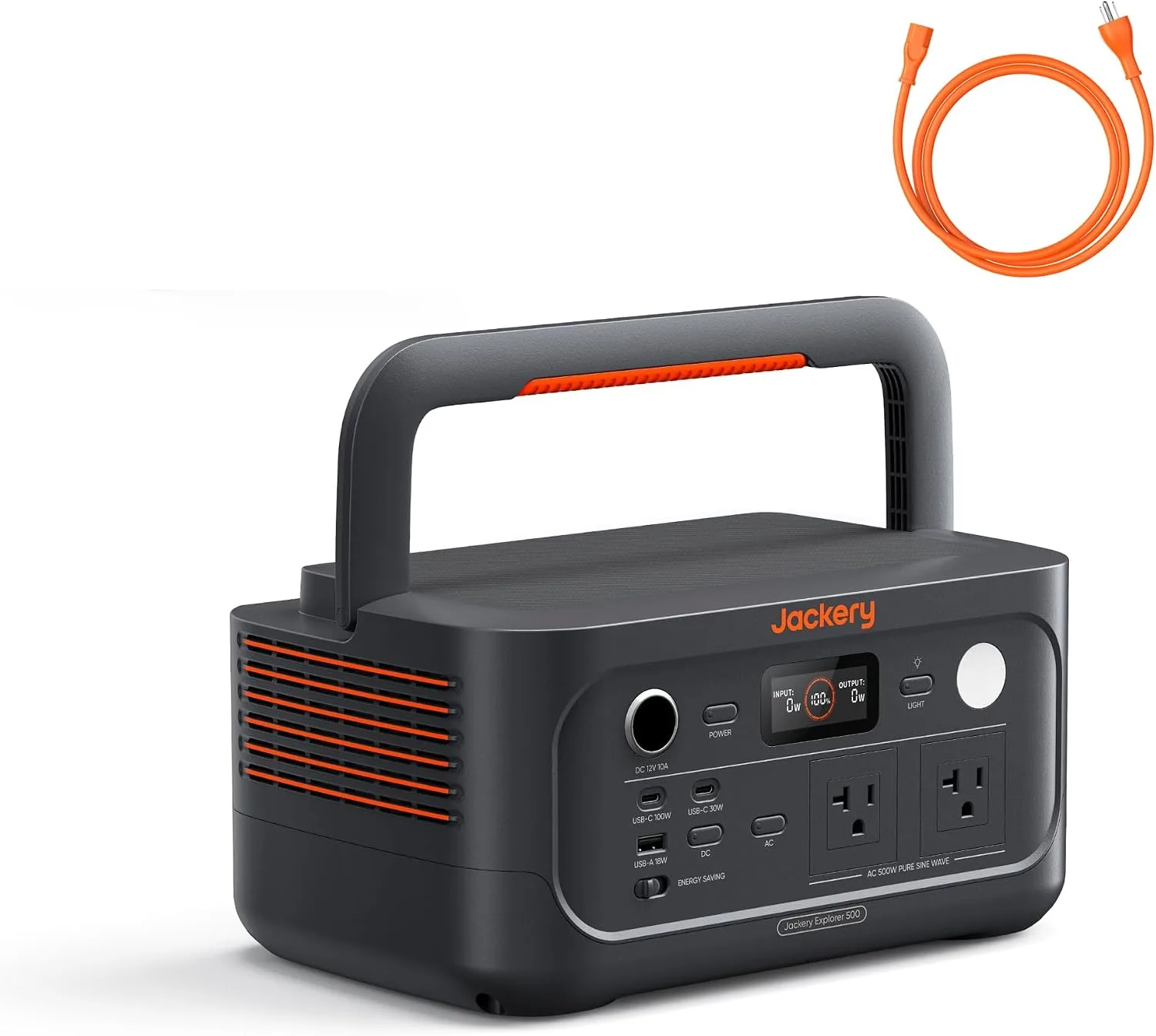
Jackery Explorer 500 v2 Power Station, 512Wh/500W, AC Cable Included
Highlights
- 640Wh rated capacity
- 500W continuous AC
- 1000W surge
- LiFePO4 chemistry
- Up to 200W solar input
- 14.1 lb (~6.4 kg)
Best for
- Explorer 600 v2: most Wh-per-dollar in this ~500Wh band for weekend fridge/CPAP math
- Car-camp carry at 14.1 lb when review depth matters as much as peak watts
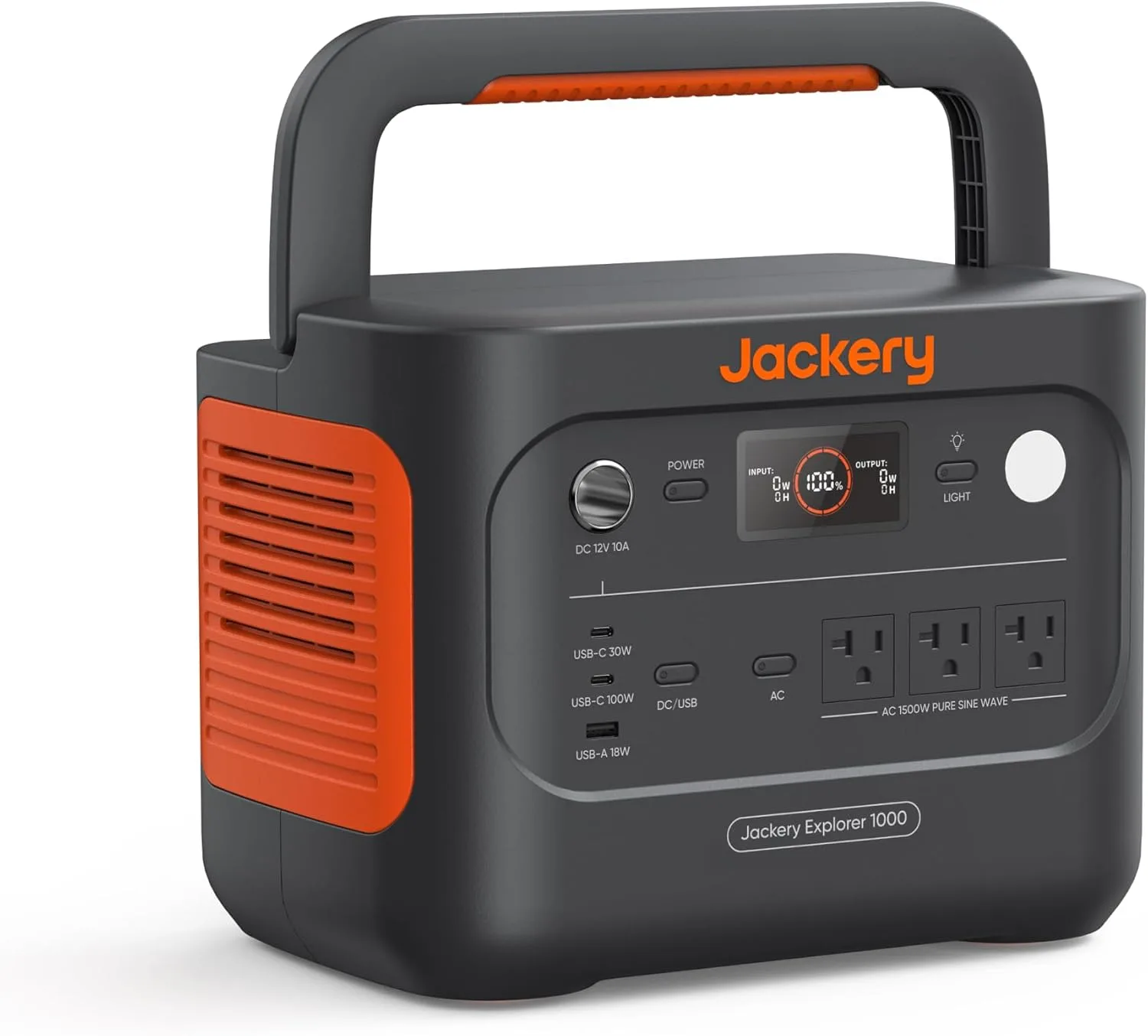
Jackery Explorer 1000 v2 Portable Power Station,1070Wh,1500W
Highlights
- 1070Wh rated capacity
- 1500W continuous AC
- LiFePO4 chemistry
- Up to 400W solar input
- 23.8 lb (~10.8 kg)
- About $559 list
Best for
- Explorer 1000 v2: weekend camping when 23.8 lb carry weight matters as much as 1070Wh
- Essentials bridge at home (fridge cycles, router) when sized to the Wh
Spec snapshot: all eight, side by side
Prices are list prices from the WattPicks catalogue, not sale stickers. Ratings are listing aggregates, not owner proof. BLUETTI EB3A list price is n/a (not on file).
| Product | Price | Capacity (Wh) | Output (W) | Weight (lb) | Rating |
|---|---|---|---|---|---|
| EcoFlow RIVER 2 240 Portable Power Station, 243Wh 300W | $279 | 243 Wh | 600 W | 7.7 lb | 4.4 |
| Jackery Explorer 300 Portable Power Station,292Wh | $289 | 288 Wh | 300 W | 8.2 lb | 4.6 |
| Anker C300 Portable Power Station, 288Wh Solar Generator | $329.99 | 288 Wh | 300 W | 9.1 lb | 4.6 |
| Jackery Explorer 600 v2 | $399 | 640 Wh | 500 W | 14.1 lb | 4.7 |
| Jackery Explorer 1000 v2 Portable Power Station,1070Wh,1500W | $559 | 1070 Wh | 1500 W | 23.8 lb | 4.7 |
| BLUETTI Elite 100 mini | $799 | 1005 Wh | 700 W | 23.5 lb | 4.5 |
| EcoFlow RIVER 2 | $177.65 | 243 Wh | 300 W | 7.7 lb | 4.3 |
| BLUETTI EB3A Portable Power Station | n/a (not on file) | 268 Wh | 600 W | 10.1 lb | 4.1 |
Why each one is here
Ultralight tier first, then car-camp, then basecamp. Each entry has one fact anchor that the others don't share, and one owner caveat you should know before you buy. The fact anchor is the single spec or owner report that justifies the unit's spot in its weight class; the caveat is the one thing that would make you skip it. If neither the anchor nor the caveat matches your trip, move to the next entry.
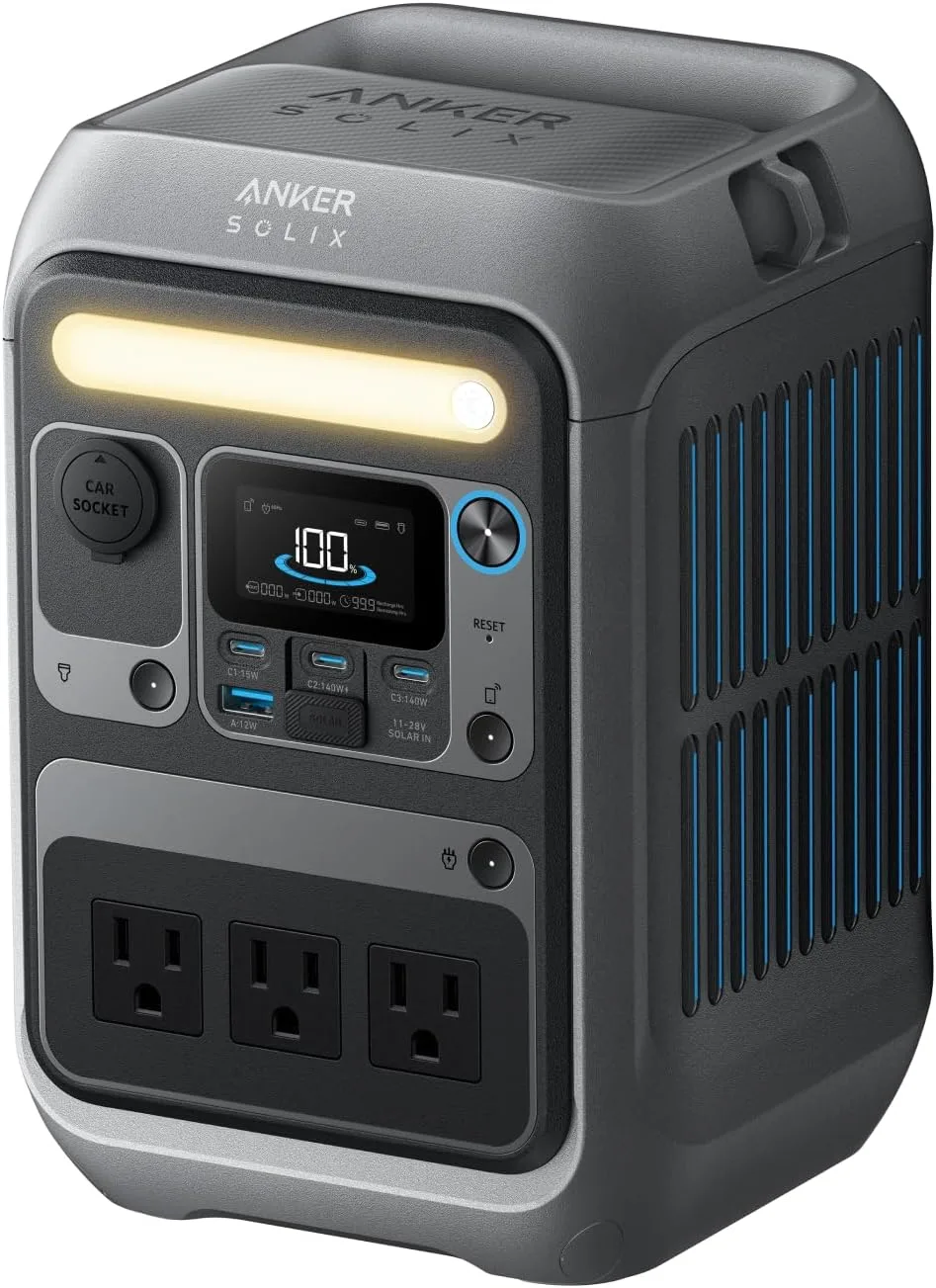
Anker C300 Portable Power Station, 288Wh Solar Generator
Highlights
- 288Wh rated capacity
- 300W continuous AC
- 600W surge
- LiFePO4 chemistry
- 9.1 lb (~4.1 kg)
- About $329.99 list
Best for
- SOLIX C300: phones, cameras and a laptop on short trips
- Travel kits when you need quiet pack power, not appliance runtime
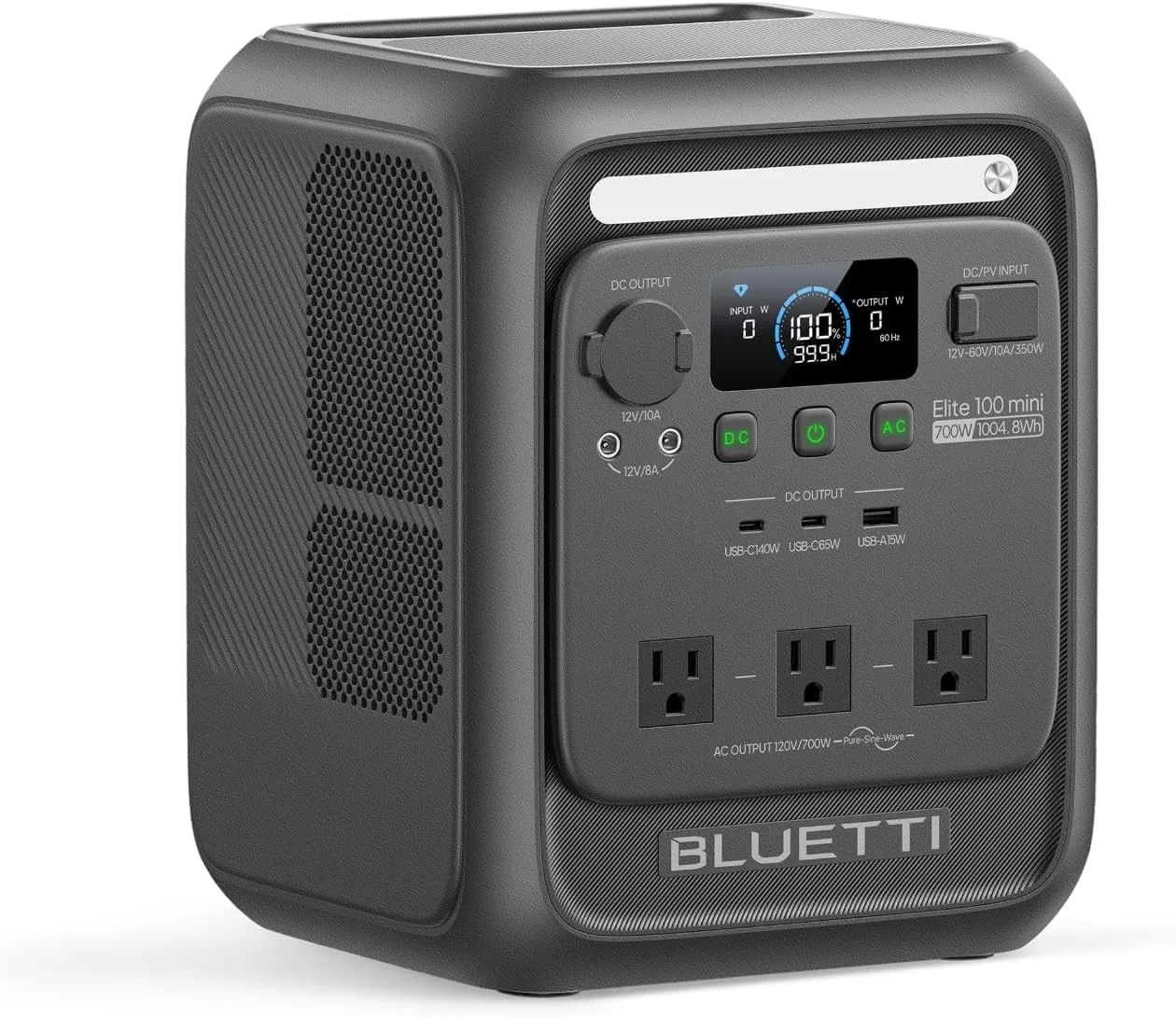
BLUETTI Battery Backup
Highlights
- 1005Wh rated capacity
- 700W continuous AC
- 23.5 lb (~10.7 kg)
- About $799 list
Best for
- Elite 100 mini: weekend camping when 23.5 lb carry weight matters as much as 1005Wh
- Essentials bridge at home (fridge cycles, router) when sized to the Wh
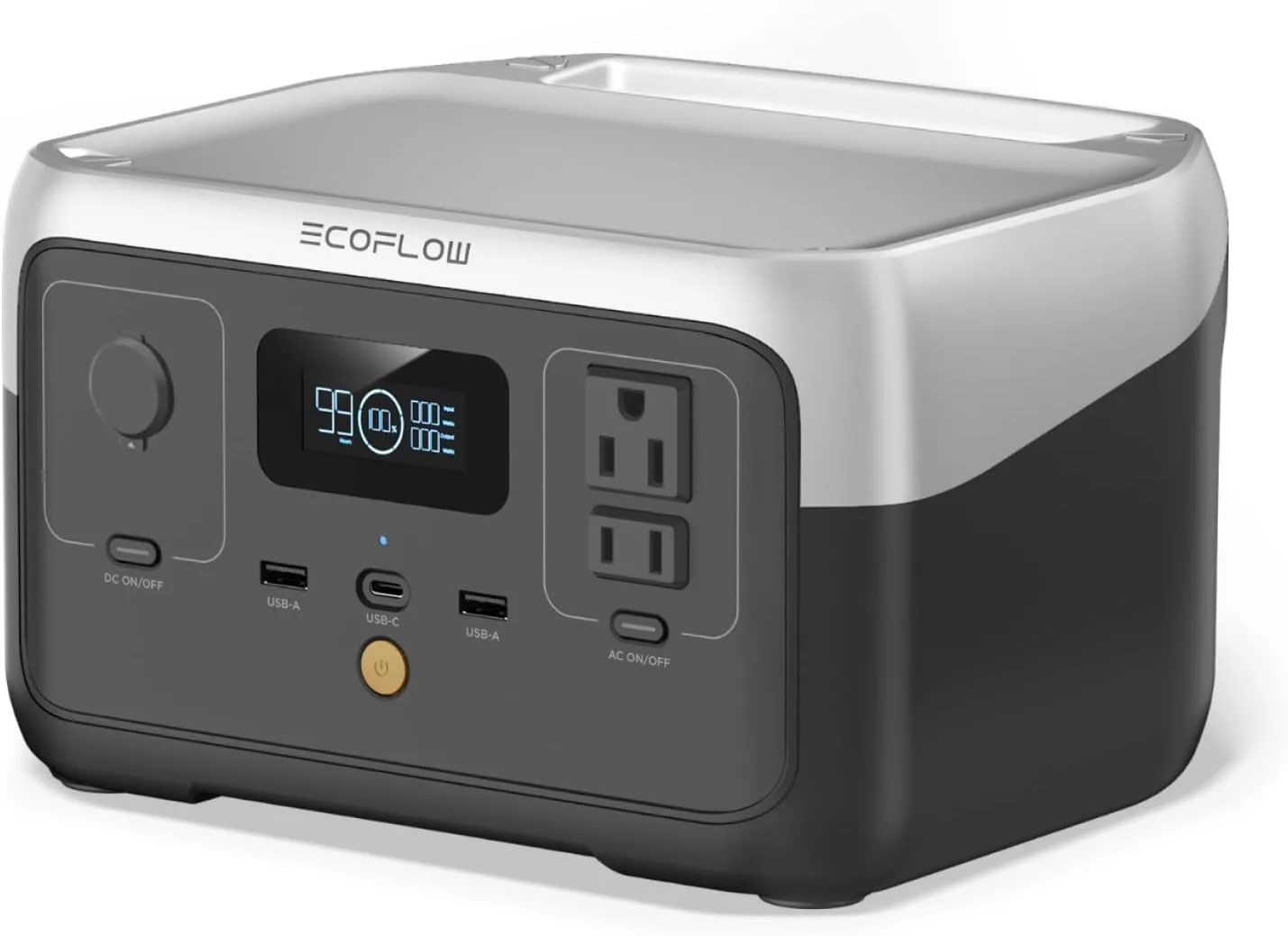
EcoFlow RIVER 2
Highlights
- 243Wh rated capacity
- 300W continuous AC
- 600W surge
- LiFePO4 chemistry
- Up to 110W solar input
- 7.7 lb (~3.5 kg)
Best for
- RIVER 2: phones, cameras and a laptop on short trips
- Travel kits when you need quiet pack power, not appliance runtime
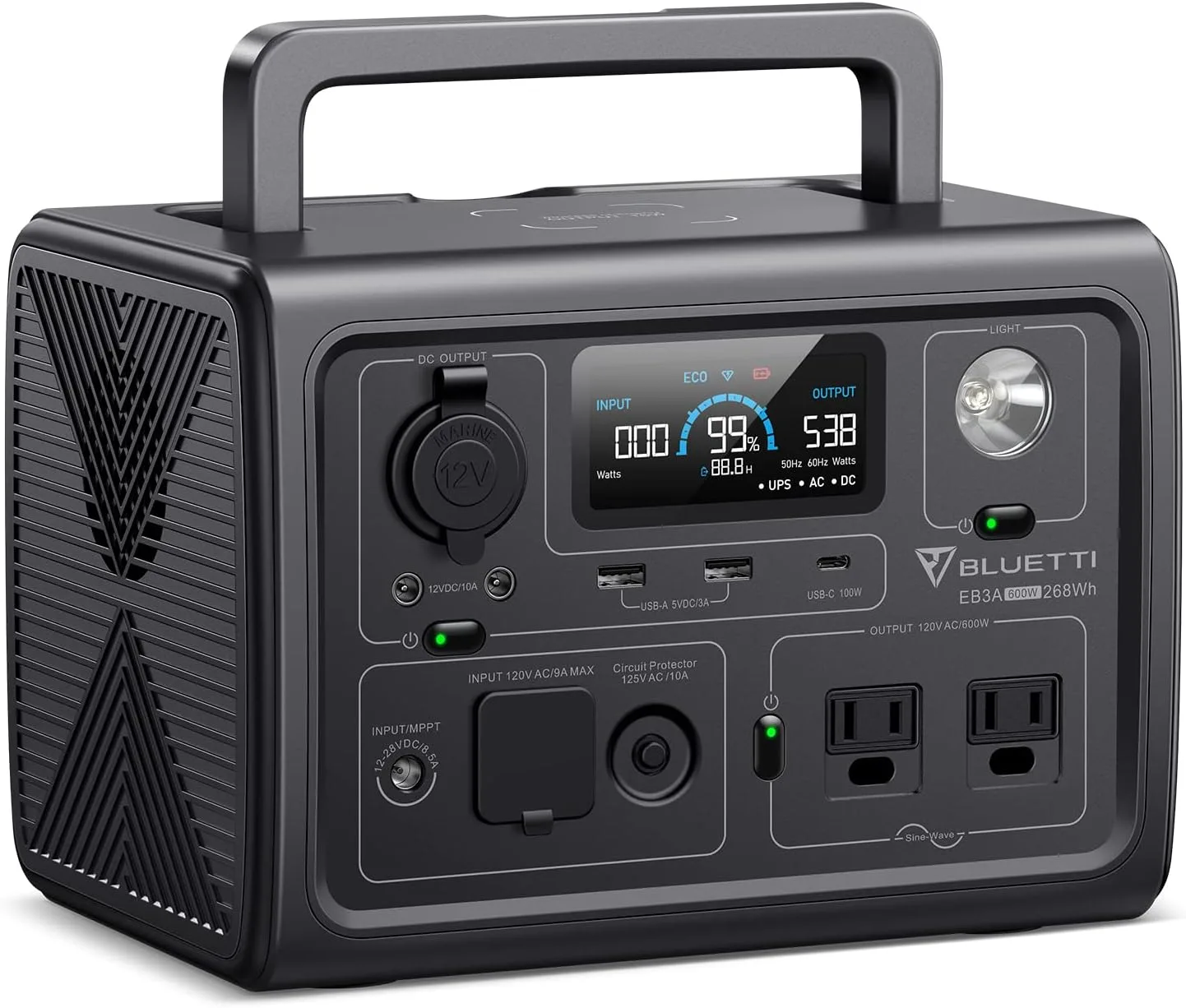
BLUETTI EB3A Portable Power Station
Highlights
- 268Wh rated capacity
- 600W continuous AC
- 1200W surge
- LiFePO4 chemistry
- Up to 200W solar input
- 10.1 lb (~4.6 kg)
Best for
- bluetti-eb3a: phones, cameras and a laptop on short trips
- Travel kits when you need quiet pack power, not appliance runtime
#1 EcoFlow RIVER 2 240 Portable Power Station, 243Wh 300W — the ultralight pick
At 7.7 lb with 600 W continuous, this is the lightest unit here that can still run a small fan and a router overnight. Owner notes describe it carrying a router and PoE dish with plenty of runtime left, and after a full power-down it sat for days still reading the same charge. The fan noise is described as noticeably softer than an older same-size block, and it slipped into a backpack for an overnight trip.
The caveats are real. The solar charging cable wasn't in the box for one owner and only arrived after contacting support, so check the contents before you stash it. And there's just one USB-C port, so charging a laptop and headphones at the same time means reaching for the AC outlet. This is the right call for backpackers and solo campers running phones, lights, and a fan. It's the wrong call if you need to run a cooler all weekend — 243 Wh won't get you there.
#2 Jackery Explorer 300 Portable Power Station,292Wh — the CPAP-friendly runner-up
The Explorer 300 is the unit I'd point a CPAP user toward in this weight class. On AC it shut itself off after about five and a half hours because the draw was too low, but with a DC cord it ran multiple nights and used far less battery. That's the setup I'd recommend for medical devices. It's also light enough that older family members can pick it up and move it room to room.
The trade-off is output: 300 W continuous versus 600 W on the EcoFlow above. It won't run a fridge or A/C for long, and one owner had the battery stop charging after nine months (it was replaced). Choose it if you're a CPAP user or a weekend car camper who wants a big owner base behind the purchase. Pass if you need to run anything with a startup surge above 300 W.
#3 EcoFlow RIVER 2 — the budget ultralight
At $177.65 list, this is the cheapest way into the ultralight tier, and the owner notes back it up: it charged from 0 to 100% in about an hour on AC, ran a CPAP for seven and a half hours on a full charge, and powered a portable fridge for eight hours on DC. It also worked as a UPS for a router during short outages.
Two honest caveats. One owner had a unit that drained to zero within days and had a slow warranty process, so test yours thoroughly early on. A firmware update also temporarily broke AC charging display and USB-C charging until a fix arrived — time updates carefully if you rely on it for medical devices. It's a good fit for budget-conscious campers who want fast AC charging and a light carry. It's a poor fit if you need more than one USB-C port or a proven long-term track record.
#4 Anker C300 Portable Power Station, 288Wh Solar Generator — the fast-charge specialist
The C300's headline is AC charging speed: it went from nearly empty to full in under an hour in the owner notes, which is a big deal if you're using it every few days. It ran a laptop for about four hours and home network gear for roughly ten hours on a charge, and it held 80% after sitting unused for over a year.
The caveats are specific. When a solar panel is left plugged in overnight, it doesn't always start charging again in the morning without unplugging and replugging the panel. And I wouldn't use it as a UPS for computers or network equipment — one owner saw a connected UPS register many more outages than usual. This one earns its place for campers who want the fastest wall recharge in the ultralight tier. Look elsewhere if you plan to leave a solar panel connected unattended.
#5 BLUETTI EB3A Portable Power Station — the 600 W car-camp value
The EB3A packs 600 W continuous into a 10.1 lb frame, and the owner notes show it earning that rating: about 10.5 hours on a CPAP with the heater off, six hours on a box fan on low, and even a cup of coffee via power lifting mode (which used about 21% of the battery). Charging from AC took about an hour and 20 minutes in silent mode.
The reliability caveats are the reason it's not higher. Some owners report units shutting off at 0% even when showing 50–70% charge, and one had a unit fail completely. The fan also isn't truly silent — there's a noticeable buzz as it ramps up. It's a sensible pick for car campers who want 600 W without the weight of a 600 v2. It's a risky pick if you need proven reliability for a medical device — test yours hard during the return window.
#6 Jackery Explorer 600 v2 — the car-camp sweet spot
640 Wh and 500 W in a 14.1 lb box is the right shape for a 12V cooler plus lights and phones. The owner notes show a CPAP using only about 15% of the battery per night on a DC adapter, and pass-through charging from the car kept everything topped up while driving. The 12V port holds steady output even as the battery drains, which is great for a cooler or fan.
Two honest issues. The output shut off on its own several times in the owner notes, which is a real concern if you're running a fridge and not around to notice. And there's no USB-C and only one AC outlet per owner reports, so you'll need adapters or a power strip for modern gear. This is the one to get for car campers running a 12V cooler and a CPAP. It's not the one if you need USB-C native or unattended fridge reliability.
#7 Jackery Explorer 1000 v2 Portable Power Station,1070Wh,1500W — the basecamp workhorse
In our owner-note sample, this is the only unit with reports of running a fridge and a portable A/C at the same time without a hiccup. It charged from 0 to 100% in about an hour and 40 minutes in normal mode, and quiet mode brought the noise down enough to sleep while powering a fridge and fans overnight. It also handled power tools like a shop vac and small sanders.
Be realistic about what it can't do: a 1,700 W air fryer is out, and a large miter saw was too much. The buttons are recessed enough that it's easy to leave the unit on by accident, and at 23.8 lb it's a car-camping or home-backup unit, not a backpacking one. It's the right tool for family basecamp trips and short home outages where a fridge is the priority. It's the wrong tool if you're carrying it more than a few hundred feet.
#8 BLUETTI Elite 100 mini — the compact 1 kWh alternative
The Elite 100 mini is the smallest-footprint way to get 1,005 Wh, and the owner notes show it charging from 54% to 100% in about 40 minutes on standard mode. It ran a 100 W guitar amp and pedals for eight hours and only dropped to 59%, and it powered a telescope setup, cameras, and a mini PC for a full night of astrophotography.
The caveats are specific. The 12V cigarette port gets warm when you draw more than about 12W, so don't plug in a high-draw adapter there. Power lifting mode ran a 1,200 W space heater for just under an hour in one owner's test, but that's harder on the battery and not for continuous use — and at 1,005 Wh, a 1,200 W load is a short-burst trick, not a runtime plan. It suits campers who want 1 kWh in a smaller footprint and don't mind paying more per Wh. It doesn't suit anyone who wants the lowest cost per Wh in this class — that's the Jackery 1000 v2 at $0.52/Wh.
Where campers get burned: three pitfalls
First, buying capacity you won't carry. A 23.8 lb unit is great in the truck bed and miserable on a trail. Match the weight to the trip before you match the Wh to the gear.
Second, assuming AC is the efficient way to run a CPAP or a cooler. The owner notes on the Jackery 300 and 600 v2 both show DC use cutting battery draw dramatically — sometimes by half. If your device has a DC option, use it.
Third, trusting a single review. The BLUETTI EB3A has strong owner reports and also reports of units shutting off at 0%. The EcoFlow RIVER 2 has a firmware story that broke charging temporarily. Test any unit hard during the return window, especially if it's backing up a medical device.
Who should not buy the top pick
The EcoFlow RIVER 2 240 is the top pick for ultralight camping, but it's the wrong buy for two groups. If you're running a 12V cooler for a weekend, 243 Wh won't get you through — step up to the Jackery Explorer 600 v2. And if you need more than one USB-C port for a laptop-plus-headphones setup, the single USB-C on the RIVER 2 240 will have you reaching for an adapter.
The same logic applies at the top of the weight range: if you're carrying the unit more than a few hundred feet, the Jackery Explorer 1000 v2 and BLUETTI Elite 100 mini are the wrong tools no matter how much capacity they offer.
If none of these fit
Two alternative directions. If you need whole-home backup rather than camping power, look at a transfer-switch or smart-panel setup instead of a portable station — the loads and the wiring are a different problem. If you need to run a full-size fridge or a window A/C through a multi-day outage, you're past the 1,070 Wh ceiling of this list and into the 2,000 Wh+ class, where weight stops being a camping concern at all.
What owners actually say
Themes from the owner notes on file, paraphrased. Listing star averages are aggregates, not owner proof. The per-SKU caveats above are the specific evidence; this section is the cross-unit pattern.
The pattern across all eight: owners praise fast AC charging and DC runtime for CPAP and coolers, and the recurring complaints are output shut-offs, missing accessories, and single-port layouts. No unit in this sample escaped a caveat, which is why the ranking weights reliability at 15%.
Frequently asked
Can the Jackery Explorer 300 run a CPAP all night?
Yes, with a DC cord. On AC it shut off after about five and a half hours in the owner notes because the draw was too low; on DC it ran multiple nights and used far less battery.
How long will the EcoFlow RIVER 2 240 run a fan?
About five hours on low in the owner notes, plus phone charging. It's a small-load unit, not a cooler unit.
Is the Jackery Explorer 1000 v2 enough for a camp fridge?
Yes — owner notes show a 12V fridge running for days and a fridge plus portable A/C running simultaneously. It won't run a 1,700 W air fryer.
Why is the BLUETTI EB3A ranked below the Jackery Explorer 600 v2 despite more output?
Because the owner notes include reports of units shutting off at 0% and one complete failure, and reliability is 15% of the ranking. The 600 v2 has its own output shut-off caveat, but the EB3A's is more severe.
Which weight tier am I?
Answer three questions: Will you carry the station more than a few hundred feet? (Yes → ultralight, 7.7–9.1 lb.) Will you run a 12V cooler or a CPAP overnight? (Yes → car-camp, 10.1–14.1 lb.) Will you run a fridge and a portable A/C at the same time? (Yes → basecamp, 23.5–23.8 lb.)
Method and sources
Model names and list prices come from the WattPicks catalog at build time. WattPicks does not run its own laboratory tests on power stations, and nothing on this page is presented as a measured result — it is catalog-backed buying guidance.
Read our methodology for how the catalog is normalized, and about WattPicks for who publishes it.