Guide
How many watts do I need for camping?
The number that matters is not a total — it is the largest load you will run at one moment, plus the surge that load needs to start. Get that right and the rest is arithmetic.
Every figure on this page is computed from the WattPicks dataset (107 models from 12 brands, all read from the manufacturers' own product pages). We do not test power stations, so nothing here is a measurement of ours.
Continuous watts vs peak watts
Every station lists two output figures. Continuous (rated) watts is what it can supply all day. Peak (surge) watts is what it can supply for a moment, and it is what starts anything with a motor or a compressor. A mini fridge that draws 60 W running may need three or four times that to start its compressor, and the compressor cycles on and off all day.
The mistake is adding up the watt-hours of everything you own instead of adding up the watts you will run simultaneously.
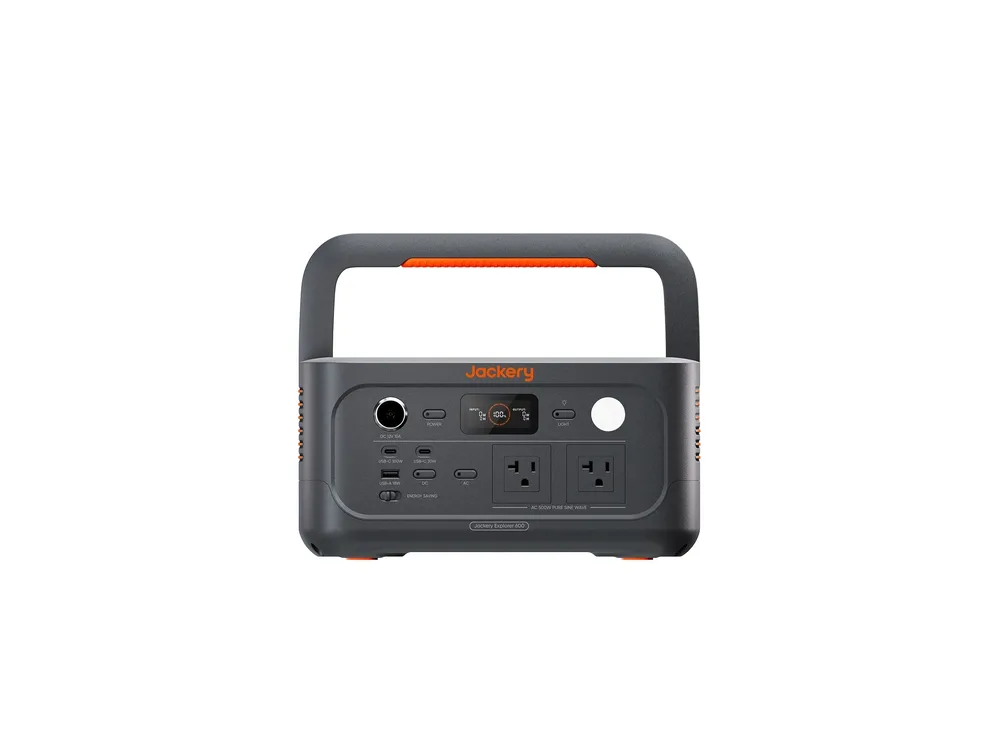
The sizing method
Then size capacity for run time: watt-hours needed = running watts × hours. A 60 W fridge that runs 24 hours needs roughly 1,440 Wh of energy if it never cycled — but a fridge cycles, so the real figure is lower. That cycle factor is where most estimates go wrong, and why the honest answer for a fridge is "measure it" rather than "multiply it".
- List what runs at the same time, not everything you own.
- For each item, take its running watts and its starting watts (motors, compressors and pumps have one).
- Continuous need = the sum of running watts.
- Surge need = continuous, minus the largest running load, plus that load’s starting watts.
- Add 20% headroom. Inverters run cooler and live longer below their ceiling.
What that means in our dataset
The 13 models we track in the 500–1,000 Wh band — the size most car campers end up with — publish continuous outputs that vary far more than their capacities suggest, so capacity alone is a poor way to choose.
Across those models, cost runs 0.30–1.20 per watt-hour and portability 20.0–51.8 Wh per pound. Two units with the same capacity can differ by a factor of two or more on both.
The common mistake
Buying capacity to solve a wattage problem. If a station cannot start your fridge’s compressor, twice the battery does not help — it just fails more slowly. Check the continuous and surge figures first, then buy the capacity for the run time you need.
Frequently asked
How many watts does a typical camping setup need?
Phone and laptop charging, lights and a 12V cooler usually sit under 200 W continuous. Add an electric kettle or an induction hob and you are into four figures, which is a different class of machine entirely.
Is a higher peak wattage always better?
For starting motors, yes. The other side of the trade-off is that high-output inverters usually mean shorter runtime at full load, and they are one of the reasons a unit weighs more.