
Best RV Power Stations for Boondocking and Shore Power
RV power is a different job than camping or home backup: you need a shore-power plug, honest usable watt-hours, and enough continuous AC to start what you actually own. Here are four stations that fit real RV loads — and the ones to skip.
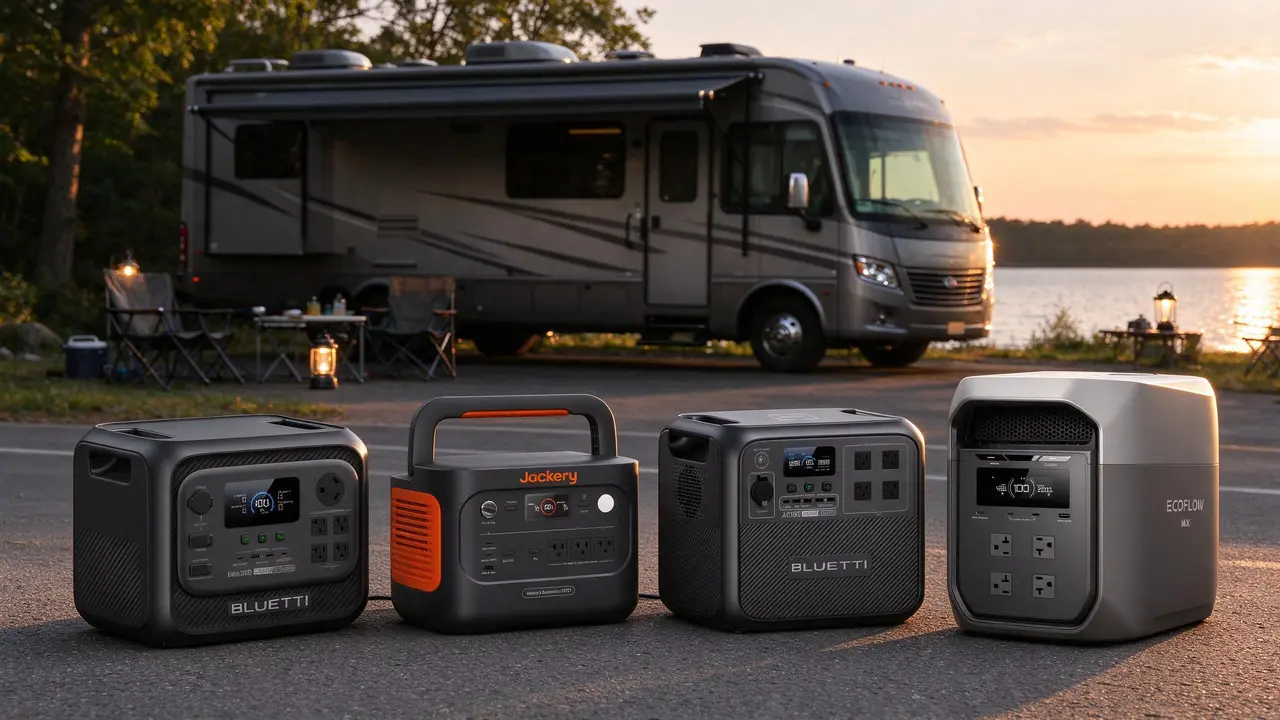
Updated
What an RV actually asks of a power station
The question I get most is some version of: can I run my camper off one of these instead of firing up a generator? The honest answer depends less on the headline watt-hour number than on three things — whether the unit has a shore-power outlet you can plug a 30A RV cord into, how much of that capacity you can actually pull out, and whether the continuous AC rating clears the appliances you plan to start.
This page is for boondocking and shore-power-style RV use: a fridge, a CPAP, fans, lights, a laptop, maybe a coffee maker or a short burst of air conditioning. It is not a whole-home backup guide, and it is not a generator replacement for a 50A coach running two air conditioners all afternoon. If that is your job, you want a different class of equipment entirely.
Four hard requirements shaped this shortlist. A real AC outlet count you can live with. A continuous rating that matches camper loads rather than surge marketing. LiFePO4 chemistry, because you will cycle this thing constantly and lead-acid or NMC packs age faster under that treatment. And a recharge path that works off shore power, solar, or the tow vehicle — ideally all three.
One disclosure up front: this page uses Amazon Associates links, and I may earn a commission if you buy through them. The picks are fit-led. Where a cheaper unit wins on a given job, it wins here too.
Quick picks
Top pick for RV shore power: the BLUETTI Elite 300. It is the only unit here with a TT-30 outlet and a 12V/30A DC output, which means you can plug the coach in directly instead of chaining adapters. The 3,014 Wh pack and 2,400W continuous output cover a fridge, fans, and a short AC run.
Runner-up and the value pick: the BLUETTI AC180. At $499 it is the cheapest per nameplate watt-hour of the four at $0.43/Wh, it has four AC outlets, and owners report a genuinely seamless UPS handoff. It is the right answer for a smaller camper or a van build where you are not trying to run air conditioning.
Also consider: the Jackery Explorer 1000 v2 if portability is the priority — 23.8 lb is carryable in a way the others are not — and the EcoFlow DELTA 3 Max if you want the fastest recharge and the best UPS behavior and can live without a TT-30.
Budget note: none of these include a solar panel, and only the Elite 300 has a native TT-30. If you plan to recharge off solar or plug in a 30A cord, add the cost of a compatible panel and a quality adapter to the station price before you compare.
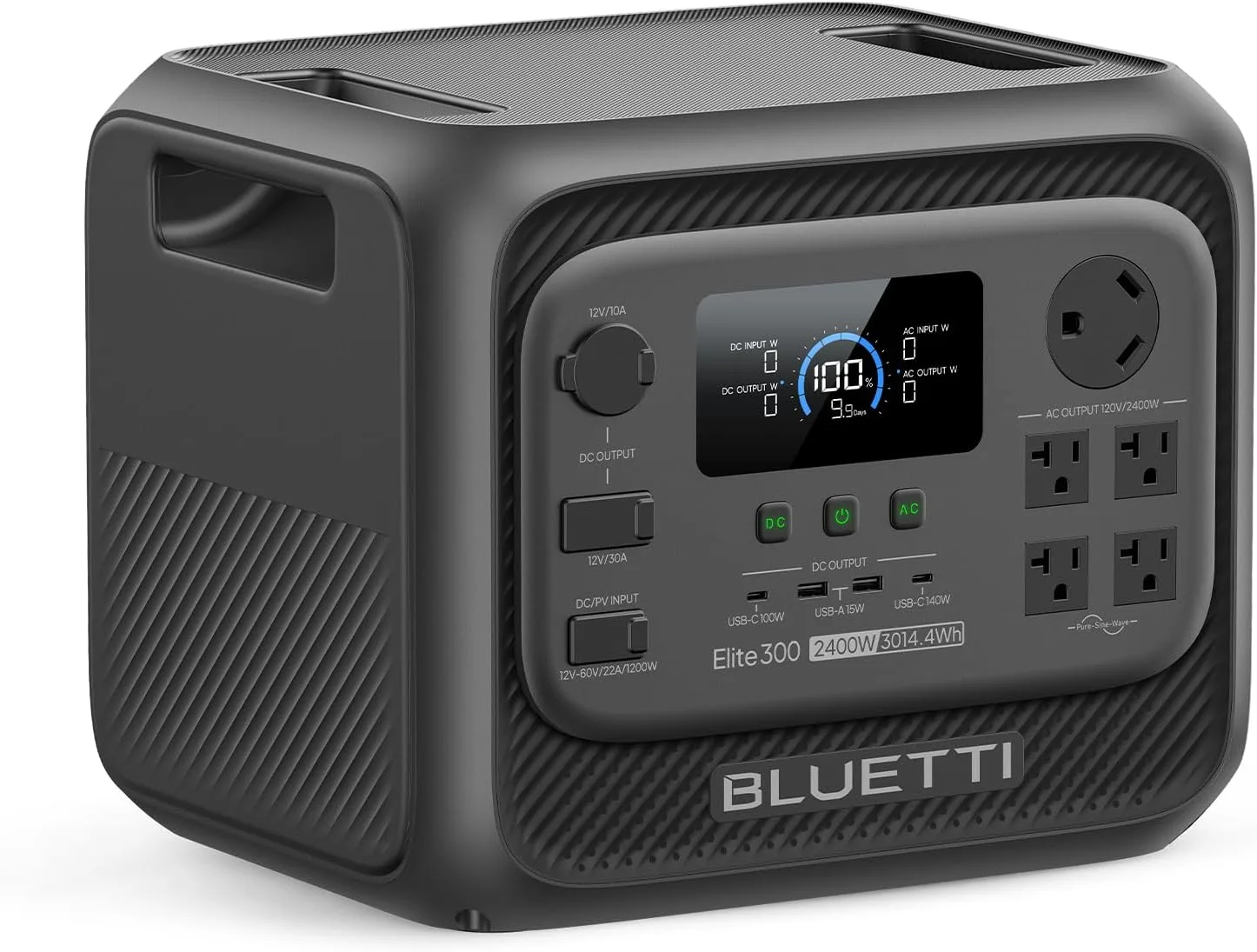
BLUETTI Elite 300 Portable Power Station for RV & Home Backup 3014.4Wh
Highlights
- 3014Wh rated capacity
- 2400W continuous AC
- LiFePO4 chemistry
- 58 lb (~26.3 kg)
- About $1699 list
Best for
- Elite 300: longer outages or higher continuous loads (still not whole-home wiring)
- RV / off-grid days where recharge speed matters as much as Wh
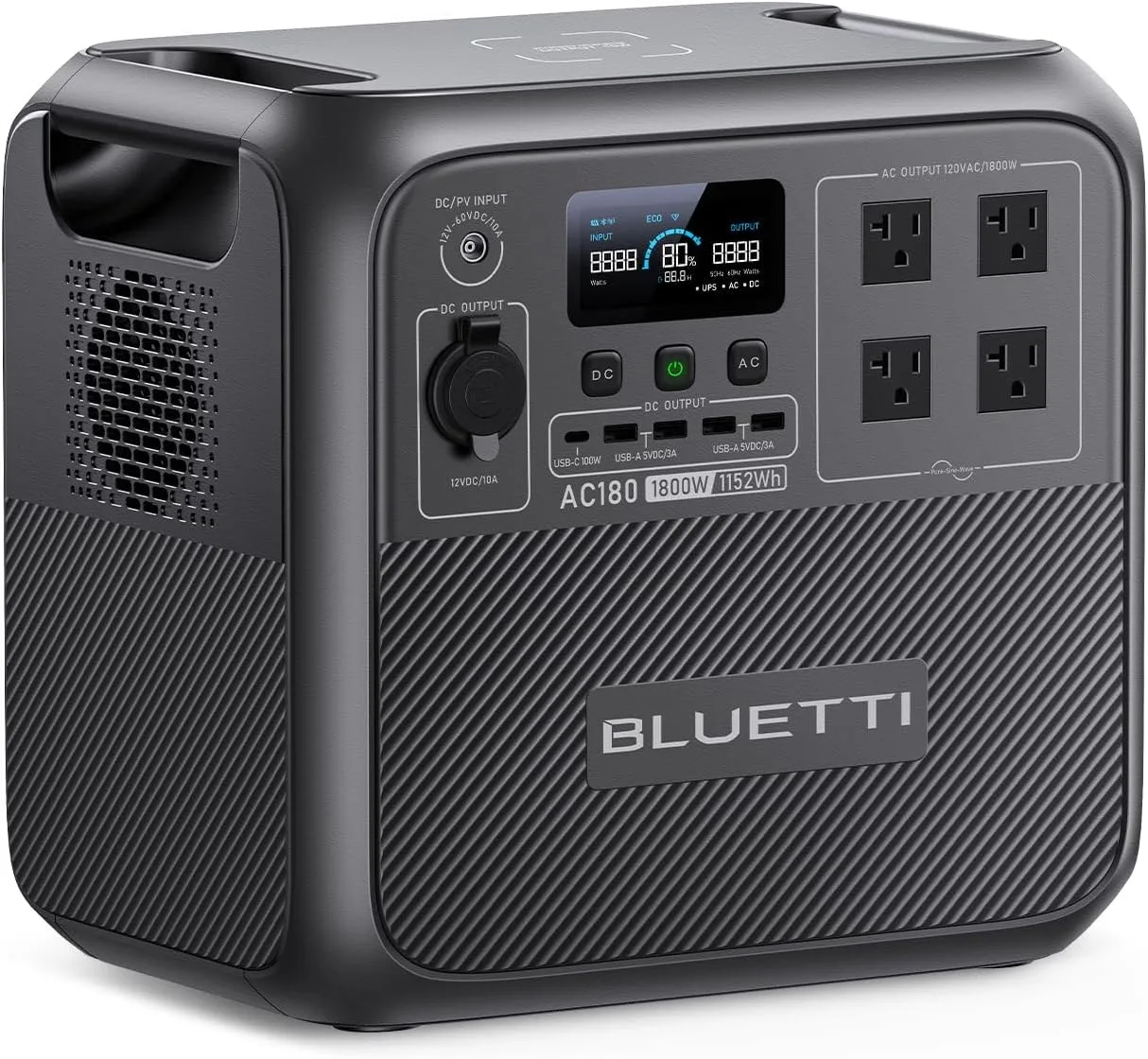
BLUETTI Portable Power Station AC180, 1152Wh LiFePO4 Battery Backup w/ 2 1800W
Highlights
- 1152Wh rated capacity
- 1800W continuous AC
- LiFePO4 chemistry
- Up to 500W solar input
- 35.3 lb (~16.0 kg)
- About $499 list
Best for
- AC180: most Wh per list dollar in mid-size LiFePO4 shortlists (~1152Wh)
- Home essentials when 1800W continuous matters more than a light carry
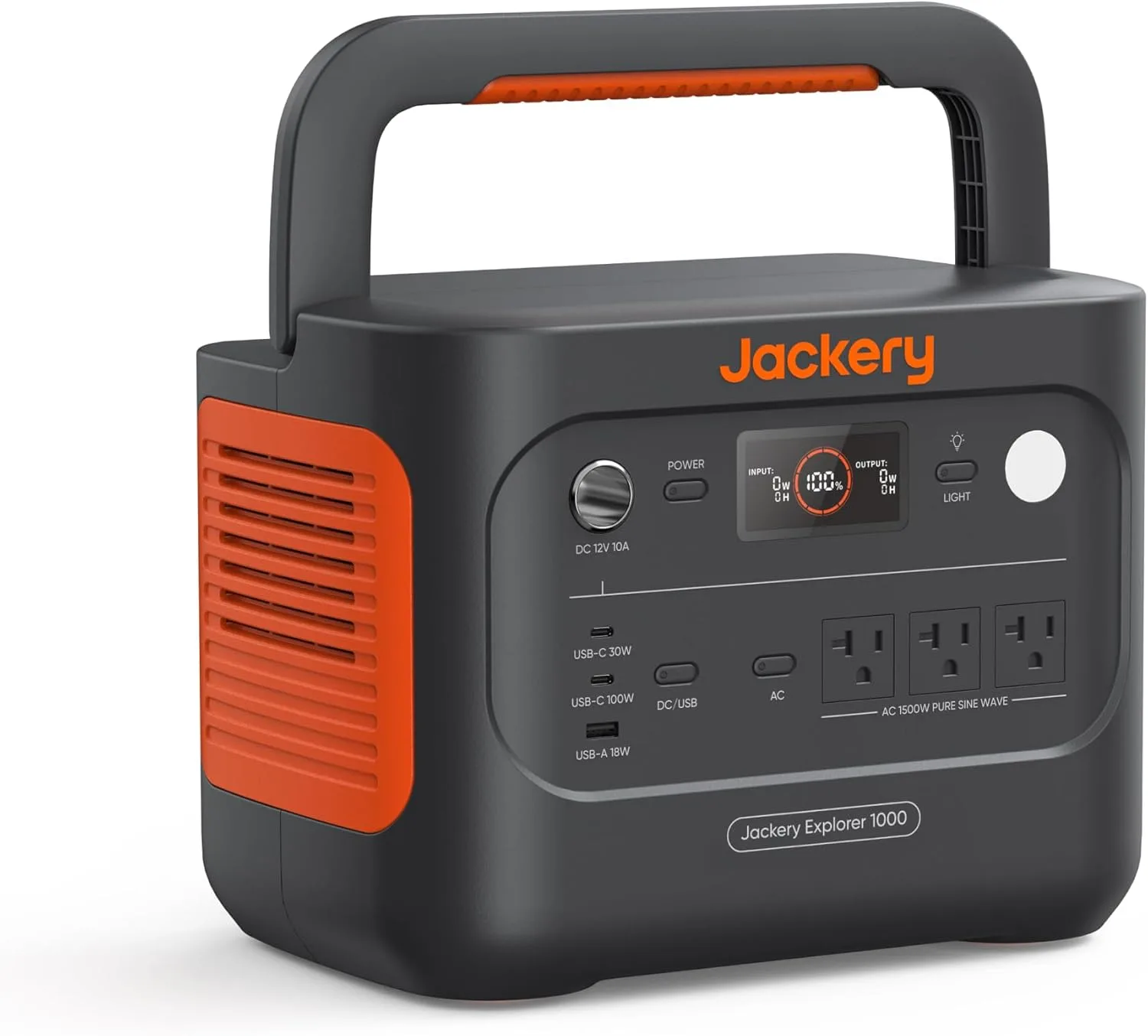
Jackery Explorer 1000 v2 Portable Power Station,1070Wh,1500W
Highlights
- 1070Wh rated capacity
- 1500W continuous AC
- LiFePO4 chemistry
- Up to 400W solar input
- 23.8 lb (~10.8 kg)
- About $559 list
Best for
- Explorer 1000 v2: weekend camping when 23.8 lb carry weight matters as much as 1070Wh
- Essentials bridge at home (fridge cycles, router) when sized to the Wh
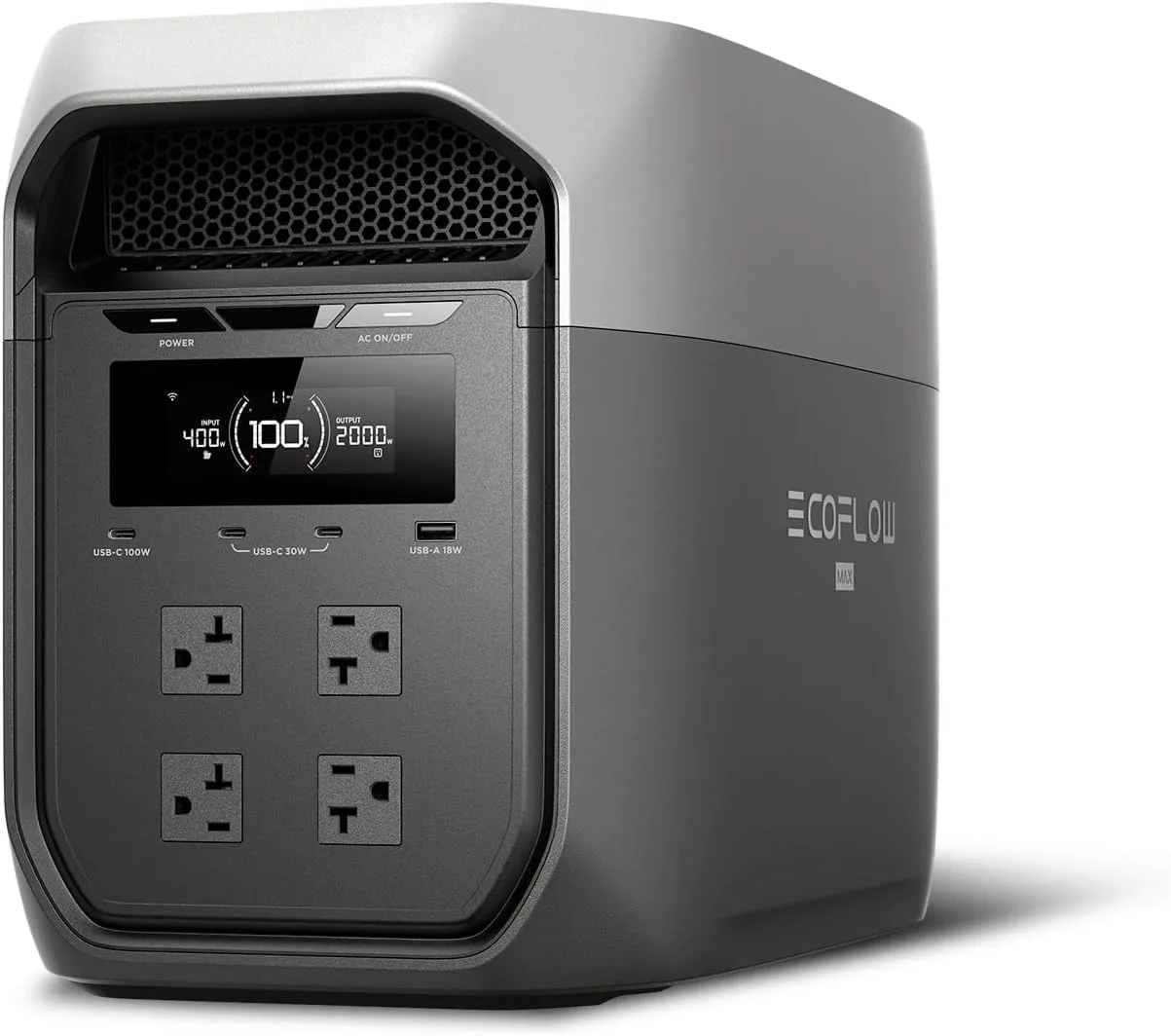
EcoFlow DELTA 3 Max Portable Power Station, 2048Wh LFP Battery
Highlights
- 2048Wh rated capacity
- 2400W continuous AC
- 4800W surge
- LiFePO4 chemistry
- Up to 500W solar input
- 44.8 lb (~20.3 kg)
Best for
- DELTA 3 Max: longer outages or higher continuous loads (still not whole-home wiring)
- RV / off-grid days where recharge speed matters as much as Wh
How I weighted this job
I scored each station on four weighted factors. Usable capacity and RV load fit got 35% — that means nameplate Wh adjusted for the reality that inverters burn idle power and most units reserve a slice of the pack. Continuous AC output and outlet layout got 25%, because a TT-30 or a true 20A blade outlet changes what you can plug in without an adapter. Recharge speed and solar flexibility got 25%, since boondocking lives or dies on how fast you refill. Build, weight, and owner-reported reliability took the last 15%.
The evidence behind those scores is listing specs plus the owner themes on file for each unit — the things people actually complain about after a season, like idle draw, flaky wireless pads, and solar voltage windows that reject their panels. Those are home-user checks against published specs, not lab-bench measurements, and I am not going to pretend otherwise.
Why the BLUETTI Elite 300 edges out the EcoFlow DELTA 3 Max at the top: both are 2400W units, but the Elite 300 carries a TT-30 RV outlet and a 12V/30A DC output that the DELTA 3 Max does not list, and that is the single biggest practical difference for a camper. The DELTA 3 Max wins on recharge speed and app polish, and it is the better UPS. On the RV-specific weights, the outlet layout decides it.
Scoreboard on those weights:
• BLUETTI Elite 300 — High on RV outlet fit and capacity; Med on continuous watts. List $1699.
• EcoFlow DELTA 3 Max — High on recharge speed and UPS behavior; Med on RV outlet fit (no TT-30). List $1199.
• BLUETTI AC180 — High on value and outlet count; Med on usable capacity for small loads. List $499.
• Jackery Explorer 1000 v2 — High on portability; Med on capacity and solar input. List $559.
That is why the pick splits by job rather than one universal winner.
Scenario facts: what camper loads actually draw
These are typical draw bands, not measurements of your specific appliance. Check the label on your own gear before you buy — a 12V compressor fridge and a residential fridge are not the same load.
- Solar panels are sold separately on every unit here — none of these picks include a panel.
- A 30A RV shore-power cord needs a TT-30 outlet or a proper adapter; check before you assume.
- Inverter idle draw (often 15–20W) quietly eats capacity on small overnight loads.
| Load | Typical running watts | Startup/surge note |
|---|---|---|
| 12V compressor fridge | 40–60W | Compressor cycles; startup can briefly spike higher |
| Residential fridge | 100–200W | Defrost and compressor start draw more |
| 13,500 BTU RV AC | 1,200–1,600W | Startup surge can be 2–3× running watts |
| Coffee maker | 600–1,200W | Brew cycle only; check peak watts |
| CPAP (no humidifier) | 30–60W | Heated humidifier adds significant draw |
Spec snapshot
Prices are current list prices, not sale stickers. Ratings are the listing aggregate, which is a popularity signal, not proof of long-term durability.
| Product | Price | Capacity (Wh) | Output (W) | Weight (lb) | Rating |
|---|---|---|---|---|---|
| BLUETTI Elite 300 Portable Power Station for RV & Home Backup 3014.4Wh | $1699 | 3014 Wh | 2400 W | 58 lb | 4.7 |
| Jackery Explorer 1000 v2 Portable Power Station,1070Wh,1500W | $559 | 1070 Wh | 1500 W | 23.8 lb | 4.7 |
| BLUETTI AC180 | $499 | 1152 Wh | 1800 W | 35.3 lb | 4.5 |
| EcoFlow DELTA 3 Max Portable Power Station, 2048Wh LFP Battery | $1199 | 2048 Wh | 2400 W | 44.8 lb | 4.7 |
The ranking
Ranked on the weights above. Nameplate $/Wh is shown for reference; the cheapest per nameplate watt-hour is the AC180 at $0.43/Wh, and I am not going to crown anything else on cost.
- #1 BLUETTI Elite 300 — $1699, 3014 Wh, 2400 W, 58 lb, $0.56/Wh
- #2 EcoFlow DELTA 3 Max — $1199, 2048 Wh, 2400 W, 44.8 lb, $0.59/Wh
- #3 BLUETTI AC180 — $499, 1152 Wh, 1800 W, 35.3 lb, $0.43/Wh
- #4 Jackery Explorer 1000 v2 — $559, 1070 Wh, 1500 W, 23.8 lb, $0.52/Wh
#1 BLUETTI Elite 300: the one that plugs into the coach
The Elite 300 earns the top spot on outlet layout, not on capacity alone. It has a TT-30 RV outlet and a 12V/30A DC output, which means a camper can plug the shore-power cord straight in and run 12V loads like a fridge, water pump, or diesel heater without a pile of adapters. That is a specific RV feature the other three do not list, and it is worth real money if you are actually boondocking in a coach.
In use, the density is the story: a 3,014 Wh pack in a body narrower than older 2 kWh stations, with handles that grip and a big color display readable from across the site. One owner reported pushing a continuous ~2400W multi-appliance load for about half an hour and it held without complaint, and the UPS handoff kept a connected computer alive through a power transition with no dropout. On a DC-only overnight run it barely sipped — one owner finished four nights on a CPAP with over a week of charge left.
The caveats are real and you should hear them before you spend $1699. There is no battery expansion, so you are locked to the built-in capacity. The solar input window is tight — roughly 12–60V at ~20–22A — which means many rigid panels cannot reach the 1,200W ceiling, and pushing open-circuit voltage past the limit can damage the MPPT and void the warranty per the manual. Check your panel specs before you buy, not after. Some settings live only in the app, firmware updates are Wi-Fi only, and the soft-start ramp means high-inrush inductive loads can balk — one owner could not start a 500W dehumidifier on first switch-on. Fan hum is present under load, and at 58 lb it is a two-hand lift.
Suits: RV owners who want to plug the coach in directly and run a fridge, fans, and a short AC session. Skip if: you need expandable capacity, plan to run big inductive appliances routinely, or already own rigid panels outside that voltage window.
#2 EcoFlow DELTA 3 Max: fastest refill, best UPS
The DELTA 3 Max is the unit I would hand someone who cares most about recharge speed and clean switchover. It refills to 100% in a little over an hour, and the 10ms transfer made it a credible UPS substitute — during a real outage one owner arrived at 29% and still carried a laptop, a modem, and three pedestal fans for hours before topping off. On a fridge test, one owner reported an iceco VL45Pro at 36°F ran a little over five days.
At 2,048 Wh and 2,400W continuous it sits between the Elite 300 and the AC180 on capacity, and it is lighter than the Elite 300 at 44.8 lb. Four AC outlets, and the app's storm guard is genuinely useful for remote status checks. The 2,400W continuous rating covers a microwave or a coffee maker without drama.
Two things keep it at #2. First, no TT-30 or 12V/30A output is listed, so an RV shore-power cord needs an adapter — that is the practical gap versus the Elite 300. Second, USB-C tops out at 100W, and one owner with a large EcoFlow collection specifically wanted a 140W port. The review base is also thinner than the others here, and most high-helpful notes are short on long-term durability, so I would treat it as promising rather than proven over years.
Suits: home-backup and RV users who want the fastest recharge and the best UPS behavior, and who can live with an adapter for shore power. Skip if: a native TT-30 outlet matters to you, you need a 140W USB-C output, or you want a long track record before buying.
#3 BLUETTI AC180: the value pick for smaller campers
The AC180 is the cheapest per nameplate watt-hour here at $0.43/Wh, and for a van or a small travel trailer it is often the right size. Four AC outlets, 1,800W continuous, and a UPS handoff that owners describe as seamless — one wired it into a basement circuit and the internet and devices never blinked when grid power dropped. Recharge is quick: over 1,000W from the wall after a full discharge, roughly two hours at standard speed.
The honest part is usable capacity. With the inverter on, the unit pulls roughly 15–20W idle, and the manual reserves about 10% of the pack, so real usable energy is well under the 1,152 Wh nameplate — small overnight loads feel that most. The wireless charging pad on top is flaky; it connects then quits after seconds, and that complaint repeats across owners. Some settings, including charge rate, live only in the app, and a couple of owners needed firmware updates before the unit performed to spec. At 35.3 lb it is fine to move spot to spot, not to carry far.
Suits: smaller campers and van builds where 1,800W continuous covers the loads and you want the lowest cost per nameplate watt-hour. Skip if: you need every rated watt-hour for tiny loads, you expect the wireless pad to work, or you are trying to run air conditioning.
#4 Jackery Explorer 1000 v2: the carryable one
At 23.8 lb the Explorer 1000 v2 is the only unit here you can reasonably carry from the truck to the picnic table, and that portability is its whole case. One owner set it up with a fridge and a portable AC running at the same time, and quiet mode dropped the noise enough that they slept while it powered the fridge and a few fans. Recharge from empty ran about 1h40m on normal mode; the emergency boost goes higher but snaps back after each quick charge. A 12-quart DC fridge in eco mode went three days from 100% to 43% with three phone top-ups mixed in.
The trade-offs are clear at 1,070 Wh and 1,500W continuous. There are no 12V barrel ports, so 12V gear needs an adapter off the cigarette socket. Solar tops out around 400W and is slow, with panel angle needing constant nudging. It will not carry big loads — a 1700W air fryer is out, and a 12" sliding miter saw spun a quarter turn and quit. The buttons sit deep in the case, and Wi-Fi does not hold overnight, so checking status means reconnecting.
Suits: weekend campers and small-trailer owners who prioritize lifting and carrying over capacity, and who run a fridge, fans, and electronics rather than appliances. Skip if: you need native 12V ports, serious solar input, or high-watt appliance runs.
What goes wrong on RV power setups
These are the mistakes I see repeated in owner notes, and they cost real money.
- Buying on nameplate Wh and ignoring idle draw. A 1,152 Wh unit with a 15–20W inverter load and a 10% reserve delivers noticeably less than the label suggests on small overnight loads.
- Mismatching solar panels to the input window. The Elite 300's tight voltage range rejects many rigid panels, and exceeding open-circuit voltage can damage the MPPT and void the warranty per the manual. Match panels to the spec sheet first.
- Assuming a shore-power cord plugs in directly. Only the Elite 300 lists a TT-30 outlet; the others need an adapter, and cheap adapters heat up.
- Expecting air conditioning to run for hours. A 13,500 BTU RV AC draws 1,200–1,600W running with a higher startup, so even a 3,014 Wh pack gives you a couple of hours, not an afternoon.
- Forgetting that solar panels are sold separately on every unit here. Budget for the panel and the cable, not just the station.
Who should pick something else
If you are running a 50A coach with two air conditioners and a residential fridge, none of these four is the right tool. You want a properly installed inverter/charger system with a large lithium bank, or a generator — a portable station is a supplement, not a replacement at that scale.
If your only job is keeping a CPAP and a phone alive overnight, you are overbuying here. A much smaller, lighter station will do it for a fraction of the price, and the 58 lb Elite 300 is a poor fit for a tent.
And if you need expandable capacity over years, the Elite 300 is the wrong pick specifically because it has no battery expansion — the AC180 and DELTA 3 Max are better starting points if you expect your needs to grow, though neither lists a native TT-30 either.
What owners keep saying
Themes from the review packs on file, paraphrased. Listing aggregates are shown for context only — they are not proof of long-term durability.
- Elite 300 (4.7 listing aggregate): owners praise the compact size for a 3 kWh pack and the RV shore-power plug, and repeatedly flag the tight solar voltage window and lack of expansion.
- Explorer 1000 v2 (4.7): fridge-overnight and quiet-mode stories dominate; the recurring complaints are the missing 12V barrel ports and the ceiling on high-watt appliances.
- AC180 (4.5): the UPS handoff and fast recharge get the most praise; idle draw and the flaky wireless pad are the most repeated gripes.
- DELTA 3 Max (4.7): the 10ms transfer and roughly one-hour recharge come up constantly; the review base is thinner, so long-term durability is not yet well established.
Frequently asked
Can the Elite 300 run my RV air conditioner?
It lists 2,400W continuous with a 4,800W surge, and one owner reported running a 15,000 BTU Coleman RV AC for about two hours. Expect hours, not an afternoon, and check your AC's running and startup draw.
Do any of these include solar panels?
No. Panels are sold separately on all four, and the Explorer 1000 v2 is compatible only with Jackery panels for solar charging.
Which is cheapest per watt-hour?
On nameplate $/Wh, the BLUETTI AC180 at $0.43/Wh. That is nameplate, not usable — idle draw and reserve cut into real output on every unit here.
Can I plug my 30A RV cord straight into the DELTA 3 Max or AC180?
Neither lists a TT-30 outlet, so you need an adapter. The Elite 300 is the one with a native TT-30.
Method and sources
Model names and list prices come from the WattPicks catalog at build time. WattPicks does not run its own laboratory tests on power stations, and nothing on this page is presented as a measured result — it is catalog-backed buying guidance.
Read our methodology for how the catalog is normalized, and about WattPicks for who publishes it.