
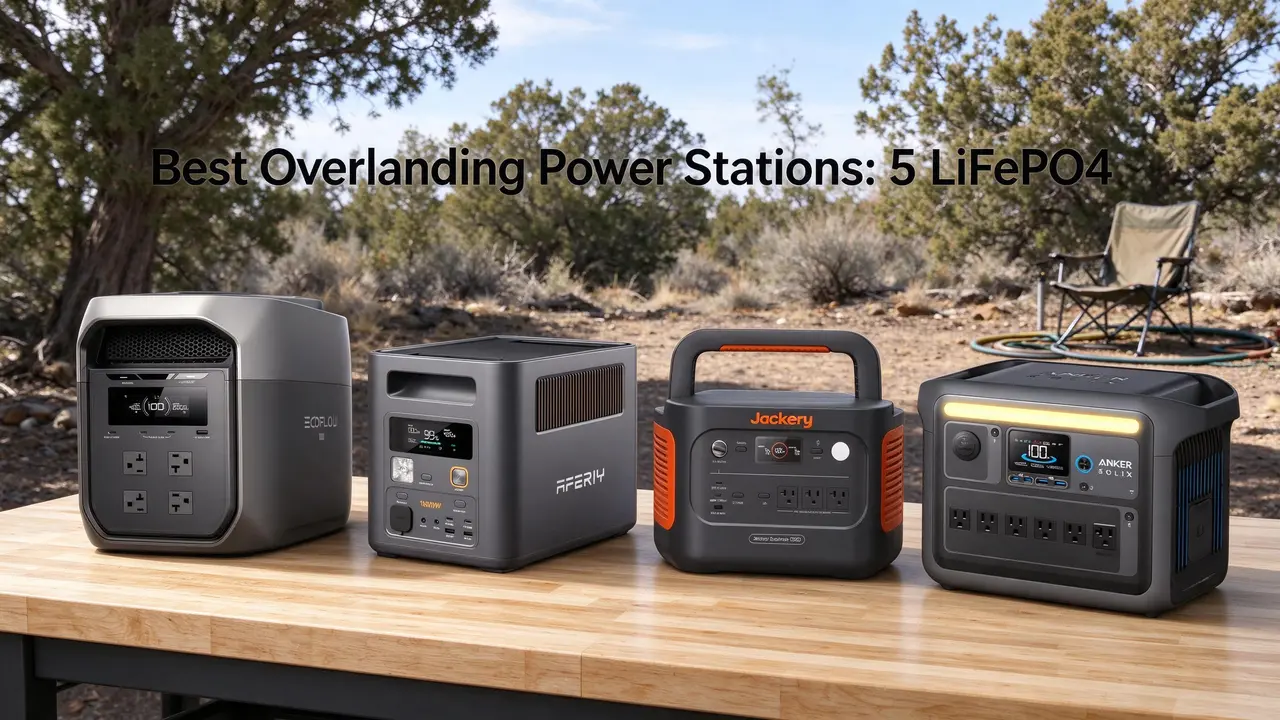
Best Overlanding Power Stations: 5 LiFePO4 Picks
Overlanding power is a different job than home backup: washboard roads, a 12V fridge that runs all night, and no wall outlet for days. These five LiFePO4 stations are the ones owners report trusting for truck camping and off-grid weekends.
Updated
What overlanding actually asks of a power station
The buying question here isn't "which station is biggest." It's which one survives a truck bed, runs a 12V fridge through a cold night, and can be topped up by a solar panel strapped to a roof rack. That's a narrower job than home backup, and it punishes different things.
Four requirements matter most for this scenario. First, a real continuous AC output — 1,500 W or better — so a fridge compressor, a laptop brick, and a camp light can share the load without tripping. Second, enough capacity to carry a fridge overnight: figure 400–700 Wh per night for a mid-size 12V fridge in mild weather, more in heat. Third, solar input headroom, because off-grid means the panel is your only fuel. Fourth, weight you can actually lift into a truck bed alone — 24–45 lb is the realistic band here.
This page is not for whole-home backup, and it is not for someone who wants a built-in transfer switch. If you're wiring a house, a transfer switch or smart panel guide is the right read. If you're packing a 4x4 for a long weekend, keep going.
One disclosure up front: this page uses Amazon Associates links, and picks are fit-led, not commission-led.
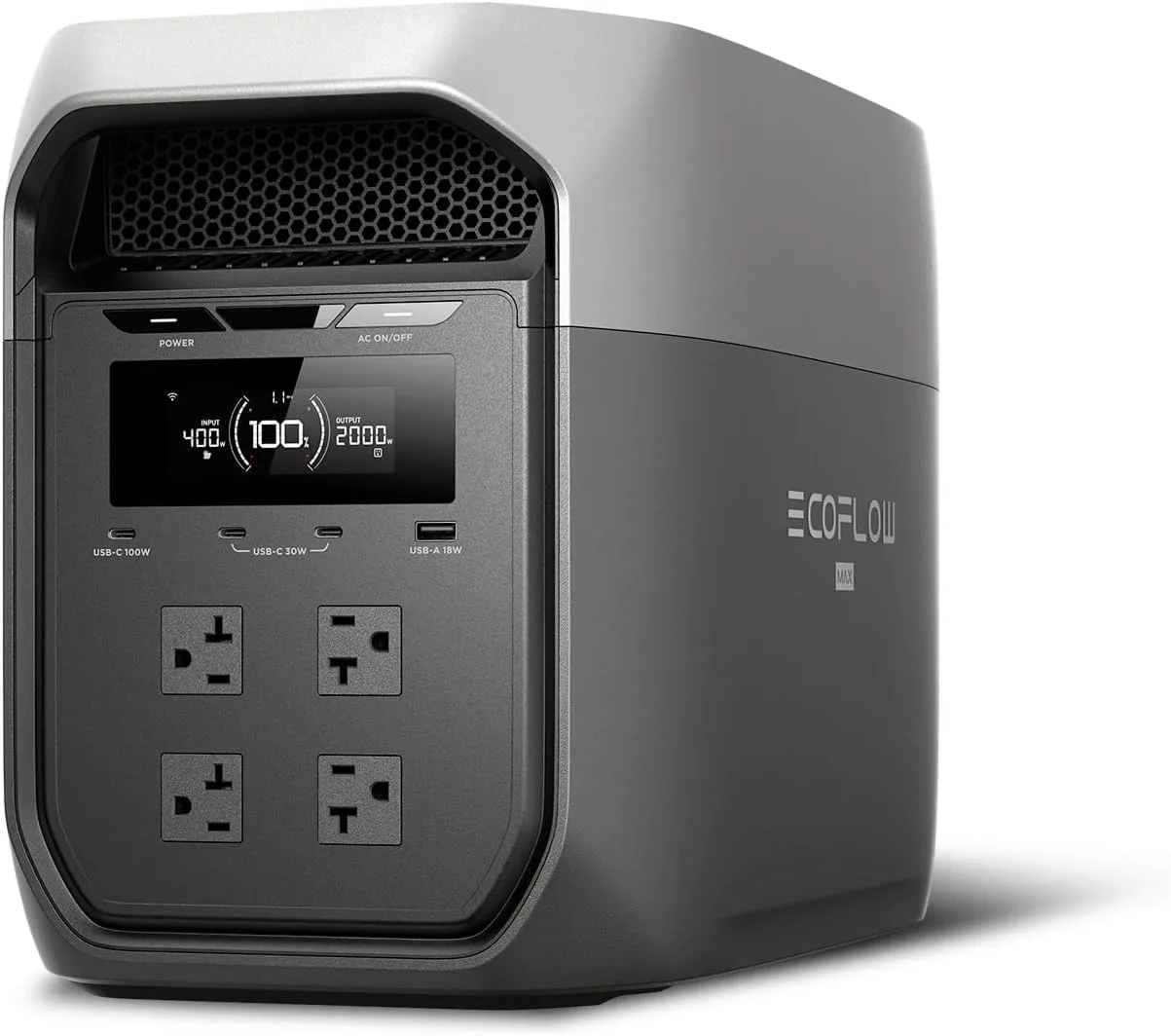
EcoFlow DELTA 3 Max Portable Power Station, 2048Wh LFP Battery
Highlights
- 2048Wh rated capacity
- 2400W continuous AC
- 4800W surge
- LiFePO4 chemistry
- Up to 500W solar input
- 44.8 lb (~20.3 kg)
Best for
- DELTA 3 Max: longer outages or higher continuous loads (still not whole-home wiring)
- RV / off-grid days where recharge speed matters as much as Wh
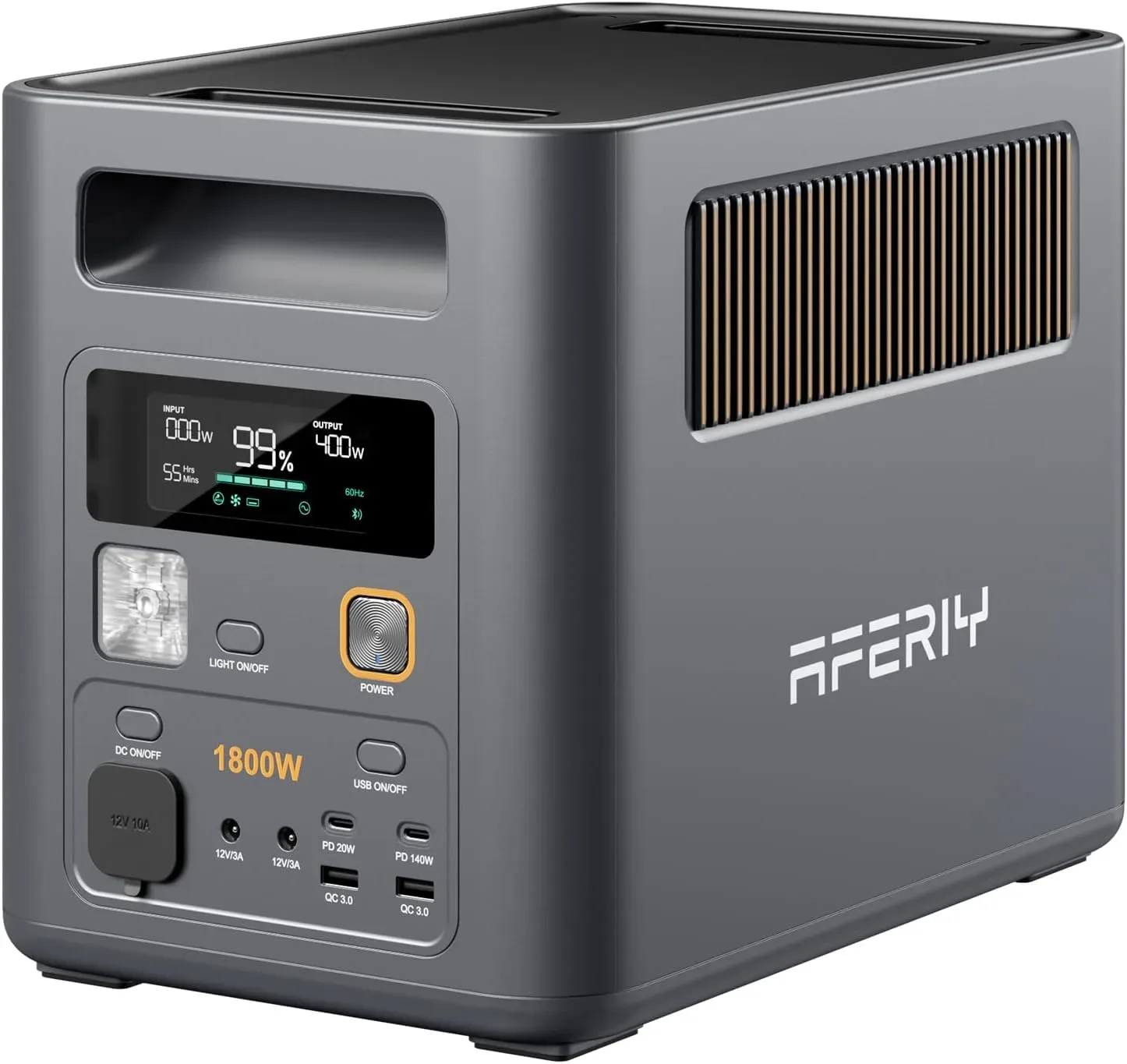
AFERIY Portable Power Station 1024Wh Solar Generator 1800W(Peak 3600W)
Highlights
- 1024Wh rated capacity
- 1800W continuous AC
- 28 lb (~12.7 kg)
- About $499 list
Best for
- AF-P180Pro: small appliances and tools that need ~1800W continuous, not just phone charging
- Essentials bridge at home (fridge cycles, router) when sized to the Wh
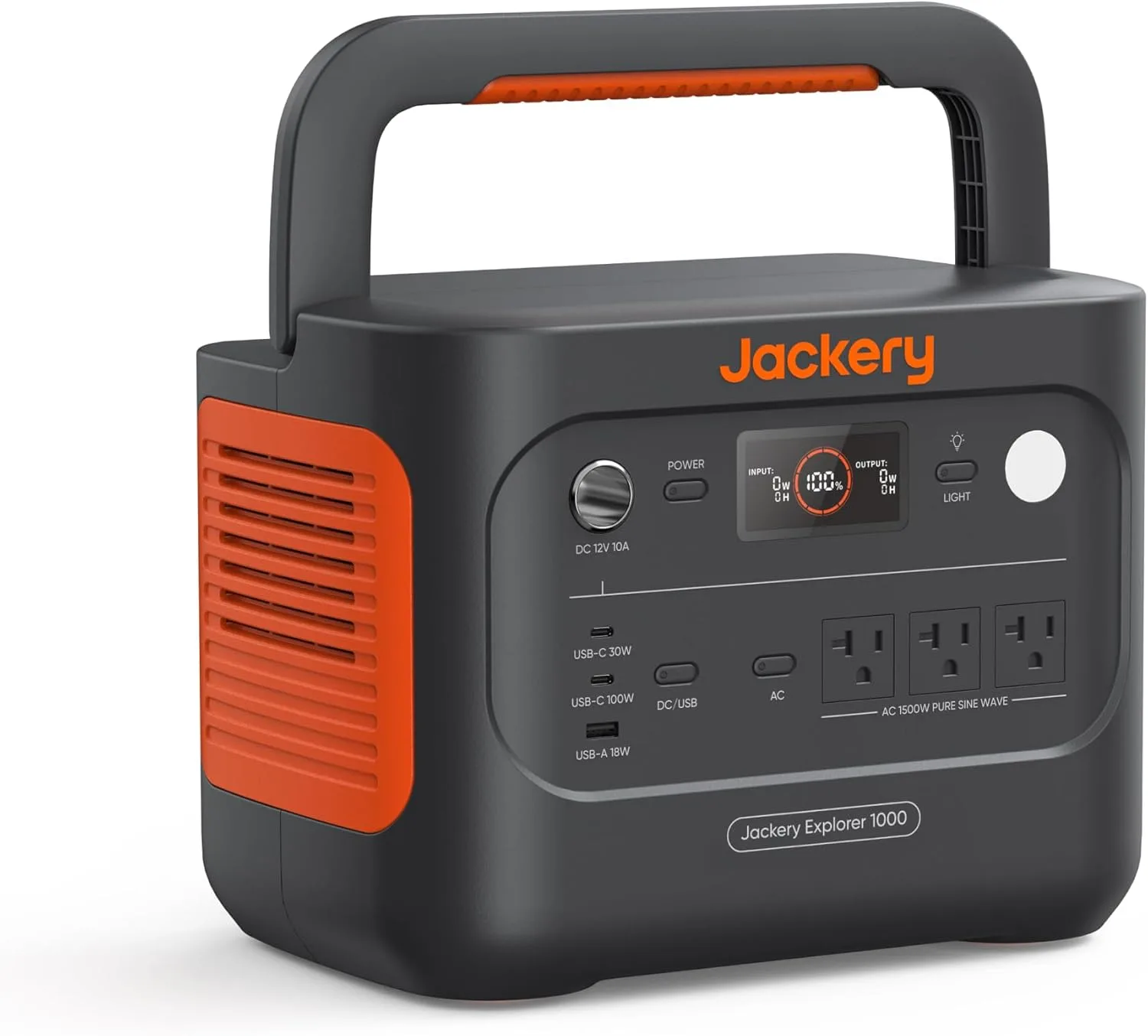
Jackery Explorer 1000 v2 Portable Power Station,1070Wh,1500W
Highlights
- 1070Wh rated capacity
- 1500W continuous AC
- LiFePO4 chemistry
- Up to 400W solar input
- 23.8 lb (~10.8 kg)
- About $559 list
Best for
- Explorer 1000 v2: weekend camping when 23.8 lb carry weight matters as much as 1070Wh
- Essentials bridge at home (fridge cycles, router) when sized to the Wh
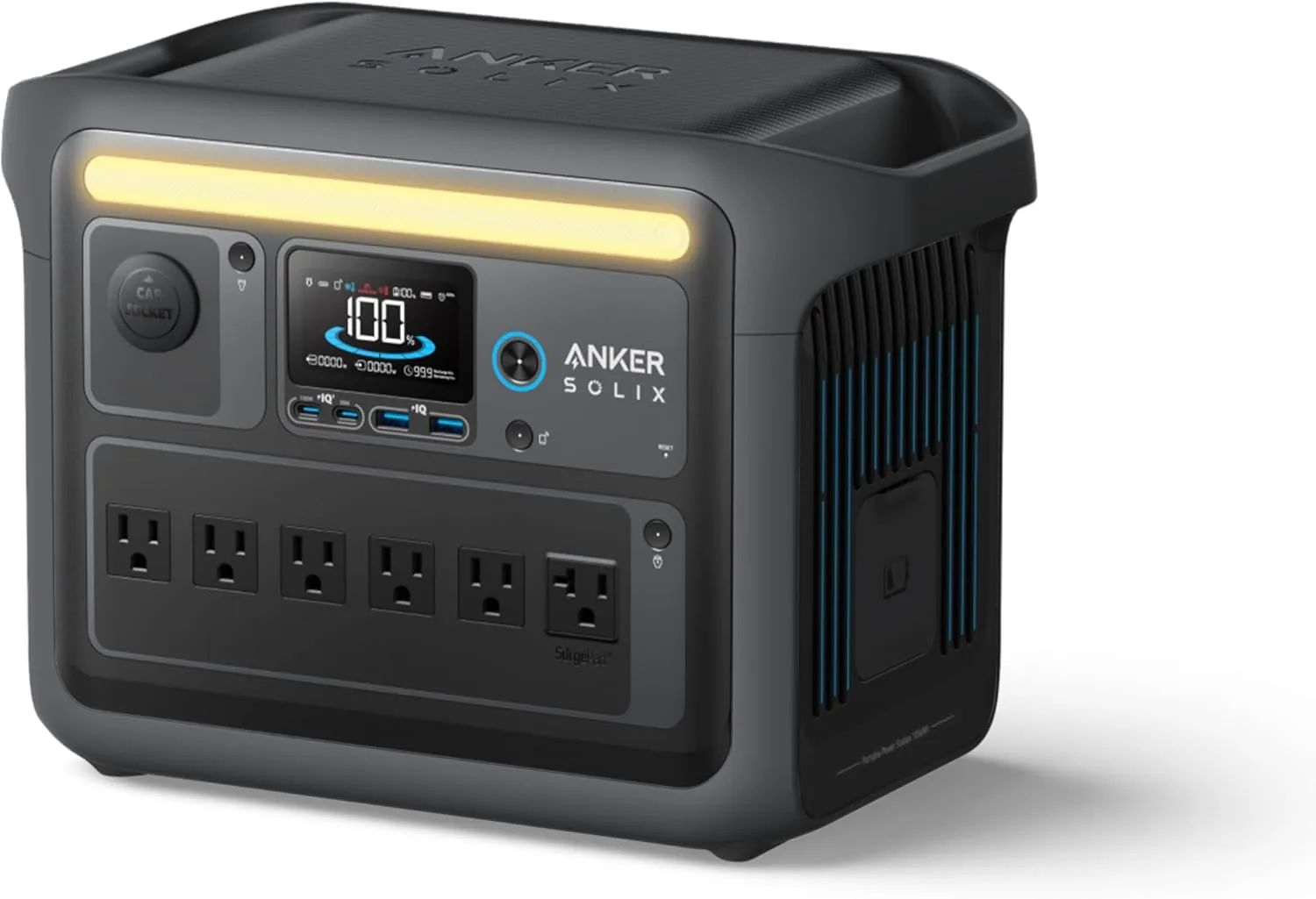
Anker C1000 Portable Power Station
Highlights
- 1056Wh rated capacity
- 1800W continuous AC
- LiFePO4 chemistry
- Up to 600W solar input
- 28.4 lb (~12.9 kg)
- About $599 list
Best for
- SOLIX C1000: small appliances and tools that need ~1800W continuous, not just phone charging
- Essentials bridge at home (fridge cycles, router) when sized to the Wh
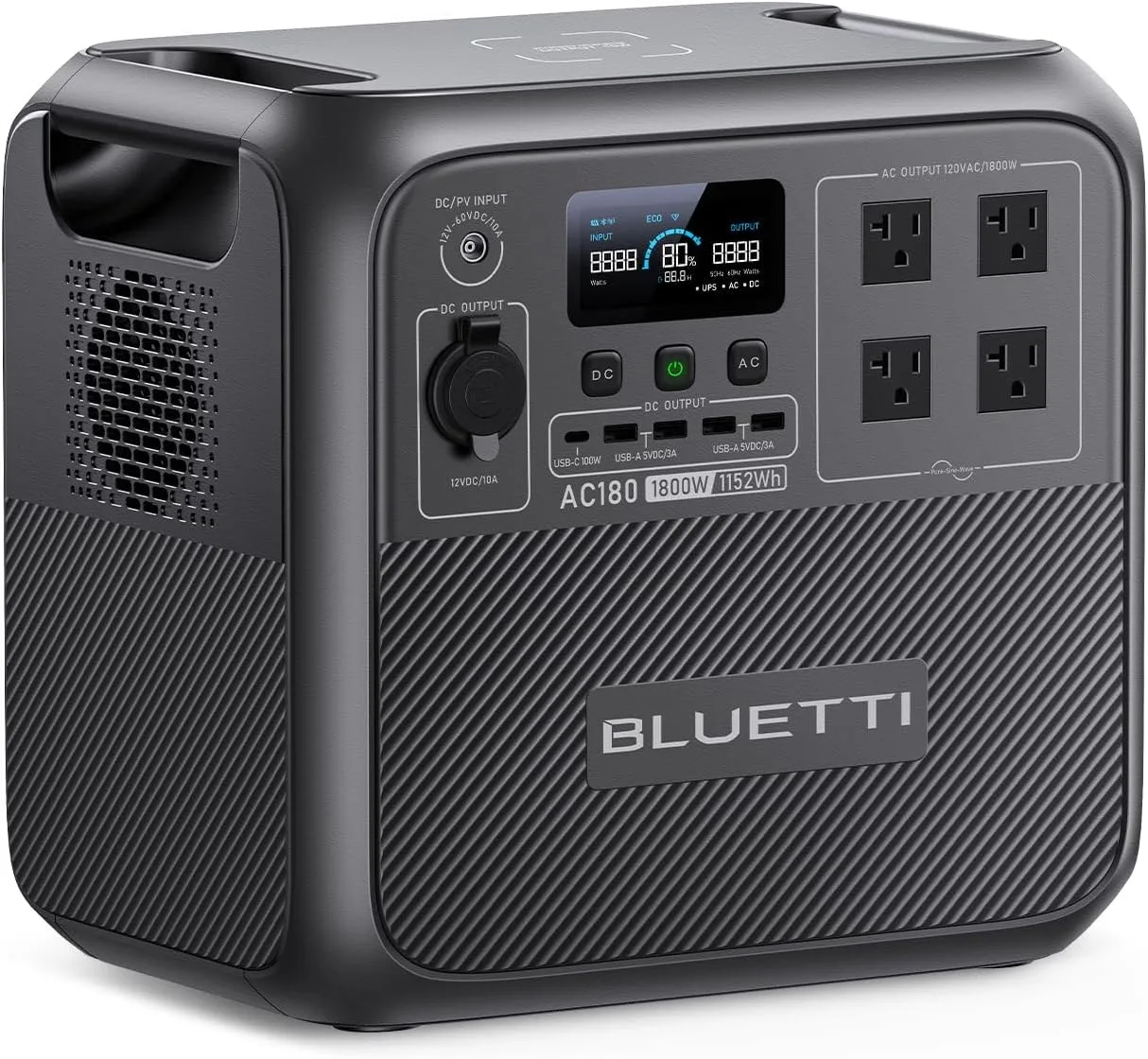
BLUETTI Portable Power Station AC180, 1152Wh LiFePO4 Battery Backup w/ 2 1800W
Highlights
- 1152Wh rated capacity
- 1800W continuous AC
- LiFePO4 chemistry
- Up to 500W solar input
- 35.3 lb (~16.0 kg)
- About $499 list
Best for
- AC180: most Wh per list dollar in mid-size LiFePO4 shortlists (~1152Wh)
- Home essentials when 1800W continuous matters more than a light carry
Quick picks: top, runner-up, also-consider
Top pick for most overlanders: EcoFlow DELTA 3 Max Portable Power Station, 2048Wh LFP Battery. It's the only unit here with enough capacity to run a fridge for several days without a solar top-up, and 2,400 W continuous covers a fridge, a laptop, and camp lights at once. The cost is weight and price — 44.8 lb and $1199. Cheaper is better when you can live with a smaller fridge load and a lighter carry — then the AFERIY or Jackery makes more sense.
Runner-up for solar-first setups: AFERIY AF-P180Pro. At 28 lb and $499, it's the lightest way into a 1,024 Wh LiFePO4 station with confirmed solar input, and owners report it handling a window AC unit. The app is the weak point. Cheaper is better when you're willing to tinker with solar and don't need multi-day fridge autonomy.
Also consider: Jackery Explorer 1000 v2 Portable Power Station,1070Wh,1500W if you want the lightest unit here (23.8 lb) and quiet overnight operation for a fridge and fans. Skip it if you need native 12V barrel ports or plan to start big saws. Cheaper is better when portability matters more than raw capacity.
Two more worth a look: Anker C1000 Portable Power Station for short-term fridge backup with fast recharge, and BLUETTI AC180 for the cheapest nameplate $/Wh in the group — with the caveat that its ~20 W idle draw eats into small-load runtime. Cheaper is better for the BLUETTI when you're on a tight budget and can turn the inverter off when idle.
How I weighted this job
I'm Avery Nolan, founding editor at WattPicks, and my background is portable power capacity, output, and price-per-Wh guidance across the catalogue. The checks below are home-user and overlanding checks grounded in owner themes on file plus listing specs — not lab-bench measurements.
The weights, and why: capacity-to-weight ratio 30% (the core overlanding trade-off — you carry every Wh); continuous AC output 25% (a fridge plus a laptop plus lights is a real simultaneous load); solar input compatibility 20% (off-grid fuel); owner-reported reliability and quirks 15% (what actually breaks or annoys on the road); price-per-Wh 10% (budget matters, but it's the last tiebreaker, not the first).
Tracing #1 over #2: the EcoFlow DELTA 3 Max wins on capacity-to-weight and output headroom — 2,048 Wh at 44.8 lb works out to about 45.7 Wh per pound, with 2,400 W continuous, the strongest ratio in this group, and owners report running a portable fridge for several days on one charge. The AFERIY AF-P180Pro takes #2 because it's the lighter, cheaper solar tinkerer's pick — 1,024 Wh at 28 lb is about 36.6 Wh per pound, with confirmed solar input around 350 W from two 200 W panels — but it gives up half the capacity and 600 W of output to the EcoFlow.
Price-per-Wh here is nameplate only: BLUETTI AC180 is the cheapest at $0.43/Wh, and no other unit in this shortlist beats it on that measure.
Here's how all five land on those weights, so the ranking reads as one continuous argument:
EcoFlow DELTA 3 Max (list $1199): High on capacity-to-weight and output headroom; its 2,400 W continuous is the highest in this group, though it is the heaviest and priciest pick.
AFERIY AF-P180Pro (list $499): High on continuous watts and ports; Med on price-per-Wh.
Jackery Explorer 1000 v2 (list $559): High on weight and quiet operation; Med on capacity-to-weight; Low on native 12V ports.
Anker C1000 (list $599): High on recharge speed and fridge backup; Med on weight and price-per-Wh.
BLUETTI AC180 (list $499): High on price-per-Wh; Low on idle draw and weight.
That split is why the pick depends on the job rather than one universal winner.
Scenario facts: the five stations side by side
Prices are list prices, not sale stickers. Ratings are listing aggregates, not owner proof. Where a spec isn't on file, it reads n/a.
| Product | Price | Capacity (Wh) | Output (W) | Weight (lb) | Rating |
|---|---|---|---|---|---|
| EcoFlow DELTA 3 Max Portable Power Station, 2048Wh LFP Battery | $1199 | 2048 Wh | 2400 W | 44.8 lb | 4.7 |
| AFERIY AF-P180Pro | $499 | 1024 Wh | 1800 W | 28 lb | 4.7 |
| Jackery Explorer 1000 v2 Portable Power Station,1070Wh,1500W | $559 | 1070 Wh | 1500 W | 23.8 lb | 4.7 |
| Anker C1000 Portable Power Station | $599 | 1056 Wh | 1800 W | 28.4 lb | 4.7 |
| BLUETTI AC180 | $499 | 1152 Wh | 1800 W | 35.3 lb | 4.5 |
The ranking, with what owners report
Each entry below is grounded in owner themes on file for that SKU. Where the review base is thin, I say so, and I note roughly how many owner reports back each theme so you can judge consensus strength.
- #1 EcoFlow DELTA 3 Max Portable Power Station, 2048Wh LFP Battery — $1199. Suits overlanders who want multi-day fridge runtime without solar and the highest continuous output here (2,400 W). Skip if 44.8 lb is too much to lift solo or you need high-wattage USB output — one owner wished for more than the standard USB wattage. Cheaper is better when you can live with a smaller fridge load and a lighter carry.
- #2 AFERIY AF-P180Pro — $499. Suits solar tinkerers who want a light 28 lb station with confirmed solar input (~350 W from two 200 W panels in one owner's setup) and enough headroom for a window AC. Skip if app polish matters — one owner rated the app poorly and noted occasional modem-like sounds. Cheaper is better when you're willing to tinker with solar and don't need multi-day fridge autonomy.
- #3 Jackery Explorer 1000 v2 Portable Power Station,1070Wh,1500W — $559. Suits campers who want the lightest unit here (23.8 lb) and quiet overnight fridge-and-fan operation. Skip if you need native 12V DC barrel ports (none — use the cigarette socket with an adapter) or plan to start a large miter saw. Cheaper is better when portability matters more than raw capacity.
- #4 Anker C1000 Portable Power Station — $599. Suits short-term fridge backup and camper quiet-hours use — owners report 36 hours on an 18 cu ft garage fridge and ~1.5 hour wall recharge. Skip if you'll carry it often (feels heavier than 28.4 lb in hand) or want a long AC cable in the box. Cheaper is better when you need fast recharge and short-term fridge backup rather than multi-day autonomy.
- #5 BLUETTI AC180 — $499. Suits budget-focused buyers who want the cheapest nameplate $/Wh here ($0.43/Wh) and UPS-style switchover for a camper circuit. Skip if you run small loads overnight — ~20 W idle draw with the inverter on drains faster than the math suggests — or if you expect the wireless charging pad to work. Cheaper is better when you're on a tight budget and can turn the inverter off when idle.
What goes wrong on the trail
Three pitfalls show up repeatedly in owner reports, and they're worth planning around before you buy.
Idle draw is the quiet killer. The BLUETTI AC180 pulls about 20 W with the inverter on, which is roughly 1,152 Wh over a 24-hour day — nearly half its capacity before you've run anything. Turn the AC output off when nothing is plugged in.
Solar input rarely matches the panel rating. One BLUETTI owner measured 161 W on a clear day from a 200 W panel; an AFERIY owner saw ~350 W from two 200 W panels. Size your solar for real-world output, not the sticker.
Port and connector quirks bite in the field. The Jackery Explorer 1000 v2 has no native 12V DC barrel ports, so 12V gear needs an adapter. The AFERIY's AC connector needs a firm push until fully seated or charging stops after a minute. And the Anker C1000's AC charging cable is noticeably shorter than its car cable — pack an extension.
Who should pick something else
If you're backing up a house rather than a truck, this shortlist is the wrong tool. None of these five is designed for a transfer switch or smart panel install, and a 1,000–2,000 Wh station won't carry a whole-home load. Read a transfer switch vs smart panel guide instead.
If you need to carry the unit more than a few dozen feet, skip the EcoFlow DELTA 3 Max (44.8 lb) and the BLUETTI AC180 (35.3 lb). The Jackery Explorer 1000 v2 at 23.8 lb is the realistic one-person carry here.
If app polish is a priority, the AFERIY AF-P180Pro and the Anker C1000 both drew app and firmware complaints from owners. The EcoFlow's app and storm guard drew the most positive owner notes in this group.
If you want the cheapest nameplate $/Wh and don't mind the idle-draw caveat, the BLUETTI AC180 at $0.43/Wh is the budget answer — just budget for the ~20 W idle draw.
Owner themes worth knowing
Short theme summaries from the high-helpful reviews on file, paraphrased — not raw review text. Where a theme rests on a single owner, I say so; where it repeats across several, I note that too.
EcoFlow DELTA 3 Max: owners lean on the fast transfer as a UPS substitute for network gear, the app's storm guard for remote monitoring, and roughly one-hour wall recharge. The most useful critical note was a wish for higher-wattage USB output. The high-helpful base is thin, so consensus rests on a handful of detailed owners.
AFERIY AF-P180Pro: owners report the sub-10ms UPS keeping a router, computer, and security system running through outages, a window AC unit starting and running, and solar input around 350 W from two 200 W panels. Caveats: app rated poorly by one owner, occasional modem-like sounds, and a display/outlet layout one owner found awkward.
Jackery Explorer 1000 v2: owners report a fridge and portable AC running together during outage testing, quiet mode quiet enough to sleep through, and ~1 hour 40 minute recharge in normal mode. Caveats: no 12V DC barrel ports, a large 12-inch sliding miter saw wouldn't start, and buttons sit deep in the case.
Anker C1000: owners report 36 hours on an 18 cu ft garage fridge and 12 hours on a kitchen side-by-side, with ~1.5 hour wall recharge. Caveats: feels heavier than the listed weight, short AC cable, app and firmware connection issues until updated, and a dim yellowish top light.
BLUETTI AC180: owners report instant UPS switchover for a camper circuit, ~2 hour recharge at standard speed, and a five-day camping trip running a car fridge. Caveats: ~20 W idle draw with the inverter on, wireless charging pad failed to keep a phone charging, ~35 lb, and solar input well short of panel rating.
Frequently asked
How much capacity do I need to run a 12V fridge overnight?
Figure 400–700 Wh per night for a mid-size fridge in mild weather, more in heat. The Jackery Explorer 1000 v2 (1,070 Wh) and Anker C1000 (1,056 Wh) cover one to two nights; the EcoFlow DELTA 3 Max (2,048 Wh) covers several days, and one owner reported a portable fridge running for several days on a single charge.
Can I charge these from a roof-rack solar panel?
Yes, all five accept solar input, but real-world output falls short of the panel rating. One BLUETTI owner measured 161 W on a clear day from a 200 W panel; an AFERIY owner saw ~350 W from two 200 W panels. Size your panel for the shortfall.
Which is lightest to lift into a truck bed?
The Jackery Explorer 1000 v2 at 23.8 lb, then the AFERIY AF-P180Pro at 28 lb and the Anker C1000 at 28.4 lb. The EcoFlow DELTA 3 Max (44.8 lb) and BLUETTI AC180 (35.3 lb) are better moved once and left in place.
Do any of these work as a UPS for a camper or truck?
The EcoFlow DELTA 3 Max and AFERIY AF-P180Pro both advertise sub-10ms transfer, and owners report using them as UPS substitutes for routers and network gear. The BLUETTI AC180 advertises 20 ms switchover. None of these is a substitute for a wired transfer switch.
Method and sources
Model names and list prices come from the WattPicks catalog at build time. WattPicks does not run its own laboratory tests on power stations, and nothing on this page is presented as a measured result — it is catalog-backed buying guidance.
Read our methodology for how the catalog is normalized, and about WattPicks for who publishes it.