
Best Portable Solar Generator for Home Backup: What Actually Runs
Home backup isn't one spec — it's usable Wh, surge for a fridge compressor, and how fast you can recharge before the next outage. Here's how five stations split that job, and which one fits your outage length.
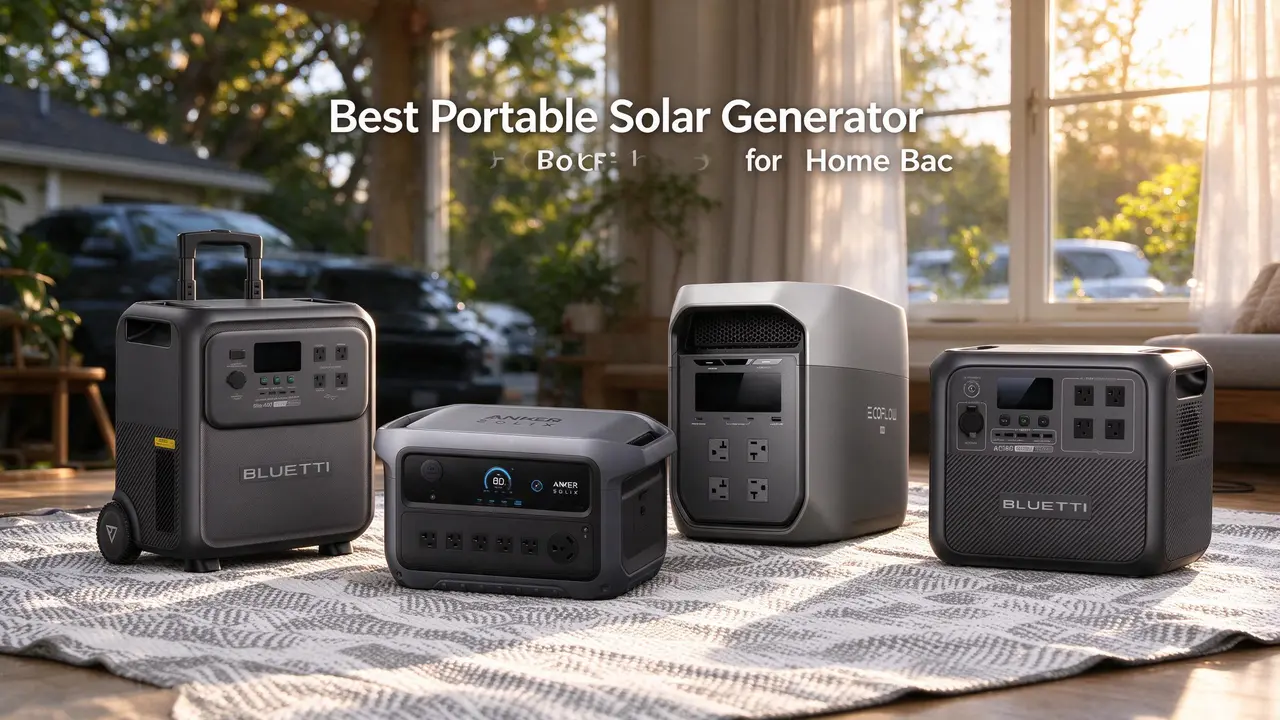
Updated
The short answer: match the station to your outage, not to a wattage sticker
As an Amazon Associate I earn from qualifying purchases. Recommendations here are based on fit and the evidence below — not commission size.
A portable solar generator is a bridge, not a whole-home solution. It keeps a fridge, a modem, some lights, and a CPAP alive for hours to a few days — it does not run a well pump, a furnace blower, or central A/C unless you've done the surge math and bought accordingly. If your outage plan includes any 240V hardwired load, this category is the wrong tool and you want a transfer switch and a standby generator.
The number that matters first is usable watt-hours, not nameplate. A 2,048Wh station does not hand you 2,048Wh at the outlet; inverter idle draw and depth-of-discharge limits eat into it. Owners of the BLUETTI AC180 have flagged roughly 20W of idle draw with the inverter on, which is real math on a 1,152Wh pack. Second is continuous output versus the surge your fridge compressor pulls at startup. Third is recharge speed, because a two-day outage with no sun is a different problem than a four-hour one.
- Enough for: fridge, lights, router, phones, CPAP, a fan or two
- Not for: well pumps, furnace blowers, central A/C, 240V dryers — plan a transfer switch instead
- Panels are sold separately on every station here unless a bundle says otherwise
Who should skip this category entirely
Renters and apartment dwellers: if you can't install a transfer switch or run a dedicated circuit, a portable station is still useful for fridge and electronics, but it won't power hardwired loads like a furnace blower or well pump. Check your lease before any permanent wiring.
Homes with critical hardwired loads: if you need to run a well pump, sump pump, or central HVAC, this category is a stopgap at best. Budget for a standby generator and transfer switch instead.
Anyone expecting a decade of daily cycling: these are LiFePO4 packs, which typically rate 3,000–6,000 cycles to 80% capacity, but that's a general chemistry expectation, not a spec published for these units. For occasional outage use, calendar aging and storage temperature matter as much as cycle count. Store them cool and topped up per the manual.
- Renters: no permanent wiring; use for plug-in loads only
- Hardwired loads: well pump, furnace blower, central A/C — plan a transfer switch
- Daily cycling: check the listing for cycle-life ratings before relying on one as a primary power source
How we picked and what we verified
We started with stations that have a real owner base and published specs for capacity, output, and weight. We prioritized usable watt-hours over nameplate, checked surge and transfer time where listed, and noted where a spec is missing rather than guessing.
Owner reports are paraphrased themes from reviews on file, not lab tests. We don't have sample sizes for those tallies, so treat them as directional. Listing specs (transfer times, solar input caps, warranty) are as published by the manufacturer and not independently bench-tested here.
Specs and prices are as of February 2025. We re-check listings periodically, but sale prices and stock move constantly — verify current details on the listing before buying.
- Owner reports: paraphrased themes, no sample size, directional only
- Listing specs: manufacturer-published, not lab-verified
- Last verified: February 2025; re-checked periodically
| Product | Price | Capacity (Wh) | Output (W) | Weight (lb) | Rating |
|---|---|---|---|---|---|
| BLUETTI Elite 400 | $1899 | 3840 Wh | 2600 W | 86 lb | 4.7 |
| Anker C2000 Gen 2 Portable Power Station, 2,048Wh | $1499 | 2048 Wh | 2400 W | 41.7 lb | 4.7 |
| EcoFlow DELTA 3 Max Portable Power Station, 2048Wh LFP Battery | $1199 | 2048 Wh | 2400 W | 44.8 lb | 4.7 |
| BLUETTI AC180 | $499 | 1152 Wh | 1800 W | 35.3 lb | 4.5 |
| Jackery Explorer 1000 v2 Portable Power Station,1070Wh,1500W | $559 | 1070 Wh | 1500 W | 23.8 lb | 4.7 |
What owners report
We tallied owner reviews on file for each station and kept only themes that matter in an outage: fridge runtime, recharge speed, idle draw, and UPS behavior. These are paraphrased summaries, not quotes, and they reflect owner experience rather than lab tests. Where a report is vague, we say so. We don't have exact sample sizes for these tallies.
- BLUETTI Elite 400: Owners say it handles a fridge and freezer for days, with one reporting about a week on a 12V cooler-style fridge and another about three days on a fridge plus freezer — both vague, so treat as directional. The wheels make the 86 lb weight manageable; the app-dependent settings are a common gripe in a grid-down scenario.
- Anker C2000 Gen 2: Owners report running a TV, fridge, and WiFi for over 10 hours and fast wall charging. One noted that pass-through from a 15A outlet caps output at 15A, which matters for RV or subpanel use.
- EcoFlow DELTA 3 Max: Owners highlight very fast charging and long-lasting power, and several use it as a UPS behind a PC and router thanks to the under-10ms transfer.
- BLUETTI AC180: Owners praise fast charging (about an hour to full) and value, but flag roughly 20W of idle draw with the inverter on — a real factor on a 1,152Wh pack.
- Jackery Explorer 1000 v2: Owners report charging to 100% within about 3 hours and running a side-by-side fridge/freezer for up to 9 hours; some also run a fridge plus portable A/C together.
Weight and where it lives
Backup power that's too heavy to move is a paperweight in the wrong room. The Jackery 1000 v2 at 23.8 lb is the only one here most people will carry up stairs without thinking about it. The AC180 at 35.3 lb is a two-hand lift. The C2000 Gen 2 at 41.7 lb and DELTA 3 Max at 44.8 lb are manageable but not casual. The Elite 400 at 86 lb is a trolley unit — owners consistently say the wheels and handle make it movable and the weight makes it a bad idea for stairs.
Plan the location before you buy. A station that lives next to the fridge and gets wheeled to the router during an outage beats a bigger one in the garage.
- Carry anywhere: Jackery 1000 v2 (23.8 lb)
- Two-hand, room to room: AC180 (35.3 lb)
- Wheel it, don't carry it: Elite 400 (86 lb)
Spec snapshot: five stations, list prices, no deal stickers
Prices below are list. Sale prices move constantly and shouldn't drive a backup purchase you'll own for a decade. Ratings are listing aggregates, not owner proof. Specs and prices are as of February 2025; verify current details on the listing before buying.
- Best solar headroom on file: Elite 400 (1,000W)
- Modest but workable: AC180 (500W), Jackery 1000 v2 (400W)
- Confirm before buying panels: DELTA 3 Max solar input not on file
| Product | Price | Capacity (Wh) | Output (W) | Weight (lb) | Rating |
|---|---|---|---|---|---|
| BLUETTI Elite 400 | $1899 | 3840 Wh | 2600 W | 86 lb | 4.7 |
| Anker C2000 Gen 2 Portable Power Station, 2,048Wh | $1499 | 2048 Wh | 2400 W | 41.7 lb | 4.7 |
| EcoFlow DELTA 3 Max Portable Power Station, 2048Wh LFP Battery | $1199 | 2048 Wh | 2400 W | 44.8 lb | 4.7 |
| BLUETTI AC180 | $499 | 1152 Wh | 1800 W | 35.3 lb | 4.5 |
| Jackery Explorer 1000 v2 Portable Power Station,1070Wh,1500W | $559 | 1070 Wh | 1500 W | 23.8 lb | 4.7 |
Runtime math you can actually use
Work from a tight band, not a fantasy. A modern fridge draws roughly 100–200W while the compressor runs and averages maybe 40–80W over a day with duty cycling. A modem and router together sit around 15–30W. A CPAP without humidifier is roughly 30–60W; with humidifier, closer to 60–90W. Lights and phone charging are noise by comparison.
So a 2,048Wh station like the EcoFlow DELTA 3 Max or Anker C2000 Gen 2, derated for inverter losses, is realistically a one-to-two-day fridge bridge with room for the router and a CPAP. The BLUETTI Elite 400's 3,840Wh is the only unit here that owners describe stretching a fridge and freezer toward multiple days — one owner reported roughly a week on a 12V cooler-style fridge, another said three days on a fridge plus freezer. Treat those as owner reports, not bench numbers.
The 1,070–1,152Wh pair is a shorter bridge. Jackery 1000 v2 owners describe a side-by-side fridge/freezer for up to about 9 hours and a fridge plus portable A/C running together in testing. The AC180's 1,152Wh is enough for a basement circuit of TV, router, and lamps — one owner wired exactly that and reported clean switchover.
- Overnight (8–12 hours): 1,070–1,152Wh (Jackery 1000 v2, AC180) covers a fridge plus router and lights, with little margin.
- One to two days: 2,048Wh (DELTA 3 Max, C2000 Gen 2) runs a fridge, router, and CPAP with duty cycling.
- Multi-day: 3,840Wh (Elite 400) is the only unit here that owners describe stretching a fridge and freezer toward several days — owner reports, not bench-tested.
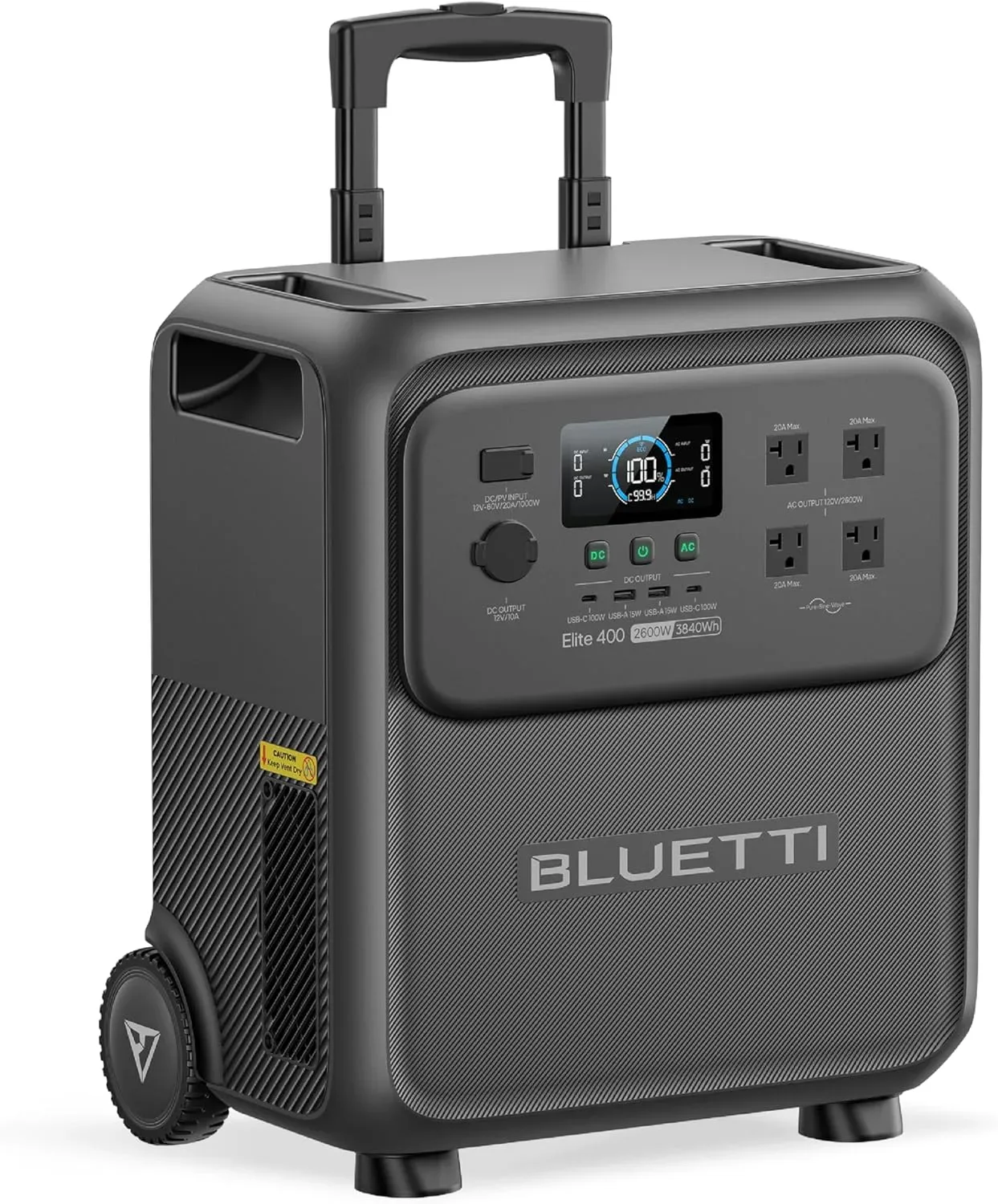
3900W Power Lifting, Essential Home Backup with Wheels, Solar Generator for Home Use, Power Outage, RV Life, Emergencies
Highlights
- 3840Wh rated capacity
- 2600W continuous AC
- 86 lb (~39.0 kg)
- About $1899 list
Best for
- Elite 400: longer outages or higher continuous loads (still not whole-home wiring)
- RV / off-grid days where recharge speed matters as much as Wh
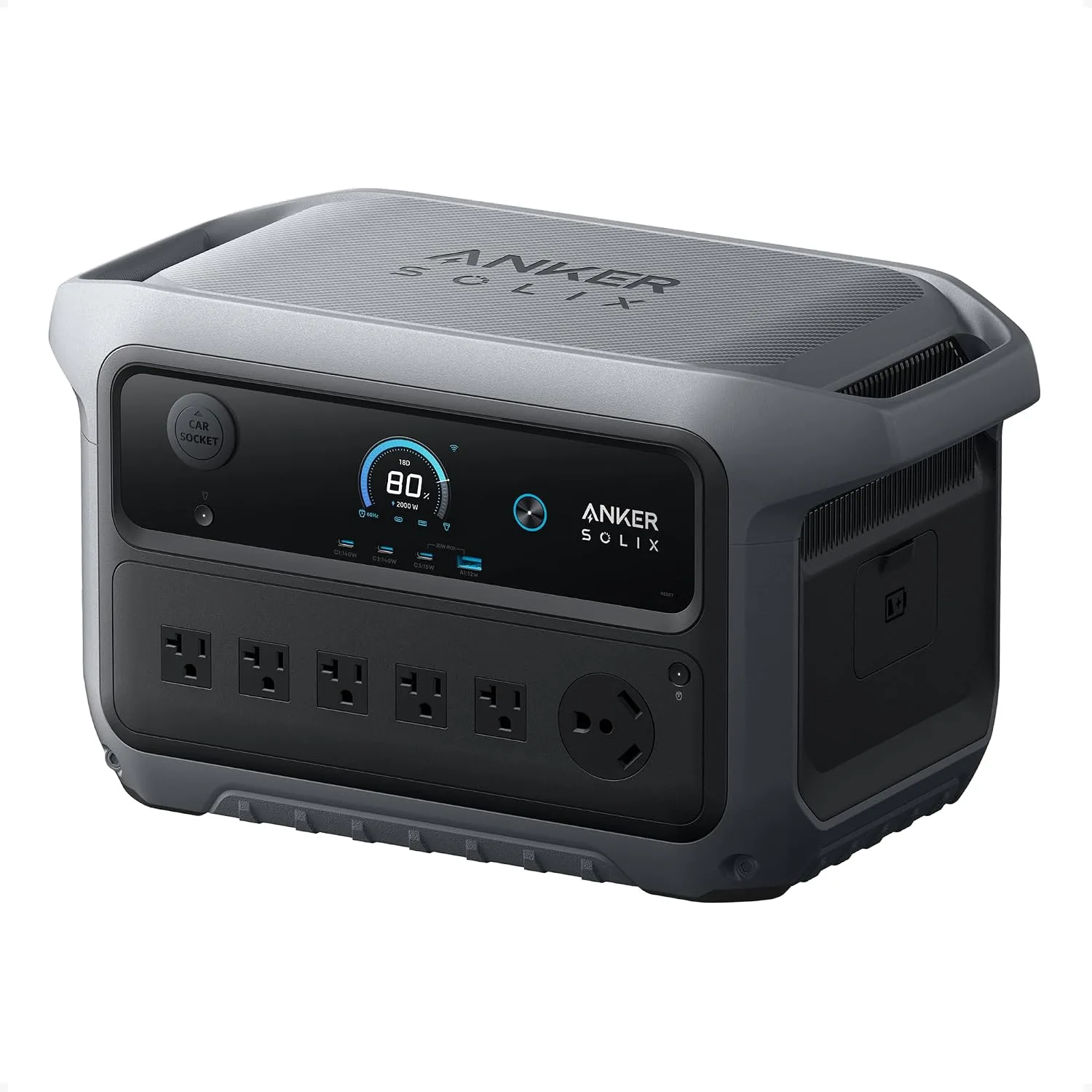
Anker C2000 Gen 2 Portable Power Station, 2,048Wh
Highlights
- 2048Wh rated capacity
- 2400W continuous AC
- 4000W surge
- LiFePO4 chemistry
- Up to 800W solar input
- 41.7 lb (~18.9 kg)
Best for
- C2000 Gen 2: longer outages or higher continuous loads (still not whole-home wiring)
- RV / off-grid days where recharge speed matters as much as Wh
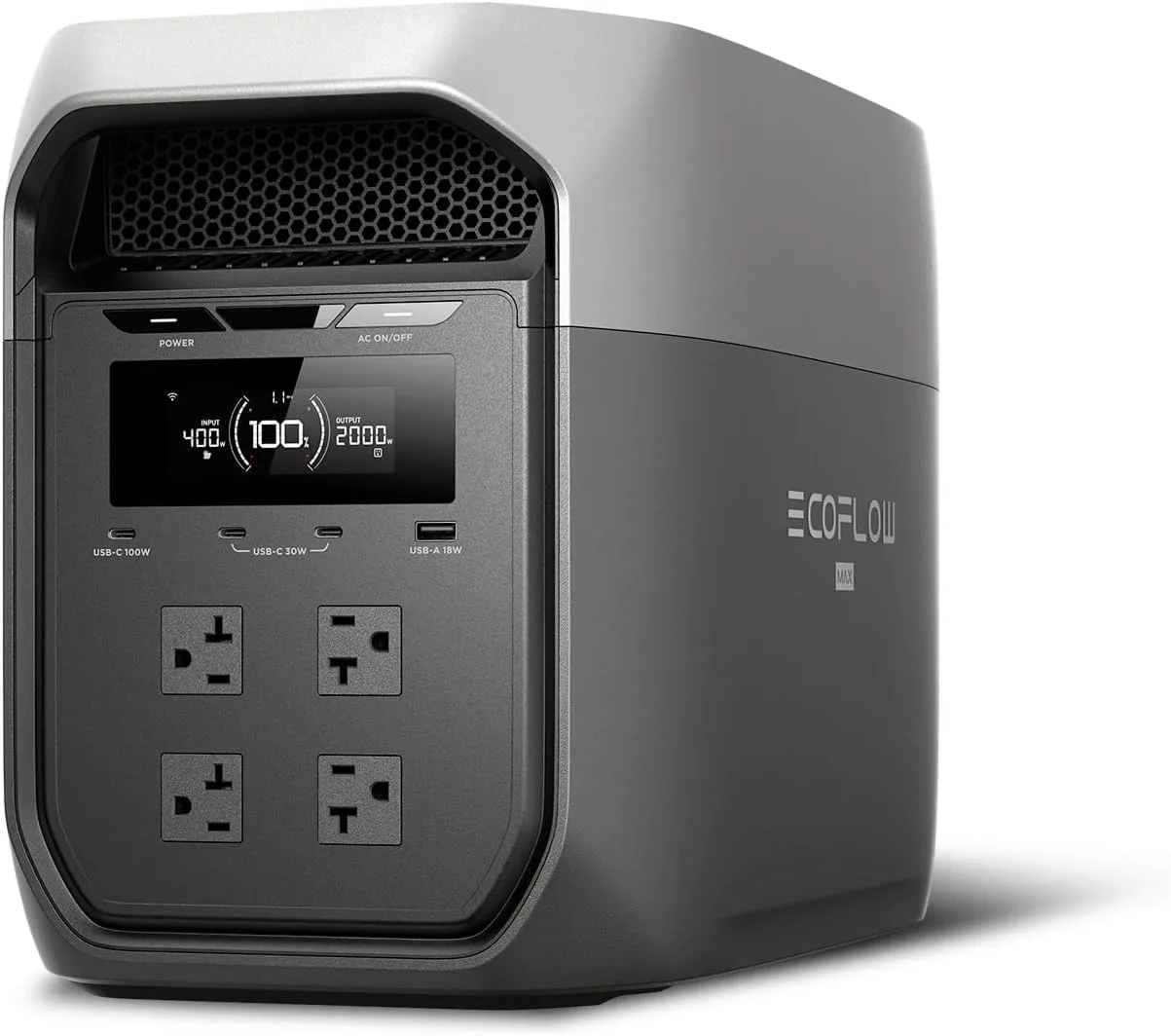
EcoFlow DELTA 3 Max Portable Power Station, 2048Wh LFP Battery
Highlights
- 2048Wh rated capacity
- 2400W continuous AC
- 4800W surge
- LiFePO4 chemistry
- Up to 500W solar input
- 44.8 lb (~20.3 kg)
Best for
- DELTA 3 Max: longer outages or higher continuous loads (still not whole-home wiring)
- RV / off-grid days where recharge speed matters as much as Wh
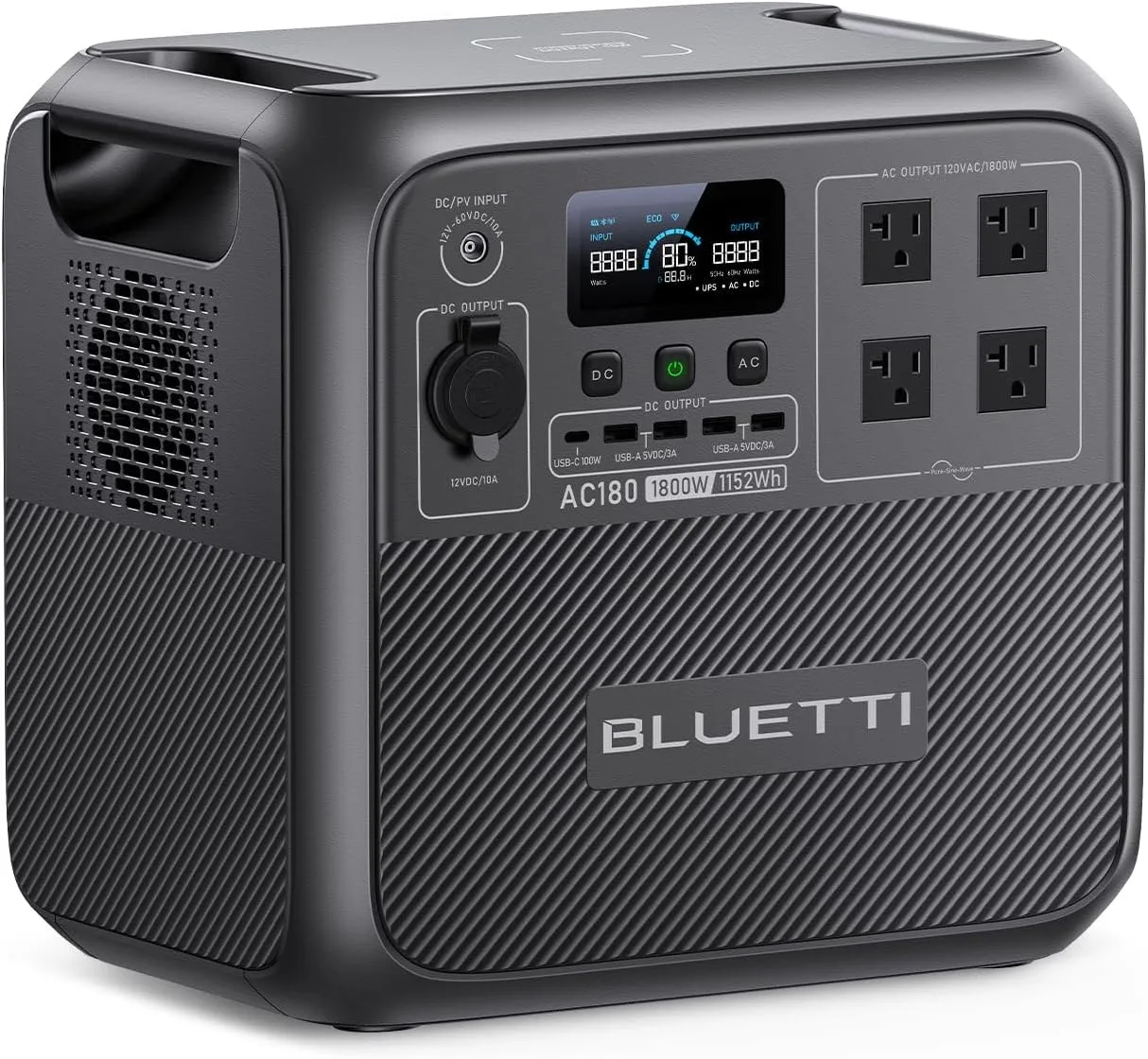
BLUETTI Portable Power Station AC180, 1152Wh LiFePO4 Battery Backup w/ 2 1800W
Highlights
- 1152Wh rated capacity
- 1800W continuous AC
- LiFePO4 chemistry
- Up to 500W solar input
- 35.3 lb (~16.0 kg)
- About $499 list
Best for
- AC180: most Wh per list dollar in mid-size LiFePO4 shortlists (~1152Wh)
- Home essentials when 1800W continuous matters more than a light carry
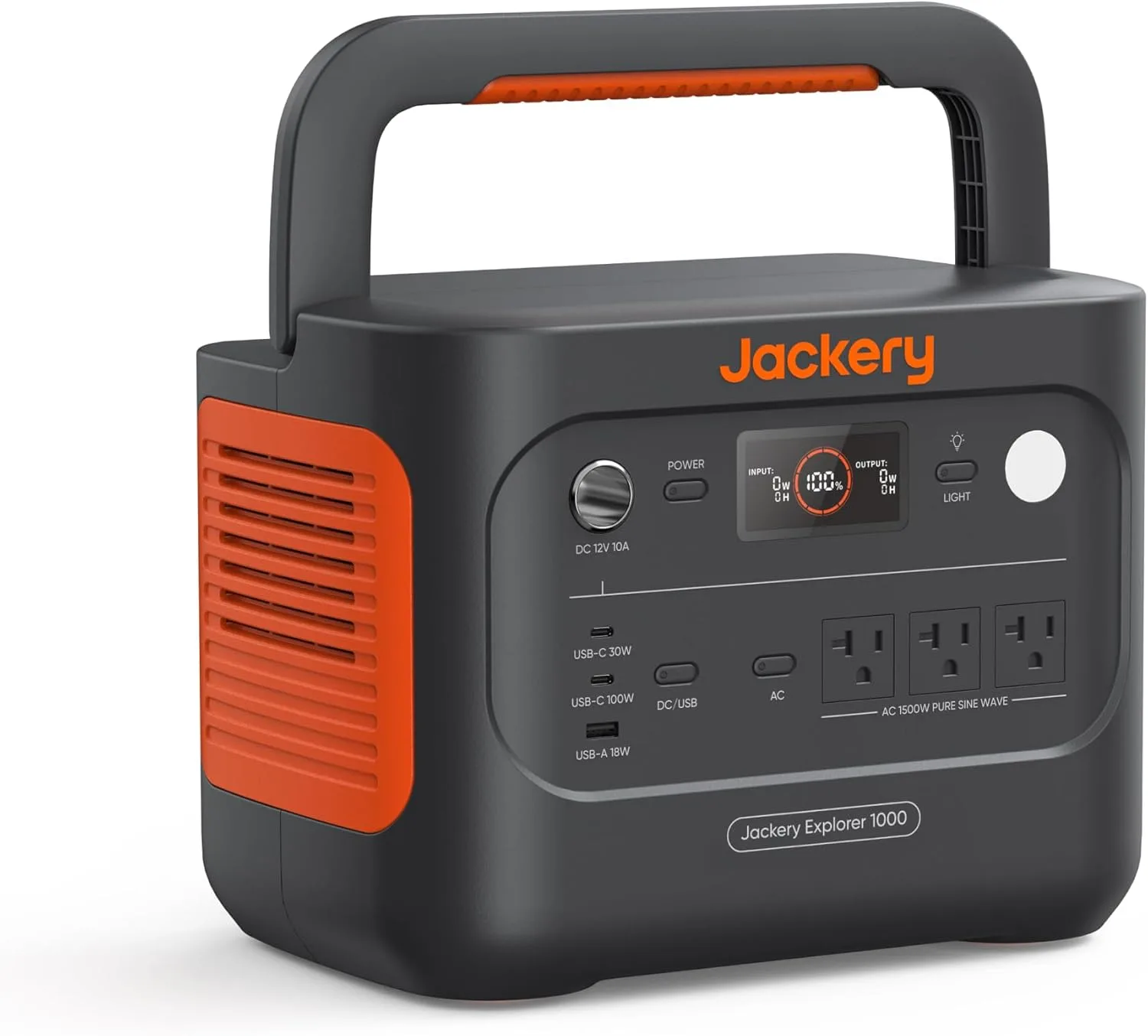
Jackery Explorer 1000 v2 Portable Power Station,1070Wh,1500W
Highlights
- 1070Wh rated capacity
- 1500W continuous AC
- LiFePO4 chemistry
- Up to 400W solar input
- 23.8 lb (~10.8 kg)
- About $559 list
Best for
- Explorer 1000 v2: weekend camping when 23.8 lb carry weight matters as much as 1070Wh
- Essentials bridge at home (fridge cycles, router) when sized to the Wh
Surge and switchover: the two specs that decide whether your fridge notices
A fridge compressor can pull two to three times its running watts for a second at startup. Continuous ratings here range from 1,500W (Jackery) to 2,600W (Elite 400), and all five have enough continuous output for a typical residential fridge. Where they differ is UPS-style transfer. The Elite 400 lists a 15ms switchover, the DELTA 3 Max lists under 10ms, and the AC180 lists 20ms. Owners of the DELTA 3 Max specifically describe using it as a UPS substitute behind a PC and router; an AC180 owner describes the same trick for a basement circuit.
The Jackery 1000 v2 and Anker C2000 Gen 2 don't publish a transfer time in the material on file, so I'd treat them as outage bridges rather than always-on UPS units. That's not a knock — it's a wiring decision. If you want the station inline permanently, buy for published transfer time and check the pass-through behavior. One C2000 Gen 2 owner flagged that plugging into a 15A wall outlet caps output at 15A in pass-through, which matters if you're feeding an RV or a subpanel.
- Published transfer time: Elite 400 (15ms), DELTA 3 Max (<10ms), AC180 (20ms)
- Not published on file: Jackery 1000 v2, Anker C2000 Gen 2 — verify before permanent inline use
- Surge names on listings are not continuous watts; size loads to the continuous number
Solar recharge: panels are extra, and input caps vary
Every station here needs panels bought separately. The question is how much solar input each accepts and how long a realistic recharge takes. The AC180 takes up to 500W of solar and lists a 2.8–3.3 hour solar-only charge. The Elite 400 lists a 1,000W solar path at roughly 6 hours to full. The C2000 Gen 2 caps solar input at 800W per an owner's note — worth knowing on a 2,048Wh pack.
The Jackery 1000 v2 accepts up to 400W of solar per owner reports and is limited to Jackery panels. The DELTA 3 Max's solar input isn't in the material on file, so I'd confirm before buying panels for it. Practical takeaway: on a cloudy multi-day outage, solar is a top-up, not a rescue. A 200W panel in real conditions delivers well under its rating — one AC180 owner measured 161W on a clear April day and 57W in rain.
- Best solar headroom on file: Elite 400 (1,000W)
- Modest but workable: AC180 (500W), Jackery 1000 v2 (400W)
- Confirm before buying panels: DELTA 3 Max solar input not on file
Who each station is for — and who should walk away
BLUETTI Elite 400 ($1,899, 3,840Wh, 2,600W): buy it if your outages run multiple days and you want fridge plus freezer plus a CPAP without juggling. Skip it if you need to carry it up stairs or you want battery expansion — one owner reported no expansion port, and settings lean on the app, which is a real problem in a grid-down scenario.
Anker C2000 Gen 2 ($1,499, 2,048Wh, 2,400W): the pick if you want a compact 41.7 lb pack that recharges fast and can run a fridge overnight plus a CPAP for two nights, per owners. Skip it if you need more than 800W of solar input or you're feeding a subpanel through a 15A outlet.
EcoFlow DELTA 3 Max ($1,199, 2,048Wh, 2,400W): the value pick in the 2kWh class. Under-10ms transfer and owner reports of UPS-style use behind networking gear make it the best fit for keeping a router and PC alive. Skip it if you need published solar input numbers before committing to panels.
BLUETTI AC180 ($499, 1,152Wh, 1,800W): the entry point. Cheapest per nameplate Wh here at $0.43/Wh (that's $499 ÷ 1,152Wh), 20ms UPS, 5-year warranty listed. Skip it if you're sizing for a multi-day fridge run — owners note idle draw eats into small loads.
Jackery Explorer 1000 v2 ($559, 1,070Wh, 1,500W): the lightest at 23.8 lb, and owners report fridge plus portable A/C together. Skip it if you need to run a 1,700W air fryer or want a car charger in the box — it isn't included.
- BLUETTI Elite 400: Owners say it handles a fridge and freezer for days, with one reporting about a week on a 12V cooler-style fridge and another about three days on a fridge plus freezer — both vague, so treat as directional. The wheels make the 86 lb weight manageable; the app-dependent settings are a common gripe in a grid-down scenario.
- Anker C2000 Gen 2: Owners report running a TV, fridge, and WiFi for over 10 hours and fast wall charging. One noted that pass-through from a 15A outlet caps output at 15A, which matters for RV or subpanel use.
- EcoFlow DELTA 3 Max: Owners highlight very fast charging and long-lasting power, and several use it as a UPS behind a PC and router thanks to the under-10ms transfer.
- BLUETTI AC180: Owners praise fast charging (about an hour to full) and value, but flag roughly 20W of idle draw with the inverter on — a real factor on a 1,152Wh pack.
- Jackery Explorer 1000 v2: Owners report charging to 100% within about 3 hours and running a side-by-side fridge/freezer for up to 9 hours; some also run a fridge plus portable A/C together.
The bottom line
If you want one answer: the EcoFlow DELTA 3 Max is the best balance of usable capacity, published switchover, and list price for a home outage bridge. Step up to the BLUETTI Elite 400 only if multi-day fridge and freezer runtime matters more than portability. Step down to the AC180 or Jackery 1000 v2 if you're covering one room and want something you can actually lift.
None of these replace a transfer switch and a standby generator for hardwired loads. They buy you time, quiet, and no gasoline — and that's the job.
Frequently asked
How long will a 2,048Wh station run my fridge?
Roughly one to two days with duty cycling and inverter losses, plus a router and CPAP. Owners of the DELTA 3 Max and C2000 Gen 2 describe overnight-plus runs, not week-long ones.
Can the BLUETTI AC180 run a fridge overnight?
Yes, but plan on a shorter window than the 2kWh units — owners flag about 20W of idle draw with the inverter on, which matters on a 1,152Wh pack.
Do any of these include solar panels?
No. Panels are sold separately on all five; the Jackery 1000 v2 is also limited to Jackery panels.
Which one works as a UPS?
The DELTA 3 Max (<10ms) and Elite 400 (15ms) publish the fastest transfer; the AC180 lists 20ms. Transfer time isn't published for the Jackery 1000 v2 or C2000 Gen 2 on file.
Method and sources
Model names and list prices come from the WattPicks catalog at build time. WattPicks does not run its own laboratory tests on power stations, and nothing on this page is presented as a measured result — it is catalog-backed buying guidance.
Read our methodology for how the catalog is normalized, and about WattPicks for who publishes it.