
Best Portable Solar Generator: 7 Picks Ranked by Real Use
Seven solar-chargeable power stations ranked by solar input, capacity-to-weight balance, and outlet power. Most ship without panels — here's what each one actually needs.
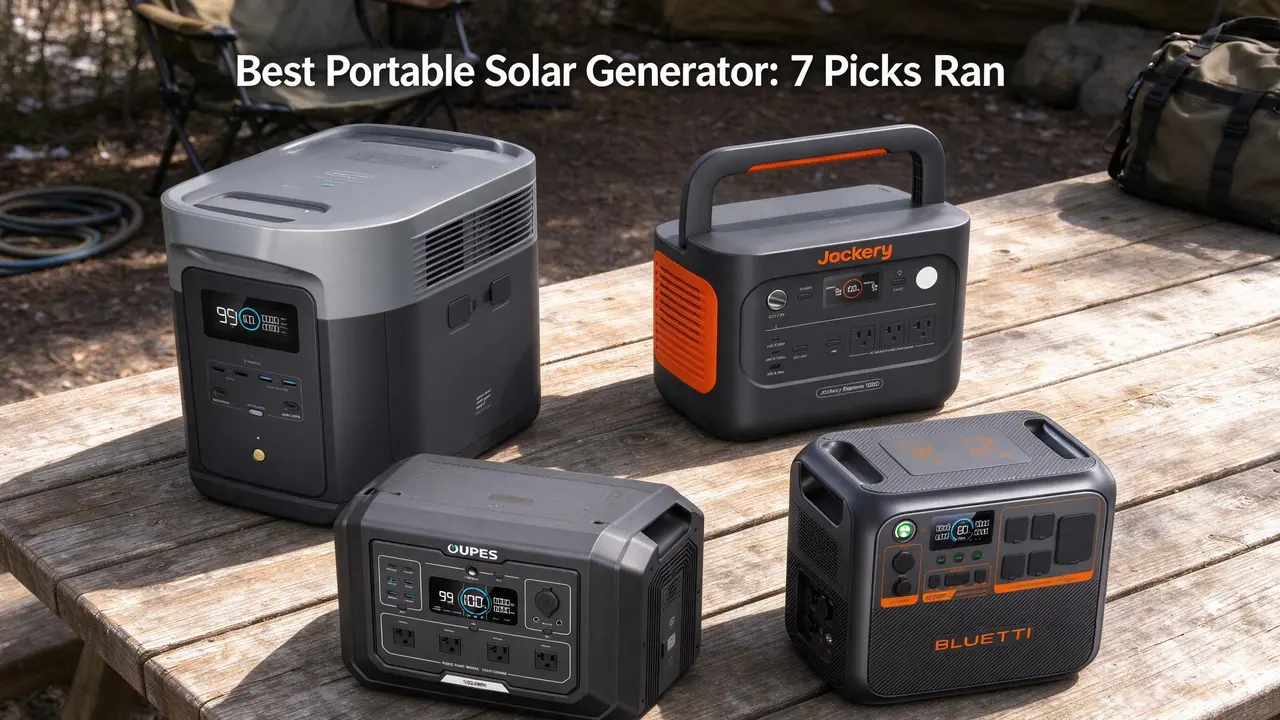
Updated
What a solar generator actually has to do for you
The buying question isn't 'which is biggest.' It's which of these seven will recharge from panels fast enough to matter, carry to where you need it, and run the loads you actually own. Panels are the part most shoppers under-budget: on the listings on file, none of these seven ships with a solar panel in the box, and the Jackery listing says so outright.
So this page ranks on three things: solar input headroom (how many watts of panel the unit will accept), capacity-to-weight balance (Wh per pound, because a 2,048 Wh box you can't lift is a shelf), and continuous AC output. It is not a whole-home backup guide — none of these replaces a transfer switch and a generator. It's also not a panel review; panel wattage and angle matter, but that's a separate decision.
Disclosure: as an Amazon Associate, WattPicks earns from qualifying purchases. Picks here are fit-led — the cheapest-per-Wh unit is not ranked first, and I'll show you why.
How this list was built
I started from the seven solar-chargeable stations in the WattPicks catalogue that publish both a capacity and a continuous AC output, then scored them on four weights. Solar input headroom is 30% — it's the whole point of a solar generator, and a unit that caps at 400W of panel takes a very different day to refill than one that accepts 1,000W or more. Capacity-to-weight is 25%, because the best battery is the one you'll actually move. Continuous AC output is 25%, since a 1,500W inverter and a 2,400W inverter are different tools. Owner themes from the review packs on file are 20%, weighted toward high-helpful reviews and repeated complaints rather than one-offs.
Why those weights: solar headroom and output are the two numbers that decide whether the unit fits your trip or outage, and weight is the number that decides whether it leaves the garage. Price is a tiebreaker inside a class, not a scoring weight — otherwise the cheapest unit wins by default, which is how you end up with a 1,070 Wh box trying to run a miter saw.
Tracing #1 over #2: the DELTA 2 Max beats the Explorer 1000 v2 on solar headroom (up to 1,000W of panel input versus a 400W cap on the Jackery) and on continuous output (2,400W versus 1,500W), and it's expandable to 6 kWh. The Jackery wins hard on weight — 23.8 lb versus 50 lb — and that's why it's #2 and not #7. If your loads are a fridge, fans, and phones, the Jackery's weight advantage outweighs the DELTA's headroom.
Method line, stated once: these are home-user checks grounded in the owner themes on file plus the listing specs, not lab-bench measurements. Where a number isn't published, the table says n/a (not on file) rather than guessing.
How the picks map to those weights: the DELTA 2 Max leads on solar headroom (30%) and ties on output (25%), but gives back points on capacity-to-weight (25%) at 50 lb — which is exactly why the Explorer 1000 v2, weaker on solar and output, still lands at #2 on its 23.8 lb frame and lower price. The AC200PL wins the capacity-per-dollar argument but loses on owner themes (20%) because of idle draw and the wireless pad. The Mega 1 is the output-per-dollar outlier at 2,000 W in a 27.8 lb box. No single unit tops all four weights, so the ranking splits by job rather than crowning one universal winner.
Quick picks: the shortlist at a glance
If you want the short version before the table: the DELTA 2 Max is the best all-rounder for fridge backup plus fast solar top-ups, the Explorer 1000 v2 is the one most people should actually buy on weight and price, and the AC180 is the value pick if you can live with idle draw.
- #1 EcoFlow DELTA 2 Max — best overall: 2,048 Wh, 2,400 W, expandable to 6 kWh, and the furnace EPS trick works.
- #2 Jackery Explorer 1000 v2 — best for most people: 23.8 lb, 1,070 Wh, 1,500 W, and quiet enough to sleep beside.
- #3 BLUETTI AC200PL — best budget 2 kWh: $899 for 2,048 Wh and 2,400 W, but 62.4 lb and real idle draw.
- #4 OUPES Mega 1 — best output-per-dollar: 2,000 W continuous in a 27.8 lb box for $549.
- #5 EcoFlow DELTA 3 Max — best UPS-first pick: 10ms transfer, 44.8 lb, 2,048 Wh.
- #6 Anker C1000 — best fridge-runtime data: 36 hours on an 18 cu ft garage fridge in owner notes.
- #7 BLUETTI AC180 — cheapest per Wh on nameplate at $0.43/Wh, with caveats.
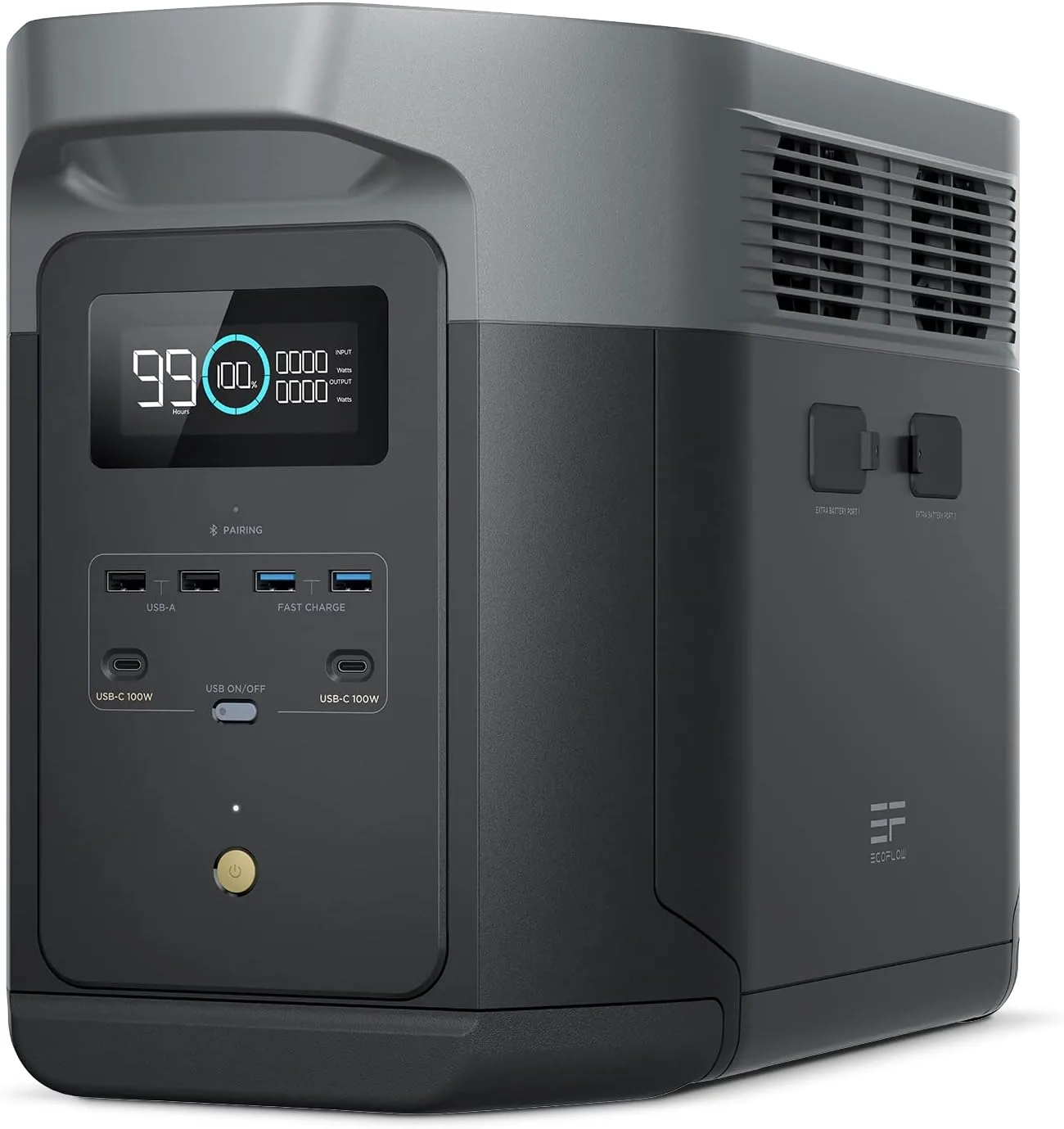
EcoFlow DELTA 2 Max
Highlights
- 2048Wh rated capacity
- 2400W continuous AC
- 4800W surge
- LiFePO4 chemistry
- Up to 1000W solar input
- 50 lb (~22.7 kg)
Best for
- DELTA 2 Max: longer outages or higher continuous loads (still not whole-home wiring)
- RV / off-grid days where recharge speed matters as much as Wh
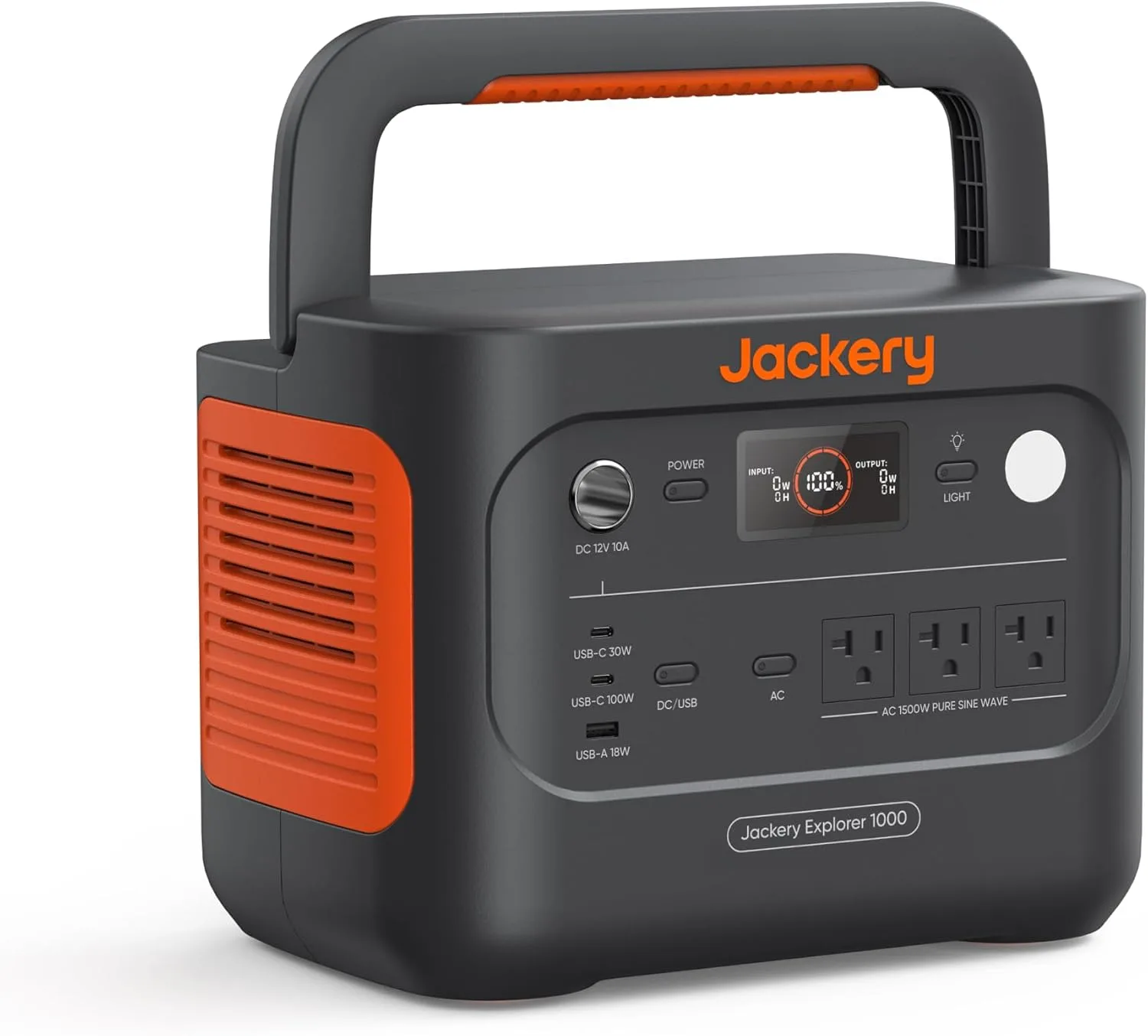
Jackery Explorer 1000 v2 Portable Power Station,1070Wh,1500W
Highlights
- 1070Wh rated capacity
- 1500W continuous AC
- LiFePO4 chemistry
- Up to 400W solar input
- 23.8 lb (~10.8 kg)
- About $559 list
Best for
- Explorer 1000 v2: weekend camping when 23.8 lb carry weight matters as much as 1070Wh
- Essentials bridge at home (fridge cycles, router) when sized to the Wh
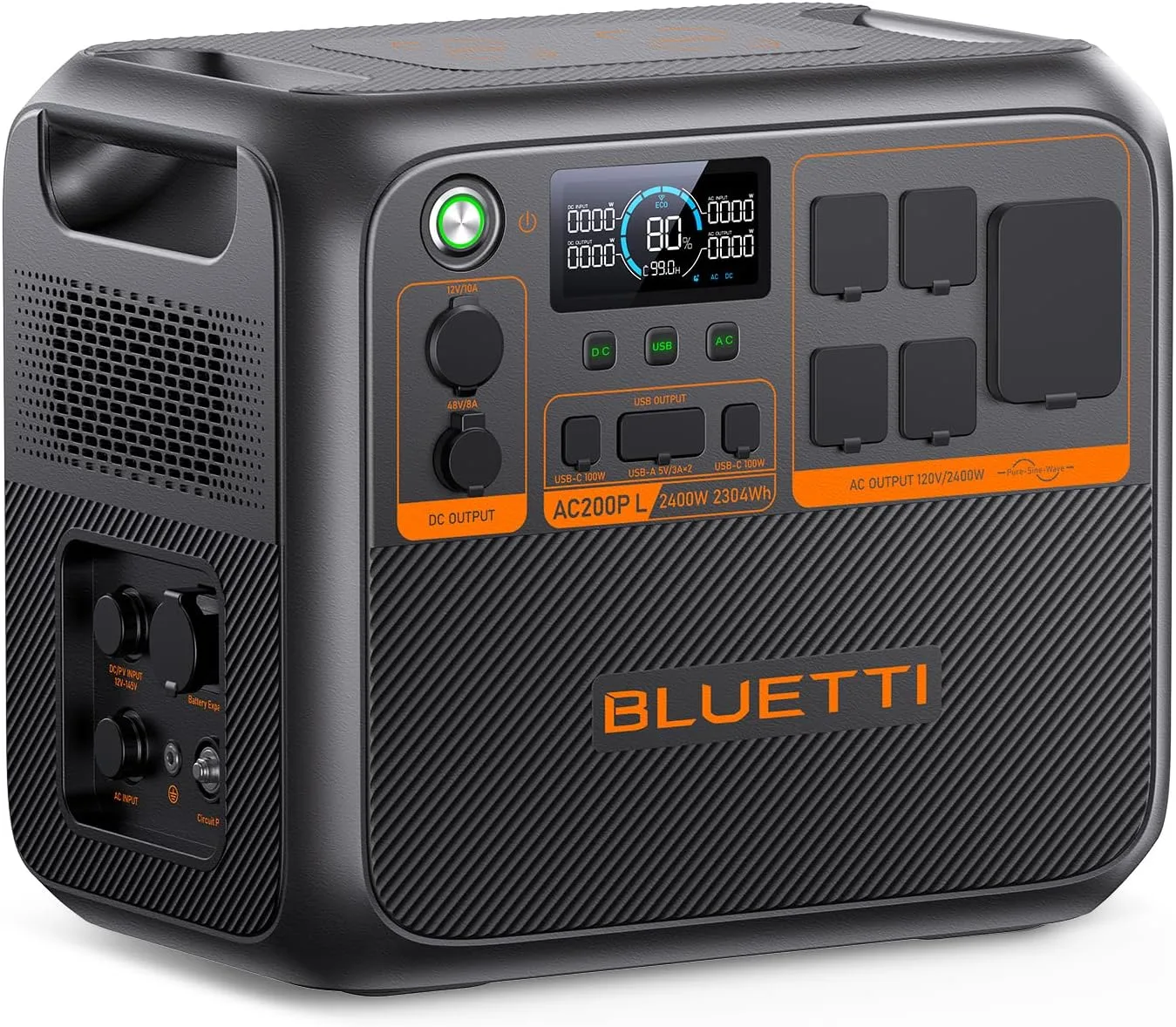
BLUETTI AC200PL
Highlights
- 2048Wh rated capacity
- 2400W continuous AC
- LiFePO4 chemistry
- Up to 1200W solar input
- 62.4 lb (~28.3 kg)
- About $899 list
Best for
- AC200L: longer outages or higher continuous loads (still not whole-home wiring)
- RV / off-grid days where recharge speed matters as much as Wh
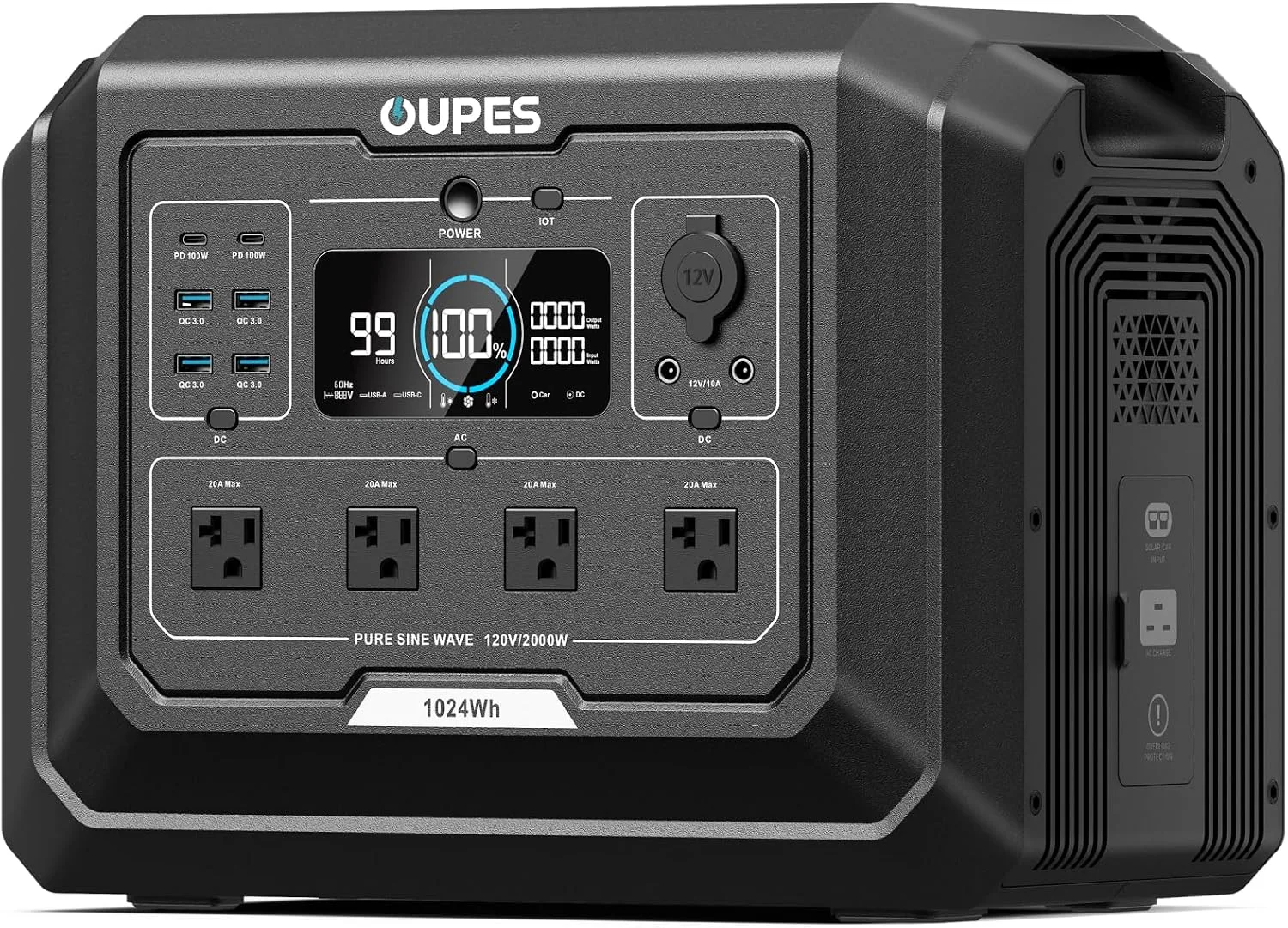
OUPES Mega 1 Portable Power Station 1024Wh 2000W
Highlights
- 1024Wh rated capacity
- 2000W continuous AC
- 4500W surge
- LiFePO4 chemistry
- Up to 800W solar input
- 27.8 lb (~12.6 kg)
Best for
- Mega 1: small appliances and tools that need ~2000W continuous, not just phone charging
- Essentials bridge at home (fridge cycles, router) when sized to the Wh
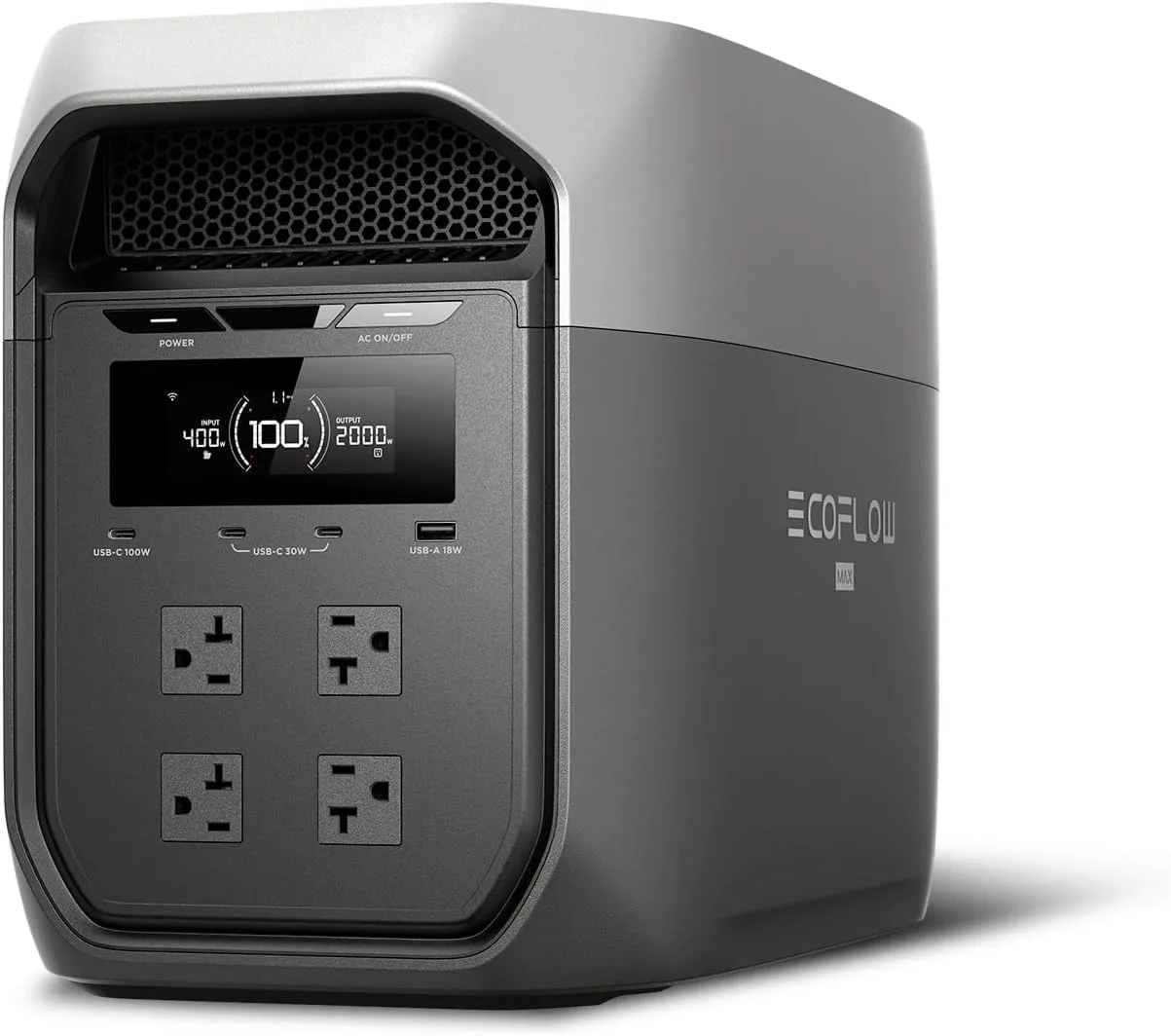
EcoFlow DELTA 3 Max Portable Power Station, 2048Wh LFP Battery
Highlights
- 2048Wh rated capacity
- 2400W continuous AC
- 4800W surge
- LiFePO4 chemistry
- Up to 500W solar input
- 44.8 lb (~20.3 kg)
Best for
- DELTA 3 Max: longer outages or higher continuous loads (still not whole-home wiring)
- RV / off-grid days where recharge speed matters as much as Wh
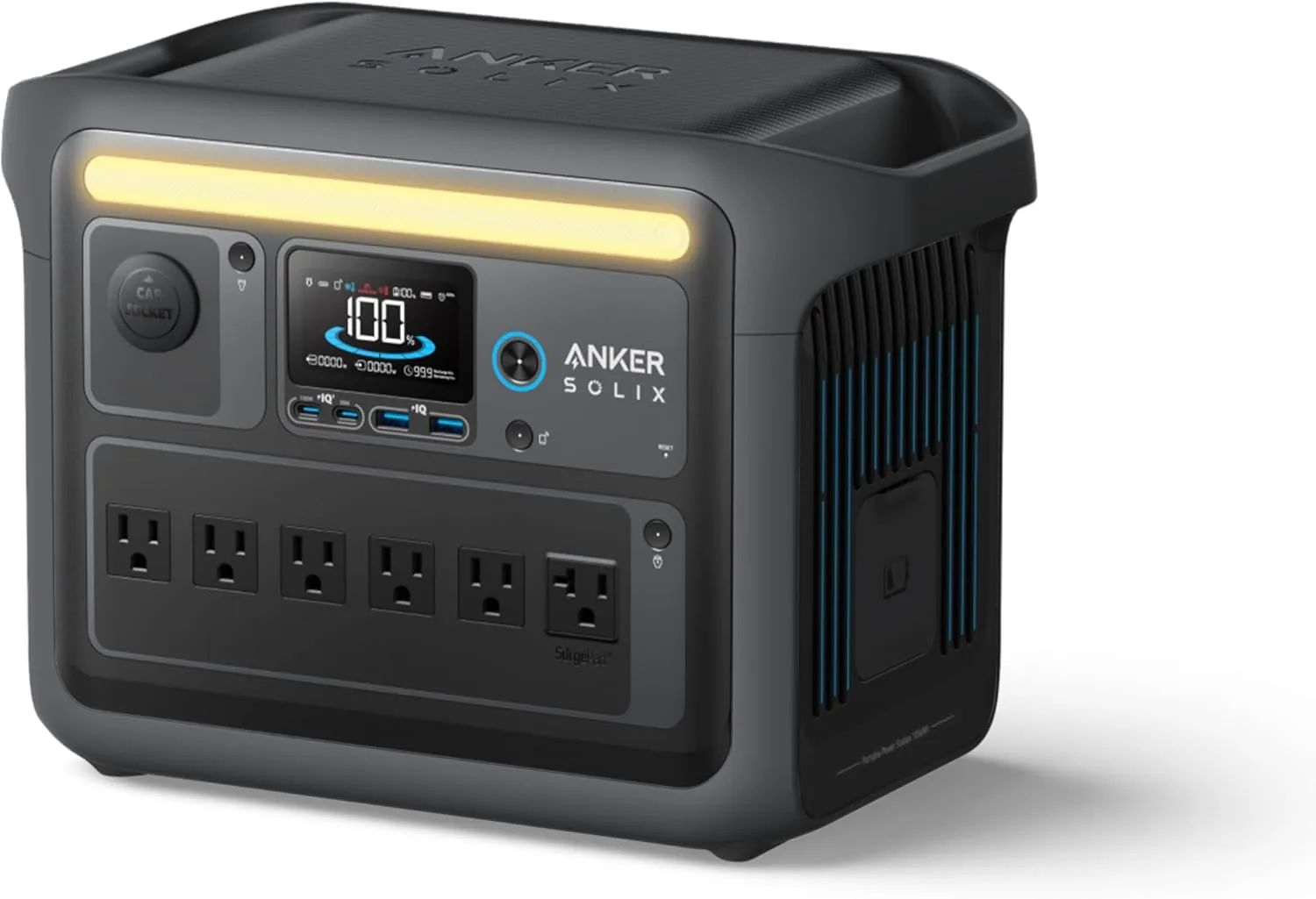
Anker C1000 Portable Power Station
Highlights
- 1056Wh rated capacity
- 1800W continuous AC
- LiFePO4 chemistry
- Up to 600W solar input
- 28.4 lb (~12.9 kg)
- About $599 list
Best for
- SOLIX C1000: small appliances and tools that need ~1800W continuous, not just phone charging
- Essentials bridge at home (fridge cycles, router) when sized to the Wh
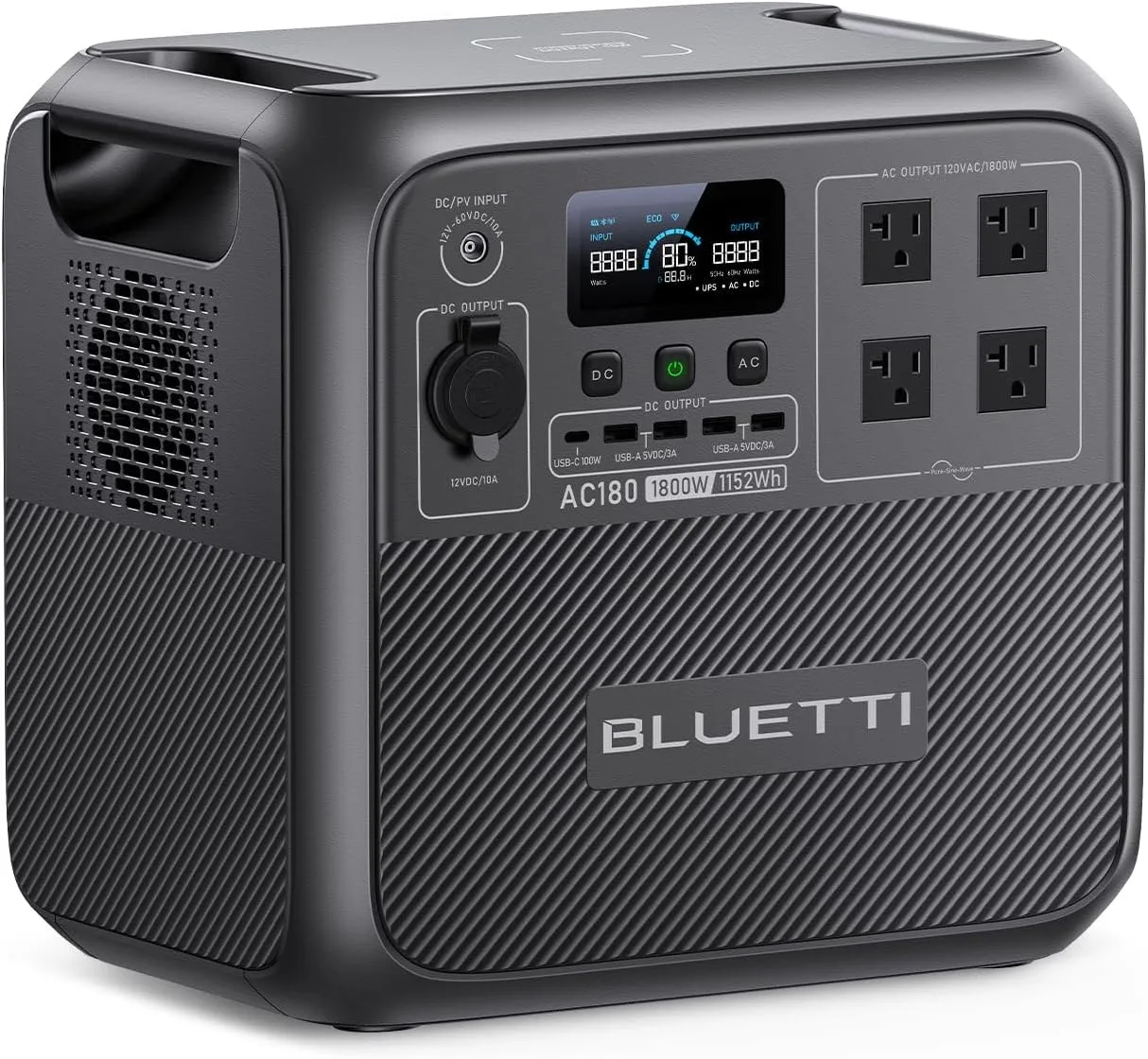
BLUETTI Portable Power Station AC180, 1152Wh LiFePO4 Battery Backup w/ 2 1800W
Highlights
- 1152Wh rated capacity
- 1800W continuous AC
- LiFePO4 chemistry
- Up to 500W solar input
- 35.3 lb (~16.0 kg)
- About $499 list
Best for
- AC180: most Wh per list dollar in mid-size LiFePO4 shortlists (~1152Wh)
- Home essentials when 1800W continuous matters more than a light carry
Spec snapshot: all seven, listing prices only
Prices below are list prices from the catalogue, not sale stickers. Ratings are the listing aggregate — useful for a smell test, not proof of anything. The Wh/lb column is capacity divided by weight, so you can audit the 25% capacity-to-weight weight yourself.
| Product | Price | Capacity (Wh) | Output (W) | Weight (lb) | Wh/lb | Rating |
|---|---|---|---|---|---|---|
| EcoFlow DELTA 2 Max | $1399 | 2048 Wh | 2400 W | 50 lb | 41.0 | 4.7 |
| Jackery Explorer 1000 v2 Portable Power Station,1070Wh,1500W | $559 | 1070 Wh | 1500 W | 23.8 lb | 45.0 | 4.7 |
| BLUETTI AC200PL | $899 | 2048 Wh | 2400 W | 62.4 lb | 32.8 | 4.5 |
| OUPES Mega 1 Portable Power Station 1024Wh 2000W | $549 | 1024 Wh | 2000 W | 27.8 lb | 36.8 | 4.5 |
| EcoFlow DELTA 3 Max Portable Power Station, 2048Wh LFP Battery | $1199 | 2048 Wh | 2400 W | 44.8 lb | 45.7 | 4.7 |
| Anker C1000 Portable Power Station | $599 | 1056 Wh | 1800 W | 28.4 lb | 37.2 | 4.7 |
| BLUETTI AC180 | $499 | 1152 Wh | 1800 W | 35.3 lb | 32.6 | 4.5 |
Why each one is here
Ranked in the order above. Each entry adds the one listing fact that anchors its rank and the one owner theme that decides whether it fits you — the headline specs live in the table, not here.
- #1 EcoFlow DELTA 2 Max — fact anchor: up to 1,000W of solar input and expansion to 6 kWh, the widest headroom here. Owner theme: it runs a stand-up freezer about a day and a mini-fridge about two, and one kept a gas furnace blower alive through a pulled plug via the EPS pass-through. Skip if 50 lb is a dealbreaker or you plan to lean on the smart dual-fuel generator — one owner fought error codes through a multi-day blackout.
- #2 Jackery Explorer 1000 v2 — fact anchor: 23.8 lb, the lightest unit here by a wide margin. Owner theme: a 12V car fridge ran three days down to about 43%, and quiet mode let them sleep in the same room. Skip if you need to start a big miter saw or a 1,700W air fryer — both are documented failures in the pack.
- #3 BLUETTI AC200PL — fact anchor: $899 for a 2,048 Wh / 2,400 W nameplate, the cheapest 2 kWh here. Owner theme: wired a basement circuit through it and lost nothing on switchover. Skip if you're chasing small-load runtime — owners measure 15–20W of inverter idle draw and about 90% usable capacity, and the wireless pad on top is unreliable.
- #4 OUPES Mega 1 — fact anchor: 2,000 W continuous in a 27.8 lb box for $549, with four well-spaced front AC outlets. Owner theme: started a full-size fridge and microwave without tripping, and one charged 0–100% in roughly 35–45 minutes on AC. Skip if you need honest small-load capacity — a 75W LED bank ran about 7–8 hours, roughly half the math — or if you lose things, because the charge cable is proprietary.
- #5 EcoFlow DELTA 3 Max — fact anchor: 10ms transfer time, the fastest switchover here. Owner theme: one ran an Iceco VL45Pro fridge at 36°F for a little over five days. Skip if you need a long owner track record — most high-helpful reviews are early-ownership impressions — or if 100W USB-C is your laptop's ceiling.
- #6 Anker C1000 — fact anchor: 1,056 Wh in a 28.4 lb frame, the best Wh/lb among the sub-1,100 Wh units. Owner theme: an 18 cu ft garage fridge ran about 36 hours and a larger kitchen side-by-side about 12 hours, freezer temps holding. Skip if you want a long AC cord in the box (about 4–5 ft) or if you won't update firmware — app connectivity needed a fix.
- #7 BLUETTI AC180 — fact anchor: the lowest nameplate $/Wh here at $0.43/Wh. Owner theme: used as a UPS for a basement circuit, it switches without a reboot. Skip if small loads dominate — the same 15–20W idle draw and ~90% usable capacity bite harder on a 1,152 Wh box — and don't buy it for the wireless pad.
Panels, cables, and the accessories that aren't in the box
This is the section that changes the budget. On the listings on file, none of these seven includes a solar panel, and the Jackery listing states it plainly. Budget a panel separately, and match panel wattage to the unit's input cap — a 400W-capped unit like the Explorer 1000 v2 won't use a 600W array, and the DELTA 2 Max will take up to 1,000W across dual inputs.
Cables are the quieter gotcha. The DELTA 2 Max pack notes an owner buying XT60i solar cables separately because they weren't included. The Explorer 1000 v2 pack notes no car charger in the box. The Mega 1's charge cable is proprietary, which is a real problem if it goes missing on a trip. The Anker C1000's AC cable is short at about 4–5 ft.
If you're sizing panels and batteries together, the related WattPicks guides on portable power station sizing and LiFePO4 cycle life are worth reading before you commit — the chemistry choice affects how many years of panel-and-station cycles you get, not just the sticker.
Where this shortlist falls apart
Three honest failure modes. First, small loads: several of these units draw 15–20W just being on, and only about 90% of rated capacity is usable on the BLUETTI units per owner notes. If your plan is a CPAP and a fan overnight, a smaller station with a bigger battery bank beats a 2 kWh box. Second, high-surge tools: the Explorer 1000 v2 won't start a large sliding miter saw, and the Mega 1's advertised 4,500W surge tripped between 2,050–2,200W for one owner. Third, support: the DELTA 2 Max pack includes a multi-day blackout story where technical callback never came.
None of these seven is a whole-home solution. If you need to run a furnace, well pump, and fridge through a multi-day outage, you're in transfer-switch and standby-generator territory, and the related WattPicks guide on transfer switch vs smart panel wiring is the right next read.
Who should not buy the top pick
The DELTA 2 Max is #1 here, and it's still the wrong buy for two groups. If you need to carry the unit up and down stairs or load it solo into a truck bed regularly, 50 lb is a two-hand lift and the Explorer 1000 v2 at 23.8 lb is the better tool even with less headroom. And if your backup plan depends on pairing with a smart dual-fuel generator, test that workflow before storm season — one owner's blackout story is a chain of error codes and manual restarts, and that's a plan-level risk, not a spec-sheet one.
A third group: if you're buying primarily for small overnight loads like a CPAP and a fan, the idle draw on the bigger BLUETTI boxes and the weight on the DELTA make a smaller, lighter station the smarter spend.
If none of these fit
Two directions. If your loads are small and your priority is weight, look at units under 1,024 Wh — the Explorer 1000 v2 is already close at 1,070 Wh, and a lighter unit with a separate battery bank handles CPAP-and-fan duty better than a 2 kWh box. If your loads are large and your priority is whole-home coverage, skip portable stations entirely and price a transfer switch plus a standby generator; the WattPicks guide on home backup sizing walks through the load math.
And if solar recharge speed is the deciding factor, compare panel input caps first: 400W (Explorer 1000 v2) versus 1,000W-plus (DELTA 2 Max) is the difference between a two-day refill and a one-day one on the same array.
What owners keep telling us
Theme summaries from the review packs on file, weighted toward high-helpful reviews. Listing star averages are aggregate only — these are the patterns, not proof. Where a runtime figure comes from a single owner report, treat it as a data point, not a guarantee.
- DELTA 2 Max: fast AC charging and app monitoring come up repeatedly; the recurring complaint is slow technical support during actual outages, plus smart-generator pairing friction.
- Explorer 1000 v2: quiet mode and 12V fridge runtime are the praised themes; the repeated caveat is tool limits and the 400W solar cap.
- AC200PL: UPS switchover works as advertised; idle draw and the unreliable wireless pad are the recurring gripes.
- Mega 1: 2,000W continuous starting real appliances is the headline praise; fan noise and usable-capacity shortfall on small loads are the repeated caveats.
- DELTA 3 Max: 10ms transfer and storm guard get mentioned often; the pack is thin on long-term durability because most reviews are early-ownership.
- Anker C1000: fridge runtime numbers are the standout owner data; short AC cable and app firmware quirks are the recurring notes.
- AC180: UPS switchover and fast AC charging are praised; idle draw and the wireless pad are the repeated caveats.
Frequently asked
Do any of these seven include a solar panel?
Not per the listings on file — the Jackery listing explicitly says the panel is not included, and the others list the station and cables only. Budget a panel separately and match its wattage to the unit's input cap.
Can the DELTA 2 Max run a gas furnace through an outage?
Owners report using it as an EPS pass-through for a gas furnace blower, with the blower continuing through a pulled plug. That's a blower load, not a whole-home furnace circuit — check your blower's wattage against 2,400W continuous.
Why is the AC180 ranked last if it's the cheapest per Wh?
Because nameplate $/Wh ignores idle draw and usable capacity. Owners measure 15–20W of inverter overhead and about 90% usable capacity, which hits a 1,152 Wh box harder than a 2,048 Wh one on small loads. It's the value pick, not the best all-rounder.
Will the Explorer 1000 v2 run a full-size refrigerator?
Owners ran a fridge plus a portable AC together without hiccups, and a 12V car fridge for three days down to about 43%. A 1,700W air fryer and a large miter saw are documented failures — check your appliance's startup draw against 1,500W continuous.
Method and sources
Model names and list prices come from the WattPicks catalog at build time. WattPicks does not run its own laboratory tests on power stations, and nothing on this page is presented as a measured result — it is catalog-backed buying guidance.
Read our methodology for how the catalog is normalized, and about WattPicks for who publishes it.