
Best Portable Power Stations: Compare Before You Buy
A seven-station shortlist ranked on usable capacity per dollar, continuous output, weight, and owner themes — not brand fame. Start with the load you actually need to run, then pick the station that clears it.
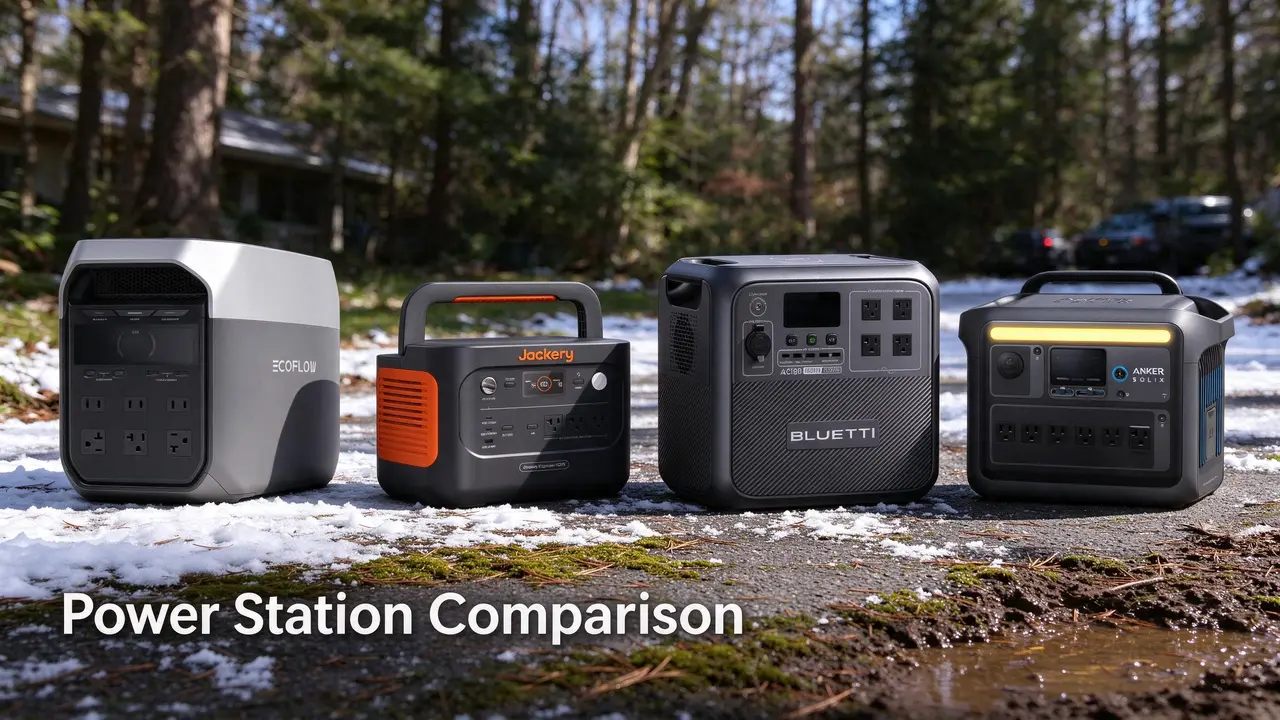
Updated
What load are you actually backing up?
Start with the number that matters: the continuous watts your load pulls, not the surge sticker on the box. A fridge cycling on and off sits in a narrow band — roughly 100–200 W running, with brief defrost spikes — while a CPAP with the humidifier off draws closer to 30–60 W. Those two loads live in different capacity classes, and buying for the bigger one when you only need the smaller one is the most common way people overspend here.
This page is a comparison framework, not a whole-home backup plan. If you are wiring a transfer switch or a smart panel, that is a different job with different numbers — a portable station is a plug-in bridge for essentials, not a service-panel replacement. Every station below is ranked on published listing specs plus owner themes on file; those checks are home-user reads of the listings and owner reports, not lab-bench measurements.
One disclosure up front: picks here are fit-led, and links may earn an Amazon Associates commission. Price shown everywhere is the list price, not a rotating deal sticker.
- Essentials band (phones, router, CPAP, lights, fan): 288–1,070 Wh
- Fridge-and-fans band (one fridge plus small loads overnight): 1,024–1,152 Wh
- Multi-appliance band (fridge, freezer, RV AC startup): 2,048 Wh and 2,400 W continuous
How this list was built
I started from the portable stations in the WattPicks catalogue with published AC output — seven units, spanning 288 Wh to 2,048 Wh. Solar-panel-only kits were excluded because they cannot run a load on their own. Then I scored each one on five weights, and every weight below is actually applied in the ranking that follows.
Capacity per dollar (30%) carries the most weight because it is the number buyers feel first, and it is computed on nameplate $/Wh from the list price. Continuous output (25%) comes next — a station that cannot clear your load's running watts is not a candidate no matter how many watt-hours it holds. Weight (15%) matters because a 40 lb box that never leaves the garage is a worse outage tool than a 24 lb one you can actually move. Owner themes (20%) come from the review packs on file, weighted toward high-helpful reports. Recharge speed and app control (10%) close it out.
Why #1 beats #2: the DELTA 3 and Explorer 1000 v2 are close on capacity and both are LFP, but the DELTA 3 carries 1,800 W continuous against 1,500 W and adds two more AC outlets (six versus three), which matters when you are plugging in a fridge, a fan, and a router at once. The Explorer 1000 v2 wins on weight and on nameplate $/Wh ($0.52 versus $0.68), so if you are carrying it and your loads stay under 1,500 W, it takes the top spot for your use. On the stated weights, the DELTA 3's output and outlet count edge it.
Why the AC180 is not #1 despite the lowest $/Wh: it is the heaviest of the 288–2,048Wh at 35.3 lb, and owner reports of inverter idle draw plus roughly 90% usable capacity mean the headline 1,152 Wh does not translate to the most delivered watt-hours on small loads. It is still the value pick — just not the balanced one.
Scoreboard on those weights — every SKU gets a High/Med/Low on each weight so you can see the math, not just the order. EcoFlow DELTA 3 ($699): High on capacity per dollar and continuous watts, Med on weight, High on owner themes, High on recharge. Jackery Explorer 1000 v2 ($559): High on continuous watts and weight, High on capacity per dollar, Med on owner themes, Med on recharge. BLUETTI AC180 ($499): High on capacity per dollar, High on continuous watts, Low on weight, Med on owner themes, Med on recharge. Anker C1000 ($599): Med on capacity per dollar, High on continuous watts, Med on weight, High on owner themes, Med on recharge. Anker C2000 Gen 2 ($1,499): Low on capacity per dollar, High on continuous watts, Low on weight, High on owner themes, High on recharge. EcoFlow DELTA 3 Max ($1,199): Low on capacity per dollar, High on continuous watts, Low on weight, High on owner themes, High on recharge. Jackery Explorer 300 ($289): High on capacity per dollar for its class, Low on continuous watts, High on weight, Med on owner themes, Low on recharge. That is why the pick splits by job rather than one universal winner.
- Capacity per dollar (nameplate $/Wh): 30%
- Continuous output (W): 25%
- Owner themes on file: 20%
- Weight (lb): 15%
- Recharge speed and app control: 10%
| Product | Capacity per dollar (30%) | Continuous output (25%) | Owner themes (20%) | Weight (15%) | Recharge & app (10%) |
|---|---|---|---|---|---|
| EcoFlow DELTA 3 | High | High | High | Med | High |
| Jackery Explorer 1000 v2 | High | High | Med | High | Med |
| BLUETTI AC180 | High | High | Med | Low | Med |
| Anker C1000 | Med | High | High | Med | Med |
| Anker C2000 Gen 2 | Low | High | High | Low | High |
| EcoFlow DELTA 3 Max | Low | High | High | Low | High |
| Jackery Explorer 300 | High | Low | Med | High | Low |
The shortlist at a glance
Seven stations, ranked on the weights above. The order is not a brand ranking — the cheapest per nameplate watt-hour sits at #3 because weight and idle draw cost it points, and the two 2,048 Wh units sit at #5 and #6 because you pay a premium per Wh for that headroom. Between those two, the C2000 Gen 2 ranks higher because it is $300 cheaper at list for the same 2,048 Wh / 2,400 W class, even though the DELTA 3 Max adds a 10 ms UPS transfer that the C2000 does not advertise.
Budget tiers at a glance: under $300 gets you the 288 Wh Explorer 300; $499–$699 covers the 1,024–1,152 Wh class (AC180, Explorer 1000 v2, C1000, DELTA 3); $1,199–$1,499 is the 2,048 Wh / 2,400 W tier (DELTA 3 Max, C2000 Gen 2).
- #1 EcoFlow DELTA 3 — the balanced 1,024 Wh pick: 1,800 W continuous, 27.6 lb, fast recharge, $699.
- #2 Jackery Explorer 1000 v2 — lightest of the 288–2,048Wh at 23.8 lb with 1,070 Wh and 1,500 W, $559.
- #3 BLUETTI AC180 — cheapest per nameplate Wh at $0.43/Wh, 1,152 Wh and 1,800 W, but 35.3 lb and real idle draw, $499.
- #4 Anker C1000 — 1,056 Wh, 1,800 W, 28.4 lb, strongest documented fridge-backup runtime in the owner pack, $599.
- #5 Anker C2000 Gen 2 — 2,048 Wh and 2,400 W for RV AC startup and multi-day outages, 41.7 lb, $1,499.
- #6 EcoFlow DELTA 3 Max — 2,048 Wh and 2,400 W with 10 ms UPS transfer, 44.8 lb, $1,199. Same capacity class as the C2000 Gen 2 but $300 cheaper; it ranks lower only because the C2000's owner pack documents RV AC startup and faster recharge, while the DELTA 3 Max's edge is UPS duty.
- #7 Jackery Explorer 300 — 288 Wh and 300 W, 8.2 lb, the CPAP-and-phones specialist at $289.
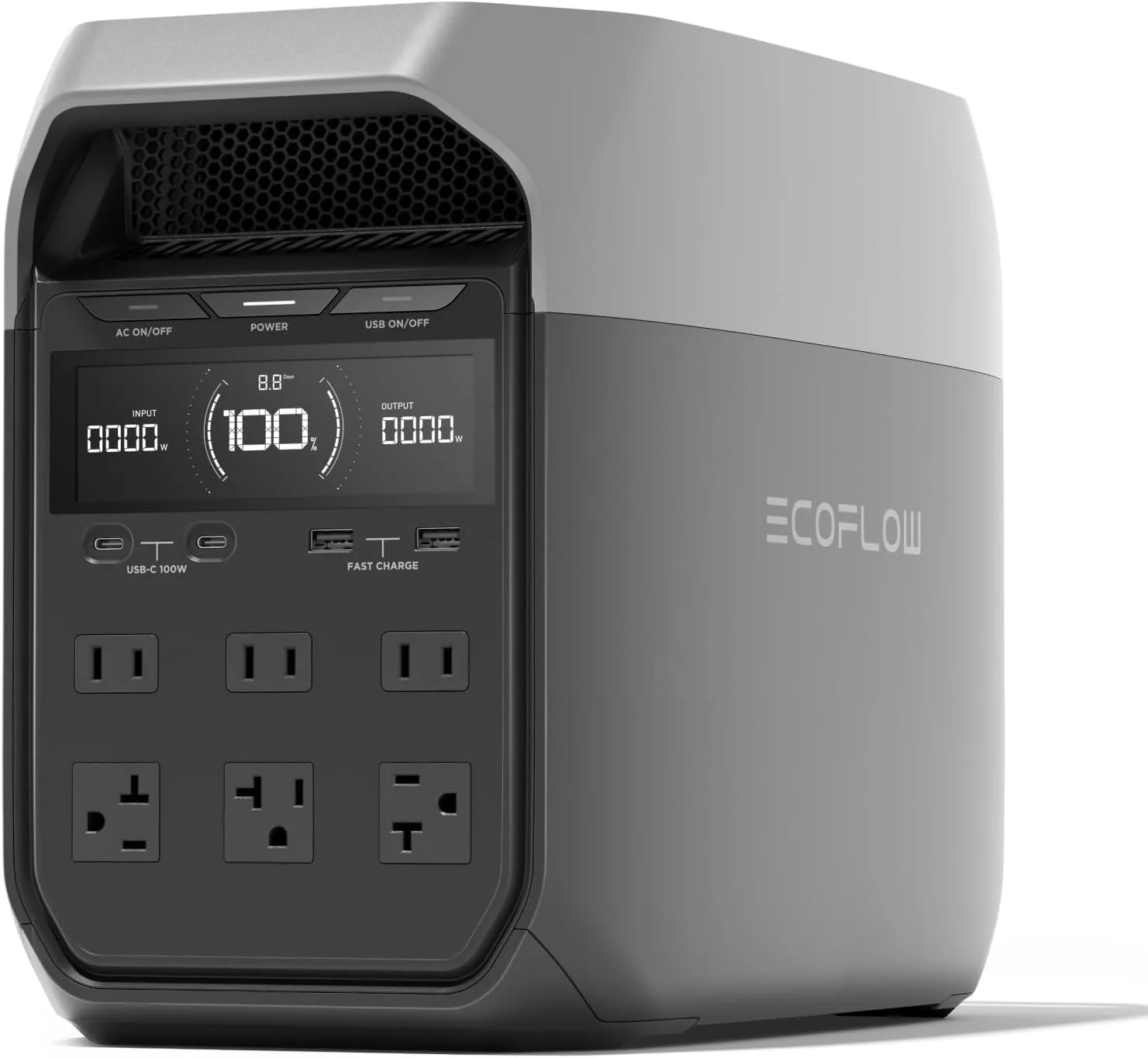
EcoFlow DELTA 3
Highlights
- 1024Wh rated capacity
- 1800W continuous AC
- 3600W surge
- LiFePO4 chemistry
- Up to 500W solar input
- 27.6 lb (~12.5 kg)
Best for
- DELTA 3: small appliances and tools that need ~1800W continuous, not just phone charging
- Essentials bridge at home (fridge cycles, router) when sized to the Wh
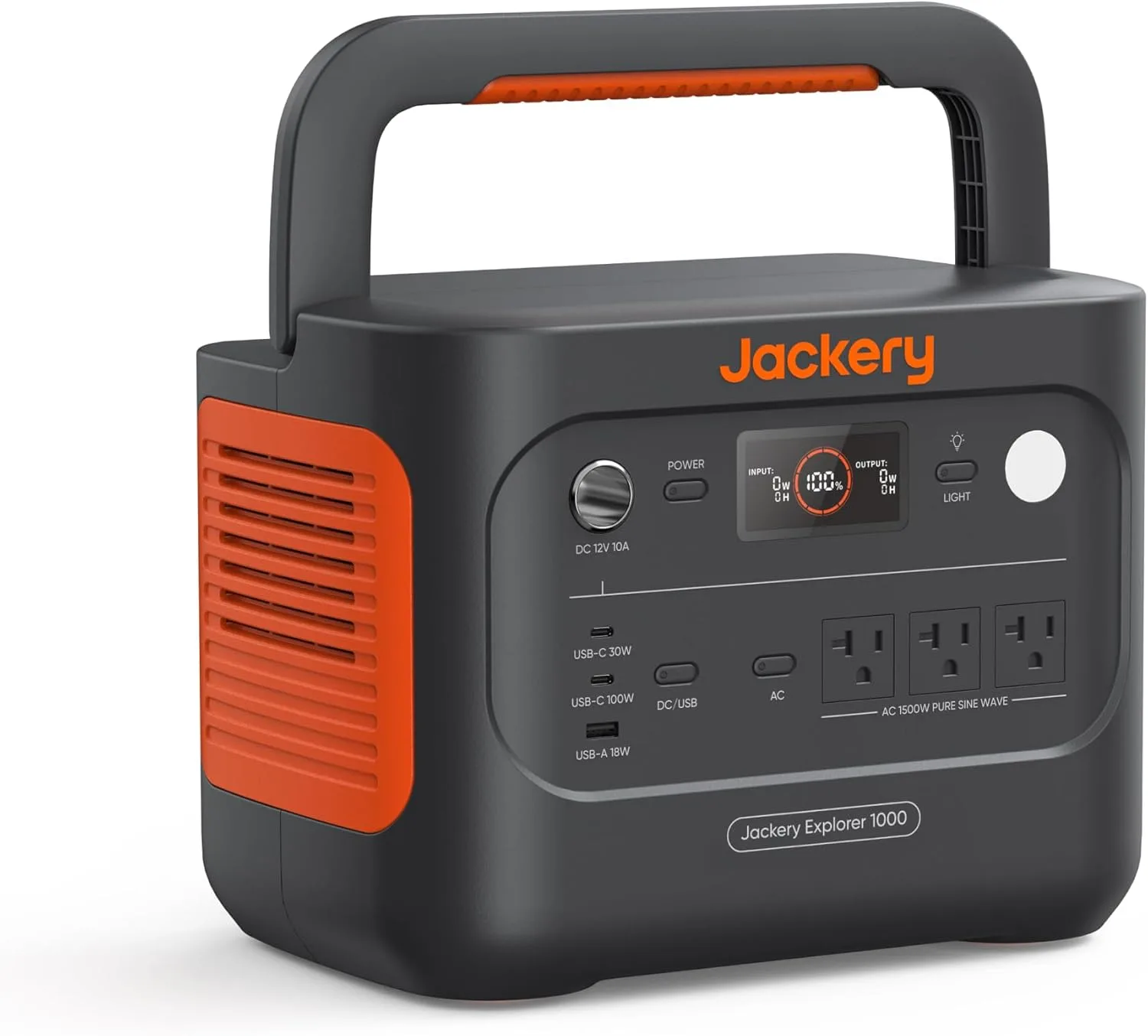
Jackery Explorer 1000 v2 Portable Power Station,1070Wh,1500W
Highlights
- 1070Wh rated capacity
- 1500W continuous AC
- LiFePO4 chemistry
- Up to 400W solar input
- 23.8 lb (~10.8 kg)
- About $559 list
Best for
- Explorer 1000 v2: weekend camping when 23.8 lb carry weight matters as much as 1070Wh
- Essentials bridge at home (fridge cycles, router) when sized to the Wh
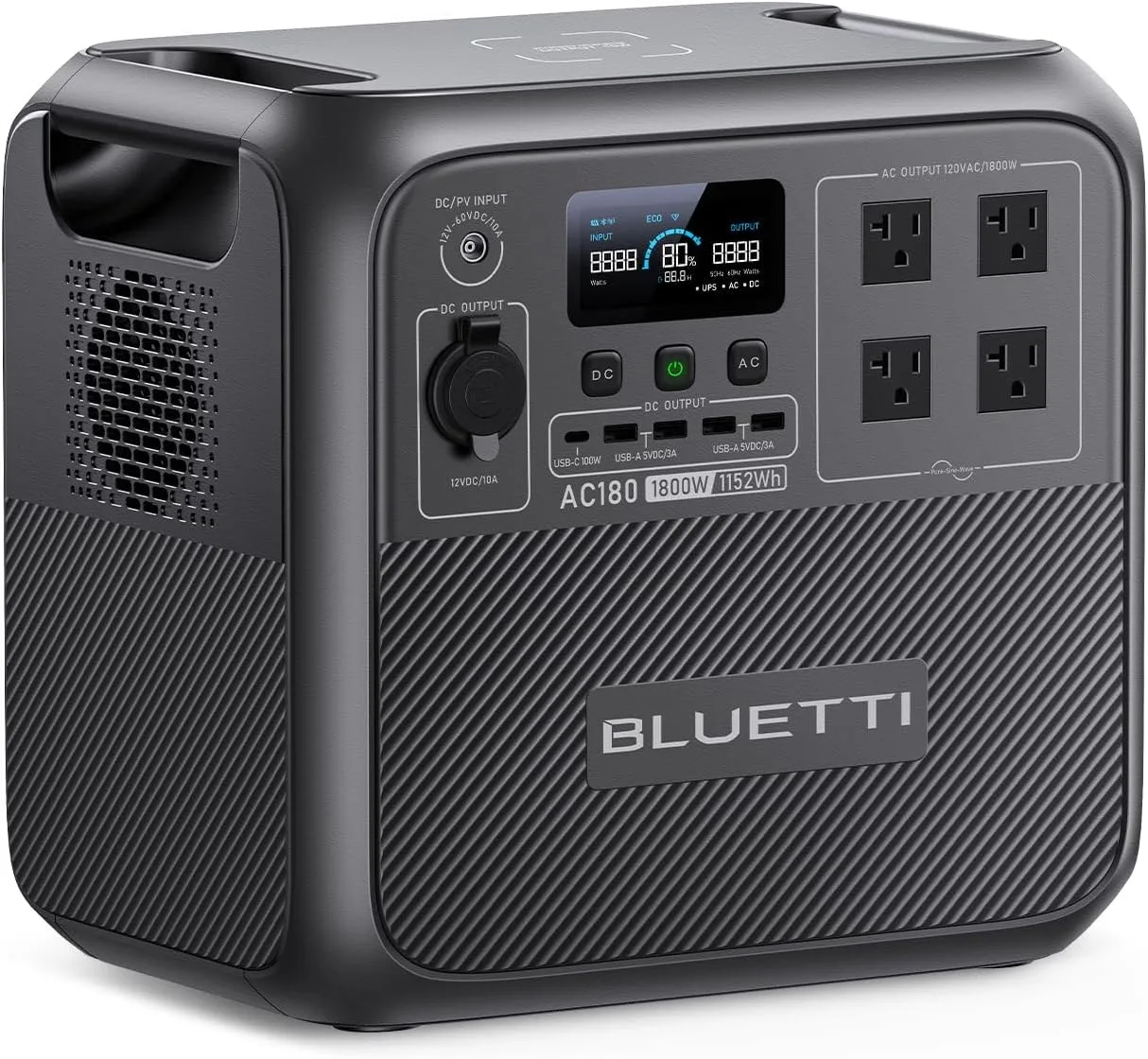
BLUETTI Portable Power Station AC180, 1152Wh LiFePO4 Battery Backup w/ 2 1800W
Highlights
- 1152Wh rated capacity
- 1800W continuous AC
- LiFePO4 chemistry
- Up to 500W solar input
- 35.3 lb (~16.0 kg)
- About $499 list
Best for
- AC180: most Wh per list dollar in mid-size LiFePO4 shortlists (~1152Wh)
- Home essentials when 1800W continuous matters more than a light carry
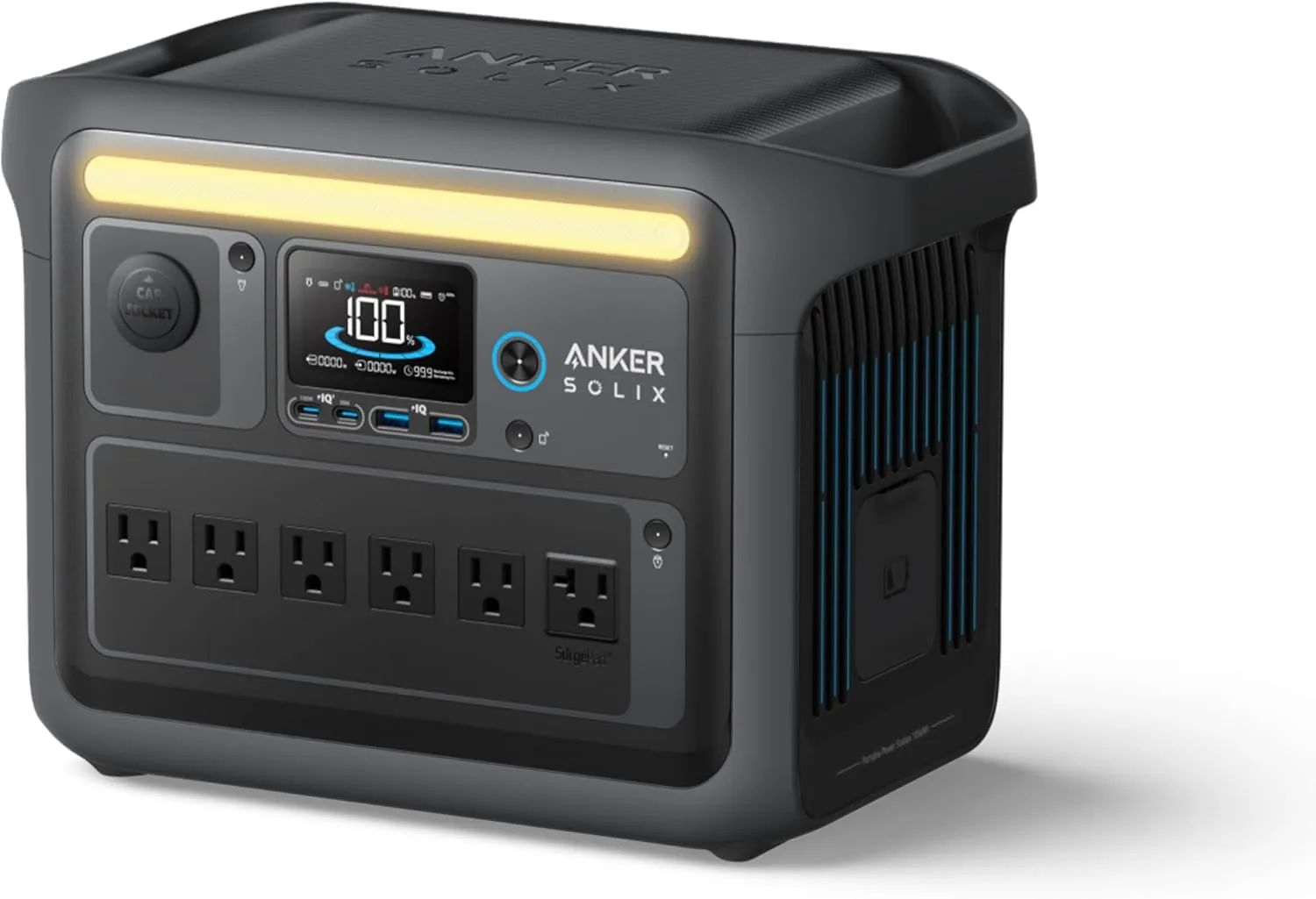
Anker C1000 Portable Power Station
Highlights
- 1056Wh rated capacity
- 1800W continuous AC
- LiFePO4 chemistry
- Up to 600W solar input
- 28.4 lb (~12.9 kg)
- About $599 list
Best for
- SOLIX C1000: small appliances and tools that need ~1800W continuous, not just phone charging
- Essentials bridge at home (fridge cycles, router) when sized to the Wh
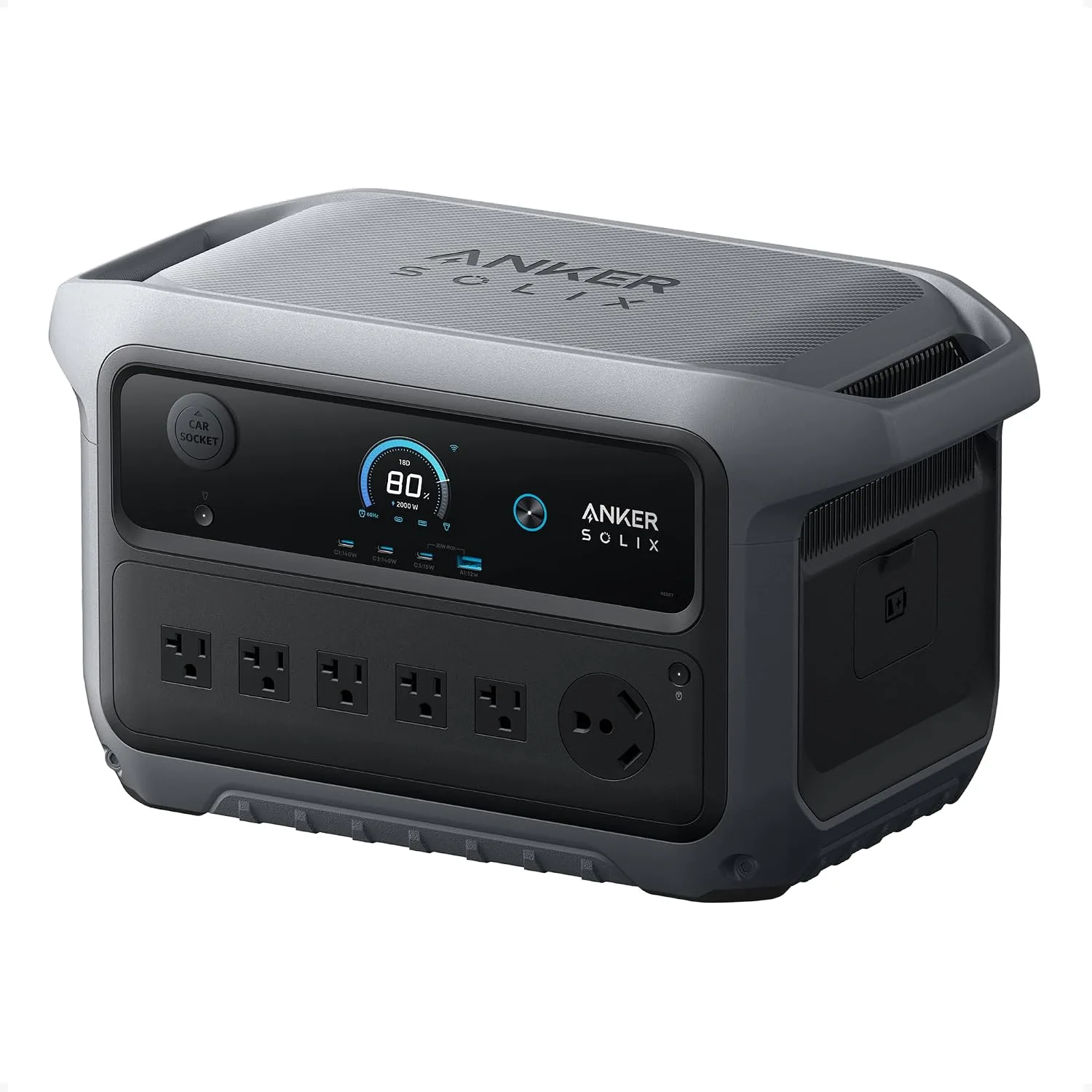
Anker C2000 Gen 2 Portable Power Station, 2,048Wh
Highlights
- 2048Wh rated capacity
- 2400W continuous AC
- 4000W surge
- LiFePO4 chemistry
- Up to 800W solar input
- 41.7 lb (~18.9 kg)
Best for
- C2000 Gen 2: longer outages or higher continuous loads (still not whole-home wiring)
- RV / off-grid days where recharge speed matters as much as Wh
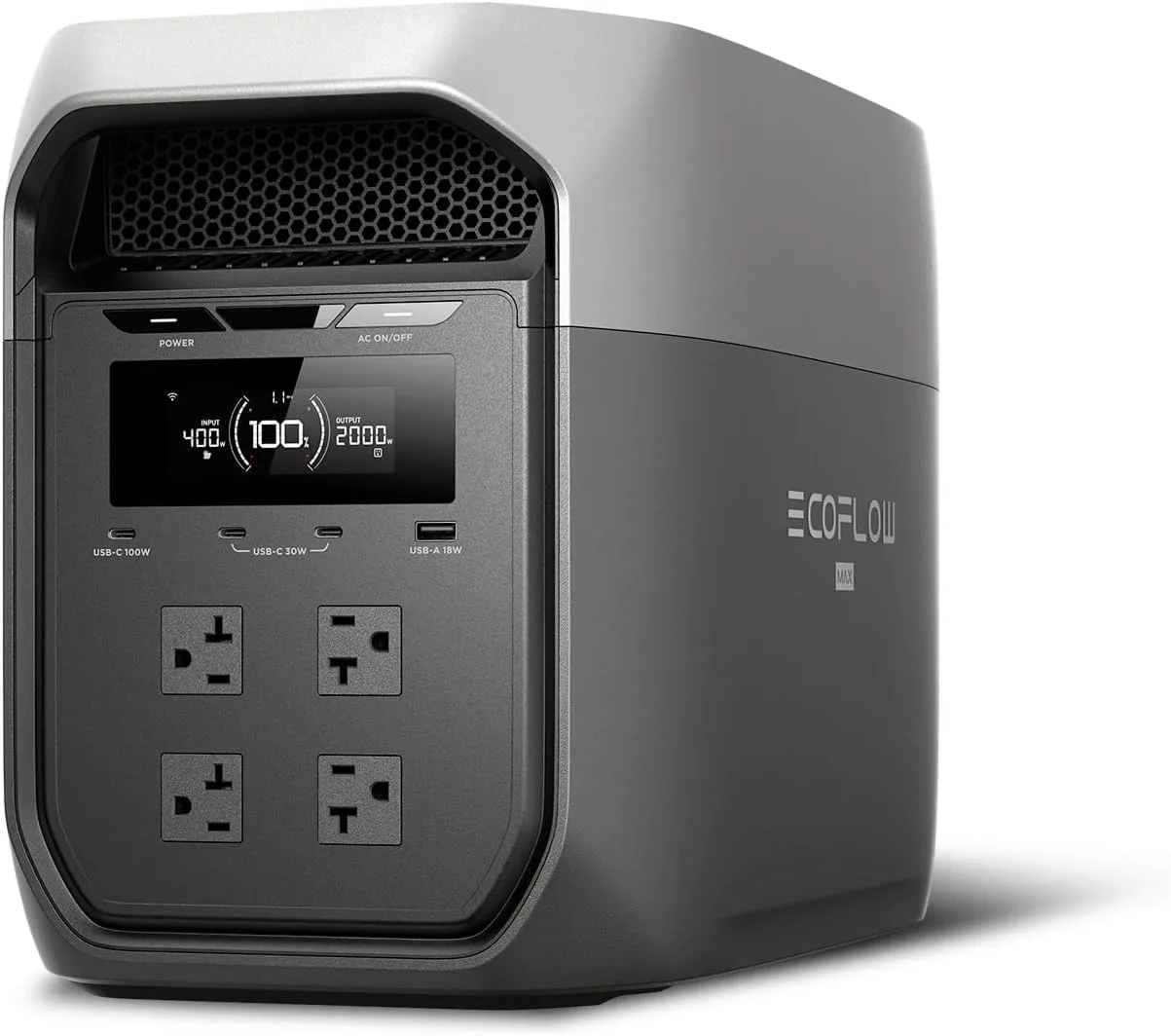
EcoFlow DELTA 3 Max Portable Power Station, 2048Wh LFP Battery
Highlights
- 2048Wh rated capacity
- 2400W continuous AC
- 4800W surge
- LiFePO4 chemistry
- Up to 500W solar input
- 44.8 lb (~20.3 kg)
Best for
- DELTA 3 Max: longer outages or higher continuous loads (still not whole-home wiring)
- RV / off-grid days where recharge speed matters as much as Wh
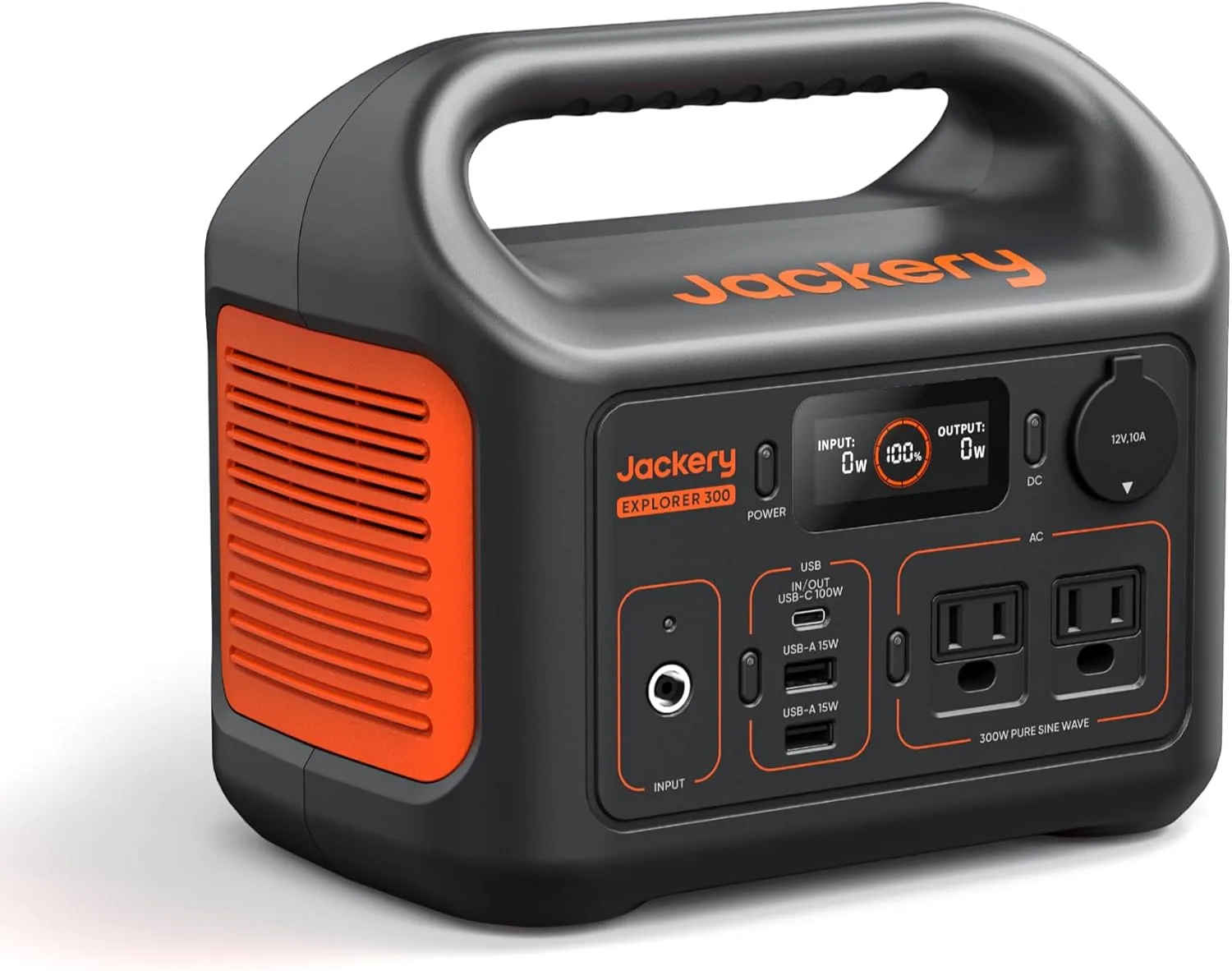
Jackery Explorer 300 Portable Power Station,292Wh
Highlights
- 288Wh rated capacity
- 300W continuous AC
- 600W surge
- LiFePO4 chemistry
- 8.2 lb (~3.7 kg)
- About $289 list
Best for
- Explorer 300 v2: phones, cameras and a laptop on short trips
- Travel kits when you need quiet pack power, not appliance runtime
Spec snapshot: all seven, list price only
Facts below come from the listings. Where a spec is not published, it reads n/a (not on file) rather than a guess. Rating is the listing aggregate, not an owner-verified score. Specs reflect the Gen 2 / v2 listings as of publication; check the current SKU page before you buy.
| Product | Price | Capacity (Wh) | Output (W) | Weight (lb) | Rating |
|---|---|---|---|---|---|
| EcoFlow DELTA 3 | $699 | 1024 Wh | 1800 W | 27.6 lb | 4.7 |
| Jackery Explorer 1000 v2 Portable Power Station,1070Wh,1500W | $559 | 1070 Wh | 1500 W | 23.8 lb | 4.7 |
| BLUETTI AC180 | $499 | 1152 Wh | 1800 W | 35.3 lb | 4.5 |
| Anker C1000 Portable Power Station | $599 | 1056 Wh | 1800 W | 28.4 lb | 4.7 |
| Anker C2000 Gen 2 Portable Power Station, 2,048Wh | $1499 | 2048 Wh | 2400 W | 41.7 lb | 4.7 |
| EcoFlow DELTA 3 Max Portable Power Station, 2048Wh LFP Battery | $1199 | 2048 Wh | 2400 W | 44.8 lb | 4.7 |
| Jackery Explorer 300 Portable Power Station,292Wh | $289 | 288 Wh | 300 W | 8.2 lb | 4.6 |
Why each one is here
Each entry below gets a suits line and a skip line tied to that model's own numbers — no shared template.
- #1 EcoFlow DELTA 3 — Suits: van and outage essentials where you want 1,800 W and six AC outlets in a 27.6 lb box. Skip if: you need to run big appliances for days; owners treat it as essentials backup, not whole-home.
- #2 Jackery Explorer 1000 v2 — Suits: fridge-plus-fans overnight where 23.8 lb matters and 1,500 W clears your load. Skip if: you run a 1,700 W air fryer or a large sliding miter saw — owners report both stall it. Owner theme: quiet mode let a family sleep while a fridge and fans ran; no 12V barrel ports, so 12V gear needs an adapter off the cigarette socket.
- #3 BLUETTI AC180 — Suits: UPS-style essentials backup on a budget, with 20 ms switchover reported by owners. Skip if: your loads are tiny and long — inverter idle draw plus roughly 90% usable capacity eats into small-load runtime. Owner theme: the wireless charging pad on top was unreliable across multiple reports.
- #4 Anker C1000 — Suits: short-term fridge backup; owners documented 36 hours on an 18 cu ft garage fridge and 12 hours on a larger kitchen side-by-side. Skip if: you carry it up stairs regularly — owners say it feels much heavier than 28.4 lb. Owner theme: the included AC cable is short (about 4–5 ft) and the top light is dim.
- #5 Anker C2000 Gen 2 — Suits: RV AC startup and multi-day outages; owners started an RV air conditioner without a soft-start kit. Skip if: you want flexible pass-through while plugged in — on a 15A household outlet it will not push more than 15A out. Owner theme: full recharge in just over an hour, but 41.7 lb makes it a move-and-park unit.
- #6 EcoFlow DELTA 3 Max — Suits: UPS duty for a PC, modem, and router; owners report 10 ms transfer kept internet up. Skip if: you want the fastest USB charging — output tops out at 100 W. Owner theme: ran an iceco VL45Pro fridge at 36°F for a little over five days on one charge.
- #7 Jackery Explorer 300 — Suits: CPAP camping and phone/lamp outage backup at 8.2 lb. Skip if: you need to run a fridge or AC — 300 W continuous will not do it. Owner theme: with a DC cord and humidifier off, owners got four nights (35 hours) on one charge; on AC the low-draw auto-off cut a CPAP after 5.5 hours.
Who should not buy the top pick
The DELTA 3 is the balanced choice, not the universal one. Two groups should walk past it.
If your outage plan centers on a fridge plus a freezer plus an RV air conditioner, 1,024 Wh and 1,800 W will not carry that for a day — you are in the 2,048 Wh / 2,400 W class, and the C2000 Gen 2 or DELTA 3 Max is the honest answer. And if you are buying primarily to carry, the 23.8 lb Explorer 1000 v2 is the better tool; the DELTA 3's extra output is dead weight if your loads never exceed 1,500 W.
- Skip the DELTA 3 if your load list includes a window AC or RV AC startup — step up to 2,400 W continuous.
- Skip it if portability is the whole point and your loads stay under 1,500 W — the Explorer 1000 v2 saves 3.8 lb and $140 at list.
If none of these fit
Two directions out of this list. First, if your real need is a single medical device — a CPAP, a concentrator — the Explorer 300's 288 Wh is the right size and the rest of this page is overkill; budget for the DC cord, which is sold separately and is the difference between one night and a weekend. Second, if you are planning for multi-day whole-home outages, no portable station on this page replaces a transfer switch and a standby source; treat these as the bridge that keeps the router and fridge alive until the bigger system comes on.
For the sizing math behind those bands, the WattPicks guide on how to size a power station for an outage walks through the same load bands used here, and the LFP versus NMC explainer covers why every station on this list is LiFePO4 and what that means for cycle life.
Warranty, support, and cycle-life anxiety
Two worries come up in every owner pack: will it still hold a charge in a year or two, and who fixes it if it does not. On cycle life, every station here is LiFePO4, which is the chemistry you want for long calendar life — but the owner packs on file are thin on multi-year degradation data, so treat any longevity claim as unproven until you see a warranty term you are comfortable with. On support, the one concrete data point in the packs is a Jackery Explorer 300 owner who reported a charge failure at nine months and had it replaced under warranty; that is a single report, not a pattern, but it is the kind of outcome to check for on the SKU page before you buy.
Practical move: confirm the current warranty length and return window on the live listing for the exact SKU you are buying, since those terms change by model and by seller. None of the runtimes or transfer times on this page are lab-verified — they are owner reports and listing claims — so build in margin rather than planning to the last watt-hour.
- Can the Explorer 300 run a CPAP all night? Yes with a DC cord and the humidifier off — owners report about 20% per night. On AC it draws more and the low-draw auto-off can cut it after roughly 5.5 hours.
- Is the AC180's 1,152 Wh all usable? No — owners report about 90% usable by design, and inverter idle draw further reduces small-load runtime. Plan on less than the nameplate for tiny loads.
- Can the C2000 Gen 2 start an RV air conditioner? Owners report yes, without a soft-start kit, for about an hour of runtime. It will not run it for hours on end.
- Do I need a transfer switch for any of these? No — all seven are plug-in stations. A transfer switch or smart panel is a separate, wired job for a different class of backup.
Owner themes worth knowing before you check out
The pattern across the packs: fast AC recharge is now table stakes in this class, and the complaints cluster around weight, idle draw, and low-draw auto-off rather than capacity. The Explorer 300 has by far the largest rating count and the longest track record, but also the thinnest recent signal on battery longevity — one owner reported a charge failure at nine months, which Jackery replaced.
Reviews on the 2,048 Wh units skew toward home outage and RV use rather than camping, which fits the page: these are backup tools first. If your use is weekend camping, the 288–2,048Wh is the better fit and the extra capacity is money you will not recover.
Frequently asked
Can the Explorer 300 run a CPAP all night?
Yes with a DC cord and the humidifier off — owners report about 20% per night. On AC it draws more and the low-draw auto-off can cut it after roughly 5.5 hours.
Is the AC180's 1,152 Wh all usable?
No — owners report about 90% usable by design, and inverter idle draw further reduces small-load runtime. Plan on less than the nameplate for tiny loads.
Can the C2000 Gen 2 start an RV air conditioner?
Owners report yes, without a soft-start kit, for about an hour of runtime. It will not run it for hours on end.
Do I need a transfer switch for any of these?
No — all seven are plug-in stations. A transfer switch or smart panel is a separate, wired job for a different class of backup.
How does the DELTA 3 Max's UPS transfer work?
Owners report a 10 ms transfer that kept a PC, modem, and router online during an outage. The C2000 Gen 2 does not advertise a UPS transfer time, so if seamless switchover is your priority, that is the DELTA 3 Max's edge.
Does the Explorer 1000 v2 need an adapter for 12V gear?
Yes — it has no 12V barrel ports, so 12V devices run off an adapter on the cigarette socket. Budget for that adapter if you plan to power 12V gear.
Method and sources
Model names and list prices come from the WattPicks catalog at build time. WattPicks does not run its own laboratory tests on power stations, and nothing on this page is presented as a measured result — it is catalog-backed buying guidance.
Read our methodology for how the catalog is normalized, and about WattPicks for who publishes it.