
Best Power Station for CPAP Backup During Outages
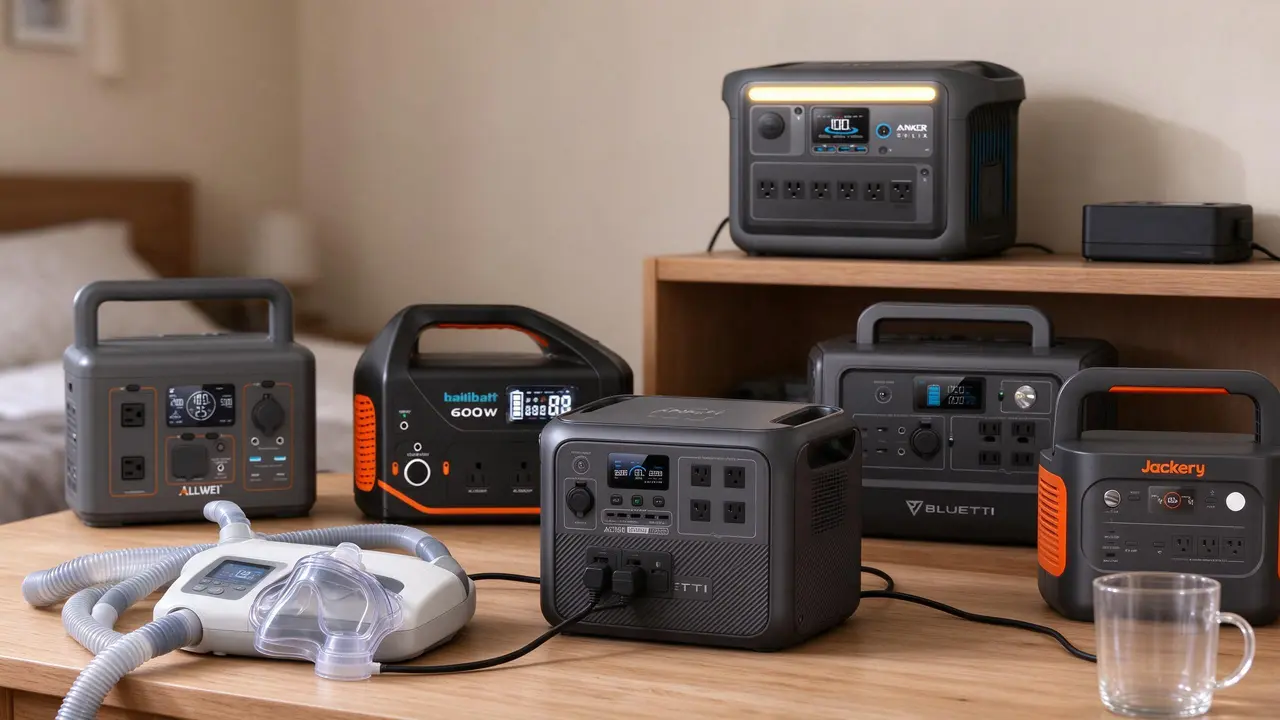
A CPAP is a small, steady load — until you turn on the humidifier and heated tube. Here are six stations that can carry a night or two, ranked by usable capacity, quiet operation, and pass-through charging.
Updated
What a CPAP actually asks of a power station
As an Amazon Associate I earn from qualifying purchases. Recommendations here are based on fit and the evidence below — not commission size.
A CPAP without humidifier is a modest load — most machines draw somewhere in the 30–60 W range at typical pressures, and many run lower. Add the heated humidifier and heated tube and you can easily triple or quadruple that draw, which is where overnight runtime collapses. So the first decision is not which station; it is whether you plan to run the humidifier.
This page is for home outage backup and bedroom use, not for backpacking or whole-home wiring. If you need to run a fridge, a furnace blower, or a sump pump, that is a different job — see our home backup sizing guide. Here the bar is: quiet enough to sleep next to, pass-through charging so it stays topped off on the nightstand, and enough usable watt-hours to carry a night or two without the humidifier.
Two hard requirements up front. First, continuous AC output must exceed your CPAP's startup and running draw with margin — every unit here clears that easily. Second, you need pass-through or UPS-style charging so the station is full when the grid drops, not sitting at 40% because you unplugged it last week.
- CPAP without humidifier: roughly 30–60 W continuous — all six units handle this.
- CPAP with heated humidifier and tube: often 100–150 W continuous — runtime shrinks fast; size up or disable.
- Pass-through charging and a UPS-style switchover matter more than headline Wh for bedroom backup.
Quick picks
If you only read one thing: pick the BLUETTI AC180 for a fixed nightstand setup, the Jackery Explorer 1000 v2 if quiet operation and lighter weight matter more, or the ALLWEI PPS600-1 if you want the cheapest light first backup and can live without a disable-able sleep timer.
Budget tradeoff in one line: the $279 ALLWEI PPS600-1 covers a CPAP without humidifier for one night; stepping up to the $499 AC180 or $559 Jackery buys you roughly double the usable capacity and the option to run the humidifier for a full night.
Top pick for bedroom CPAP backup: BLUETTI AC180. The UPS switchover is instant, owners report it running a full-size fridge for 36 hours (bonus headroom, not a CPAP requirement), and the app lets you monitor and control outputs remotely. It is heavy at 35.3 lb, so it lives in one place — which is fine for a nightstand.
Runner-up for a lighter, quieter unit: Jackery Explorer 1000 v2 Portable Power Station,1070Wh,1500W. Quiet mode is genuinely sleep-friendly, AC recharge is about 1 hour 40 minutes in normal mode, and it held 100% after months in a hot garage. It lacks 12V barrel ports and won't run a 1700 W air fryer, but neither matters for CPAP.
Also consider for a small, cheap first backup: ALLWEI PPS600-1. At 13 lb and $279 it is the easiest to move, and owners report pass-through charging and a genuinely quiet fan. The catch is the sleep timer you cannot disable — fine for a continuous CPAP draw, bad for intermittent loads.
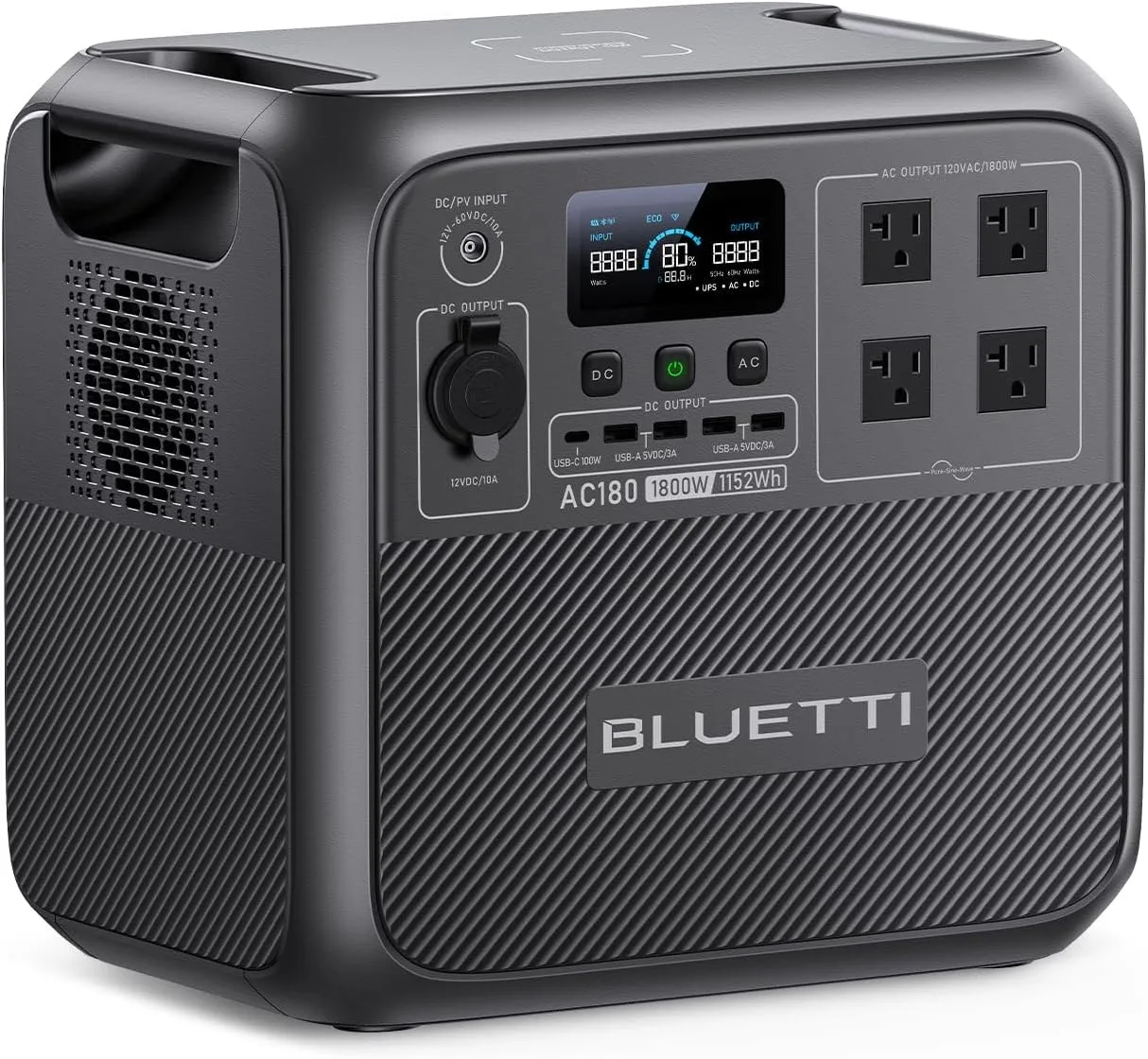
BLUETTI Portable Power Station AC180, 1152Wh LiFePO4 Battery Backup w/ 2 1800W
Highlights
- 1152Wh rated capacity
- 1800W continuous AC
- LiFePO4 chemistry
- Up to 500W solar input
- 35.3 lb (~16.0 kg)
- About $499 list
Best for
- AC180: most Wh per list dollar in mid-size LiFePO4 shortlists (~1152Wh)
- Home essentials when 1800W continuous matters more than a light carry
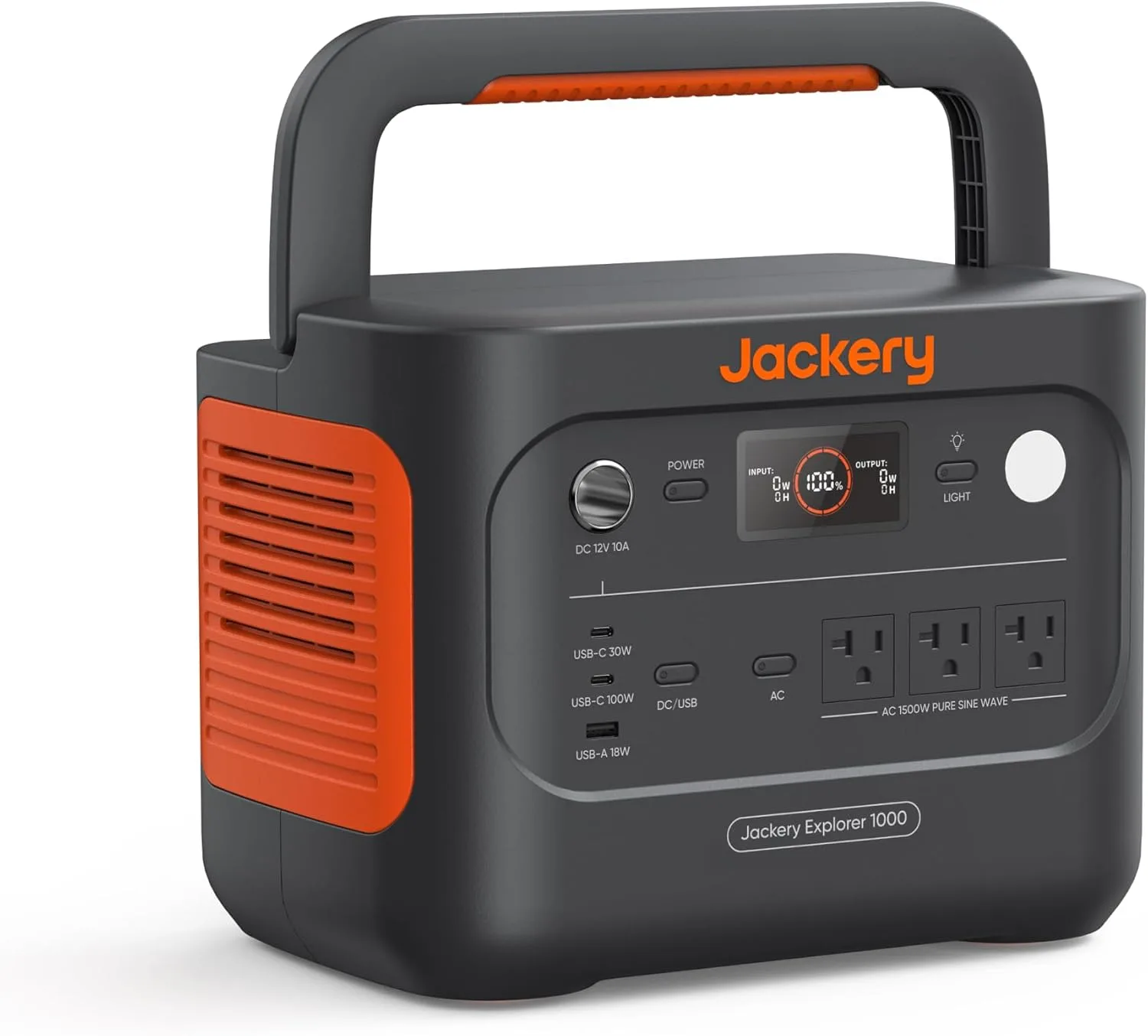
Jackery Explorer 1000 v2 Portable Power Station,1070Wh,1500W
Highlights
- 1070Wh rated capacity
- 1500W continuous AC
- LiFePO4 chemistry
- Up to 400W solar input
- 23.8 lb (~10.8 kg)
- About $559 list
Best for
- Explorer 1000 v2: weekend camping when 23.8 lb carry weight matters as much as 1070Wh
- Essentials bridge at home (fridge cycles, router) when sized to the Wh
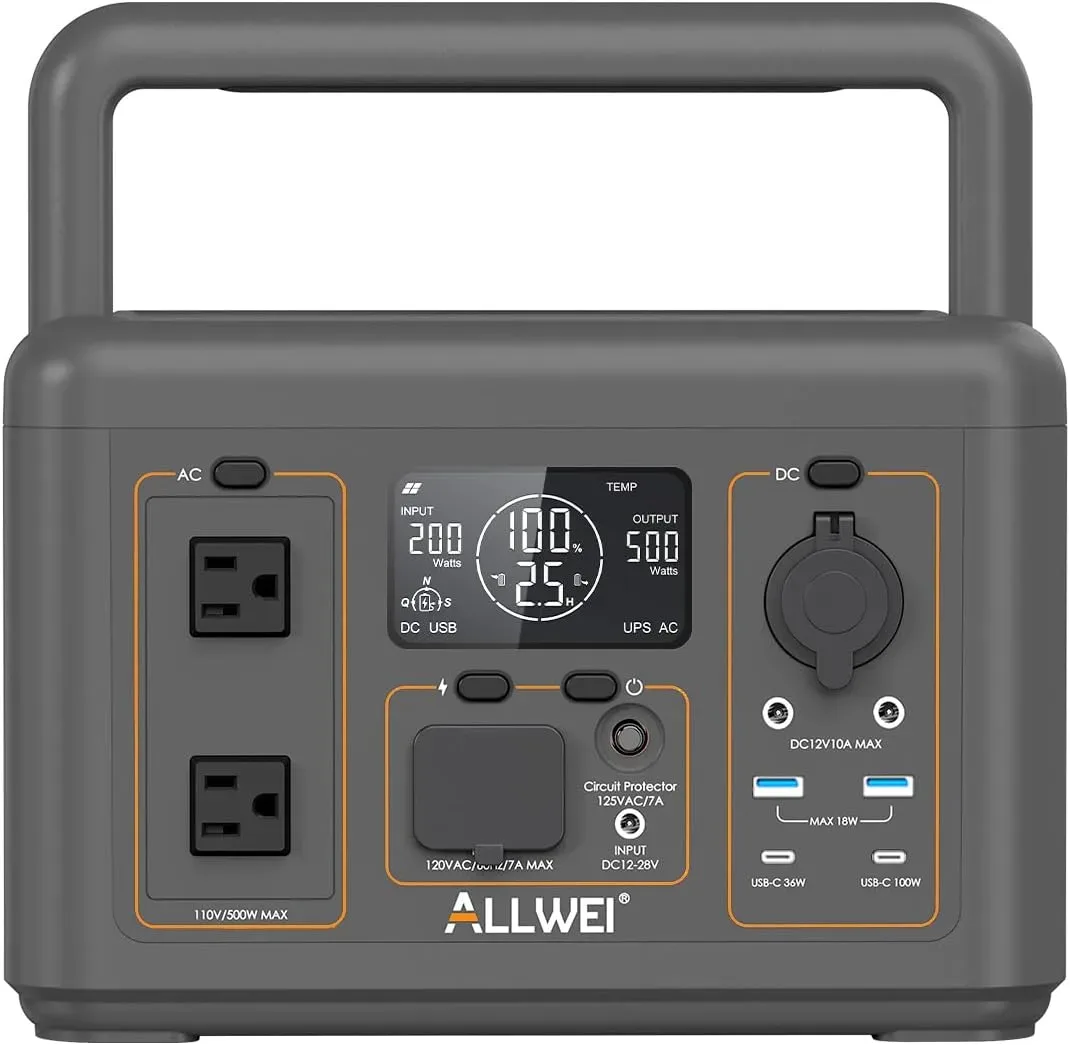
ALLWEI Portable Power Station 500W, 512Wh LiFePO4 Battery UPS Backup Power
Highlights
- 512Wh rated capacity
- 500W continuous AC
- LiFePO4 chemistry
- 13 lb (~5.9 kg)
- About $279 list
Best for
- Portable: weekend camping when 13 lb carry weight matters as much as 512Wh
- Essentials bridge at home (fridge cycles, router) when sized to the Wh
How we weighted this job
I weighted usable capacity for a CPAP load at 35%, quiet operation at 20%, pass-through/UPS behavior at 20%, portability and footprint at 15%, and owner-reported reliability themes at 10%. Usable capacity gets the biggest share because the humidifier decision changes runtime by hours, and a station that cannot carry two nights without it is not really backup. Quiet operation is weighted heavily because this sits next to a bed.
The method line, in one breath: these picks come from home-user checks grounded in owner themes on file plus listing specs, and those checks are not lab-bench measurements. Prices and specs are from the listings; where a number is missing I say so rather than guess.
Why the BLUETTI AC180 edges out the Jackery Explorer 1000 v2 at the top despite a slightly lower weighted score (4.25 vs. 4.35): the AC180's UPS switchover is the cleanest bedroom-backup behavior in this group, and owners report running a full-size fridge for 36 hours — far beyond any CPAP need, which means bonus headroom, not a CPAP requirement. The Jackery is quieter in its quiet mode and lighter, but its one-hour recharge depends on an app emergency mode that reverts after each use, and it lacks 12V barrel ports. For a CPAP on a nightstand, the AC180's instant switchover wins; for a lighter unit you might move between rooms, the Jackery is the better carry. Think of the weighted score as a starting point and the ranking as the tie-breaker for this specific job.
Weighted scores below use the 35/20/20/15/10 rubric. Scores are relative within this group (5 = best fit for CPAP backup, 1 = weakest) and reflect the evidence on file, not lab measurements. The EB70S is shown with a price gap because its list price is not on file; it stays ranked on merit but is not a value pick until you can confirm the price at checkout.
- Usable capacity for CPAP load: 35%
- Quiet operation: 20%
- Pass-through / UPS switchover: 20%
- Portability and footprint: 15%
- Owner-reported reliability themes: 10%
| Product | Usable capacity (35%) | Quiet operation (20%) | Pass-through / UPS (20%) | Portability (15%) | Owner reliability (10%) | Weighted score |
|---|---|---|---|---|---|---|
| BLUETTI AC180 | 5 | 4 | 5 | 2 | 4 | 4.25 |
| Jackery Explorer 1000 v2 | 4 | 5 | 4 | 4 | 5 | 4.35 |
| Anker C1000 | 4 | 4 | 4 | 3 | 4 | 3.85 |
| BLUETTI EB70S | 3 | 3 | 4 | 4 | 4 | 3.50 |
| ALLWEI PPS600-1 | 2 | 5 | 4 | 5 | 3 | 3.45 |
| bailibatt Portable Generator | 1 | 4 | 3 | 5 | 2 | 2.65 |
Scenario facts: what the numbers mean for a night
The table below is the spec snapshot for all six units. Treat the capacity column as nameplate, not usable — owners of the AC180 and others report roughly 90% usable capacity and idle draw with the inverter on, so plan for less than the sticker suggests. The rating column is the listing aggregate, not owner proof.
For CPAP math: a 40 W machine over 8 hours is about 320 Wh. A 120 W humidified setup over 8 hours is about 960 Wh. That single difference is why a 293 Wh unit can carry two nights without humidity but not one night with it, and why a 1,070 Wh unit is the safer floor if you refuse to give up the humidifier.
Worked example for a 60–90 W setup: take nameplate Wh × 0.9 (usable), then subtract idle draw × hours. A 1,000 Wh station gives about 900 Wh usable; a 20 W inverter idle over 8 hours eats 160 Wh, leaving about 740 Wh for the CPAP. At 75 W that is roughly 9.9 hours — one solid night, not two. At 60 W it is about 12.3 hours. This is why the humidifier decision and inverter-off habit matter more than the headline number.
DC vs. AC operation is the biggest runtime lever after the humidifier. Running a CPAP on 12V DC (with the correct DC cable for your machine) bypasses the inverter, so you avoid the inverter's idle draw and conversion losses — on the same Wh, that can roughly double runtime versus AC (owner-reported, not measured). Check that your CPAP model supports a 12V DC input and that the station has a 12V barrel or car port; the Jackery Explorer 1000 v2 lacks 12V barrel ports, so DC operation there means the car port or AC only. For a list of CPAP models with 12V DC input, check your machine's manual or the manufacturer's site.
| Product | Price | Capacity (Wh) | Output (W) | Weight (lb) | Rating |
|---|---|---|---|---|---|
| ALLWEI PPS600-1 | $279 | 512 Wh | 500 W | 13 lb | 4.4 |
| bailibatt Portable Generator for Emergency Power Station Backup Travel | $209.99 | 293 Wh | 600 W | 9.1 lb | 4.1 |
| BLUETTI AC180 | $499 | 1152 Wh | 1800 W | 35.3 lb | 4.5 |
| BLUETTI EB70S | n/a (not on file) | 716 Wh | 800 W | 21.4 lb | 4.4 |
| Jackery Explorer 1000 v2 Portable Power Station,1070Wh,1500W | $559 | 1070 Wh | 1500 W | 23.8 lb | 4.7 |
| Anker C1000 Portable Power Station | $599 | 1056 Wh | 1800 W | 28.4 lb | 4.7 |
The ranking
#1 BLUETTI AC180 — $499, 1152 Wh, 1800 W, 35.3 lb. Suits: a fixed nightstand backup where instant UPS switchover and bonus fridge-level headroom matter. Skip if: you need to carry it between rooms — at 35.3 lb it is a leave-in-place unit. Owners report about 20 W idle draw with the inverter on and roughly 90% usable capacity, so plan runtime below the sticker. The wireless charging pad is unreliable per multiple owners; don't buy it for that.
#2 Jackery Explorer 1000 v2 Portable Power Station,1070Wh,1500W — $559, 1070 Wh, 1500 W, 23.8 lb. Suits: a bedroom where quiet operation is the deciding factor and you want a lighter unit than the AC180. Skip if: you need built-in 12V barrel ports or plan to run high-draw appliances — it won't run a 1700 W air fryer or a large miter saw. The one-hour recharge requires the app's emergency mode and reverts after each use; normal mode is about 1 hour 40 minutes. Verify the app and firmware version before relying on that mode.
#3 Anker C1000 Portable Power Station — $599, 1056 Wh, 1800 W, 28.4 lb. Suits: buyers who want app-adjustable charge rate so a generator isn't overloaded, plus optional expansion battery for longer outages. Skip if: a short AC cable is a dealbreaker — owners report about 4–5 feet. App connectivity can be flaky until a firmware update is applied; check the installed version before an outage. Decision rule: if you plan to recharge from a small generator or a car, the app's charge-rate control is the reason to pick this over the Jackery; if you just want a quiet bedroom unit, the Jackery is simpler.
#4 BLUETTI EB70S — list price n/a (not on file), 716 Wh, 800 W, 21.4 lb. Suits: a mid-size unit with a strong port set (4 AC, 2 USB-C, 2 USB-A, car, 2 DC) and LiFePO4 longevity. Skip if: you need a visible display at a glance — the screen sleeps quickly and the indicator LEDs are hard to see in daylight, which makes it easy to leave on and drain. The AC charging brick fan is loud. Because the price is not on file, confirm it at checkout before treating this as a value pick.
#5 ALLWEI PPS600-1 — $279, 512 Wh, 500 W, 13 lb. Suits: a cheap, light first backup for a CPAP without humidifier, with pass-through charging and a quiet fan. Skip if: you run intermittent loads — the sleep timer cannot be disabled and shuts the DC port after about two hours of no draw. Solar input caps around 70–80 W, so a bigger panel won't charge faster.
#6 bailibatt Portable Generator for Emergency Power Station Backup Travel — $209.99, 293 Wh, 600 W, 9.1 lb. Suits: the lightest and cheapest option here, and one owner report (unverified) describes two nights of CPAP use on one charge with humidity and heated tube off. Skip if: you need headroom for a humidifier or larger loads — 293 Wh is tight, and one owner reported a unit that popped and smoked on recharge. Test yours thoroughly during the return window.
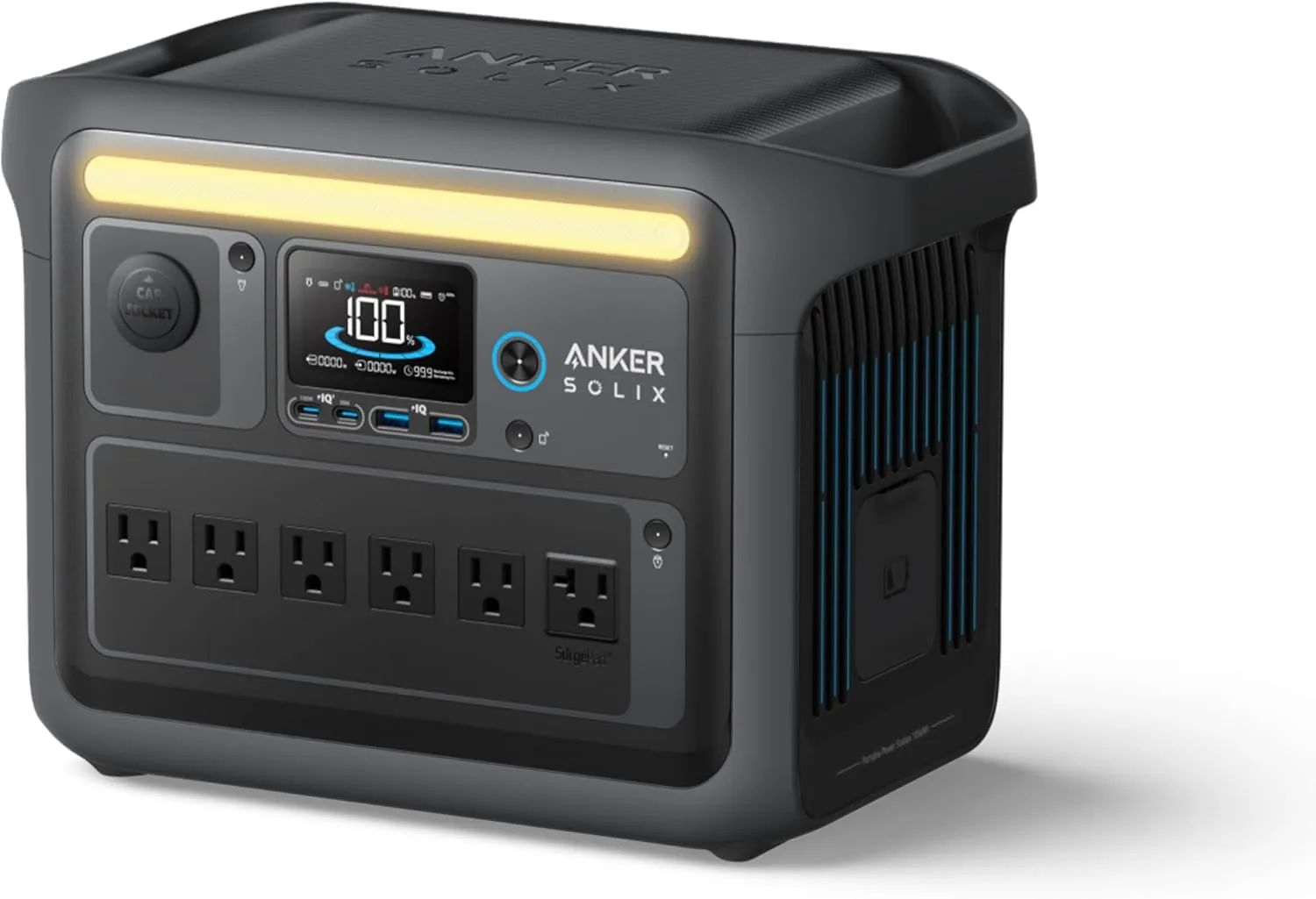
Anker C1000 Portable Power Station
Highlights
- 1056Wh rated capacity
- 1800W continuous AC
- LiFePO4 chemistry
- Up to 600W solar input
- 28.4 lb (~12.9 kg)
- About $599 list
Best for
- SOLIX C1000: small appliances and tools that need ~1800W continuous, not just phone charging
- Essentials bridge at home (fridge cycles, router) when sized to the Wh
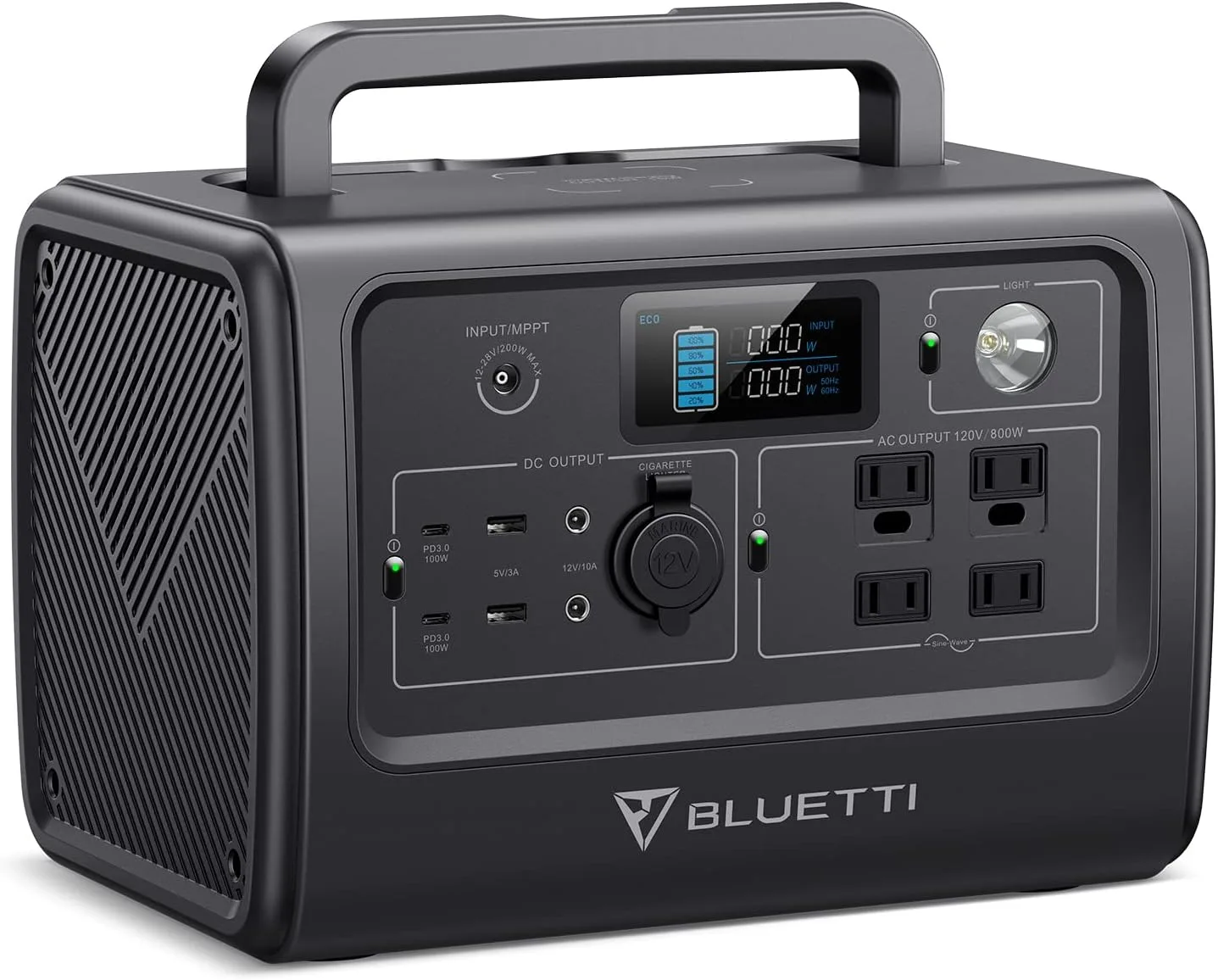
BLUETTI Portable Power Station EB70S, 716Wh LiFePO4 Battery Backup w/ 4 800W AC Outlets
Highlights
- 716Wh rated capacity
- 800W continuous AC
- LiFePO4 chemistry
- Up to 200W solar input
- 21.4 lb (~9.7 kg)
Best for
- EB70S: weekend camping when 21.4 lb carry weight matters as much as 716Wh
- Essentials bridge at home (fridge cycles, router) when sized to the Wh
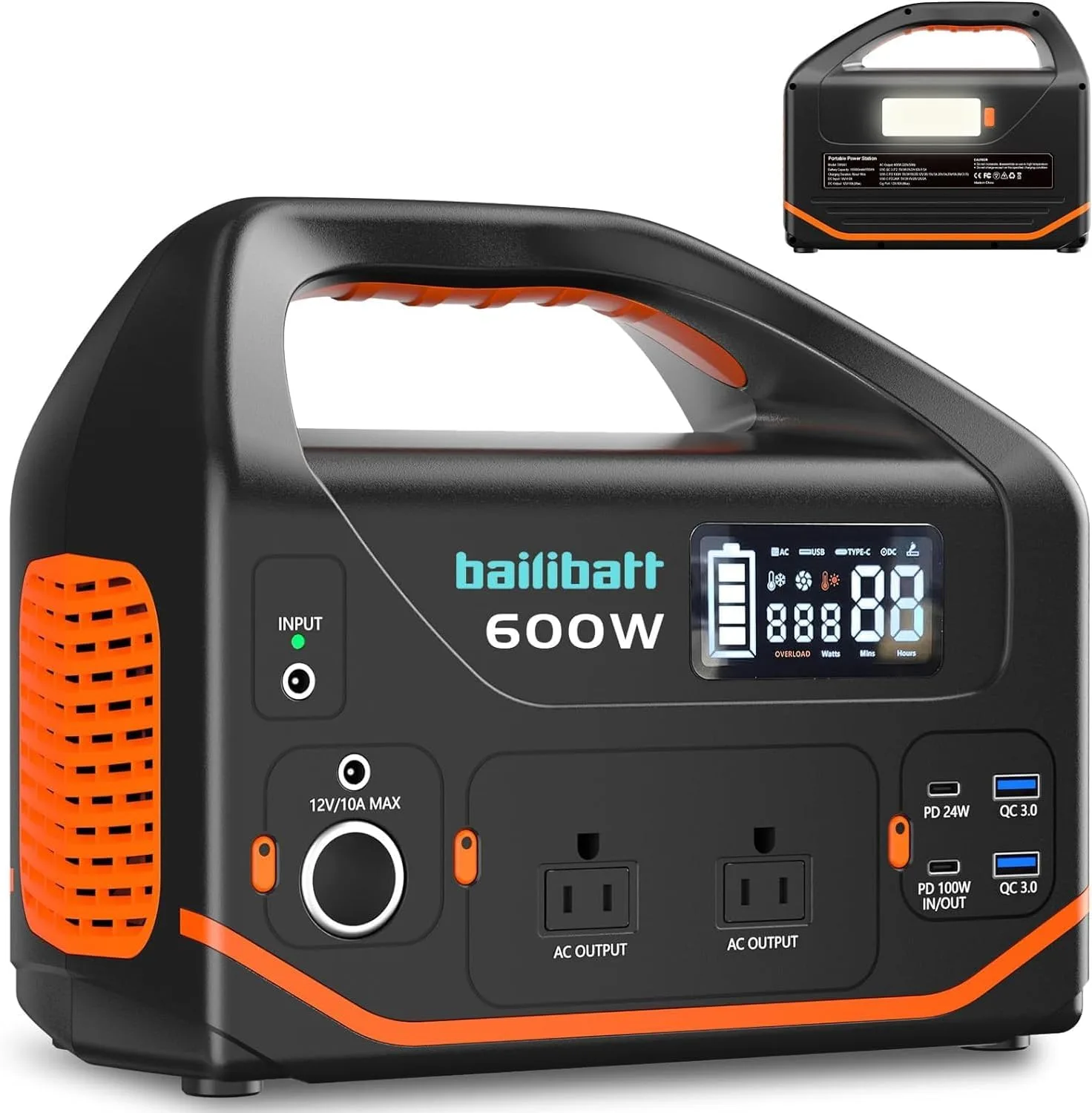
bailibatt Portable Generator for Emergency Power Station Backup Travel Outdoor 100W PD
Highlights
- 293Wh rated capacity
- 600W continuous AC
- 9.1 lb (~4.1 kg)
- About $209.99 list
Best for
- Portable: phones, cameras and a laptop on short trips
- Travel kits when you need quiet pack power, not appliance runtime
What goes wrong with CPAP backup
The humidifier is the biggest trap. A heated humidifier and heated tube can push a CPAP from roughly 40 W to 120 W or more, which turns an eight-hour night from about 320 Wh into about 960 Wh. Owners who report two nights on a small unit almost always mention turning humidity and heated tube off.
The second trap is idle draw. The AC180 consumes about 20 W with the inverter on, and only about 90% of rated capacity is usable. Over a long outage, that adds up — turn the inverter off when you're not using AC, or run the CPAP on DC to bypass the inverter entirely.
The third is the sleep timer on units like the ALLWEI PPS600-1. It cannot be disabled and shuts the DC port after about two hours of no draw. A CPAP draws continuously, so it's usually fine, but if you also run a cycling mini fridge on DC, you'll wake up to a warm fridge.
Finally, test your unit during the return window. One bailibatt owner reported a unit that popped and smoked on recharge; one ALLWEI owner had a unit that wouldn't recharge after the first discharge. These are single reports, but the pattern is clear: verify before the window closes.
- Disable humidifier and heated tube, or size up to 1,000 Wh or more.
- Turn the inverter off when not in use to avoid idle draw; DC operation bypasses it.
- Check for a sleep timer you cannot disable before relying on DC ports overnight.
- Run a full discharge/recharge cycle during the return window to verify capacity.
Who should pick something else
If you need to run a fridge, furnace blower, or sump pump during an outage, a CPAP-sized station is the wrong tool — look at our home backup sizing guide and consider a transfer-switch setup instead.
If you need to carry the unit between rooms or take it camping, skip the AC180 and Anker C1000 at 35.3 lb and 28.4 lb; the ALLWEI PPS600-1 at 13 lb or the bailibatt at 9.1 lb are far easier to move, with the capacity trade-off noted above.
If you refuse to give up the humidifier, do not buy the 293 Wh bailibatt or the 512 Wh ALLWEI expecting a full night — plan on 1,000 Wh or more, which points to the Jackery, Anker, or AC180.
Owner themes worth knowing
These are theme summaries from owner reviews on file, not raw quotes. Listing star averages are shown in the table as listing aggregate only. This section focuses on what owners consistently praise or flag beyond the spec sheet; caveats already covered in the ranking are not repeated here.
ALLWEI PPS600-1 (listing aggregate 4.4): owners praise the solid build, independent port switches, pass-through charging, and quiet fan; the recurring complaint is the non-disableable sleep timer and capped solar input.
bailibatt (listing aggregate 4.1): owners like the light weight and quiet operation, and one reported two nights of CPAP use with humidity off; a single failure report (smoke on recharge) is worth noting.
BLUETTI AC180 (listing aggregate 4.5): owners highlight instant UPS switchover, fast AC charging after a firmware update, and fridge runtime; caveats include idle draw, ~90% usable capacity, and an unreliable wireless charger.
BLUETTI EB70S (listing aggregate 4.4): owners value the LiFePO4 battery and port selection; the display sleep and loud charger fan come up repeatedly.
Jackery Explorer 1000 v2 (listing aggregate 4.7): owners report quiet operation, fast AC charging, and good storage retention; weight and lack of 12V barrel ports are the main trade-offs.
Anker C1000 (listing aggregate 4.7): owners praise fast charging and app control; weight, short AC cable, and flaky app connectivity until firmware update are the common caveats.
Frequently asked
Can I run two CPAPs on one station?
Yes, if the combined continuous draw stays under the station's AC output and the total watt-hours fit your night. Two 40 W machines over 8 hours is about 640 Wh, so a 1,000 Wh-class unit works; two humidified 120 W setups is about 1,920 Wh, which is beyond every unit here.
Can the BLUETTI AC180 run my CPAP with humidifier all night?
On paper, 1152 Wh nameplate with about 90% usable is roughly 1,037 Wh; a 120 W humidified setup over 8 hours is about 960 Wh, so it is close but tight, and idle draw eats into that. Without the humidifier it is comfortable for multiple nights.
Is the Jackery Explorer 1000 v2 quiet enough for a bedroom?
Owners consistently report quiet operation, especially in quiet mode, and one owner slept while it powered a fridge and fans. It is the quietest of the larger units here.
How many nights can the bailibatt carry a CPAP?
One owner report (unverified) describes two nights on a single charge with humidity and heated tube off. With the humidifier on, expect well under one night at 293 Wh.
Do I need a UPS feature for CPAP?
Not strictly, but pass-through charging keeps the station topped off so it is full when the grid drops. The AC180's UPS switchover is the cleanest in this group; the ALLWEI also supports pass-through.
Method and sources
Model names and list prices come from the WattPicks catalog at build time. WattPicks does not run its own laboratory tests on power stations, and nothing on this page is presented as a measured result — it is catalog-backed buying guidance.
Read our methodology for how the catalog is normalized, and about WattPicks for who publishes it.