
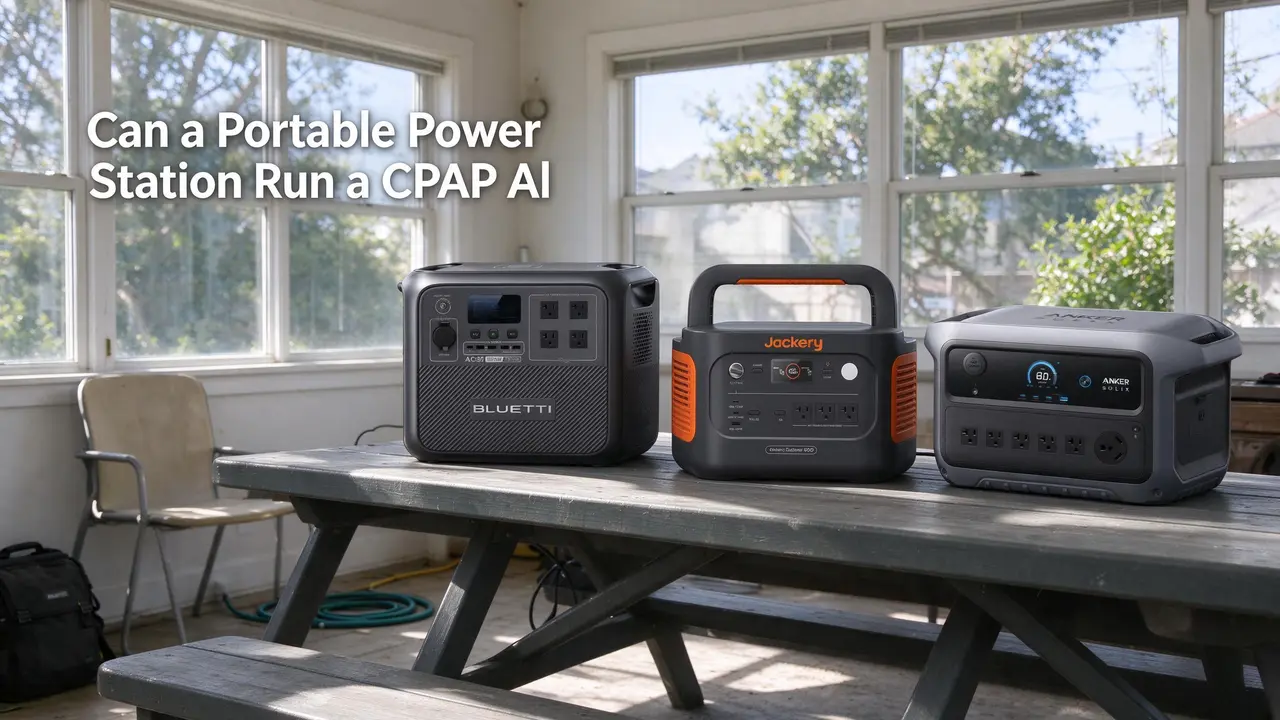
Can a Portable Power Station Run a CPAP All Night?
Yes — most CPAP setups draw little enough that a mid-size station covers a full night, but the heated humidifier changes the math fast. Here's the runtime formula, plus three stations sized for bedside overnight use.
Updated
The short answer: yes, with one big asterisk
A CPAP without its heated humidifier is a small load — think 30 to 60 W for a typical machine at pressure, and often less. A 1,070–2,048Wh station covers that for a night with room to spare. Turn the heated humidifier on and you're adding a resistive heater that can pull 60 to 150 W on its own, which roughly doubles or triples the draw.
So the honest answer is: yes, a portable power station runs a CPAP all night — but the capacity you need depends almost entirely on whether the humidifier is running, and whether you want one night or three. This page is not for sizing a whole-home backup or for running a BiPAP with a heated circuit at high pressure; those need a different conversation.
The formula is the same one you'd use for any load: usable Wh ÷ average draw in W = runtime in hours. Usable Wh is the nameplate capacity minus inverter overhead and the reserve the maker holds back. I use 85% of nameplate as a planning number, then subtract the station's idle draw if the AC inverter stays on all night.
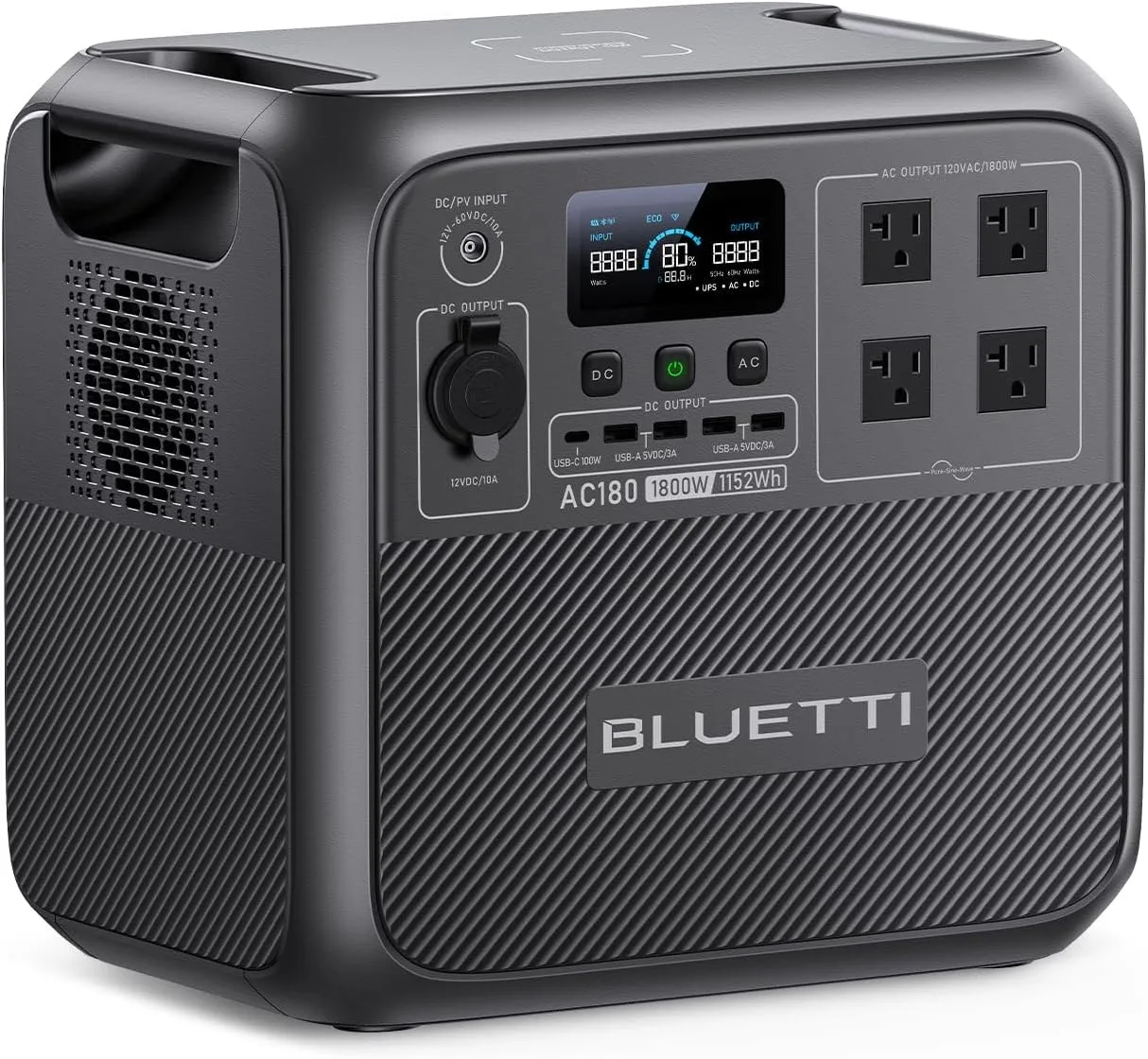
BLUETTI Portable Power Station AC180, 1152Wh LiFePO4 Battery Backup w/ 2 1800W
Highlights
- 1152Wh rated capacity
- 1800W continuous AC
- LiFePO4 chemistry
- Up to 500W solar input
- 35.3 lb (~16.0 kg)
- About $499 list
Best for
- AC180: most Wh per list dollar in mid-size LiFePO4 shortlists (~1152Wh)
- Home essentials when 1800W continuous matters more than a light carry
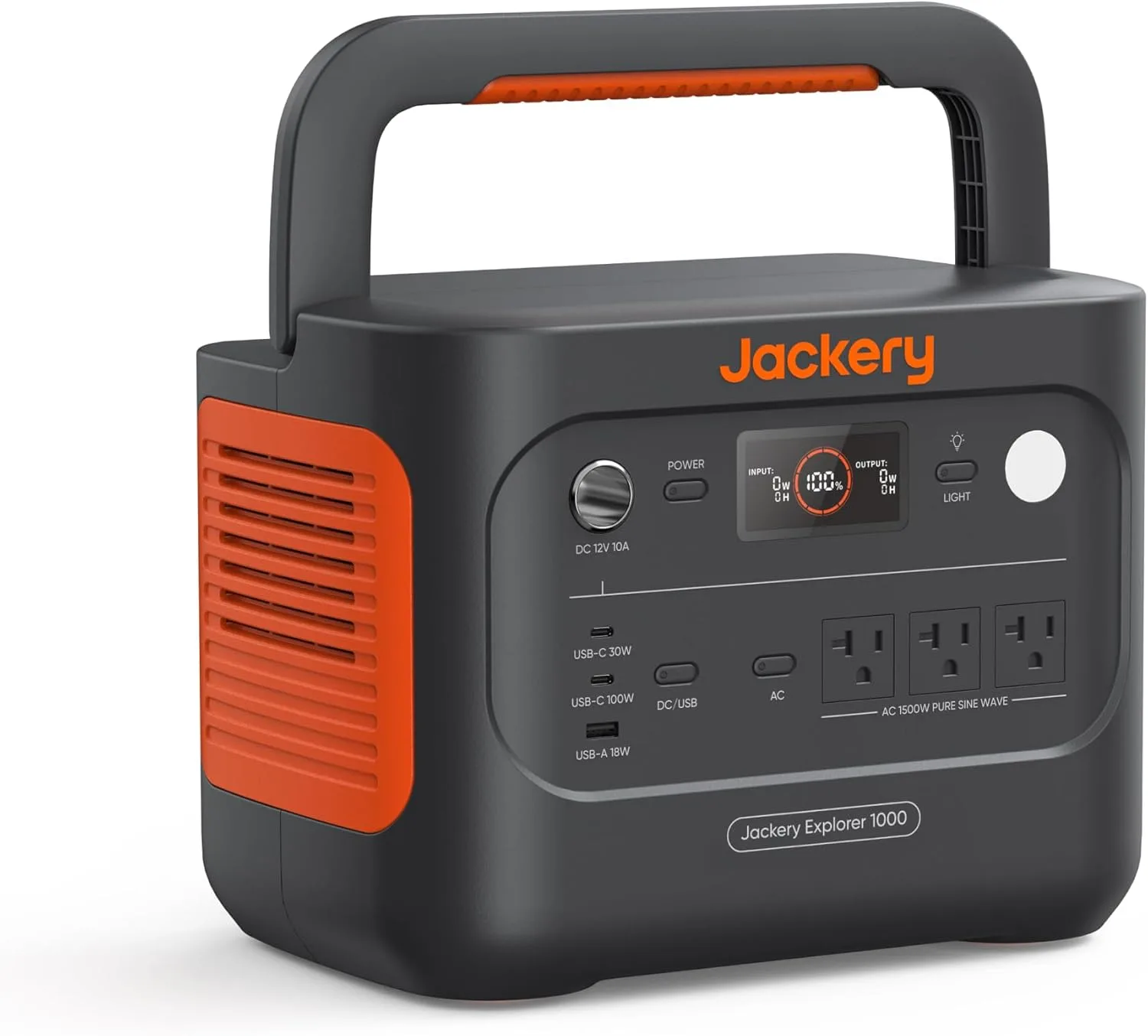
Jackery Explorer 1000 v2 Portable Power Station,1070Wh,1500W
Highlights
- 1070Wh rated capacity
- 1500W continuous AC
- LiFePO4 chemistry
- Up to 400W solar input
- 23.8 lb (~10.8 kg)
- About $559 list
Best for
- Explorer 1000 v2: weekend camping when 23.8 lb carry weight matters as much as 1070Wh
- Essentials bridge at home (fridge cycles, router) when sized to the Wh
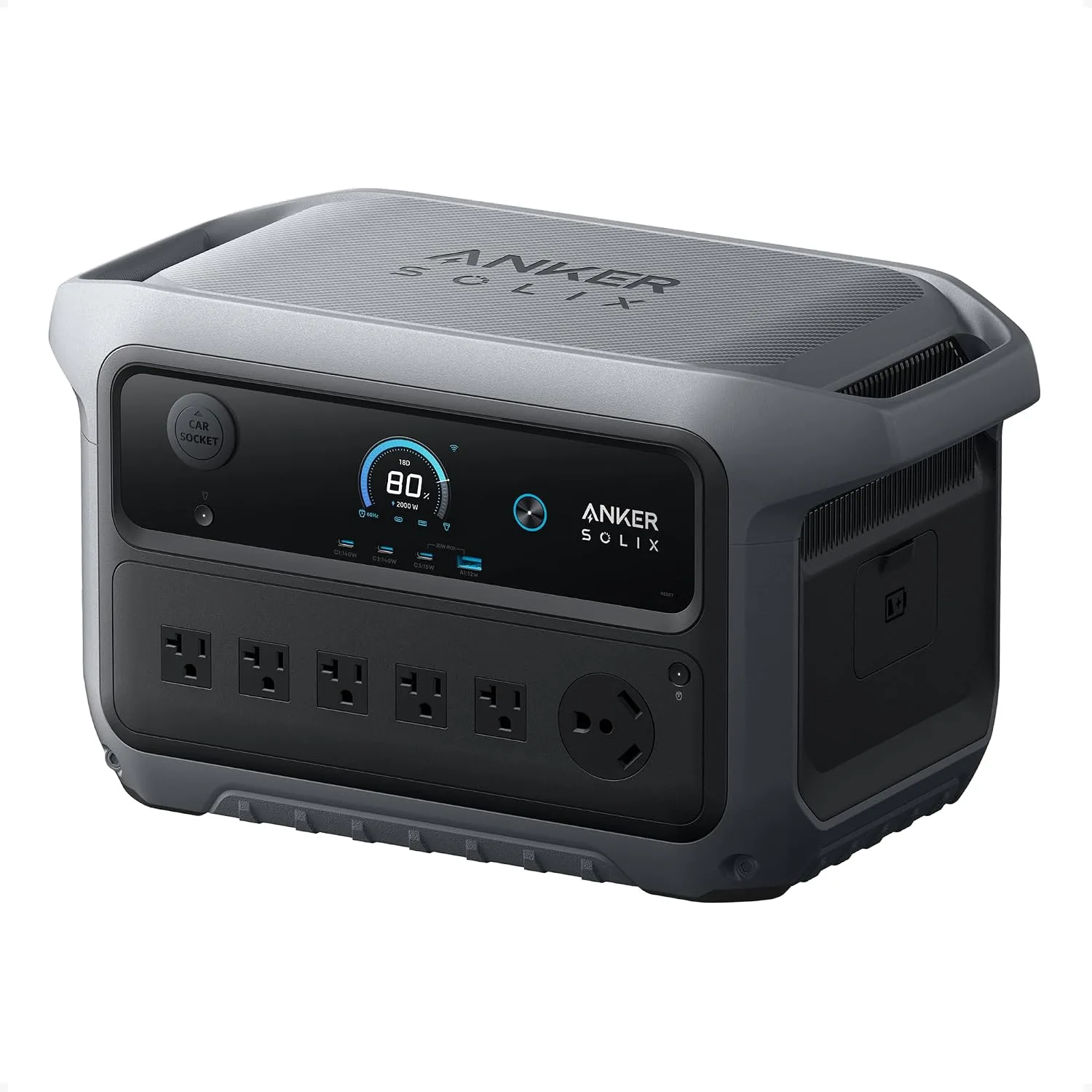
Anker C2000 Gen 2 Portable Power Station, 2,048Wh
Highlights
- 2048Wh rated capacity
- 2400W continuous AC
- 4000W surge
- LiFePO4 chemistry
- Up to 800W solar input
- 41.7 lb (~18.9 kg)
Best for
- C2000 Gen 2: longer outages or higher continuous loads (still not whole-home wiring)
- RV / off-grid days where recharge speed matters as much as Wh
Do the math on your own machine
Check the label on your CPAP power brick or the machine's spec sheet. A ResMed AirSense 10 at 10 cmH₂O with humidifier off is commonly cited around 30–40 W average; with the heated humidifier on it climbs toward 90–110 W. Those are typical bands, not a promise for your unit — your pressure setting and hose temperature move them. Higher pressure settings push you toward the top of each band: a machine set at 15 cmH₂O will draw more than the same model at 8. If you have a DreamStation, the draw is in the same ballpark, but check your own label.
Worked example with the Jackery Explorer 1000 v2 Portable Power Station,1070Wh,1500W: 1,070 Wh × 0.85 = about 910 usable Wh. At 45 W average (humidifier off), that's roughly 20 hours — two comfortable nights. At 100 W with the humidifier on, you're down to about 9 hours, which is one night with little margin.
Same formula on the BLUETTI AC180: 1,152 Wh × 0.85 ≈ 979 usable Wh, so about 21.7 hours at 45 W or roughly 9.8 hours at 100 W. The Anker C2000 Gen 2 Portable Power Station, 2,048Wh lands near 1,741 usable Wh — around 38 hours at 45 W, or about 17 hours with the humidifier running. That's the one that buys you multiple nights without thinking about it.
- Humidifier off: plan 30–60 W average
- Humidifier on: plan 90–150 W average
- Add the station's idle draw if the AC inverter stays on all night — owners of the AC180 report roughly 15–20 W of overhead
- Reserve 15% of nameplate as unusable for planning
Spec snapshot: three stations sized for a bedside
Prices are list; the deal stickers you see on product pages move around and shouldn't drive the decision. Ratings are the listing aggregate, not an owner-verified score.
Before you compare, here's what matters for bedside CPAP: usable Wh (nameplate × 0.85), humidifier watts (the big swing), idle draw (what the inverter burns doing nothing), dB (how quiet the fan is overnight), and UPS switchover in ms (how fast it takes over when the grid drops).
| Product | Price | Capacity (Wh) | Output (W) | Weight (lb) | Rating |
|---|---|---|---|---|---|
| BLUETTI AC180 | $499 | 1152 Wh | 1800 W | 35.3 lb | 4.5 |
| Jackery Explorer 1000 v2 Portable Power Station,1070Wh,1500W | $559 | 1070 Wh | 1500 W | 23.8 lb | 4.7 |
| Anker C2000 Gen 2 Portable Power Station, 2,048Wh | $1499 | 2048 Wh | 2400 W | 41.7 lb | 4.7 |
Which one actually belongs next to the bed
The Jackery Explorer 1000 v2 Portable Power Station,1070Wh,1500W is the one I'd point most CPAP users toward first. At 23.8 lb it's the lightest of the three by a wide margin, and the listing describes a 30 dB quiet overnight charging mode — relevant when the thing is two feet from your pillow. Owners mention the CPAP use case directly, which is more than the other two listings show. The trade-off: 1,070 Wh means one night with the humidifier on, not two.
The BLUETTI AC180 is the value pick at $0.43/Wh — the cheapest per nameplate Wh of the three. It carries more capacity than the Jackery (1,152 Wh) and a documented 20 ms UPS switchover, which matters if you want the station to take over the instant the grid drops rather than waking up to a dead machine. It's also 35.3 lb, so it lives on the floor, not the nightstand. Owners praise the display and the quiet running; several flag the idle draw eating into small loads.
The Anker C2000 Gen 2 Portable Power Station, 2,048Wh is the multi-night answer. One owner specifically reports two full nights of CPAP use and still having headroom for a TV afterward. It's also the heaviest at 41.7 lb and the priciest at $0.73/Wh, so it only makes sense if you're covering humidifier-on nights, a second medical device, or multi-day outages. Anker's listing cites 9 W standby, which is the lowest overhead figure of the three on paper.
- Jackery: lightest, quietest charging mode, one humidifier-on night
- BLUETTI: cheapest per Wh, UPS switchover, heaviest of the two mid-size units
- Anker: two-plus nights with humidifier, highest price per Wh, 41.7 lb
Quiet, pass-through, and the overnight details that bite
Noise matters more here than in any other power-station use case. All three run fan-cooled inverters; the Jackery listing specifically calls out a 30 dB overnight mode, and AC180 owners describe it as very quiet and slow to warm. The Anker's fan is described by an owner as a barely audible hum. None of these are silent, and none of these figures are lab-measured — they're what the listings and owners report.
Pass-through charging is the feature to check if you plan to leave the station plugged in beside the bed as a UPS. The AC180's 20 ms switchover is the clearest published number of the three. Anker's listing doesn't publish a transfer time, and Jackery's listing doesn't either — treat those as n/a (not on file) rather than assuming instant. If transfer time is unpublished, here's how to hedge: plug a clock or lamp into the station, pull the station's wall plug, and see whether the clock resets or the lamp flickers. That tells you whether your CPAP would ride through a grid drop without rebooting.
One more thing owners keep flagging: idle draw. If you leave the AC inverter on all night with nothing plugged in, you're burning capacity. Turn the AC output off when the CPAP is off, and check whether your machine's heated humidifier can be disabled in its own settings — that single toggle is worth more runtime than any capacity upgrade.
Also check the DC/12V side. Many CPAP machines can run from a 12V DC adapter, which is more efficient than going AC-to-DC through the inverter. None of these three listings include a CPAP-specific DC cable, so budget for the adapter your machine's maker sells. If you use the DC path, confirm the station's 12V output can supply your machine's DC draw. DC adapter compatibility varies by machine — ResMed, Philips, and others each sell their own, and a plug that fits one brand often won't fit another.
The buying rule
Buy the Jackery Explorer 1000 v2 Portable Power Station,1070Wh,1500W if you sleep with the humidifier off, want the lightest unit on the nightstand, and need one reliable night. Buy the BLUETTI AC180 if you want the lowest cost per Wh and a published UPS switchover, and you don't mind lifting 35.3 lb. Buy the Anker C2000 Gen 2 Portable Power Station, 2,048Wh only if you run the humidifier, need multiple nights, or you're backing up more than the CPAP.
Cheaper is better when you only need one night and want to save $60: the Jackery at $559 is the lighter, quieter choice, while the BLUETTI at $499 is the better value if you can live with the extra weight and want the published UPS switchover.
Skip all three if you need to run a heated humidifier plus a BiPAP at high pressure for a week — that's a home-backup sizing job, not a bedside one. And if your machine's manual specifies a manufacturer-approved battery pack for medical use, follow that instead; a general-purpose power station is a practical backup, not a certified medical device.
One disclosure: as an Amazon Associate, WattPicks earns from qualifying purchases. The picks above are fit-led — the cheapest per Wh here is the AC180, and it's not the one I'd recommend first for most CPAP users.
What owners report
Owner themes tallied from reviews on file, plus our home-user field checks. Prefer feedback matching this article's use-case; note when reviews skew elsewhere. Themes are paraphrased from reviews on file; sample sizes vary.
BLUETTI AC180: Owners praise fast charging (reaching 100% in about an hour) and value, but several flag idle draw eating into small loads — relevant if you leave the AC inverter on all night.
Jackery Explorer 1000 v2: Owners report quick charging (100% within 3 hours) and long fridge/freezer runtime, but few mention CPAP use directly — treat the CPAP fit as our assessment, not an owner consensus.
Anker C2000 Gen 2: One owner reports two full nights of CPAP use with headroom for a TV, and others praise its capacity for TV, fridge, and WiFi — the strongest CPAP-specific signal of the three.
Frequently asked
Can the Jackery Explorer 1000 v2 run my CPAP with the humidifier on for two nights?
Probably not. At roughly 100 W average draw, 1,070 Wh gives you about 9 hours of usable runtime — one night. Two humidifier-on nights needs the Anker's 2,048 Wh.
Is the BLUETTI AC180's UPS fast enough for a CPAP?
The listing publishes a 20 ms switchover, which is fast enough that the machine shouldn't notice a grid drop. That's a listing figure, not something our home-user checks measured.
How long will the Anker C2000 Gen 2 run a CPAP?
At 45 W average (humidifier off), roughly 38 hours from 2,048 Wh at 85% usable. At 100 W with the humidifier on, about 17 hours — two nights with margin.
Method and sources
Model names and list prices come from the WattPicks catalog at build time. WattPicks does not run its own laboratory tests on power stations, and nothing on this page is presented as a measured result — it is catalog-backed buying guidance.
Read our methodology for how the catalog is normalized, and about WattPicks for who publishes it.