
Best Solar Generators: 1kWh vs 2kWh Picks Ranked
The right solar generator depends on whether you're bridging a fridge through a short outage or carrying a house circuit for days. This ranking sorts eight LFP stations by capacity tier, output, and what owners actually report.
Updated
What a solar generator actually has to do for you
Start with the load, not the badge. A solar generator is a battery and an inverter in a box — it stores energy and pushes it back out as 120V AC. The number that decides whether it works for you is continuous output in watts, and the number that decides how long it works is capacity in watt-hours.
Here's the boundary this page lives inside: these eight stations are 1,024–2,048 Wh units rated 1,500–2,400 W continuous. That is enough for a fridge, a modem, lights, a CPAP, a fan, and a laptop through a short-to-medium outage. It is not enough for a whole-home circuit, a central AC, an electric water heater, or a 240V well pump. If that's your goal, you want a transfer switch and a much larger system, not this list.
The other thing worth saying up front: a solar generator only earns the name if you pair panels. None of these ship with panels in the box, and the solar input ceiling varies a lot across the eight — from a 400W cap on the Jackery to 1,200W on the BLUETTI AC200PL. Panel pairing is a separate purchase and a separate decision.
One disclosure: as an Amazon Associate, WattPicks earns from qualifying purchases. Picks here are fit-led — the ranking follows the weights below, not commission.
How this ranking was built
I started from the full portable-power catalogue and filtered to LFP stations with a published continuous AC rating between 1,500 W and 2,400 W and a nameplate capacity between 1,024 Wh and 2,048 Wh. That left a pool of roughly two dozen units; eight made the cut because they had enough owner feedback on file to say something honest about real use, and because together they cover both capacity tiers without three near-identical entries.
The weights, and why: capacity per dollar at nameplate (25%) because this is the number most buyers are actually shopping; continuous output (20%) because it decides which appliances are even in play; weight and portability (15%) because a 60 lb box that never leaves the garage is a different product than a 24 lb one; recharge speed and solar input ceiling (15%) because outage length is usually a recharge problem, not a capacity problem; owner-reported reliability and support themes (15%) because spec sheets don't tell you whether the app connects; and warranty and cycle life (10%) because LFP packs are a decade-long purchase.
Tracing #1 over #2: the DELTA 2 Max and the AC200PL tie on capacity and continuous output, so the decision falls to the secondary weights. The EcoFlow wins on weight (50 lb vs 62.4 lb), on owner-reported app quality, and on a documented 5-year service term. The BLUETTI wins on nameplate $/Wh ($0.44 vs $0.68) and on raw outlet count. I ranked the EcoFlow first because portability and app reliability are the two things owners complain about most across this whole category — but if the unit lives in one spot and price leads, the AC200PL is the better buy and I would not argue with you.
Method note, stated plainly: these are home-user checks grounded in the owner themes on file plus the listing specs. They are not lab-bench measurements, and I am not presenting them as instrumented results. Where a number comes from a listing, I say so. Where the data is missing, I write n/a (not on file).
One credential line: I'm the founding editor at WattPicks, covering portable power capacity, output, and price-per-Wh across the catalogue.
Scoreboard on those weights — EcoFlow DELTA 2 Max (list $1399): High where list price and published capacity match the job, Med on continuous watts; Jackery Explorer 1000 v2 Portable Power Station,1070Wh,1500W (list $559): High on continuous watts and ports, Med on price. That is why the pick splits by job rather than one universal winner.
Quick picks: which tier fits which job
If you want the short version before the table, here it is. The 2kWh tier is for people who want to run a fridge overnight and still have headroom in the morning. The 1kWh tier is for people who want a lighter box they can actually move, and who accept that a long outage means recharging mid-way.
Top overall for home backup: EcoFlow DELTA 2 Max. It has the most complete package in this list — 2,048 Wh, 2,400 W continuous, a 5-year service term on the LFP pack, and an app that owners consistently describe as the best in the category. The catch is weight and a rocky handshake with EcoFlow's own smart generator.
Runner-up for the same job, cheaper: BLUETTI AC200PL at $899. Same 2,048 Wh and 2,400 W, and the lowest nameplate $/Wh in the 2kWh tier at $0.44/Wh. It is also the heaviest unit here at 62.4 lb, which is a real constraint if the unit has to move between floors.
Best light 1kWh pick: Jackery Explorer 1000 v2 at 23.8 lb and $559. It is the easiest of the eight to carry, and owners report it running a fridge and a portable AC together. It will not start a large miter saw.
Best value 1kWh with high output: OUPES Mega 1 at $549, 2,000 W continuous, 27.8 lb. The surge number on the listing is optimistic — more on that below.
Also consider: Anker C1000 ($599, 1,056 Wh, 1,800 W) if you want Anker's app and support reputation in a 28.4 lb box; BLUETTI AC180 ($499, 1,152 Wh, 1,800 W) if budget leads and you accept 35.3 lb; EcoFlow DELTA 3 Max ($1,199, 2,048 Wh, 44.8 lb) if a 10ms UPS transfer matters more than port count; Anker C2000 Gen 2 ($1,499, 2,048 Wh, 41.7 lb) if you want the lightest 2kWh body here and can live with a 15A pass-through limit.
- Enough for: fridge, modem/router, lights, fans, CPAP, laptop, phone charging, a microwave in short bursts on the 2,400W units.
- Not for: central AC, electric range, 240V well pump, whole-home transfer without a licensed install.
- Panels are sold separately on every unit in this list — budget for them if solar recharge is the plan.
Spec snapshot: all eight, side by side
Prices below are list prices, not current sale stickers. Ratings are the listing aggregate — useful as a rough signal, not as owner proof. Weight is the manufacturer figure in pounds.
| Product | Price | Capacity (Wh) | Output (W) | Weight (lb) | Rating |
|---|---|---|---|---|---|
| EcoFlow DELTA 2 Max | $1399 | 2048 Wh | 2400 W | 50 lb | 4.7 |
| Jackery Explorer 1000 v2 Portable Power Station,1070Wh,1500W | $559 | 1070 Wh | 1500 W | 23.8 lb | 4.7 |
| BLUETTI AC200PL | $899 | 2048 Wh | 2400 W | 62.4 lb | 4.5 |
| OUPES Mega 1 Portable Power Station 1024Wh 2000W | $549 | 1024 Wh | 2000 W | 27.8 lb | 4.5 |
| EcoFlow DELTA 3 Max Portable Power Station, 2048Wh LFP Battery | $1199 | 2048 Wh | 2400 W | 44.8 lb | 4.7 |
| Anker C1000 Portable Power Station | $599 | 1056 Wh | 1800 W | 28.4 lb | 4.7 |
| BLUETTI AC180 | $499 | 1152 Wh | 1800 W | 35.3 lb | 4.5 |
| Anker C2000 Gen 2 Portable Power Station, 2,048Wh | $1499 | 2048 Wh | 2400 W | 41.7 lb | 4.7 |
Why each one is here
The order below follows the weights above. Each entry gets a suits line and a skip line tied to a listing fact, plus the owner themes that actually showed up in the feedback on file.
- #1 EcoFlow DELTA 2 Max — $1399, 2,048 Wh, 2,400 W, 50 lb. Suits: a household that wants one box to carry a fridge, a furnace blower, and the Wi-Fi through a multi-day outage, with the option to add batteries later. Skip if: you plan to pair it with EcoFlow's smart dual-fuel generator — owners report repeated error codes and failed auto-charging in exactly the scenario you'd buy it for.
- #2 BLUETTI AC200PL — $899, 2,048 Wh, 2,400 W, 62.4 lb. Suits: a stationary install where the unit sits in one place and the lowest nameplate $/Wh in the 2kWh tier matters. Skip if: you need to move it between floors — 62.4 lb is the heaviest here by a wide margin.
- #3 Jackery Explorer 1000 v2 — $559, 1,070 Wh, 1,500 W, 23.8 lb. Suits: the lightest carry in this list, with a fridge-plus-portable-AC test on file and a quiet mode owners actually sleep next to. Skip if: your load includes a large miter saw or similar high-inrush tool — one owner's blade turned a quarter turn and stopped.
- #4 OUPES Mega 1 — $549, 1,024 Wh, 2,000 W, 27.8 lb. Suits: high continuous output in a sub-30 lb body, with a 12V car plug on the backup battery that owners used to run a Dometic fridge for a week. Skip if: you're counting on the advertised 4,500W surge — one owner's unit tripped between 2,050 and 2,200 W.
- #5 EcoFlow DELTA 3 Max — $1199, 2,048 Wh, 2,400 W, 44.8 lb. Suits: a UPS role for a home office or Wi-Fi stack, where the 10ms transfer time is the whole point. Skip if: you need lots of USB-C — the port lock lists one USB-C and one USB-A.
- #6 Anker C1000 — $599, 1,056 Wh, 1,800 W, 28.4 lb. Suits: fridge backup in a body you can carry, with owner tests of 36 hours on an 18 cu ft garage fridge and 12 hours on a larger kitchen unit. Skip if: you want a built-in light that actually lights a room — owners describe it as dim and yellowish.
- #7 BLUETTI AC180 — $499, 1,152 Wh, 1,800 W, 35.3 lb. Suits: budget-led UPS duty for a basement circuit, where owners report seamless switchover on router and TV. Skip if: you're running small loads for a long time — owners measure about 20W of idle draw with the inverter on.
- #8 Anker C2000 Gen 2 — $1499, 2,048 Wh, 2,400 W, 41.7 lb. Suits: the lightest 2kWh body here, with a hurricane-outage fridge run and two nights of CPAP on file. Skip if: you want to run a 30A RV AC while charging from a 15A household outlet — pass-through caps output at 15A.
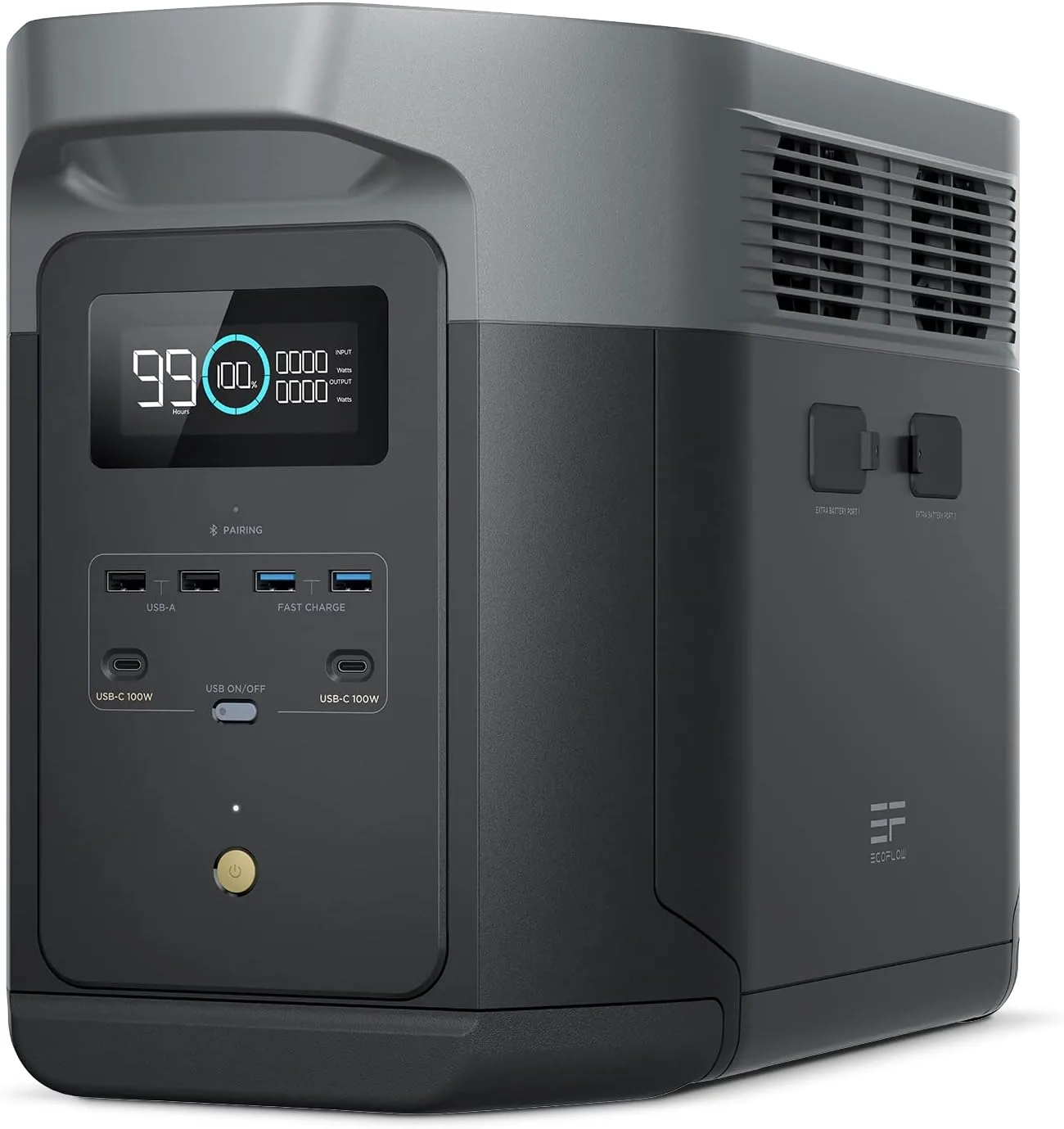
EcoFlow DELTA 2 Max
Highlights
- 2048Wh rated capacity
- 2400W continuous AC
- 4800W surge
- LiFePO4 chemistry
- Up to 1000W solar input
- 50 lb (~22.7 kg)
Best for
- DELTA 2 Max: longer outages or higher continuous loads (still not whole-home wiring)
- RV / off-grid days where recharge speed matters as much as Wh
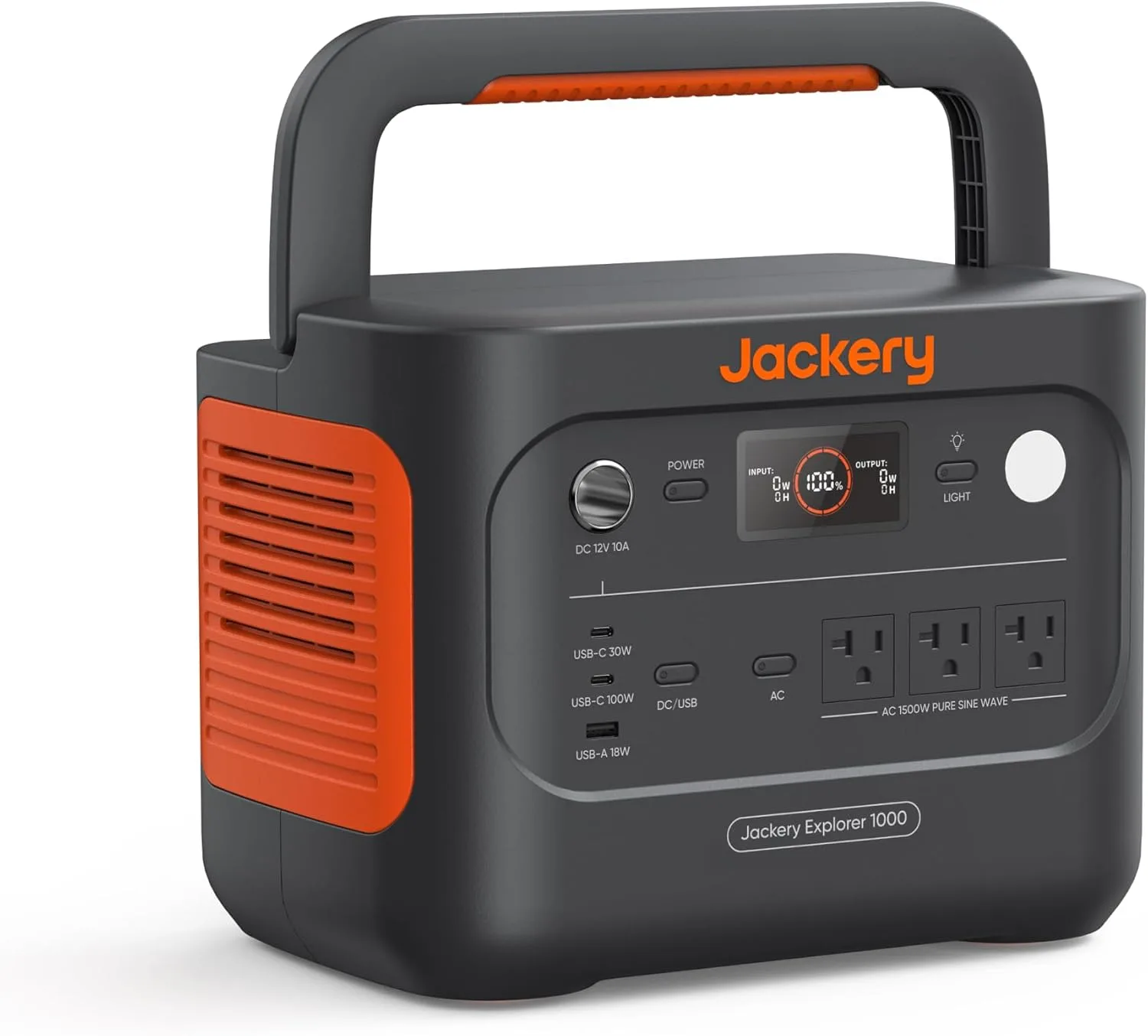
Jackery Explorer 1000 v2 Portable Power Station,1070Wh,1500W
Highlights
- 1070Wh rated capacity
- 1500W continuous AC
- LiFePO4 chemistry
- Up to 400W solar input
- 23.8 lb (~10.8 kg)
- About $559 list
Best for
- Explorer 1000 v2: weekend camping when 23.8 lb carry weight matters as much as 1070Wh
- Essentials bridge at home (fridge cycles, router) when sized to the Wh
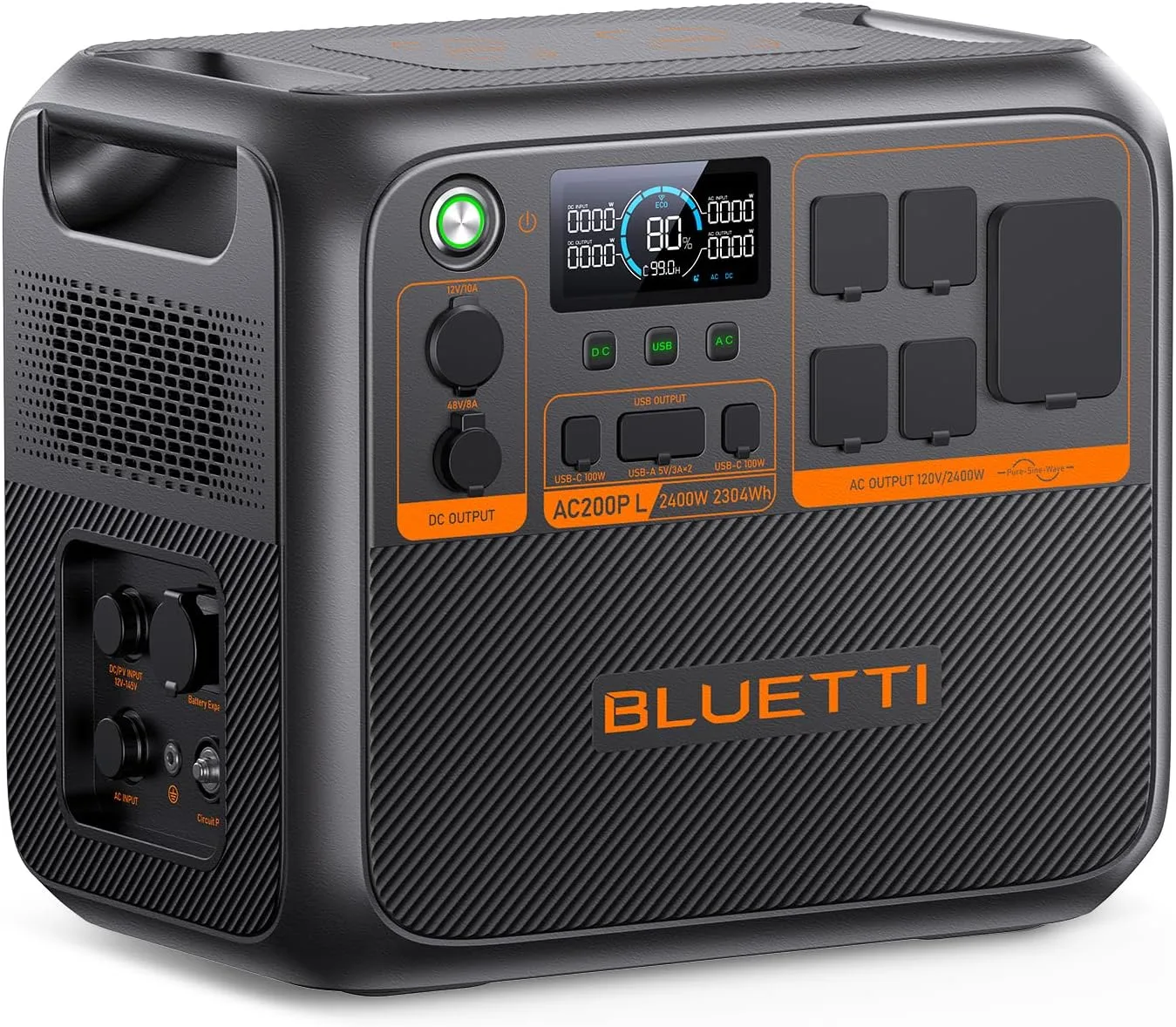
BLUETTI AC200PL
Highlights
- 2048Wh rated capacity
- 2400W continuous AC
- LiFePO4 chemistry
- Up to 1200W solar input
- 62.4 lb (~28.3 kg)
- About $899 list
Best for
- AC200L: longer outages or higher continuous loads (still not whole-home wiring)
- RV / off-grid days where recharge speed matters as much as Wh
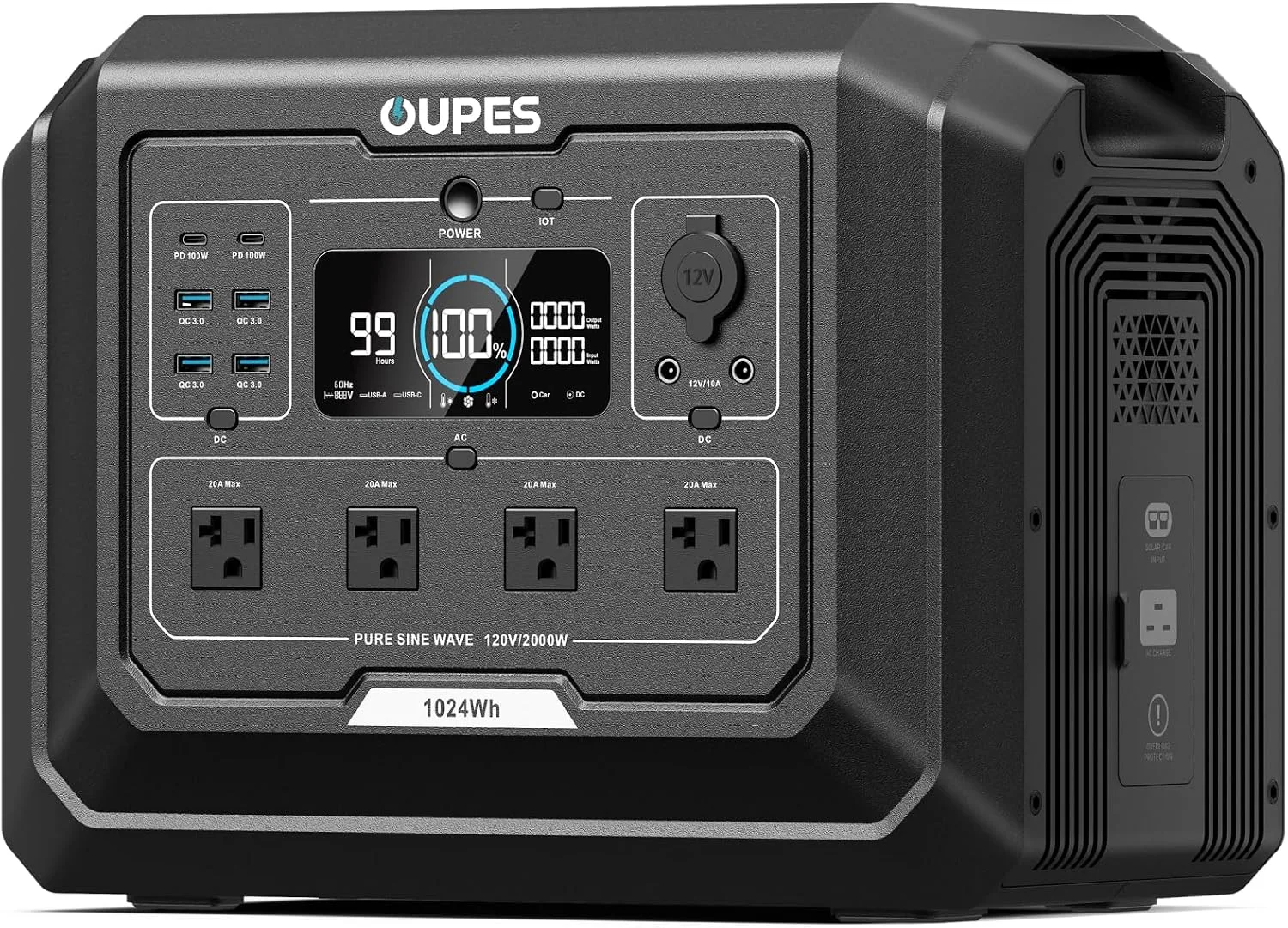
OUPES Mega 1 Portable Power Station 1024Wh 2000W
Highlights
- 1024Wh rated capacity
- 2000W continuous AC
- 4500W surge
- LiFePO4 chemistry
- Up to 800W solar input
- 27.8 lb (~12.6 kg)
Best for
- Mega 1: small appliances and tools that need ~2000W continuous, not just phone charging
- Essentials bridge at home (fridge cycles, router) when sized to the Wh
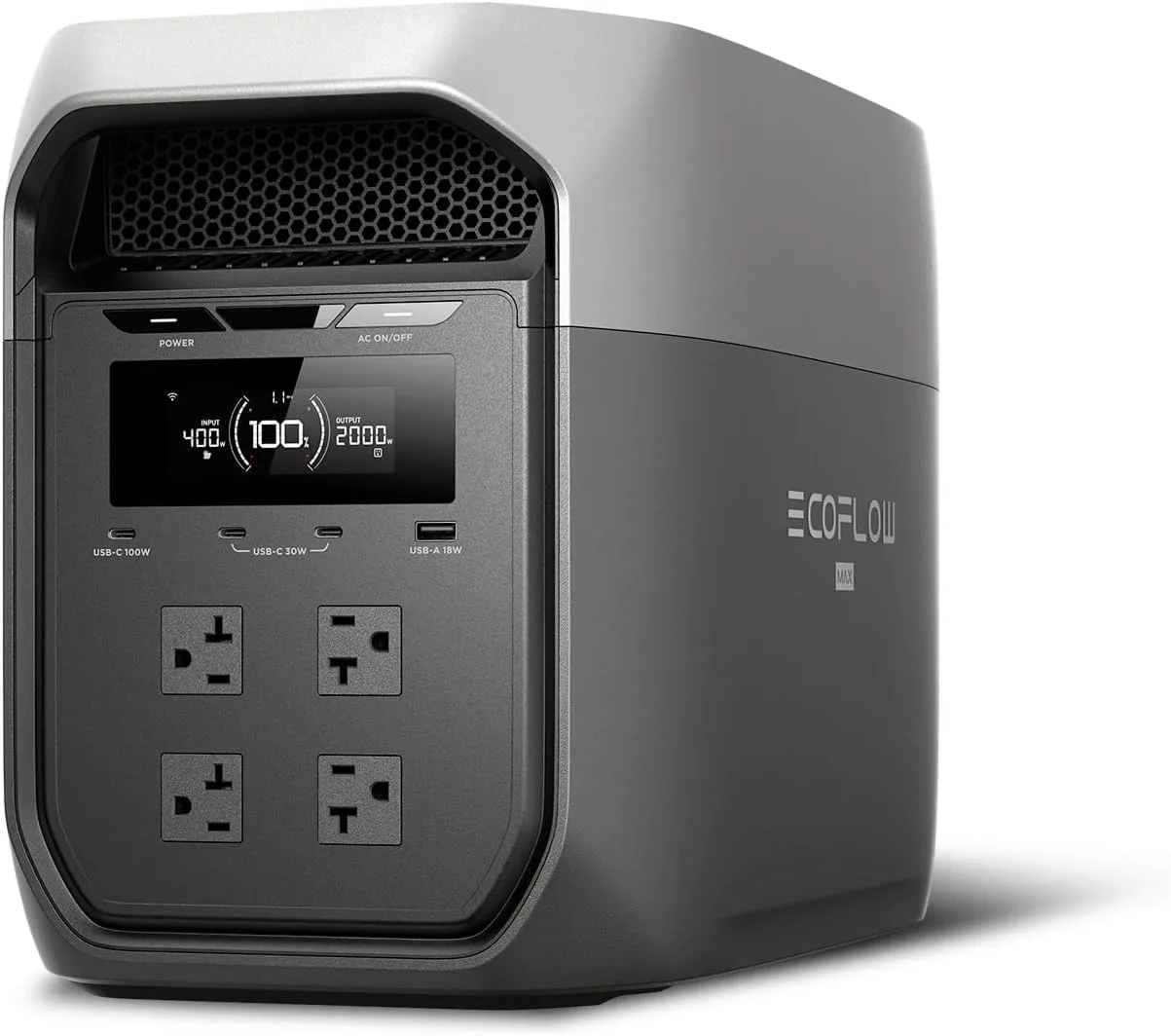
EcoFlow DELTA 3 Max Portable Power Station, 2048Wh LFP Battery
Highlights
- 2048Wh rated capacity
- 2400W continuous AC
- 4800W surge
- LiFePO4 chemistry
- Up to 500W solar input
- 44.8 lb (~20.3 kg)
Best for
- DELTA 3 Max: longer outages or higher continuous loads (still not whole-home wiring)
- RV / off-grid days where recharge speed matters as much as Wh
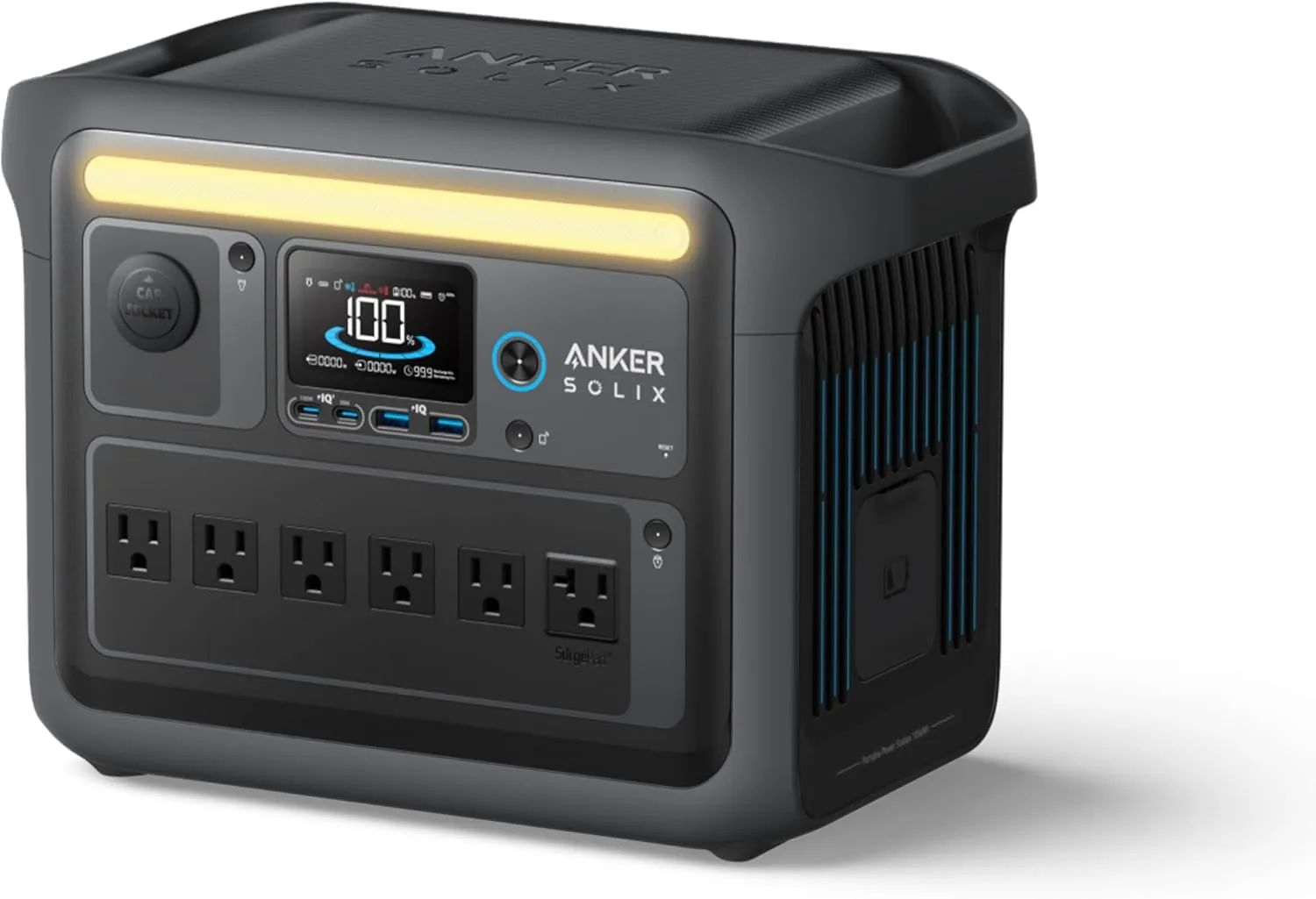
Anker C1000 Portable Power Station
Highlights
- 1056Wh rated capacity
- 1800W continuous AC
- LiFePO4 chemistry
- Up to 600W solar input
- 28.4 lb (~12.9 kg)
- About $599 list
Best for
- SOLIX C1000: small appliances and tools that need ~1800W continuous, not just phone charging
- Essentials bridge at home (fridge cycles, router) when sized to the Wh
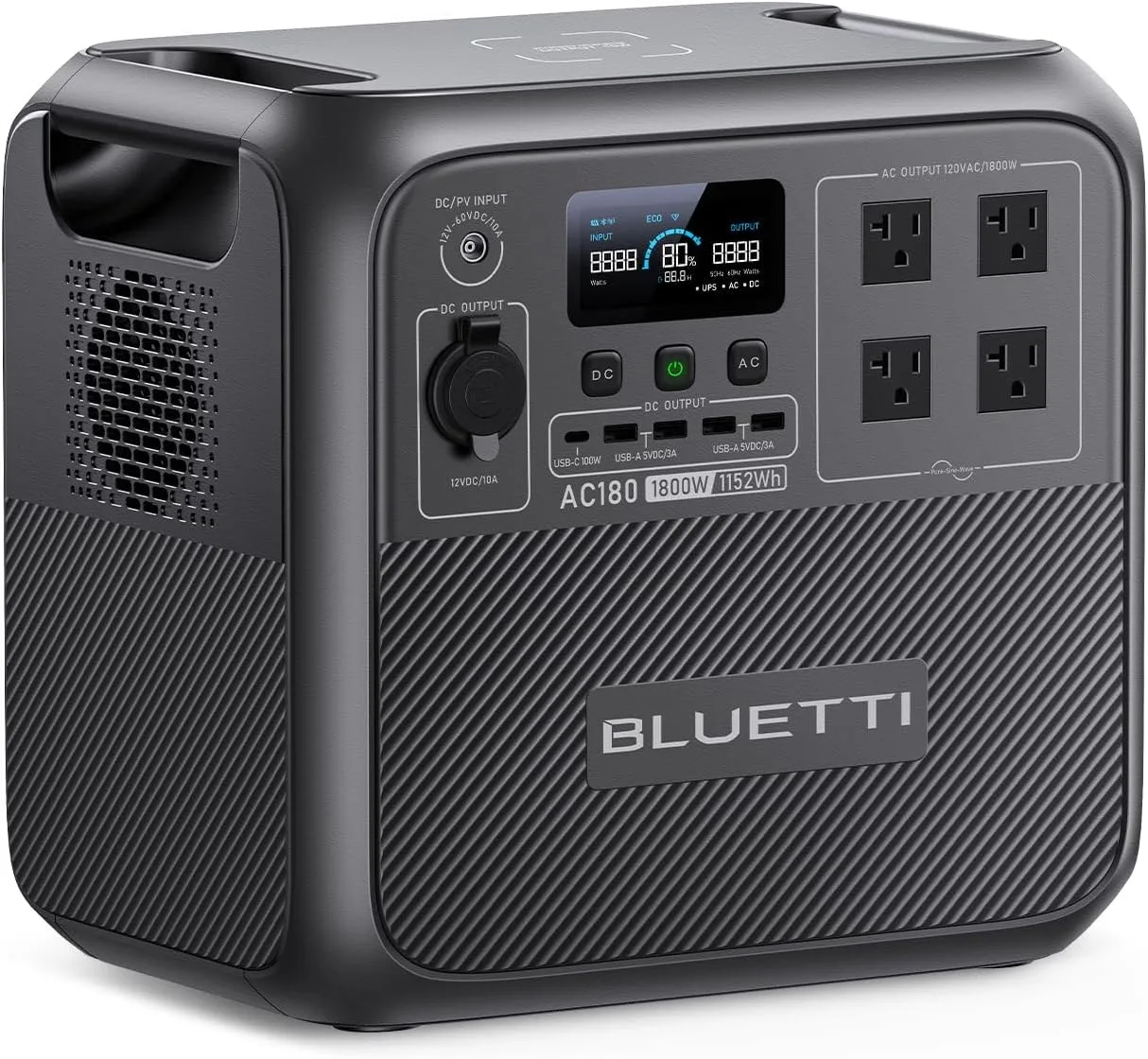
BLUETTI Portable Power Station AC180, 1152Wh LiFePO4 Battery Backup w/ 2 1800W
Highlights
- 1152Wh rated capacity
- 1800W continuous AC
- LiFePO4 chemistry
- Up to 500W solar input
- 35.3 lb (~16.0 kg)
- About $499 list
Best for
- AC180: most Wh per list dollar in mid-size LiFePO4 shortlists (~1152Wh)
- Home essentials when 1800W continuous matters more than a light carry
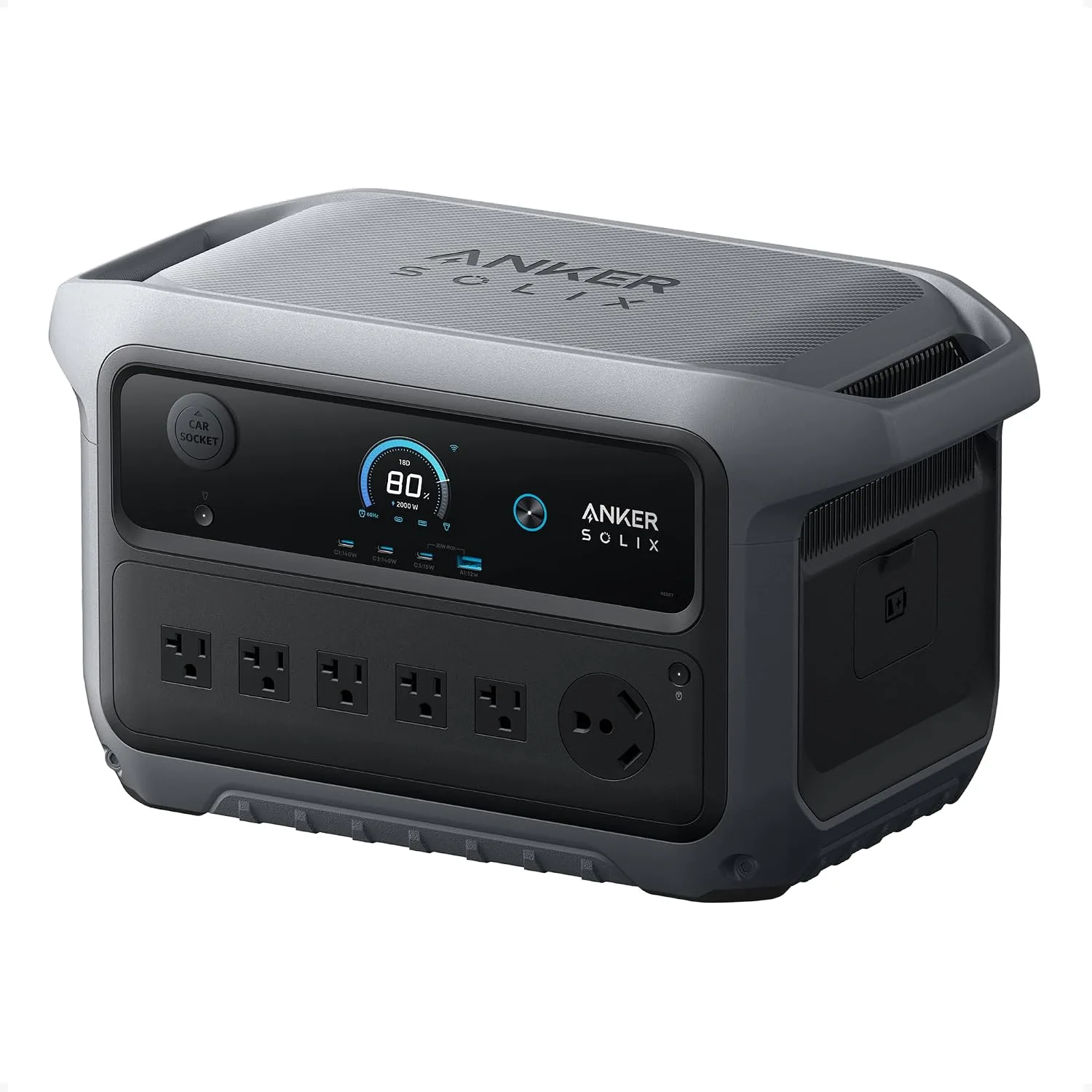
Anker C2000 Gen 2 Portable Power Station, 2,048Wh
Highlights
- 2048Wh rated capacity
- 2400W continuous AC
- 4000W surge
- LiFePO4 chemistry
- Up to 800W solar input
- 41.7 lb (~18.9 kg)
Best for
- C2000 Gen 2: longer outages or higher continuous loads (still not whole-home wiring)
- RV / off-grid days where recharge speed matters as much as Wh
The trade-offs the spec sheet hides
Idle draw is the quiet tax on every one of these. The BLUETTI AC180 and AC200PL both draw roughly 20W with the inverter on, per owner reports — over a 24-hour outage that's about 480 Wh, or nearly half of the AC180's nameplate capacity. If your plan is to leave the unit on all night for a 40W fan, do the math on the idle number first, not the capacity number.
Surge ratings deserve suspicion. The OUPES Mega 1 lists a 4,500W surge; one owner's unit tripped between 2,050 and 2,200 W. Treat any surge figure as marketing until you've tested it against your specific appliance. For motor loads — fridges, compressors, pumps — the continuous rating is the number to respect.
Solar input ceilings vary more than capacity does. The Jackery Explorer 1000 v2 caps at 400W, the Anker C2000 Gen 2 at 800W, and the BLUETTI AC200PL at 2400W. If you're planning to recharge primarily from panels, that ceiling decides how fast you recover between outage days — and it's a bigger practical difference than 100 Wh of capacity.
Weight is a feature. The spread here is 23.8 lb to 62.4 lb for broadly similar jobs. A unit you can carry is a unit you'll actually deploy; a 62 lb box tends to become furniture.
Ports are not interchangeable. The DELTA 2 Max lists AC×6, USB-C×2, USB-A×2, and a car port. The DELTA 3 Max lists AC×4, USB-C×1, USB-A×1. The Anker C2000 Gen 2 lists AC×1. Where the port lock says unknown, I'm not going to claim a port is missing — the listing simply doesn't say.
Who should not buy the top pick
The DELTA 2 Max is first on this list, and it is still the wrong buy for two groups.
If you already own or plan to buy EcoFlow's smart dual-fuel generator, don't buy this expecting a seamless pair. The most helpful critical review on file describes a multi-day hurricane outage where the generator and station failed to hand off repeatedly, with constant error codes and an auto-charge feature that worked once in five days. That is a specific integration risk, and it's worth testing hard before an emergency rather than during one.
If you need to move the unit regularly — up and down stairs, between a garage and a kitchen, into and out of a vehicle — 50 lb is a two-hand lift and a chore. The Jackery Explorer 1000 v2 at 23.8 lb or the OUPES Mega 1 at 27.8 lb will get used more often, even with less capacity.
And a third, softer one: if you're counting every watt-hour for a long outage, the DELTA 2 Max's capacity advantage is real but not free — you're paying $0.68/Wh at nameplate, versus $0.43/Wh on the BLUETTI AC180. If the outage is short and the budget is tight, the cheaper unit is the smarter buy.
If none of these fit
Two directions out of this list.
Up: if your real goal is keeping a house circuit alive — furnace, well pump, fridge, and lights — a portable station is the wrong tool. You want a transfer switch or smart panel install with a stationary battery or a standby generator, and the sizing conversation starts at your panel, not at watt-hours.
Down: if your loads are a phone, a laptop, a CPAP, and a camp light, a 1kWh unit is overkill. A 300–500 Wh station is lighter, cheaper, and easier to live with, and the money you save buys the solar panel that actually matters for off-grid use.
What owners actually report
Short theme summaries from the feedback on file, not raw review dumps.
EcoFlow DELTA 2 Max: fast wall charging is the headline — owners describe 0–100% in about 75 minutes and 80% in under an hour. Fridge and freezer runtime gets repeated praise. The recurring complaint is generator pairing and slow technical support.
Jackery Explorer 1000 v2: quiet mode and the 1h40m normal recharge come up often. Owners like the front-facing AC outlets and the LED light. The limit that shows up is high-inrush tools.
BLUETTI AC200PL: UPS switchover and the clear display are the strengths. The wireless charging pad is a common disappointment, and weight is the most-cited drawback.
OUPES Mega 1: charging speed (35–45 minutes on high) and high output for the price are the themes. Fan noise under load and a real-world capacity shortfall show up in critical reviews.
EcoFlow DELTA 3 Max: the 10ms transfer time and the app's storm guard feature are what owners mention. Weight and the 100W USB ceiling are the gripes.
Anker C1000: fridge runtime tests and the 100W USB-C port get praised. The dim light and short AC cable are the recurring notes.
BLUETTI AC180: UPS duty and fast charging are the strengths. Idle draw and the unreliable wireless pad are the caveats.
Anker C2000 Gen 2: hurricane-outage performance and CPAP runtime are the standout stories. The 15A pass-through limit and 800W solar cap are the limits owners flag.
The decision rule
Buy the 2kWh tier if your outage plan includes a fridge overnight plus a second appliance running at the same time, and you can leave the unit in one place. The DELTA 2 Max is the most complete package; the AC200PL is the value pick if weight doesn't matter.
Buy the 1kWh tier if portability is the deciding factor and you're willing to recharge mid-outage. The Jackery Explorer 1000 v2 is the easiest carry; the OUPES Mega 1 gives you the most continuous output per pound; the Anker C1000 splits the difference with the best-documented fridge runtime in the tier.
Skip all eight if you need whole-home backup, 240V loads, or a permanent install. That's a transfer switch conversation, and it starts with your panel — not with a portable station.
Frequently asked
How long will the DELTA 2 Max run a fridge?
Owners on file report a mini-fridge for 53 hours and a stand-up freezer for 26 hours, roughly double the on-screen estimate because compressors cycle. Your number depends on ambient temperature and how often the door opens.
Can the Jackery Explorer 1000 v2 run a space heater?
Not continuously. At 1,500 W continuous, a 1,500 W heater sits right at the ceiling; most owners run fans and blankets instead. Check the appliance's actual draw before assuming.
Does the BLUETTI AC180 work as a UPS?
Yes — owners report seamless switchover on a router and TV. But plan for the roughly 20W idle draw with the inverter on, which eats capacity over a long outage.
Can the Anker C2000 Gen 2 run an RV air conditioner?
Owners report it starting a 50A RV AC through a 30A adapter without a soft-start kit. The catch: you can't do that while charging from a 15A household outlet, because pass-through caps output at 15A.
Method and sources
Model names and list prices come from the WattPicks catalog at build time. WattPicks does not run its own laboratory tests on power stations, and nothing on this page is presented as a measured result — it is catalog-backed buying guidance.
Read our methodology for how the catalog is normalized, and about WattPicks for who publishes it.