
Best Portable Power Station for Off-Grid Living
Off-grid living means matching a station to your daily loads, not just buying the biggest battery. Here are four LiFePO4 units that cover weekend cabins through full-time setups, with honest trade-offs from owner reports.
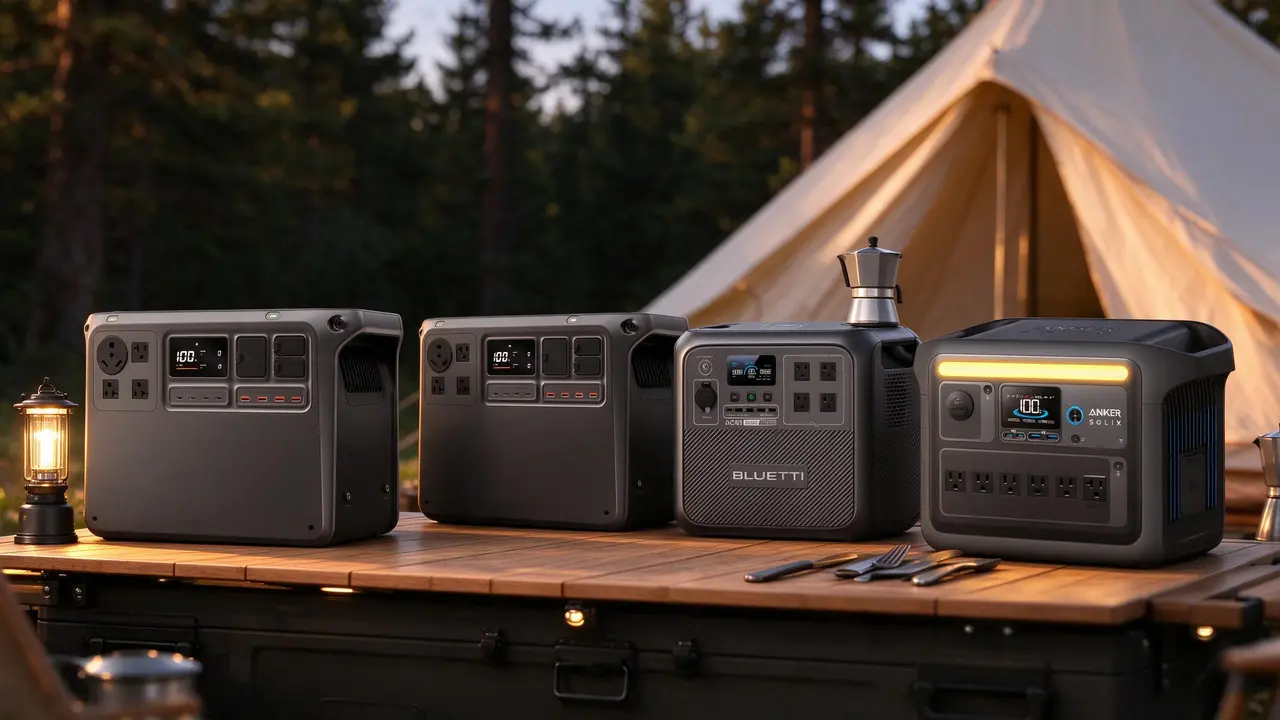
Updated
What off-grid living actually asks of a power station
If you're setting up an off-grid cabin or replacing a generator for daily living, the first question isn't which station has the biggest number on the box. It's what you need to run between solar charges, and for how long. A weekend cabin with lights, a phone, and a laptop is a different job than a full-time setup running a fridge, a CPAP, and power tools.
This guide is not for whole-home backup with a transfer switch, and it's not for running a 240V well pump or central AC. Those need a different class of system. Here we're matching four portable LiFePO4 stations to off-grid tiers: weekend cabin, part-time off-grid, and full-time light living. Every spec comes from the manufacturer listings; owner reports fill in the real-world behavior.
To map your own use to a tier, estimate daily watt-hours (Wh/day). A weekend cabin with lights, phone, and laptop typically draws 300–600 Wh/day. A part-time off-grid setup with a fridge, router, and lights runs about 1,000–1,500 Wh/day. Full-time light living with a fridge, CPAP, and occasional tools is roughly 2,000–3,000 Wh/day. These are planning ranges, not measured results — your duty cycles will vary.
- Hard requirement: LiFePO4 chemistry for cycle life and safety in a cabin setting.
- Hard requirement: solar input that can realistically recharge the bank between uses.
- Hard requirement: continuous AC output that covers your largest single load without tripping.
- Hard requirement: a weight you can actually move into place — or a permanent spot for it.
| Tier | Typical loads | Estimated Wh/day | Best-fit station here |
|---|---|---|---|
| Weekend cabin | Lights, phone, laptop, small fan | 300–600 Wh | Jackery Explorer 1000 v2 |
| Part-time off-grid | Fridge, router, lights, occasional tool | 1,000–1,500 Wh | BLUETTI AC180 or Anker C1000 |
| Full-time light living | Fridge, CPAP, tools, Starlink | 2,000–3,000 Wh | DJI DYM2000L |
Quick picks: top, runner-up, also-consider
Top pick for full-time light off-grid: DJI DYM2000L. It's the only station here with 2,048 Wh and 3,000 W continuous, which means it can run a fridge, a CPAP, and a few tools without juggling. The catch is weight and a real gray-market risk — buy only from an authorized seller and check voltage/frequency on arrival.
Runner-up for part-time off-grid: BLUETTI AC180. At $499 it's the cheapest per nameplate Wh here ($0.43/Wh), and owners report easy UPS switchover and fast recharge. But idle draw and ~90% usable capacity mean you plan for less runtime than the sticker suggests.
Also consider: Jackery Explorer 1000 v2 for weekend cabins where weight matters most (23.8 lb), and Anker C1000 for camper or cabin setups where you want a compact 1 kWh bank with strong fridge runtime and app control.
Budget rule: if your budget is under $600, buy the BLUETTI AC180 unless you need the Jackery's lighter weight or the Anker's fridge runtime and expansion option. Cheaper is better when you can live with the AC180's ~20W idle draw and ~90% usable capacity; the Anker costs more but gives you a lighter 28.4 lb body and longer fridge runtime.
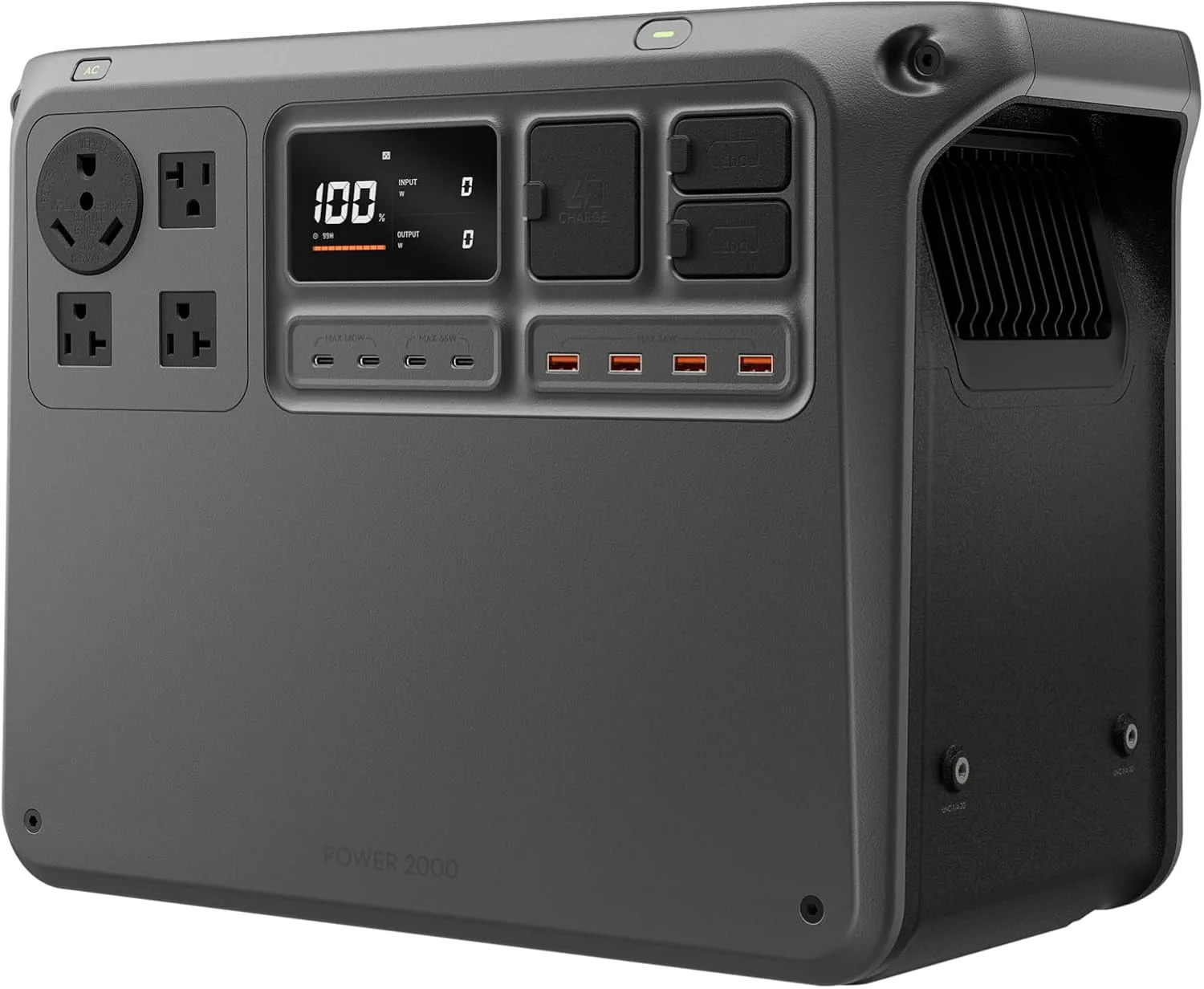
Compact Size, 3000W Stable Output, Fast Recharge, Electric Generator for Home, Camping & RVs, Off-Grid
Highlights
- 2048Wh rated capacity
- 3000W continuous AC
- 47.8 lb (~21.7 kg)
- About $1299 list
Best for
- Compact Size: longer outages or higher continuous loads (still not whole-home wiring)
- RV / off-grid days where recharge speed matters as much as Wh
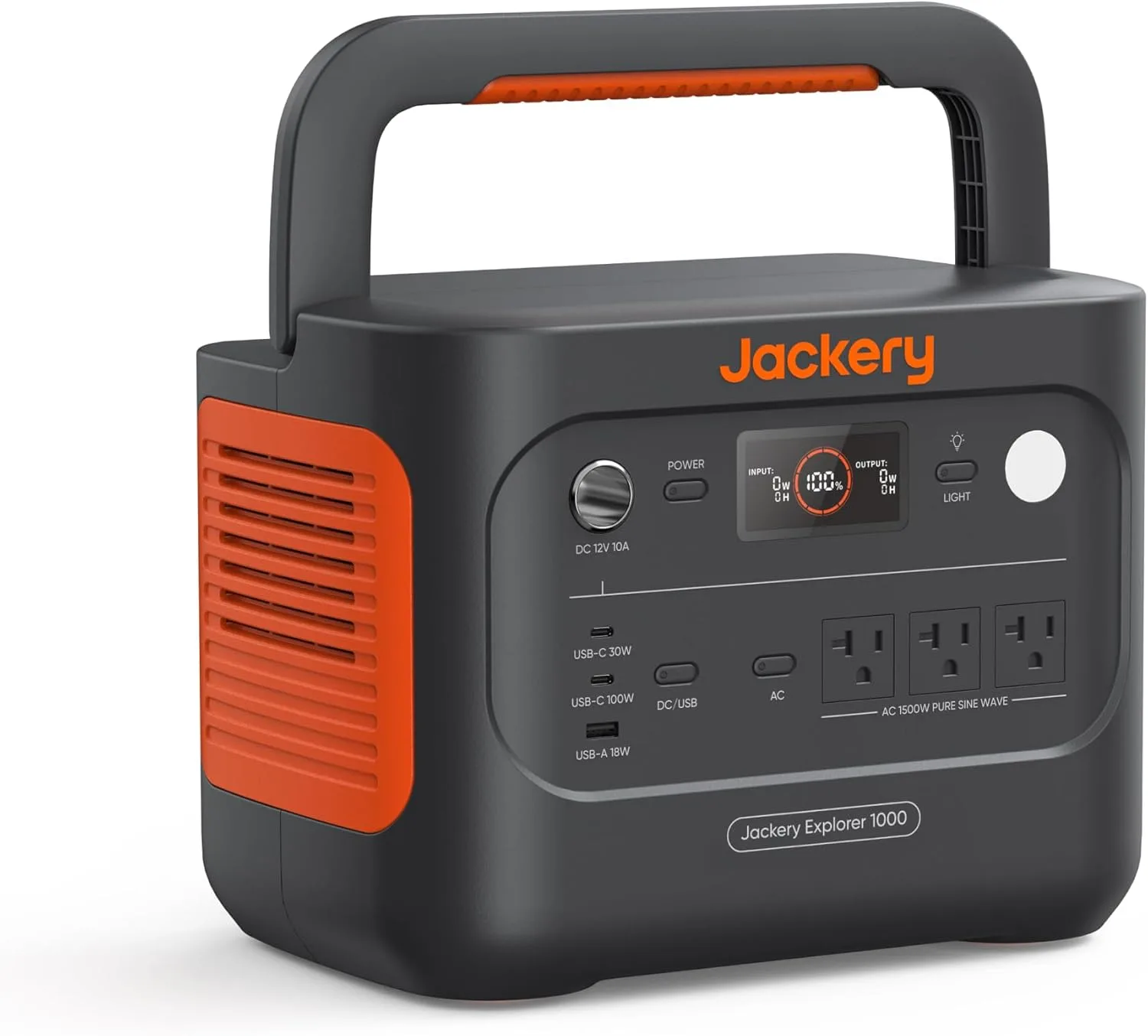
Jackery Explorer 1000 v2 Portable Power Station,1070Wh,1500W
Highlights
- 1070Wh rated capacity
- 1500W continuous AC
- LiFePO4 chemistry
- Up to 400W solar input
- 23.8 lb (~10.8 kg)
- About $559 list
Best for
- Explorer 1000 v2: weekend camping when 23.8 lb carry weight matters as much as 1070Wh
- Essentials bridge at home (fridge cycles, router) when sized to the Wh
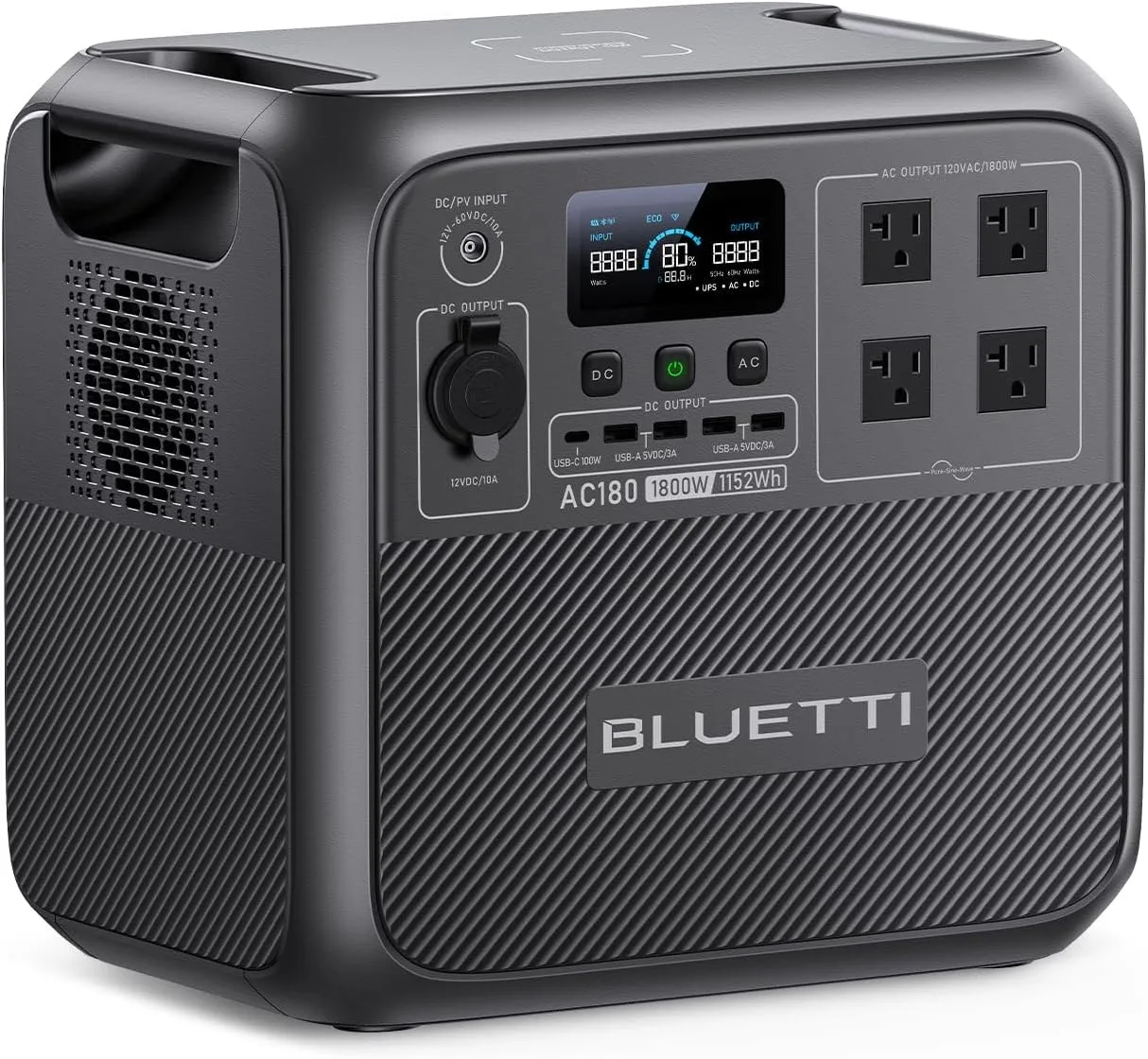
BLUETTI Portable Power Station AC180, 1152Wh LiFePO4 Battery Backup w/ 2 1800W
Highlights
- 1152Wh rated capacity
- 1800W continuous AC
- LiFePO4 chemistry
- Up to 500W solar input
- 35.3 lb (~16.0 kg)
- About $499 list
Best for
- AC180: most Wh per list dollar in mid-size LiFePO4 shortlists (~1152Wh)
- Home essentials when 1800W continuous matters more than a light carry
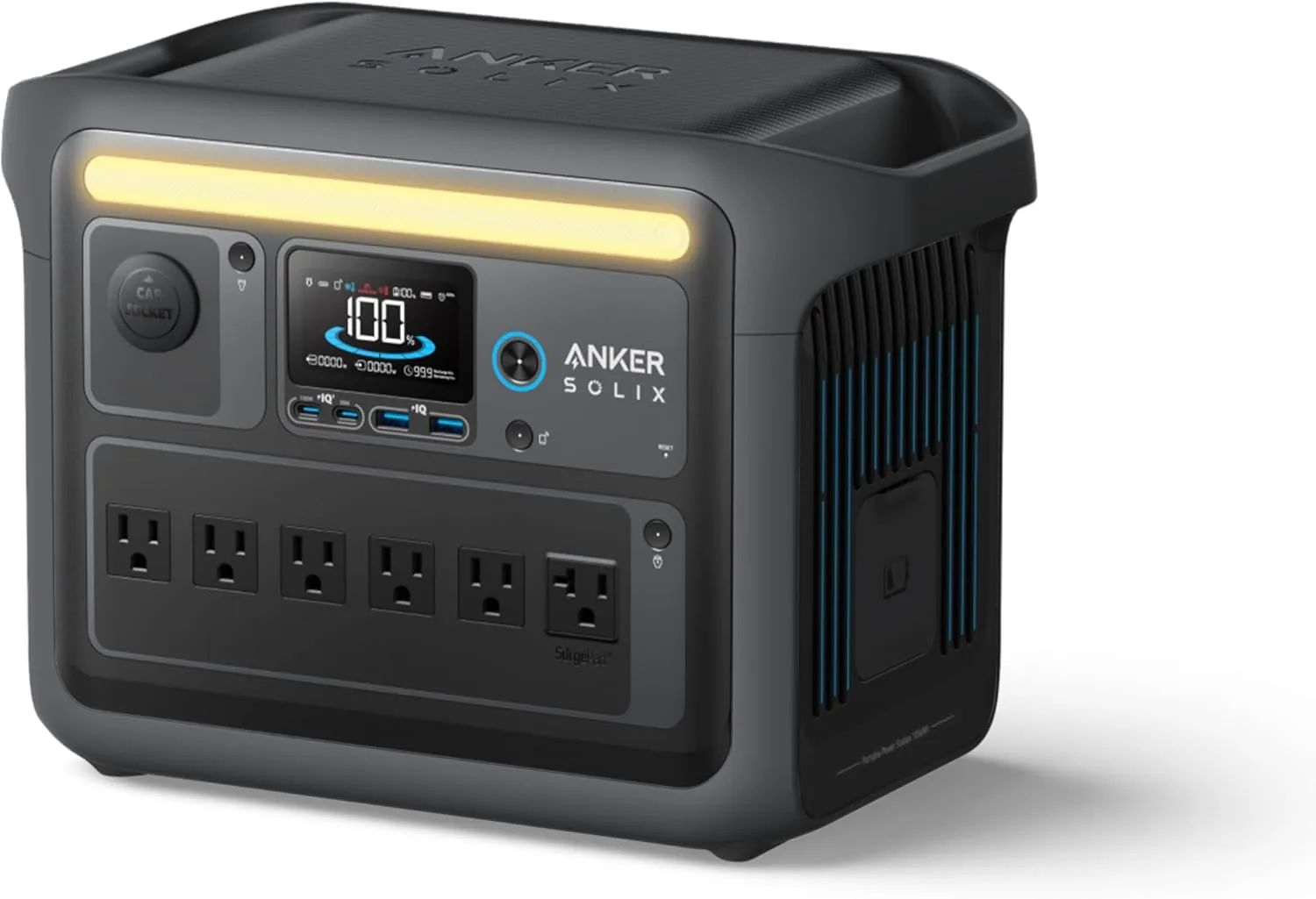
Anker C1000 Portable Power Station
Highlights
- 1056Wh rated capacity
- 1800W continuous AC
- LiFePO4 chemistry
- Up to 600W solar input
- 28.4 lb (~12.9 kg)
- About $599 list
Best for
- SOLIX C1000: small appliances and tools that need ~1800W continuous, not just phone charging
- Essentials bridge at home (fridge cycles, router) when sized to the Wh
How we weighted this shortlist
I weighted capacity and usable runtime at 30%, continuous output at 25%, solar recharge practicality at 20%, portability and footprint at 15%, and owner-reported reliability at 10%. The percentages are not lab scores; they're a way to keep the ranking honest when a big battery is also a heavy one.
I read through owner reviews and grouped the recurring themes — what people actually ran, what broke, what surprised them. Those themes inform the per-SKU notes below. The numbers come from the listings. My checks are home-user checks grounded in those owner themes and the published specs; they are not lab-bench measurements. One Amazon Associates disclosure: if you buy through a link here, we may earn a commission. Picks are fit-led, not commission-led.
Here's how each station scores on those weights, using the listing specs and owner themes:
| Product | Capacity & usable runtime (30%) | Continuous output (25%) | Solar recharge (20%) | Portability (15%) | Owner-reported reliability (10%) |
|---|---|---|---|---|---|
| DJI DYM2000L | High (2,048 Wh) | High (3,000 W) | Med (needs extra cable/mod) | Low (47.8 lb) | Med (gray-market and early-failure reports) |
| BLUETTI AC180 | Med (1,152 Wh, ~90% usable) | Med (1,800 W) | High (fast AC recharge) | Med (35.3 lb) | High (easy UPS switchover) |
| Jackery Explorer 1000 v2 | Med (1,070 Wh) | Med (1,500 W) | Med (proprietary port) | High (23.8 lb) | High (quiet mode, fast recharge) |
| Anker C1000 | Med (1,056 Wh) | Med (1,800 W) | High (fast recharge) | Med (28.4 lb) | Med (app issues, seller risk) |
The ranking: four stations for four off-grid tiers
Here's how the four stack up for off-grid living, from weekend cabin to full-time light. Prices are list prices; ratings are listing aggregates, not owner proof.
Why DJI ranks #1 despite low portability and medium reliability: the weighted math favors capacity and output. DJI scores High on the 30% capacity weight and High on the 25% output weight, while its Low portability (15%) and Med reliability (10%) only drag down a combined 25% of the score. BLUETTI wins on solar recharge and reliability but is only Med on capacity and output, so it lands at #2. Jackery's High portability can't overcome Med capacity and output. Anker's Med across the board puts it at #3, ahead of Jackery because its High solar recharge and Med reliability edge out Jackery's Med solar and High reliability when capacity and output are equal. The tier table above lists Anker as a part-time option alongside BLUETTI because both have 1,800 W output and ~1 kWh capacity; the ranking order reflects the weighted score, not a claim that Anker is better for every part-time user.
#1 DJI DYM2000L — the full-time light off-grid anchor
The DYM2000L is the only station here that clears 2,000 Wh and 3,000 W continuous, and that changes what you can run. Owners report running a Starlink, a large mini-LED TV, and a pellet grill at the same time for hours, and one owner ran high-power tools and an electric rope winch on job sites. Another powered a CPAP for six nights camping with the humidifier off. For a cabin where you want to run a fridge and a few tools without thinking about it, this is the one.
The trade-offs are real. It's 47.8 lb, so it's a move-and-leave unit, not something you carry between rooms. Solar charging needs an extra cable or mod — there's no standard solar cable in the box. Pair it with a 400–800 W panel array using the required adapter; the listing specifies a solar input connector that is not standard MC4, so confirm the exact plug type before ordering panels. And the owner reports include a gray-market Hong Kong unit set for 50Hz that threw an error code every minute during charging, plus another unit that failed after three weeks and took nearly seven weeks of support friction. Check the seller carefully.
Suits: full-time light off-grid or job-site power where you need high continuous output and can vet the vendor. Skip if: you need plug-and-play solar out of the box, or you want a station you can carry up a ladder.
- Strengths: high continuous and peak output; fast AC recharge; app monitoring; UPS backup.
- Caveats: heavy; solar cable not included; gray-market risk; early-failure reports.
#2 BLUETTI AC180 — the value pick for part-time off-grid
The AC180 is the cheapest per nameplate Wh here at $0.43/Wh, and owners consistently report easy setup and instant UPS switchover. One owner ran a basement circuit with a TV, router, and lights through an 8-gauge cord and the switchover was seamless. It charged from 0 to 100% in about two hours at standard speed after firmware updates, and owners ran a box fan overnight and a portable car fridge for five days.
The honest cracks matter for off-grid planning. With the inverter on, it draws about 20W idle, which can eat nearly half the battery over a day with small loads, and the manual says only ~90% of capacity is usable. The wireless charger on top disconnected after a few seconds in owner reports — don't buy it for that. It's also 35.3 lb and awkward to carry far. For solar, pair it with a 200–500 W panel using the standard MC4 connector; the listing gives a solar input voltage range that you should match to your panel's Voc.
Suits: part-time off-grid or UPS backup where you can account for idle draw and don't need every watt-hour. Skip if: you need reliable wireless charging or maximum usable capacity per dollar.
- Strengths: UPS switchover; clear display; fast recharge; app control.
- Caveats: ~20W idle draw; ~90% usable capacity; wireless charger unreliable; heavy.
#3 Anker C1000 — the compact camper and cabin fridge backup
The C1000 is the smallest and lightest of the 1 kWh class here at 28.4 lb, and owners report strong fridge runtime: one ran a full-size garage fridge for 36 hours and a kitchen side-by-side for 12 hours. Another kept a fridge going 8 hours during a blackout and still had 38% left. In a truck camper with the expansion battery, it ran a microwave, Keurig, furnace, and hot water heater during quiet hours.
The watch-outs are practical. It's heavy in hand — owners say it feels more like 40–60 lb despite the 28 lb spec — so it's a move-and-leave unit. The AC wall cable is only about 4–5 ft, which is short for something this size. The top light is dim and yellow, and the app had wifi/Bluetooth connection issues until a firmware update. One owner received a dead unit with no seller support, so check the seller. For solar, pair it with a 200–400 W panel using the required adapter; the listing specifies a non-MC4 solar input, so confirm the connector type before buying a panel.
Suits: camper or cabin setups where you want a compact 1 kWh bank with strong fridge runtime and app control. Skip if: you need to carry it often or want a long AC cord.
- Strengths: fridge runtime; fast recharge; app control; expansion battery option.
- Caveats: heavy in hand; short AC cable; dim light; app connection issues; seller risk.
#4 Jackery Explorer 1000 v2 — the lightweight weekend cabin pick
At 23.8 lb, the Explorer 1000 v2 is the lightest station here, and that matters if you're carrying it from car to cabin. Owners report running a refrigerator and a portable AC unit simultaneously during testing, and quiet mode was quiet enough to sleep while powering a fridge and fans overnight. It recharged from 0 to 100% in about 1 hour 40 minutes in normal mode, and one owner ran a 12V fridge for three days from 100% to 43%.
The limits are clear. It won't run a 1700W air fryer, and at 1,070 Wh you're not powering large appliances for long. There are no 12V DC barrel ports, so you'll need an adapter from the cigarette socket, and the solar port is less common than standard connectors. The buttons are recessed and it's easy to leave the unit on accidentally; the wifi also doesn't stay on overnight. For solar, pair it with a 200–400 W panel using the required adapter; the listing specifies a proprietary solar input, so confirm the connector type before buying a panel.
Suits: weekend cabins and short outages where weight matters most and you size loads realistically. Skip if: you need to run big appliances or want standard solar plugs.
- Strengths: lightweight; quiet mode; fast recharge; ran fridge + portable AC.
- Caveats: limited capacity for large appliances; no 12V barrel ports; proprietary solar port; recessed buttons.
What goes wrong when you size by wishful thinking
The most common off-grid mistake is buying for the biggest load you might run once, then discovering the station can't recharge fast enough between uses. Solar input is the bottleneck: a 200W panel in real conditions rarely delivers 200W, and owners report 57W on a cloudy day and 161W on a clear day from a 200W panel. Plan for less than the sticker.
The second mistake is ignoring idle draw and usable capacity. The AC180's ~20W idle draw and ~90% usable capacity are not unique — they're just documented. If you're running small loads overnight, a smaller station with less idle draw can outperform a bigger one.
The third is seller risk. The DJI gray-market report and the Anker dead-on-arrival report both ended in support friction. Buy from a seller with a clear return policy, and check the unit's voltage and frequency settings on arrival.
Here's a worked runtime example to close the loop: a typical fridge draws about 60W running, but cycles on roughly one-third of the time, so average draw is ~20W. Over 24 hours that's 480 Wh. With the AC180's ~90% usable capacity (about 1,037 Wh), that's roughly two days of fridge-only runtime before solar. Add a 20W idle draw and you lose another 480 Wh/day — so plan your overnight budget with both the fridge duty cycle and the inverter idle draw in mind.
- Pitfall: assuming solar panels deliver their rated wattage in real conditions.
- Pitfall: ignoring idle draw and usable capacity when calculating runtime.
- Pitfall: buying from a gray-market seller and ending up in warranty limbo.
- Pitfall: sizing for a peak load you'll never run continuously.
Who should pick something else
If you need to run a 240V well pump, central AC, or a whole-home transfer switch, none of these four are the right tool. That's a different class of system with a permanent install and a licensed electrician.
If you need a station you can carry in a backpack or up a ladder, the Jackery is the only one here that comes close, and even it is 23.8 lb. If you need plug-and-play solar with standard connectors, the DJI and Jackery both have proprietary or missing solar cables — look at a station with standard MC4 input.
If you need the absolute cheapest per nameplate Wh, the BLUETTI AC180 is it at $0.43/Wh. But if you need maximum usable capacity and can handle the weight, the DJI's 2,048 Wh and 3,000 W continuous is the only one here that won't flinch at a fridge plus tools.
Who should not buy any of these: if your daily budget is under 300 Wh and you only need phone and laptop charging, a smaller 500 Wh station will save money and weight. If you live in an apartment with no solar access, a station with fast AC recharge (BLUETTI or Anker) makes more sense than one that depends on panels. If you're RV-only and always have shore power, a station is redundant. And if you're replacing a generator for whole-home backup, none of these four are a generator replacement — they're portable banks for specific loads.
Frequently asked
Can the DJI DYM2000L run a fridge and a CPAP overnight?
Owners report running a CPAP for six nights with the humidifier off, and running a fridge plus other loads. At 2,048 Wh and 3,000 W continuous, it has the headroom, but runtime depends on the fridge's duty cycle.
Can the BLUETTI AC180 run a fridge overnight?
Using the worked math above: a fridge averaging ~20W draws 480 Wh over 24 hours. The AC180's ~90% usable capacity is about 1,037 Wh, so fridge-only runtime is roughly two days before solar. Add the ~20W idle draw and you lose another 480 Wh/day, so overnight you're fine but multi-day fridge-only use needs recharge.
Which station is best for a weekend cabin?
The Jackery Explorer 1000 v2 at 23.8 lb is the easiest to carry, and owners report running a fridge and portable AC simultaneously. If you need more capacity, the Anker C1000 at 28.4 lb is the next step up.
Do any of these include solar panels?
No. The Jackery listing explicitly says solar panel not included, and the DJI requires a separate solar cable or mod. Budget for panels and cables separately.
How do I match a solar panel to these stations?
Check the station's solar input voltage range and connector type. The BLUETTI AC180 uses standard MC4 connectors and pairs with a 200–500 W panel. The DJI, Jackery, and Anker require specific adapters or proprietary connectors — confirm the exact type from the listing before buying a panel.
Method and sources
Model names and list prices come from the WattPicks catalog at build time. WattPicks does not run its own laboratory tests on power stations, and nothing on this page is presented as a measured result — it is catalog-backed buying guidance.
Read our methodology for how the catalog is normalized, and about WattPicks for who publishes it.