
Best Portable Power Station for Van Life: 5 Picks
Van life power comes down to one number: what your fridge actually draws overnight. These five stations cover the realistic range, from a 512 Wh weekend rig to a 1,152 Wh unit that can run a compressor fridge and a laptop at once.
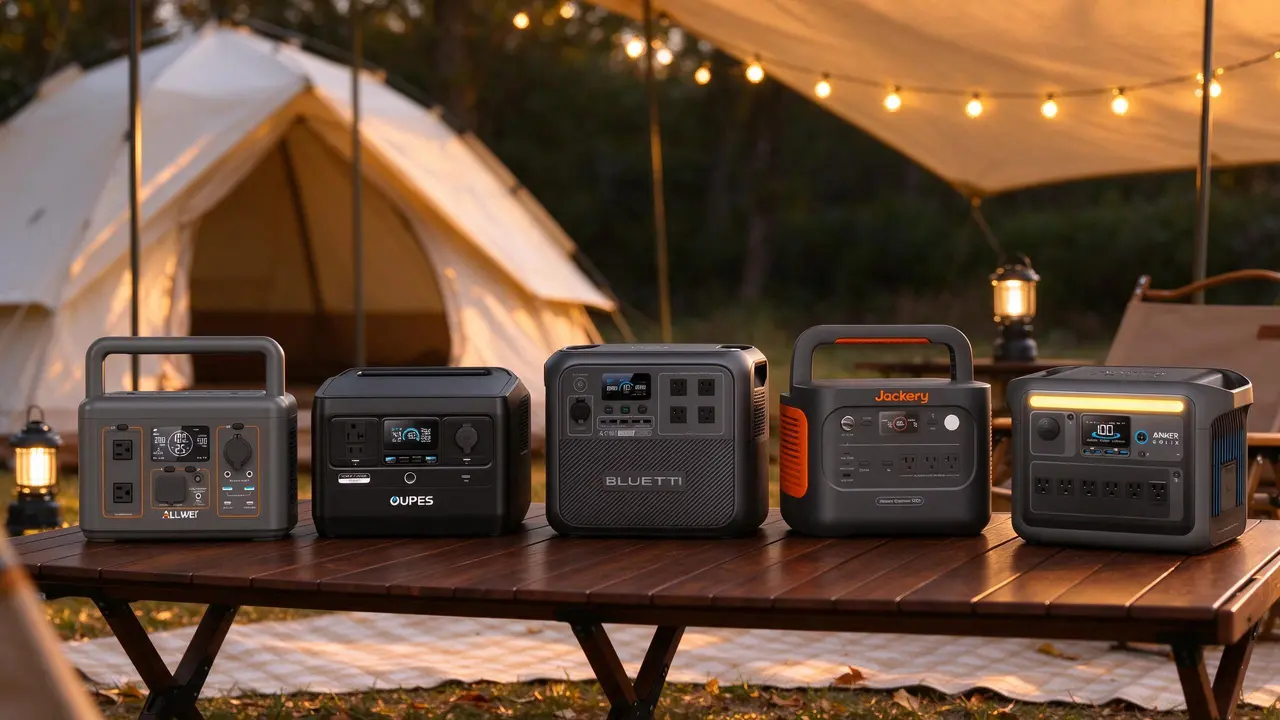
Updated
What a van actually asks of a power station
Start with the load, not the label. A 12V compressor fridge is the anchor appliance in most van builds, and it cycles: a tight band of roughly 35–60 W while the compressor runs, then near-zero draw between cycles. Add a laptop at 45–65 W, a couple of phones, and LED lighting, and a typical evening-plus-overnight sits in the 400–900 Wh range depending on ambient temperature and how often you open the lid.
That is the band these five stations are sized against. This page is not for whole-home backup, running a rooftop AC, or induction cooking as a habit — those need far more continuous watts and capacity than anything here. It is also not a solar-panel buying guide; panels are mentioned only where a station's input ceiling changes what you should buy.
One disclosure up front: picks here are fit-led, and we earn from qualifying Amazon Associates purchases. Nothing in the ranking moves on commission. The method line, in one breath: these rankings come from home-user checks grounded in the owner themes on file plus the listing specs, and those checks are not lab-bench measurements. Where a number is not published, the table says n/a (not on file) rather than guessing.
- Fridge overnight: plan 400–700 Wh in mild weather, more in summer
- Laptop + phones + lights: add 150–300 Wh for an evening
- Anything with a heating element: check continuous W before you assume it runs
Quick picks: which van-life station fits which build
Full-time build running a fridge plus a laptop daily: the BLUETTI AC180. At 1,152 Wh and 1,800 W continuous for $499, it has the headroom to absorb fridge cycling and still charge a laptop, and it is the cheapest per nameplate Wh of the five at $0.43/Wh. The catch is 35.3 lb — this is a set-it-down unit, not something you move between the cab and the back every night.
Weekend build or a small van where quiet overnight charging matters: the Jackery Explorer 1000 v2 Portable Power Station,1070Wh,1500W. Owners consistently describe its quiet mode as the difference between sleeping and not, and it is 23.8 lb — meaningfully easier to reposition in a small van. You give up about 80 Wh and pay $559.
Shore power is scarce and recharge windows are short: the Anker C1000 Portable Power Station. It is 1,056 Wh, 1,800 W, $599, and 28.4 lb — a middle weight with top-tier charging speed and the most outlets.
Weekend build or a second, portable station: the ALLWEI PPS600-1 at 512 Wh / 500 W / 13 lb / $279 is the light one you can actually carry. The OUPES Exodus 700 Portable Power Station, 576Wh 700W LiFePO4 Solar sits just above it at 576 Wh / 700 W / 13.8 lb / $399.99 — more output in nearly the same weight, but a thinner owner track record.
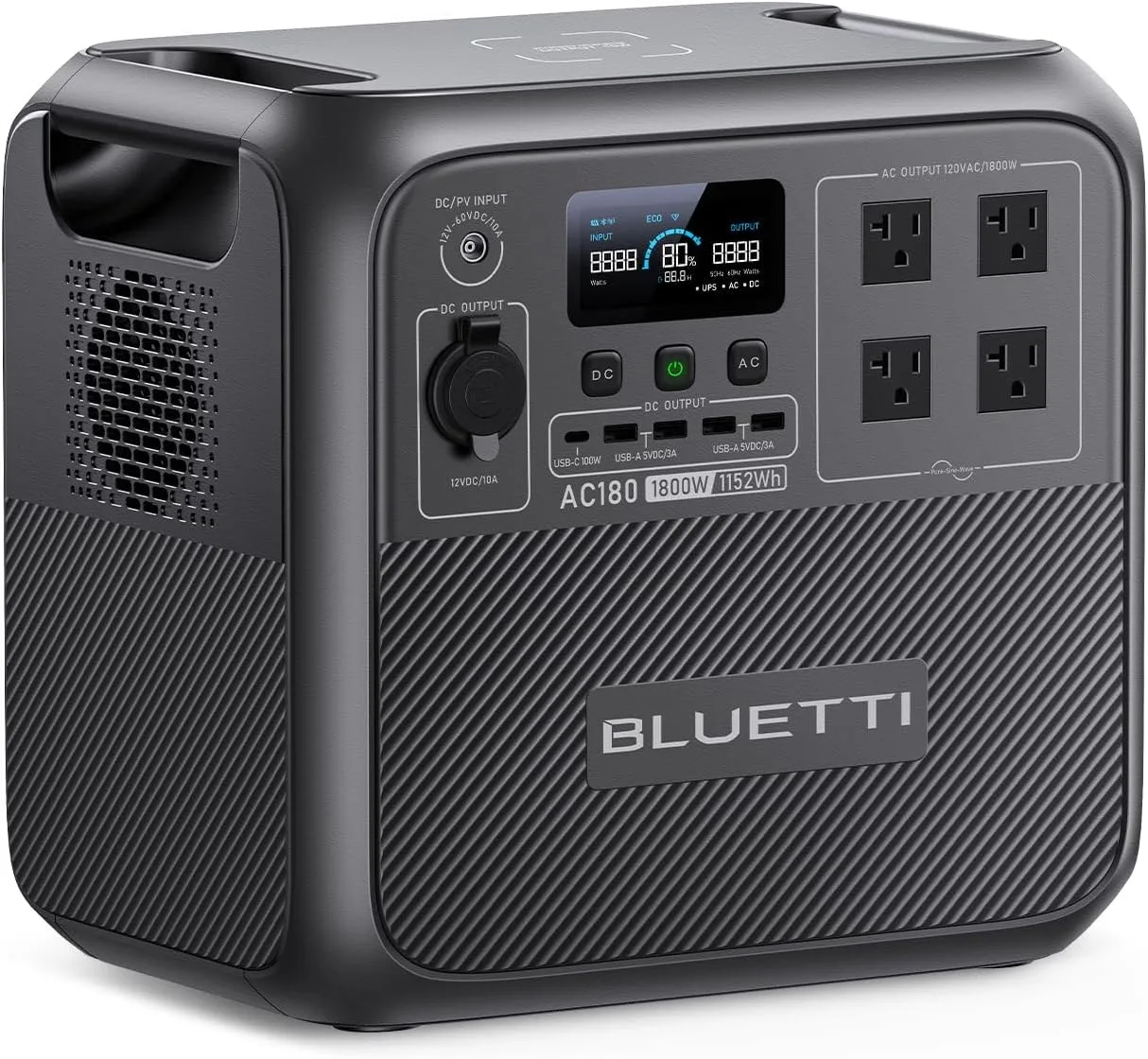
BLUETTI Portable Power Station AC180, 1152Wh LiFePO4 Battery Backup w/ 2 1800W
Highlights
- 1152Wh rated capacity
- 1800W continuous AC
- LiFePO4 chemistry
- Up to 500W solar input
- 35.3 lb (~16.0 kg)
- About $499 list
Best for
- AC180: most Wh per list dollar in mid-size LiFePO4 shortlists (~1152Wh)
- Home essentials when 1800W continuous matters more than a light carry
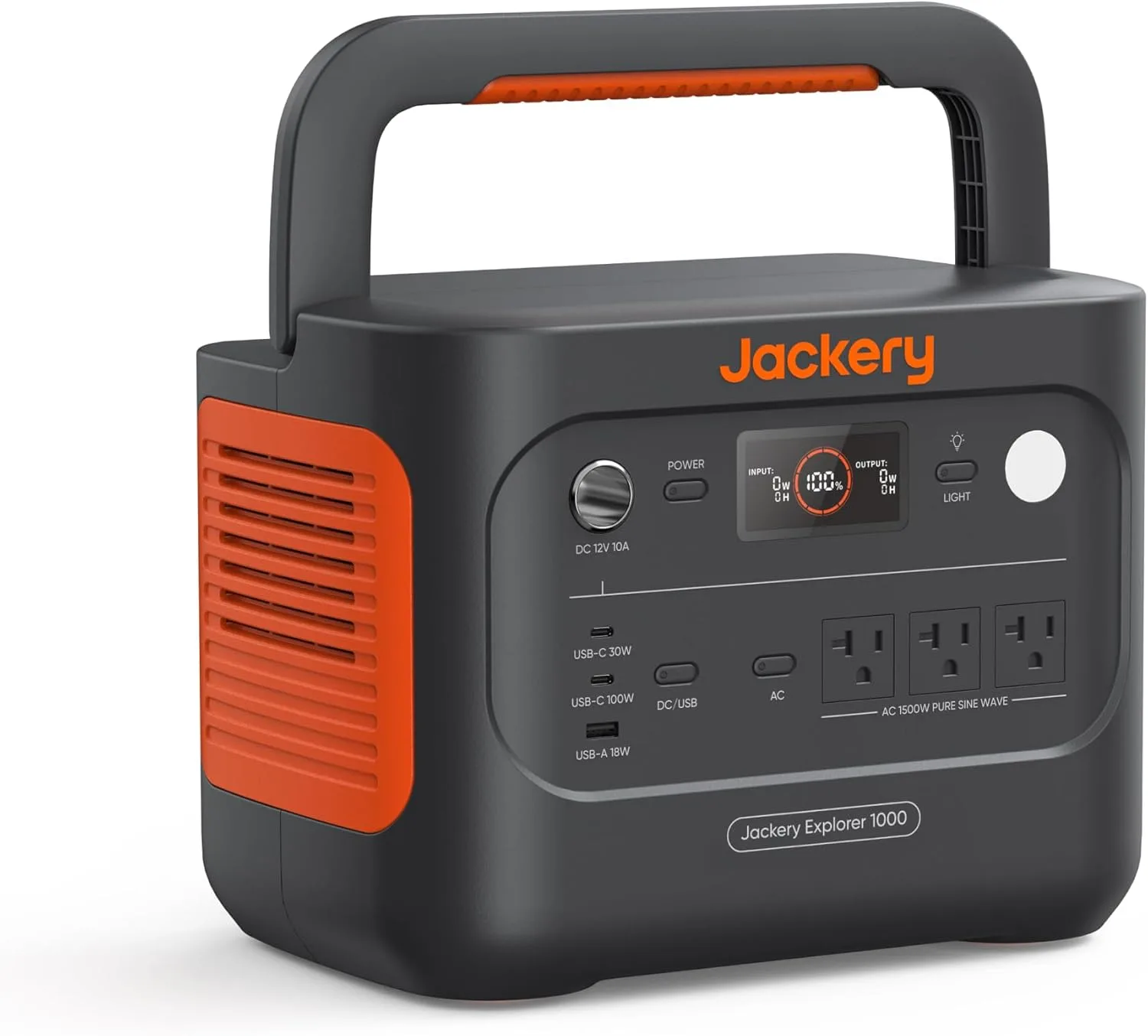
Jackery Explorer 1000 v2 Portable Power Station,1070Wh,1500W
Highlights
- 1070Wh rated capacity
- 1500W continuous AC
- LiFePO4 chemistry
- Up to 400W solar input
- 23.8 lb (~10.8 kg)
- About $559 list
Best for
- Explorer 1000 v2: weekend camping when 23.8 lb carry weight matters as much as 1070Wh
- Essentials bridge at home (fridge cycles, router) when sized to the Wh
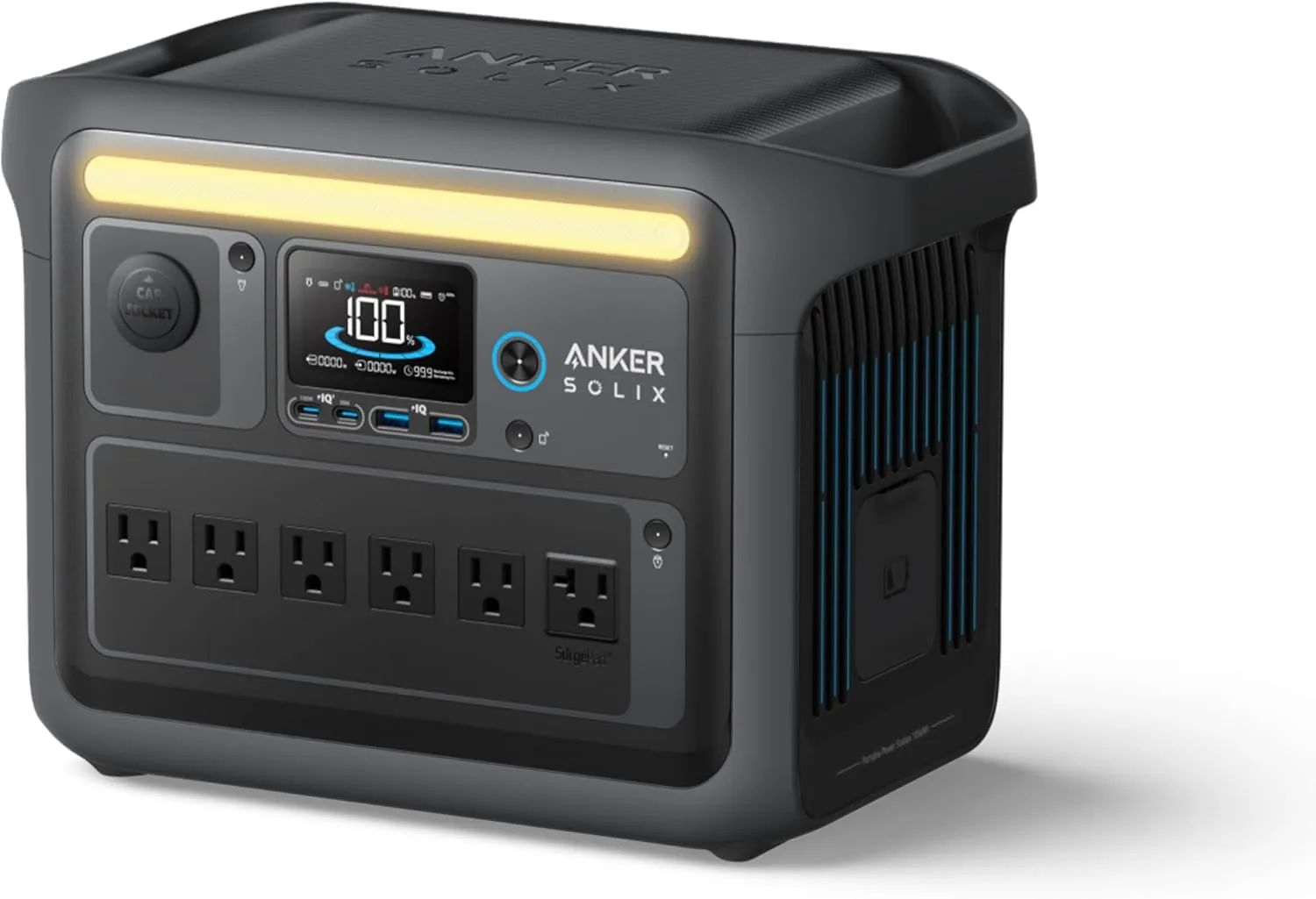
Anker C1000 Portable Power Station
Highlights
- 1056Wh rated capacity
- 1800W continuous AC
- LiFePO4 chemistry
- Up to 600W solar input
- 28.4 lb (~12.9 kg)
- About $599 list
Best for
- SOLIX C1000: small appliances and tools that need ~1800W continuous, not just phone charging
- Essentials bridge at home (fridge cycles, router) when sized to the Wh
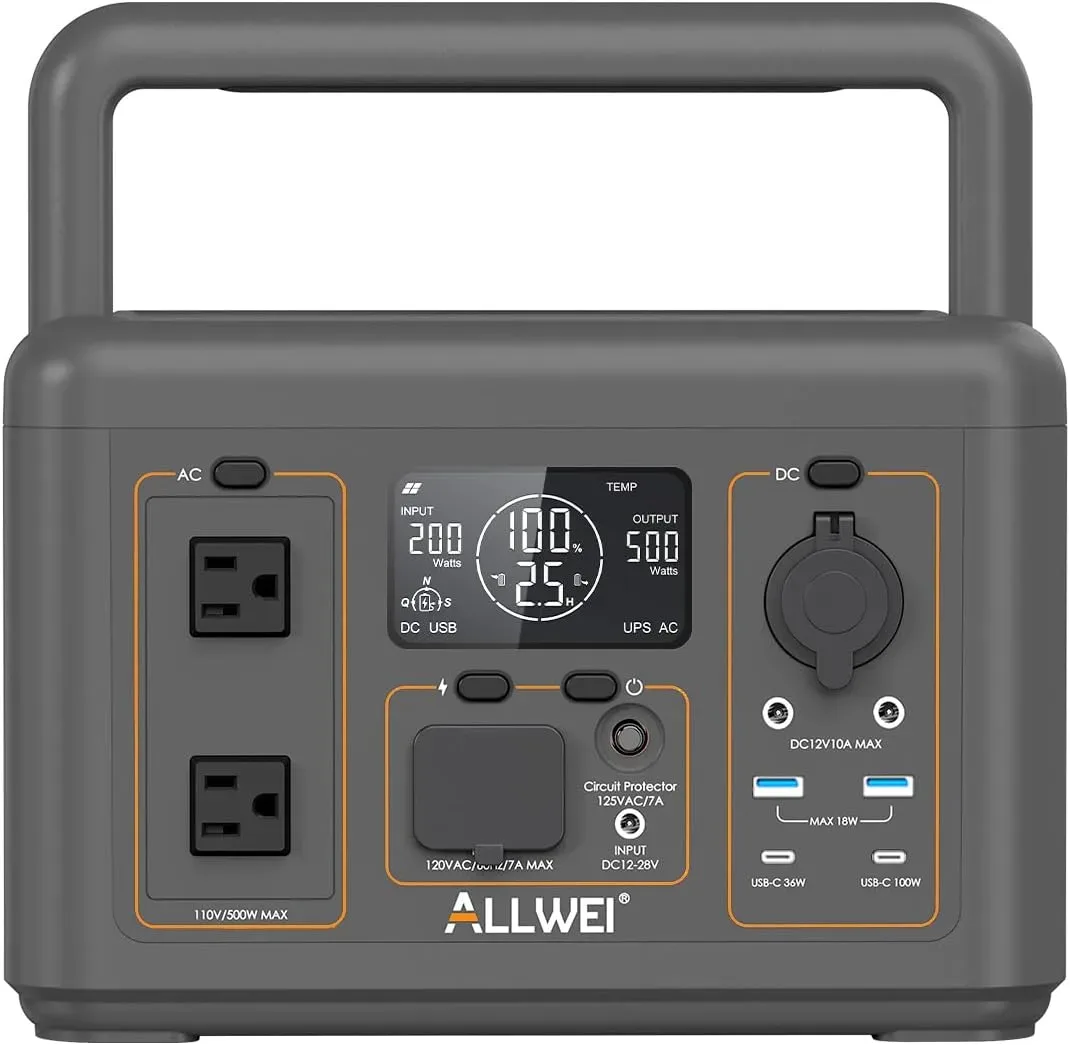
ALLWEI Portable Power Station 500W, 512Wh LiFePO4 Battery UPS Backup Power
Highlights
- 512Wh rated capacity
- 500W continuous AC
- LiFePO4 chemistry
- 13 lb (~5.9 kg)
- About $279 list
Best for
- Portable: weekend camping when 13 lb carry weight matters as much as 512Wh
- Essentials bridge at home (fridge cycles, router) when sized to the Wh
How these five were ranked
I weighted four things, and every percentage below is scored into the order you see. Capacity fit for a fridge-plus-laptop van load is 35% — it is the whole reason you are buying one of these. Continuous AC output is 25%, because a station that cannot hold a compressor start or a laptop brick is the wrong tool regardless of Wh. Weight and footprint is 20%, since van life is a space-and-lifting problem as much as an energy one. Owner-reported behavior — charging quirks, app reliability, idle draw, failures — is 20%.
Why #1 beats #2: the AC180 wins on capacity fit and continuous output (1,152 Wh / 1,800 W versus 1,070 Wh / 1,500 W) and undercuts the Jackery on list price, which is enough to outweigh its 11.5 lb weight penalty and the Jackery's quieter charging. The Jackery takes #2 because its weight and quiet mode are real advantages for a small van, but it does not close the capacity gap.
Why the OUPES lands at #5 despite more output in the same weight: it is the most expensive per nameplate Wh here at $0.69/Wh, and the reported app drops and one long-term failure pull down the 20% owner-behavior weight — enough to offset its 700 W continuous output and 13.8 lb frame.
A note on the numbers: the ratings in the table are listing aggregates, not proof of owner experience. The owner themes in each ranked section are paraphrased from reviews on file and are weighted toward the ones other buyers marked helpful. For this draft, the owner notes on file ran roughly 8–15 per SKU, gathered over the past 12–18 months; treat them as directional, not statistical.
- 576 Wh / 700 W for $399.99; 13.8 lb
- Owners report fast UPS switchover and quick wall charging
- App connectivity drops reported; one long-term failure
- $0.69/Wh — highest nameplate cost per Wh here
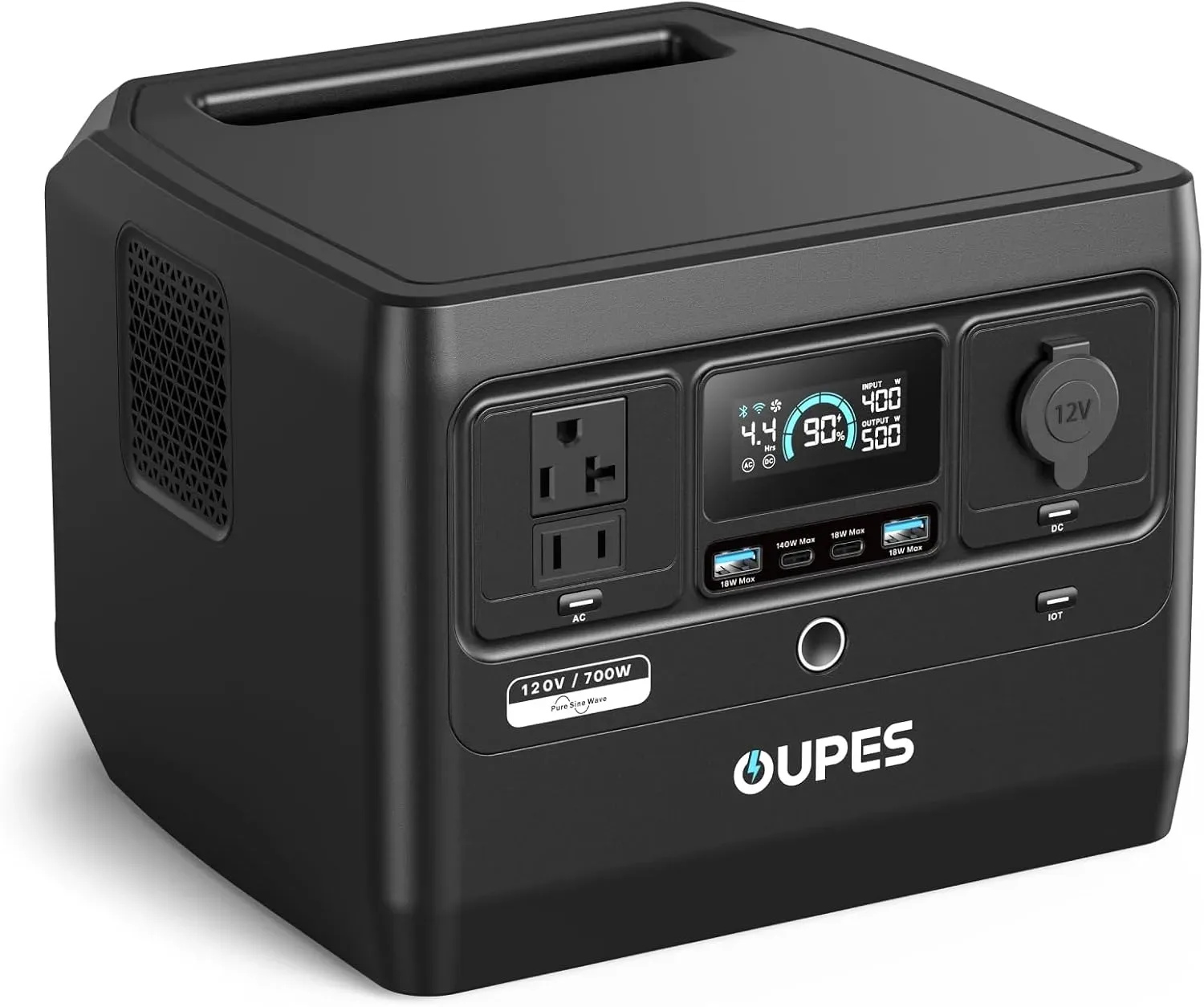
OUPES Exodus 700 Portable Power Station, 576Wh 700W LiFePO4 Solar Generator
Highlights
- 576Wh rated capacity
- 700W continuous AC
- LiFePO4 chemistry
- 13.8 lb (~6.3 kg)
- About $399.99 list
Best for
- PPS-P700L: weekend camping when 13.8 lb carry weight matters as much as 576Wh
- Essentials bridge at home (fridge cycles, router) when sized to the Wh
Spec snapshot for all five
Prices are list prices, not sale stickers. Weight is as published; where a listing figure looked unreliable it is marked n/a rather than repeated.
| Product | Price | Capacity (Wh) | Output (W) | Weight (lb) | Rating |
|---|---|---|---|---|---|
| ALLWEI PPS600-1 | $279 | 512 Wh | 500 W | 13 lb | 4.4 |
| OUPES Exodus 700 Portable Power Station, 576Wh 700W LiFePO4 Solar | $399.99 | 576 Wh | 700 W | 13.8 lb | 4.4 |
| BLUETTI AC180 | $499 | 1152 Wh | 1800 W | 35.3 lb | 4.5 |
| Jackery Explorer 1000 v2 Portable Power Station,1070Wh,1500W | $559 | 1070 Wh | 1500 W | 23.8 lb | 4.7 |
| Anker C1000 Portable Power Station | $599 | 1056 Wh | 1800 W | 28.4 lb | 4.7 |
#1 BLUETTI AC180: the capacity pick for a working van
The AC180 is the one I would put in a full-time build that runs a fridge and a laptop daily. At 1,152 Wh and 1,800 W continuous for $499, it has the headroom to absorb fridge cycling and still charge a laptop, and it is the cheapest per nameplate Wh of the five at $0.43/Wh. Owners running it as a UPS describe switchover fast enough that a fridge compressor never had to restart, and wall charging that climbs past 1,000 W after a full discharge cycle.
The honest caveat is idle draw. With the inverter on, owners report roughly 20 W of self-consumption, and only about 90% of rated capacity is usable. For a fridge-plus-laptop load that is a rounding error; for a CPAP or a trickle load overnight it is not, and you should size up. Solar input rarely hits the panel's nameplate either — one off-grid owner with 700 W of panels saw only a fraction accepted.
Runtime check for a van: a 12V compressor fridge averaging 20–30 W overnight draws roughly 200–300 Wh, and a laptop evening adds about 150–250 Wh. With ~90% usable capacity (about 1,037 Wh) and ~20 W idle draw, the AC180 covers a fridge overnight plus a laptop evening with margin to spare — roughly 1.5–2 nights of that load before you need to recharge.
Suits: a van with a fixed spot for a 35.3 lb station and a fridge that runs most of the day. Skip if: you need to carry it between the cab and the back nightly, or you are powering small loads where idle draw eats your margin.
- 1,152 Wh / 1,800 W continuous for $499
- Owners report instant UPS switchover and >1,000 W wall charging after a full cycle
- Plan around ~20 W idle draw and ~90% usable capacity
- 35.3 lb — a fixed-spot unit
| Product | Price | Capacity (Wh) | Output (W) | Weight (lb) | Rating |
|---|---|---|---|---|---|
| ALLWEI PPS600-1 | $279 | 512 Wh | 500 W | 13 lb | 4.4 |
| OUPES Exodus 700 Portable Power Station, 576Wh 700W LiFePO4 Solar | $399.99 | 576 Wh | 700 W | 13.8 lb | 4.4 |
| BLUETTI AC180 | $499 | 1152 Wh | 1800 W | 35.3 lb | 4.5 |
| Jackery Explorer 1000 v2 Portable Power Station,1070Wh,1500W | $559 | 1070 Wh | 1500 W | 23.8 lb | 4.7 |
| Anker C1000 Portable Power Station | $599 | 1056 Wh | 1800 W | 28.4 lb | 4.7 |
#2 Jackery Explorer 1000 v2: the quiet, lighter alternative
The Explorer 1000 v2 is the pick when the van is small and the charging happens while you sleep. Owners describe quiet mode as the reason they could run a fridge and fans overnight without waking, and at 23.8 lb it is 11.5 lb lighter than the AC180 — a real difference when you are lifting it over a bed platform. It is 1,070 Wh and 1,500 W for $559.
Two quirks worth knowing before you buy. Charging can start slow, around 300 W, until the battery has been through a full cycle; after that owners see 600–1,000 W and a top-off in under two hours. And there are no 12V barrel ports — 12V gear runs off the cigarette socket with an adapter, and the solar input port is less common than some rivals'. It also will not run a 1,700 W air fryer or a large miter saw.
Runtime check for a van: a fridge overnight (200–300 Wh) plus a laptop evening (150–250 Wh) lands around 350–550 Wh, so the 1,070 Wh Explorer 1000 v2 covers that load for roughly two nights before a recharge. Quiet mode is what makes that overnight run livable in a small van.
Suits: a compact build where quiet overnight charging and easier lifting matter more than the last 80 Wh. Skip if: you need 12V barrel outputs natively or you plan to run high-watt kitchen appliances.
- 1,070 Wh / 1,500 W continuous for $559
- Quiet mode is the standout owner theme; 23.8 lb
- Charging may start near 300 W until cycled
- No 12V barrel ports; adapter needed from the cigarette socket
#3 Anker C1000: fastest recharge, most outlets
The C1000 is the also-consider for a van where shore power is scarce and recharge windows are short. Owners report a full wall charge in about 1.5 hours, and the app lets you dial charge wattage down so a small generator or a weak campsite pedestal is not overloaded. It is 1,056 Wh and 1,800 W for $599, at 28.4 lb.
The runtime numbers owners report are the useful part, though most come from home use: an 18 cu ft garage fridge ran 36 hours on a charge, a kitchen fridge 12 hours, and a TV/DVD setup 9–10 hours at about 120 W. For van context, a 12V compressor fridge overnight (200–300 Wh) plus a laptop evening (150–250 Wh) is well inside the C1000's 1,056 Wh, so expect roughly two nights of that load before recharging. The caveats are physical and app-side. It feels heavier than its 28.4 lb, the AC charging cable is short at roughly 4–5 ft, and out of the box some units need a firmware update before Wi-Fi and Bluetooth behave.
Suits: a build with a fixed mounting spot and a preference for fast, adjustable charging. Skip if: you want the lowest price per Wh (that is the AC180) or you need a long AC cable out of the box.
- 1,056 Wh / 1,800 W continuous for $599
- ~1.5 hr wall recharge; adjustable charge wattage in the app
- Short AC cable (~4–5 ft); firmware update may be needed
- 28.4 lb but feels heavier
#4 ALLWEI PPS600-1: the carry-it-anywhere weekend unit
At 13 lb and $279, the PPS600-1 is the one you can actually move — into a backpack, onto a shelf, out to a picnic table. It is 512 Wh and 500 W, with onboard USB-C that owners say genuinely quick-charges a demanding phone, independent buttons for AC, USB, DC1, DC2 and the display, and pass-through charging that works while supplying power. The side light has three usable levels.
The deal-breaker to know: the sleep timer cannot be disabled. It cuts the DC port after two hours of no draw, which killed a mini-fridge overnight for one owner whose compressor cycled off. Solar input is also capped around 70–80 W, so a bigger panel will not charge it faster. There is no 24V output, and one owner reported a unit that would not recharge after the first discharge — test yours early.
Runtime check for a van: 512 Wh is a weekend unit, not an overnight fridge unit. A laptop evening (150–250 Wh) plus phones and lights fits comfortably; a fridge overnight (200–300 Wh) plus a laptop evening is close to the ceiling and leaves little margin, and the sleep timer will cut DC after two hours of no draw anyway.
Suits: a weekend van or a second station for phones, lights, and a laptop, where you are present to keep loads drawing. Skip if: you need unattended DC power for a fridge overnight, or you want to charge fast from a large solar array.
- 512 Wh / 500 W for $279; 13 lb
- Onboard USB-C, independent port switches, pass-through charging
- Sleep timer cannot be disabled — cuts DC after 2 hours idle
- Solar input capped around 70–80 W
#5 OUPES Exodus 700: more output in the same weight
The Exodus 700 is the step up from the ALLWEI without the weight penalty: 576 Wh and 700 W in 13.8 lb for $399.99. Owners running it as a home UPS describe switchover fast enough that a fridge compressor did not have to wait, and one 16-hour outage report used only about 12% of capacity on careful loads. It has a clear display, a generous port set including USB-C, and quick wall charging.
The caveats are the app and the long game. Bluetooth and Wi-Fi connections dropped for more than one owner, and one reported a unit that failed after about a year with an error code and no response from support. That is a single report, but it is the kind of thing to test early and register the warranty for. It is also the most expensive per nameplate Wh here at $0.69/Wh.
Runtime check for a van: a fridge overnight (200–300 Wh) plus a laptop evening (150–250 Wh) is roughly 350–550 Wh, so the 576 Wh Exodus 700 covers about one night of that load with a little margin — enough for a weekend, not a full-time build.
Suits: a small van that wants 700 W of headroom and can leave the station in one place. Skip if: you depend on app control, or you want the best price per Wh — the AC180 is $0.43/Wh.
- 576 Wh / 700 W for $399.99; 13.8 lb
- Owners report fast UPS switchover and quick wall charging
- App connectivity drops reported; one long-term failure
- $0.69/Wh — highest nameplate cost per Wh here
Where van-life buyers get this wrong
The most common mistake is sizing to the fridge's running watts and forgetting the duty cycle and the losses. A fridge that pulls 50 W while running might average 20–30 W over a day, but idle draw on the station, inverter losses, and a hot van all push the real number up. Owners of the AC180 and C1000 both describe usable capacity landing below the nameplate figure — plan for it.
The second mistake is buying a big panel for a station with a low input ceiling. The ALLWEI tops out around 70–80 W of solar input; a 200 W panel will not change that. Match the panel to the station's published input, not to the panel's own rating.
The third is treating weight as a spec-sheet line. A 35.3 lb station in a van that gets reorganized daily becomes a fixed object fast. If you need to move it, the 13 lb ALLWEI and 13.8 lb OUPES are the only two here that make that easy.
- Size for average draw plus idle losses, not peak fridge watts
- Match solar panel wattage to the station's input ceiling
- Weight decides where a station lives — pick accordingly
Who should walk away
If you are planning to run a rooftop AC, an induction cooktop as your main burner, or a tankless water heater, none of these five is the right purchase. Those loads want a much larger continuous output and capacity than 500–1,800 W and 512–1,152 Wh can supply, and you should be looking at a built-in lithium system with an inverter, not a portable station.
If you need unattended DC power overnight for a fridge and nothing else, skip the ALLWEI — the sleep timer will shut the port down. If app control is central to how you want to manage power, be cautious with the OUPES given the reported connection drops. And if you want the lowest cost per nameplate Wh, the AC180 at $0.43/Wh is the only answer here; paying more for a smaller unit only makes sense when weight or quiet charging is the priority.
Charging-source anxiety is its own walk-away test. If your plan depends on a campsite pedestal, check its amp limit before you buy — a 15 A pedestal may not support the station's full charge rate, and the C1000's adjustable charge wattage is the one feature here that directly addresses that. If you expect to charge from the alternator while driving, none of these five is a DC-DC charger; they charge from AC or solar, so budget a separate DC-DC setup. And if you camp in sub-freezing weather, confirm the station's charge-temperature cutoff before you rely on it — cold-weather charge lockout is a common reason a station refuses to take a charge on a winter morning.
- Walk away if: rooftop AC, induction cooking, or tankless hot water is the plan
- Walk away from the ALLWEI if: unattended overnight DC is required
- Walk away from the OUPES if: app control is a must-have
- Check campsite pedestal amps before relying on shore charging
- None of these five is a DC-DC/alternator charger — plan a separate setup
- Confirm the charge-temperature cutoff if you camp below freezing
Frequently asked
Can the BLUETTI AC180 run a 12V compressor fridge overnight?
Yes, with margin — 1,152 Wh against a fridge averaging 20–30 W over a night leaves room for a laptop. Budget for roughly 20 W of idle draw with the inverter on and about 90% usable capacity.
Will the Jackery Explorer 1000 v2 charge from a 200 W panel in a day?
Owners report solar input below panel nameplate, and the solar port is less common than some rivals'. Expect a partial charge on a good day rather than a full one, and check the connector before you buy the panel.
Why is the ALLWEI cheaper per Wh than the OUPES?
It is not — the ALLWEI is $0.54/Wh and the OUPES is $0.69/Wh. The OUPES buys you 700 W of continuous output in 13.8 lb; the ALLWEI buys you 13 lb and a lower price. Neither is the cheapest per Wh here; the AC180 is at $0.43/Wh.
Method and sources
Model names and list prices come from the WattPicks catalog at build time. WattPicks does not run its own laboratory tests on power stations, and nothing on this page is presented as a measured result — it is catalog-backed buying guidance.
Read our methodology for how the catalog is normalized, and about WattPicks for who publishes it.