
Best Foldable Solar Panels for Portable Power Stations
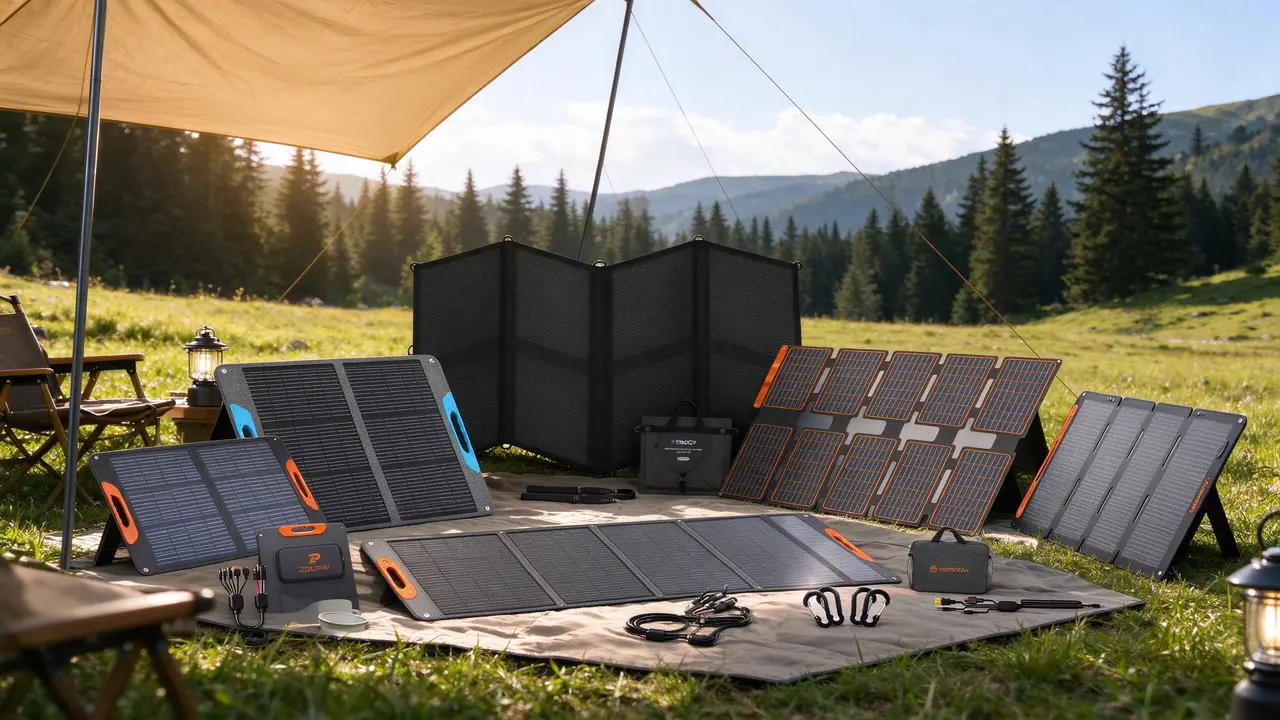
A foldable panel is only as good as the watts it actually pushes into your station — and how little it hurts to carry. Here are seven that earn their place, from a 4 lb notebook-sized 100W to a 200W blanket that packs into a backpack.
Updated
The buying question: how many watts does your station actually want?
Start with your power station's solar input limit, not the panel's sticker. A 100W panel into a station capped at 60W of solar input is a 60W panel with extra weight. A 200W panel into a 10A-limited input will bump that ceiling all afternoon and never show you its full number.
So the honest shortlist splits by job. If you're topping up a 300–1,000 Wh station on weekend trips, a 100W folder that packs small and sets up in seconds is the right tool. If you're recovering a night of CPAP use or running a fridge off a 1,000 Wh-plus station, you want 200W and you want it to hold output when the panel is flat and the sun is high.
What this page is not: a whole-home solar guide, and not a rigid-panel comparison. These are foldables and blankets you carry, unfold, and stake down. Every number below comes from the listings; the output expectations come from owner reports in the reviews, which is a different thing from a bench measurement.
- Check your station's max solar input watts and amps before anything else
- 100W class suits 300–1,000 Wh stations; 200W class suits 1,000 Wh and up
- Budget for an adapter cable on any panel that ships MC4-only
Quick picks: the seven, by job
Best overall for most people: ZOUPW 100W Portable Solar Panel for Power Station. It's the rare budget 100W that arrives with a genuinely useful 10 ft multi-connector harness, and owners put it near the top of their own 100W comparisons.
Best 200W for the money: TWELSEAVAN 200W Portable Solar Panel for Power Station. Owners report 145–190W in real conditions and cloudy-day charging that embarrasses the price tag. Best packable 200W: Renogy 200W Portable Solar Panel for Power Stations, 25% High Efficiency — 8.82 lb and a backpack-sized fold, if you accept that it needs propping.
Most packable, full stop: FlexSolar 100W Foldable Portable Solar Panel Charger IP67 Waterproof at 4.07 lb. Best output per pound when the sky is clean: Jackery SolarSaga 200W Portable Solar Panel,Bifacial. Cheapest way into a name-brand 100W: Renogy 100W Portable Solar Panel for Power Stations, 25% High Efficiency. And the Jackery SolarSaga 100W Air Solar Panel, 23% Conversion Efficiency is the one to buy if you already own a Jackery station and want the matching ecosystem.
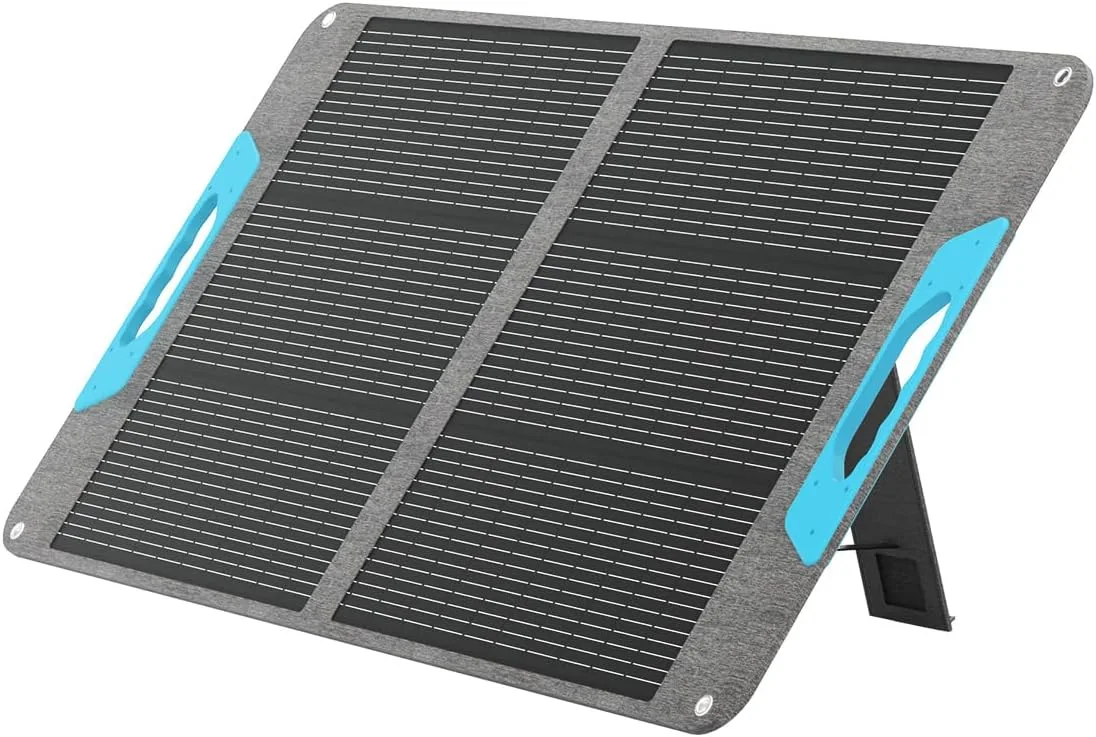
Renogy 100W Portable Solar Panel for Power Stations, 25% High Efficiency
Highlights
- 320Wh rated capacity
- 100W continuous AC
- 7.3 lb (~3.3 kg)
- About $124.99 list
Best for
- n type 100 watt foldable solar panel: phones, cameras and a laptop on short trips
- Travel kits when you need quiet pack power, not appliance runtime
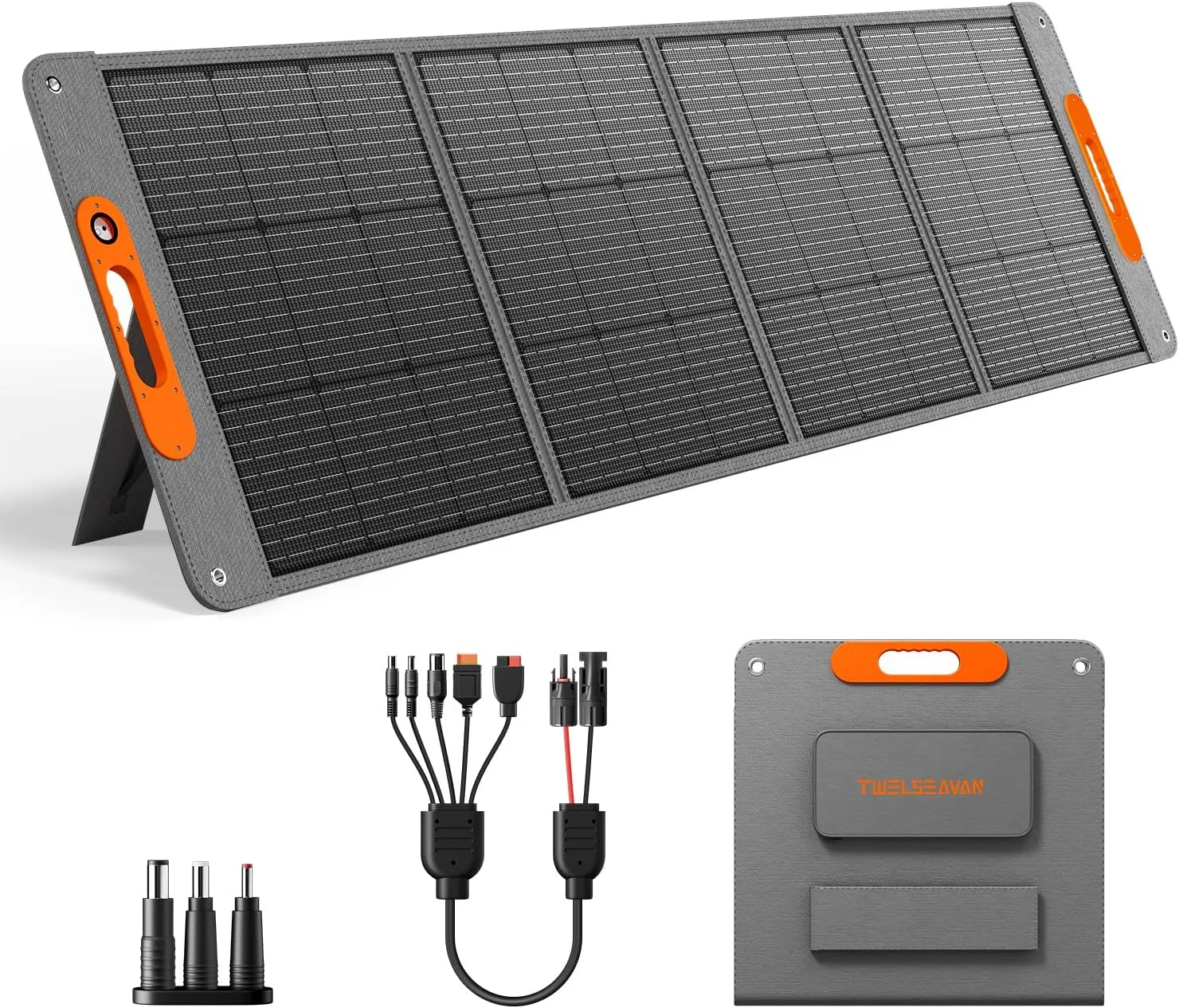
TWELSEAVAN 200W Portable Solar Panel for Power Station
Highlights
- 200W continuous AC
- 15.7 lb (~7.1 kg)
- About $189.99 list
Best for
- 200W Solar Panel: longer outages or higher continuous loads (still not whole-home wiring)
- RV / off-grid days where recharge speed matters as much as Wh
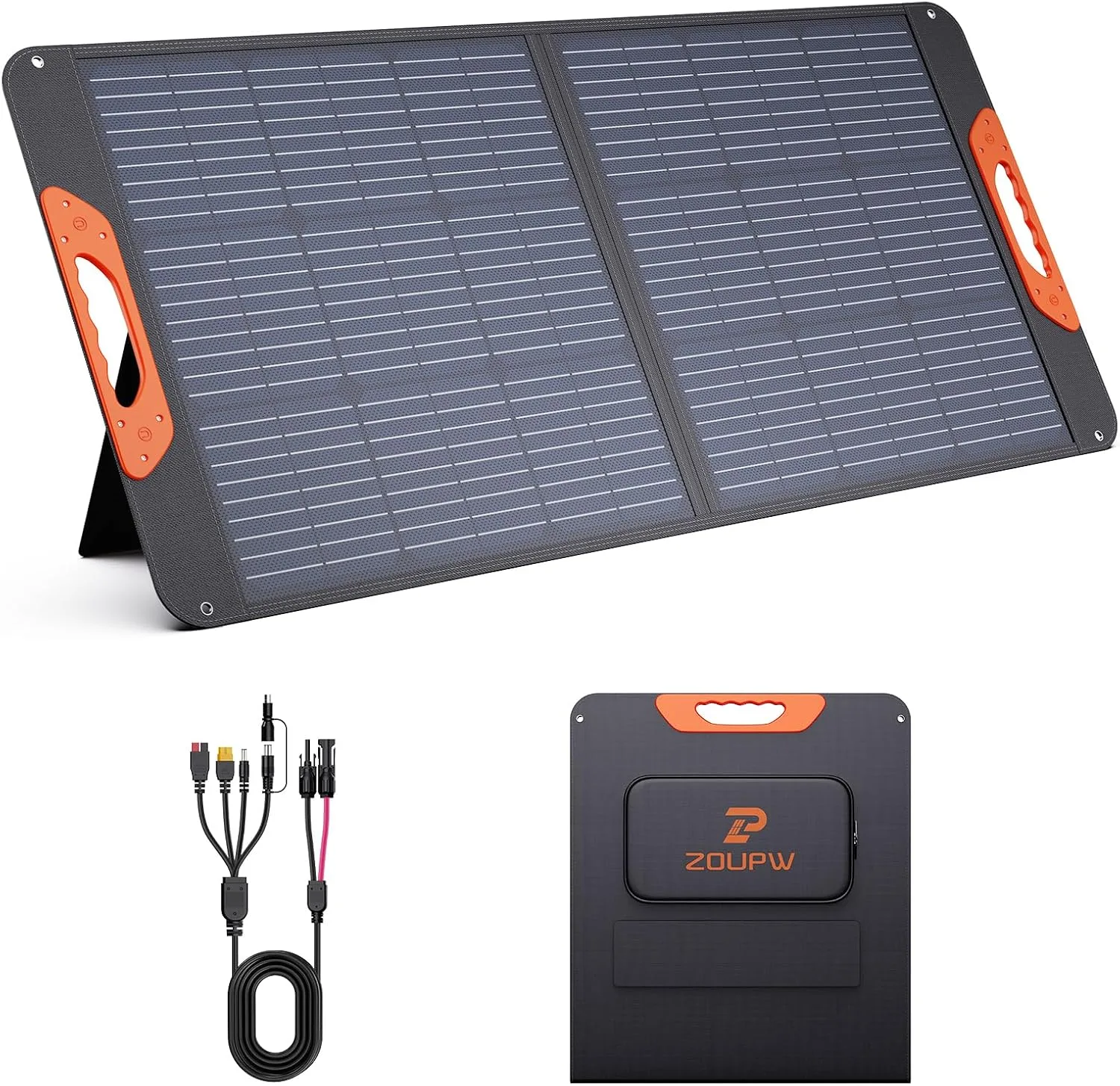
ZOUPW 100W Portable Solar Panel for Power Station
Highlights
- 100W continuous AC
- 9.5 lb (~4.3 kg)
- About $105.99 list
Best for
- ZOUPW-F100W: longer outages or higher continuous loads (still not whole-home wiring)
- RV / off-grid days where recharge speed matters as much as Wh
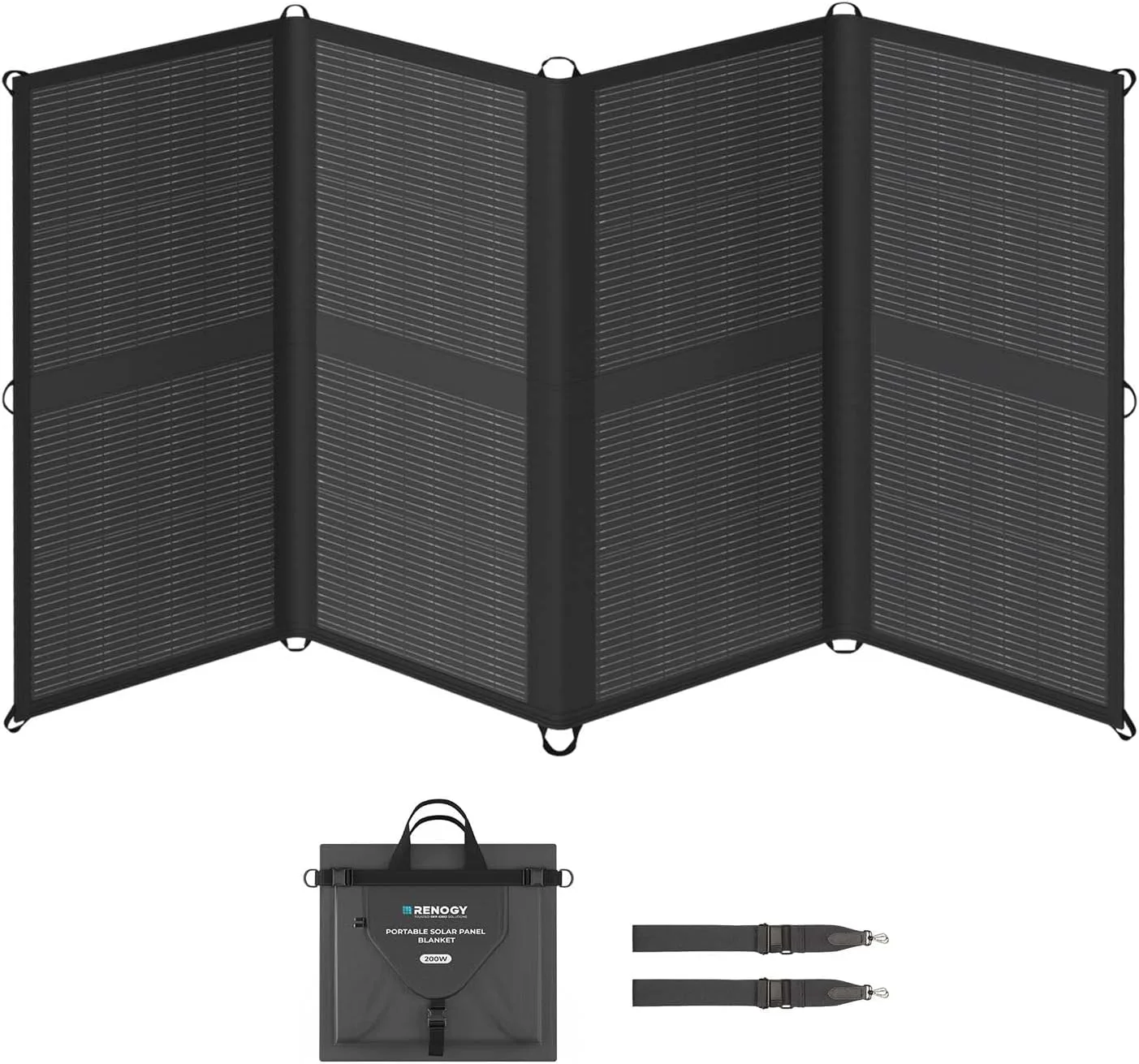
Renogy 200W Portable Solar Panel for Power Stations, 25% High Efficiency
Highlights
- 200W continuous AC
- 8.8 lb (~4.0 kg)
- About $237.99 list
Best for
- n type 200w solar blanket: longer outages or higher continuous loads (still not whole-home wiring)
- RV / off-grid days where recharge speed matters as much as Wh
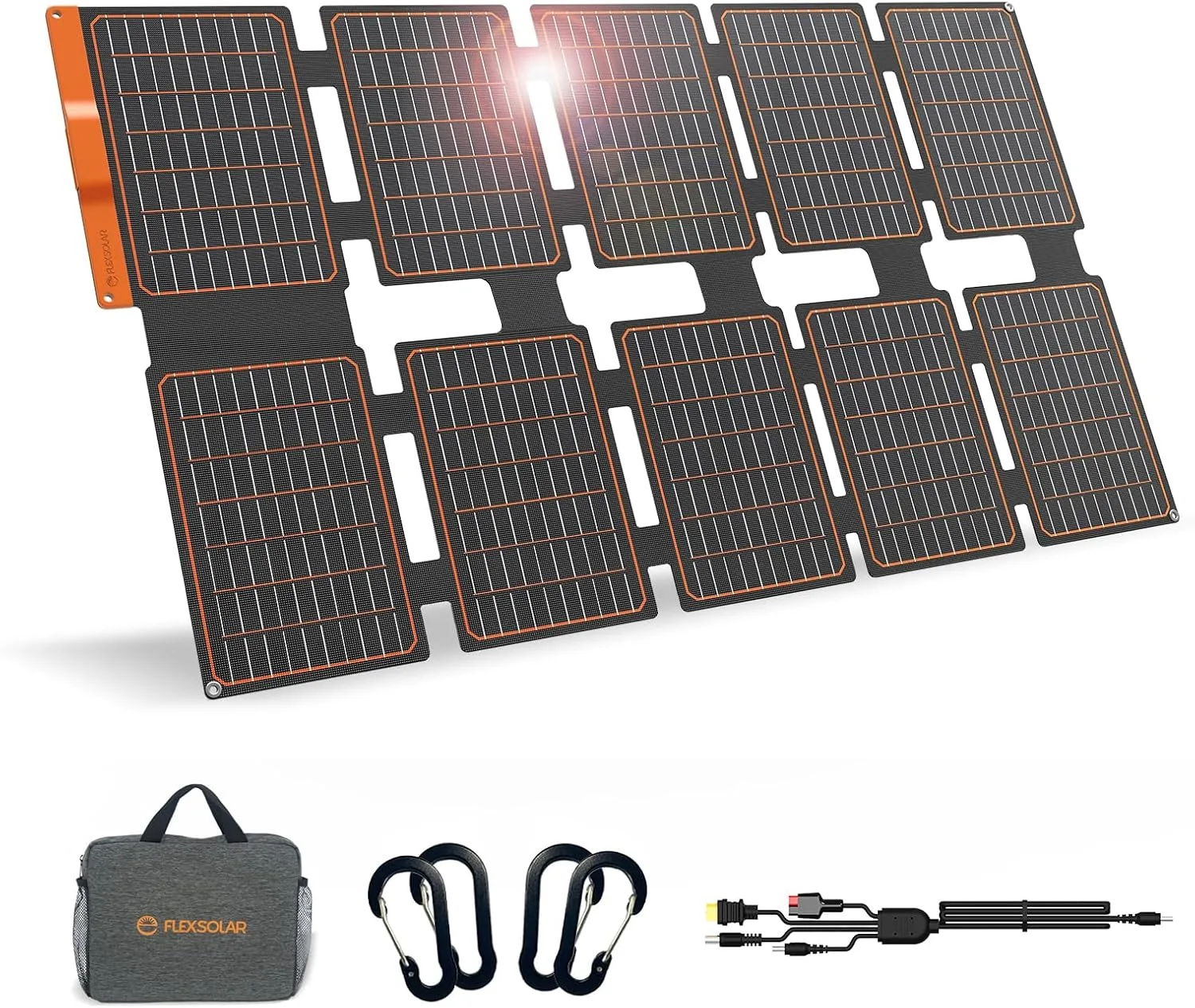
FlexSolar 100W Foldable Portable Solar Panel Charger IP67 Waterproof
Highlights
- 100W continuous AC
- 4.1 lb (~1.9 kg)
- About $89.99 list
Best for
- YL-S100-CA: longer outages or higher continuous loads (still not whole-home wiring)
- RV / off-grid days where recharge speed matters as much as Wh
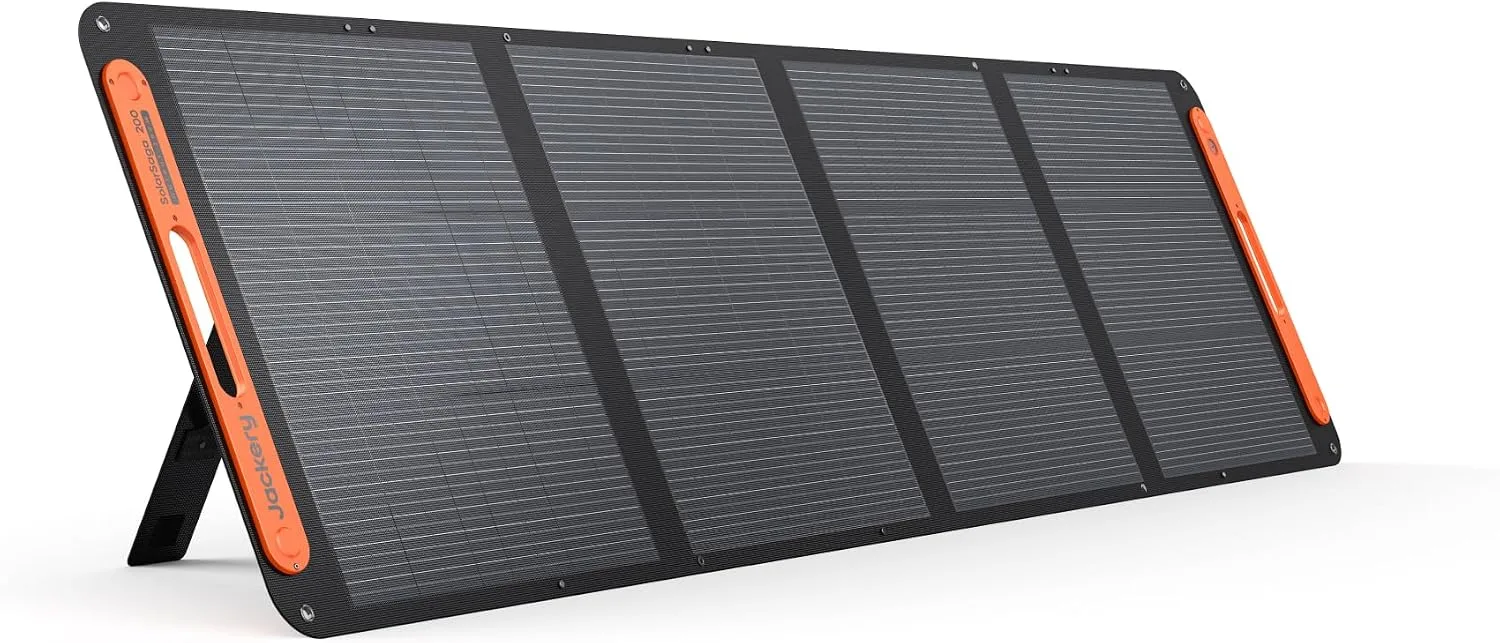
Jackery SolarSaga 200W Portable Solar Panel,Bifacial
Highlights
- 2042Wh rated capacity
- 200W continuous AC
- 14.3 lb (~6.5 kg)
- About $429 list
Best for
- SolarSaga 200: longer outages or higher continuous loads (still not whole-home wiring)
- RV / off-grid days where recharge speed matters as much as Wh
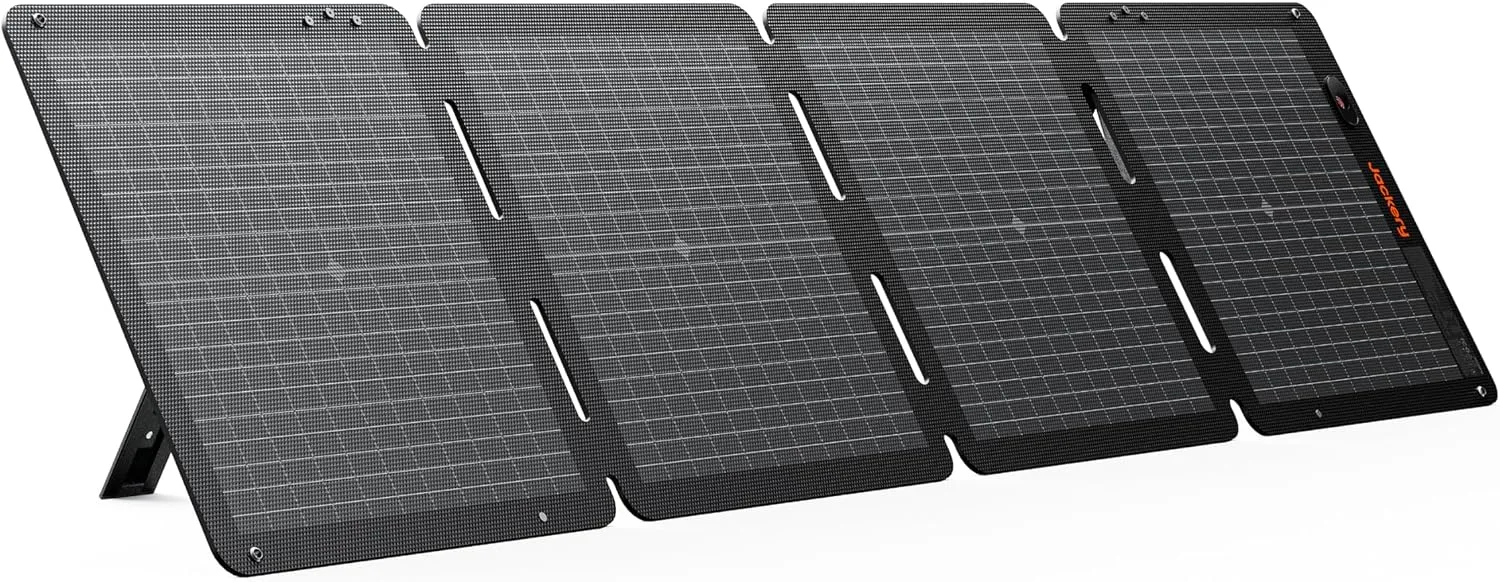
Jackery SolarSaga 100W Air Solar Panel, 23% Conversion Efficiency Bifacial Panels, IP65 Waterproof,
Highlights
- About $345.99 list
- Jackery catalog listing
- Specs from manufacturer listings
Best for
- Jackery SolarSaga 100W Air Solar Panel, 23% Conversion Efficiency Bifacial Panels, IP65 Waterproof,: longer outages or higher continuous loads (still not whole-home wiring)
- RV / off-grid days where recharge speed matters as much as Wh
How I ranked these seven
I weighted four things, and I'll show the math because a ranking without it is just a mood. Real-world output versus the rated number got 35% — it's the whole point of the purchase, and owner reports are the only honest source I have for it. Packability (folded size and weight together) got 25%, because a panel you leave in the truck is a panel you don't use. Connector and adapter fit got 20% — a panel that needs a cable you don't own is a paperweight on day one. Stand and setup quality got 10%, and durability and support signals got the last 10%.
Why ZOUPW edges TWELSEAVAN for the top slot: on the 35% output weight they're close, but ZOUPW's included 10 ft harness and 5-in-1 connector set clears the 20% connector weight outright, and at 9.5 lb it's easier to move than TWELSEAVAN's 15.7 lb. TWELSEAVAN wins raw watts and cloudy-day performance; it loses on the stand's limited tilt range and the permanently attached cable.
One transparency note: these are home-user checks grounded in owner themes on file plus the listing specs — not lab-bench measurements. Where owners and the sticker disagree, I say so.
Amazon Associates disclosure: as an Amazon Associate I earn from qualifying purchases. Picks here are fit-led, not commission-led — the cheapest panel on this list is not the one I put first.
Scoreboard on those weights — Renogy 100W Portable Solar Panel for Power Stations, 25% High Efficiency (list $124.99): High where list price and published capacity match the job, Med on continuous watts; TWELSEAVAN 200W Portable Solar Panel for Power Station (list $189.99): High on continuous watts and ports, Med on price. That is why the pick splits by job rather than one universal winner.
| Product | Price | Rated (W) | Folded size | Weight (lb) | Rating |
|---|---|---|---|---|---|
| Renogy 100W Portable Solar Panel for Power Stations, 25% High Efficiency | $124.99 | 100 W | 22.99 x 22.54 x 1.57 in | 7.3 lb | 4.5 |
| TWELSEAVAN 200W Portable Solar Panel for Power Station | $189.99 | 200 W | 23*22 inches | 15.7 lb | 4.4 |
| ZOUPW 100W Portable Solar Panel for Power Station | $105.99 | 100 W | 24.13*21.06*1.77 inch | 9.5 lb | 4.6 |
| Renogy 200W Portable Solar Panel for Power Stations, 25% High Efficiency | $237.99 | 200 W | 16.14"L x 3.07"W x 15.35"H | 8.82 lb | 4.3 |
| FlexSolar 100W Foldable Portable Solar Panel Charger IP67 Waterproof | $89.99 | 100 W | 12.99"L x 2.17"W x 10.43"H | 4.07 lb | 4.4 |
| Jackery SolarSaga 200W Portable Solar Panel,Bifacial | $429 | 200 W | 24x21.7x1.8 inches | 14.33 lb | 4.5 |
| Jackery SolarSaga 100W Air Solar Panel, 23% Conversion Efficiency | $345.99 | 100 W | n/a (not on file) | 13.67 lb | 4.6 |
Spec snapshot
Prices are list prices from the listings, not sale stickers. Ratings are the listing aggregate — useful as a smell test, not as proof of anything. The Jackery 100W Air's folded size isn't published in a form I can quote, so it reads n/a rather than a guess.
| Product | Price | Rated (W) | Folded size | Weight (lb) | Rating |
|---|---|---|---|---|---|
| Renogy 100W Portable Solar Panel for Power Stations, 25% High Efficiency | $124.99 | 100 W | 22.99 x 22.54 x 1.57 in | 7.3 lb | 4.5 |
| TWELSEAVAN 200W Portable Solar Panel for Power Station | $189.99 | 200 W | 23*22 inches | 15.7 lb | 4.4 |
| ZOUPW 100W Portable Solar Panel for Power Station | $105.99 | 100 W | 24.13*21.06*1.77 inch | 9.5 lb | 4.6 |
| Renogy 200W Portable Solar Panel for Power Stations, 25% High Efficiency | $237.99 | 200 W | 16.14"L x 3.07"W x 15.35"H | 8.82 lb | 4.3 |
| FlexSolar 100W Foldable Portable Solar Panel Charger IP67 Waterproof | $89.99 | 100 W | 12.99"L x 2.17"W x 10.43"H | 4.07 lb | 4.4 |
| Jackery SolarSaga 200W Portable Solar Panel,Bifacial | $429 | 200 W | 24x21.7x1.8 inches | 14.33 lb | 4.5 |
| Jackery SolarSaga 100W Air Solar Panel, 23% Conversion Efficiency | $345.99 | 100 W | n/a (not on file) | 13.67 lb | 4.6 |
#1 ZOUPW 100W Portable Solar Panel for Power Station — the one most people should buy
The cable is the reason this ranks first. ZOUPW ships a 10 ft adapter harness with five connector ends — DC8020, XT60, Anderson, DC7909, DC5521 — which covers Jackery, EcoFlow, Anker, and Bluetti inputs without a second purchase. Owners call the cable the real winner, and after watching people get stalled by missing adapters on other panels, I believe them.
Output is honest-but-below-sticker, as it is on every panel here. Owners report roughly 60–88W in good sun, and one head-to-head tester put it near the top of the 100W class, beating flex and quarter-fold panels and only losing a few percent to much heavier rigid ones. It charged a Jackery 300 from 62% to full in about 1.5 hours in one owner's account.
The cracks: the rear legs barely adjust, so the tilt angle tops out lower than you'd like. The USB-C PD port capped around 45W in testing even when the DC side was pulling more. And at 9.5 lb it's heavier than some buyers expect on a long carry.
Suits you if you want a well-accessorized 100W folder that punches above its weight and works with whatever station you own. Skip it if you need precise leg adjustment all day or high-wattage USB-C PD for a laptop.
- Included 10 ft 5-in-1 harness — no adapter shopping
- Owners report 60–88W in good sun; plan around that, not 100W
- Legs offer little tilt range; USB-C PD capped near 45W
#2 TWELSEAVAN 200W Portable Solar Panel for Power Station — the 200W value play
If you need to recover real watt-hours rather than trickle, this is the panel that makes the case for 200W at a 100W-ish price. One owner took a Bluetti AC180 from 60% to 100% between 9 a.m. and 1 p.m. on a mostly cloudy day, and saw 177W around 10 a.m. in winter. Owners generally report 145–190W depending on angle and sky.
The build reads sturdy in the reviews, and the attached cable plus built-in adapter ends means it mates with most stations out of the box. One owner compared it directly to a Jackery-branded panel of the same size and found it just as solid.
What you give up: aiming. The built-in stand doesn't offer enough range when the sun is low, so early-morning and late-afternoon charging takes propping and creativity. The output cable is permanently attached, which limits swapping or extending. And 15.7 lb is a two-hand carry, not a one-hand one.
Suits you if you're charging a 1,000 Wh-plus station on camping trips or backup duty and want maximum watts per dollar. Skip it if you need fine tilt control or a detachable cable.
- Owners report 145–190W; cloudy-day charging is a genuine strength
- Permanently attached cable; stand range is limited at low sun angles
- 15.7 lb — the heaviest 200W here except the Jackery
#3 Renogy 200W Portable Solar Panel for Power Stations, 25% High Efficiency — the packable 200W
An 8-fold blanket design gets 200W down to 8.82 lb and a 16.14 x 15.35 x 3.07 in fold — small enough that owners describe it as backpack-sized. That combination is why it beats the heavier 200W panels on packability even though it costs more than the TWELSEAVAN.
Flat output is real. One owner averaged 104W/h with a 164W peak before solar noon on a partly cloudy day, then averaged 129W with a 195W peak in the noon hour. Another kept batteries topped off running two electric coolers, lights, a diesel heater, and device charging, and recovered a night of CPAP use in under two hours of decent sun.
The catch is off-axis performance. One owner saw output drop to 60–80W at just over 11 degrees off-axis, and there's no stand in the box — you prop it or hang it. The USB ports sit in the cable pouch underneath once it's deployed, which is awkward. Adapter confusion is a recurring theme: the panel is MC4-only, and the Renogy 4-in-1 adapter cable is sold separately.
Suits you if you want 200W that disappears into a roof rack or a duffel and you're willing to bungee and aim it. Skip it if you need a built-in stand or easy access to USB ports while it's working.
- 8.82 lb and a backpack-sized fold — the portability leader at 200W
- MC4 output only; the 4-in-1 adapter cable is sold separately
- Weak off-axis output; no stand included
#4 FlexSolar 100W Foldable Portable Solar Panel Charger IP67 Waterproof — the one that fits anywhere
At 4.07 lb and a 12.99 x 10.43 x 2.17 in fold, this is the most packable 100W panel on the list by a wide margin — owners call it notebook-sized, and it comes with a padded case. If your constraint is luggage space rather than watts, this is the answer.
It charges direct devices well. The USB-A and USB-C ports fast-charge in direct sun and still work in partial shade, and one owner charged a laptop straight off the panel. Owners report 80–85W max in summer sun and a 300 Wh battery bank filled in about 3.5 hours.
The trade-offs are real and worth naming. There's no kickstand — it's two panels high and mostly lies flat, so you lose early and late watts. The included cable has no MC4 connector. The orange circuitry housing gets hot under 60W-plus DC loads. And the USB port is a weak point in rain; one owner reported corrosion until cleaned. One owner also reported a blown capacitor after about a week of cold-weather use and no response from FlexSolar support after several attempts — a single report, but you should know it before leaning on the warranty.
Suits you if portability is the whole point and you'll treat it gently. Skip it if you need a stand, MC4, or confidence in long rain exposure.
- 4.07 lb, notebook-sized fold, padded case included
- No kickstand and no MC4 on the included cable
- Heat under high DC load; one report of rain corrosion at the USB port
#5 Jackery SolarSaga 200W Portable Solar Panel,Bifacial — best output per pound in clean sun
When the sky is clean, this panel does what the sticker says. One owner at 6,000 ft with clear skies and the built-in sun guide got a consistent 198W, dropping to 60–100W under passing cloud and holding about 60W in heavy overcast. The bifacial design pulls ambient and reflected light, and it's roughly a third the weight and size of a comparable-wattage competitor panel.
It's also the most weather-confident panel here — it survived a short rain storm and reads as rugged in the reviews. But it blows over easily because it's so light, and owners wish the legs had a way to weigh them down. It's also very cloud-sensitive in the other direction: one owner got no charge at all over eight hours of unexpected cloud cover.
Compatibility isn't universal — one owner found it incompatible with a Jackery 300 Plus and returned it. And at $429 it's the most expensive panel on this list by a wide margin.
Suits you if you own a compatible Jackery station, camp in reliable sun, and want the most efficient panel per pound. Skip it if you camp in wind or frequent cloud, or if the price makes you flinch — it should.
- Owners report up to 198W in clean sun; ~60W in heavy overcast
- Blows over easily; stake it or set a lower angle
- $429 list — the premium option here
#6 Renogy 100W Portable Solar Panel for Power Stations, 25% High Efficiency — the cheap name-brand 100W
This is the panel I'd grab for car camping and backyard afternoons. It's slim, light at 7.3 lb, and the magnets in the handles snap it shut for storage. It worked right out of the box with no assembly, and the zippered cable pocket seals tightly — rain-jacket tight, not submersible.
The catch is where the watts come from. The full 100W is only available through the MC4 connectors; USB-C topped out around 40W in one owner's shunt test and the USB-A ports stayed under 15W each. No MC4-to-XT60/barrel/Anderson cable is in the box — the Renogy 4-in-1 adapter cable is sold separately — and one owner lost a day waiting on a cord before first use.
Output is honest-but-modest: one owner never got past 87W on a clear Chicago day, another saw 55–60W in direct sun and 12–18W under cloud. It's also a low-voltage panel, so long extension runs need heavy-gauge cable — a 14-gauge run lost roughly half the power in one test. The rear legs are flimsy and the panel sails in wind; stake it.
Suits you if you want a light, cheap, name-brand 100W for car camping and you already own the right adapter. Skip it if you need one-cable laptop charging or a rock-solid stand.
- 7.3 lb, magnetic snap closure, no assembly
- MC4-only for full output; adapter cable sold separately
- Flimsy legs; stake it down in wind
#7 Jackery SolarSaga 100W Air Solar Panel, 23% Conversion Efficiency — the ecosystem pick
If you already own a Jackery station, this is the panel that makes the pairing frictionless. Two of them in parallel produced 204W initially and settled between 194 and 200W in one owner's account, and it charged two 10,000 mAh power banks from near dead to full in a few hours on a partly-sunny day. Owners describe the build as durable and easy to clean, and the bifacial design gathered more light than a comparable 100W panel in one comparison.
It's light and easy to fold and unfold, and the setup is quick. But the price is the story: at $345.99 for 100W, one owner called it overpriced and said they wouldn't buy another until the price drops, and another found charging slow. It's also a bit big, though manageable.
One compatibility note worth flagging: Jackery states this panel is not compatible with the Explorer 300 / 300 v2 series — using them together can trigger an input voltage error. Check your station before you buy.
Suits you if you're inside the Jackery ecosystem and want a matching, efficient 100W with no adapter fuss. Skip it if you're price-sensitive, need fast charging for larger devices, or own an Explorer 300-series station.
- Owners report 194–200W from two panels in parallel
- Not compatible with Explorer 300 / 300 v2 — check your station
- $345.99 for 100W; owners call the price steep
Where these panels fall short — and who shouldn't buy the top pick
None of these will hit their rated watts in real conditions, and that's not a defect — it's how thin portable panels behave. Owners across all seven report roughly 60–95% of the sticker number depending on angle, heat, and sky. If you need a guaranteed 200W, buy a rigid panel and a mount, not a folder.
The ZOUPW at #1 is the wrong buy for two kinds of people. First, anyone charging a station above about 1,000 Wh on a daily basis — 100W is a trickle at that scale, and you'll want the TWELSEAVAN or the Renogy blanket. Second, anyone who needs to charge a laptop directly off the panel: the USB-C PD cap near 45W makes that a bad experience, and you're better off with a panel feeding a station that then feeds the laptop.
Also skip the whole category if you're expecting a foldable to run a fridge indefinitely through cloudy weather. It won't. These are top-up tools, not generators.
- Buy a rigid panel instead if you need guaranteed rated output
- Skip 100W entirely if you're cycling a 1,000 Wh-plus station daily
- Skip any folder if you need direct high-wattage USB-C laptop charging
If none of these fit
Two directions worth considering. If your station has a high solar input ceiling and you're charging it daily, step up to a rigid or semi-rigid briefcase panel — heavier, but it holds output better off-axis and usually costs less per watt. If your real constraint is weight and you're hiking to your campsite, the FlexSolar is the floor of what's practical; anything heavier becomes a car-camping panel whether you planned it that way or not.
And if you're still choosing a station to pair with any of these, start there — the panel's ceiling is your station's input limit, and no foldable on this list can fix a 60W input cap.
What owners keep telling me
The pattern across these reviews is consistent: people are happy when they buy for their actual load and disappointed when they buy for the sticker. The ZOUPW and TWELSEAVAN owners talk about cables and cloudy days; the Jackery 200W owners talk about clean-sun output and wind; the FlexSolar owners talk about pack size and heat.
Listing aggregates here run 4.3 to 4.6, which tells you the category is broadly satisfying and not that any one panel is better than another. Read the output complaints, not the star average.
One more thing worth saying plainly: the panels with the best owner sentiment are the ones whose included accessories match the buyer's station. Buy the harness, not just the panel.
Frequently asked
Do I need an adapter cable for the Renogy panels?
Yes, for most stations. Both Renogy picks here output MC4 only, and the Renogy 4-in-1 adapter cable is sold separately. Budget for it before first use — owners on both panels lost time waiting on the right connector.
Will a 200W panel overload my power station?
No — the station draws what its input allows. A 200W panel into a 10A-limited input just runs at that ceiling. The panel doesn't push more than the station asks for.
Can I charge a laptop straight from these panels?
Only the FlexSolar does it comfortably, and only at modest wattage. On the ZOUPW and Renogy 100W, USB-C caps well below the panel's DC output, so the workable path is panel-to-station, then station-to-laptop.
Which of these works with a Jackery Explorer 300?
Not the Jackery SolarSaga 100W Air — Jackery states it's incompatible with the 300 / 300 v2 series and can trigger an input voltage error. The ZOUPW's 5-in-1 harness includes the DC7909 tip that fits the 240/300/500, and the TWELSEAVAN's adapter set covers most Jackery inputs.
Method and sources
Model names and list prices come from the WattPicks catalog at build time. WattPicks does not run its own laboratory tests on power stations, and nothing on this page is presented as a measured result — it is catalog-backed buying guidance.
Read our methodology for how the catalog is normalized, and about WattPicks for who publishes it.