
Best Camping Power Stations for Off-Grid Weekends
A weekend off-grid needs a box that carries easy, recharges fast, and runs quiet at night. Here are seven stations ranked by real trip loads — not home-backup specs.
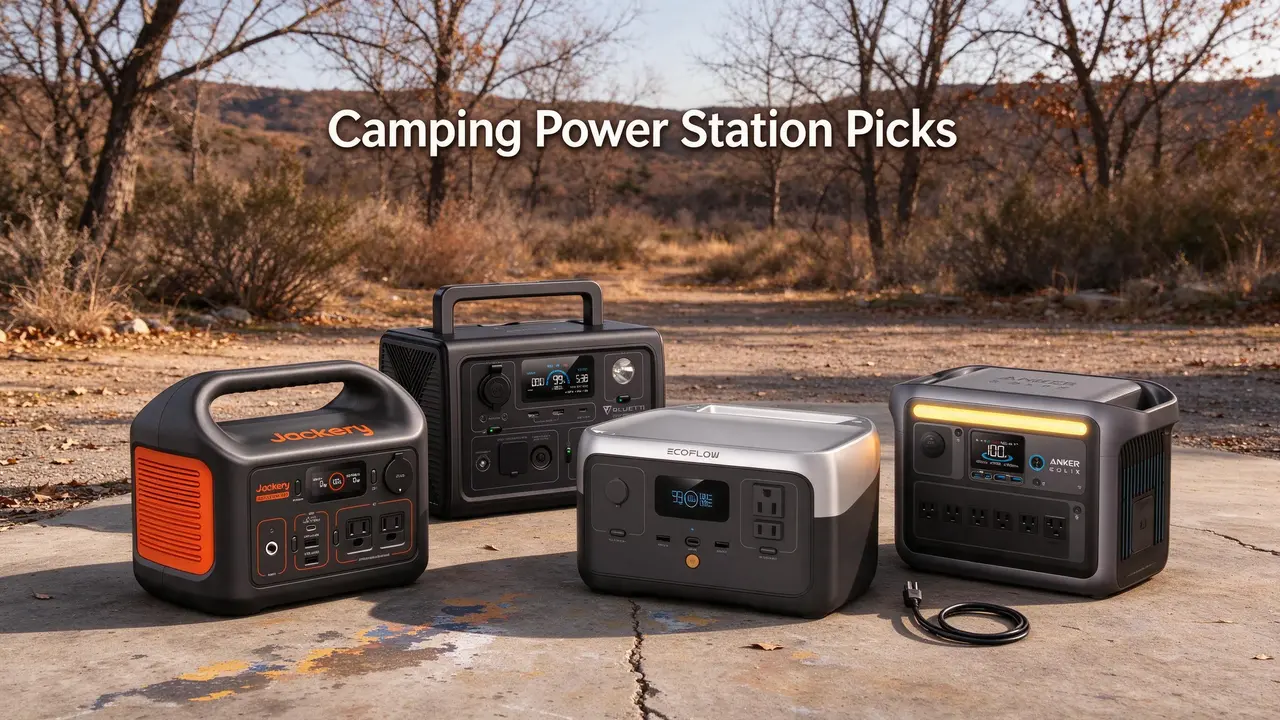
Updated
What a weekend off-grid actually asks of a power station
You are packing for two or three nights without a hookup. The load list is short: phones, a laptop, maybe a 12V cooler, a fan, lights, and for some of you a CPAP. That is a different job than keeping a fridge alive through a hurricane. This page is about the camping version — weight you carry from the car, solar input that actually starts charging, fan noise at 2 a.m., and enough outlets for the family's gear.
The hard requirements I weigh first: it has to be light enough to move without a second person, it has to recharge from a panel you can realistically deploy, and it has to run your overnight load without waking you. If you need whole-home backup or a 240V transfer switch, this is not that page.
- Carry weight under ~25 lb for one-person moves; under 15 lb if you switch campsites.
- Solar input that initiates with a 100W panel — smaller panels often fail to start a charge.
- Continuous AC output that covers your biggest single load, not the surge number.
- Quiet enough for tent sleeping; fan behavior matters more than the spec sheet.
Quick picks: top, runner-up, also-consider
Top pick for most weekend campers: Jackery Explorer 300 Portable Power Station,292Wh. At 8.2 lb and $289, it is the easiest box to carry and the CPAP-on-DC reports are the strongest in this group. It will not run a cooler for days, but for phones, lights, a fan, and a CPAP it is the right size. Don't buy if: you need to run a 12V cooler for more than a night.
Runner-up for power-hungry weekends: Jackery Explorer 500 v2 Power Station, 512Wh/500W, AC Cable Included. The 640Wh capacity and regulated 12V output make it the better cooler box, and 14.1 lb is still manageable. It costs $399 and needs a 100W panel to reliably solar-charge. Don't buy if: you want USB-C onboard or a second AC outlet.
Also consider: EcoFlow RIVER 2 at $177.65 if budget and recharge speed lead. It is the lightest at 7.7 lb and recharges in about an hour, but 243Wh and 300W cap it to day-pack duty. Don't buy if: your load includes a cooler or any appliance over 300W.
Budget tradeoff: the $177.65 RIVER 2 saves you about $111 versus the Explorer 300 but gives up ~45Wh and the CPAP-on-DC advantage; the $399 Explorer 500 v2 buys cooler runtime for roughly $110 more than the Explorer 300.
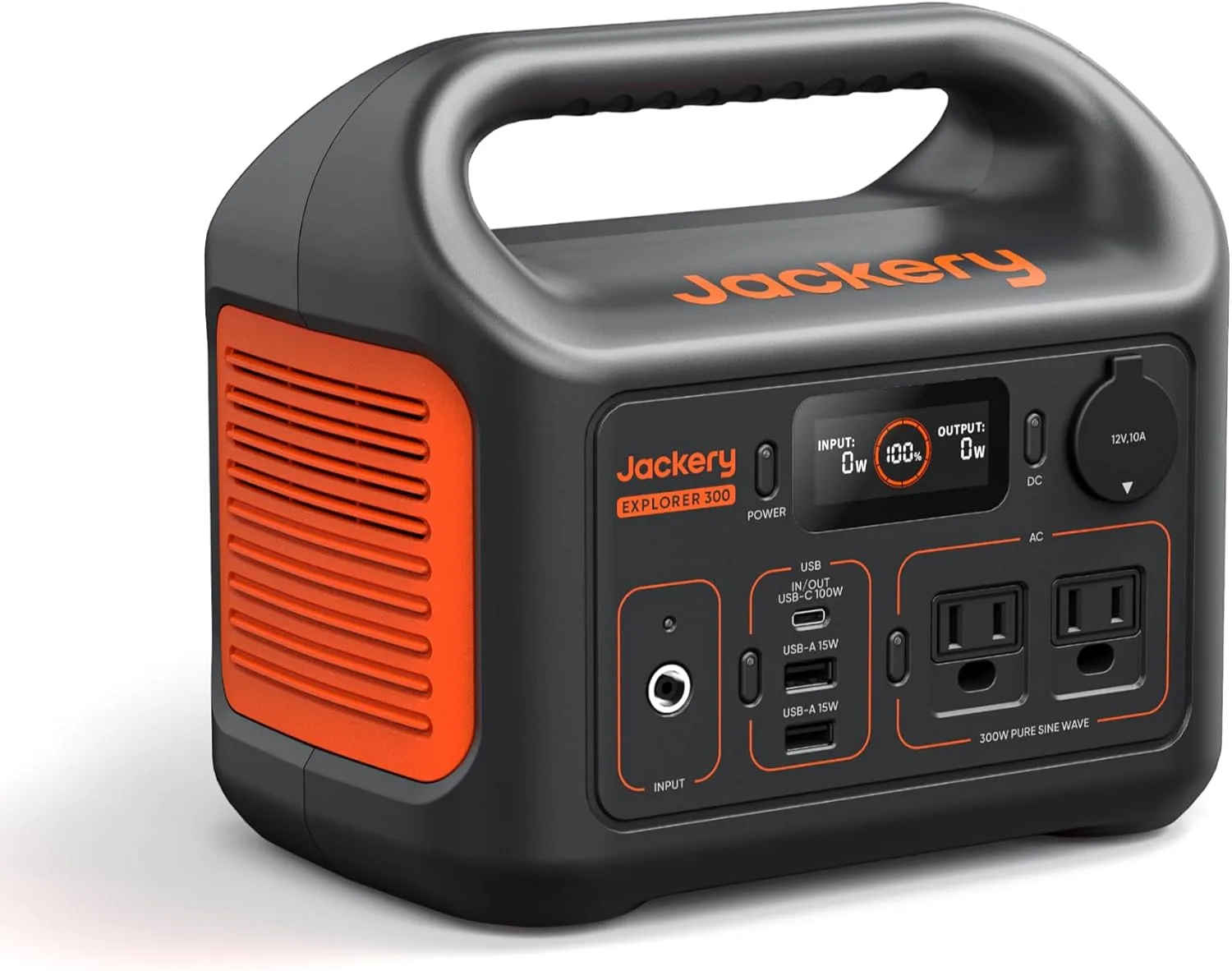
Jackery Explorer 300 Portable Power Station,292Wh
Highlights
- 288Wh rated capacity
- 300W continuous AC
- 600W surge
- LiFePO4 chemistry
- 8.2 lb (~3.7 kg)
- About $289 list
Best for
- Explorer 300 v2: phones, cameras and a laptop on short trips
- Travel kits when you need quiet pack power, not appliance runtime
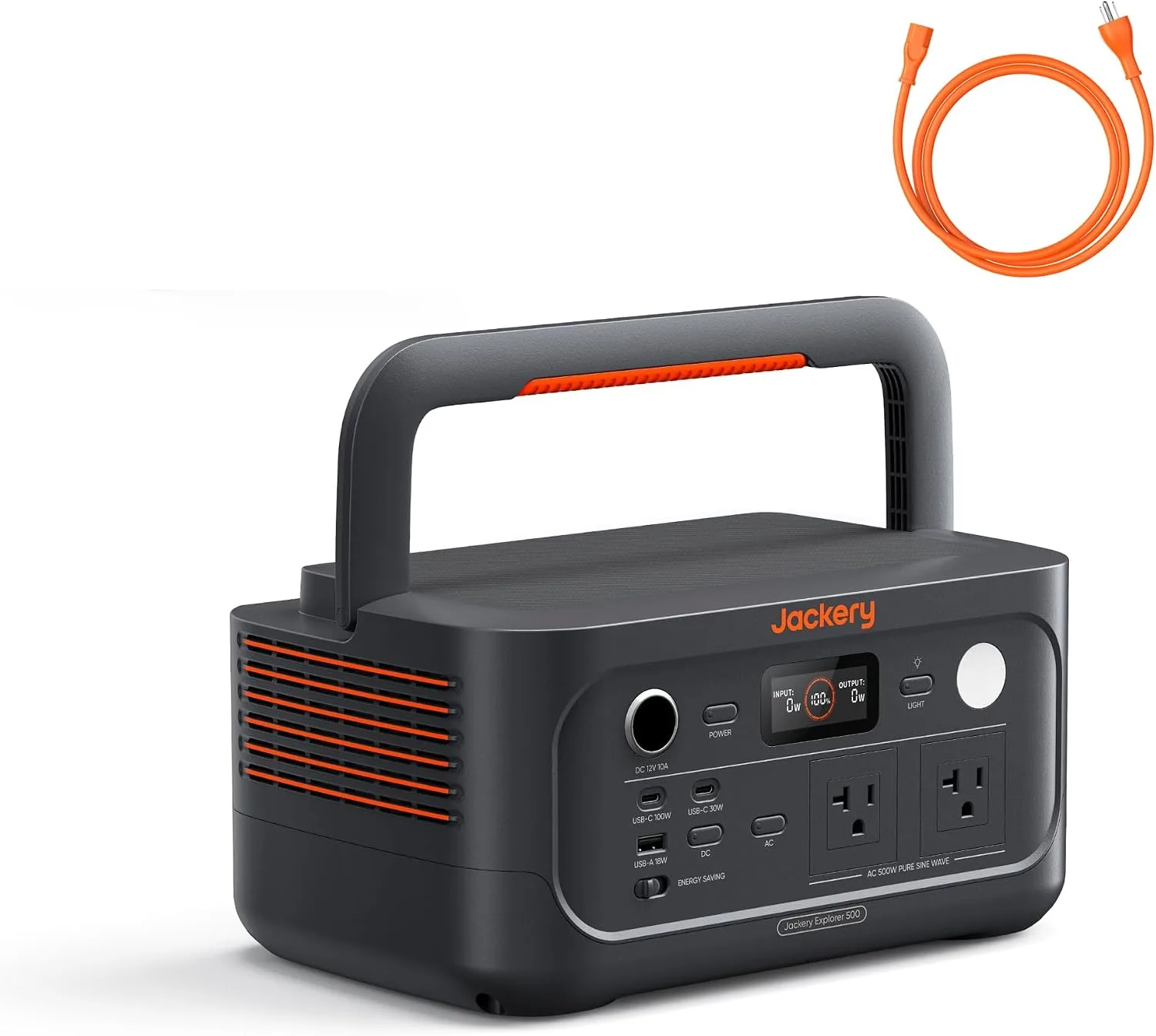
Jackery Explorer 500 v2 Power Station, 512Wh/500W, AC Cable Included
Highlights
- 640Wh rated capacity
- 500W continuous AC
- 1000W surge
- LiFePO4 chemistry
- Up to 200W solar input
- 14.1 lb (~6.4 kg)
Best for
- Explorer 600 v2: most Wh-per-dollar in this ~500Wh band for weekend fridge/CPAP math
- Car-camp carry at 14.1 lb when review depth matters as much as peak watts
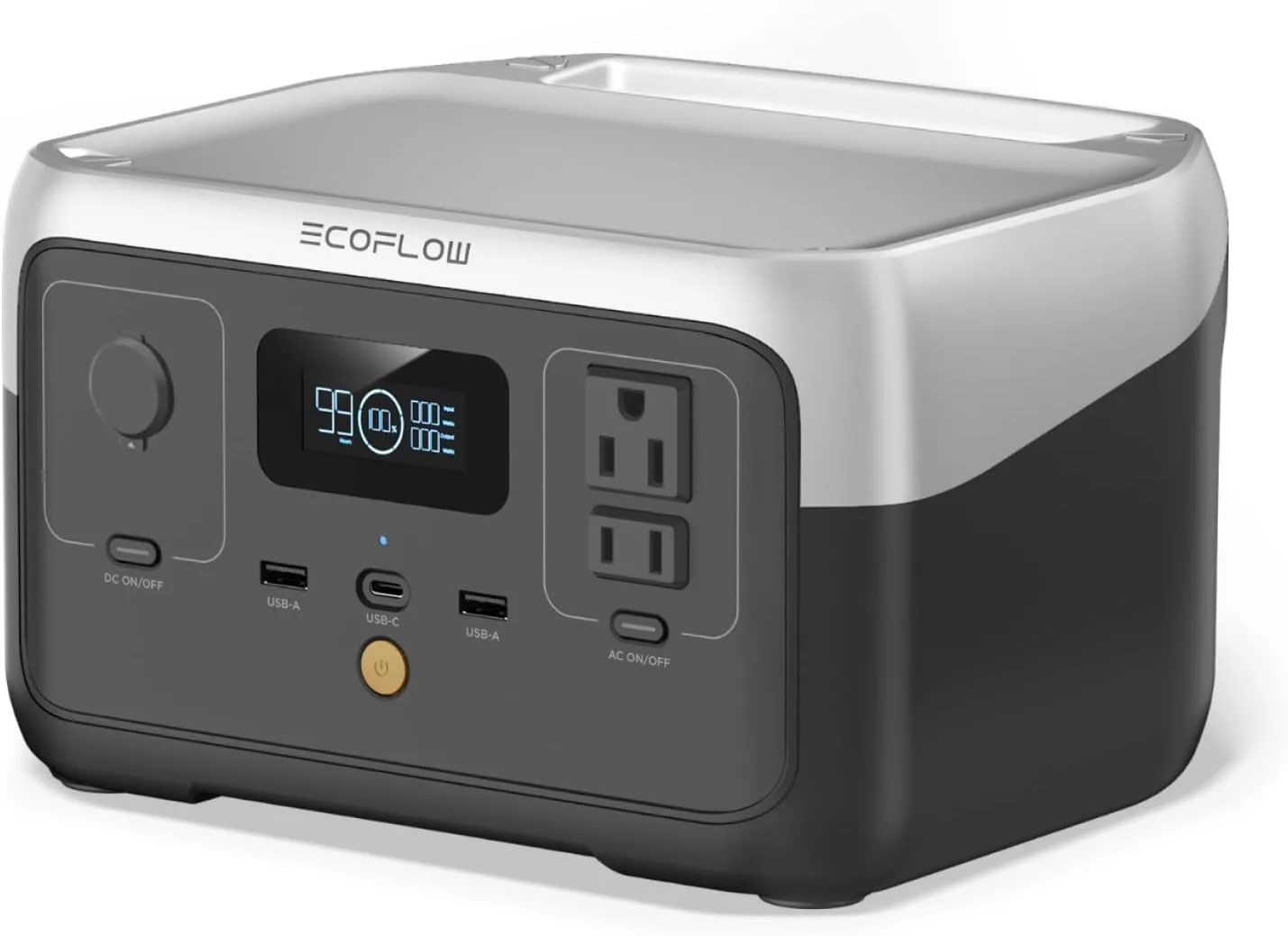
EcoFlow RIVER 2
Highlights
- 243Wh rated capacity
- 300W continuous AC
- 600W surge
- LiFePO4 chemistry
- Up to 110W solar input
- 7.7 lb (~3.5 kg)
Best for
- RIVER 2: phones, cameras and a laptop on short trips
- Travel kits when you need quiet pack power, not appliance runtime
How I weight this job
I rank by four things, in this order: usable capacity for a weekend load (35%), carry weight and footprint (25%), recharge speed from AC and solar (20%), and owner-reported reliability and noise (20%). Every percentage is scored — nothing sits on the list as decoration.
The data comes from listing specs and owner themes on file. I am a home-user reviewer working from those notes and the published numbers; these are not lab-bench measurements. Where a listing is missing a price or a spec, I write n/a rather than guess. Prices and specs were checked against the listings on file as of this writing; where a listing shows a deal, I still use the list price in the table and prose.
Why this order: a weekend box that is too heavy stays in the car, and one that will not recharge from a 100W panel is a paperweight on day two. Capacity matters, but only after you can actually carry and refill it. The Explorer 1000 v2 beats the Explorer 500 v2 mainly on weight-to-capacity and recharge flexibility; the 500 v2 wins on raw output for the money but gives up portability.
As an Amazon Associate, I earn from qualifying purchases. Picks are fit-led, not commission-led.
- 35% weekend capacity fit — Wh against a realistic two-night load.
- 25% carry weight and footprint — can one person move it?
- 20% recharge speed — AC time and solar initiation.
- 20% owner reliability and noise — repeated themes, not one-offs.
| Product | Capacity fit (35%) | Carry weight (25%) | Recharge speed (20%) | Reliability & noise (20%) |
|---|---|---|---|---|
| Jackery Explorer 300 | High for CPAP/lights/phones | High (8.2 lb) | Med | High (DC CPAP; AC auto-off) |
| Jackery Explorer 500 v2 | High for cooler weekends | Med (14.1 lb) | Med (needs 100W panel) | Med (dated ports) |
| EcoFlow RIVER 2 | Low (243Wh) | High (7.7 lb) | High (~1 hr AC) | Med (300W ceiling; one warranty issue) |
| Jackery Explorer 1000 v2 | High (1070Wh) | Med (23.8 lb) | High (~1 hr 40 min) | High (quiet mode) |
| BLUETTI AC180 | High (1152Wh) | Low (35.3 lb) | High (~2 hr AC) | Med (idle draw; ~90% usable) |
| BLUETTI EB3A | Med (268Wh) | High (10.1 lb) | High (~1 hr 20 min) | Low (random shutdowns) |
| Anker C1000 | High (1,056Wh per model name) | Low (27.6 lb) | High (~1.5 hr AC) | Med (app/firmware hiccups) |
Scenario facts: what a weekend load looks like
A typical two-night camping load is smaller than most people think. Phones and a laptop might draw 30–60W when charging; a 12V cooler pulls roughly 40–60W cycling; a box fan on low is about 40–70W; LED lights are under 10W. A CPAP without humidifier is in the 30–50W range depending on pressure.
That puts a two-night basecamp at roughly 400–800Wh of actual draw, depending on cooler duty cycle and how much you charge. A day-pack trip with phones and a fan can fit in 250–300Wh. The table below is the spec snapshot I use throughout.
| Product | Price | Capacity (Wh) | Output (W) | Weight (lb) | Rating |
|---|---|---|---|---|---|
| Jackery Explorer 300 Portable Power Station,292Wh | $289 | 288 Wh | 300 W | 8.2 lb | 4.6 |
| BLUETTI EB3A Portable Power Station | n/a (not on file) | 268 Wh | 600 W | 10.1 lb | 4.1 |
| EcoFlow RIVER 2 | $177.65 | 243 Wh | 300 W | 7.7 lb | 4.3 |
| Anker C1000 Portable Power Station with Car Charging Cable, 1,056Wh | $599.99 | 1,056 Wh (per model name; listing figure is a data error) | 1800 W | 27.6 lb | 4.7 |
| Jackery Explorer 500 v2 Power Station, 512Wh/500W, AC Cable Included | $399 | 640 Wh | 500 W | 14.1 lb | 4.7 |
| Jackery Explorer 1000 v2 Portable Power Station,1070Wh,1500W | $559 | 1070 Wh | 1500 W | 23.8 lb | 4.7 |
| BLUETTI AC180 | $499 | 1152 Wh | 1800 W | 35.3 lb | 4.5 |
The ranking: seven stations, sorted by weekend fit
The order below follows the weights above. Prices are list prices; where a listing shows a deal, I still use the list price in the table and prose so the comparison stays honest.
- #1 Jackery Explorer 300 Portable Power Station,292Wh — $289, 288Wh, 300W, 8.2 lb. Suits: CPAP on DC, lights, phones, and a fan for two nights. Skip if: you need to run a 12V cooler for more than a night.
- #2 Jackery Explorer 500 v2 Power Station, 512Wh/500W, AC Cable Included — $399, 640Wh, 500W, 14.1 lb. Suits: cooler weekends and gear that wants steady 12V. Skip if: you want USB-C onboard or a second AC outlet.
- #3 EcoFlow RIVER 2 — $177.65, 243Wh, 300W, 7.7 lb. Suits: fast-turnaround day trips and phone/laptop duty. Skip if: your load includes a cooler or any appliance over 300W.
- #4 Jackery Explorer 1000 v2 Portable Power Station,1070Wh,1500W — $559, 1070Wh, 1500W, 23.8 lb. Suits: basecamp with a fridge and a portable AC, or a family with multiple devices. Skip if: you switch campsites often or need to carry it far.
- #5 BLUETTI AC180 — $499, 1152Wh, 1800W, 35.3 lb. Suits: set-and-forget UPS at a cabin or basecamp where it stays put. Skip if: portability matters — 35.3 lb is a two-hand move.
- #6 BLUETTI EB3A Portable Power Station — n/a (not on file), 268Wh, 600W, 10.1 lb. Suits: short trips where 600W output matters and you are nearby. Skip if: you need unattended reliability — random shutdowns are a repeated owner theme.
- #7 Anker C1000 Portable Power Station with Car Charging Cable, 1,056Wh — $599.99, 1,056Wh (per model name; listing figure is a data error), 1800W, 27.6 lb. Suits: car-camping fridge backup where AC recharge speed is the priority. Skip if: you need capacity per dollar — the price is the highest here.
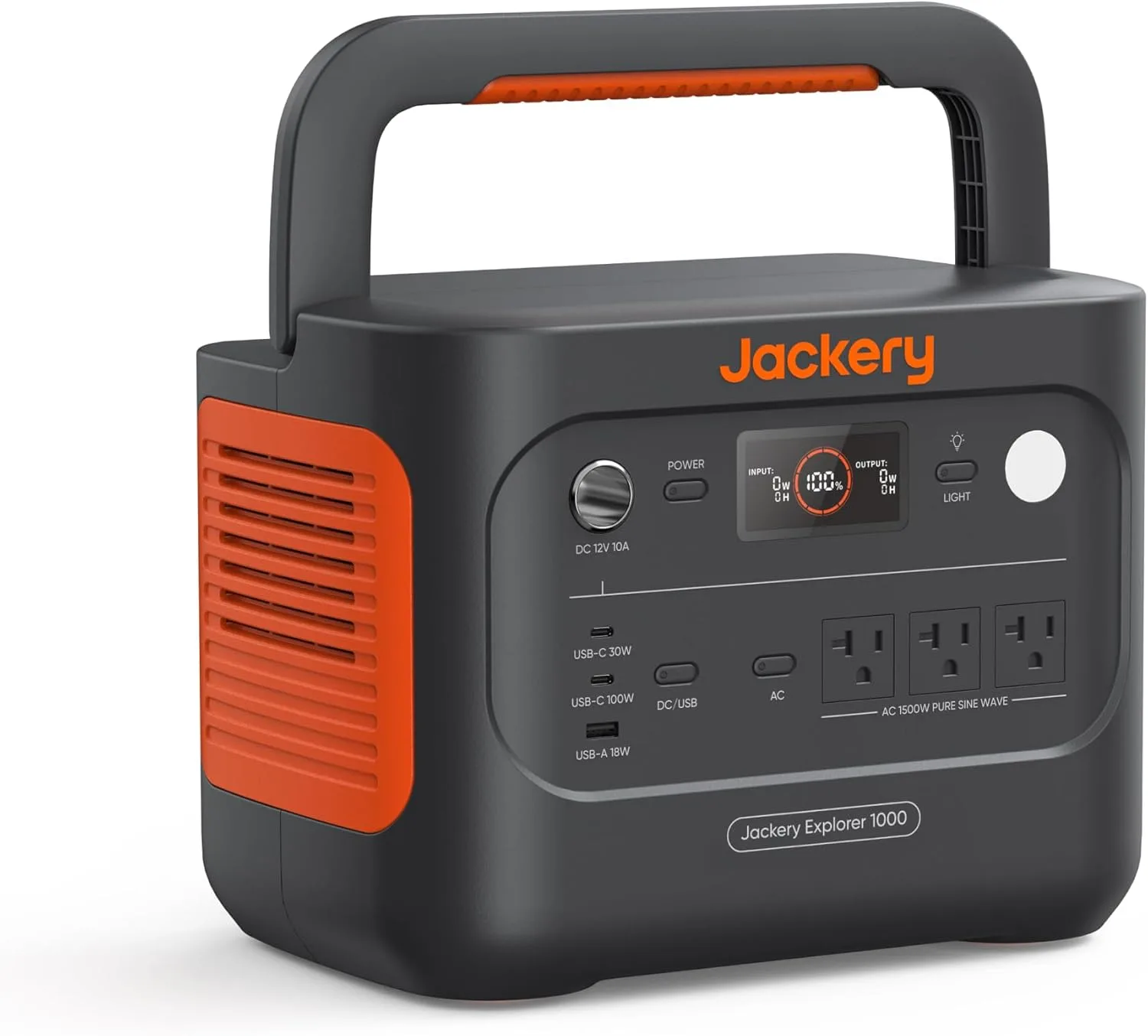
Jackery Explorer 1000 v2 Portable Power Station,1070Wh,1500W
Highlights
- 1070Wh rated capacity
- 1500W continuous AC
- LiFePO4 chemistry
- Up to 400W solar input
- 23.8 lb (~10.8 kg)
- About $559 list
Best for
- Explorer 1000 v2: weekend camping when 23.8 lb carry weight matters as much as 1070Wh
- Essentials bridge at home (fridge cycles, router) when sized to the Wh
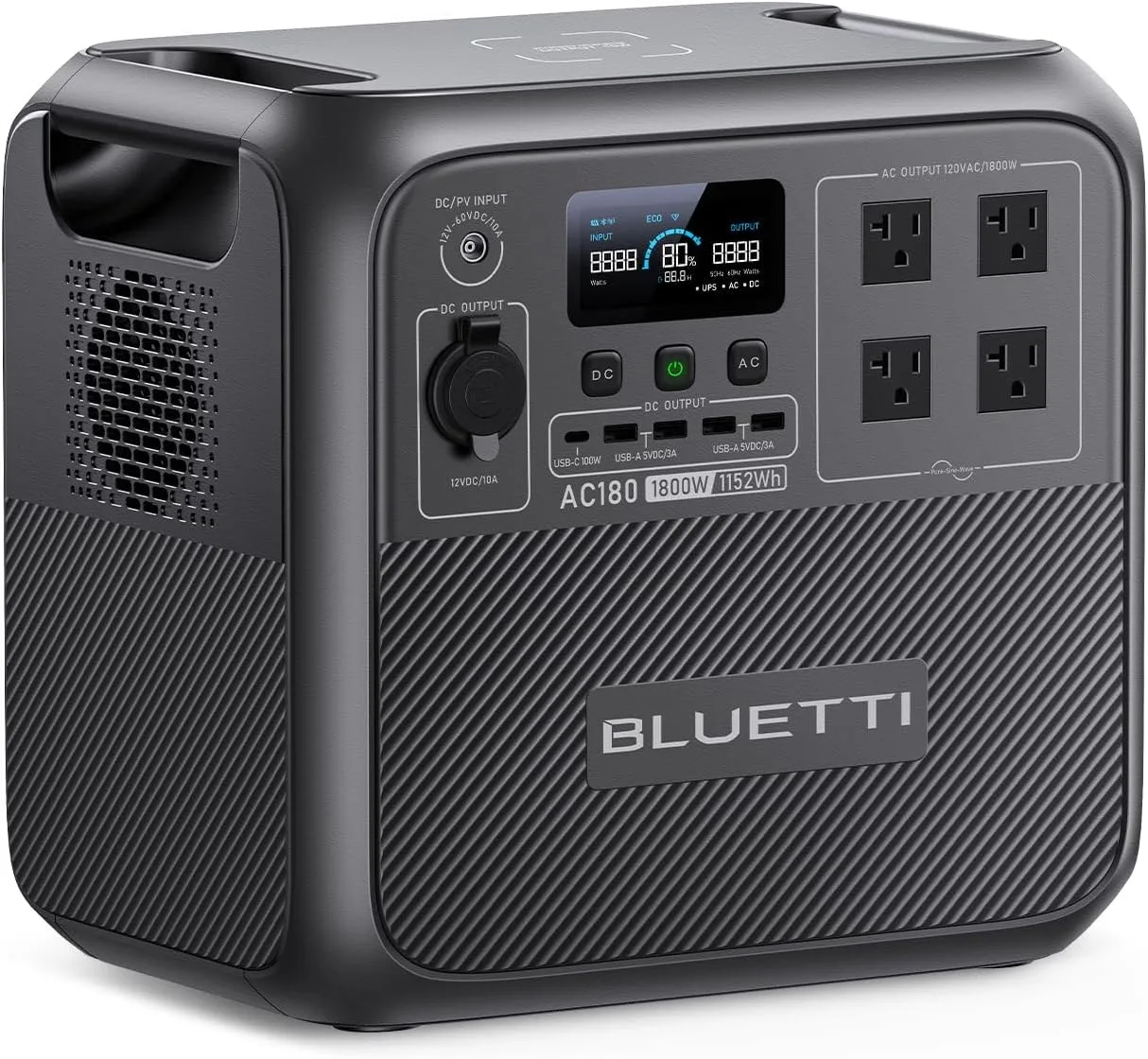
BLUETTI Portable Power Station AC180, 1152Wh LiFePO4 Battery Backup w/ 2 1800W
Highlights
- 1152Wh rated capacity
- 1800W continuous AC
- LiFePO4 chemistry
- Up to 500W solar input
- 35.3 lb (~16.0 kg)
- About $499 list
Best for
- AC180: most Wh per list dollar in mid-size LiFePO4 shortlists (~1152Wh)
- Home essentials when 1800W continuous matters more than a light carry
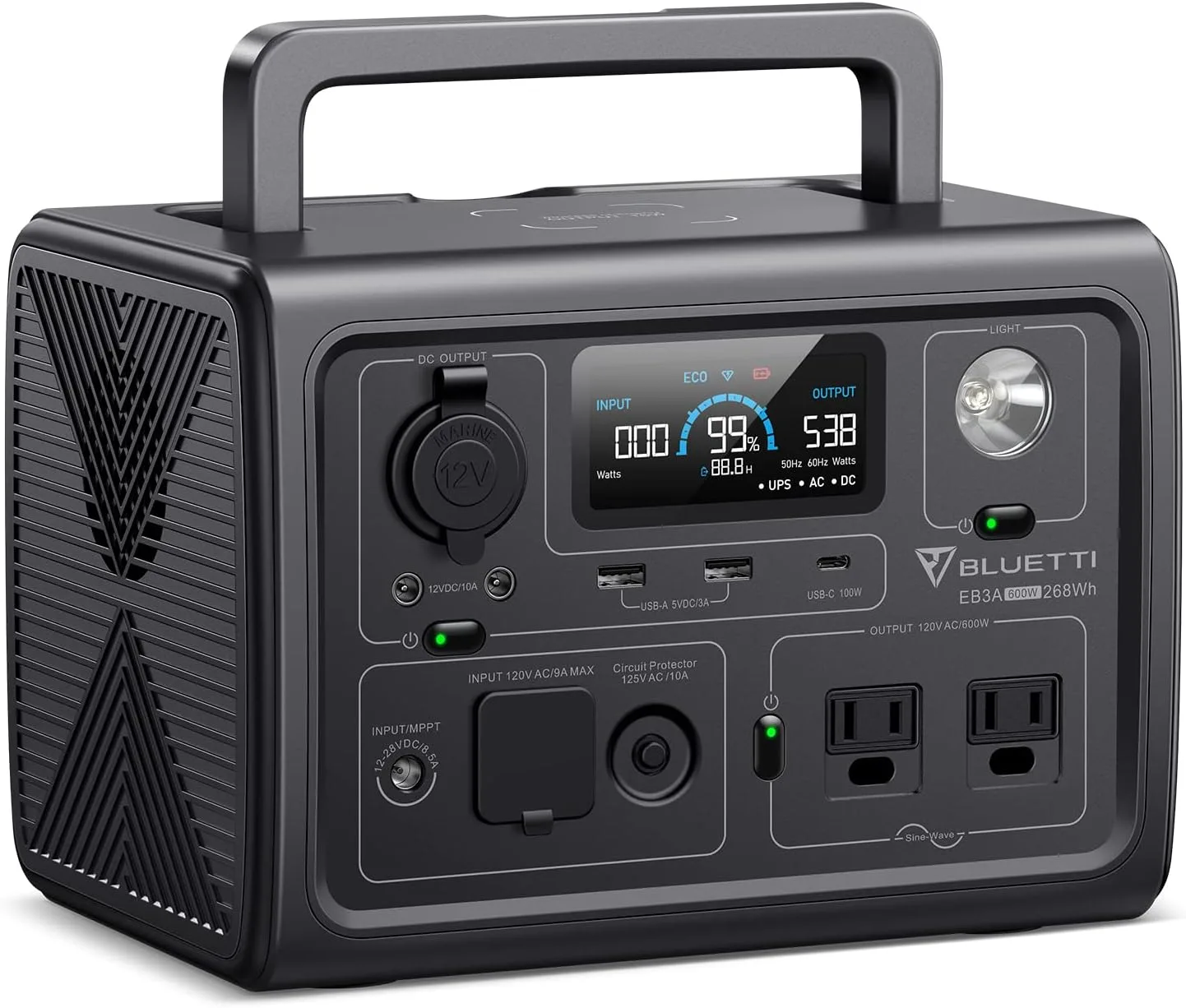
BLUETTI EB3A Portable Power Station
Highlights
- 268Wh rated capacity
- 600W continuous AC
- 1200W surge
- LiFePO4 chemistry
- Up to 200W solar input
- 10.1 lb (~4.6 kg)
Best for
- bluetti-eb3a: phones, cameras and a laptop on short trips
- Travel kits when you need quiet pack power, not appliance runtime
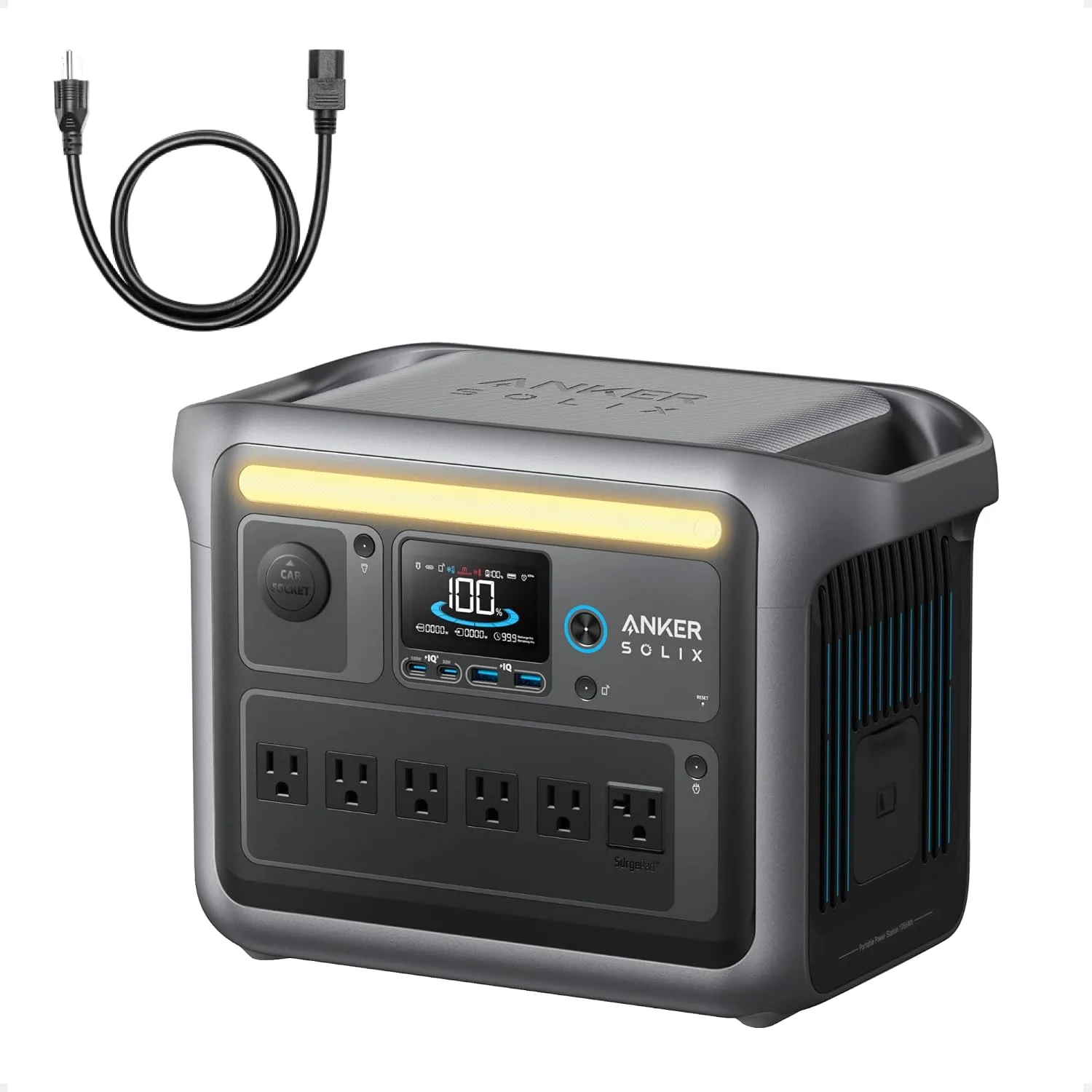
Anker Full Charge in 58 Min
Highlights
- 56Wh rated capacity
- 1800W continuous AC
- LiFePO4 chemistry
- 27.6 lb (~12.5 kg)
- About $599.99 list
Best for
- SOLIX C1000: phones, cameras and a laptop on short trips
- Travel kits when you need quiet pack power, not appliance runtime
Why each one landed where it did
Jackery Explorer 300 Portable Power Station,292Wh — The CPAP story is the differentiator. Owners report four nights on a DC cord with 2% left, and another saw only 29% used over two freezing nights. On AC, the low-draw auto-off cut a CPAP after 5.5 hours; the DC cord avoids that and roughly halves consumption. It also carried a 24-hour outage with phones, a laptop, a TV, a heating pad, and a small coffee maker and still showed 43%. The caveat is capacity: it will not run a fridge, and one owner felt a single phone charge plus a lamp drained it in a day. For lights, phones, and CPAP on DC, it is the best fit here.
Jackery Explorer 500 v2 Power Station, 512Wh/500W, AC Cable Included — The regulated 12V output is the reason it ranks second. Owners ran a DC fridge/freezer for 15 hours with over 50% left, and a Dometic fridge for about 45 hours in normal mode. That steady 12V also matters for ham radios and gear that complains when voltage sags. Solar has a floor: a 60W panel would not start a charge, while a 100W panel worked. The port layout is dated — one AC outlet and no USB-C — and support experiences vary. If you need a cooler-capable box and do not mind the older ports, it is a workhorse.
EcoFlow RIVER 2 — Speed is the pitch. Owners watched it go from zero to full in about an hour on AC, and one brought a portable fridge from 22% to 100% in 42 minutes while the fridge stayed cold. CPAP users get a full night (7.5 hours in one report), and the app shows input and output clearly. The 300W ceiling rules out coffee makers, microwaves, and hair dryers, and one owner's unit self-discharged to zero within days and had a tedious warranty process. A firmware update also temporarily killed AC charging readout and USB-C input on another unit until a fix landed. For fast-cycling, light backup, it is great; for appliance-level power, size up.
Jackery Explorer 1000 v2 Portable Power Station,1070Wh,1500W — This is the basecamp box. Owners ran a fridge and a portable AC at the same time, and one ran a 12-quart DC fridge for three days and only dropped to 43% with phone charging on top. Recharge is about 1 hour 40 minutes in normal mode, and quiet mode is genuinely quiet enough to sleep next to. It is not an everything box: a 1700W air fryer and a large sliding miter saw both tripped it. At 23.8 lb it is portable but not a carry-far unit, and Wi-Fi can drop overnight. For a family basecamp with a fridge and fans, it fits.
BLUETTI AC180 — The UPS mode is the headline. One owner wired a basement circuit through it and the switchover was seamless — internet and TV stayed on without a blink. It has the muscle for real appliances: a fridge and coffee maker through winter outages, and a portable car fridge for five days while charging phones. AC recharge is about two hours. Two things to know: the inverter draws about 20W even with nothing plugged in, and only ~90% of rated capacity is usable, so small loads eat through it faster than the math suggests. At 35.3 lb it is a move-once unit. For a set-and-forget UPS at a cabin, it is solid; for portability, size down.
BLUETTI EB3A Portable Power Station — It punches above its size: a 600W chainsaw charger ran without complaint, a cup brewed at 315W using power lift mode, and a box fan ran six hours on low. CPAP users got 10.5 hours on AC with the heater off, and another 9 hours with 57% left. AC recharge is about an hour and twenty minutes in silent mode. The cracks are real and repeated: the fan buzzes as it ramps, several owners found the new-unit smell hard to take, and multiple units shut down abruptly to 0% even when powering a single low-watt device. The app is needed for some settings, and Bluetooth pairing exposed other people's units in one report. For camping and short jobs where you are nearby, it is handy; for unattended backup, look elsewhere.
Anker C1000 Portable Power Station with Car Charging Cable, 1,056Wh — The fridge numbers are the reason it makes the list: an 18 cu ft garage fridge ran for 36 hours before shutdown at 1%, and a larger kitchen fridge lasted 12 hours with doors opening. A TV, Roku, and hotpad at ~120W ran 9–10 hours, and recharge from 1% to full took about 1.5 hours on AC. The app lets you dial down charge wattage so a small generator is not overloaded. The trade-offs: it is heavy (listed at 27.6 lb but owners say it feels more), the app and firmware had connection hiccups out of the box on one unit, and the AC cable is short. The listing capacity figure of 56Wh is an outlier against the 1,056Wh model name and the owner runtime reports; I treat it as a data error and do not use it for load math. For car-camping fridge backup where recharge speed leads, it is a strong pick; for capacity per dollar, look at the AC180.
What goes wrong on an off-grid weekend
The failures are predictable. A 60W panel will not start a charge on the Explorer 500 v2; you need 100W. A 300W box will trip on a coffee maker. A low-draw CPAP on AC will hit the auto-off on the Explorer 300. And a 35 lb unit stays in the car if you are switching campsites.
The other trap is idle draw. The AC180 burns about 20W with the inverter on, and only ~90% of rated capacity is usable. That means a 1152Wh box behaves more like 1000Wh for small loads. Plan your load list against usable capacity, not the nameplate.
- Solar panel too small to initiate charging — budget for 100W minimum on the larger boxes.
- Appliance wattage over continuous output — check the label before you pack the coffee maker.
- Low-draw auto-off cutting a CPAP or radio — use DC where possible.
- Idle draw and usable-capacity limits — plan for ~90% of rated Wh on the AC180.
- Weight creep — a 35 lb box is a two-hand move, not a day-pack.
Who should pick something else
If you need to run a full-size fridge, a microwave, or a coffee maker, none of the 243–1,152Wh boxes here will do it. Step up to a larger unit (the Explorer 1000 v2 or AC180 are the biggest here) and check the continuous wattage against the appliance label. If you need whole-home backup with a transfer switch, this is the wrong page — look at the home-backup guides.
If you are backpacking or moving camp every day, the 23–35 lb units are the wrong shape. The Explorer 300 or River 2 are the carry-friendly options. And if you need unattended reliability for medical gear, the EB3A's random-shutdown reports make it a poor fit; the Explorer 300 on DC or the AC180 as a UPS are safer bets.
- Not for whole-home backup or transfer-switch wiring.
- Not for backpacking — anything over 15 lb is car-camping gear.
- Not for high-watt appliances on the 243–1,152Wh units.
- Not for unattended medical backup on the EB3A.
Owner themes behind the ranking
These are theme summaries from high-helpful reviews on file, not raw quotes. Listing star averages are shown in the table as listing aggregates, not owner proof.
Jackery Explorer 300: CPAP DC efficiency and portability are the recurring wins; auto-shutoff on low AC draw and capacity limits are the recurring complaints. BLUETTI EB3A: small-but-powerful output and fast recharge versus fan noise and random shutdowns. EcoFlow RIVER 2: fast recharge and UPS function versus 300W ceiling and one warranty ordeal. Anker C1000: fridge runtime and fast recharge versus weight and app/firmware hiccups. Jackery Explorer 500 v2: regulated 12V and cooler runtime versus solar minimum and dated ports. Jackery Explorer 1000 v2: quiet mode and fast recharge versus weight and high-watt appliance limits. BLUETTI AC180: UPS switchover and appliance muscle versus idle draw and 35.3 lb weight.
Frequently asked
Can the Explorer 300 run a CPAP for a full weekend?
Yes, on DC. Owners report four nights (35 hours) on a full charge with 2% left, and another saw only 29% used over two freezing nights. On AC, the low-draw auto-off cut one CPAP after 5.5 hours, so use the DC cord.
Will the Explorer 500 v2 charge from a 60W solar panel?
No — owners found a 60W panel would not initiate charging. A 100W panel worked. Budget for 100W if you plan to solar-charge this unit.
How long does the AC180 last on a small load?
The inverter draws about 20W with nothing plugged in, and only ~90% of rated capacity is usable. For a 55W fan, one owner saw about 10–11 hours instead of the 16–17 hours the math suggested. Plan for usable capacity, not nameplate.
Can the Anker C1000 run a fridge overnight?
Owners report an 18 cu ft garage fridge ran 36 hours before shutdown at 1%, and a larger kitchen fridge lasted 12 hours with doors opening. That is short-outage food protection, not multi-day backup.
Method and sources
Model names and list prices come from the WattPicks catalog at build time. WattPicks does not run its own laboratory tests on power stations, and nothing on this page is presented as a measured result — it is catalog-backed buying guidance.
Read our methodology for how the catalog is normalized, and about WattPicks for who publishes it.