
Guide
Can you charge a power station from a car outlet?
Yes, with the right cable — but the 12V socket in a car is the slowest way to refill a power station, and the port most people point at is an output rather than a charging input. Here is how to tell them apart before you rely on one.
Every figure on this page is computed from the WattPicks dataset (107 models from 12 brands, all read from the manufacturers' own product pages). We do not test power stations, so nothing here is a measurement of ours.
The short answer
Many power stations accept a 12V car charging cable that runs from the vehicle accessory socket to a dedicated DC input on the unit. It works, and it is useful for topping up on a long drive, but it is the slowest of the three normal methods — slower than a wall outlet and usually slower than a decent solar array.
The vehicle side is the limit, not the station. A car accessory socket is fused for a modest current and shared with whatever else is plugged in, so it cannot deliver the same power as a household circuit. Check the model’s own input list rather than assuming every station ships with or supports a car cable.
The 12V car port is usually an output
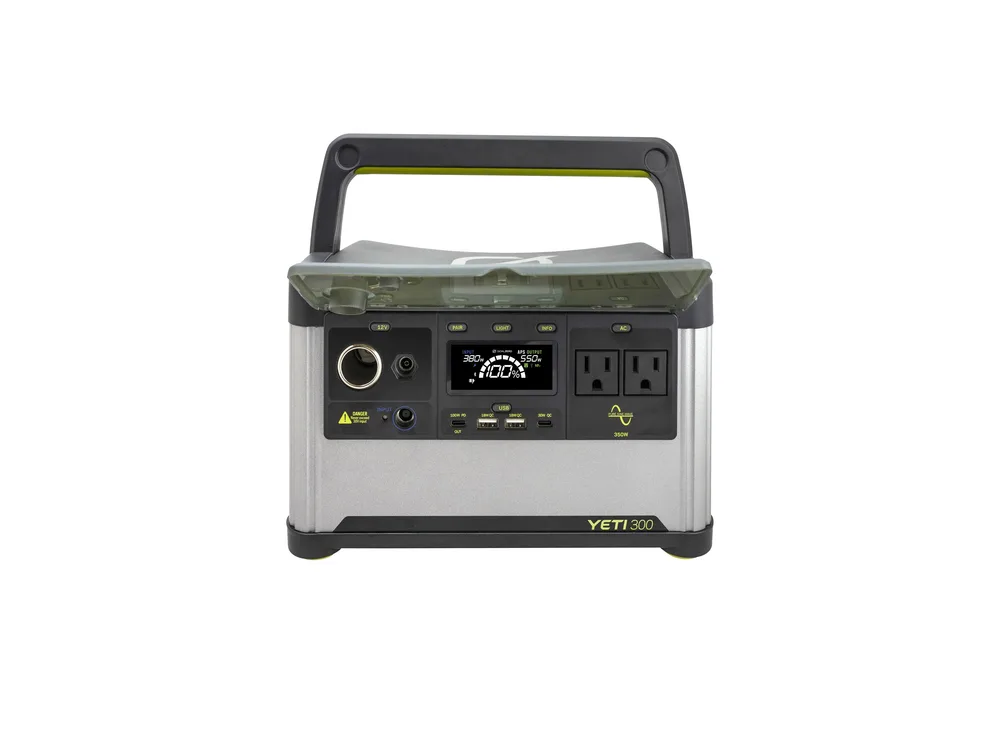
This is the mix-up behind most of the confusion. In the WattPicks dataset, 42 of the 107 models publish a 12V car port, and the vendor pages typically quote it as 12V/10A. That figure describes an output for running 12V accessories — a cooler, a light, a tire pump — not the input you charge the station through.
Charging and output are separate circuits even when they share a connector family. The charging input is a DC input, often labeled with its own voltage window and current limit. If a listing advertises a 12V car port and says nothing about a car charging input, treat car charging as unconfirmed for that model and plan around AC or solar instead.
What the dataset can and cannot compare
The figures we can compare are the ones the vendors publish. 49 of the 107 models state an AC recharge time, which works out to an average input rate of roughly 61 W to 1.7 kW across the set. Solar is documented more often still: 83 models publish a solar input rating, from 90 W to 6.4 kW.
Car charging input wattage is largely unpublished. Because the dataset records a car port as an output spec, we cannot compute a car recharge time from it, and we will not estimate one. If a car charge is central to how you will use a station, look for a model whose own manual states the DC input figure.
Common mistakes
- Reading the 12V car port specification as a charging rate. It is an output.
- Leaving the station plugged into an accessory socket that goes dead with the ignition, then finding a flat station the next morning.
- Charging from a car with the engine off and draining the vehicle battery in the process.
- Assuming a car charge will keep pace with heavy use on a road trip. It is a top-up, not a primary source.
- Buying a car cable for a model whose manual lists only AC and solar inputs.
Charging from a car, step by step
- Confirm the station has a DC charging input and that its manual allows a 12V car source.
- Use the cable the manufacturer supplies. A generic cable can be wired for the wrong polarity or pinout.
- Run the engine while you charge, so the station draws from the alternator rather than the starter battery.
- Watch the station display rather than the clock. The input rate decides the time, and a car is usually the slowest source.
- Unplug before leaving the vehicle parked, and do not store the unit in a hot cabin for long periods.
If a car charge is not enough
For a weekend trip, charging at home before you leave is almost always simpler than charging on the road. If you need to recharge while parked, solar is the more predictable source, and the AC input is the fastest when you have an outlet. The best portable power stations page ranks the models that publish their inputs.
Frequently asked
Can you charge a power station from a car outlet?
Yes, if the model has a DC charging input and the manufacturer supports a 12V car cable. It is the slowest of the usual charging methods and is best treated as a top-up rather than a full recharge.
Is the 12V car port the same as the charging input?
Usually not. In our dataset the car port is an output, typically quoted as 12V/10A. The charging input is a separate DC input, so check the model page or manual rather than the port label.
Will charging from a car drain the car battery?
It can if the engine is off and the socket stays live. Run the engine while charging so the alternator carries the load, and check whether the accessory socket is powered when the ignition is off.
How long does a car charge take?
We do not publish a car charge time, because the dataset does not record a car input wattage for these models. AC recharge times and solar input ratings are the figures the vendors publish, and those are the ones to compare.