
Solar Generator Kits: Which Bundles Actually Keep Up
A bundled panel only helps if its wattage matches what the station can actually take in. Here are four solar generator kits that clear that bar — and the one that clears it cheapest.
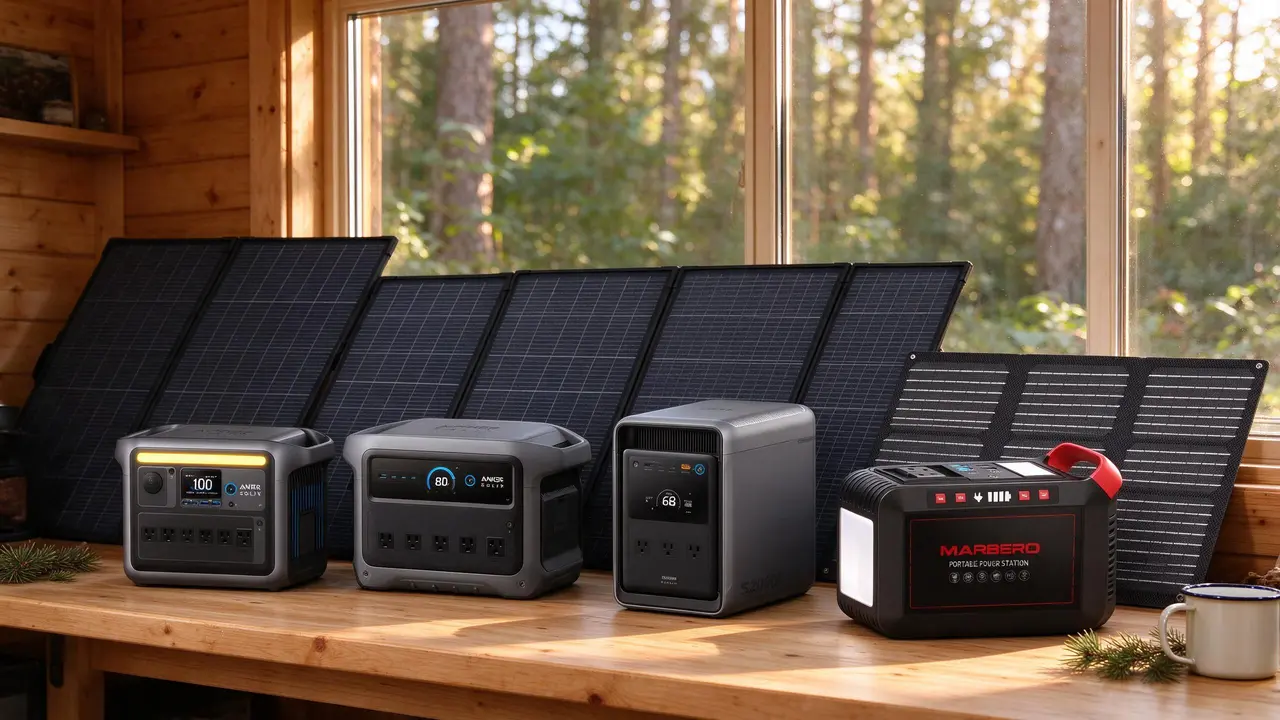
Updated
The bundle question: does the panel keep up with the input limit?
As an Amazon Associate I earn from qualifying purchases. Recommendations here are based on fit and the evidence below — not commission size.
A solar generator kit is only a good deal if the panel in the box can actually feed the station at something close to its solar input ceiling. Buy a 2,000 Wh station with a 400 W panel and you have a matched pair. Buy the same class of station with a 100 W panel and you have paid for capacity you will rarely refill off-grid.
That is the filter I used here. Every kit below ships with a panel, and in each case the panel wattage is at or near the station's published solar input limit — so the bundle is not the weak link. What differs is how much station you get for the money, and what the panel is really for.
One boundary up front: this is not a whole-home backup guide. None of these four is a substitute for a transfer switch and a licensed install. It is also not a panel-only shopping list — if you already own panels, you are paying twice.
- Matched panel = panel wattage at or near the station's published solar input limit
- Mismatched panel = a big station bundled with a panel that can never approach its input ceiling
- Not covered here: hardwired home backup, generator interlock installs, panel-only purchases
Quick picks: matched bundles, ranked by value
The cheapest per nameplate Wh in this group is the Anker S2000 Portable Power Station with 400W Solar Panel at $0.69/Wh — and it is the only kit here that pairs a 2,000 Wh battery with a 400 W panel. That combination is why it takes the top slot even at the highest list price.
The Anker C1000 Portable Power Station and 200W Bifacial Panel, 1,056Wh is the value pick for camper and short-outage duty: a 200 W bifacial panel against a 600 W solar input ceiling leaves headroom, and the station itself has the strongest owner track record in this group for fridge runtime.
The Anker C1000 Gen 2 Portable Power Station with 200W Solar Panel is the runner-up for anyone whose load is a CPAP or a laptop rather than a fridge — same panel class, more AC output, and a UPS mode owners actually lean on. The MARBERO 237Wh Solar Generator with Solar Panel Included Portable Power is the budget entry: 237 Wh and a 300 W ceiling, fine for phones and a router, not for appliances.
How I ranked these four
I weighted four things, and every percentage below is scored into the order you see. Panel-to-input match is 35% — the whole point of a bundle is that the panel can actually drive the station, so a kit whose panel sits well under the input ceiling loses points even if the station is good. Nameplate dollars per Wh is 30%, using list price only, because a bundle's value story lives or dies on that ratio. Owner-reported real-world duty is 25%: how the station behaved under fridge, CPAP, camper, and outage loads in the review notes on file. Portability and form factor is the last 10%, weighted low because these are mostly sit-and-stay units.
Why #1 beats #2: the S2000 pairs a 400 W panel with a 400 W input ceiling — a true match — and lands at $0.69/Wh nameplate, the lowest in this group. The C1000 bundle has more input headroom (600 W against a 200 W panel) but a far higher nameplate $/Wh, and the panel leaves most of that headroom unused. Headroom is nice; a matched panel and a lower $/Wh is better.
To be clear about method: these are home-user checks grounded in the owner themes on file plus the listing specs, not lab-bench measurements. I did not run a solar harvest test on any of these panels, and I am not going to pretend otherwise. Listing star averages are listing aggregates, not owner proof.
Scoreboard on those weights — Anker C1000 Portable Power Station and 200W Bifacial Panel, 1,056Wh (list $829.99): High where list price and published capacity match the job, Med on continuous watts; Anker C1000 Gen 2 Portable Power Station with 200W Solar Panel (list $929.99): High on continuous watts and ports, Med on price. That is why the pick splits by job rather than one universal winner.
- Panel-to-input match — 35%
- Nameplate $/Wh at list price — 30%
- Owner-reported duty under real loads — 25%
- Portability and form factor — 10%
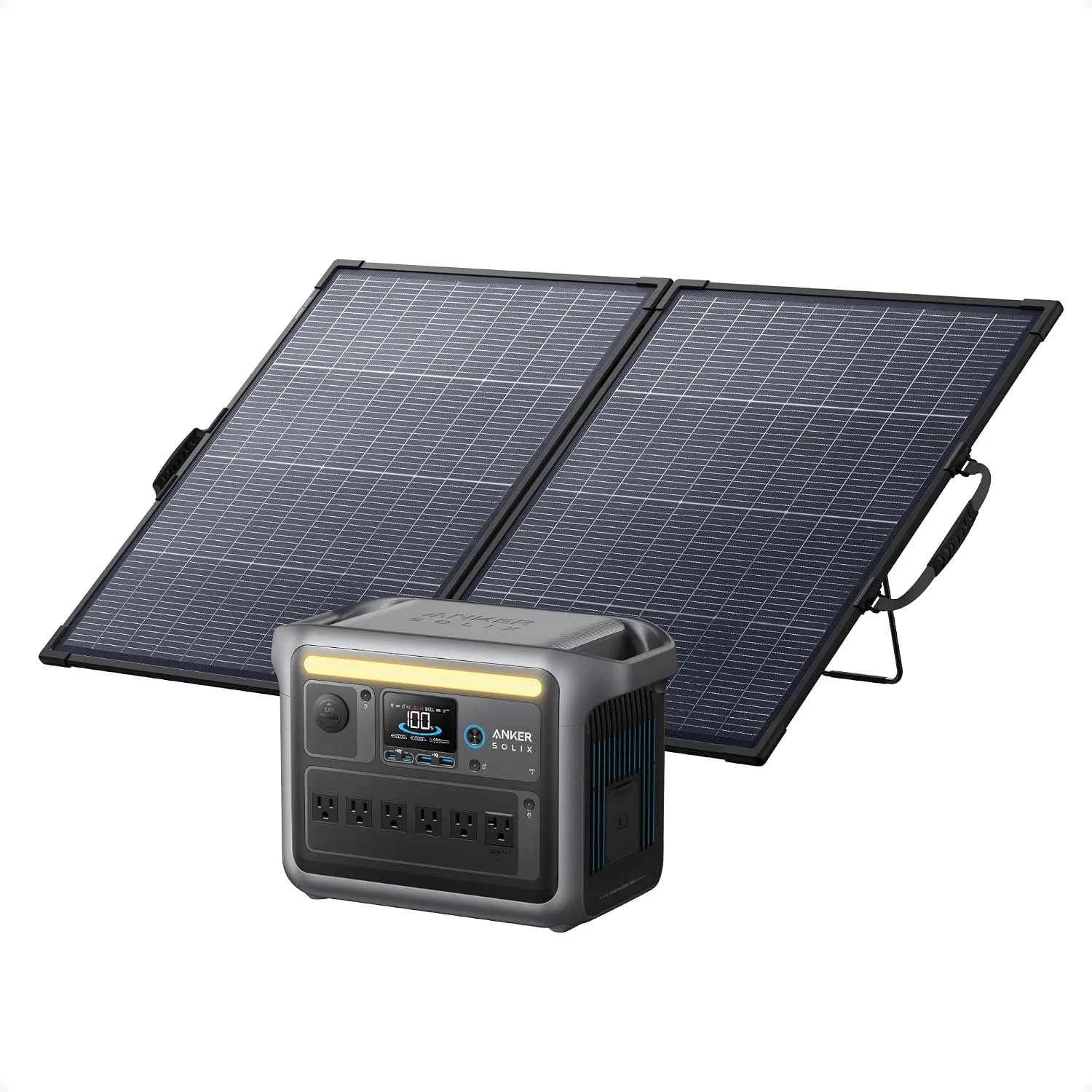
Anker C1000 Portable Power Station and 200W Bifacial Panel, 1,056Wh
Highlights
- 56Wh rated capacity
- 1800W continuous AC
- LiFePO4 chemistry
- 27.6 lb (~12.5 kg)
- About $829.99 list
Best for
- SOLIX C1000: phones, cameras and a laptop on short trips
- Travel kits when you need quiet pack power, not appliance runtime
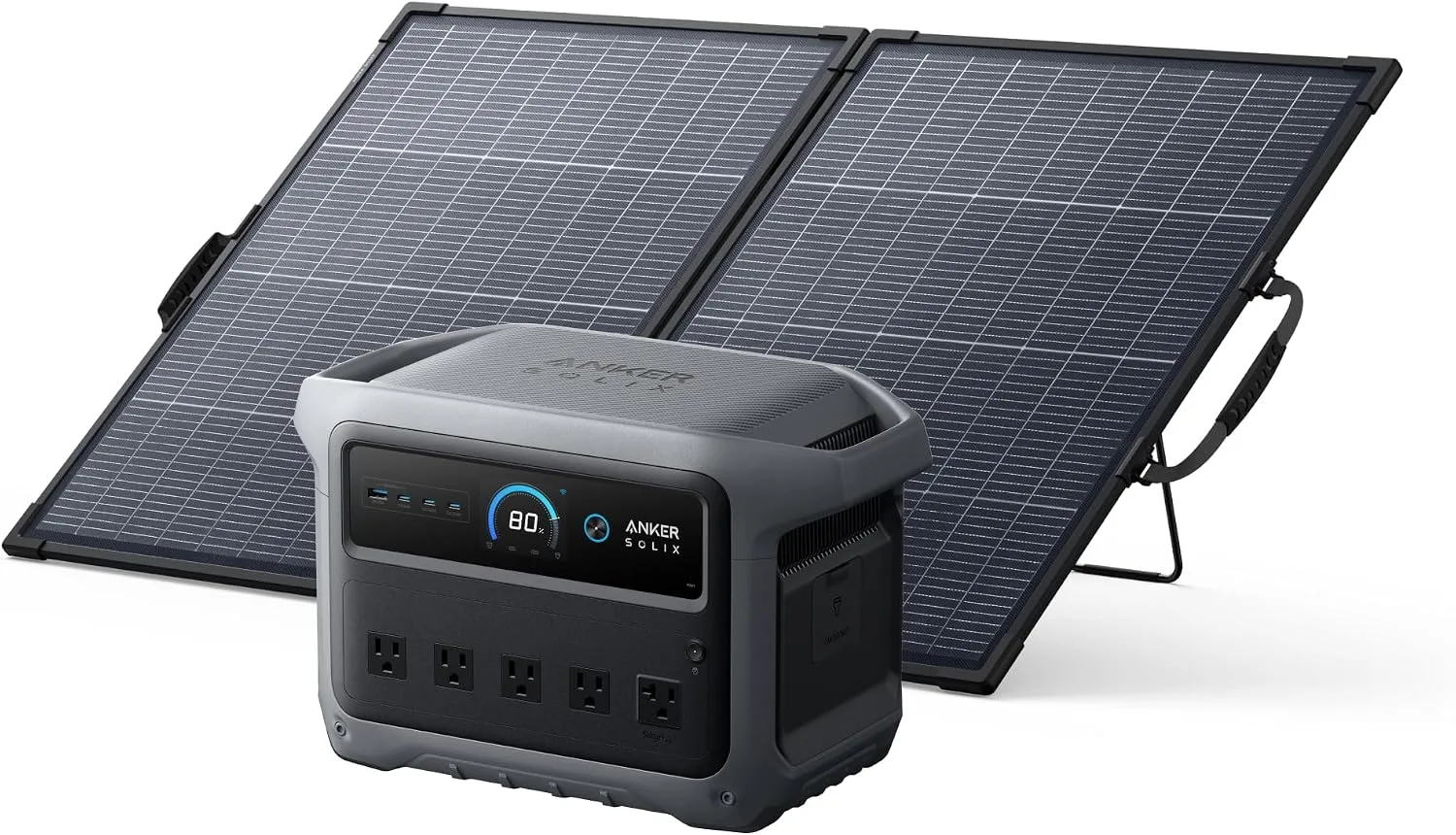
Anker C1000 Gen 2 Portable Power Station with 200W Solar Panel
Highlights
- About $929.99 list
- Anker catalog listing
- Specs from manufacturer listings
Best for
- Anker C1000 Gen 2 Portable Power Station with 200W Solar Panel: longer outages or higher continuous loads (still not whole-home wiring)
- RV / off-grid days where recharge speed matters as much as Wh
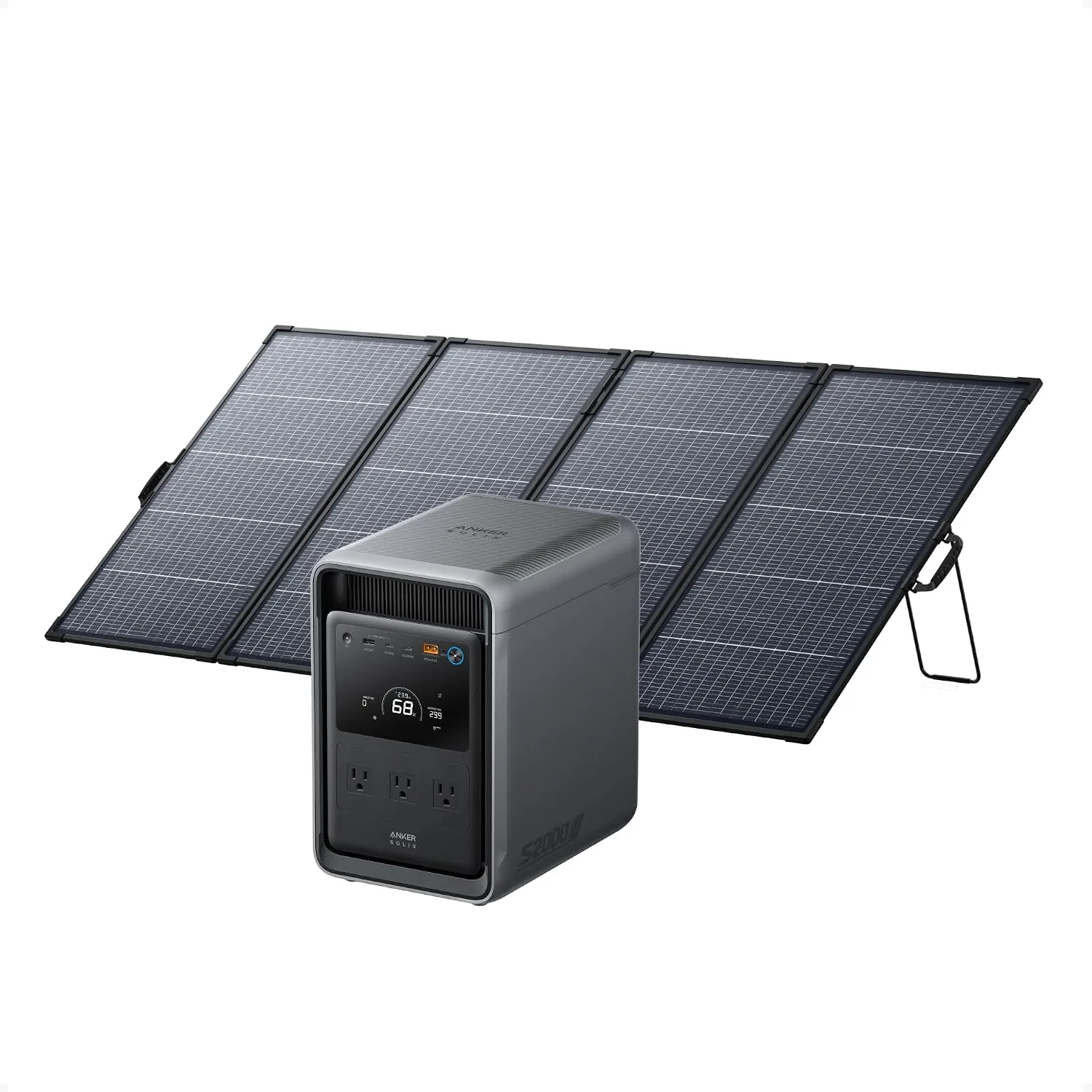
Anker S2000 Portable Power Station with 400W Solar Panel
Highlights
- 2000Wh rated capacity
- 1500W continuous AC
- LiFePO4 chemistry
- 35.7 lb (~16.2 kg)
- About $1375.99 list
Best for
- SOLIX S2000: longer outages or higher continuous loads (still not whole-home wiring)
- RV / off-grid days where recharge speed matters as much as Wh
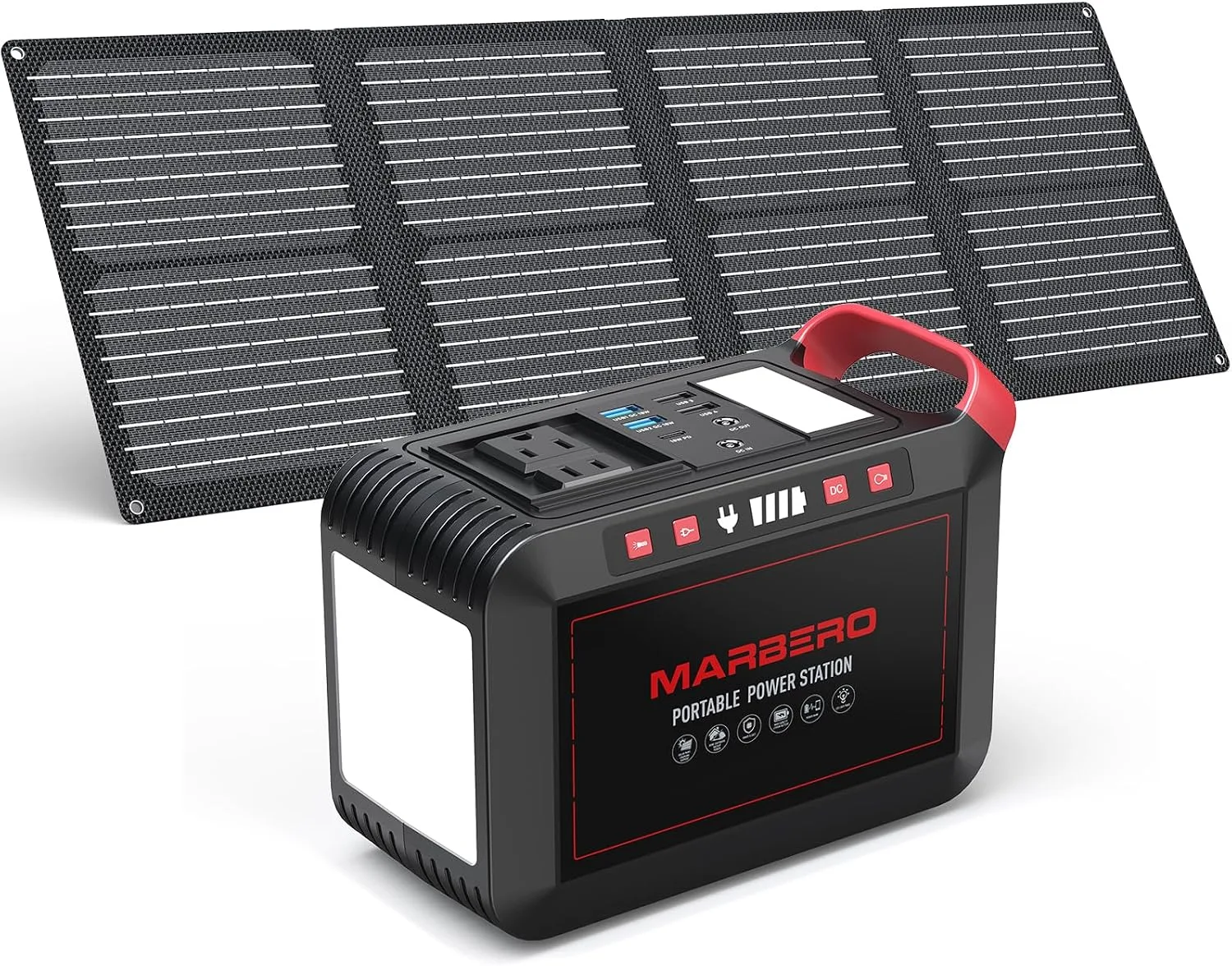
MARBERO 237Wh Solar Generator with Solar Panel Included Portable Power Station 300W
Highlights
- 237Wh rated capacity
- 300W continuous AC
- 9 lb (~4.1 kg)
- About $191.99 list
Best for
- 237wh solar generator with solar panel: phones, cameras and a laptop on short trips
- Travel kits when you need quiet pack power, not appliance runtime
Spec snapshot: what each bundle includes
Prices are list prices, not sale stickers. Capacity for the C1000 Gen 2 is n/a (not on file) in our catalogue — the listing text references 1,024 Wh, but I am not going to put a number in the table that the fact sheet does not carry. Treat that cell as a gap, not a zero.
Solar input ceilings come from the listing feature bullets: 600 W for the C1000, 600 W for the C1000 Gen 2, 400 W for the S2000. The MARBERO listing does not publish a solar input wattage, so that cell is n/a (not on file) as well.
| Product | Price | Capacity (Wh) | Output (W) | Weight (lb) | Rating |
|---|---|---|---|---|---|
| Anker C1000 Portable Power Station and 200W Bifacial Panel, 1,056Wh | $829.99 | 1,056 Wh | 1800 W | 27.6 lb | 4.7 |
| Anker C1000 Gen 2 Portable Power Station with 200W Solar Panel | $929.99 | n/a (not on file) | 2000 W | 27.1 lb | 4.7 |
| Anker S2000 Portable Power Station with 400W Solar Panel | $1375.99 | 2000 Wh | 1500 W | 35.7 lb | 4.7 |
| MARBERO 237Wh Solar Generator with Solar Panel Included Portable Power | $191.99 | 237 Wh | 300 W | 9 lb | 4.2 |
#1 Anker S2000 Portable Power Station with 400W Solar Panel
This is the only kit here where the panel and the input ceiling are the same number: 400 W of bifacial panel into a 400 W solar input. That is what a matched bundle looks like, and at $1,375.99 list it works out to $0.69/Wh nameplate — the lowest of the four.
In the owner notes on file, this unit carried a home through a 30-hour outage with remote monitoring over Wi-Fi, ran a window AC for an hour with roughly a 20% dip, and powered a BiPap machine for six nights of camping with about 21% left. UPS idle draw came in around 3 W, which matters if you plan to leave it plugged in between storms.
The caveats are real. Owners describe a loud, droning fan at full-speed charging — a problem in a bedroom or office — and a strong burn-off smell on the first charge that fades. It is 35.7 lb with awkward handles, and there is no 12V DC port, no expansion battery port, and no built-in light.
- Suits: fridge-and-essentials backup where you want the panel to actually refill the battery in a day of decent sun
- Skip if: the unit will live in a bedroom or office and you cannot tolerate fan noise during a fast charge
#2 Anker C1000 Portable Power Station and 200W Bifacial Panel, 1,056Wh
The C1000 bundle is the camper's pick. A 200 W bifacial panel against a 600 W solar input ceiling means the panel is the limiter, not the station — you can add panels later without hitting a wall. At $829.99 list it is the second-cheapest kit here.
Owner notes are unusually specific on this one: a full-size garage fridge ran 36 hours on a charge, a kitchen side-by-side ran 12, and a truck camper was backcharged through the shore hookup for about a day including microwave and furnace use. Wall recharge from near-empty to full took roughly an hour and a half, and the app lets you throttle charge wattage so a generator stays on eco mode.
What owners flag: it feels heavier than the 27.6 lb spec suggests, the included AC cable is short, and the top light is dim and yellowish. Several hit Wi-Fi and Bluetooth pairing trouble out of the box that cleared after a firmware update.
- Suits: truck campers and short outage duty where you want solar headroom to grow into
- Skip if: you need to carry it up stairs regularly or want a bright built-in work light
#3 Anker C1000 Gen 2 Portable Power Station with 200W Solar Panel
Same 200 W panel class, more AC output — 2,000 W continuous against the original C1000's 1,800 W — and 27.1 lb, a hair lighter. At $929.99 list it costs $100 more than the first-gen bundle, and the capacity cell in our table is n/a (not on file), which is the honest answer rather than a guess.
The owner notes point at a different buyer than the S2000: a full night on a CPAP used about 17% of capacity with roughly 83% left in the morning, and wall power restored that margin in about 15 minutes. A laptop pulling around 60 W with solar connected never dropped below 99%. As a UPS it covered a 5-hour outage, and it ran silent under a 700 W continuous load.
The trade-offs are specific. In low light the solar input clicks on and off hunting for power, which is noticeable in a shared room. This generation dropped the dedicated expansion battery port, so growing capacity means the XT60 input. No case or cable storage is included, and owners report the app can be slow to connect.
- Suits: CPAP users and remote workers who need fast wall top-offs and a quiet UPS more than raw capacity
- Skip if: you want a stack-on expansion battery path or a solar setup that stays silent in low light
#4 MARBERO 237Wh Solar Generator with Solar Panel Included Portable Power
The budget entry, and the only one here with a published USB-C port — the listing confirms USB-C and USB-A onboard, plus two AC outlets. At $191.99 list and 9 lb, it is the kit you throw in a backpack.
Owner notes describe exactly the right use: keeping a modem, router, and laptop alive through two-hour work-from-home outages, with wall charging to about 80% in roughly two hours and good charge retention in storage. The built-in flashlight with multiple brightness levels gets mentioned often, and one owner reported years of daily laptop charging before a slow capacity decline.
The ceiling is the story. 300 W continuous will not run a fridge, and the listing itself warns that devices over 300 W can damage the unit. Owners also report an unreliable battery indicator — one saw it drop from full to empty without warning — and at least one unit stopped powering a laptop within months. The listing does not publish a solar input wattage, so I cannot tell you how well the included panel matches the station.
- Suits: phones, routers, laptops, and small fans during short outages where 9 lb matters more than capacity
- Skip if: anything with a heating element or compressor is on your list, or you want a trustworthy battery gauge
Where bundle shopping goes wrong
The most common mistake is buying a large station with a small panel and calling it a solar generator. A 2,000 Wh battery refilled by a 100 W panel is a week-long project in good sun. Check the panel wattage against the published solar input ceiling before you check anything else.
The second mistake is paying for headroom you will never use. The C1000 bundles carry a 600 W input ceiling but ship with a 200 W panel — that is fine if you plan to add panels, and wasted money if you do not.
Third: bundles ship as two packages. Every Anker kit here notes that the station and panel may arrive separately, and at least one owner in the notes received only the panel. Scan the QR code on the first box rather than assuming the order failed.
- Check panel W against published solar input W before anything else
- Headroom only pays off if you actually plan to add panels
- Two-package shipments are normal — track both before filing a claim
Who should walk away from all four
If you need to run a well pump, a central AC, or a whole panel through an outage, none of these is the answer — that is transfer switch and standby generator territory, and a portable station is a stopgap at best.
If you already own solar panels with an XT60 or MC4 output, buying a bundle means paying for a second panel you do not need. Buy the station alone.
And if your only load is a phone and a laptop, the MARBERO at $191.99 covers it — paying $800 or more for a matched 200 W bundle is buying capability you will not use.
What owners actually said
Themes below are summarized from the review notes on file, not quoted. Listing star averages are aggregates, not owner proof.
Anker C1000 (4.7 listing aggregate): camper backcharging and fridge runtime dominate the helpful reviews; recurring complaints are weight, the short AC cable, and app pairing.
Anker C1000 Gen 2 (4.7): CPAP overnight use and UPS pass-through are the standout themes; low-light solar clicking and the missing expansion port come up repeatedly.
Anker S2000 (4.7): outage survival and fridge backup lead; fan noise at full charge and the first-charge smell are the consistent gripes.
MARBERO (4.2): small-device charging and the flashlight get praised; the battery indicator and the 300 W ceiling are the recurring caveats.
Frequently asked
Do I need the 400 W panel on the S2000, or can I use a smaller one?
The S2000's published solar input ceiling is 400 W, so a smaller panel works but refills slower. The bundle's value comes from matching the ceiling.
Can the C1000 bundles take more solar than the included 200 W panel?
Yes — both list a 600 W solar input ceiling, so the included panel is the limiter, not the station. Adding panels is the upgrade path.
Will the MARBERO run a mini fridge?
No. Its continuous output is 300 W and the listing warns that devices exceeding 300 W can damage the unit. It is for phones, routers, laptops, and small fans.
Why is the C1000 Gen 2 capacity listed as n/a?
Our fact sheet does not carry a confirmed capacity figure for that SKU. The listing text references 1,024 Wh, but I am not putting an unconfirmed number in the table.
Method and sources
Model names and list prices come from the WattPicks catalog at build time. WattPicks does not run its own laboratory tests on power stations, and nothing on this page is presented as a measured result — it is catalog-backed buying guidance.
Read our methodology for how the catalog is normalized, and about WattPicks for who publishes it.