
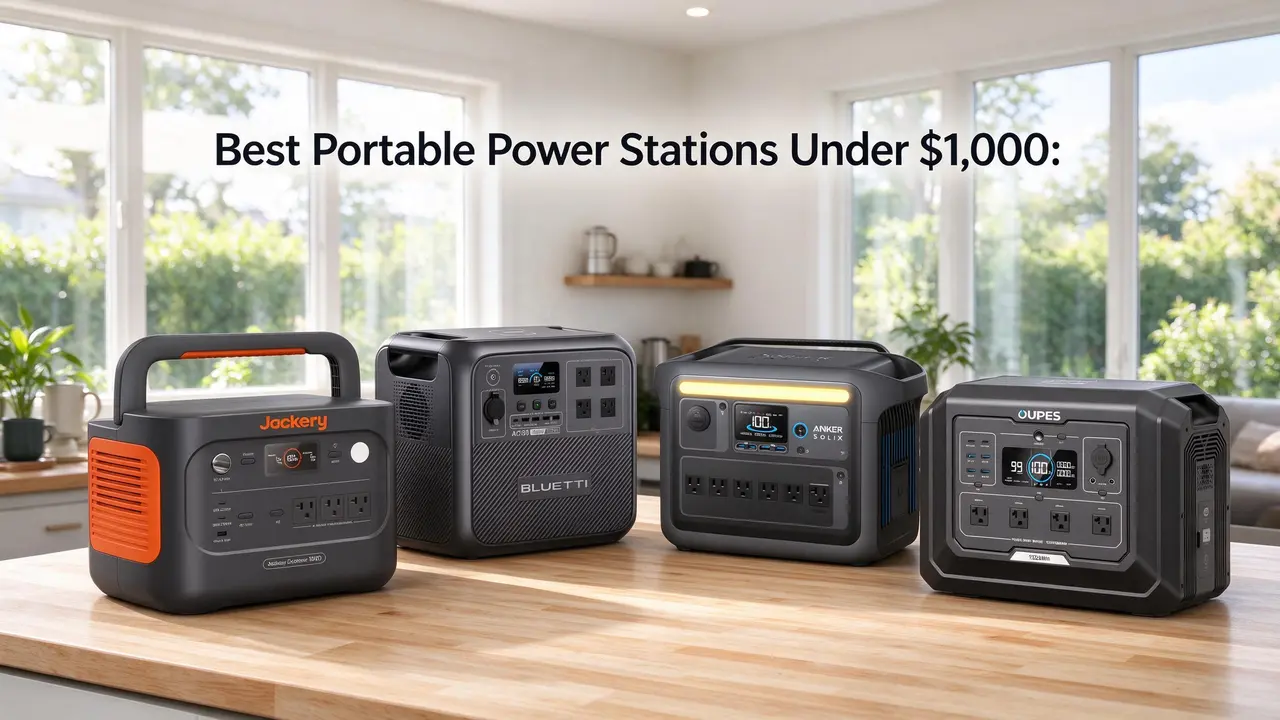
Best Portable Power Stations Under $1,000: Three Budget Bands, Five Units
Under $1,000 buys a real 1 kWh power station — but which band you land in decides whether you get a fridge box, a UPS, or a solar bundle. Here are five units sorted by what each tier actually delivers.
Updated
What $1,000 actually buys in this class
If you are shopping under $1,000 for a portable power station, you are really shopping one question: how much usable energy do you need to move, and how often? Every unit here sits in the 1,024–1,152 Wh band with 1,500–2,000 W of continuous AC output. That is enough for a fridge, a CPAP, routers, fans, and phones through a short outage. It is not enough to run a whole home, an air fryer, or a big miter saw for long.
The budget bands matter more than the brand names. Entry sits around $499–$559, middle around $549–$599, and the top band is the $699 solar bundle. Crossing a band usually buys one specific thing — more continuous watts, a UPS switchover, or a panel in the box — not a better version of everything.
One disclosure up front: picks here are fit-led, and links may earn an Amazon Associates commission. Specs come from listings; owner themes come from reviews on file. These are home-user checks, not lab-bench measurements.
- Entry band (~$499–$559): 1,024–1,152 Wh, 1,500–1,800 W, no panel included
- Middle band (~$549–$599): 1,800–2,000 W continuous, UPS or fast-recharge features
- Top band (~$699): 1,024 Wh with a 200W solar panel bundled
How I sorted these five
I weighted four things: continuous AC output (30%) because it decides what actually starts; usable capacity and recharge speed (30%) because headline Wh rarely survives idle draw and inverter loss; port layout and weight (20%) because a 35 lb box you cannot lift is a shelf ornament; and owner themes from reviews on file (20%) because repeated complaints about fans, cables, and app flakiness are the failures you will actually hit.
Why the AC180 leads on value and the Jackery leads on carry: the AC180 wins the watts-per-dollar and UPS argument at $499 and 1,800 W, but it is 35.3 lb — the heaviest here by a wide margin. The Jackery gives up 300 W of continuous output and 82 Wh of capacity, and takes back 11.5 lb. That weight gap is why it sits first for anyone moving the unit between rooms or vehicles.
The OUPES Mega 1 is the awkward one. On paper it has the best output-per-dollar of the group at 2,000 W for $549, but owner reports on file describe usable capacity landing well under the headline and a surge rating that tripped early. That is why it ranks as a middle-band value pick rather than the top overall.
Scoreboard on those weights: the Jackery Explorer 1000 v2 (1070Wh, 1500W, list $559) scores High where list price and published capacity match the job, and Med on continuous watts. The BLUETTI AC180 (list $499) scores High on continuous watts and ports, and Med on price. That is why the pick splits by job rather than one universal winner.
Quick picks by band
If you want the cheapest credible 1 kWh box with the lightest carry, the Jackery Explorer 1000 v2 is the entry pick at $559 and 23.8 lb. If you want the most watts per dollar and a real UPS switchover, the BLUETTI AC180 at $499 is the value anchor — it is also the cheapest per nameplate Wh here at $0.43/Wh.
The middle band is where the trade-offs get interesting. The Anker C1000 at $599 buys you 11 AC outlets and the strongest fridge-runtime owner reports on file. The OUPES Mega 1 at $549 buys 2,000 W continuous — the highest here — for less money.
The top band is a single unit: the BLUETTI Solar Generator Elite 100 V2 with 200W Solar Panel Included at $699. You are paying $0.68/Wh, the highest nameplate rate in this group, and the premium is the bundled panel, not more capacity.
- Jackery Explorer 1000 v2 — best for: lightest carry and simplest fridge-plus-fans duty
- BLUETTI AC180 — best for: most watts per dollar and instant UPS switchover
- Anker C1000 — best for: short grid-down fridge protection with the most outlets
- OUPES Mega 1 — best for: high continuous output on a tight budget
- BLUETTI Elite 100 V2 bundle — best for: off-grid campers who will actually use the panel
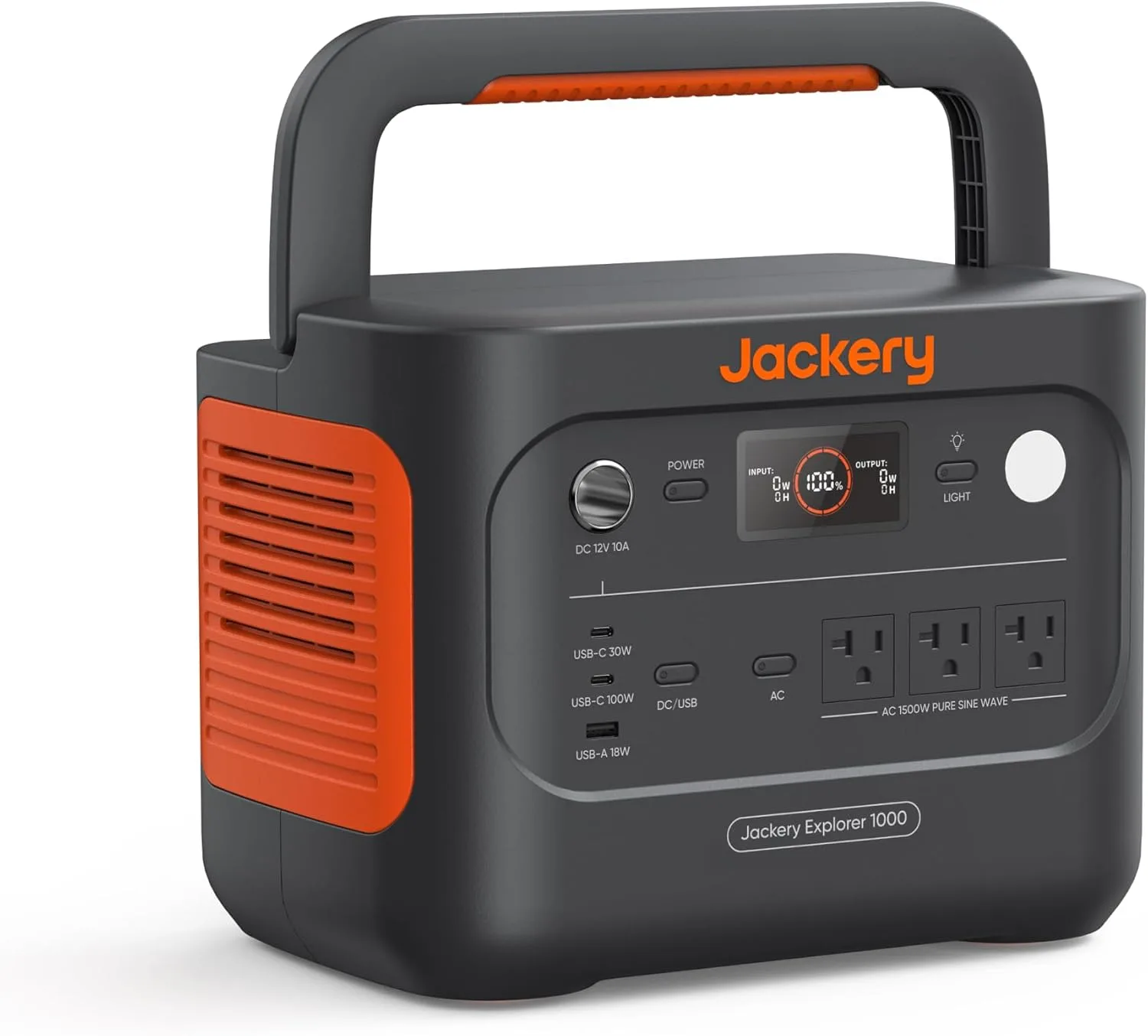
Jackery Explorer 1000 v2 Portable Power Station,1070Wh,1500W
Highlights
- 1070Wh rated capacity
- 1500W continuous AC
- LiFePO4 chemistry
- Up to 400W solar input
- 23.8 lb (~10.8 kg)
- About $559 list
Best for
- Explorer 1000 v2: weekend camping when 23.8 lb carry weight matters as much as 1070Wh
- Essentials bridge at home (fridge cycles, router) when sized to the Wh
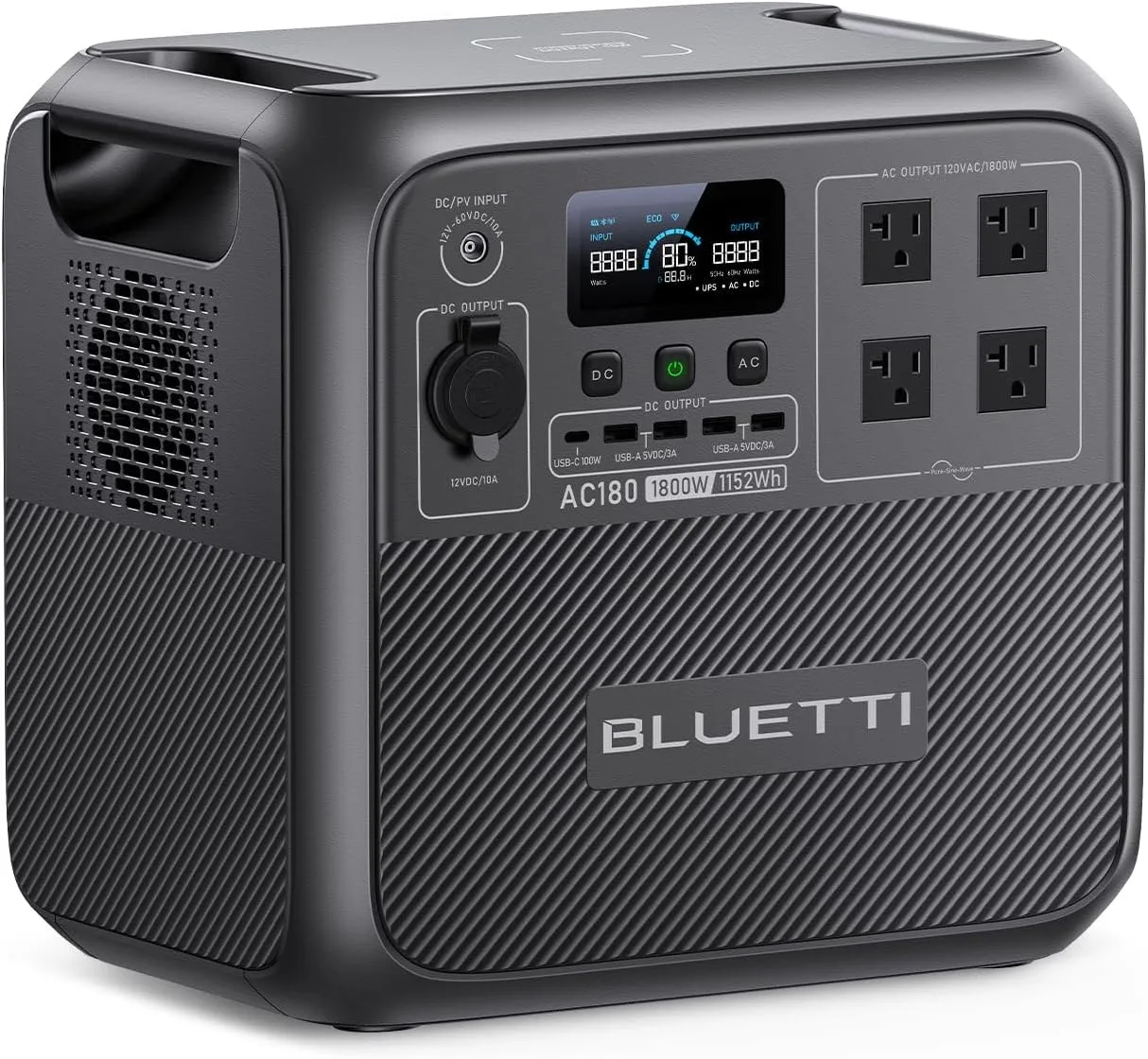
BLUETTI Portable Power Station AC180, 1152Wh LiFePO4 Battery Backup w/ 2 1800W
Highlights
- 1152Wh rated capacity
- 1800W continuous AC
- LiFePO4 chemistry
- Up to 500W solar input
- 35.3 lb (~16.0 kg)
- About $499 list
Best for
- AC180: most Wh per list dollar in mid-size LiFePO4 shortlists (~1152Wh)
- Home essentials when 1800W continuous matters more than a light carry
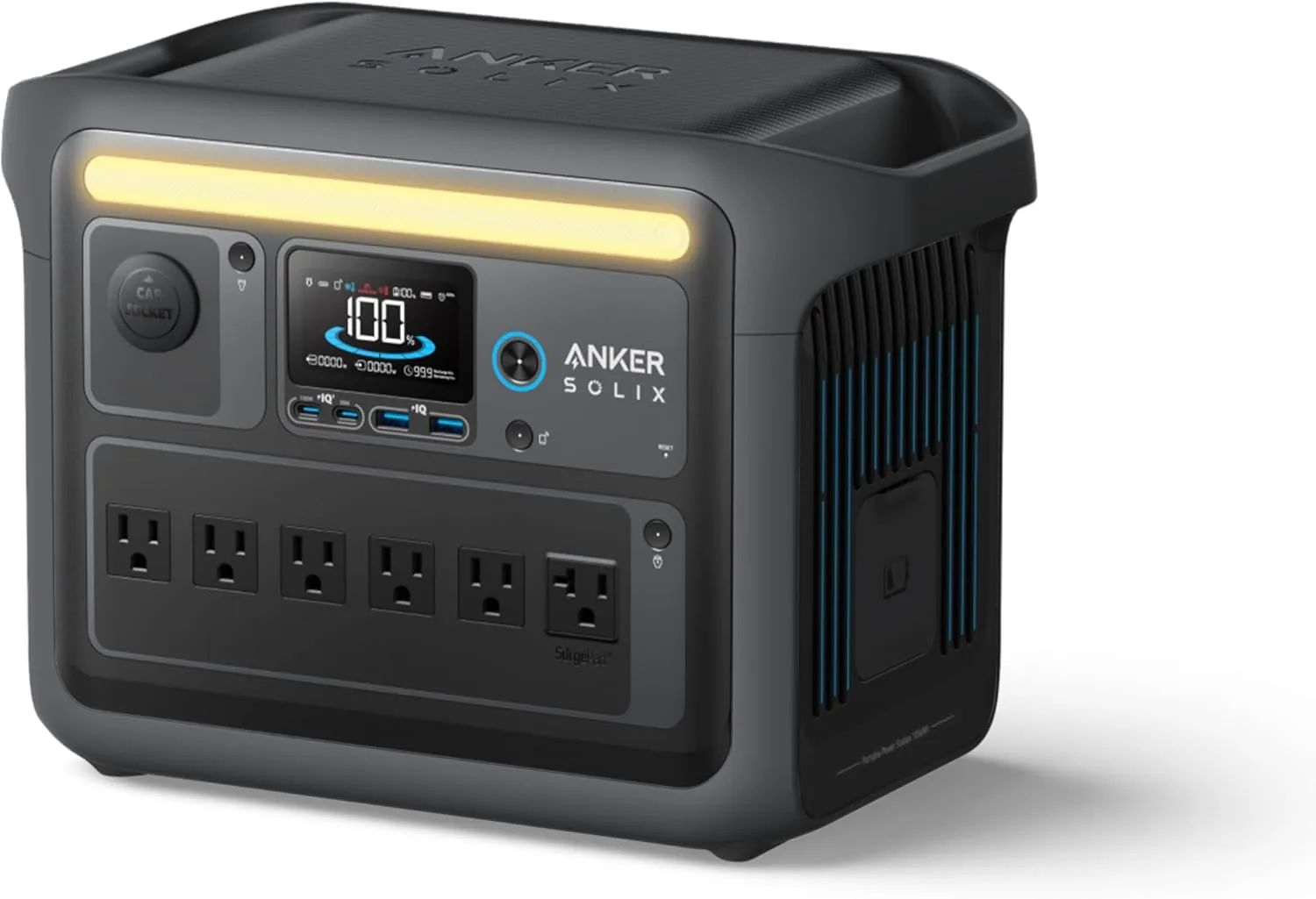
Anker C1000 Portable Power Station
Highlights
- 1056Wh rated capacity
- 1800W continuous AC
- LiFePO4 chemistry
- Up to 600W solar input
- 28.4 lb (~12.9 kg)
- About $599 list
Best for
- SOLIX C1000: small appliances and tools that need ~1800W continuous, not just phone charging
- Essentials bridge at home (fridge cycles, router) when sized to the Wh
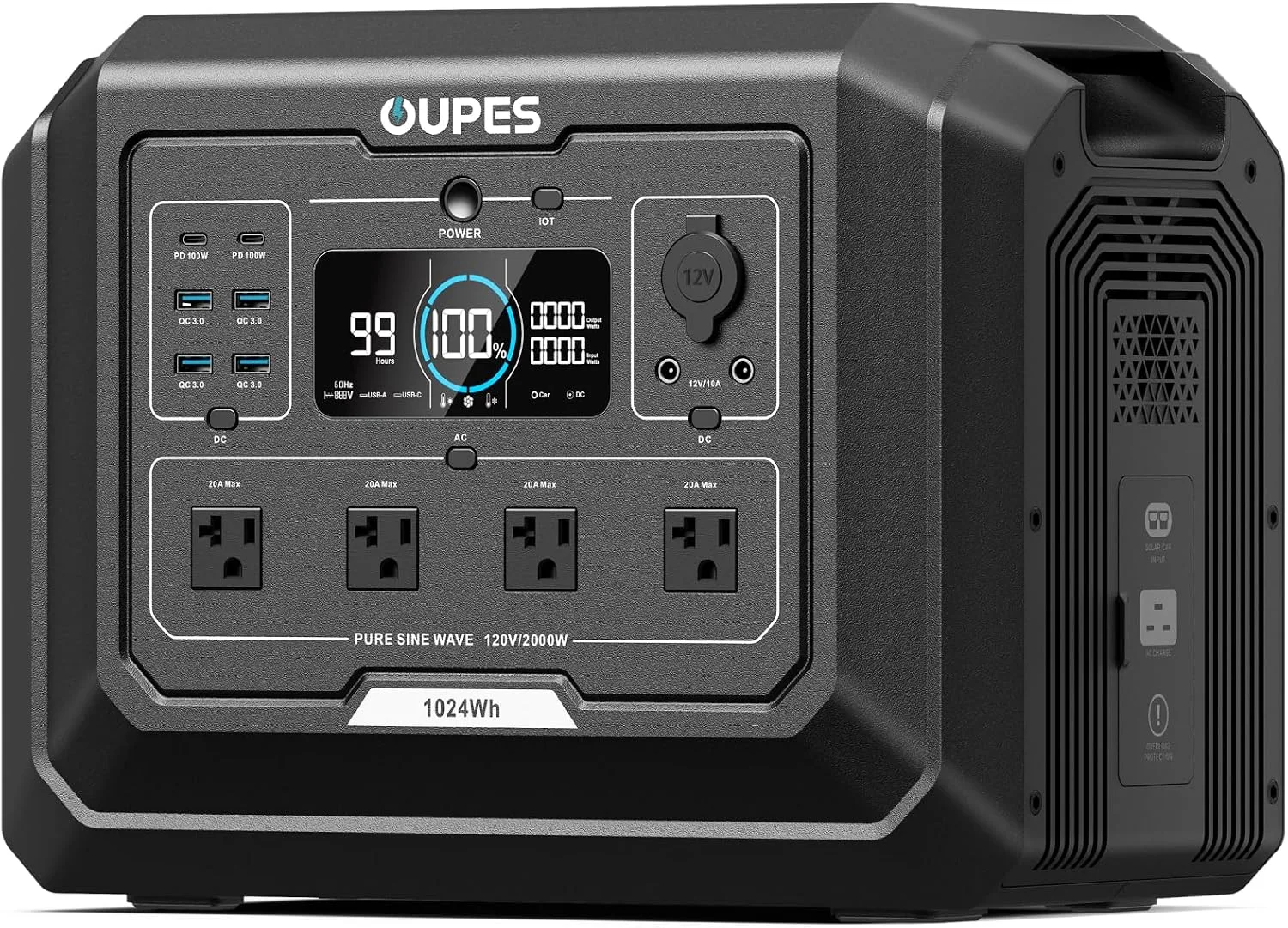
OUPES Mega 1 Portable Power Station 1024Wh 2000W
Highlights
- 1024Wh rated capacity
- 2000W continuous AC
- 4500W surge
- LiFePO4 chemistry
- Up to 800W solar input
- 27.8 lb (~12.6 kg)
Best for
- Mega 1: small appliances and tools that need ~2000W continuous, not just phone charging
- Essentials bridge at home (fridge cycles, router) when sized to the Wh
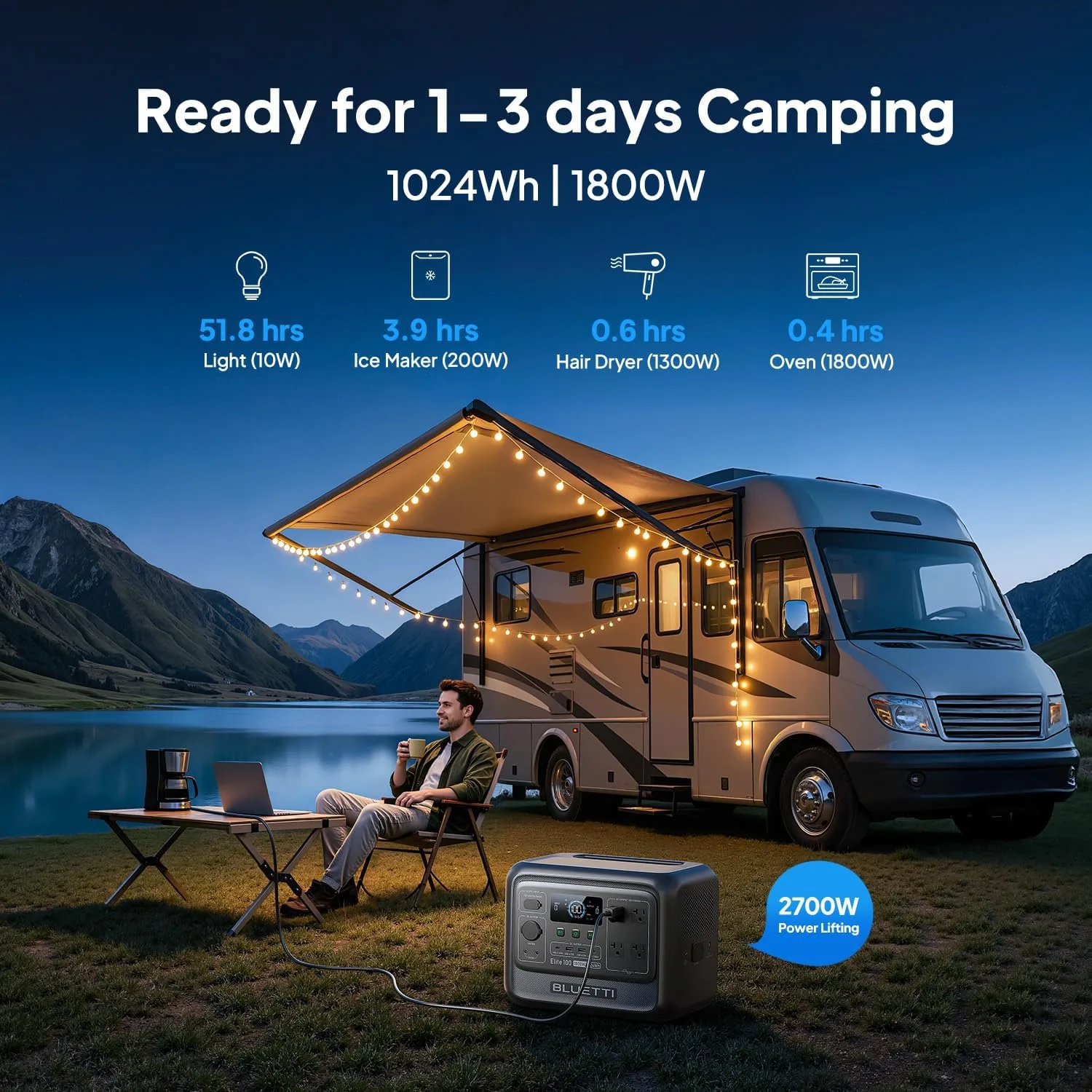
BLUETTI Solar Generator Elite 100 V2 with 200W Solar Panel Included, 1024Wh
Highlights
- About $699 list
- BLUETTI catalog listing
- Specs from manufacturer listings
Best for
- BLUETTI Solar Generator Elite 100 V2 with 200W Solar Panel Included, 1024Wh: longer outages or higher continuous loads (still not whole-home wiring)
- RV / off-grid days where recharge speed matters as much as Wh
Spec snapshot
List prices only — no deal stickers. Ratings are listing aggregates, not owner proof. Weight is the listing figure in pounds.
| Product | Price | Capacity (Wh) | Output (W) | Weight (lb) | Rating |
|---|---|---|---|---|---|
| Jackery Explorer 1000 v2 Portable Power Station,1070Wh,1500W | $559 | 1070 Wh | 1500 W | 23.8 lb | 4.7 |
| BLUETTI AC180 | $499 | 1152 Wh | 1800 W | 35.3 lb | 4.5 |
| Anker C1000 Portable Power Station | $599 | 1056 Wh | 1800 W | 28.4 lb | 4.7 |
| OUPES Mega 1 Portable Power Station 1024Wh 2000W | $549 | 1024 Wh | 2000 W | 27.8 lb | 4.5 |
| BLUETTI Solar Generator Elite 100 V2 with 200W Solar Panel Included, | $699 | 1024 Wh | 1800 W | 25 lb | 4.5 |
The entry band: Jackery Explorer 1000 v2
At $559 and 23.8 lb, the Jackery Explorer 1000 v2 is the easiest of these to actually move. Owner reports on file describe it carrying a refrigerator and a portable AC unit at the same time from the AC outlets, and quiet mode dropping the fan noise enough to sleep while it ran a fridge and a couple of fans overnight.
The compromises are real. There are no 12V barrel ports — owners needed an adapter on the cigarette socket to feed 12V gear. The one-hour emergency boost reverts to normal charging after each quick top-off, so most stayed in normal mode. Solar is slow and fussy about panel angle, and no car charger came in the box.
Suits: short outages, camping, and tailgates where a fridge and fans matter most and you move the unit yourself. Don't buy if: you need native 12V ports, a bundled panel, or more than 1,500 W continuous.
- Owner theme: fridge plus portable AC ran together without hiccups
- Owner theme: quiet mode made overnight fridge duty sleepable
- Caveat: no 12V barrel ports; adapter needed
- Caveat: easy to leave switched on and quietly drain
The middle band: BLUETTI AC180, Anker C1000, OUPES Mega 1
The BLUETTI AC180 at $499 is the value anchor and the cheapest per nameplate Wh here at $0.43/Wh. Owners wired it into one basement outlet run — router, TV, lamps — and the UPS switchover was instant when wall power was cut. The honest catch: with the inverter on it draws roughly 20W, and the manual caps usable capacity near 90%, so small loads get far less runtime than 1,152 Wh suggests. It is also 35.3 lb, the heaviest unit in this group.
The Anker C1000 at $599 is the fridge specialist. In owner outage reports a full-size garage fridge ran about 36 hours and a larger kitchen fridge about 12 hours with normal door opening, both holding safe temps. AC recharge from nearly empty took about an hour and a half, and the app let owners cap charge wattage so a small generator was not overwhelmed. It is heavier in hand than 28.4 lb suggests, the AC cable is short, and app connectivity was flaky until a firmware update.
The OUPES Mega 1 at $549 gives you the most continuous output here at 2,000 W, and owners started a full-size fridge, microwave, and hair dryer without tripping the breaker. But a light-load run — a bank of 75W LEDs — lasted about 7–8 hours, roughly half the math. The surge rating tripped between about 2050–2200W, the fan runs whenever it is charging, and the charge cable is proprietary.
Suits the AC180 if: you want an affordable UPS for essentials and a camping fridge box. Suits the C1000 if: short grid-down fridge protection is the whole job. Suits the Mega 1 if: you need high output on a budget and can live with capacity shortfall. Don't buy any of the three if: you need to carry the unit far or run large appliances for days.
- AC180: instant UPS switchover; ~20W idle draw; 35.3 lb
- C1000: 36 hr garage-fridge run; short AC cable; flaky app pre-update
- Mega 1: 2,000 W continuous; ~half expected runtime on light loads; proprietary cable
The top band: BLUETTI Solar Generator Elite 100 V2 with 200W Solar Panel Included
At $699 this is the only bundle here with a panel in the box — and at $0.68/Wh it is the most expensive per nameplate Wh of the five. You are not buying more capacity; 1,024 Wh and 1,800 W sit right in the middle of this group. You are buying the 200W panel and the off-grid story that comes with it.
Two conditions before you pay the premium. First, you actually plan to charge away from a wall outlet — if every recharge happens at home, the panel is dead weight and the entry or middle band is the better spend. Second, you accept that there are no owner reviews on file for this bundle yet, so the listing specs are unverified until reports arrive. I will not invent field notes for it.
Suits: campers and off-grid users who want one box with a panel and will use it. Don't buy if: you recharge at home, or you want owner-validated runtime before you buy.
- Only bundle here with a 200W panel included
- Highest nameplate $/Wh of the five at $0.68/Wh
- No owner reviews on file — specs unverified
Where the jump between bands is worth it
The single upgrade worth paying for is entry to middle — specifically the $499 AC180 over the $559 Jackery if UPS switchover and 1,800 W matter to you. You spend $60 less, gain 300 W of continuous output and 82 Wh, and get instant switchover for a router or TV circuit. The cost is 11.5 lb of carry weight.
The jump from middle to the $699 top band is narrower. Unless you will genuinely use the bundled 200W panel, that $100–$200 premium buys convenience, not capability. Buy the panel separately later if you change your mind.
Walk-away boundaries
Do not buy any of these if your plan is whole-home backup. None of them will run a furnace, a well pump, or central AC. If that is the goal, you want a transfer switch and a different class of equipment entirely.
Do not buy the heaviest unit here — the 35.3 lb AC180 — if you plan to carry it up stairs or into a tent regularly. And do not buy the OUPES Mega 1 for its surge rating alone; owner reports on file say it trips well under the advertised number.
What owners keep telling me
The themes repeat across the review packs on file. Jackery owners praise quiet mode and fast recharge, and flag the missing 12V ports and slow solar. AC180 owners love the UPS switchover and warn about idle draw eating small-load runtime. C1000 owners report strong fridge endurance and gripe about the short AC cable and app reconnects. Mega 1 owners praise the output-per-dollar and note capacity shortfall, fan noise, and the proprietary cable. The Elite 100 V2 bundle has no owner reviews on file yet — treat it as unproven until they arrive.
Frequently asked
Can any of these run a full-size refrigerator overnight?
Yes, with conditions. The Anker C1000 ran a garage fridge about 36 hours and a kitchen fridge about 12 hours in owner reports; the Jackery handled a fridge plus a portable AC together. Expect less if the fridge is opened often or the room is warm.
Which is cheapest per Wh?
The BLUETTI AC180 at $499 for 1,152 Wh works out to $0.43/Wh, the lowest nameplate rate in this group. The Elite 100 V2 bundle is highest at $0.68/Wh.
Why is the OUPES Mega 1 not ranked first despite 2,000 W?
Because owner reports on file describe usable capacity landing well under the headline and an early surge trip — output alone does not outweigh that.
Method and sources
Model names and list prices come from the WattPicks catalog at build time. WattPicks does not run its own laboratory tests on power stations, and nothing on this page is presented as a measured result — it is catalog-backed buying guidance.
Read our methodology for how the catalog is normalized, and about WattPicks for who publishes it.