3–3 on 7 shared metrics
DJI Power 2000 vs Renogy PowerStation 2000
On 7 shared published metrics they split 3–3. Capacity is nearly matched (2.05 kWh vs 2.05 kWh), so the decision turns on the rows below — not size. Choose Power 2000 when you will move the unit often — it leads on weight and watt-hours per pound.
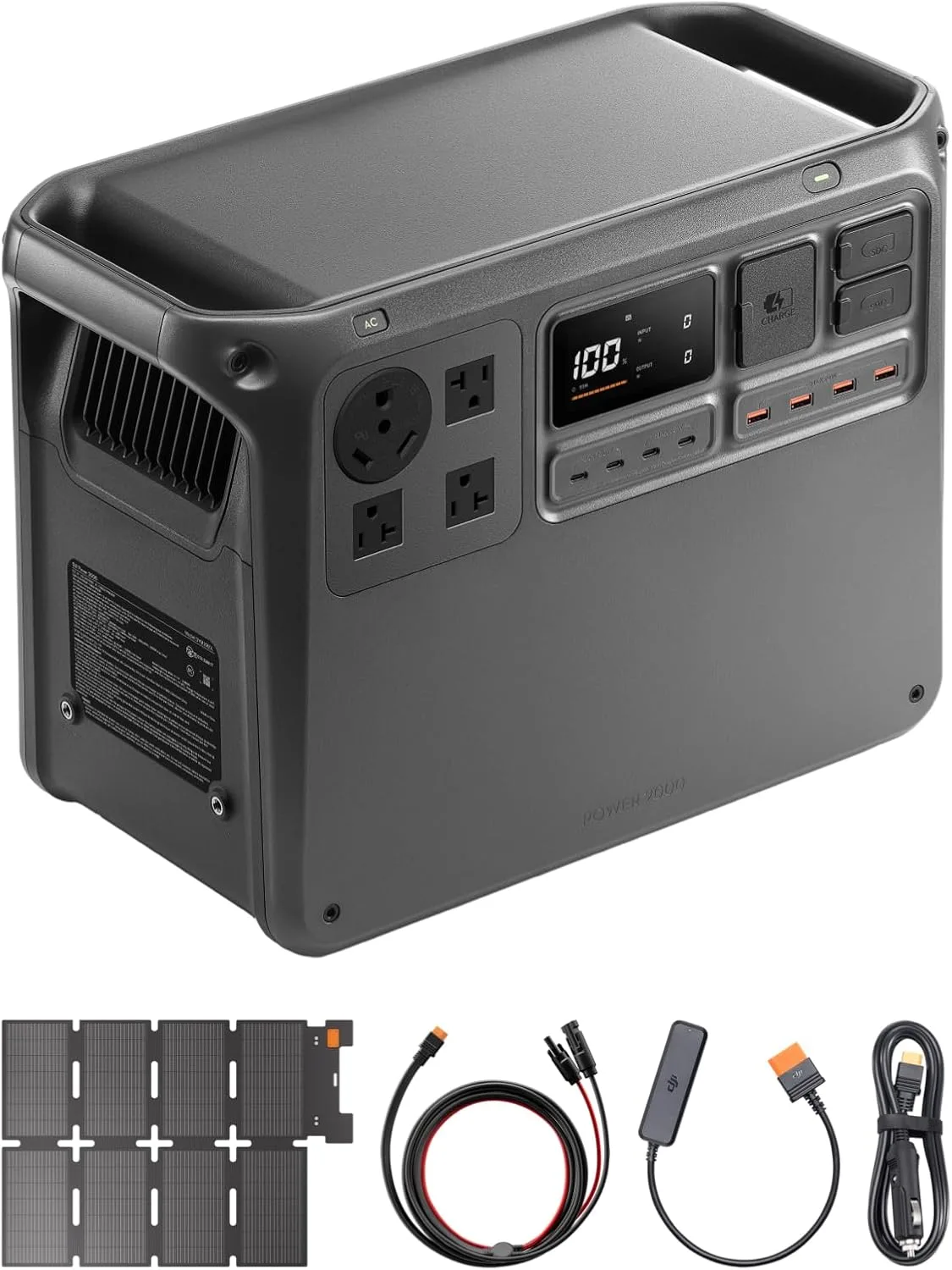
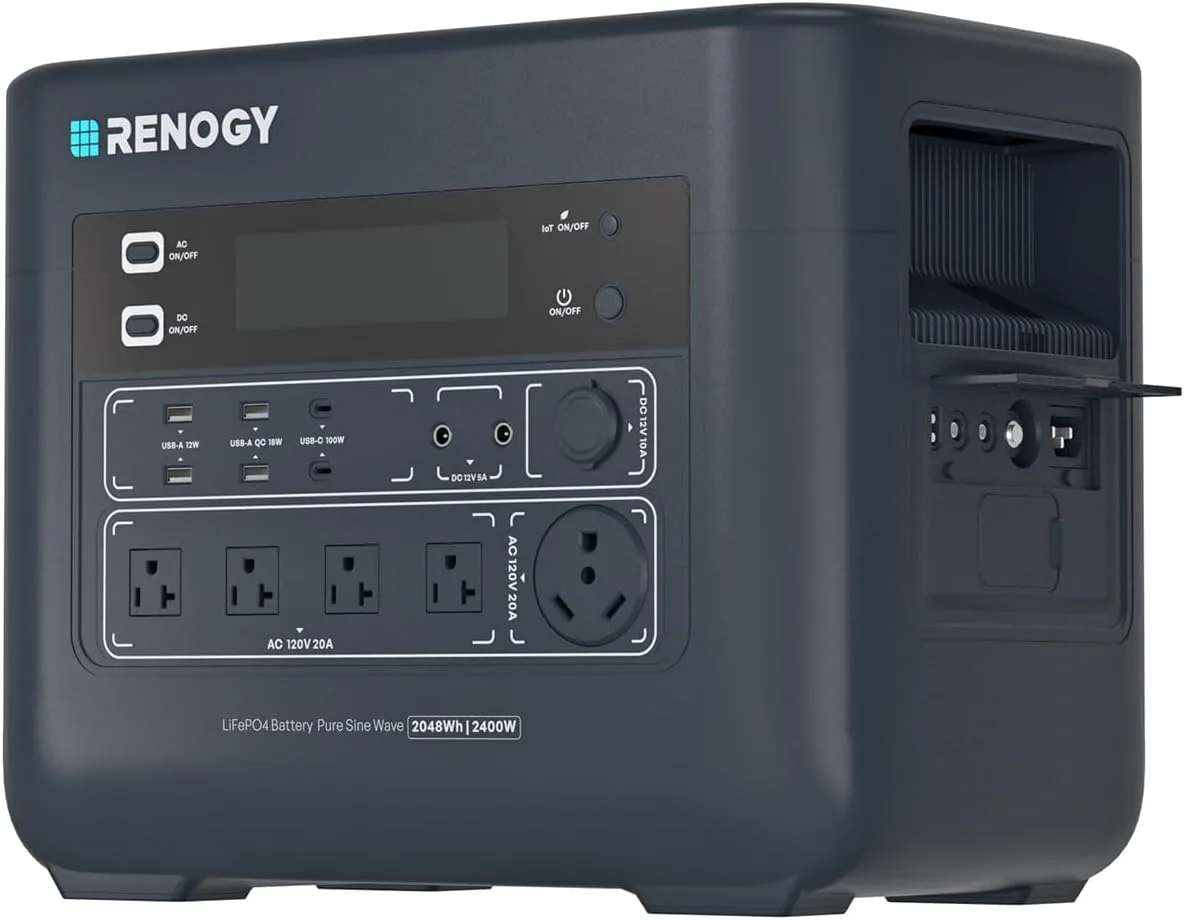
- Carry / campingPower 2000
- Heavy AC loadsPowerStation 2000
- Value per WhPowerStation 2000
- Cycle lifePower 2000
Who wins which job
Pick Power 2000 when
DJI Power 2000
- Weight: 48.5 lb vs 51.8 lb
- Watt-hours per pound: 42.2 Wh/lb vs 39.5 Wh/lb
- Rated cycles: 4,000 cycles vs 3,000 cycles
DJI owners who want the fastest field recharge and already trust the brand.
Pick PowerStation 2000 when
Renogy PowerStation 2000
- Continuous AC output: 2,400 W vs 2,000 W
- List price: $849.98 vs $1,036.99
- Cost per watt-hour: $0.42 vs $0.51
DIY solar buyers who want a station that fits a larger component system.
Spec by spec
A green mark is the better published figure on that row. Blank cells mean the vendor did not publish the number — we do not estimate.
| Metric | Power 2000 | PowerStation 2000 | What it means |
|---|---|---|---|
| Capacity | 2,048 Wh | 2,048 Wh | How much energy the unit stores. Sets how long everything else can run. |
| Continuous AC output | 2,000 W | 2,400 W | The largest load the inverter will run continuously, not counting surge. |
| Weight lower is better | 48.5 lb | 51.8 lb | The spec buyers most often regret ignoring. |
| List price lower is better | $1,036.99 | $849.98 | Hub catalogue list price (same figure as product pages). Historical lows stay off this column. |
| Cost per watt-hour lower is better | $0.51 | $0.42 | Price divided by capacity. The fairest single value metric. |
| Watt-hours per pound | 42.2 Wh/lb | 39.5 Wh/lb | Capacity you get per pound carried. |
| Rated cycles | 4,000 cycles | 3,000 cycles | Vendor claim for charge cycles before capacity degrades to 80%. |
| Warranty | 60 months | — | Stated warranty length from the vendor listing. |
How each one ranks overall
The brands behind them
DJI
DJI creators who want one battery system for gear and camp
Best for: DJI owners who want the fastest field recharge and already trust the brand.
Not for: Off-gridders and home-backup buyers who need expandable capacity.
All DJI models →Renogy
The DIY off-grid builder who arrives for solar, not for a camping box
Best for: DIY solar buyers who want a station that fits a larger component system.
Not for: Buyers who want a polished consumer product and app.
All Renogy models →Where these numbers come from. WattPicks does not test power stations — this is a spec profile, not a review. Every figure on this page is taken from DJI’s own product listing and is stored with the vendor’s exact wording, reproduced below. We do not estimate missing specs — a field the vendor does not publish is shown as “—” and excluded from rankings. Source: dji.com.
Vendor wording for each figure (6)
capacityWh: “Capacity => 2048 Wh”acOutputW: “2000W output power”weight: “Approx. 22 kg”price: “"originalPriceLabel":"USD $1,899"”cycleLife: “4000 cycles”warrantyMonths: “The default warranty period is three years. You can get an additional two-year warranty period by downloading the DJI Home app, and completing the first connection.”
Where these numbers come from. WattPicks does not test power stations — this is a spec profile, not a review. Every figure on this page is taken from Renogy’s own product listing and is stored with the vendor’s exact wording, reproduced below. We do not estimate missing specs — a field the vendor does not publish is shown as “—” and excluded from rankings. Source: renogy.com.
Vendor wording for each figure (4)
capacityWh: “2,048Wh”acOutputW: “120V AC~60Hz, 20A Max, 2400W Max (3,600W Surge)”weight: “51.81 lbs / 23.5kg”cycleLife: “3000 Cycles”
Frequently asked
Which is better for most buyers, the DJI Power 2000 or the Renogy PowerStation 2000?
Neither sweeps the scoreboard (3–3 on 7 shared metrics). Match the winning rows to your job — Carry / camping usually decide it faster than brand preference.
I care most about carry / camping — which should I buy?
Choose Power 2000 when you will move the unit often — it leads on weight and watt-hours per pound.
Method and sources
Every row on this page is a published manufacturer figure from the WattPicks catalog at build time. WattPicks does not run laboratory tests on these units, and blank cells mean the vendor did not publish that metric — not that we estimated it.
Read our methodology for how the catalog is normalized, and about WattPicks for who publishes it.
You might also compare — Power 2000
Also worth a look