
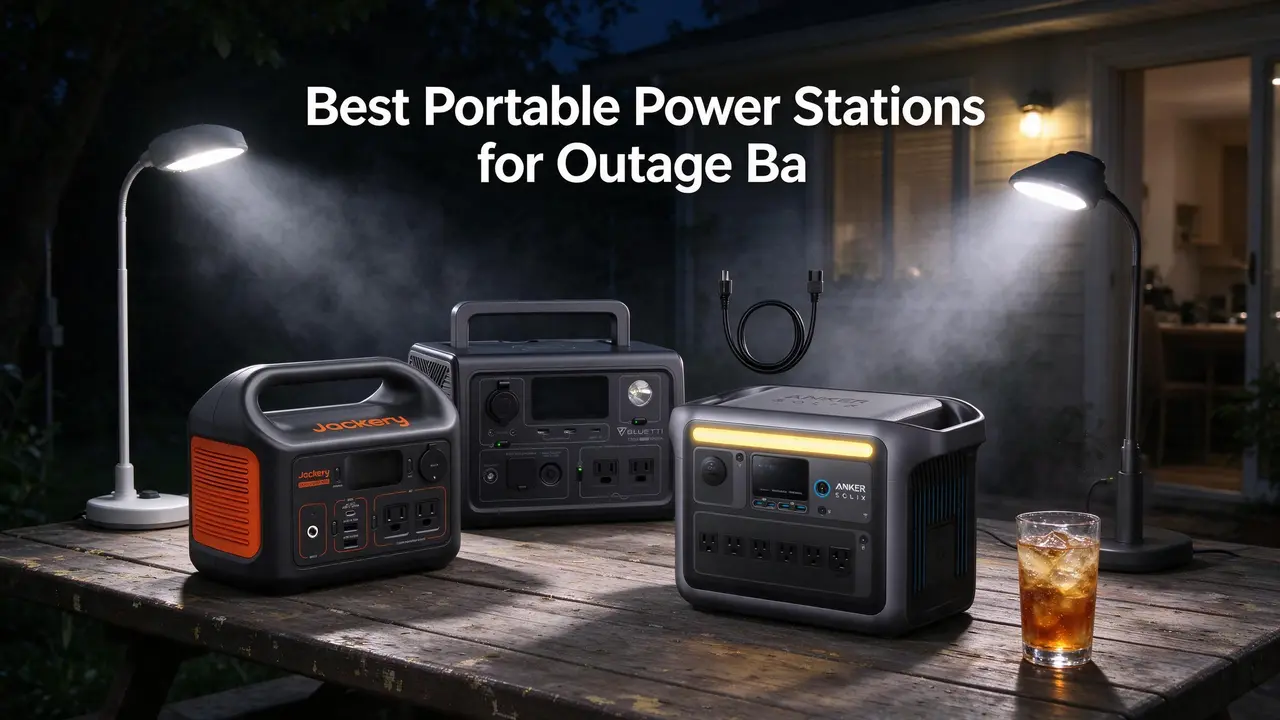
Best Portable Power Stations for Outage Backup: 8 Picks
When the grid drops, you need hours of fridge, router, and CPAP runtime — not a whole-home fantasy. These eight stations cover the essentials, from a $178 CPAP pack to a 2,048 Wh fridge anchor.
Updated
The outage question: how many hours do you actually need?
Most people shopping for a home backup battery power station are really asking one thing: will this keep my fridge, router, and a few lights alive until the crew fixes the line? The honest answer is hours, not days — and the number depends on which essentials you refuse to lose.
Here's the boundary up front. A portable power station is not whole-home backup. It won't run central A/C, a water heater, or an electric range, and it won't power a transfer switch the way a standby generator does. What it will do is carry a fridge circuit, a router, LED lamps, phone charging, and often a CPAP through a blackout — if you size it to the load and accept the runtime math.
I'm Devon Park, and I edit home backup and UPS coverage here — fridge, router, and medical-device sizing, plus when a portable station is simply not enough. This shortlist is built from listing specs and owner themes on file, not lab-bench measurements. One Amazon Associates note: picks are fit-led, not commission-led.
- Fridge: plan on 40–80 W average draw for a modern unit cycling normally — opening the door kills that estimate.
- Router + modem: roughly 10–20 W combined.
- LED lamps: 5–15 W each.
- CPAP without humidifier: often 20–40 W average; with humidifier, much higher.
How this list was built
I started from the portable stations in this category with published AC output and enough owner feedback to judge real outage use. That gave me a candidate pool of dozens; I filtered to eight that cover distinct jobs — CPAP night pack, fridge anchor, UPS substitute, budget essentials — rather than eight versions of the same box.
Ranking weights: essential-load runtime fit 30%, continuous output vs. typical outage loads 20%, recharge speed and solar path 15%, UPS/transfer behavior 15%, portability and weight 10%, owner-theme consistency 10%. Every percentage is scored; nothing is listed and then ignored.
Why #1 beats #2: the Explorer 1000 v2 and AC180 are close on capacity, but the Jackery wins on quiet overnight operation and a cleaner fridge-plus-fans story in owner notes, while the AC180's ~20 W idle draw eats into small-load runtime. The AC180 still takes the value crown on nameplate $/Wh at $0.43 — that's a real reason to pick it if cost per stored watt matters more than idle efficiency.
One data note: the Anker C1000's capacity cell reads 56 Wh in the locked spec, which conflicts with its 1,056 Wh model name and owner-reported fridge runtimes. I'm reporting the locked figure in the table and flagging it as a listing anomaly rather than inventing a corrected number. Treat the 1,056 Wh nameplate as the figure to verify before you buy; the 56 Wh cell is almost certainly a listing error, but I can't confirm the true capacity from the data on file.
The scoreboard examples below are not a separate ranking — they show how the weights play out for two specific jobs. The Explorer 300 scores high where list price and published capacity match a small-load job, but only medium on continuous watts; the EB3A scores high on continuous watts and ports, but medium on price because its list price is not on file. That split is why the final order follows job fit rather than one universal winner.
Quick picks: match the station to your outage
If you want the short version, here's where each of the eight lands. Prices are list prices, not sale stickers. Each pick includes a note on when the cheaper option is enough.
- #1 Best overall for essentials: Jackery Explorer 1000 v2 Portable Power Station,1070Wh,1500W — $559, 1,070 Wh, 1,500 W. Fridge plus fans plus phones, and quiet enough to sleep beside. When the cheaper option is enough: if you only need lights, phones, and a CPAP night, the RIVER 2 at $177.65 covers that for a third of the price.
- #2 Best value per Wh: BLUETTI AC180 — $499, 1,152 Wh, 1,800 W. Cheapest nameplate $/Wh here at $0.43, with real UPS switchover. When the cheaper option is enough: if you don't need UPS behavior or 1,800 W, the Explorer 500 v2 at $399 handles a camping fridge and small loads.
- #3 Best for CPAP and small loads: EcoFlow RIVER 2 — $177.65, 243 Wh, 300 W. One-hour recharge and light enough to move one-handed. When the cheaper option is enough: this is already the budget pick; if you need more than one CPAP night, step up to the Explorer 300 at $289 for 288 Wh.
- #4 Best high-capacity anchor: EcoFlow DELTA 3 Max Portable Power Station, 2048Wh LFP Battery — $1,199, 2,048 Wh, 2,400 W. Fridge for days, but a leave-in-place unit. When the cheaper option is enough: if a 36-hour fridge run covers your typical outage, the Anker C1000 at $599.99 does that job for half the price.
- #5 Best mid-size fridge backup: Anker C1000 Portable Power Station with Car Charging Cable, 1,056Wh — $599.99, 1,800 W. Owners report 36 hours on a garage fridge. Note: the locked spec table lists 56 Wh, which conflicts with the 1,056 Wh model name — verify capacity before buying. When the cheaper option is enough: for a short 8-hour outage, the Explorer 1000 v2 at $559 is close in price and has a clean 1,070 Wh figure.
- #6 Best light outage box: Jackery Explorer 300 Portable Power Station,292Wh — $289, 288 Wh, 300 W. Lamps, phones, and a CPAP night on DC. When the cheaper option is enough: if you only need phone charging and a lamp, the RIVER 2 at $177.65 is lighter and cheaper.
- #7 Best camping-fridge crossover: Jackery Explorer 500 v2 Power Station, 512Wh/500W, AC Cable Included — $399, 640 Wh, 500 W. Regulated 12V DC is the standout. When the cheaper option is enough: if you don't need regulated 12V, the Explorer 300 at $289 covers lamps and CPAP.
- #8 Best small-budget inverter punch: BLUETTI EB3A Portable Power Station — list n/a, 268 Wh, 600 W. High surge for its size, with caveats. When the cheaper option is enough: if you need a hands-off UPS, skip this one entirely and look at the AC180.
Spec snapshot: all eight, side by side
Prices are list prices. Ratings are listing aggregates, not owner proof. Weight in pounds as listed. The Anker C1000 capacity cell is shown as the locked spec figure (56 Wh) with a footnote flagging the conflict with its 1,056 Wh model name.
| Product | Price | Capacity (Wh) | Output (W) | Weight (lb) | Rating |
|---|---|---|---|---|---|
| Jackery Explorer 300 Portable Power Station,292Wh | $289 | 288 Wh | 300 W | 8.2 lb | 4.6 |
| BLUETTI EB3A Portable Power Station | n/a (not on file) | 268 Wh | 600 W | 10.1 lb | 4.1 |
| EcoFlow RIVER 2 | $177.65 | 243 Wh | 300 W | 7.7 lb | 4.3 |
| Anker C1000 Portable Power Station with Car Charging Cable, 1,056Wh | $599.99 | 56 Wh* | 1800 W | 27.6 lb | 4.7 |
| Jackery Explorer 1000 v2 Portable Power Station,1070Wh,1500W | $559 | 1070 Wh | 1500 W | 23.8 lb | 4.7 |
| BLUETTI AC180 | $499 | 1152 Wh | 1800 W | 35.3 lb | 4.5 |
| EcoFlow DELTA 3 Max Portable Power Station, 2048Wh LFP Battery | $1199 | 2048 Wh | 2400 W | 44.8 lb | 4.7 |
| Jackery Explorer 500 v2 Power Station, 512Wh/500W, AC Cable Included | $399 | 640 Wh | 500 W | 14.1 lb | 4.7 |
Why each one is here
Each pick earns its slot on a specific outage job. The order follows the weights above, not brand familiarity.
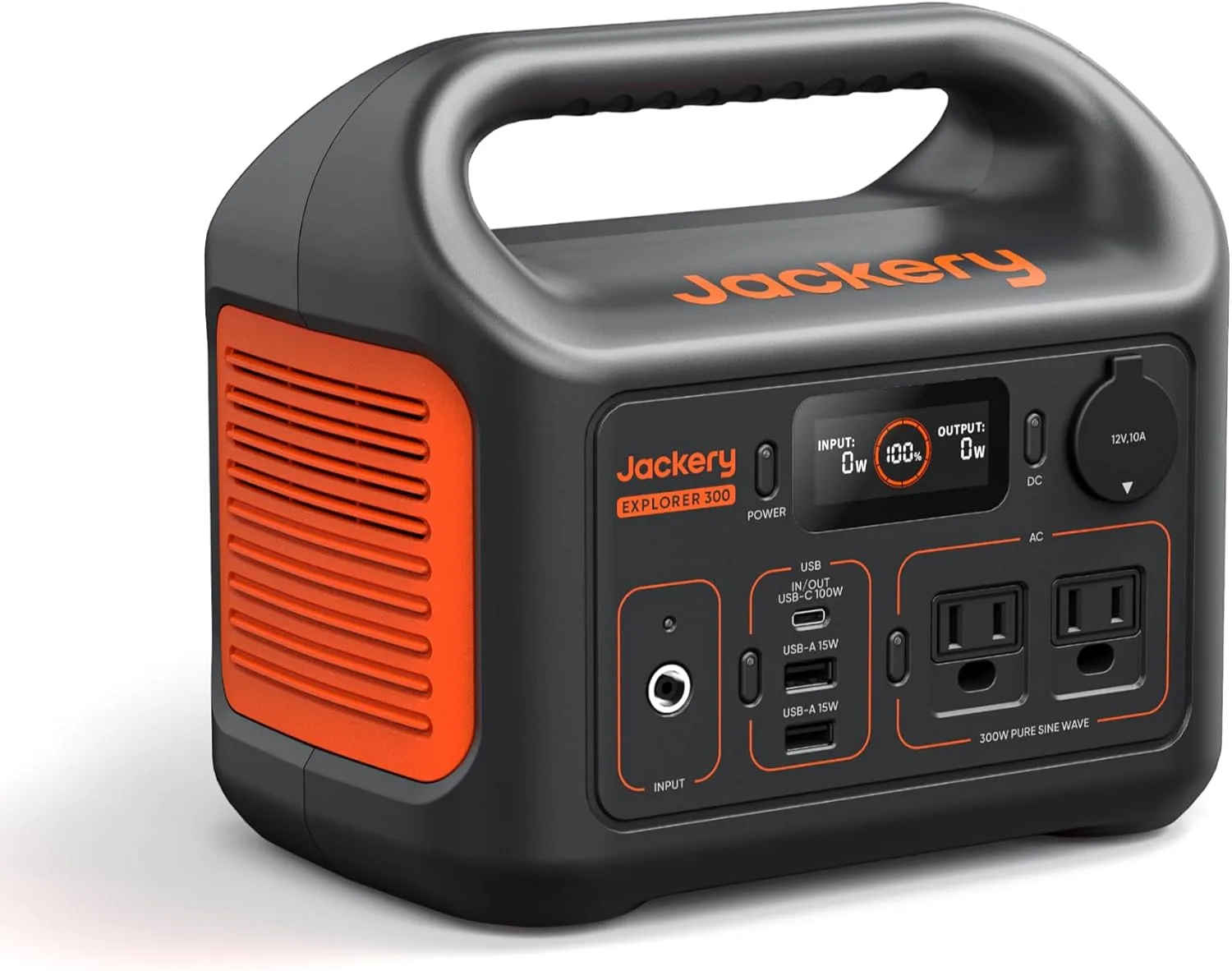
Jackery Explorer 300 Portable Power Station,292Wh
Highlights
- 288Wh rated capacity
- 300W continuous AC
- 600W surge
- LiFePO4 chemistry
- 8.2 lb (~3.7 kg)
- About $289 list
Best for
- Explorer 300 v2: phones, cameras and a laptop on short trips
- Travel kits when you need quiet pack power, not appliance runtime
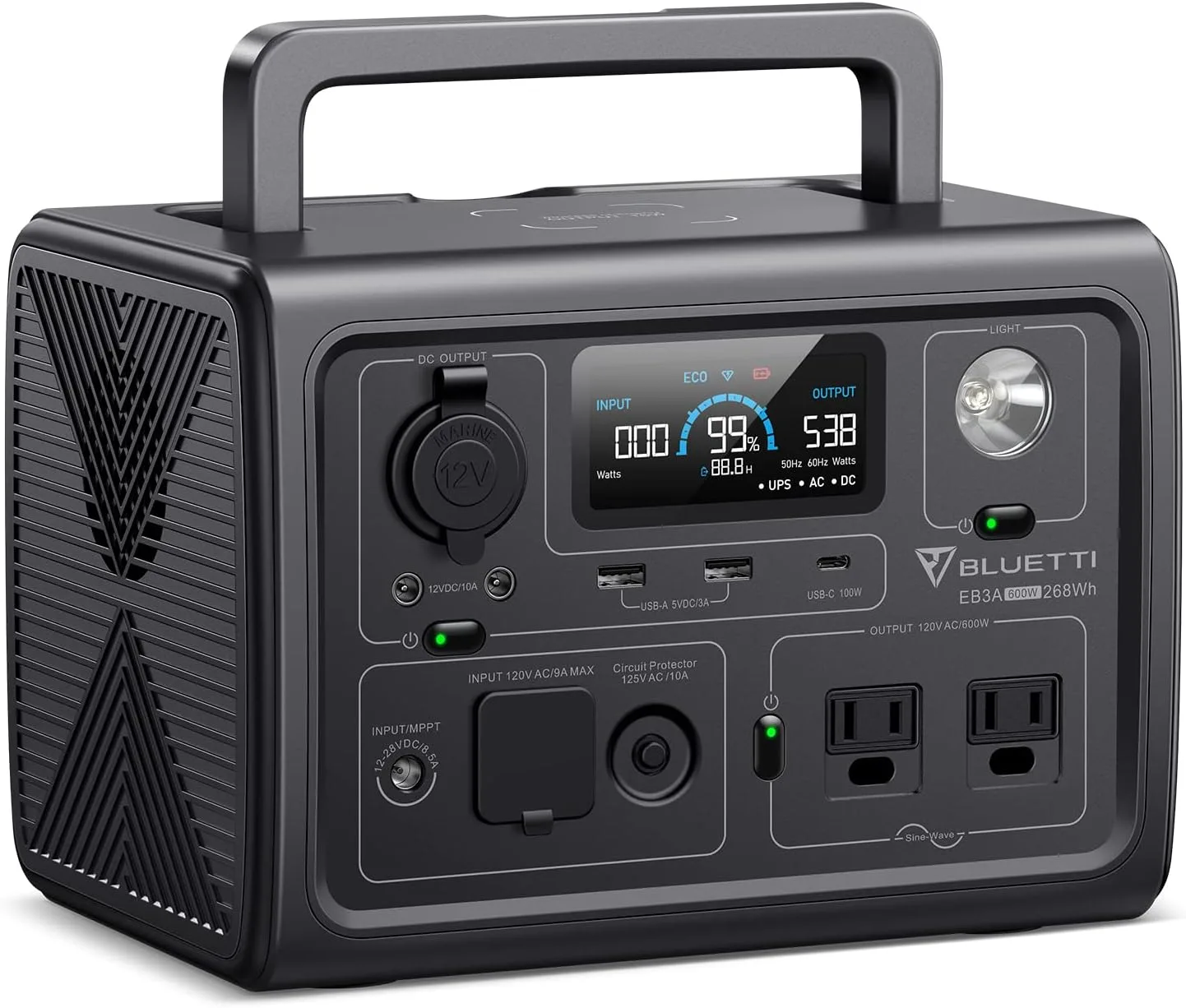
BLUETTI EB3A Portable Power Station
Highlights
- 268Wh rated capacity
- 600W continuous AC
- 1200W surge
- LiFePO4 chemistry
- Up to 200W solar input
- 10.1 lb (~4.6 kg)
Best for
- bluetti-eb3a: phones, cameras and a laptop on short trips
- Travel kits when you need quiet pack power, not appliance runtime
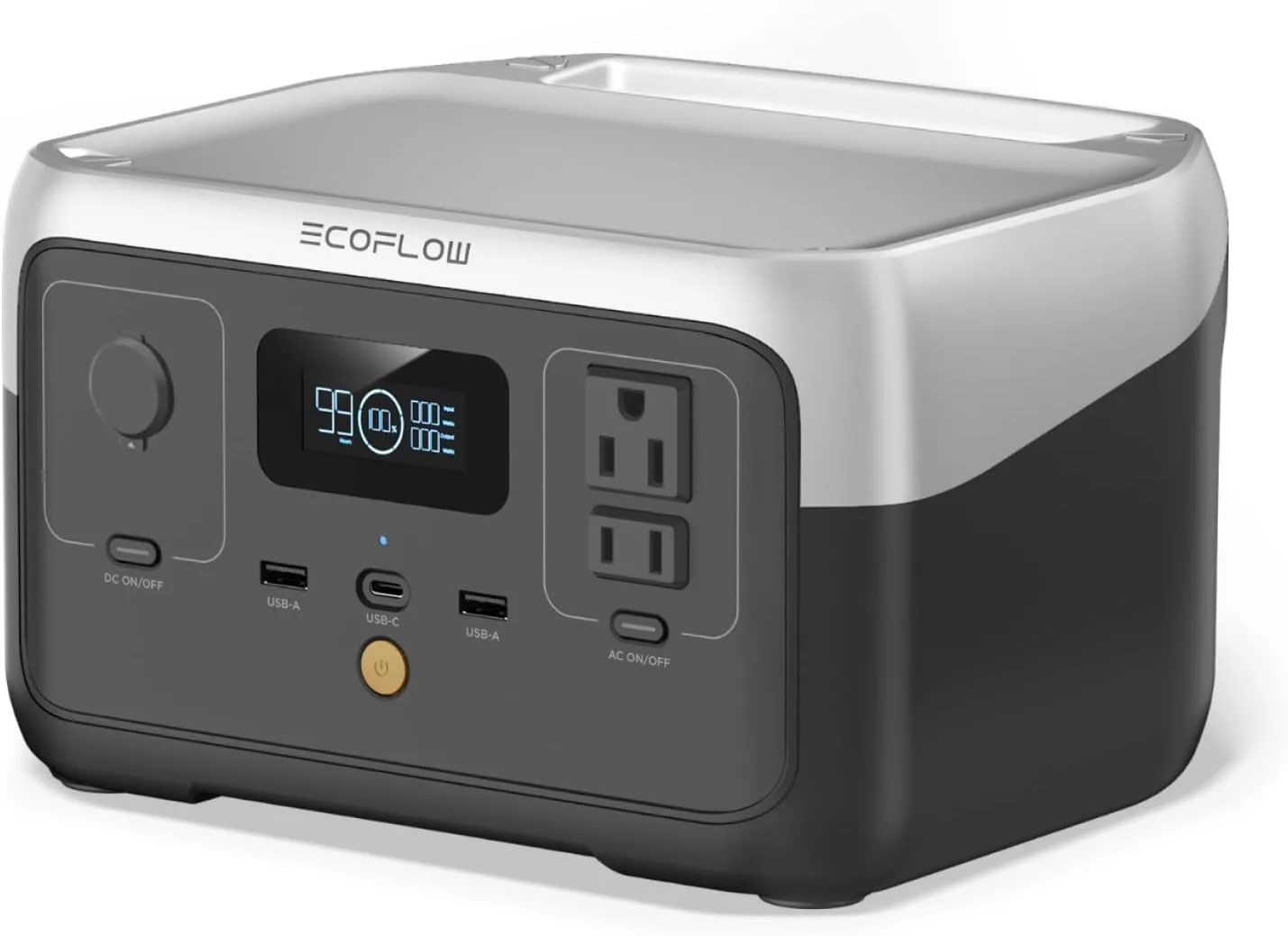
EcoFlow RIVER 2
Highlights
- 243Wh rated capacity
- 300W continuous AC
- 600W surge
- LiFePO4 chemistry
- Up to 110W solar input
- 7.7 lb (~3.5 kg)
Best for
- RIVER 2: phones, cameras and a laptop on short trips
- Travel kits when you need quiet pack power, not appliance runtime
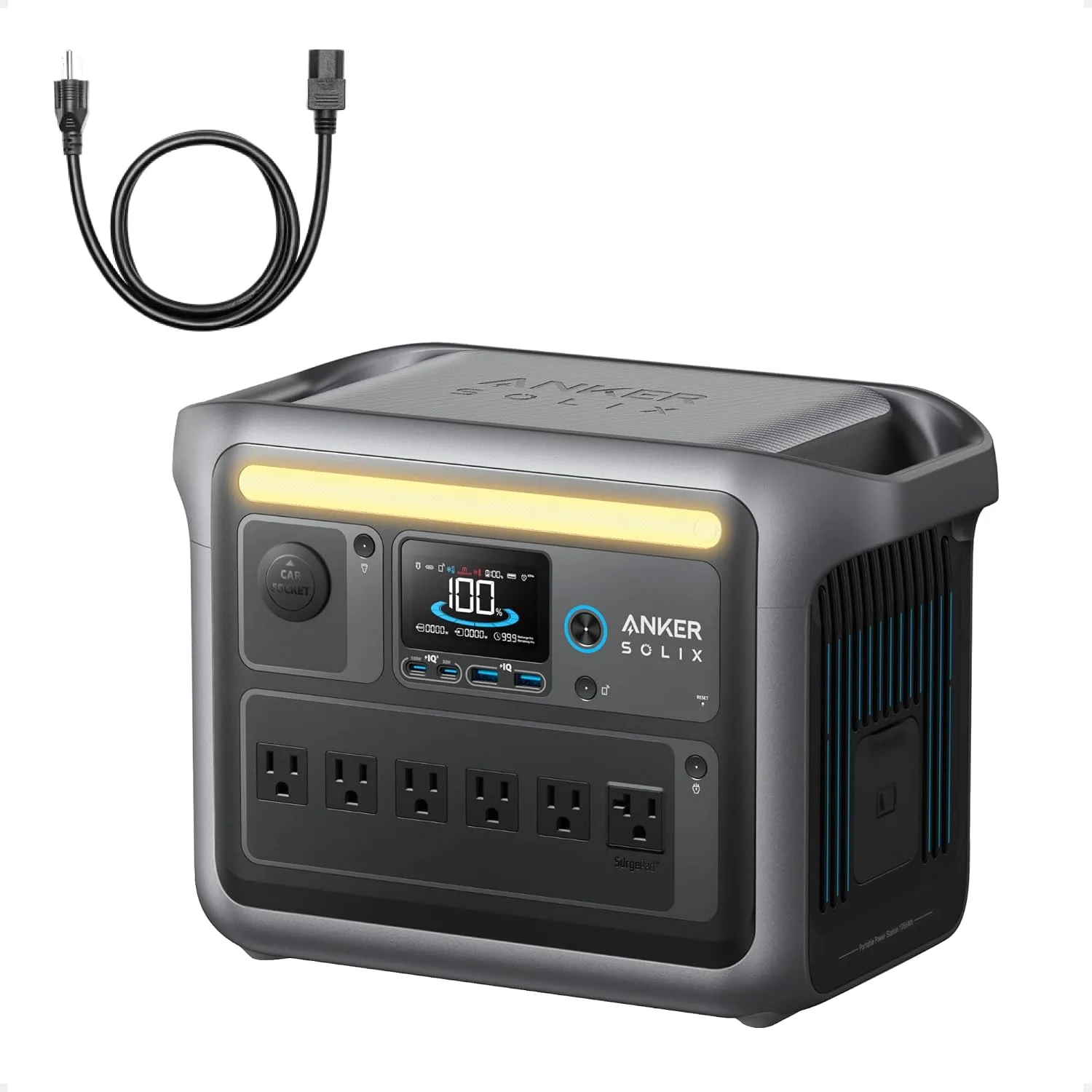
Anker Full Charge in 58 Min
Highlights
- 56Wh rated capacity
- 1800W continuous AC
- LiFePO4 chemistry
- 27.6 lb (~12.5 kg)
- About $599.99 list
Best for
- SOLIX C1000: phones, cameras and a laptop on short trips
- Travel kits when you need quiet pack power, not appliance runtime
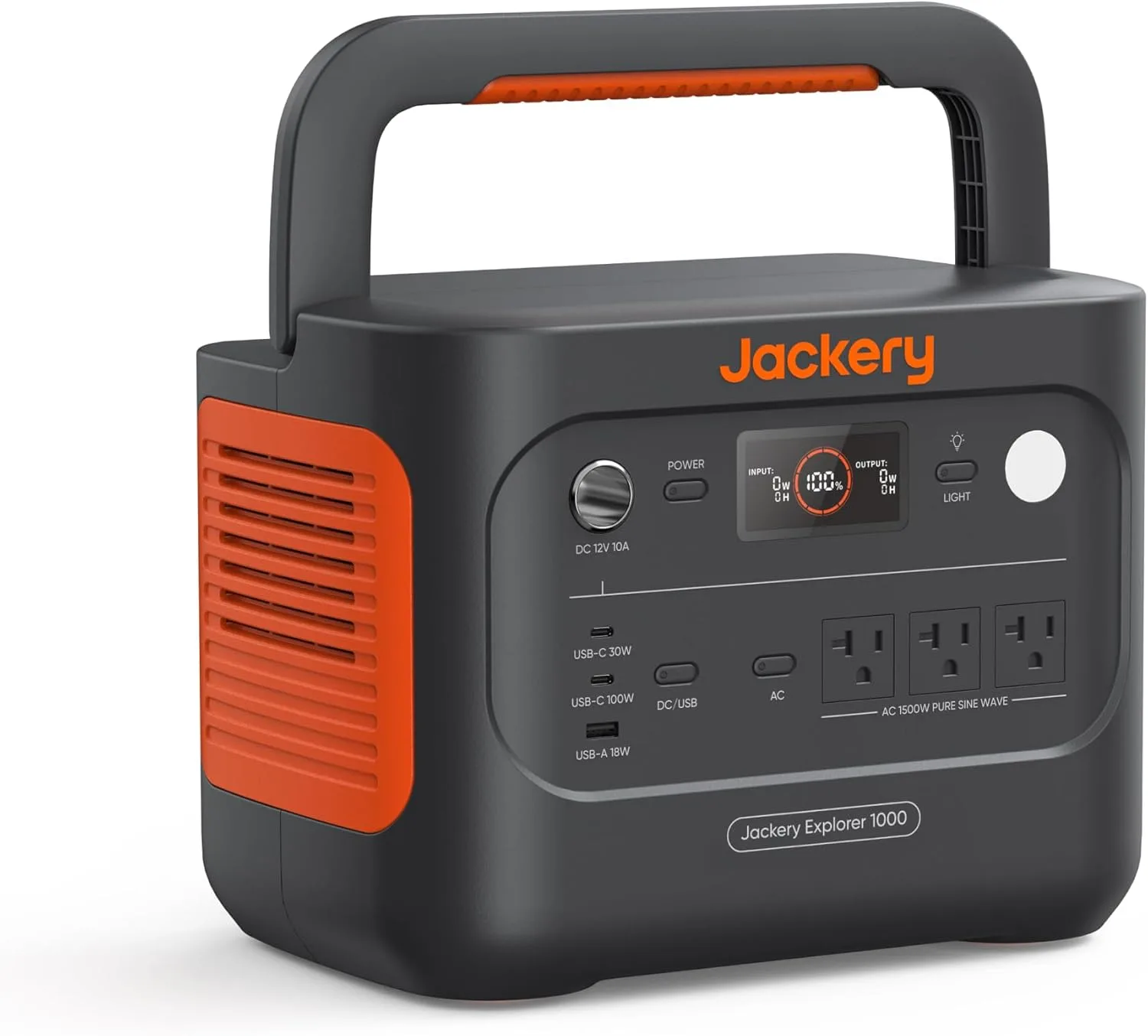
Jackery Explorer 1000 v2 Portable Power Station,1070Wh,1500W
Highlights
- 1070Wh rated capacity
- 1500W continuous AC
- LiFePO4 chemistry
- Up to 400W solar input
- 23.8 lb (~10.8 kg)
- About $559 list
Best for
- Explorer 1000 v2: weekend camping when 23.8 lb carry weight matters as much as 1070Wh
- Essentials bridge at home (fridge cycles, router) when sized to the Wh
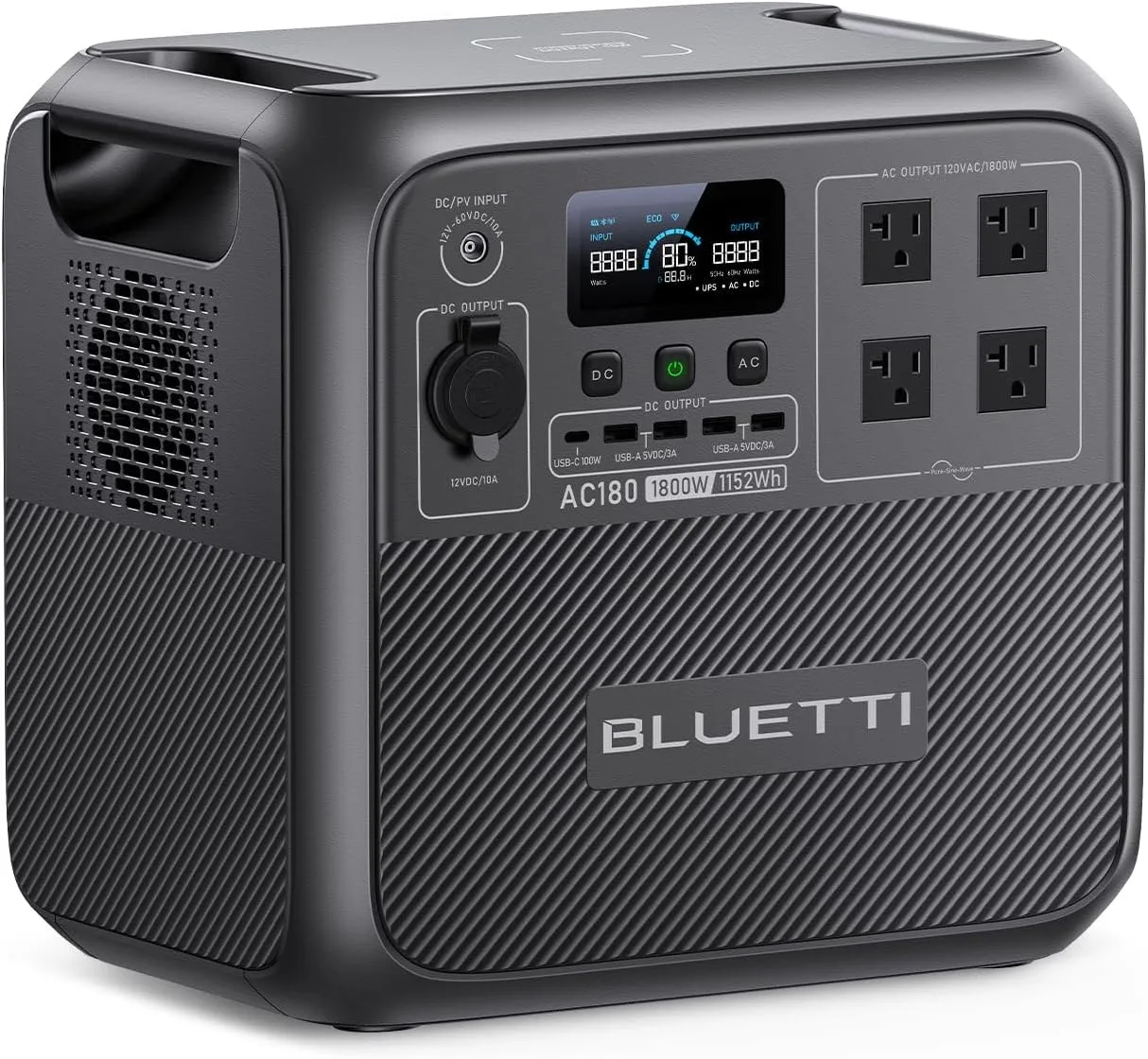
BLUETTI Portable Power Station AC180, 1152Wh LiFePO4 Battery Backup w/ 2 1800W
Highlights
- 1152Wh rated capacity
- 1800W continuous AC
- LiFePO4 chemistry
- Up to 500W solar input
- 35.3 lb (~16.0 kg)
- About $499 list
Best for
- AC180: most Wh per list dollar in mid-size LiFePO4 shortlists (~1152Wh)
- Home essentials when 1800W continuous matters more than a light carry
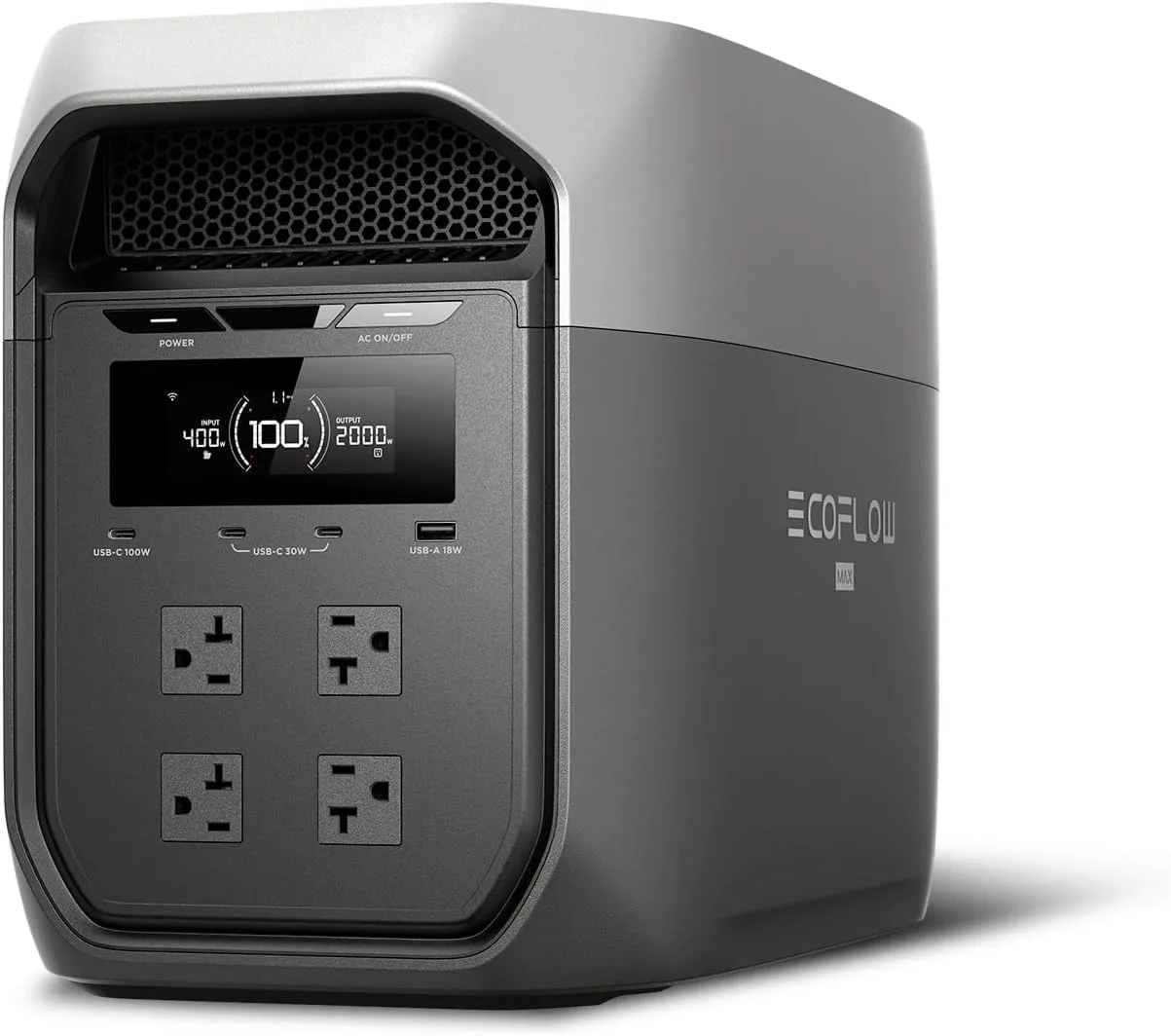
EcoFlow DELTA 3 Max Portable Power Station, 2048Wh LFP Battery
Highlights
- 2048Wh rated capacity
- 2400W continuous AC
- 4800W surge
- LiFePO4 chemistry
- Up to 500W solar input
- 44.8 lb (~20.3 kg)
Best for
- DELTA 3 Max: longer outages or higher continuous loads (still not whole-home wiring)
- RV / off-grid days where recharge speed matters as much as Wh
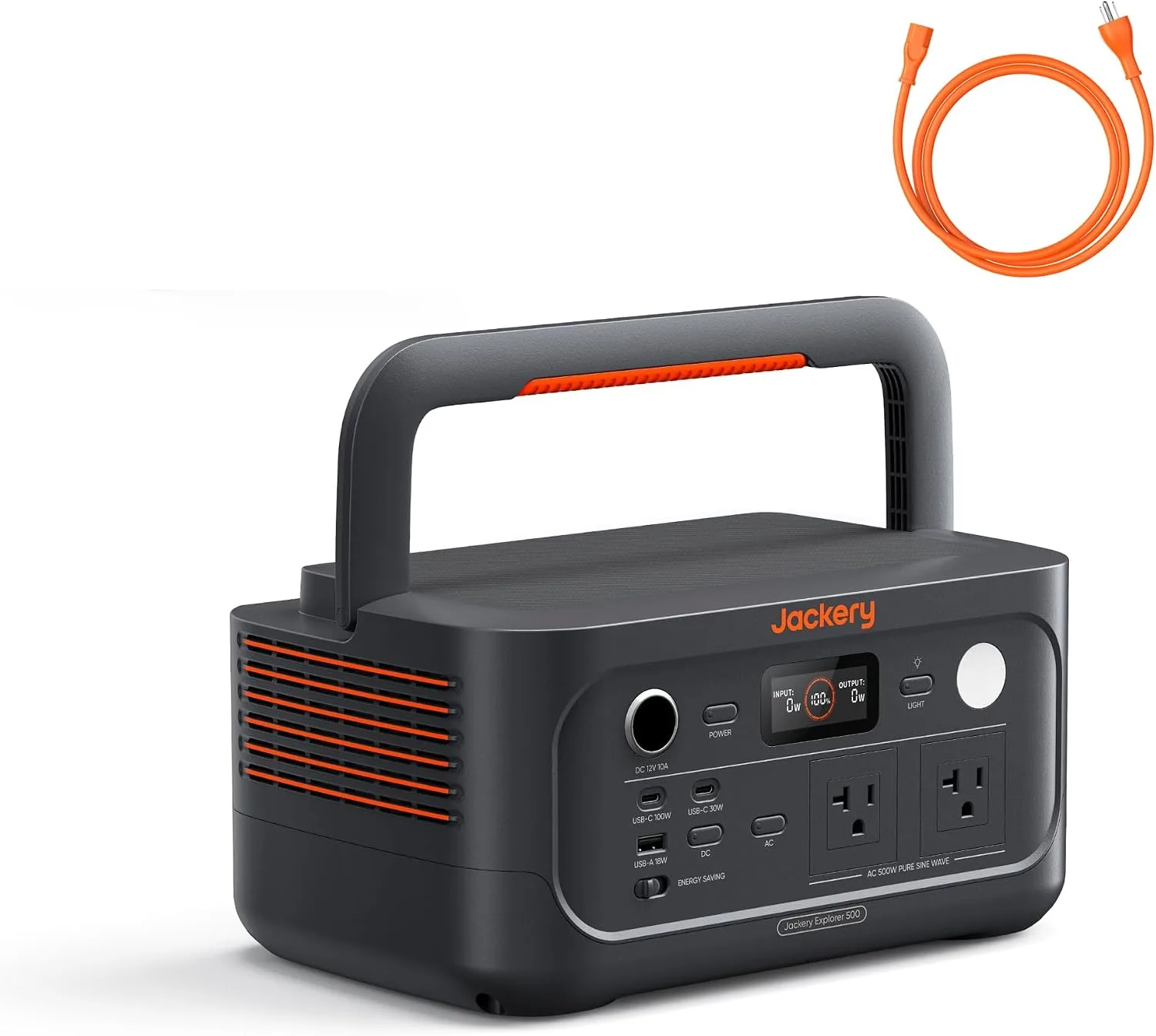
Jackery Explorer 500 v2 Power Station, 512Wh/500W, AC Cable Included
Highlights
- 640Wh rated capacity
- 500W continuous AC
- 1000W surge
- LiFePO4 chemistry
- Up to 200W solar input
- 14.1 lb (~6.4 kg)
Best for
- Explorer 600 v2: most Wh-per-dollar in this ~500Wh band for weekend fridge/CPAP math
- Car-camp carry at 14.1 lb when review depth matters as much as peak watts
#1 Jackery Explorer 1000 v2: the fridge-and-fans anchor
The Explorer 1000 v2 is the station I'd park in a central hallway for a multi-hour outage. At 1,070 Wh and 1,500 W continuous, it has the headroom to run a fridge and a portable A/C together — owners describe exactly that — and its quiet mode is the detail that separates it from louder boxes when you're sleeping two rooms away.
Owner reports on file describe a 12-quart DC fridge running three days from 100% to 43% with phone charging mixed in, and recharge from empty taking about an hour forty in normal mode. The app's runtime estimate made it easy to decide what to unplug next.
Suits: households that want one box for fridge, fans, router, and phones, left in place. Skip if: you need to carry it up stairs daily — owners call it marginal to haul — or you want 12V barrel ports, which it lacks. When the cheaper option is enough: if your outage essentials are lights, phones, and a CPAP night, the RIVER 2 covers that for a third of the price.
- Owner theme: fridge plus portable A/C ran simultaneously without hiccups.
- Owner theme: quiet mode was genuinely sleep-able while the fridge cycled.
- Caveat: no 12V barrel ports; 12V gear needs an adapter.
- Caveat: won't touch a 1,700 W air fryer; solar is slow and angle-sensitive.
#2 BLUETTI AC180: cheapest per nameplate Wh, with UPS behavior
The AC180 is the value play. At $499 for 1,152 Wh, it's $0.43/Wh on nameplate — the lowest in this group — and it adds real UPS switchover that kept a router, TV, and lights on without a blink in owner reports. If you're wiring a basement circuit to a single station, this is the one that behaves most like a small UPS.
The catch is idle draw. With the inverter on, owners measured roughly 20 W of self-consumption plus a reserve, so small loads get noticeably less than the rated capacity. Plan for it, or you'll be puzzled why a 55 W fan didn't last as long as the math said.
Suits: budget-conscious buyers who want capacity plus UPS behavior and can leave it in place. Skip if: you need to carry it far (~35 lb) or you were counting on the wireless charging pad — owners report it drops after seconds. When the cheaper option is enough: if you don't need UPS switchover or 1,800 W, the Explorer 500 v2 at $399 handles a camping fridge and small loads.
- Owner theme: instant switchover kept internet and devices alive through outages.
- Owner theme: portable car fridge ran five days on a camping trip.
- Caveat: ~20 W idle draw plus ~10% reserve shrinks usable capacity for small loads.
- Caveat: some units needed firmware updates and a full discharge/recharge to read capacity correctly.
#3 EcoFlow RIVER 2: the CPAP-night specialist
If your outage worry is a CPAP night and a dead phone, the RIVER 2 is the right shape. At 7.7 lb and 243 Wh, it's the lightest station here, and owners confirm a full night on a CPAP with charge to spare — one ran 7.5 hours and recharged in about an hour the next morning.
The one-hour AC recharge is the feature that changes planning: you can top it up between outages instead of babysitting it. It also acts as a stopgap UPS for a router and NVR through short flickers.
Suits: CPAP users, apartment dwellers, and anyone who wants a grab-and-go pack for lights and phones. Skip if: you expect it to run a Keurig, microwave, or hair dryer — 300 W continuous is the real ceiling, and owners who expected more were disappointed. When the cheaper option is enough: this is already the budget pick; if you need more than one CPAP night, step up to the Explorer 300 at $289 for 288 Wh.
- Owner theme: 0–100% in about an hour on AC, repeatedly confirmed.
- Owner theme: CPAP ran 7.5 hours on AC, recharged in about an hour.
- Caveat: a firmware update temporarily broke AC charge display and USB-C input on one unit.
- Caveat: only one USB-C port; fan audible during fast charging.
#4 EcoFlow DELTA 3 Max: the high-capacity fridge anchor
The DELTA 3 Max is the station you buy when you want the fridge to survive a long outage, not just a short one. At 2,048 Wh and 2,400 W, it ran an Iceco VL45 Pro fridge a little over five days at 36°F in owner reports, and its 10 ms transfer kept WiFi and routers alive as a UPS.
It charged to full in a little over an hour and arrived with enough charge to run a laptop, modem, and three fans through an actual outage. The app's storm guard and remote monitoring are genuinely useful for pre-storm prep.
Suits: home-office or fridge-circuit backup where the unit can live in place. Skip if: you need to haul it (44.8 lb) or you want maximum USB-C output — it tops out at 100 W, and one owner wished for 140 W. When the cheaper option is enough: if a 36-hour fridge run covers your typical outage, the Anker C1000 at $599.99 does that job for half the price.
- Owner theme: 10 ms transfer kept WiFi and routers running through outages.
- Owner theme: Iceco VL45 Pro fridge ran a little over five days at 36°F.
- Caveat: heavy and large — move-and-leave, not carry-around.
- Caveat: review pack is thin on long-term durability; most reports cover weeks or months.
#5 Anker C1000: the short-term fridge backup
The C1000 earns its slot on one number owners keep repeating: fridge runtime. An 18 cu ft garage fridge ran 36 hours before shutdown at 1%, and a busier kitchen side-by-side went 12 hours. Through an 8-hour outage, a fridge stayed cold and the pack still showed 38%.
Recharge from 1% to full took about an hour and a half on AC, and the app lets you cap input wattage so a small generator isn't overloaded — a genuinely useful feature for storm prep.
Suits: households that want a short-term fridge and essentials backup they can leave in the kitchen. Skip if: you'll carry it often — owners say it feels heavier than the listed 27.6 lb — or you need a long AC cable; the included one is short. When the cheaper option is enough: for a short 8-hour outage, the Explorer 1000 v2 at $559 is close in price and has a clean 1,070 Wh figure.
- Owner theme: 18 cu ft garage fridge ran 36 hours; kitchen fridge 12 hours.
- Owner theme: TV, Roku bar, and hot pad at ~120 W ran 9–10 hours.
- Caveat: app/Bluetooth flaky until a firmware update.
- Caveat: one report of a unit that wouldn't power on without AC — test in the return window.
- Caveat: the locked spec table lists 56 Wh, which conflicts with the 1,056 Wh model name and the 36-hour fridge runtime — verify capacity before buying.
#6 Jackery Explorer 300: the light outage box
The Explorer 300 is the station for lamps, phones, and a CPAP — not the fridge. At 288 Wh and 8.2 lb, it's light enough for older users to move room to room, and owners report 12–14 hours from a 20 W LED bulb down to 10%.
The CPAP story is the clearest win, but only with a DC cord. On AC, the low-draw auto-shutoff kicked in after about 5.5 hours and used roughly 40% of the battery; on DC it dropped to about 20% per night and didn't shut off.
Suits: apartment outages, CPAP users with a DC cord, and anyone who wants a grab-and-go essentials pack. Skip if: you need to run a fridge or A/C — owners repeatedly note it's a small-appliance unit only. When the cheaper option is enough: if you only need phone charging and a lamp, the RIVER 2 at $177.65 is lighter and cheaper.
- Owner theme: 42-inch TV, phone charging, heating pad, and small coffee maker ran six hours with 43% left.
- Owner theme: CPAP on DC used about 20% per night; on AC it auto-shut off after 5.5 hours.
- Caveat: auto-power-off cuts output when draw is under ~10 W.
- Caveat: one long-term owner had the battery stop charging at nine months; support replaced it.
#7 Jackery Explorer 500 v2: the camping-fridge crossover
The Explorer 500 v2 is the Goldilocks pack for a camping fridge and small outage loads. Its regulated 12V DC output held steady under load and ran a DC fridge/freezer 15 hours with over 50% left in owner reports; a Dometic fridge went about 45 hours in normal mode.
It's light enough to carry between rooms, and pass-through charging let owners run devices while solar charging. The 640 Wh capacity and 500 W output are modest but honest for lamps, fans, and a CPAP.
Suits: campers and households that want a portable fridge pack plus small outage backup. Skip if: you need USB-C — the catalogue port lock lists USB-C×1, but owner reviews of the 500 v2 mention its absence, so verify your unit — or you expect a 60 W panel to start solar charging; it needs 100 W. When the cheaper option is enough: if you don't need regulated 12V, the Explorer 300 at $289 covers lamps and CPAP.
- Owner theme: regulated 12V DC held steady; DC fridge/freezer ran 15 hours with over 50% left.
- Owner theme: Dometic fridge ran about 45 hours in normal mode.
- Caveat: solar charging needs a 100 W panel to reliably start.
- Caveat: support friction reported — one owner spent months getting a defective DC output replaced.
#8 BLUETTI EB3A: high surge for its size, with caveats
The EB3A is the small inverter with surprising punch. At 600 W continuous and 268 Wh, it powered a 400 W chainsaw charger and brewed coffee via power-lift mode at about 315 W, costing roughly a fifth of the battery per cup. A box fan ran six hours on low.
CPAP on AC lasted about 9–10.5 hours with the heater off, and one owner saw 9 hours with 57% left. Recharge from 0 to full took about an hour twenty in silent mode.
Suits: campers and short-outage users who want high surge in a small box and will test their unit hard early. Skip if: you need a hands-off UPS for medical gear — a daily-use owner reported two units cutting to 0% from 50–60% under a 2–10 W load, and fan noise plus off-gassing complaints are repeated. When the cheaper option is enough: if you need a hands-off UPS, skip this one entirely and look at the AC180.
- Owner theme: 400 W chainsaw charger and coffee via power-lift mode worked.
- Owner theme: CPAP on AC ran about 9–10.5 hours with heater off.
- Caveat: random shutdowns to 0% below ~50–60% reported across two units.
- Caveat: fan noise and controller buzz even in silent mode; app requires an account.
Who should not buy the top pick
The Explorer 1000 v2 is the best overall for essentials, but it's the wrong buy for two clear groups.
First, anyone who needs to carry the station up and down stairs daily. At 23.8 lb it's a leave-in-place unit; owners consistently call it marginal to haul. Second, anyone who needs 12V barrel ports for radios or DC gear — it doesn't have them, and an adapter is one more thing to lose in a blackout.
If you're in either group, look at the RIVER 2 for portability or the Explorer 500 v2 for regulated 12V DC.
If none of these fit
Two alternative directions. If your real need is whole-home coverage — central A/C, well pump, furnace — a portable station is the wrong category; you want a standby generator with a transfer switch, and no amount of Wh fixes that.
If you need a hands-off UPS for a CPAP or medical device, a dedicated medical-grade UPS with a known transfer time and battery health monitoring is safer than any of these portable boxes. The AC180 and DELTA 3 Max come closest on switchover, but neither is a substitute for a device rated for the job.
Owner themes: what buyers keep saying
Across the high-helpful reviews on file, the themes line up with the jobs above. The Explorer 1000 v2 and AC180 owners talk about fridge runtime and UPS switchover; RIVER 2 and Explorer 300 owners talk about CPAP nights and portability; the C1000 and DELTA 3 Max owners talk about long fridge runs and weight.
The caveats are equally consistent: idle draw on the AC180, fan noise and random shutdowns on the EB3A, firmware quirks on the RIVER 2, and support friction on the Explorer 500 v2. None of these are dealbreakers for every buyer, but they're the reasons to pick one over another.
- Jackery Explorer 1000 v2: fridge plus A/C, quiet mode, heavy.
- BLUETTI AC180: UPS switchover, idle draw, wireless pad unreliable.
- EcoFlow RIVER 2: one-hour recharge, CPAP night, 300 W ceiling.
- Anker C1000: 36-hour fridge run, heavy in practice, short AC cable, capacity cell anomaly.
- EcoFlow DELTA 3 Max: 10 ms transfer, five-day fridge, thin long-term data.
- Jackery Explorer 300: lamps and CPAP on DC, auto-shutoff on low draw.
- Jackery Explorer 500 v2: regulated 12V, 100 W solar minimum, support friction.
- BLUETTI EB3A: high surge, fan noise, random shutdowns reported.
Frequently asked
Can the Explorer 1000 v2 run a fridge overnight?
Owners report a 12-quart DC fridge ran three days from 100% to 43%, and a full-size fridge plus portable A/C ran together. A standard fridge overnight is realistic; multi-day is not.
Will the RIVER 2 run a CPAP all night?
Yes, on AC, per owner reports of 7.5 hours. Recharge takes about an hour the next morning.
Why does the AC180 show less runtime than the math?
Idle draw is roughly 20 W with the inverter on, plus a reserve. Subtract that before you plan.
Does the EB3A work as a UPS for a router?
It can, but the reported random shutdowns below 50–60% make it a risky choice for always-on gear. Test your unit hard in the first weeks.
Method and sources
Model names and list prices come from the WattPicks catalog at build time. WattPicks does not run its own laboratory tests on power stations, and nothing on this page is presented as a measured result — it is catalog-backed buying guidance.
Read our methodology for how the catalog is normalized, and about WattPicks for who publishes it.