
Best 1000Wh Portable Power Stations for Camping and Off-Grid Weekends
Seven true ~1kWh stations, ranked for tent and RV weekends rather than whole-home UPS duty. Weight, solar input, night noise, and port spread decide the order — not nameplate wattage.
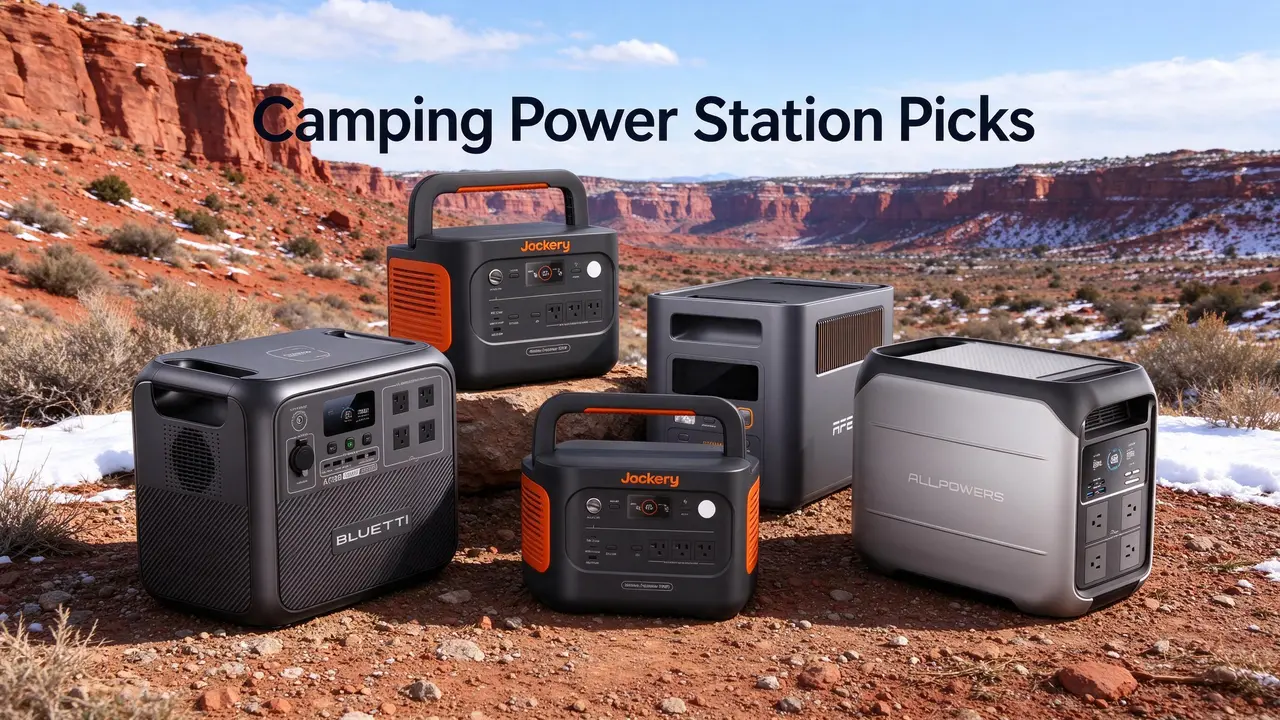
Updated
What a camping weekend actually asks of a 1kWh station
You are not buying a whole-home generator here. A ~1,000Wh station is the box that runs a 12V fridge, charges four phones, lights a tent, and keeps a CPAP alive for a night or two — then gets carried to the car in one trip. If your plan is to back up a furnace, a well pump, or a full kitchen circuit, this class is the wrong tool and you should be reading about transfer switches instead.
The hard requirements for this job are narrow. It has to be light enough that one person lifts it into a trunk without swearing. It needs a real solar input, because a weekend off-grid lives or dies on how many watts of panel it will accept. It should be quiet enough at 2 a.m. that a fan cycling on doesn't wake the tent. And it needs enough AC outlets that you aren't unplugging the fridge to charge a laptop.
One buying tip before the list: panels are sold separately on every unit here. Budget for them, and match panel wattage to the station's solar input ceiling — a 400W panel on a station that caps lower is money you won't recover.
Quick picks: top, runner-up, also consider
Top pick for a camping weekend: Jackery Explorer 1000 v2 Portable Power Station,1070Wh,1500W. At 23.8 lb it's the one you'll actually load, and quiet mode is the feature owners mention most for overnight fridge duty.
Runner-up: BLUETTI AC180. More capacity (1152 Wh) and a genuinely fast wall charge, with a UPS switchover owners describe as seamless. It loses the top spot on weight and idle draw, not on capability.
Also consider: OUPES Mega 1 Portable Power Station 1024Wh 2000W. The 2000W continuous output is the highest here and it recharges in under an hour in owner reports — but the fans get loud and the surge claim doesn't hold up in the field.
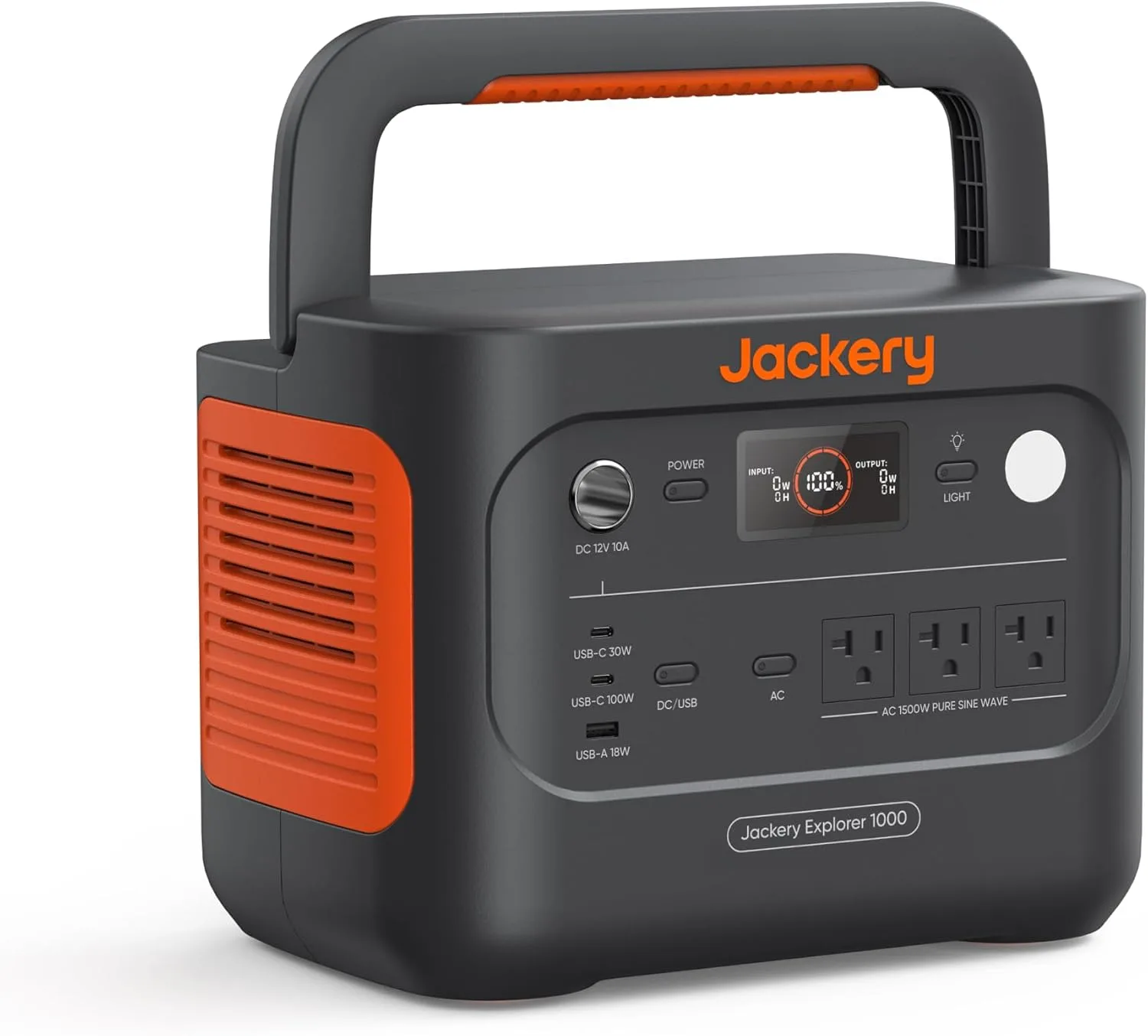
Jackery Explorer 1000 v2 Portable Power Station,1070Wh,1500W
Highlights
- 1070Wh rated capacity
- 1500W continuous AC
- LiFePO4 chemistry
- Up to 400W solar input
- 23.8 lb (~10.8 kg)
- About $559 list
Best for
- Explorer 1000 v2: weekend camping when 23.8 lb carry weight matters as much as 1070Wh
- Essentials bridge at home (fridge cycles, router) when sized to the Wh
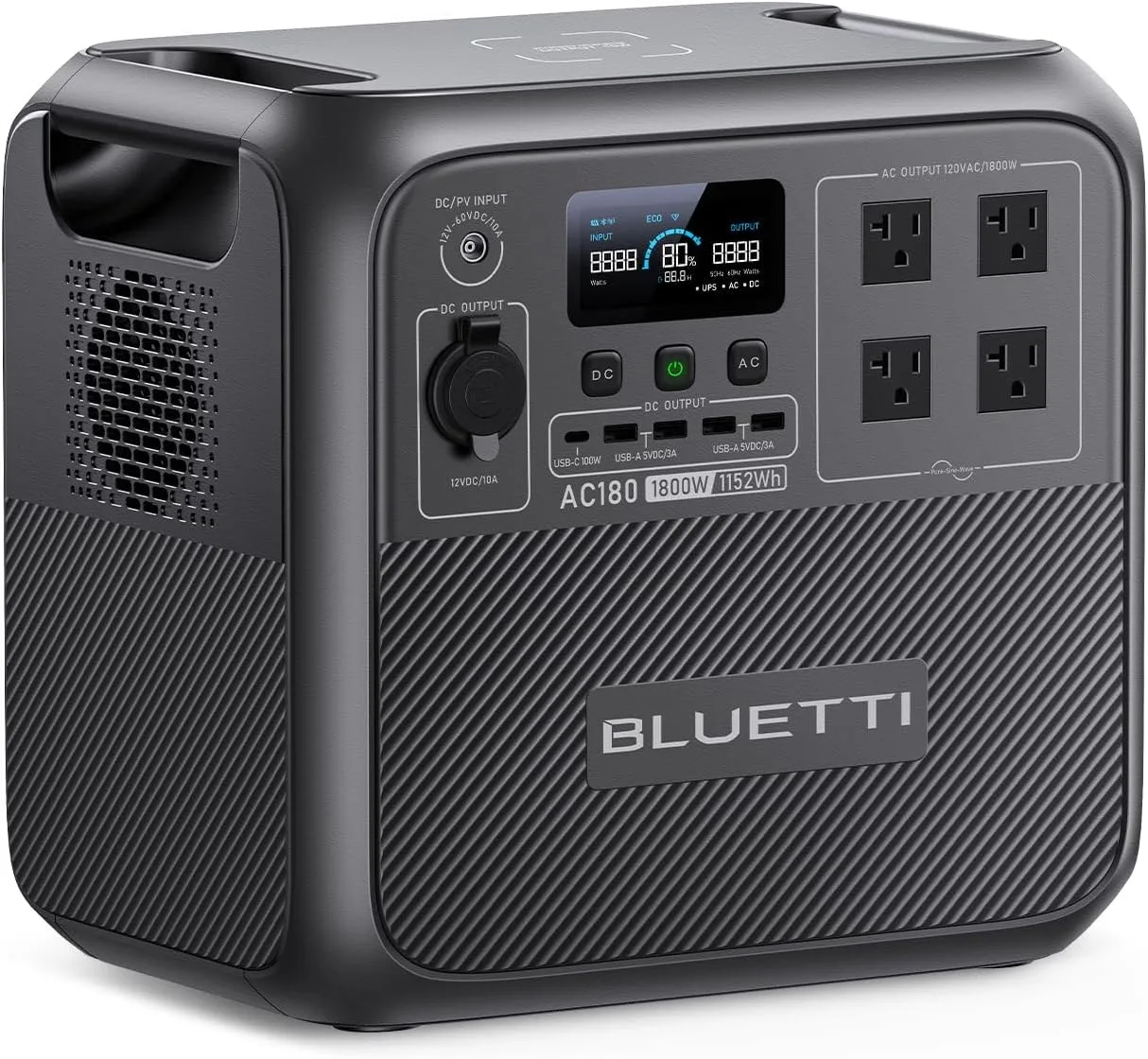
BLUETTI Portable Power Station AC180, 1152Wh LiFePO4 Battery Backup w/ 2 1800W
Highlights
- 1152Wh rated capacity
- 1800W continuous AC
- LiFePO4 chemistry
- Up to 500W solar input
- 35.3 lb (~16.0 kg)
- About $499 list
Best for
- AC180: most Wh per list dollar in mid-size LiFePO4 shortlists (~1152Wh)
- Home essentials when 1800W continuous matters more than a light carry
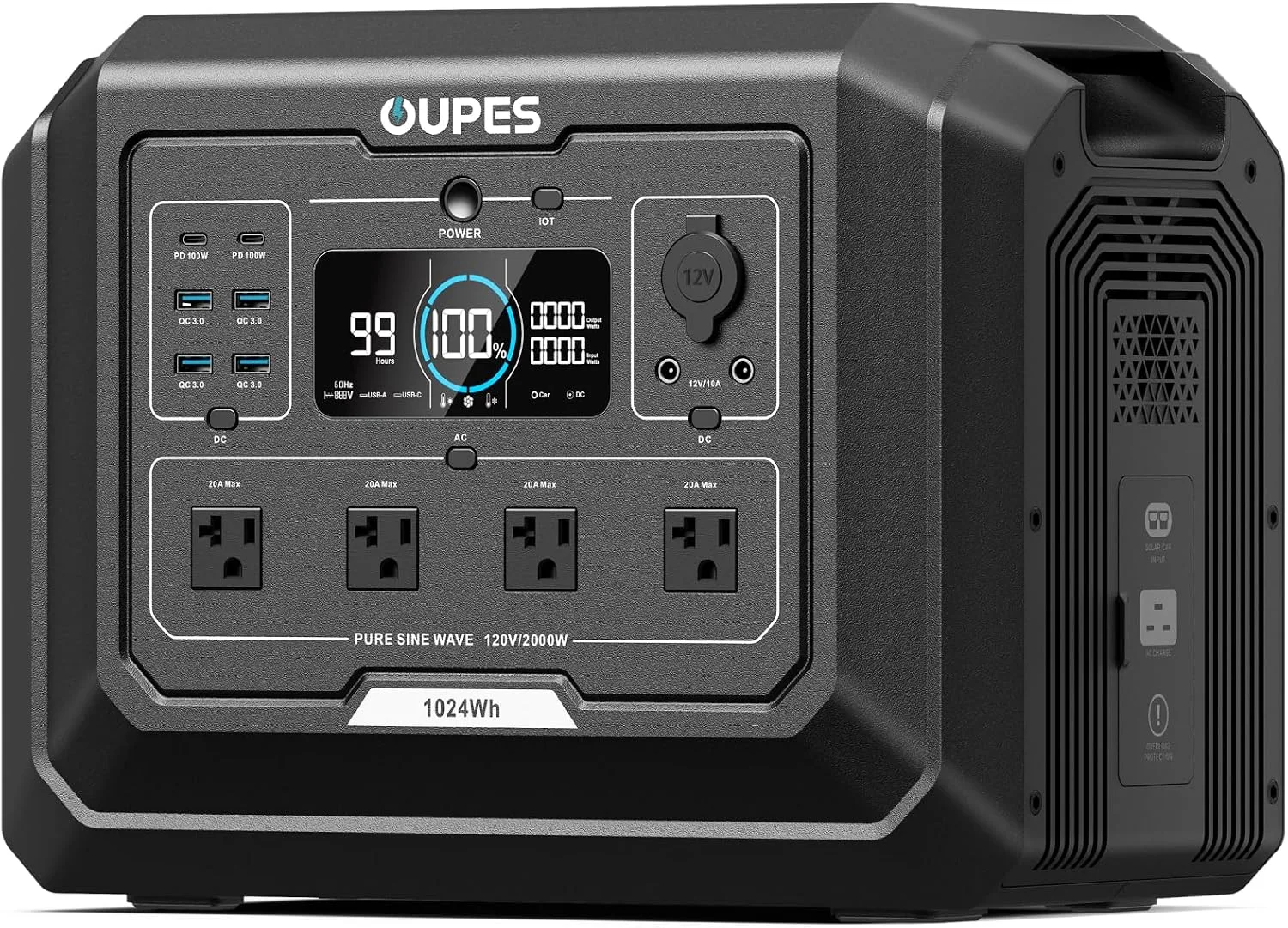
OUPES Mega 1 Portable Power Station 1024Wh 2000W
Highlights
- 1024Wh rated capacity
- 2000W continuous AC
- 4500W surge
- LiFePO4 chemistry
- Up to 800W solar input
- 27.8 lb (~12.6 kg)
Best for
- Mega 1: small appliances and tools that need ~2000W continuous, not just phone charging
- Essentials bridge at home (fridge cycles, router) when sized to the Wh
How I weighted this job
I ranked these as a home user working from owner themes on file plus the listing specs — not lab-bench measurements. The percentages below are the actual scoring weights, and every one of them moved a unit up or down.
Portability and weight took 25%, because a station you won't carry is a station you leave home. Solar input ceiling and recharge behavior took 20% — the off-grid weekend hinges on it. Night noise and fan behavior under load took 15%. Port spread and outlet spacing took 15%. Real usable runtime against the nameplate, judged from owner reports, took 15%. Listing price per Wh took 10%.
Why #1 beats #2: the Jackery Explorer 1000 v2 wins on the two heaviest weights at once — 23.8 lb is the lightest in this group by a wide margin, and owners consistently report quiet-mode overnight fridge runs. The BLUETTI AC180 has more capacity and a faster wall charge, but 35.3 lb and a real idle draw cost it on portability and usable-runtime. That trade is the whole ranking in one sentence.
Scoreboard on those weights — here's how the top two map to the six categories, with the raw input behind each label:
BLUETTI AC180 (list $499): Portability 25% — Low (35.3 lb); Solar 20% — High (listing solar input ceiling not published, but owner reports show fast solar top-up); Noise 15% — Med (fan audible under load); Ports 15% — High (multiple AC outlets plus USB); Runtime 15% — Med (idle draw with inverter on); Price/Wh 10% — High ($0.43/Wh).
Jackery Explorer 1000 v2 (list $559): Portability 25% — High (23.8 lb); Solar 20% — High (listing solar input ceiling not published, but owner reports show solar top-up in a few hours); Noise 15% — High (quiet mode); Ports 15% — High (front-facing AC outlets plus built-in lamp); Runtime 15% — High (owner-reported overnight fridge runs); Price/Wh 10% — Med ($0.52/Wh).
That is why the pick splits by job rather than one universal winner.
Scenario facts at a glance
Everything below comes from the listings. Where a spec isn't published, it says so rather than guessing. Prices are list prices, not sale stickers. Ratings are listing aggregates, not owner samples.
| Product | Price | Capacity (Wh) | Output (W) | Weight (lb) | Rating |
|---|---|---|---|---|---|
| BLUETTI AC180 | $499 | 1152 Wh | 1800 W | 35.3 lb | 4.5 |
| Jackery Explorer 1000 v2 Portable Power Station,1070Wh,1500W | $559 | 1070 Wh | 1500 W | 23.8 lb | 4.7 |
| AFERIY AF-P180Pro | $499 | 1024 Wh | 1800 W | 28 lb | 4.7 |
| ALLPOWERS P1800 Portable Power Station, 1024Wh | $419 | 1024 Wh | 1800 W | n/a (not on file) | 4.2 |
| 1200W Portable Power Station 1024Wh Solar Generator | $421.99 | 1024 Wh | 1200 W | 31.5 lb | 4 |
| Anker C1000 Portable Power Station | $599 | 1056 Wh | 1800 W | 28.4 lb | 4.7 |
| OUPES Mega 1 Portable Power Station 1024Wh 2000W | $549 | 1024 Wh | 2000 W | 27.8 lb | 4.5 |
The ranking, one station at a time
Ranked by the weights above. Prices are list; several of these have sold lower, and I'd wait for a sale on the pricier ones.
- #1 Jackery Explorer 1000 v2 — lightest, quietest overnight
- #2 BLUETTI AC180 — most capacity, best UPS behavior
- #3 OUPES Mega 1 — highest continuous output
- #4 Anker C1000 — best fridge runtime per charge
- #5 AFERIY AF-P180Pro — most ports, expandable (thin owner data)
- #6 ALLPOWERS P1800 — cheapest per Wh, with caveats
- #7 1200W Portable Power Station 1024Wh Solar Generator — light and cheap, weakest UPS
#1 Jackery Explorer 1000 v2: the one you'll actually carry
At 23.8 lb this is the outlier in a group that mostly sits near 28–35 lb. Owner themes on file show it running a full-size fridge and a portable AC together without tripping, and quiet mode letting owners sleep while it powered the fridge and a couple of fans overnight. The front-facing AC outlets and built-in lamp matter more than they sound when the power is out and you're fumbling in the dark.
The caveats are real. The app's Wi-Fi connection dropped overnight in owner reports, so you may have to reconnect to check the level. There are no 12V barrel ports — you'll need an adapter to draw DC from the cigarette socket — and a larger miter saw wouldn't start on it.
Suits: tent and RV campers who move the station daily and want a fridge to survive the night. Skip if: you need to run heavy tools or want a station that stays put as a home UPS.
#2 BLUETTI AC180: capacity and a seamless switch
The AC180 carries the most capacity in this group at 1152 Wh, and the UPS switchover is the feature owners bring up first — owner reports describe cutting wall power and keeping the router and TV running without a blink. The display's hours-remaining estimate made it easy to coach a household to turn things off and stretch runtime.
Two things cost it the top spot. It's 35.3 lb, which is a two-hand lift and not something you'd haul to a campsite repeatedly. And the idle draw is real: with the inverter on it eats power with nothing plugged in, so small overnight loads don't get the full rated capacity. One owner's first charge rate was stuck low until a full drain and recharge plus a firmware update sorted the estimate.
Suits: short outages at home, plus car camping where the station stays near the vehicle. Skip if: you're carrying it any distance or running only tiny loads overnight.
#3 OUPES Mega 1: the output leader, with a loud side
2000W continuous is the highest here, and owner reports show it starting a full-size fridge and a microwave without tripping the internal breaker. Recharge from wall power was very fast — roughly 35–45 minutes from 0 to 100% in owner reports — which is genuinely useful between drives.
The advertised 4500W surge was optimistic; owners consistently report trips between 2050–2200W. Fans ran aggressively under heavy load or fast charging, loud enough to notice in a quiet room, and the charge cable is proprietary, so losing it is a real problem.
Suits: overlanders and job-site users who need to start a big inductive load and can tolerate fan noise. Skip if: you need quiet overnight operation or the full advertised surge.
#4 Anker C1000: the fridge marathon runner
In owner reports a full-size garage fridge ran 36 hours on a single charge, and a larger kitchen fridge managed 12. Wall recharge was about 1.5 hours from 1% to 100%, and the app let owners dial charging wattage down so a generator wasn't overloaded.
It's 28.4 lb and a two-hand lift, the app sometimes took a while to connect without Wi-Fi, and the AC charging cable is short at roughly 4–5 feet — that limited where owners could plug it in. The top light was dimmer than expected.
Suits: home-fridge backup during outages, and campers who want the longest fridge runtime per charge. Skip if: you're hauling it often or want a polished app experience.
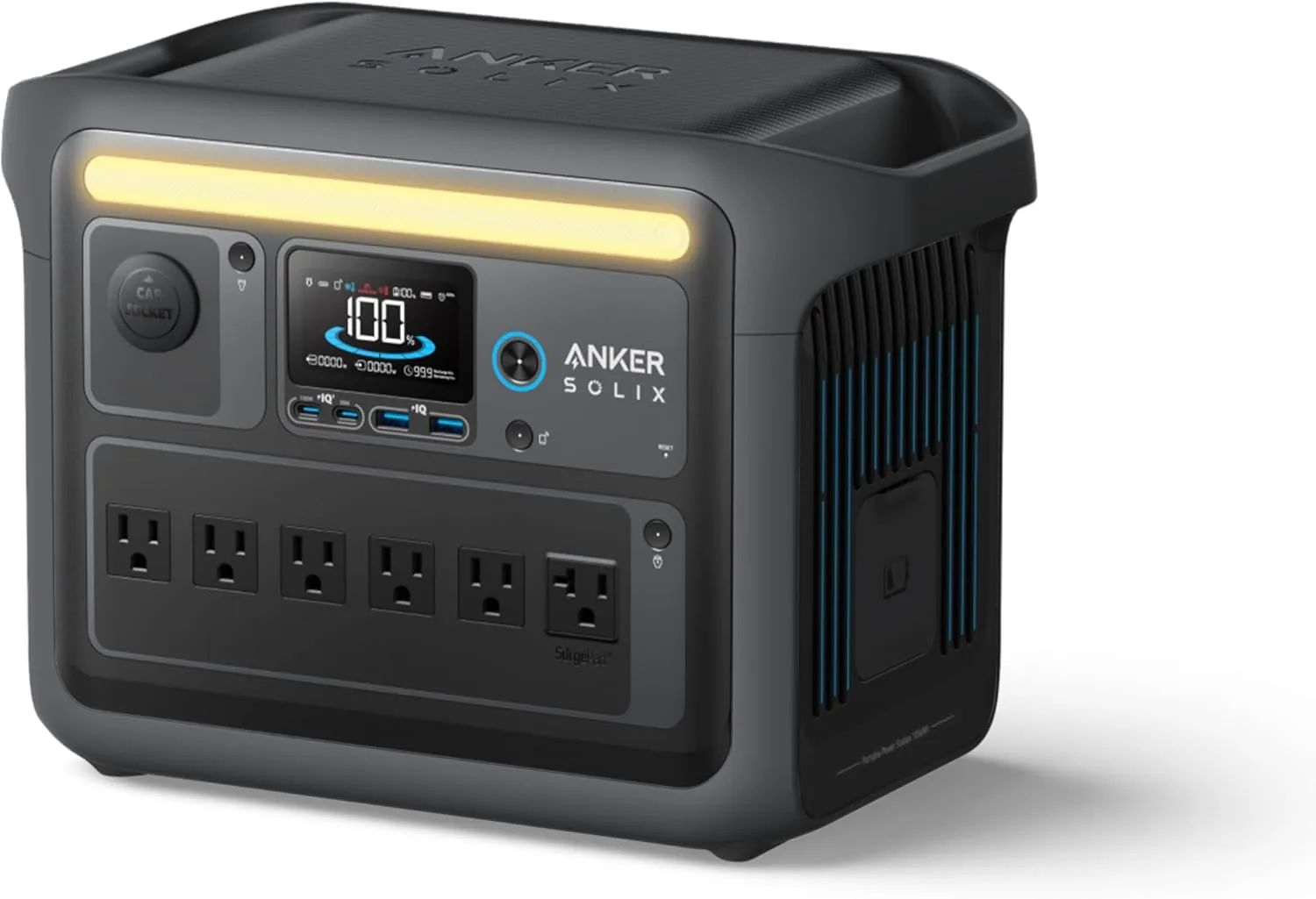
Anker C1000 Portable Power Station
Highlights
- 1056Wh rated capacity
- 1800W continuous AC
- LiFePO4 chemistry
- Up to 600W solar input
- 28.4 lb (~12.9 kg)
- About $599 list
Best for
- SOLIX C1000: small appliances and tools that need ~1800W continuous, not just phone charging
- Essentials bridge at home (fridge cycles, router) when sized to the Wh
#5 AFERIY AF-P180Pro: ports and expansion (thin owner data)
The listing claims 14 AC outlets and expandability up to 5120Wh with add-on batteries — that's the most port spread in this group and the only one here advertising a clear upgrade path. It's 28 lb, mid-pack on weight, and the 1800W output matches the AC180.
Structured owner detail for this SKU is thin in the source pack, and the listing aggregate sits on only 131 ratings — a listing aggregate, not an owner sample. Treat the port count and expansion claims as listing-only until more owners report. Panels and expansion batteries are sold separately.
One friction point owners do mention: the 14-outlet layout is dense, so bulky adapters can crowd neighboring sockets. And with expansion batteries sold separately, the advertised 5120Wh path is a multi-purchase commitment, not a one-box upgrade.
Suits: buyers who want to grow capacity later and need many outlets at a campsite. Skip if: you want a long track record of owner reports before spending — if you need a proven track record, the Anker C1000 is the safer pick.
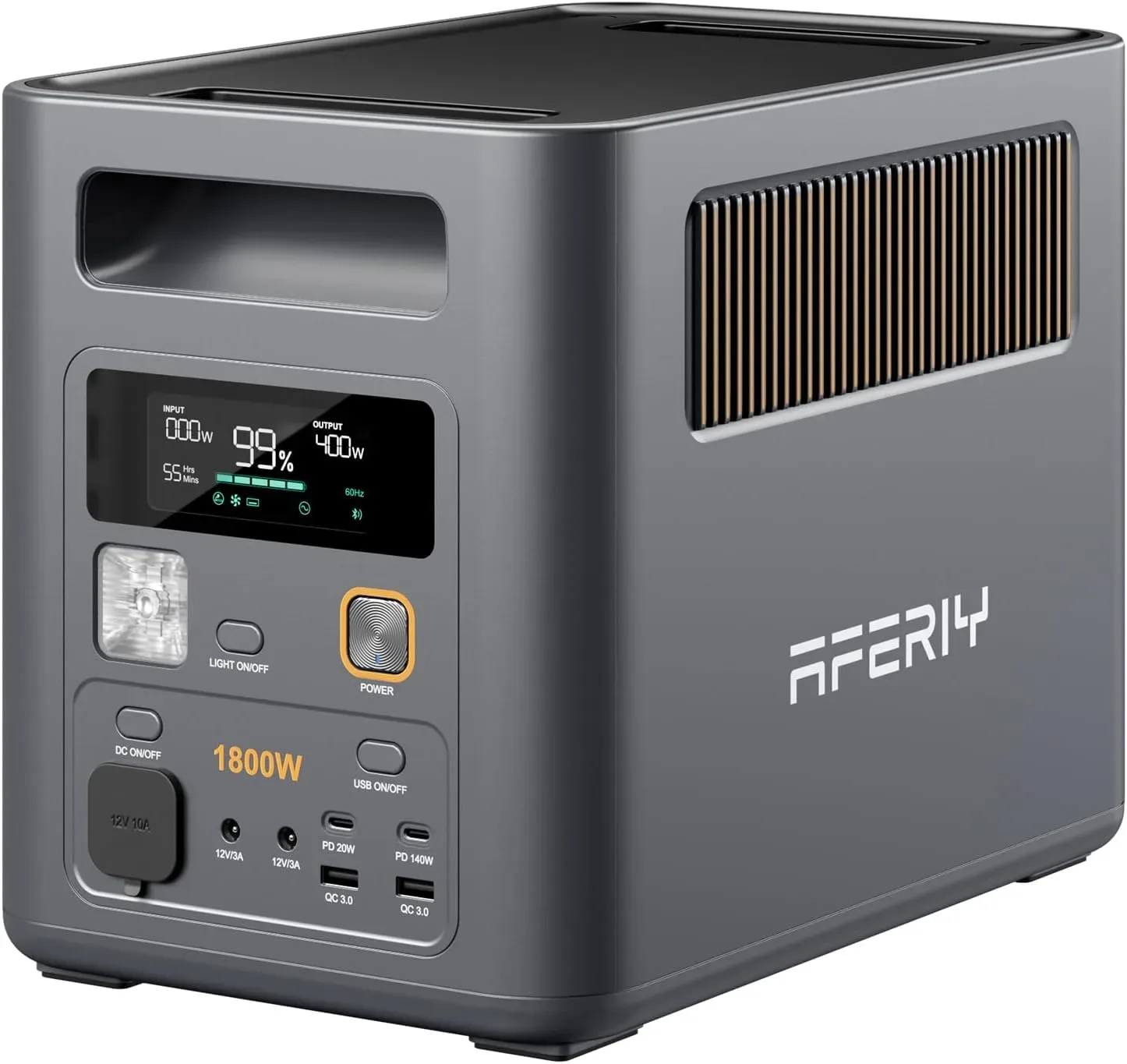
AFERIY Portable Power Station 1024Wh Solar Generator 1800W(Peak 3600W)
Highlights
- 1024Wh rated capacity
- 1800W continuous AC
- 28 lb (~12.7 kg)
- About $499 list
Best for
- AF-P180Pro: small appliances and tools that need ~1800W continuous, not just phone charging
- Essentials bridge at home (fridge cycles, router) when sized to the Wh
#6 ALLPOWERS P1800: cheapest per Wh, with strings
At $419 for 1024 Wh this is the lowest nameplate cost per Wh in the group at $0.41/Wh, and the UPS switchover kept a modem and router running without a blink in owner reports. A TV ran four hours and only dropped from 100% to 60%, and solar topped it back up in a few hours.
The strings are serious for a camping box. It self-discharges noticeably even with AC/DC off — within a month it was completely drained in owner checks, so it's not grab-and-go. The sine wave isn't pure; one owner's tablet touchscreen wouldn't work while plugged in. And the AC outputs stay off after a full drain and power restore.
Suits: budget buyers who keep it on a charger and use it for short outages. Skip if: you need pure sine wave output or a station that holds charge in storage.
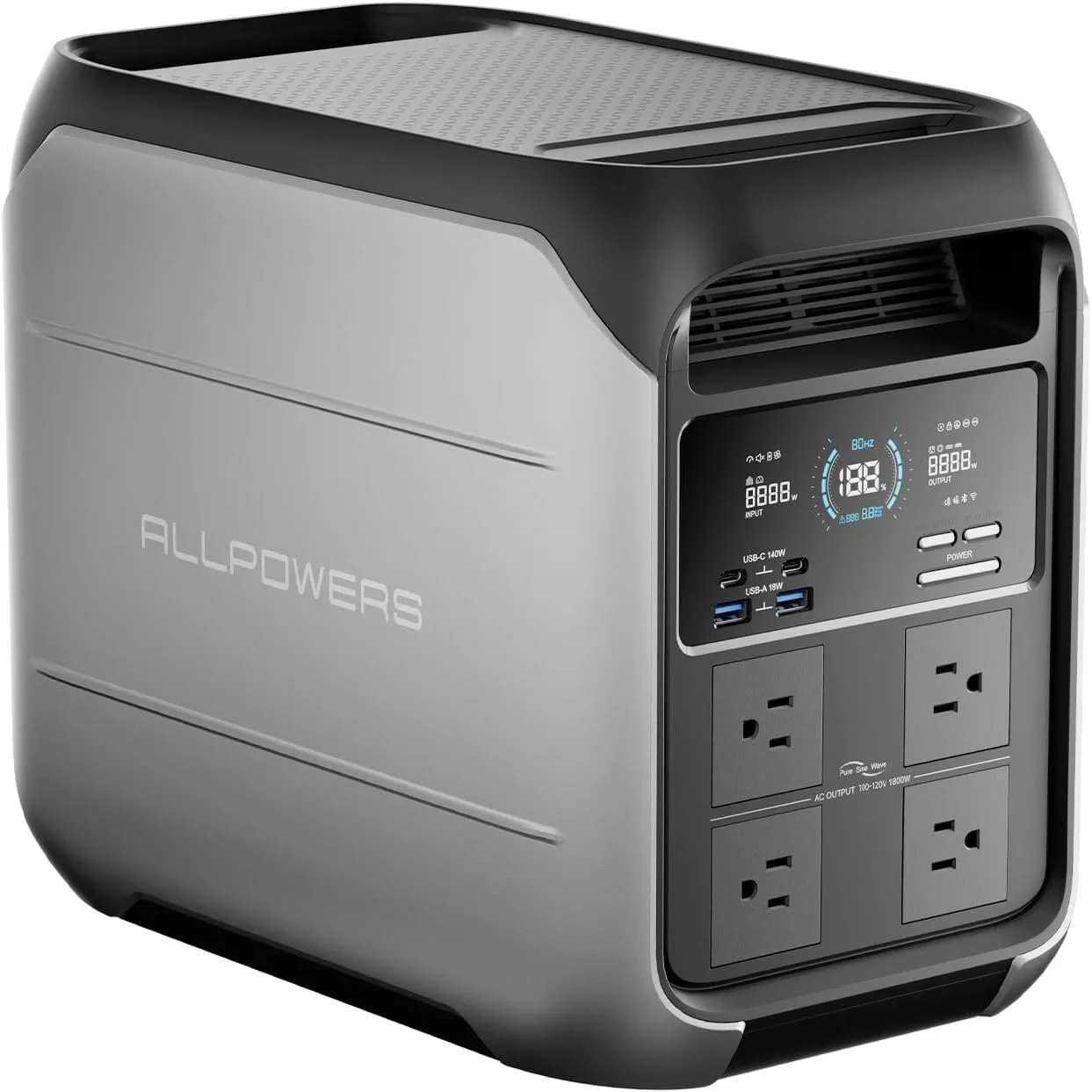
ALLPOWERS P1800 Portable Power Station, 1024Wh
Highlights
- 1024Wh rated capacity
- 1800W continuous AC
- 3600W surge
- LiFePO4 chemistry
- Up to 650W solar input
- About $419 list
Best for
- allpowers-p1800: small appliances and tools that need ~1800W continuous, not just phone charging
- Essentials bridge at home (fridge cycles, router) when sized to the Wh
#7 1200W Portable Power Station 1024Wh Solar Generator: light and cheap, weakest UPS
This is the lightest of the 1024Wh units here at 31.5 lb — though not the lightest in the whole group, since the Jackery, AFERIY, Anker, and OUPES all weigh less — and its 1200W output is the lowest continuous rating in the group. Charging was fast in owner checks: a dead tablet charged in about 90 minutes and used 9% of the battery, and the rear camping light was brighter than expected.
The UPS switchover has a delay, so a modem dropped and the computer rebooted — owners needed a separate UPS to bridge the gap. The AC power button didn't always stay on, which made running an air mattress pump a fight. Support was unresponsive in owner experience.
Suits: light camping and phone/laptop charging where you don't need seamless backup. Skip if: you want UPS-grade switchover or reliable long-term support — the Jackery 1000 v2 is the better light-and-quiet pick if you can spend more.
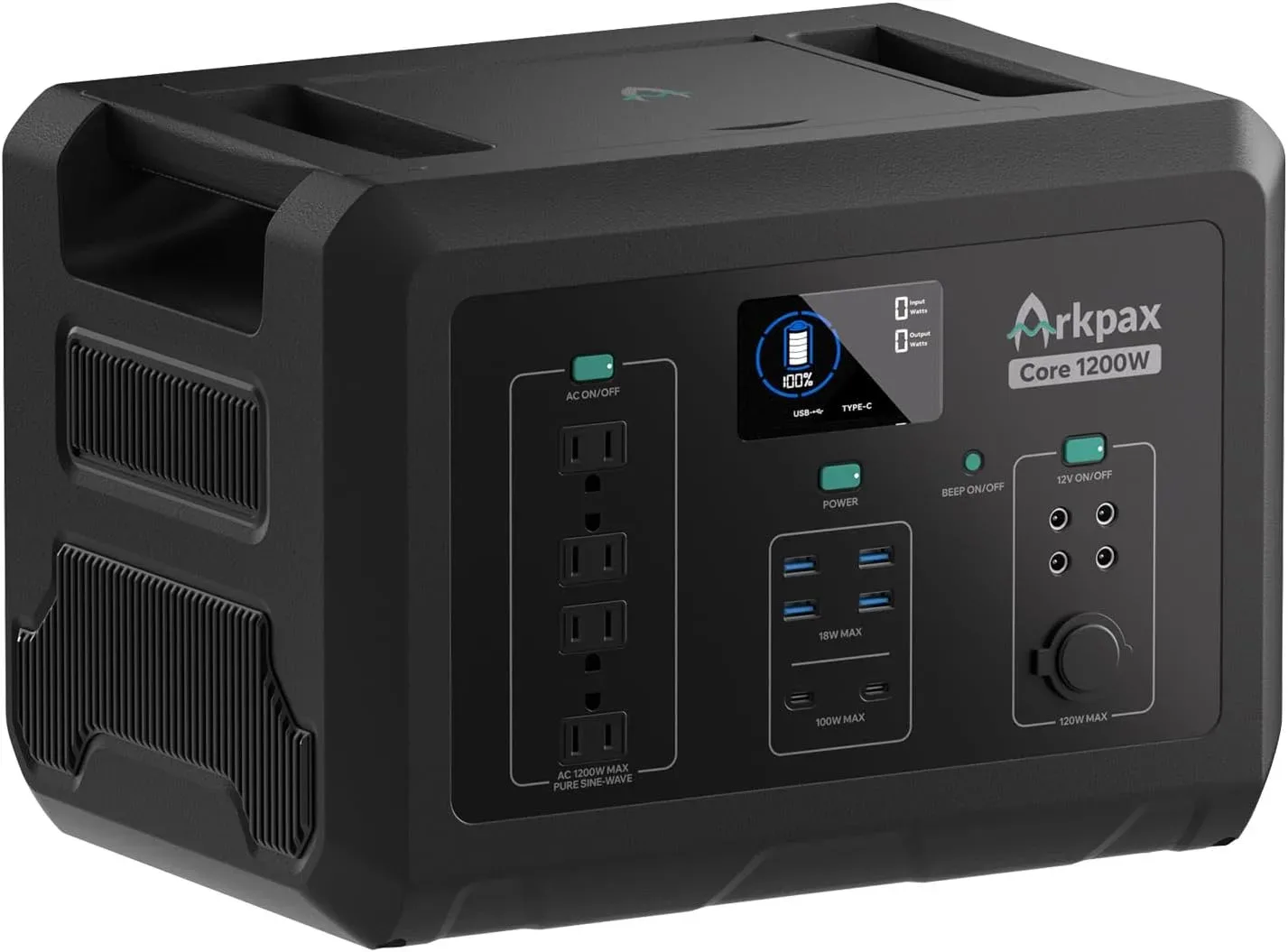
1200W Portable Power Station 1024Wh Solar Generator
Highlights
- 1024Wh rated capacity
- 1200W continuous AC
- 31.5 lb (~14.3 kg)
- About $421.99 list
Best for
- b0gpwjf5by: budget quiet camping / light outage loads when list price leads
- Park-and-use backup — at 31.5 lb (~14.3 kg) this is a poor long hike companion
What goes wrong on a camping weekend
- Idle draw eats your margin. Inverter-on consumption on the AC180 and self-discharge on the ALLPOWERS P1800 both shrink usable capacity well below nameplate — plan around it, not against it.
- Surge claims don't survive contact. The OUPES Mega 1 tripped near 2050–2200W despite a 4500W claim; size for continuous watts, not the marketing peak.
- Panels are extra and mismatched. Every unit here sells panels separately, and a panel that exceeds the station's solar input ceiling is wasted money.
- Noise at 2 a.m. Fans on the OUPES Mega 1 ran aggressively under load; quiet modes on the Jackery and Anker are the difference between sleeping and not.
- Storage discharge. A station that drains itself in a month (ALLPOWERS) is a bad emergency backup unless it lives on a charger.
Who should pick something else
If you're backing up a furnace, well pump, or a whole circuit panel, stop here. A 1kWh station runs a fridge for hours, not a house for days — you want a transfer switch and a larger system, and I'd read the transfer switch vs smart panel comparison before spending on this class.
If you need to run a 240V appliance, a large miter saw, or a window AC for hours, none of these will do it. The Jackery 1000 v2 wouldn't start a large miter saw in owner checks, and the OUPES surge fell short of its claim.
If you want a station that holds charge for months untouched, the ALLPOWERS P1800 is the wrong pick — its self-discharge is the worst here. And if you're buying for a permanent home UPS, the weight of the AC180 and Anker C1000 matters less than switchover speed and warranty, which is a different ranking.
Concrete thresholds: if you need more than 8 hours of fridge runtime per charge, step up to a 2kWh-class station — the Anker C1000's 36-hour garage-fridge report is the outlier, not the norm. If you need to run a 240V well pump or furnace, this class is out. If you need a station that holds charge for months untouched, the ALLPOWERS P1800 is the wrong pick. And if you're buying for a permanent home UPS, weight matters less than switchover speed and warranty — a different ranking.
Frequently asked
Can I charge a 1kWh station from a car 12V socket while driving?
Yes, but slowly. A 12V socket typically delivers far less than a wall outlet, so a full recharge on the road takes many hours — plan it as a top-up between drives, not a full refill. The OUPES Mega 1's fast wall recharge (roughly 35–45 minutes in owner reports) is the better bet when you have grid power at either end of the trip.
The OUPES Mega 1 advertises a 4500W surge — will it actually start my tools?
Claimed vs. observed: the listing claims 4500W surge, but owners consistently report trips between 2050–2200W. Size your loads to the 2000W continuous rating and treat the surge figure as marketing until you've tested your specific tool.
Can a 1kWh station run a fridge overnight?
Yes, with margin — but the margin varies by fridge and ambient temperature. The Anker C1000 ran a full-size garage fridge 36 hours in owner reports, and the Jackery 1000 v2 handled a fridge plus a portable AC together. A typical fridge draws roughly 100–200W cycling, so plan on 8–12 hours of real runtime per charge in mild conditions; a hot garage or a poorly insulated fridge will cut that.
Which is lightest for carrying to a tent?
The Jackery Explorer 1000 v2 at 23.8 lb. The BLUETTI AC180 at 35.3 lb is the heaviest here and the one you'd least want to haul far.
Do I need to buy solar panels separately?
Yes — panels are sold separately on all seven. Match panel wattage to each station's solar input ceiling; the AFERIY and OUPES listings advertise the highest expansion paths.
Which has the fastest wall recharge?
The OUPES Mega 1, at roughly 35–45 minutes from 0 to 100% in owner reports. The Anker C1000 took about 1.5 hours, and the BLUETTI AC180 charges quickly but needed a firmware update before the estimate was accurate.
Method and sources
Model names and list prices come from the WattPicks catalog at build time. WattPicks does not run its own laboratory tests on power stations, and nothing on this page is presented as a measured result — it is catalog-backed buying guidance.
Read our methodology for how the catalog is normalized, and about WattPicks for who publishes it.