
BLUETTI EB70S vs Goal Zero Yeti 700: Which Mid-Size Station?
Two 700Wh-class stations, two different bets: the EB70S leans on outlet count and AC headroom, the Yeti 700 on fast recharge and a plain power cord. Here's how to pick one without guessing.
Updated
At a glance
Two 700Wh-class stations, two different bets: the EB70S leans on outlet count and AC headroom, the Yeti 700 on fast recharge and a plain power cord. Here's how to pick one without guessing.
- EB70S: more outlets, more AC watts, LiFePO4 rated 2,500+ cycles to 80%.
- Yeti 700: faster wall recharge, IPX4 rating, 4,000+ cycle LiFePO4 claim, app control.
- Both: mid-size, ~20–21 lb, not whole-home backup.
Two 700Wh-class stations, two different bets
Affiliate disclosure: WattPicks earns a commission on qualifying purchases through Amazon Associates. Picks are fit-led, not commission-led.
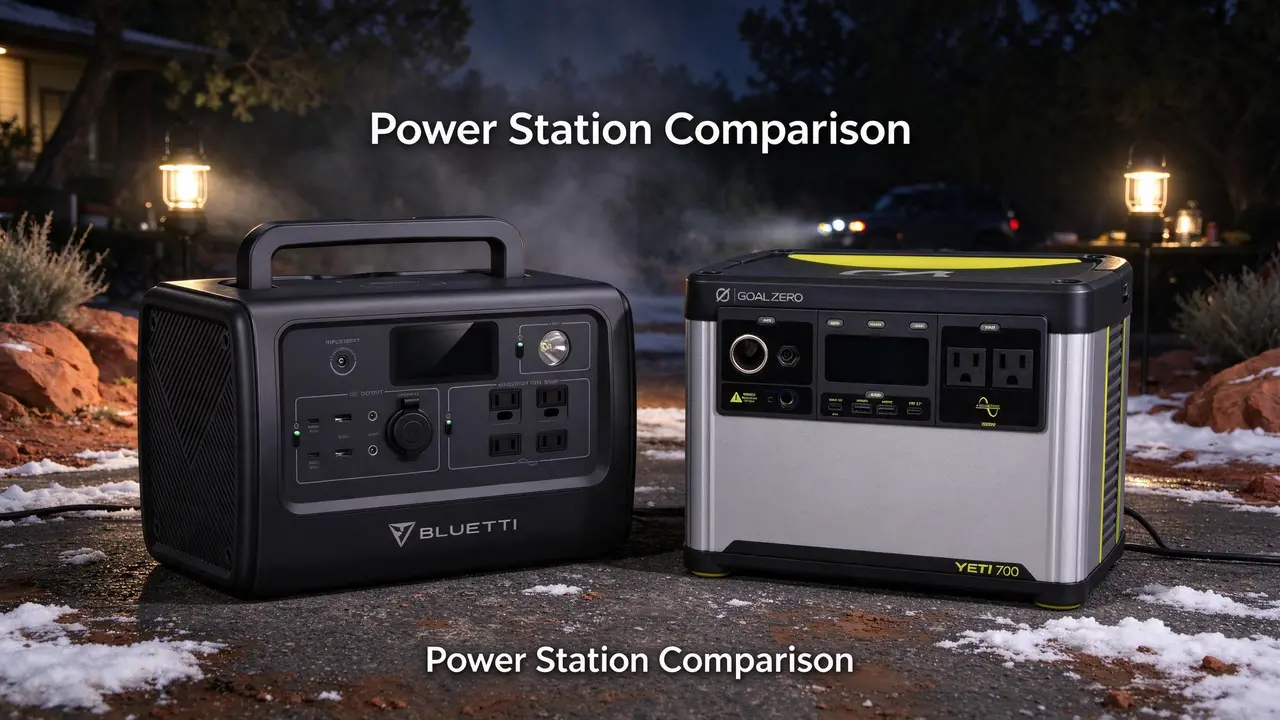
If you're shopping the 700Wh class, the BLUETTI EB70S and Goal Zero Yeti 700 land in the same conversation — but they don't make the same promise. The EB70S bets on outlet count and AC headroom: 716 Wh, 800 W continuous, four AC outlets, and a 15W wireless pad on top. The Yeti 700 bets on recharge speed and a simpler charging setup: 677 Wh, 600 W continuous, a plain power cord instead of a brick, and a Bluetooth app for when the unit is tucked away.
This is a head-to-head for people deciding between these two, not a roundup of every mid-size station. If you need 1,000Wh+ for a fridge through a multi-day outage, neither is the right tool — look at larger units like the AC180 or Explorer 1000 v2 instead. For camping, CPAP, laptop, and small-appliance backup, the choice comes down to which trade-off you can live with.
Specs reflect the current listings on file; bundles and versions vary, so confirm the exact configuration before you buy.
- EB70S: more outlets, more AC watts, LiFePO4 rated 2,500+ cycles to 80%.
- Yeti 700: faster wall recharge, IPX4 rating, 4,000+ cycle LiFePO4 claim, app control.
- Both: mid-size, ~20–21 lb, not whole-home backup.
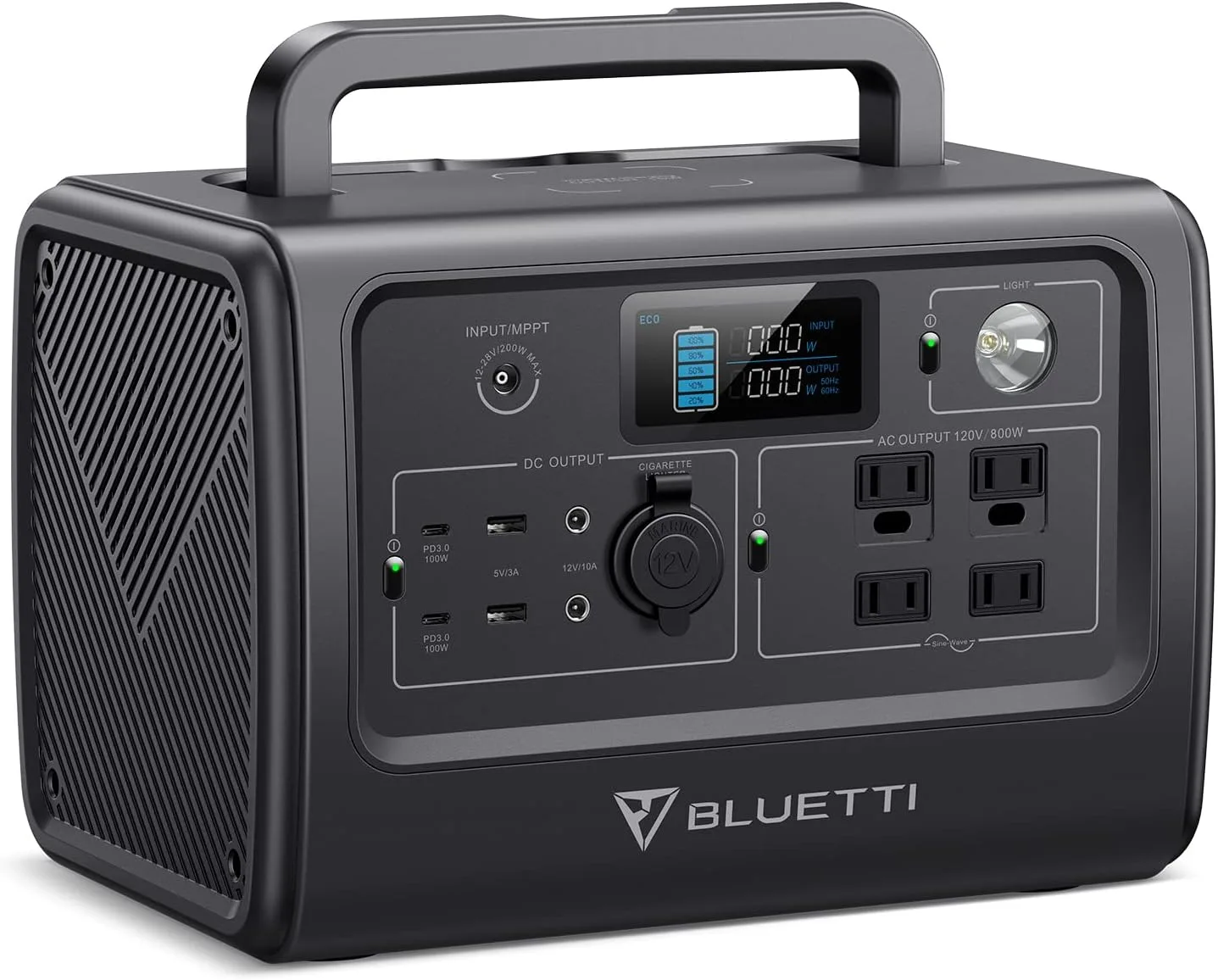
BLUETTI Portable Power Station EB70S, 716Wh LiFePO4 Battery Backup w/ 4 800W AC Outlets
Highlights
- 716Wh rated capacity
- 800W continuous AC
- LiFePO4 chemistry
- Up to 200W solar input
- 21.4 lb (~9.7 kg)
Best for
- EB70S: weekend camping when 21.4 lb carry weight matters as much as 716Wh
- Essentials bridge at home (fridge cycles, router) when sized to the Wh
- Solar top-ups up to ~200W when panels and weather cooperate
Strengths
- EB70S: 716Wh / 800W continuous — treat as electronics and light loads, not a tool inverter
- 21.4 lb (~9.7 kg) is the lightest-class carry in this band — easier stairs and car packing
- EB70S uses LiFePO4 — cycle-life claims usually beat older NMC marketing lines
Watch-outs · not ideal when
- EB70S is still a bridge for essentials — not a transfer-switch whole-home system
- Usable energy on EB70S is below the 716Wh label once the inverter is working
- Rated 200W solar on EB70S is optimistic; shade and cables cut real watts
- LiFePO4 helps longevity, but EB70S still hates freezing charge temps on winter trips
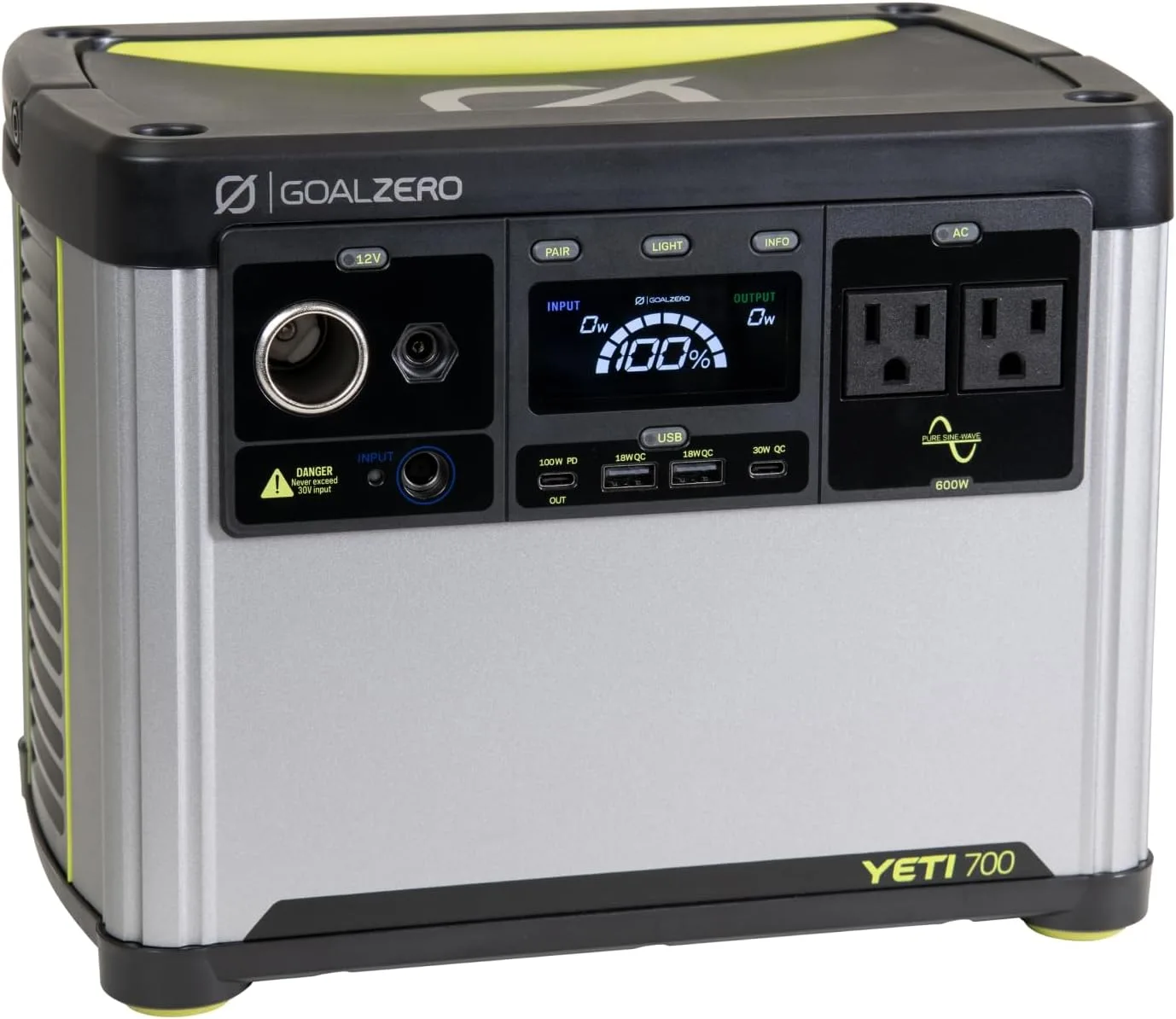
Goal Zero Yeti 700
Highlights
- 677Wh rated capacity
- 600W continuous AC
- 1000W surge
- LiFePO4 chemistry
- Up to 200W solar input
- 20.3 lb (~9.2 kg)
Best for
- Yeti 700: weekend camping when 20.3 lb carry weight matters as much as 677Wh
- Essentials bridge at home (fridge cycles, router) when sized to the Wh
- Solar top-ups up to ~200W when panels and weather cooperate
Strengths
- Yeti 700: 677Wh pack with 600W continuous / 1000W surge — size loads to both numbers
- 20.3 lb (~9.2 kg) is the lightest-class carry in this band — easier stairs and car packing
- Yeti 700 uses LiFePO4 — cycle-life claims usually beat older NMC marketing lines
- Owners on file: 5/5 · 19 helpful — I bought this 700 since I have a full size CPAP machine with the humidifier that I need wh…
Watch-outs · not ideal when
- Yeti 700 is still a bridge for essentials — not a transfer-switch whole-home system
- Usable energy on Yeti 700 is below the 677Wh label once the inverter is working
- Rated 200W solar on Yeti 700 is optimistic; shade and cables cut real watts
- LiFePO4 helps longevity, but Yeti 700 still hates freezing charge temps on winter trips
Owner voices
Short takes from public retail reviews — paraphrased or translated when long or non-English; meaning kept close to the original.
“5/5 · 19 helpful — I bought this 700 since I have a full size CPAP machine with the humidifier that I need when I go camping. Was able to charge multiple other devices over night (phone, hearing aid, watch) while I wa…”
“5/5 · 13 helpful — Great size to keep my laptop PC online in the middle of no where. Not enough juice to run appliances but lights NP. It is a bit heavy, but the size is great for packing (like oversized ammo box). Se…”
“5/5 · 8 helpful — My original review was not a positive one because our system quit working and we could not get any customer service response while they were doing some kind of system switch over, but since the origi…”
Methodology
I'm Avery Nolan, WattPicks founding editor. This comparison is grounded in the listing specs on file and owner themes from high-helpful reviews — home-user checks, not lab-bench measurements. I did not run instrumented tests on either unit. Ratings shown are listing aggregates, not owner proof.
Value is judged only where a price is on file. The Yeti 700 lists at $699.95; the EB70S price is n/a (not on file), so its dollar-for-dollar value cannot be scored here — the pick splits by job, not by a single universal winner. Once the EB70S price is confirmed, weigh it against the Yeti 700's $699.95 by asking whether the extra AC headroom and outlets are worth the difference for your specific loads.
Spec snapshot
Numbers below are from the listings on file. The EB70S price is n/a (not on file); the Yeti 700 lists at $699.95. Ratings are listing aggregates, not owner proof.
| Product | List price | Capacity (Wh) | Output (W) | Weight (lb) | Rating |
|---|---|---|---|---|---|
| BLUETTI EB70S | $429 | 716 Wh | 800 W | 21.4 lb | 4.64 |
| Goal Zero Yeti 700 | $699.95 | 677 Wh | 600 W | 20.3 lb | 4.17 |
Per-unit verdict
The table below summarizes each unit's core trade-off so you can compare at a glance.
- AC output: EB70S 800 W vs Yeti 700 600 W.
- AC outlets: EB70S 4 vs Yeti 700 2.
- USB-C: EB70S 2 vs Yeti 700 3.
- Wall recharge: Yeti 700 ~2 hr (listing) vs EB70S ~3.5 hr (owner reports).
- Cycle claim: EB70S 2,500+ vs Yeti 700 4,000+.
| Product | List price | Capacity | Output | Weight | Key trade-off |
|---|---|---|---|---|---|
| BLUETTI EB70S | $429 | 716 Wh | 800 W | 21.4 lb | More outlets and AC headroom; loud charger fan, dim indicators |
| Goal Zero Yeti 700 | $699.95 | 677 Wh | 600 W | 20.3 lb | Faster recharge and app control; owner-reported reliability and support risk |
Where the differences are
Four configuration differences explain most of the gap. First, AC output: the EB70S gives you 800 W continuous versus 600 W on the Yeti 700. That 200 W matters if you want to run a small heater, a coffee maker, or a fridge with a startup surge — the EB70S has more headroom before you trip the inverter.
Second, outlet count. The EB70S has four AC outlets and two USB-C ports (100W PD each per the listing), plus two USB-A, a car port, and a wireless charging pad. The Yeti 700 has two AC outlets, three USB-C ports, two USB-A, and a car port. If you're charging a family's worth of devices at once, the EB70S spreads them out; the Yeti 700 makes you choose.
Third, recharge. The Yeti 700 charges from 0% to 100% in about two hours on high-speed mode per the listing, using a standard power cord. The EB70S pulls a regulated ~193 W from the wall and tops off in about three and a half hours in owner reports — still quick, but the Yeti is faster and the cord is simpler.
Fourth, battery claims. Both are LiFePO4. BLUETTI rates the EB70S at 2,500+ cycles to 80%; Goal Zero claims 4,000+ cycles for the Yeti 700. Treat those as manufacturer claims, not tested figures — but the chemistry is the same, so the buyer impact is similar: longer life and better safety than older NMC packs.
The spec that decides it — for your job
There's no single universal decider here; the spec that matters depends on what you're powering. If your job is running a cooler, aquarium, or small appliance, continuous AC output is the deciding number. The EB70S's 800 W lets you run a 150 W aquarium heater, lights, and pumps — one owner reported about 18 hours on that load — or a 12V cooler overnight plus drone batteries and a laptop. The Yeti 700's 600 W is enough for a CPAP with humidifier, a laptop, and phones, but it's tighter for anything with a compressor or heating element.
If your job is moving the station between wall, car, and campsite, recharge speed and cord simplicity decide it. The Yeti 700's two-hour wall charge and plain power cord are genuinely nicer. The EB70S's charger brick is the loud one — owners repeatedly mention the fan running the whole time it's plugged in, even after the battery is full.
If your job is a damp or tucked-away setup — a rainy campsite, or a unit stowed in a cabinet — the Yeti 700's IPX4 rating and app control earn their place, letting you check status from your phone rather than crouch to read the LCD.
- EB70S owners: love the outlets and LiFePO4; dislike the fan noise and dim lights.
- Yeti 700 owners: love the fast recharge and CPAP runtime; worry about reliability and support delays.
Real owner trade-offs
On the EB70S, the praise is consistent: LiFePO4 battery, fast AC recharge, and an outlet spread that lets you run a fridge and charge devices at once. The complaints are equally consistent: the charger fan is loud, the AC/DC indicator lights are nearly invisible in daylight, and the LCD sleeps within seconds with no dedicated wake button. Support experiences are mixed — one high-helpful owner had a unit that wouldn't take a charge and couldn't reach support, while another got a fast response and a recalibration fix.
On the Yeti 700, owners highlight CPAP overnight use (a full-size CPAP with humidifier plus phone, hearing aid, and watch finished under 50%), fast household recharge, and UPS duty for WiFi. The caveats are serious: one high-helpful owner is on a third unit after the first two let smoke out, and another waited months for support during a system switch-over before getting a replacement. Fridge runtime was judged modest — roughly 18 to 24 hours for a 12V fridge in one report.
Buy the one that…
Buy the BLUETTI EB70S if you need more AC outlets and 800 W of headroom for a cooler, aquarium, or small appliance, and you can live with a loud charger fan and dim indicator lights. It's the better fit for a campsite with multiple devices or a home backup for lights and a fridge.
Buy the Goal Zero Yeti 700 if fast wall recharge, a plain power cord, and CPAP-friendly runtime matter more than outlet count, and you're willing to accept the reliability and support risk that owners have reported. It's the better fit for a laptop-and-CPAP traveler who values portability and quick turnaround.
Skip both if you need to run a full-size fridge for days or power a whole-home circuit — step up to a larger station or a transfer-switch setup.
Who should not buy
Neither unit is a fit for every job. Here's where each one falls short, plus the surge headroom to check before you commit.
- EB70S: skip if you need more than 800 W continuous or a large startup surge — check your appliance's surge watts against the 800 W rating. Also skip if quiet charging matters, since the charger fan runs the whole time it's plugged in.
- Yeti 700: skip if you need more than 600 W continuous or a large startup surge, or if owner-reported reliability and support delays are a dealbreaker. Also skip if you need more than two AC outlets at once.
- Both: skip if you need whole-home backup, multi-day fridge runtime, or a dedicated UPS with published transfer-time specs.
Warranty and returns
Warranty and return terms are not on file for either unit in this comparison, so confirm them on the listing before you buy. For a station in this price class, check the warranty length, what it covers (battery degradation vs. defects), and the return window — especially given the owner-reported support delays on the Yeti 700 and the mixed support experiences on the EB70S.
Frequently asked
Can the EB70S run a CPAP overnight?
Yes — owners report running a CPAP plus phone charging overnight, though the Yeti 700 has more specific CPAP-with-humidifier reports. Check your CPAP's watt draw against the 800 W continuous rating.
Which is better for solar?
The EB70S accepts up to 200 W solar input; owners note a 120 W panel only produced 85–90 W in sun, so a 200 W panel is the practical choice. The Yeti 700 accepts up to 200 W solar via 8mm input per the listing.
Do either of these work as a UPS?
The Yeti 700 has owner reports of UPS use for WiFi; the EB70S is not marketed as a UPS. Neither is a substitute for a dedicated UPS with transfer time specs.
Method and sources
Model names and list prices come from the WattPicks catalog at build time. WattPicks does not run its own laboratory tests on power stations, and nothing on this page is presented as a measured result — it is catalog-backed buying guidance.
Read our methodology for how the catalog is normalized, and about WattPicks for who publishes it.