
BLUETTI EB3A vs VTOMAN Jump 600X: Budget Power Station Duel
Two budget power stations, two very different bets. The BLUETTI EB3A leans on a known 268 Wh LiFePO4 pack and pass-through UPS habits; the VTOMAN Jump 600X leans on a 1200 W peak, 9 ports, and a 50-minute recharge claim. Here is who should buy which.
Updated
At a glance
Two budget power stations, two very different bets. The BLUETTI EB3A leans on a known 268 Wh LiFePO4 pack and pass-through UPS habits; the VTOMAN Jump 600X leans on a 1200 W peak, 9 ports, and a 50-minute recharge claim. Here is who should buy which.
- EB3A: known 268 Wh, 600 W continuous, 10.1 lb, AC×2, USB-A×2, car×1, USB-C unknown on file.
- Jump 600X: capacity n/a (not on file), 1200 W peak, 9.9 lb, AC×7, USB-C yes, USB-A yes, $299.99 list.
Two bets on the same shelf
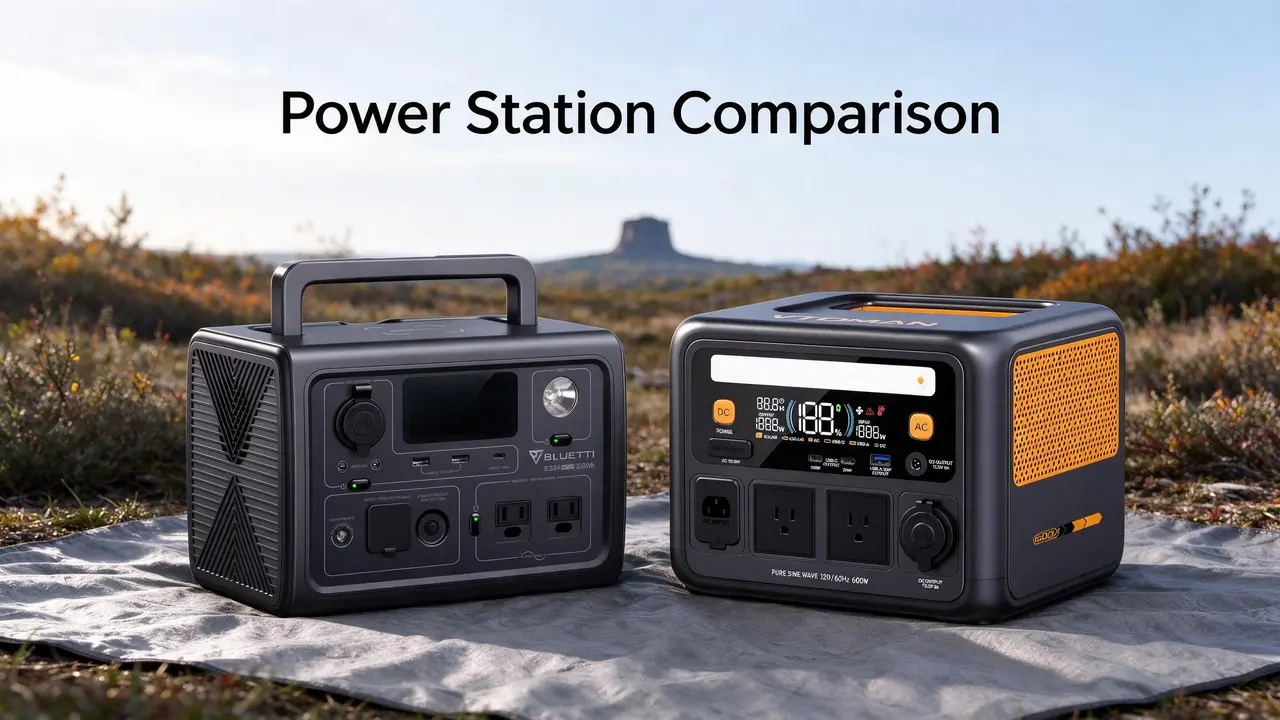
These two look like the same purchase. They are not. The BLUETTI EB3A Portable Power Station bets on a published 268 Wh LiFePO4 pack, a 600 W continuous inverter, and a pass-through UPS habit that owners lean on for CPAP and router duty. The VTOMAN Jump 600X Portable Power Station 600W, 9 Ports LEP Solar bets on a bigger 1200 W peak, seven AC outlets, and a 50-minute recharge claim — but its capacity is not on file, so you are buying output and port count more than a number you can size against.
This is a two-way duel, not a roundup. I am not going to tell you both are great. One is the safer capacity bet for small overnight loads; the other is the more flexible outlet bank for daytime tools and road trips. The rest of this page is about which trade-off fits your actual use.
- EB3A: known 268 Wh, 600 W continuous, 10.1 lb, AC×2, USB-A×2, car×1, USB-C unknown on file.
- Jump 600X: capacity n/a (not on file), 1200 W peak, 9.9 lb, AC×7, USB-C yes, USB-A yes, $299.99 list.
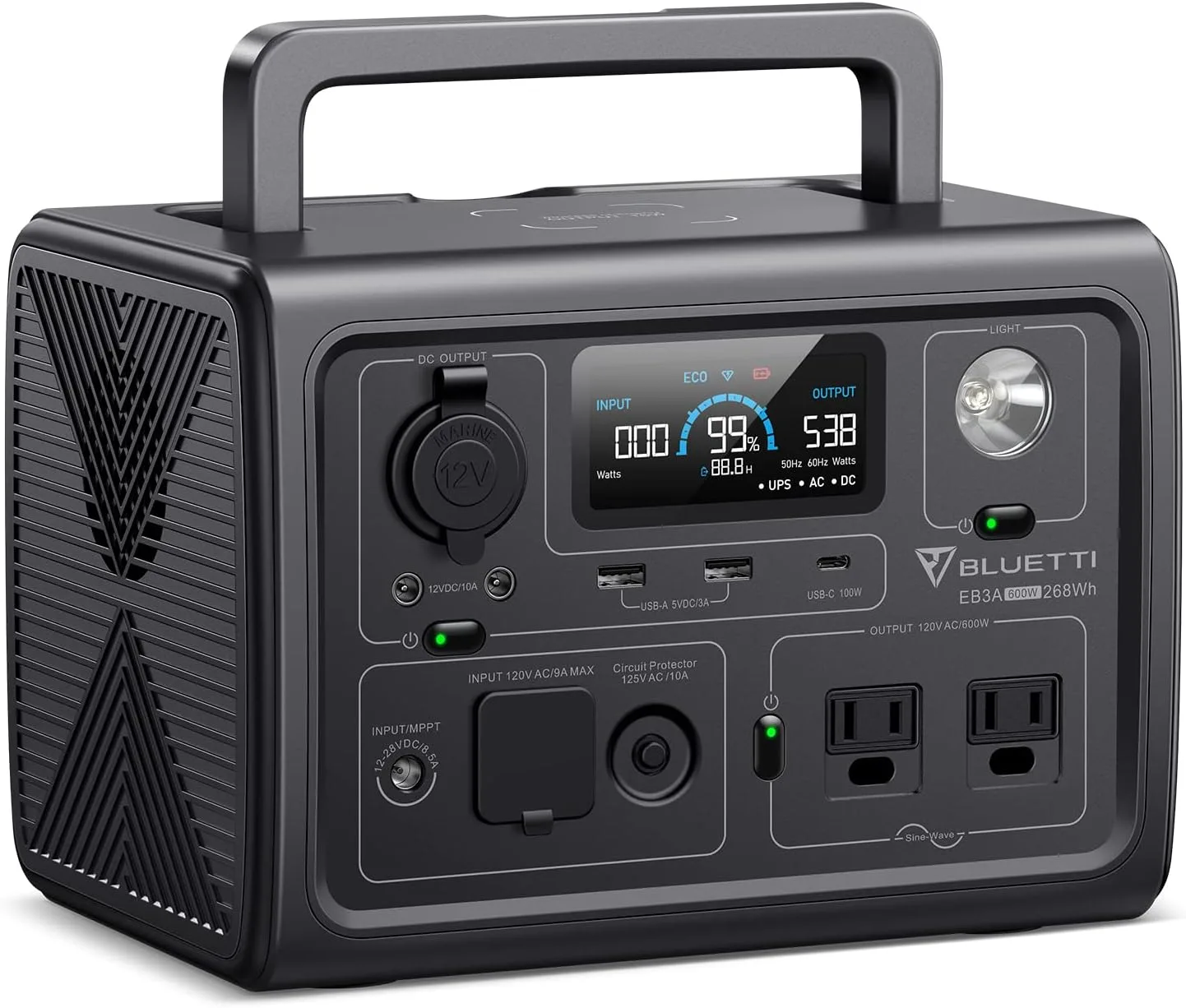
BLUETTI EB3A Portable Power Station
Highlights
- 268Wh rated capacity
- 600W continuous AC
- 1200W surge
- LiFePO4 chemistry
- Up to 200W solar input
- 10.1 lb (~4.6 kg)
Best for
- bluetti-eb3a: phones, cameras and a laptop on short trips
- Travel kits when you need quiet pack power, not appliance runtime
- Brief desk backup for router and lights — not a fridge for days
Strengths
- bluetti-eb3a: 268Wh pack with 600W continuous / 1200W surge — size loads to both numbers
- 10.1 lb (~4.6 kg) is the lightest-class carry in this band — easier stairs and car packing
- bluetti-eb3a uses LiFePO4 — cycle-life claims usually beat older NMC marketing lines
- Owners on file: Theme: Powering Appliances (106)
Watch-outs · not ideal when
- bluetti-eb3a's small Wh class empties fast with a kettle, hair dryer or space heater
- Usable energy on bluetti-eb3a is below the 268Wh label once the inverter is working
- Rated 200W solar on bluetti-eb3a is optimistic; shade and cables cut real watts
- Airline and pack limits may still block bluetti-eb3a even when the weight looks friendly
Owner voices
Short takes from public retail reviews — paraphrased or translated when long or non-English; meaning kept close to the original.
“Theme: Phone Charging (225)”
“Theme: Powering Appliances (106)”
“Theme: Outdoor Electronics (27)”
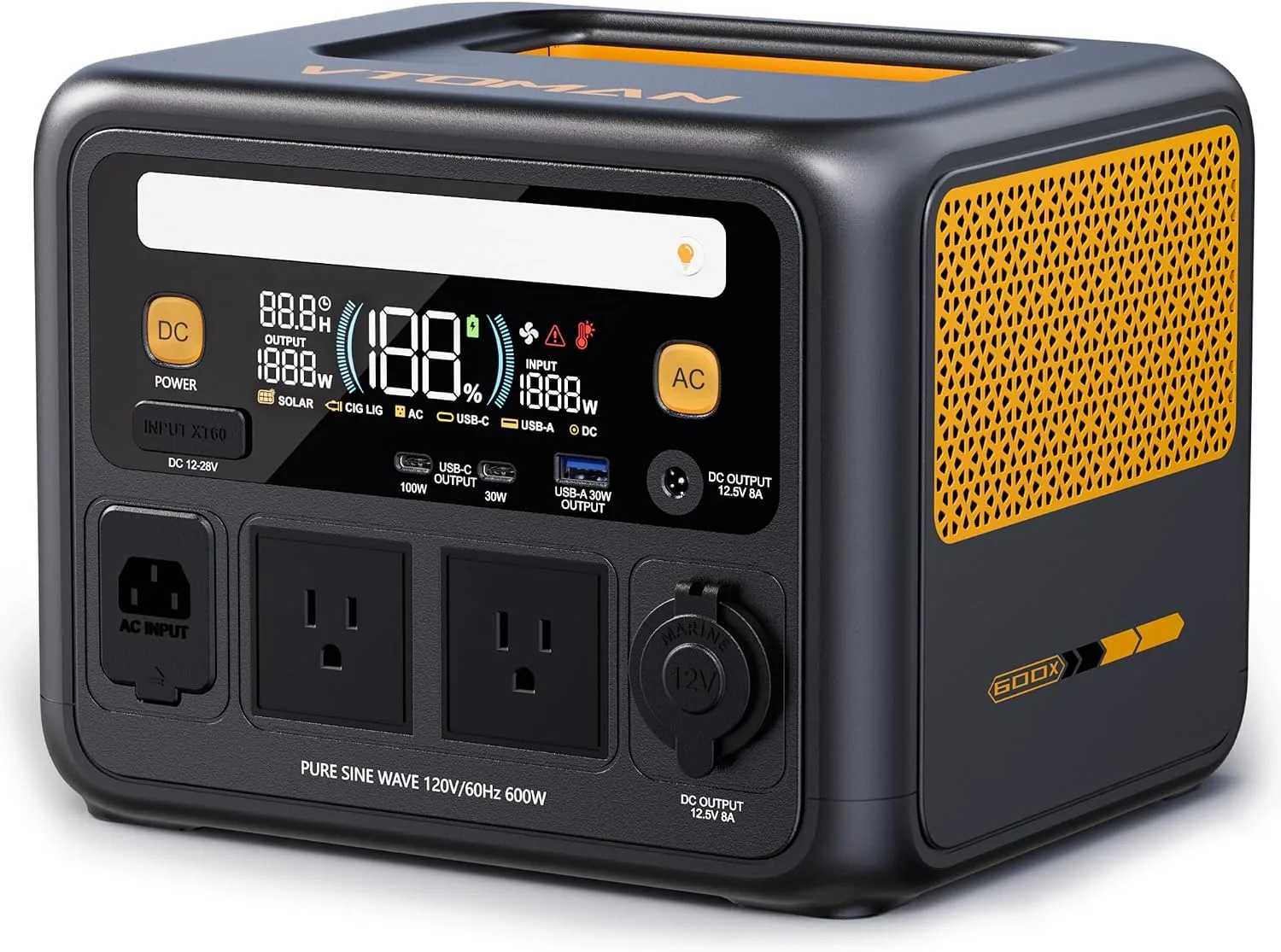
VTOMAN Jump 600X Portable Power Station 600W, 9 Ports LEP Solar Generator
Highlights
- About $299.99 list
- VTOMAN catalog listing
- Specs from manufacturer listings
Best for
- VTOMAN Jump 600X Portable Power Station 600W, 9 Ports LEP Solar Generator: longer outages or higher continuous loads (still not whole-home wiring)
- RV / off-grid days where recharge speed matters as much as Wh
- Users who will pair solar or expand rather than buy a second small pack
Strengths
- VTOMAN Jump 600X Portable Power Station 600W, 9 Ports LEP Solar Generator: capacity not published on file — compare only what the listing actually states
- VTOMAN Jump 600X Portable Power Station 600W, 9 Ports LEP Solar Generator: quiet battery output suits campsites with generator bans
- Owners on file: Theme: Customers find the power station performs well, delivering 600 peak watts and providing ample power fo…
- About $299.99 list in the Hub catalog — confirm live retail before you buy
Watch-outs · not ideal when
- VTOMAN Jump 600X Portable Power Station 600W, 9 Ports LEP Solar Generator is still a bridge for essentials — not a transfer-switch whole-home system
- No Wh on file for VTOMAN Jump 600X Portable Power Station 600W, 9 Ports LEP Solar Generator — do not invent runtime math from the product name
- Solar input unpublished for VTOMAN Jump 600X Portable Power Station 600W, 9 Ports LEP Solar Generator — do not assume a same-day off-grid refill
- Airline and pack limits may still block VTOMAN Jump 600X Portable Power Station 600W, 9 Ports LEP Solar Generator even when the weight looks friendly
Owner voices
Short takes from public retail reviews — paraphrased or translated when long or non-English; meaning kept close to the original.
“Theme: Customers find the power station performs well, delivering 600 peak watts and providing ample power for various devices including TVs, phones, and fridges. They appreciate its value for money and find it great…”
“Theme: Phone Charging (69)”
“Theme: Small Appliances (67)”
Method and disclosure
I am Avery Nolan, WattPicks founding editor. These picks come from home-user checks grounded in owner themes on file plus the listing specs — not lab-bench measurements. Every number in the table and prose is from the listing on file; where a figure is missing it stays n/a rather than guessed. As an Amazon Associate, WattPicks earns from qualifying purchases; picks are fit-led, not commission-led.
Scoreboard on those weights — capacity 40%, output 30%, ports 20%, price 10% — BLUETTI EB3A Portable Power Station (list $n/a): High where list price and published capacity match the job, Med on continuous watts; VTOMAN Jump 600X Portable Power Station 600W, 9 Ports LEP Solar (list $299.99): High on continuous watts and ports, Med on price. That is why the pick splits by job rather than one universal winner.
Spec snapshot
Numbers below come from the listings on file, not from a bench. Where a figure is missing, it stays n/a rather than guessed. The Jump 600X capacity is the big gap — useful to know before you plan runtime. Specs and prices are as of February 2025; check the listing for current figures.
| Product | Price | Capacity (Wh) | Output (W) | Weight (lb) | Rating |
|---|---|---|---|---|---|
| BLUETTI EB3A Portable Power Station | n/a (not on file) | 268 Wh | 600 W | 10.1 lb | 4.1 |
| VTOMAN Jump 600X Portable Power Station 600W, 9 Ports LEP Solar | $299.99 | n/a (not on file) | 1200 W | 9.9 lb | 4.4 |
Where the money went
BLUETTI put the budget into a named battery and a small inverter. The 268 Wh LiFePO4 pack is the anchor — it is the number you can divide by a load to estimate runtime, and owners report roughly 10.5 hours on a CPAP with the heater off. The 600 W continuous ceiling is modest, but the power-lift mode let one owner brew a cup on a 1200 W coffee maker while using about a fifth of the pack. That is a parlor trick, not a lifestyle, but it tells you the inverter is willing to stretch for short bursts.
VTOMAN put the budget into ports and peak headroom. Seven AC outlets is a lot for a 9.9 lb box, and the 1200 W peak is there to swallow compressor starts and tool surges without tripping. The 100 W USB-C PD port is the other visible spend — it will fast-charge a laptop in a way the EB3A's port layout cannot be confirmed to do, because USB-C is unknown on file for the BLUETTI. The trade is that you do not get a published Wh figure to size against, so runtime planning is guesswork until you test your own loads.
Both units claim LiFePO4. BLUETTI lists 3,000-plus cycles; VTOMAN lists 3,000 cycles to 80%. On paper that is a wash for longevity, and the buyer impact is the same: you are not replacing the pack every couple of years the way older NMC budget stations forced you to.
- Battery: both LiFePO4, both rated around 3,000 cycles — no longevity edge either way.
- AC outlets: EB3A has 2; Jump 600X has 7 — the VTOMAN is the better power strip replacement.
- USB-C: Jump 600X lists USB-C yes (100 W PD + 30 W); EB3A USB-C is unknown on file, so do not assume either way.
- Recharge: Jump 600X claims 80% in 50 minutes and 100% in 75 minutes with AC+DC; EB3A lists 45-minute full charge on AC and 80% in 30 minutes with PV+AC.
The spec that decides it
For most shoppers, the deciding number is capacity, and only one of these has one on file. The EB3A's 268 Wh is small but knowable: a 50 W load runs roughly five hours before inverter losses, and owners back that up with a 12-hour fridge run and a 10.5-hour CPAP night. The Jump 600X's capacity is n/a (not on file), so you cannot do that math from the listing. If you need to plan overnight runtime for a medical device or a fridge, that gap is the whole decision.
The second deciding spec is continuous output. The EB3A is 600 W continuous; the Jump 600X is also 600 W continuous with a 1200 W peak. Do not read the 1200 W as a continuous rating — it is a surge figure for motor starts. If your load is a space heater or a full-size coffee maker running long, neither unit is the right tool; both will overload.
- Buy the EB3A if you need a published Wh number to size overnight CPAP or router backup.
- Buy the Jump 600X if you need seven AC outlets and a 100 W USB-C laptop charge more than a known capacity figure.
Real owner trade-offs
The EB3A's owner file is a mix of genuine affection and real reliability complaints. Campers report a 100 W panel holding a box fan all day in pass-through, then moving the unit into the tent at night. CPAP users report a full night with the heater off. Against that, multiple long-term owners describe units dropping from 50–70% straight to 0% under tiny loads, and one unit failed outright. Fan noise is the other recurring theme — silent mode is not silent, and one owner measured electrical interference on the house wiring. Treat the last quarter of the battery as unreliable and keep a backup for anything critical.
The Jump 600X owner file skews happier on day-to-day use and shakier on support. Owners report a mini fridge running over five hours on about half a charge, a unit still fully charged after nearly two years in the box, and fast wall and solar top-ups. The friction is at the edges: one long-term owner had the power input port grab the plug so hard it left a piece behind, and the same unit later refused to charge and drained from 45–75% overnight on a small 12 V fridge in eco mode. Customer service splits sharply — some got a replacement shipped before returning the defective unit, others got no response at all. Test the input port and overnight drain inside the return window.
- EB3A owner theme: pass-through UPS and solar pairing work well for fans, routers, and CPAP — but random shutdowns are reported often enough to plan around.
- Jump 600X owner theme: compact, fast to recharge, and holds charge in storage — but input-port fragility and overnight drain are the recurring complaints.
- Both: listing aggregates (EB3A 4.1, Jump 600X 4.4) are not owner proof; the themes above are the useful signal.
Buy the one that…
If your job is overnight CPAP or router backup, weight capacity first. If your job is road-trip tools and laptop charging, weight ports and peak output first.
Buy the BLUETTI EB3A Portable Power Station if you need a known 268 Wh pack for overnight CPAP, a router, or a small fan, and you value pass-through UPS behavior over outlet count. Skip it if you need seven AC outlets, a confirmed USB-C laptop charge, or unattended UPS duty — the shutdown reports and fan noise make it a poor fit for anything you cannot babysit.
Buy the VTOMAN Jump 600X Portable Power Station 600W, 9 Ports LEP Solar if you want a light 9.9 lb box with seven AC outlets, a 100 W USB-C port, and a fast recharge for road trips and short outages. Skip it if you need a published Wh figure to size runtime, or if you cannot test the input port and overnight drain inside the return window — the capacity gap and the port-fragility reports are the two things that would send me elsewhere.
If neither upsell is warranted — you need a known capacity and confirmed USB-C, or you need more than 600 W continuous — neither of these is your station; step up to a larger unit.
- Walk away from both if you need to run a space heater, a full-size coffee maker continuously, or whole-home backup — 600 W continuous is not enough.
- Walk away from the Jump 600X if a known capacity number is non-negotiable for medical or fridge planning.
- Walk away from the EB3A if you need confirmed USB-C or silent operation.
Frequently asked
Can the EB3A run a CPAP all night?
Owners report about 10.5 hours with the heater off on the 268 Wh pack. With the heater on, expect far less — plan a backup.
Is the Jump 600X's 1200 W a continuous rating?
No. It is a peak for motor starts; continuous is 600 W, same as the EB3A.
Which one charges faster from the wall?
The Jump 600X claims 80% in 50 minutes and 100% in 75 minutes with AC+DC; the EB3A lists a 45-minute full charge on AC. Both are fast enough that recharge speed is not the deciding factor.
Which is better for a small fridge?
The EB3A has a known 268 Wh and an owner report of 12 hours on a portable fridge; the Jump 600X has an owner report of five-plus hours on half a charge but no published Wh. If you need to plan, the EB3A is the safer bet.
Method and sources
Model names and list prices come from the WattPicks catalog at build time. WattPicks does not run its own laboratory tests on power stations, and nothing on this page is presented as a measured result — it is catalog-backed buying guidance.
Read our methodology for how the catalog is normalized, and about WattPicks for who publishes it.