
EcoFlow Delta 3 Ultra vs DELTA 3: AGap, Two Different Jobs
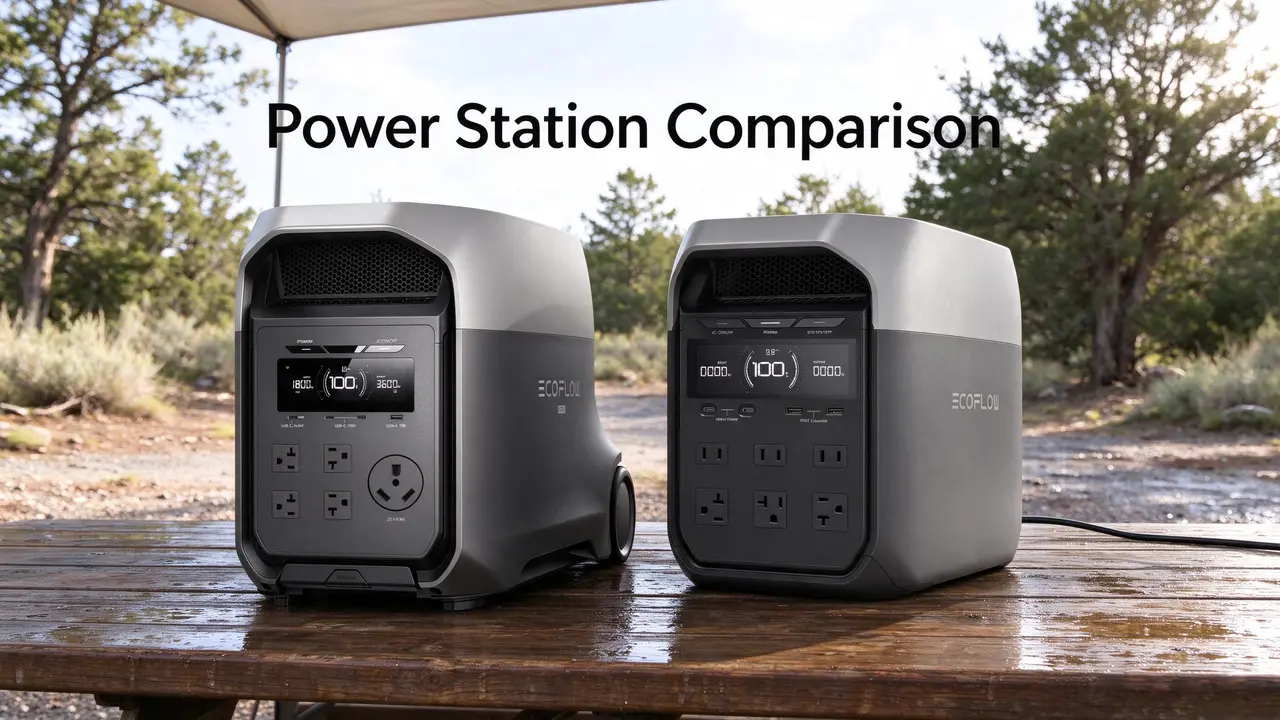
Two EcoFlow stations, two very different jobs. The Delta 3 Ultra is a 3,072 Wh / 3,600 W whole-home backup box; the DELTA 3 is a 27.6 lb, 1,024 Wh daily driver for van life and overnight loads. Here is how to pick without overbuying.
Updated
At a glance
Two EcoFlow stations, two very different jobs. The Delta 3 Ultra is a 3,072 Wh / 3,600 W whole-home backup box; the DELTA 3 is a 27.6 lb, 1,024 Wh daily driver for van life and overnight loads. Here is how to pick without overbuying.
- Delta 3 Ultra: 3,072 Wh / 3,600 W / 72.1 lb / $1,599 list — whole-home and kitchen loads.
- DELTA 3: 1,024 Wh / 1,800 W / 27.6 lb / $699 list — overnight loads and grab-and-go backup.
A $900 gap, two different jobs
As an Amazon Associate I earn from qualifying purchases. Recommendations here are based on fit and the evidence below — not commission size.
These two EcoFlow stations do not compete for the same outlet. The Delta 3 Ultra is a 3,072 Wh, 3,600 W whole-home backup box that can run a griddle and a smart oven at the same time. The DELTA 3 is a 1,024 Wh, 1,800 W daily driver that weighs 27.6 lb and lives in a van or a closet until the power blinks.
The Ultra bets on raw capacity and high-wattage loads. The DELTA 3 bets on portability, fast charging, and a lower entry price. Neither is a compromise pick — they are answers to different outage plans.
Method: this comparison uses manufacturer listing specs and owner-review themes summarized from the listing pages, not lab-bench testing. Where a runtime is quoted, it is either an owner report or a clearly labeled estimate with the load and depth-of-discharge assumption shown. Owner themes are paraphrased from the review sections of the product listings; we do not have individual review counts or dates on file, so treat them as directional patterns rather than audited statistics.
- Delta 3 Ultra: 3,072 Wh / 3,600 W / 72.1 lb / $1,599 list — whole-home and kitchen loads.
- DELTA 3: 1,024 Wh / 1,800 W / 27.6 lb / $699 list — overnight loads and grab-and-go backup.
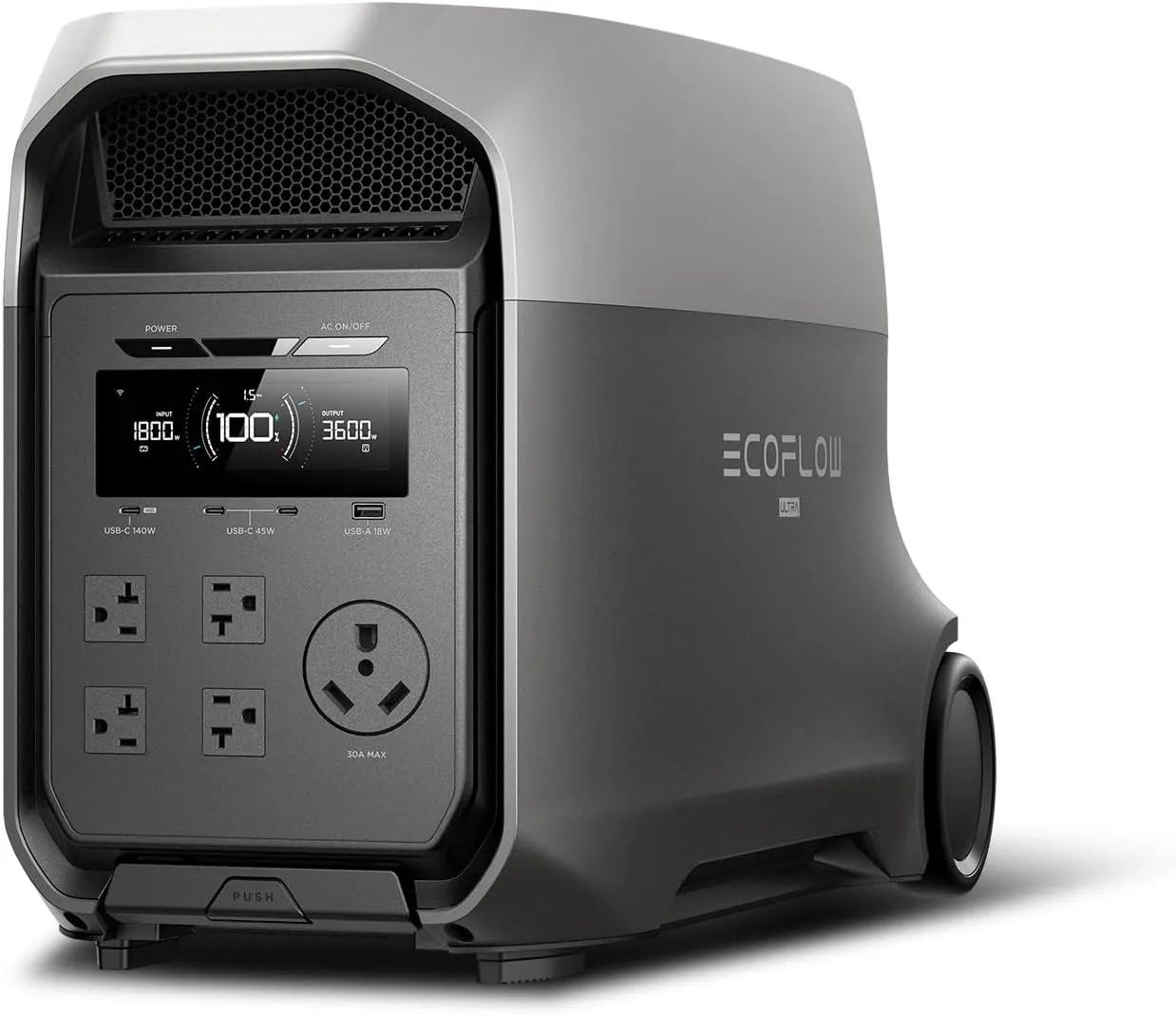
EcoFlow Delta 3 Ultra 3072Wh Portable Power Station, 3600W AC Output
Highlights
- 3072Wh rated capacity
- 3600W continuous AC
- 7200W surge
- LiFePO4 chemistry
- Up to 3200W solar input
- 72.1 lb (~32.7 kg)
Best for
- DELTA 3 Ultra: longer outages or higher continuous loads (still not whole-home wiring)
- RV / off-grid days where recharge speed matters as much as Wh
- Best parked near the vehicle or cabin — not a long carry to a tent
Strengths
- DELTA 3 Ultra: 3072Wh pack with 3600W continuous / 7200W surge — size loads to both numbers
- 72.1 lb (~32.7 kg) is a park-and-use chassis — plan a short path, not a trail hike
- 3600W continuous headroom covers more small appliances than 1kW-class inverters
- Owners on file: Theme: Power distribution (8)
Watch-outs · not ideal when
- At 72.1 lb (~32.7 kg), DELTA 3 Ultra is a poor tent-hike companion — plan a cart or leave it in the vehicle
- High continuous output on DELTA 3 Ultra tempts big loads — Wh still runs out on kettles and A/C
- Rated 3200W solar on DELTA 3 Ultra is optimistic; shade and cables cut real watts
- LiFePO4 helps longevity, but DELTA 3 Ultra still hates freezing charge temps on winter trips
Owner voices
Short takes from public retail reviews — paraphrased or translated when long or non-English; meaning kept close to the original.
“Theme: Functionality (17)”
“Theme: Value for money (10)”
“Theme: Battery capacity (6)”
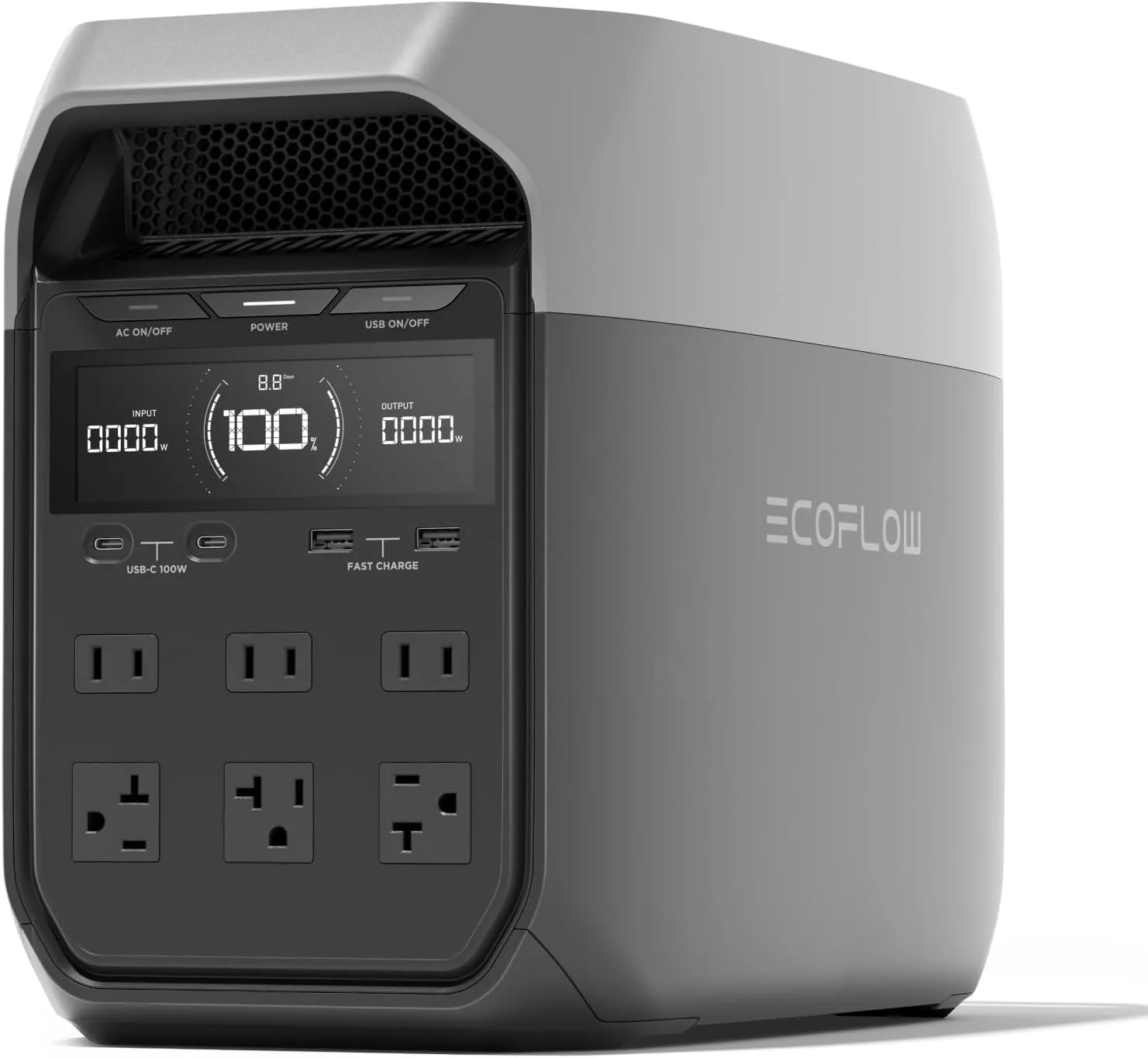
EcoFlow DELTA 3
Highlights
- 1024Wh rated capacity
- 1800W continuous AC
- 3600W surge
- LiFePO4 chemistry
- Up to 500W solar input
- 27.6 lb (~12.5 kg)
Best for
- DELTA 3: small appliances and tools that need ~1800W continuous, not just phone charging
- Essentials bridge at home (fridge cycles, router) when sized to the Wh
- Solar top-ups up to ~500W when panels and weather cooperate
Strengths
- DELTA 3: 1024Wh pack with 1800W continuous / 3600W surge — size loads to both numbers
- 27.6 lb (~12.5 kg) sits in the solo car-camp carry carry band for weekend moves
- 10ms-class UPS switchover on the listing — useful when a router restart would hurt
- Owners on file: Theme: Customers find the power station performs well, delivering 1800W of power and charging to 100% in 54 m…
Watch-outs · not ideal when
- DELTA 3 is still a bridge for essentials — not a transfer-switch whole-home system
- Usable energy on DELTA 3 is below the 1024Wh label once the inverter is working
- Rated 500W solar on DELTA 3 is optimistic; shade and cables cut real watts
- LiFePO4 helps longevity, but DELTA 3 still hates freezing charge temps on winter trips
Owner voices
Short takes from public retail reviews — paraphrased or translated when long or non-English; meaning kept close to the original.
“Theme: Customers find the power station performs well, delivering 1800W of power and charging to 100% in 54 minutes, with one customer noting it runs TVs and fridges without issue. They appreciate its portability for…”
“Theme: Powering Appliances (12)”
“Theme: Charging speed (57)”
Spec snapshot
Prices are list prices from the catalogue; ratings are listing aggregates, not owner proof. Weight is in pounds.
| Product | Price | Capacity (Wh) | Output (W) | Weight (lb) | Rating |
|---|---|---|---|---|---|
| EcoFlow Delta 3 Ultra 3072Wh Portable Power Station, 3600W AC Output | $1599 | 3072 Wh | 3600 W | 72.1 lb | 4.6 |
| EcoFlow DELTA 3 | $699 | 1024 Wh | 1800 W | 27.6 lb | 4.7 |
Where the money went
The Ultra's extra $900 buys capacity, output, and a different physical class. The DELTA 3 spends its budget on being light enough to carry and fast enough to top up between uses.
- Capacity: 3,072 Wh vs 1,024 Wh — three times the stored energy on the Ultra.
- Continuous output: 3,600 W vs 1,800 W — the Ultra can run two high-draw kitchen appliances at once; the DELTA 3 cannot.
- Weight: 72.1 lb vs 27.6 lb — the Ultra is a wheeled-class appliance; the DELTA 3 is a carry. (Handle and wheel hardware are not listed in the spec rows, so confirm on the listing before you buy.)
- Ports: the spec rows on file do not list port counts for either unit — check the current listing before you commit.
- Expansion: the spec rows on file do not list battery expansion slots for either unit. Confirm expansion support on the current listing before you plan to add batteries later.
The spec that decides it
For most buyers the deciding number is continuous output, not capacity. The Ultra's 3,600 W clears a 1,800 W griddle plus an 1,800 W smart oven at the same time. The DELTA 3's 1,800 W ceiling means one high-draw appliance at a time, and its 1,024 Wh runs out faster under heat loads.
Runtime math, so you can audit it: at 80% depth of discharge, the DELTA 3 delivers about 819 Wh of usable energy (1,024 Wh × 0.8). A 150 W fridge averages roughly 5.5 hours on that budget (819 ÷ 150); a 400 W load averages about 2 hours. The Ultra's 3,072 Wh gives about 2,458 Wh usable at 80% DoD — roughly 16 hours on the same 150 W fridge. These are estimates, not bench results; real runtime shifts with startup surges and temperature.
Heater runtime context: the owner-reported ~3 hours on the Ultra is a small space heater at a low/medium setting, not a 1,500 W full-blast run. At 80% DoD the Ultra has ~2,458 Wh usable, so a 1,500 W heater would last roughly 1.6 hours (2,458 ÷ 1,500); a 750 W setting roughly 3.3 hours. Treat any heater runtime as short and plan a backup heat source.
Van-life example: a 12V fridge averaging ~50 W plus a roof fan at ~15 W draws ~65 W continuous. On the DELTA 3's ~819 Wh usable at 80% DoD, that is roughly 12.6 hours (819 ÷ 65) — enough for an overnight stop, not a full day off-grid without solar or driving recharge.
Surge caveat: motors and compressors (fridges, sump pumps, space heaters on startup) can draw several times their running wattage for a moment. Check each appliance's startup wattage against the station's continuous rating before you plan an outage around it.
The second deciding number is weight. At 72.1 lb the Ultra is a wheeled appliance; at 27.6 lb the DELTA 3 is a carry. If you need to move the station up stairs or into a vehicle weekly, that gap matters more than wattage.
Real owner trade-offs
Owner-review themes summarized from the listing pages show the Ultra earning its keep on cooking and outage coverage, with complaints about fixed capacity and app friction. The DELTA 3 draws praise for daily cycling and fast charging, with a persistent 99% charge quirk and a capacity ceiling that pushes some owners toward expansion batteries.
Each owner theme below is tied to the decision it should change for you. These are paraphrased patterns from the listing review sections, not audited counts; verify current reviews on the listing before you buy.
- Delta 3 Ultra — cooking loads: owners report running an 1,800 W griddle and an 1,800 W smart oven together. Decision rule: if simultaneous high-draw cooking is your outage plan, the Ultra's 3,600 W is the reason to buy it.
- Delta 3 Ultra — heating: owners report a small space heater running for roughly three hours (low/medium setting; see runtime math above). Decision rule: treat heater runtime as short and plan a backup heat source.
- Delta 3 Ultra — fixed capacity: owners flag no expansion slots. Decision rule: if you expect loads to grow, buy capacity up front rather than planning to add batteries later.
- Delta 3 Ultra — firmware: owners report firmware updates that cut AC output. Decision rule: do not rely on the Ultra for critical gear during an update window; test after each update and note your firmware version and date.
- DELTA 3 — overnight loads: owners report diesel heater and fan loads through the night. Decision rule: the 1,024 Wh budget fits low-draw overnight use, not heating.
- DELTA 3 — fridge: owners report a large portable fridge running about 24 hours. Decision rule: a fridge-only outage plan fits the DELTA 3; adding a heater does not.
- DELTA 3 — sump pump: owners report about eight hours of runtime. Decision rule: verify your pump's startup surge before counting on it.
- DELTA 3 — charge quirk: owners report charging to only 99% after long use. Decision rule: treat 99% as full for planning purposes.
- DELTA 3 — capacity ceiling: owners say 1,024 Wh is not enough for longer outages. Decision rule: budget for EcoFlow expansion packs if outages run past a day, and confirm pack compatibility on the listing.
Buy the one that…
Buy the EcoFlow Delta 3 Ultra 3072Wh Portable Power Station, 3600W AC Output if your outage plan includes cooking, heating, or running multiple high-wattage appliances at once, and you can live with a 72.1 lb wheeled-class unit that cannot be expanded.
Buy the EcoFlow DELTA 3 if you need a 27.6 lb station for van life, overnight loads, or grab-and-go backup, and you are willing to add battery packs later when 1,024 Wh stops being enough.
What you'll still need to buy: the right AC charging cable for your outlet, any EcoFlow expansion battery packs if you go DELTA 3, and a surge-rated power strip or transfer setup for critical circuits. Confirm cable and pack compatibility on the listing before checkout.
- Skip the Ultra if you need expandable capacity or hot-swap firmware updates on critical gear.
- Skip the DELTA 3 if you expect to run a griddle and an oven simultaneously or need more than 1,800 W continuous.
Who should skip both
Apartment dwellers with no outdoor venting for a generator and no place to store a 72.1 lb unit may be better served by a smaller, lighter station or a UPS for critical electronics.
RV owners who need to expand capacity over time should confirm expansion support on the current listing before choosing either unit; the spec rows on file do not list expansion slots for the Ultra or the DELTA 3.
Users with critical medical gear should not rely on either station without a tested backup plan, a firmware-update freeze, and a surge-rated transfer setup. The Ultra's owner-reported firmware updates that cut AC output are a specific risk here.
Anyone whose outage plan centers on a 1,500 W space heater should size for the runtime math above, not the marketing headline; a heater is a short-burst load on either station.
How we picked
We compared the two EcoFlow stations on the specs that change an outage plan: continuous output, usable capacity at 80% depth of discharge, weight, and owner-reported behavior. We did not bench-test either unit. Where the spec rows on file were silent (port counts, expansion slots, pass-through behavior), we say so rather than guess. Prices and ratings are listing aggregates and can change; verify on the listing before checkout.
Frequently asked
Can the DELTA 3 run a space heater?
Yes, within its 1,800 W continuous limit, but runtime is short at 1,024 Wh. The Ultra ran a small space heater for about three hours in owner reports at a low/medium setting; a 1,500 W full-blast run would be closer to 1.6 hours on the Ultra's ~2,458 Wh usable at 80% DoD.
Does the Delta 3 Ultra support extra batteries?
The spec rows on file do not list expansion slots for the Ultra. Owner reports flag fixed capacity. Confirm expansion support on the current listing before you plan to add batteries later.
Method and sources
Model names and list prices come from the WattPicks catalog at build time. WattPicks does not run its own laboratory tests on power stations, and nothing on this page is presented as a measured result — it is catalog-backed buying guidance.
Read our methodology for how the catalog is normalized, and about WattPicks for who publishes it.