
Best Power Station for Van Life: 4 Picks by Real Loads
Van life power comes down to what you actually run overnight — a fridge, a fan, a laptop — and how you recharge without shore power. Here are four stations sized for tight van builds, ranked by usable capacity, weight, and recharge options.
Updated
What a van actually asks of a power station
Start with the overnight load, not the spec sheet. A typical van build runs a 12V compressor fridge (roughly 40–60 W average once it's cycling), a roof fan or two (15–40 W), a laptop and phone charging (60–100 W while charging), and LED lighting (under 20 W). Add those up and a normal night sits somewhere around 150–250 W of average draw — call it 1.2–2.0 kWh across eight hours if everything runs at once, less in practice because the fridge cycles and the laptop tops off.
That math is why capacity and recharge speed matter more than peak output for most vans. You rarely need 2,400 W of continuous AC unless you're running an induction cooktop or a microwave, and those are short bursts, not overnight loads. What bites you is the gap between nameplate watt-hours and what you can actually pull out after inverter overhead and idle draw.
This guide is for campervan and light off-grid weekend use. It is not a whole-home backup ranking, and I'm not scoring these as UPS units for a house — the transfer-time and surge numbers show up where owners lean on them, but that's not the job here. If you're wiring a transfer switch for a house, that's a different article.
One disclosure: as an Amazon Associate I earn from qualifying purchases. Picks below are fit-led — the ranking follows the weights in the next section, not commission.
Quick picks: top, runner-up, also-consider
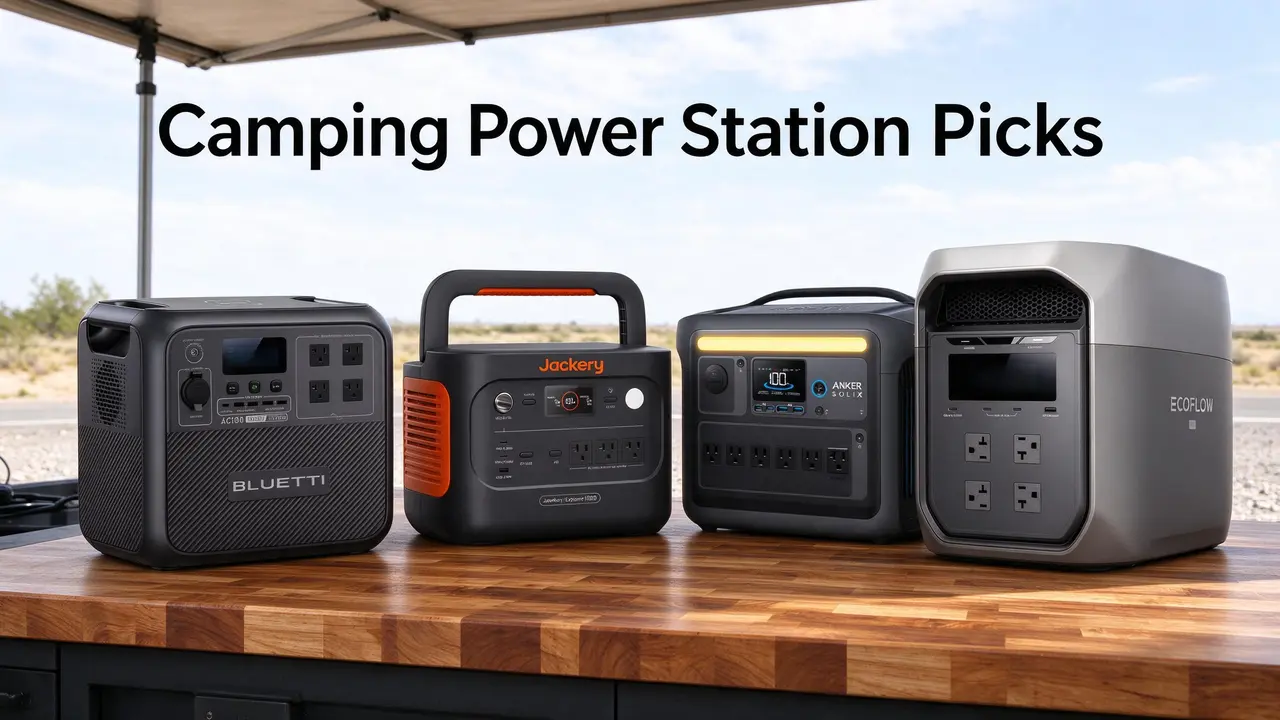
#1 Jackery Explorer 1000 v2 Portable Power Station,1070Wh,1500W — $559. The lightest of the four at 23.8 lb, with the recharge speed and fridge runtime that match a van's actual overnight load. Best all-around for a campervan build.
#2 BLUETTI AC180 — $499. Cheapest per Wh at $0.43/Wh, with a UPS-style switchover owners report relying on. The pick if budget leads and you'll park the unit rather than carry it.
#3 Anker C1000 Portable Power Station — $599. The fridge-runtime champ in owner tests (36 hours on a garage fridge, owner-reported, method not disclosed), with a ~1.5-hour recharge. Heavier in hand than the listing suggests.
#4 EcoFlow DELTA 3 Max Portable Power Station, 2048Wh LFP Battery — $1199. The capacity and output leader at 2,048 Wh and 2,400 W. Also the heaviest at 44.8 lb — a basecamp unit, not a daily-lift one.
Cheaper is better when you'll park the unit and can live with more weight and idle draw — the BLUETTI AC180 saves $60 and adds capacity over the Jackery, but costs you 11.5 lb and a less efficient overnight profile.
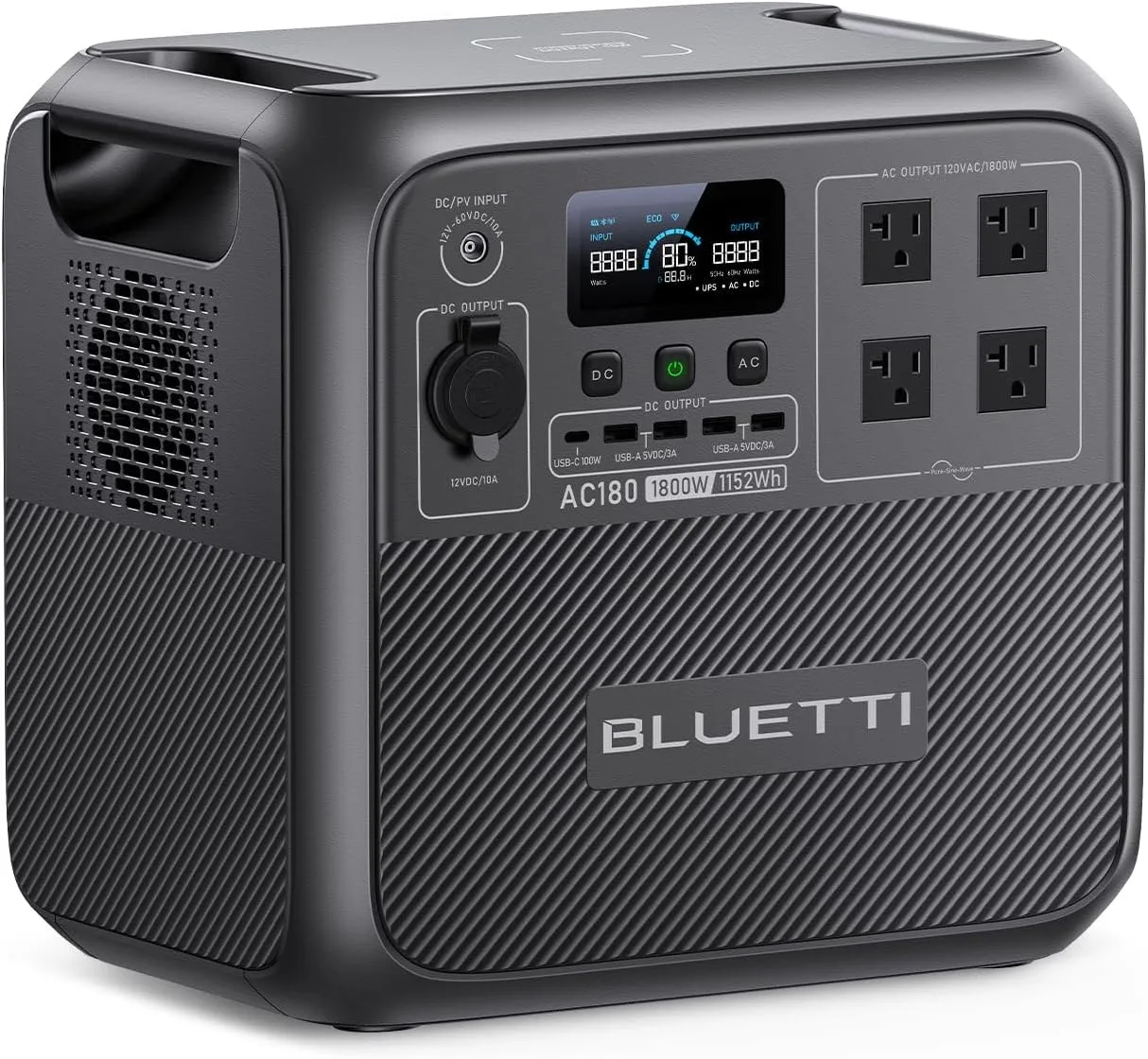
BLUETTI Portable Power Station AC180, 1152Wh LiFePO4 Battery Backup w/ 2 1800W
Highlights
- 1152Wh rated capacity
- 1800W continuous AC
- LiFePO4 chemistry
- Up to 500W solar input
- 35.3 lb (~16.0 kg)
- About $499 list
Best for
- AC180: most Wh per list dollar in mid-size LiFePO4 shortlists (~1152Wh)
- Home essentials when 1800W continuous matters more than a light carry
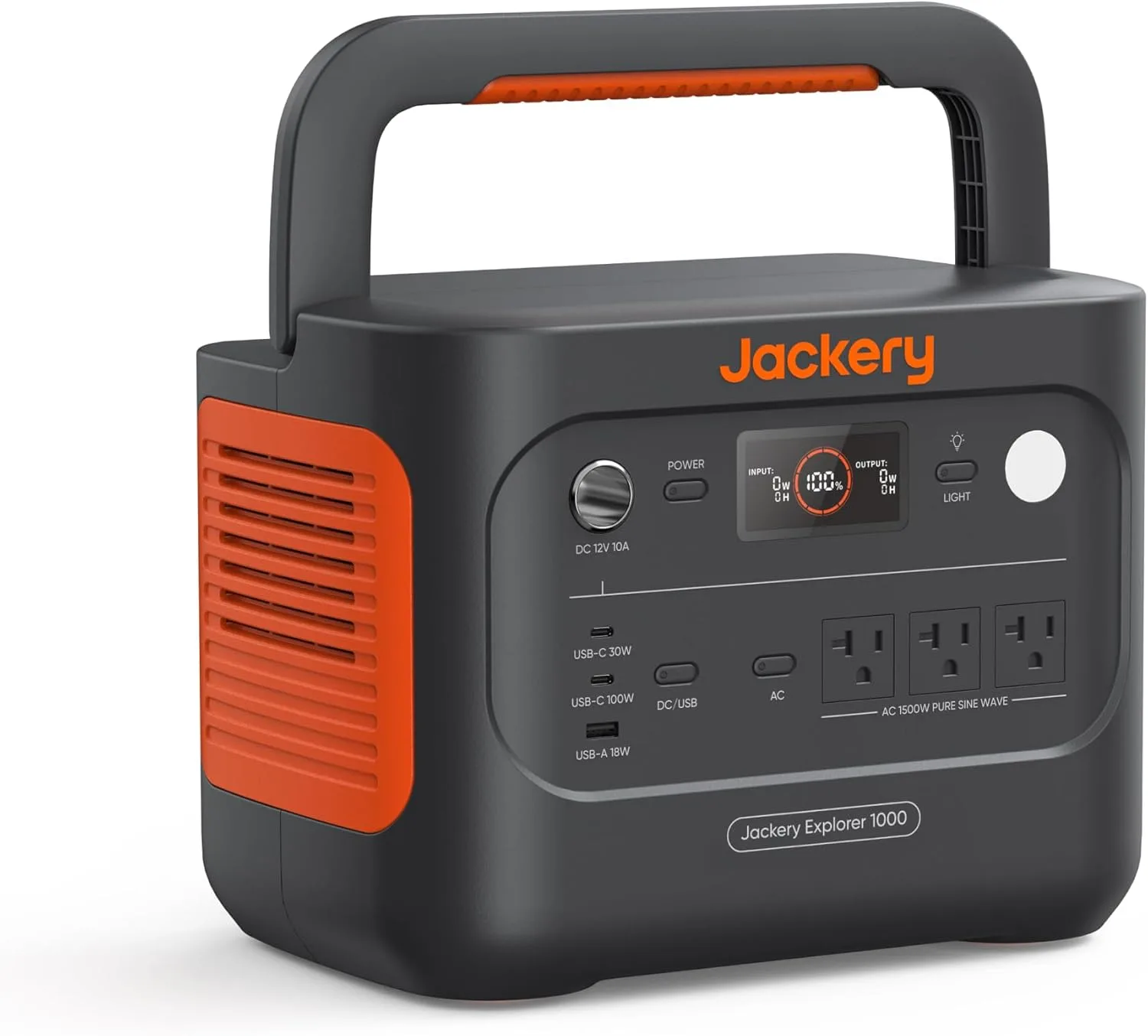
Jackery Explorer 1000 v2 Portable Power Station,1070Wh,1500W
Highlights
- 1070Wh rated capacity
- 1500W continuous AC
- LiFePO4 chemistry
- Up to 400W solar input
- 23.8 lb (~10.8 kg)
- About $559 list
Best for
- Explorer 1000 v2: weekend camping when 23.8 lb carry weight matters as much as 1070Wh
- Essentials bridge at home (fridge cycles, router) when sized to the Wh
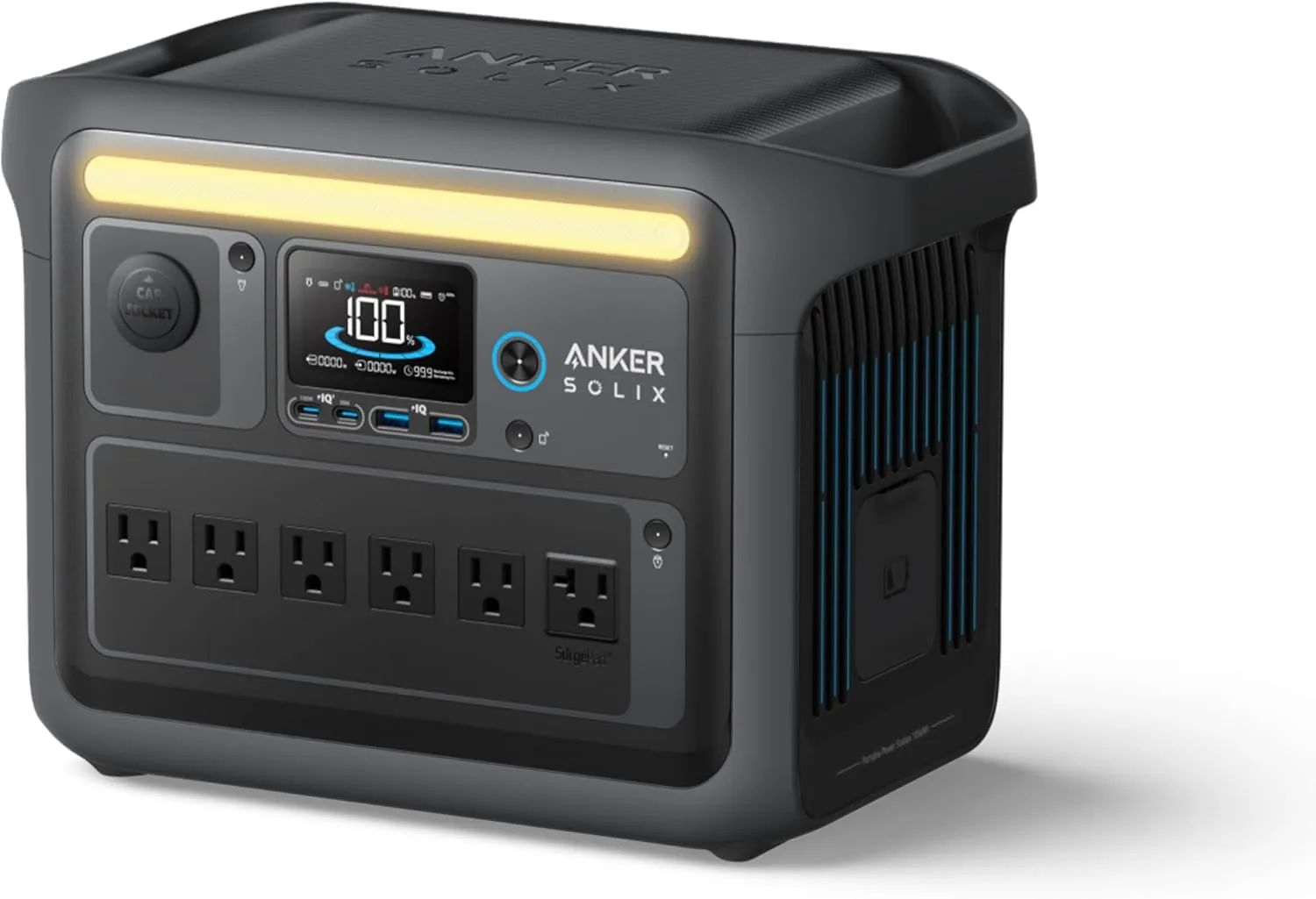
Anker C1000 Portable Power Station
Highlights
- 1056Wh rated capacity
- 1800W continuous AC
- LiFePO4 chemistry
- Up to 600W solar input
- 28.4 lb (~12.9 kg)
- About $599 list
Best for
- SOLIX C1000: small appliances and tools that need ~1800W continuous, not just phone charging
- Essentials bridge at home (fridge cycles, router) when sized to the Wh
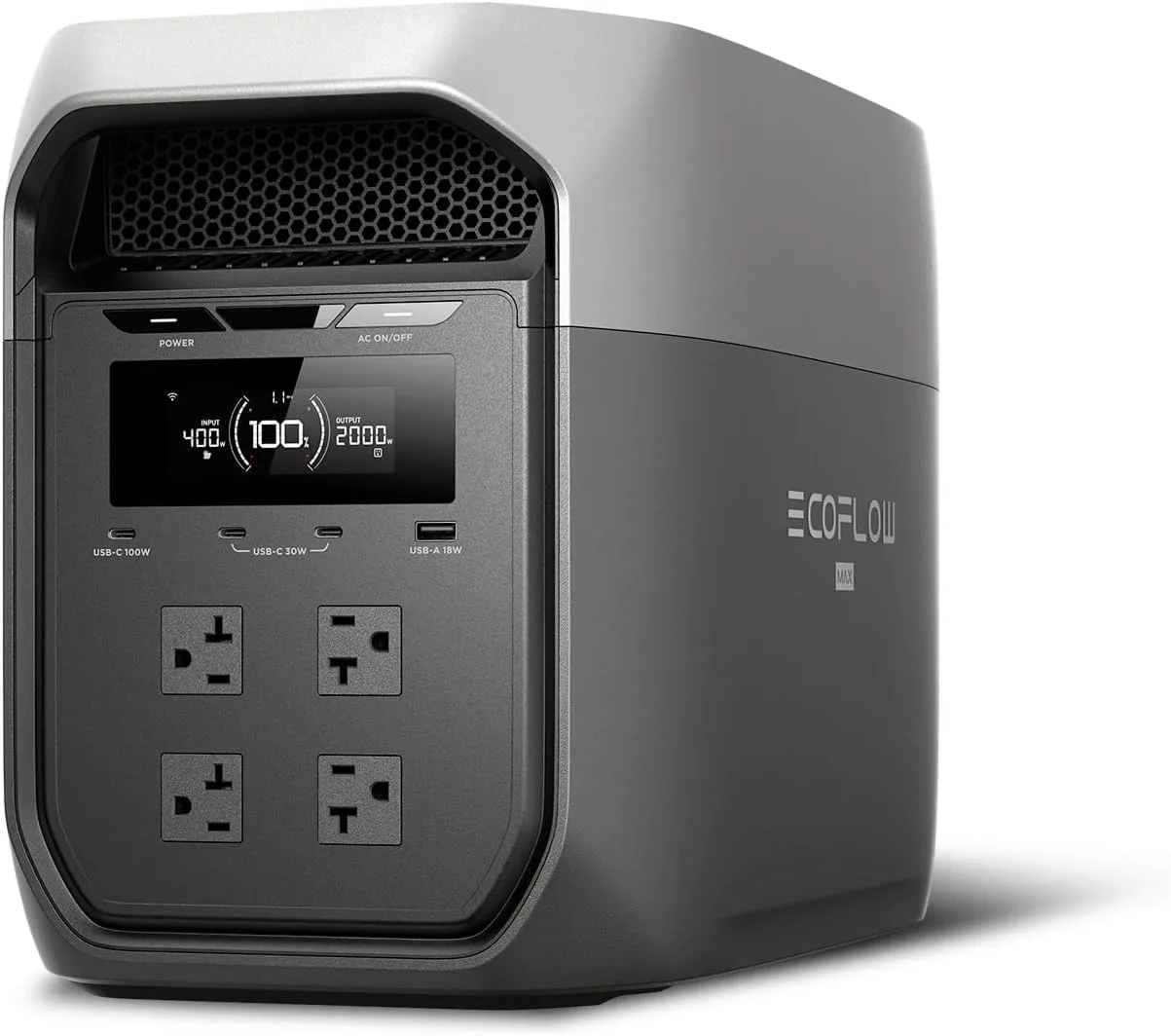
EcoFlow DELTA 3 Max Portable Power Station, 2048Wh LFP Battery
Highlights
- 2048Wh rated capacity
- 2400W continuous AC
- 4800W surge
- LiFePO4 chemistry
- Up to 500W solar input
- 44.8 lb (~20.3 kg)
Best for
- DELTA 3 Max: longer outages or higher continuous loads (still not whole-home wiring)
- RV / off-grid days where recharge speed matters as much as Wh
How I weighted this job
I'm a deep-use experience reviewer working from listing specs plus owner themes on file — home-user checks, not lab-bench measurements. Every number in the table comes from the listing; the owner notes tell me how the units behave in real vans and campsites.
The weights, and why: usable capacity and real runtime 30% (a van lives or dies on overnight headroom, and idle draw quietly eats it); recharge flexibility 25% (solar, alternator/12V, and shore power all matter when you're parked off-grid for days); weight and footprint 20% (you lift this thing in and out of a tight build more than you'd think); output headroom 15% (enough for a cooktop or microwave burst, not a whole-house load); owner-reported reliability and support 10% (firmware quirks, app behavior, warranty experience).
Tracing #1 over #2: the BLUETTI AC180 wins on price-per-Wh at $0.43/Wh and brings a genuine UPS-style switchover owners rely on, but the Jackery Explorer 1000 v2 takes the top slot because it's 11.5 lb lighter (23.8 lb vs 35.3 lb), recharges from the wall in under two hours in normal mode, and owners report multi-day 12V fridge runs — the exact van-life load. The AC180's idle draw and heavier frame cost it the top spot for a build where you move the unit often.
The Anker C1000 lands third: superb fridge runtime and a ~1.5-hour recharge, but it feels heavier in hand than its 28.4 lb listing and its short AC cable is a real annoyance in a van. The EcoFlow DELTA 3 Max is the capacity play — 2,048 Wh and 2,400 W — but at 44.8 lb and $1,199 it's a two-hand, plan-around-it unit, so it ranks fourth for tight builds even though it's the most capable on paper.
Here's how each unit scores on those weights, using High/Med/Low per criterion (30/25/20/15/10). The table makes the ranking auditable:
| Product | Capacity & Runtime (30%) | Recharge Flexibility (25%) | Weight & Footprint (20%) | Output Headroom (15%) | Reliability & Support (10%) |
|---|---|---|---|---|---|
| Jackery Explorer 1000 v2 | High — 1,070 Wh, multi-day fridge runs reported | High — <2 hr wall, solar/12V capable | High — 23.8 lb, lightest here | Med — 1,500 W covers kettle/microwave bursts | High — quiet mode praised, few quirks |
| BLUETTI AC180 | High — 1,152 Wh, but idle draw noted | High — fast wall, solar/12V, UPS switchover | Med — 35.3 lb, heavier frame | Med — 1,800 W, good for bursts | Med — UPS valued, but idle draw and pad cutouts |
| Anker C1000 | High — 1,056 Wh, 36 hr fridge test | High — ~1.5 hr wall, solar/12V | Med — 28.4 lb but feels heavier; short AC cable | Med — 1,800 W, similar burst capability | Med — strong runtime, dim light noted |
| EcoFlow DELTA 3 Max | High — 2,048 Wh, multi-day fridge | High — >1 hr wall, solar/12V, 10ms transfer | Low — 44.8 lb, basecamp only | High — 2,400 W, real headroom | Med — 100W USB-C cap, weight complaints |
Scenario facts: the four units side by side
Prices are list prices. Ratings are the listing aggregate, not owner proof. Where a spec isn't on file I say so rather than guess.
This spec snapshot is a quick-reference companion to the weighted table above — use it to check raw numbers, not to re-rank the units.
| Product | Price | Capacity (Wh) | Output (W) | Weight (lb) | Rating |
|---|---|---|---|---|---|
| BLUETTI AC180 | $499 | 1152 Wh | 1800 W | 35.3 lb | 4.5 |
| Jackery Explorer 1000 v2 Portable Power Station,1070Wh,1500W | $559 | 1070 Wh | 1500 W | 23.8 lb | 4.7 |
| Anker C1000 Portable Power Station | $599 | 1056 Wh | 1800 W | 28.4 lb | 4.7 |
| EcoFlow DELTA 3 Max Portable Power Station, 2048Wh LFP Battery | $1199 | 2048 Wh | 2400 W | 44.8 lb | 4.7 |
The ranking, unit by unit
Each pick gets a suits line and a skip line tied to its listing facts. Shared caveats — inverter idle draw, nameplate vs usable watt-hours — apply to all four and aren't repeated on every card.
- #1 Jackery Explorer 1000 v2 — Suits: van builds where you lift the unit often and want fast wall recharge plus multi-day 12V fridge runs. 1,500 W continuous covers a kettle or a small microwave burst, not an induction cooktop. Skip if: you need to run a big sliding miter saw or heavy job-site tools — owners report it stalls on large saws.
- #2 BLUETTI AC180 — Suits: budget-led builds that want UPS-style switchover and a clear runtime display. 1,800 W continuous handles a coffee maker or a microwave, but not simultaneous high-draw appliances. Skip if: you'll carry it far or run light loads overnight — inverter idle draw eats into runtime and it's 35.3 lb.
- #3 Anker C1000 — Suits: fridge and freezer backup where runtime is the priority and you can live with a short AC cable. 1,800 W continuous is fine for a kettle or a small microwave, not an induction range. Skip if: you need to move it daily or want a bright work light — it feels heavier than 28.4 lb and the top light is dim.
- #4 EcoFlow DELTA 3 Max — Suits: long off-grid trips and builds with room for a 44.8 lb basecamp unit that can run a car fridge for days. 2,400 W continuous is the only one here with real headroom for an induction cooktop or a full-size microwave, though those are short bursts. Skip if: you're in a tight build or carry it up stairs — and note the USB-C tops out at 100W.
What goes wrong in a van build
Three pitfalls show up again and again in the owner notes.
Idle draw vs nameplate capacity. With the inverter on, these units sip power just sitting there. Owners who did the math on the AC180 and others land in the same place: plan for less runtime than the sticker implies, especially on light loads. Turn AC/DC outputs off when nothing's plugged in.
Recharge assumptions. Solar rarely delivers the panel's rated watts — owners report well under nameplate on cloudy or angled days. Alternator and 12V charging work but are slow. Shore power is fastest, so plan your parking around an outlet when you can.
Firmware and app quirks. Several owners hit slow charging or flaky Wi-Fi/Bluetooth until they updated firmware and ran a full discharge/recharge cycle. Budget a setup evening before you judge a unit on day one.
Who should pick something else
If you're running an induction cooktop or microwave as your primary cooking method, none of these is the right first buy — you want more continuous output and capacity than the 1,056–2,048Wh, and the DELTA 3 Max is the only one here with real headroom at 2,400 W. Even then, cooking loads are short bursts, so pair it with a plan. The 15% output-headroom weight reflects occasional bursts, not sustained cooking — if cooking is your main load, size up or go built-in.
If you're building a fixed electrical system with a house battery, an inverter, and a DC-DC charger, a portable station is a stopgap, not the system. Buy the components instead.
And if you need whole-home backup with a transfer switch, this isn't that article — these are van and campsite units, and I'm not scoring them as home UPS replacements.
What to check before you buy
Before you commit, verify these per unit — they're the details that separate a good van fit from a frustrating one.
Warranty length and support: check the current warranty terms on the listing; owner notes mention firmware and app support as a factor, but terms change, so confirm at purchase.
Alternator/12V charging rate: all four accept 12V input, but rates vary and are often slow — check the listing for the specific amperage and plan your driving time accordingly.
Overnight-load worked example: for a typical 150–250 W average draw, a 1,000 Wh unit gives you roughly 4–6 hours of usable runtime after inverter overhead and idle draw; a 2,000 Wh unit doubles that. Match the unit to your actual nightly consumption, not the sticker.
Model/SKU version and firmware: listings sometimes ship different hardware revisions; check the model number and update firmware before judging performance.
Owner themes worth knowing
Short paraphrases from the review packs, matched to each unit's listed facts.
Jackery Explorer 1000 v2: praise centers on fast recharge and quiet mode for overnight fridge and fan duty; the recurring caveat is that large power tools stall it.
BLUETTI AC180: the UPS switchover and runtime display earn consistent praise; repeated notes flag idle draw and a wireless charging pad that cuts out.
Anker C1000: strong fridge runtime and a ~1.5-hour recharge come up often; several owners mention it feels heavier than the listed weight and the AC cable is short.
EcoFlow DELTA 3 Max: the 10ms transfer and multi-day car-fridge runs are highlights; the common gripe is the 100W USB-C cap and the unit's weight.
Frequently asked
Can the Jackery Explorer 1000 v2 run a 12V car fridge overnight?
Owners report multi-day runs on a single charge, sipping a fraction of the battery per night. It's the lightest of the four at 23.8 lb, which is why it tops the list for vans.
Is the BLUETTI AC180's $0.43/Wh the cheapest here?
Yes — it's the lowest nameplate $/Wh of the four. The trade-off is weight (35.3 lb) and idle draw on light loads.
How fast do these recharge from shore power?
The Jackery recharges in under two hours in normal mode; the Anker in about 1.5 hours; the DELTA 3 Max in a little over an hour. The AC180 charges quickly once firmware is current, but owners report a slow-charge-then-fix pattern out of the box.
What can I expect from solar recharge?
Solar input is supported on all four, but real-world output is well under the panel's rated watts on cloudy or angled days — owners report needing to manage expectations. Plan on solar as a supplement, not a primary recharge, unless you have a large array and good sun.
Will these fit in a tight van build?
Footprint and weight matter: the Jackery at 23.8 lb is the easiest to stash and move; the DELTA 3 Max at 44.8 lb needs a dedicated, reinforced spot. Check the dimensions on the listing against your storage space before buying.
Method and sources
Model names and list prices come from the WattPicks catalog at build time. WattPicks does not run its own laboratory tests on power stations, and nothing on this page is presented as a measured result — it is catalog-backed buying guidance.
Read our methodology for how the catalog is normalized, and about WattPicks for who publishes it.