
Best 2000W Power Station: 4 Solar-Ready Picks Ranked
Four 2,048 Wh stations that all claim 2,400 W continuous — so the real decision is weight, recharge speed, and what the panels cost on top. Here's how they sort out for home backup, RV, and camping.
Updated
The 2,000W class is a spec tie — so buy on the things that differ
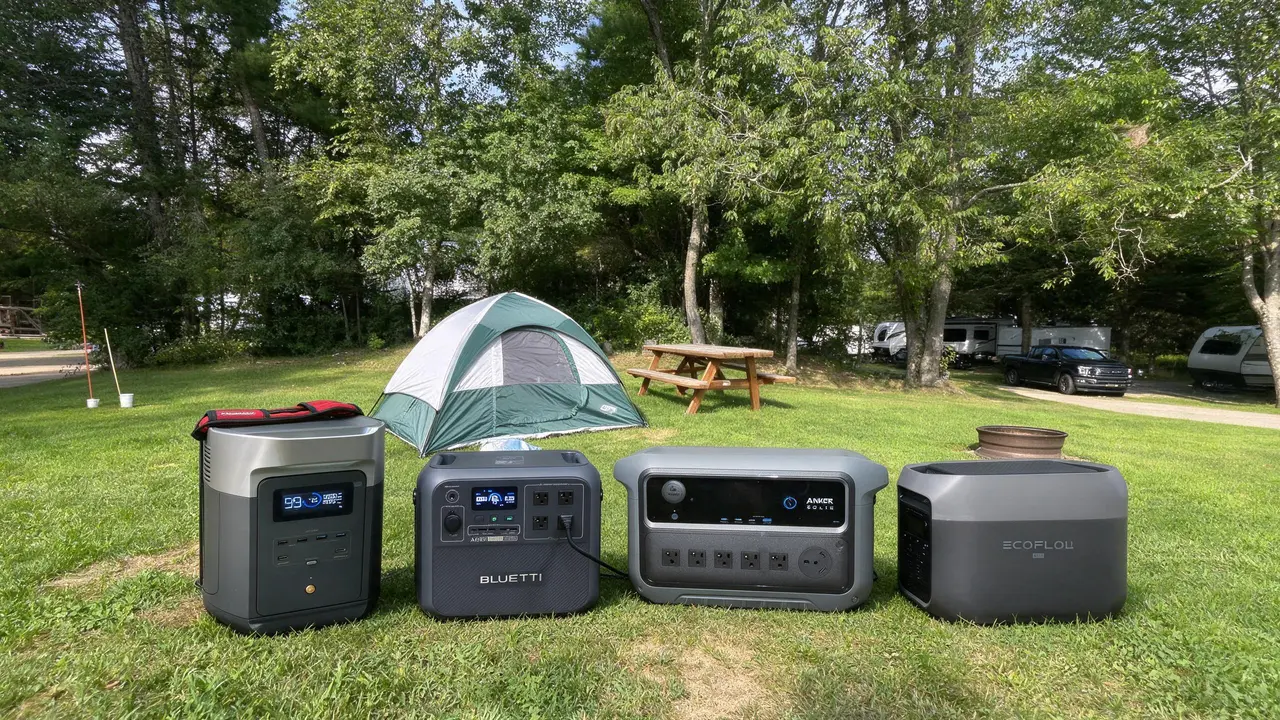
Every station on this list publishes 2,048 Wh and 2,400 W continuous. That means the headline numbers won't decide it for you. What separates them is weight, how fast they refill from a wall outlet, how much solar they'll accept, and how many outlets you get for the money.
One boundary up front: this is not a whole-home backup guide. A single 2 kWh battery runs a fridge, router, lights, and a CPAP through a normal outage, and owners report it can carry a gas furnace blower for a few hours (see the DELTA 2 Max note below). It will not run central A/C, an electric range, or a heat-pump system for long — for that you're sizing a transfer switch and a much bigger system.
Also budget for panels. None of these four ship with a solar panel, and the panel is where the "solar generator" part of the price actually lands. A 400W portable panel is a separate purchase on top of every list price below.
Disclosure: this guide uses Amazon Associates links, and purchases through them may earn a commission. The ranking is fit-led — the AC200PL wins on price and evidence depth, not on payout.
- All four: 2,048 Wh capacity, 2,400 W continuous AC output
- None include a solar panel — add that cost before comparing totals
- This class suits fridge/router/furnace-blower outages, not whole-home loads
Quick picks: which of the four to start with
If you want the lowest entry price for the same 2 kWh and 2,400 W, the BLUETTI AC200PL at $899 is the obvious first look — and on nameplate dollars per watt-hour it's the cheapest here at $0.44/Wh. If weight is the thing you'll curse every time you move it, the Anker C2000 Gen 2 at 41.7 lb is the lightest of the four.
The two EcoFlow units sit in the middle on price and split on purpose. The DELTA 3 Max at $1,199 is the newer, lighter, UPS-flavored pick with a 10ms transfer claim. The DELTA 2 Max at $1,399 is the older, heavier, more-established unit with the deepest owner track record in this pack.
How I ranked them, and what I weighted
I'm a deep-use experience reviewer working from the listing specs plus the owner themes on file for each unit — home-user checks, not lab-bench measurements. Every number in the table comes from the listing; the owner themes tell me how the units behave in real outages, and they never override a spec.
I weighted four things. Value at list price got 30%, because all four deliver the same 2,048 Wh and 2,400 W and the spread is $600. Recharge speed and solar input got 25%, since refill time is what decides whether a 2 kWh battery survives a multi-day outage. Portability got 20% — 41.7 lb versus 62.4 lb is a real difference on stairs. Owner-reported reliability and support got 25%, weighted toward the themes that repeat across many reviews rather than one-off complaints.
Tracing #1 over #2: the AC200PL wins on value, taking 30% almost outright at $0.44/Wh against the DELTA 3 Max's $0.59/Wh. The DELTA 3 Max claws back on portability (44.8 lb vs 62.4 lb) and on the UPS story — a 10ms transfer claim and repeated owner reports of clean switchover. But the AC200PL's owner pack is far deeper (2,825 ratings vs 650), and its UPS switchover is also well attested. Depth of evidence plus the price gap is what puts BLUETTI first and EcoFlow's newer unit second.
Here's how each unit rates on those four criteria, using High/Med/Low. The winner is the unit with the fewest weak spots where the weight is heaviest — not the one with the highest star rating.
- BLUETTI AC200PL ($899): Value — High ($0.44/Wh, cheapest here). Recharge/solar — High (fast wall charging once firmware is current; 1,200W solar input per listing). Portability — Low (62.4 lb, heaviest). Owner reliability/support — High (2,825 ratings, UPS switchover well attested).
- EcoFlow DELTA 3 Max ($1,199): Value — Med ($0.59/Wh). Recharge/solar — High (fast recharge, 10ms transfer claim). Portability — High (44.8 lb). Owner reliability/support — Med (only 650 ratings, most reports short and recent).
- Anker C2000 Gen 2 ($1,499): Value — Low (highest list price). Recharge/solar — Med (fast wall recharge, but solar capped at 800W). Portability — High (41.7 lb, lightest). Owner reliability/support — Med (RV A/C startup reported, but 15A pass-through limit and no printed manual).
- EcoFlow DELTA 2 Max ($1,399): Value — Med. Recharge/solar — High (wall charge under two hours, 1,000W solar input per listing). Portability — Med (50 lb). Owner reliability/support — High (deepest track record, but smart-generator pairing and slow support are recurring complaints).
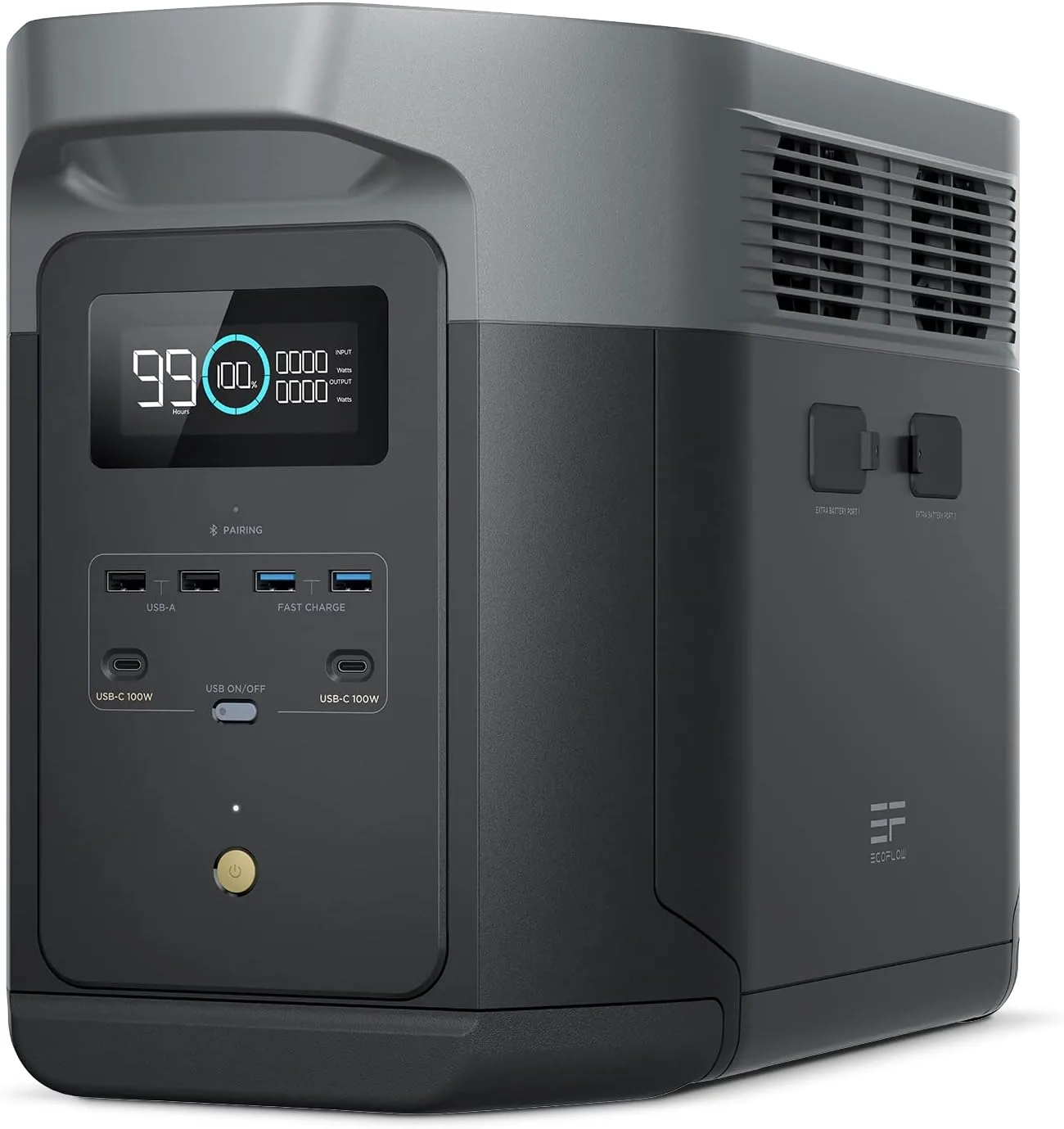
EcoFlow DELTA 2 Max
Highlights
- 2048Wh rated capacity
- 2400W continuous AC
- 4800W surge
- LiFePO4 chemistry
- Up to 1000W solar input
- 50 lb (~22.7 kg)
Best for
- DELTA 2 Max: longer outages or higher continuous loads (still not whole-home wiring)
- RV / off-grid days where recharge speed matters as much as Wh
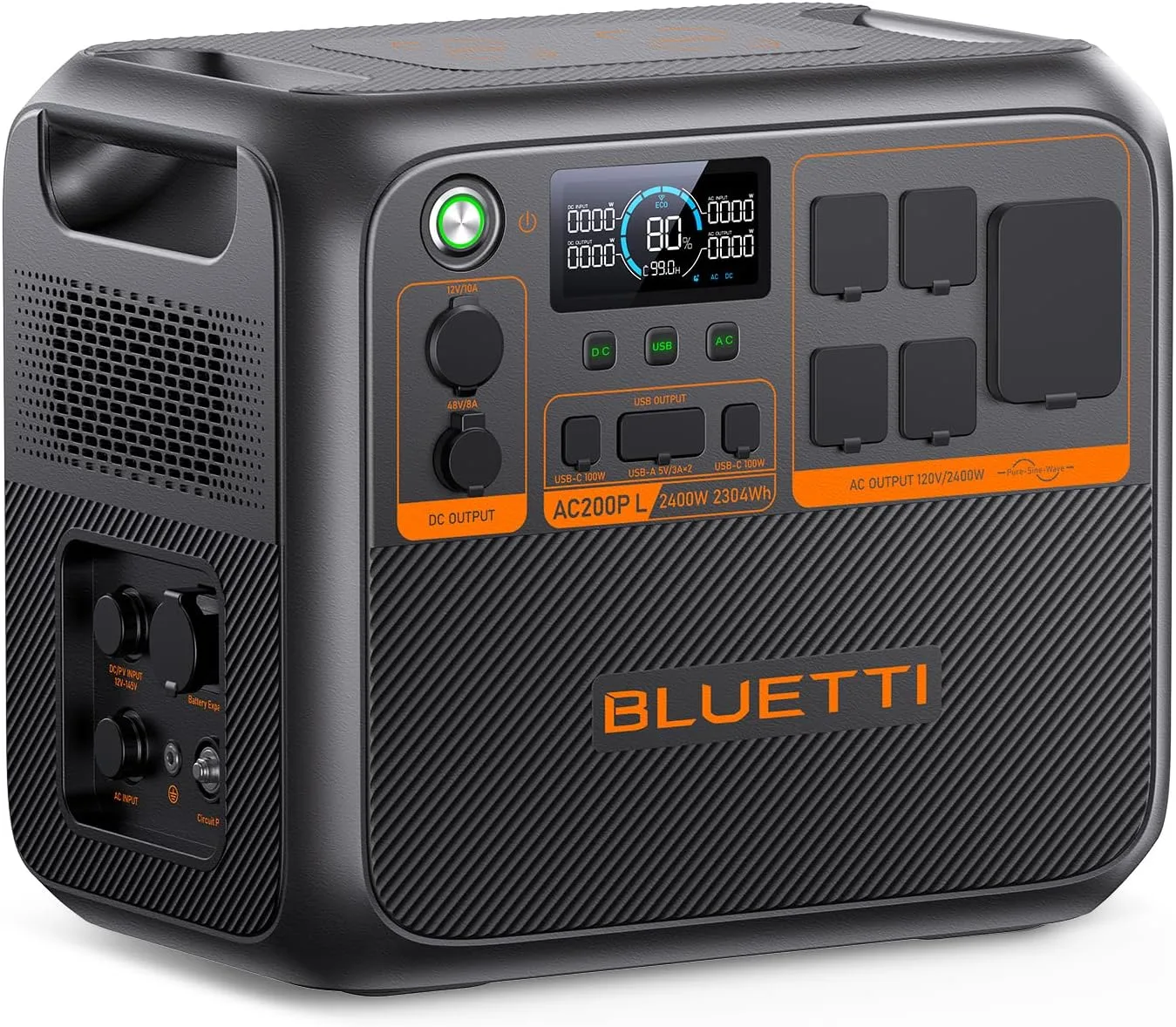
BLUETTI AC200PL
Highlights
- 2048Wh rated capacity
- 2400W continuous AC
- LiFePO4 chemistry
- Up to 1200W solar input
- 62.4 lb (~28.3 kg)
- About $899 list
Best for
- AC200L: longer outages or higher continuous loads (still not whole-home wiring)
- RV / off-grid days where recharge speed matters as much as Wh
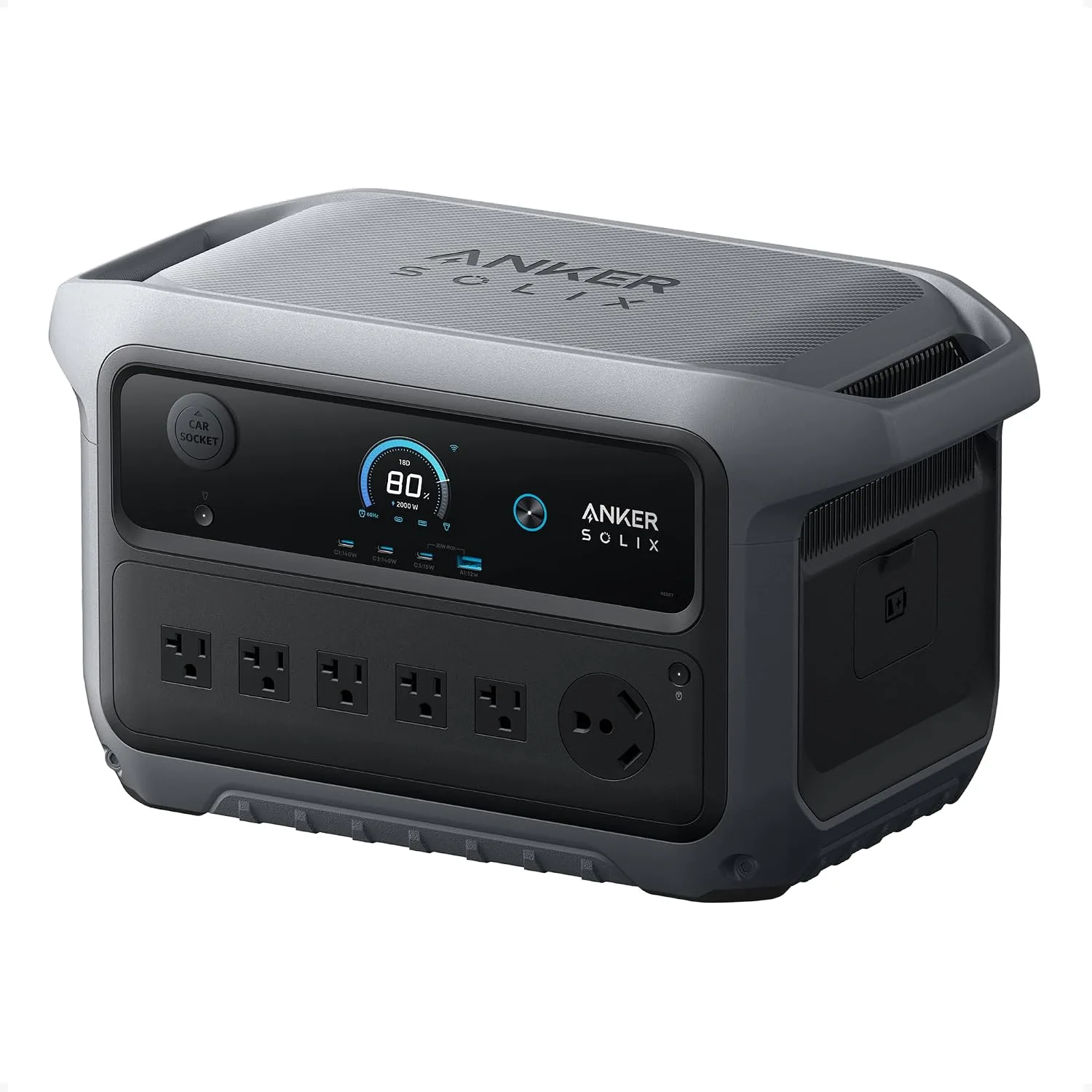
Anker C2000 Gen 2 Portable Power Station, 2,048Wh
Highlights
- 2048Wh rated capacity
- 2400W continuous AC
- 4000W surge
- LiFePO4 chemistry
- Up to 800W solar input
- 41.7 lb (~18.9 kg)
Best for
- C2000 Gen 2: longer outages or higher continuous loads (still not whole-home wiring)
- RV / off-grid days where recharge speed matters as much as Wh
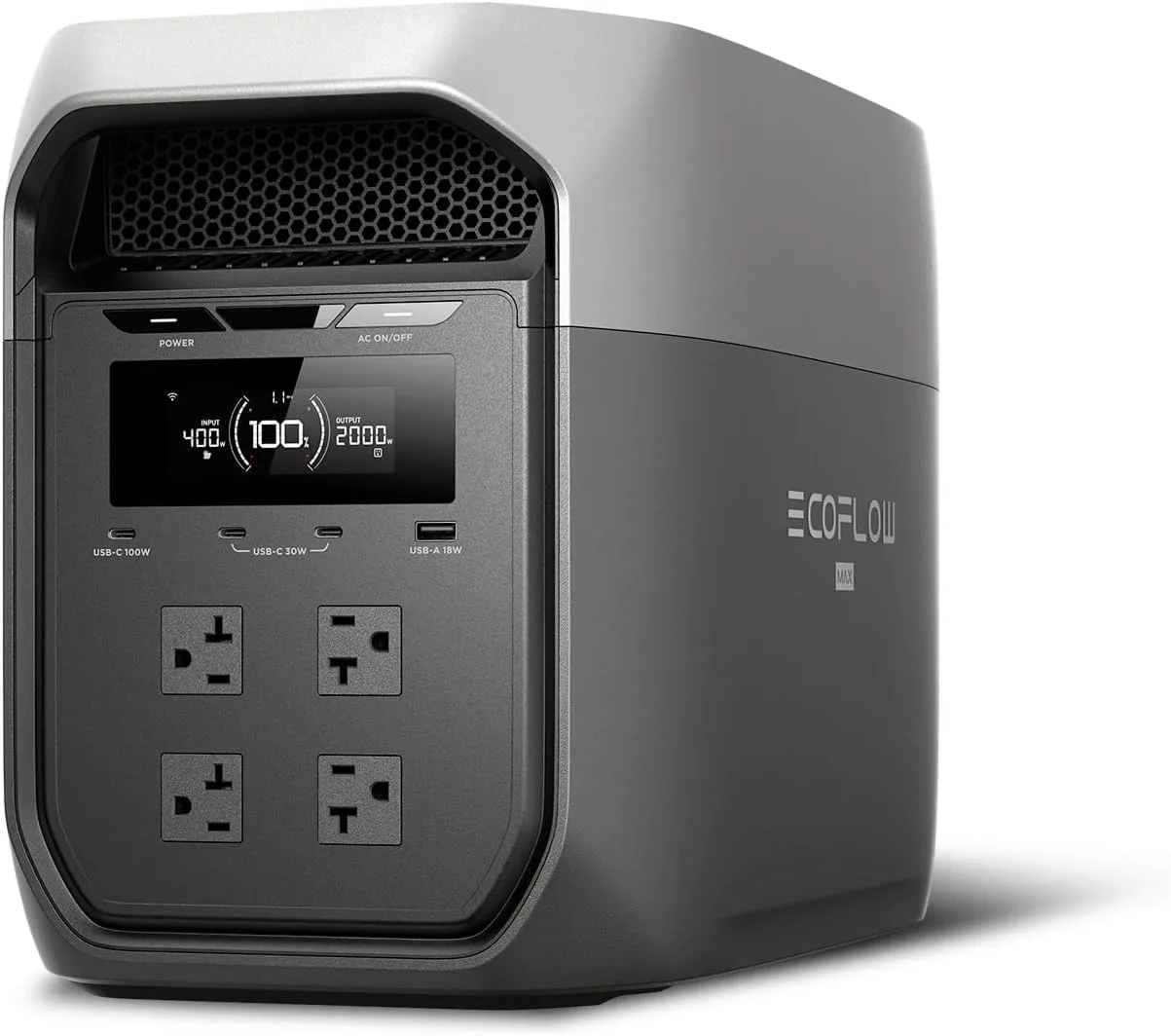
EcoFlow DELTA 3 Max Portable Power Station, 2048Wh LFP Battery
Highlights
- 2048Wh rated capacity
- 2400W continuous AC
- 4800W surge
- LiFePO4 chemistry
- Up to 500W solar input
- 44.8 lb (~20.3 kg)
Best for
- DELTA 3 Max: longer outages or higher continuous loads (still not whole-home wiring)
- RV / off-grid days where recharge speed matters as much as Wh
Spec snapshot: the four side by side
Prices are list prices, not sale stickers. Ratings are listing aggregates, not owner proof. Weight is the shipping-relevant number you'll feel on a stairwell.
| Product | Price | Capacity (Wh) | Output (W) | Weight (lb) | Rating |
|---|---|---|---|---|---|
| EcoFlow DELTA 2 Max | $1399 | 2048 Wh | 2400 W | 50 lb | 4.7 |
| BLUETTI AC200PL | $899 | 2048 Wh | 2400 W | 62.4 lb | 4.5 |
| Anker C2000 Gen 2 Portable Power Station, 2,048Wh | $1499 | 2048 Wh | 2400 W | 41.7 lb | 4.7 |
| EcoFlow DELTA 3 Max Portable Power Station, 2048Wh LFP Battery | $1199 | 2048 Wh | 2400 W | 44.8 lb | 4.7 |
Why each one made the list
#1 — BLUETTI AC200PL ($899, 2,048 Wh, 2,400 W, 62.4 lb). Best for: budget-first home backup where the unit stays put. The value anchor of the group and the cheapest per nameplate watt-hour at $0.44/Wh. Multiple owners describe setting it up as a UPS on a basement circuit and having the TV, router, and lights stay on through a pull-the-plug test without a flicker. Wall charging is quick once firmware is current — one owner saw it pull over 1,000W after updates and a full discharge/recharge cycle. The caveats are real: idle and inverter draw eat into runtime, only about 90% of rated capacity is usable by design, and the wireless charging pad on top is a repeated disappointment. It's also the heaviest here at 62.4 lb. Skip it if you move your station between rooms, floors, or a vehicle regularly — 62.4 lb is the heaviest here and you'll feel it.
#2 — EcoFlow DELTA 3 Max Portable Power Station, 2048Wh LFP Battery ($1,199, 2,048 Wh, 2,400 W, 44.8 lb). Best for: newer UPS-grade transfer in a lighter package. Owners report the 10ms transfer keeping a PC and router alive through pull-the-plug checks, and one ran an Iceco chest fridge at 36°F for a little over five days on a charge. The app's storm-guard and remote monitoring come up often. The honest caveat is evidence depth: most owner reports are short and recent, so long-term durability is still building its case. One owner wanted a higher-wattage USB output next to the 100W USB-C. Skip it if you need a long, deep owner track record before spending — only 650 ratings, most short and recent.
#3 — Anker C2000 Gen 2 Portable Power Station, 2,048Wh ($1,499, 2,048 Wh, 2,400 W, 41.7 lb). Best for: RV and camping where you lift it often. The lightest of the four by a clear margin, and the one with the most surprising load story: owners report starting an RV air conditioner through a 30-amp adapter without a soft-start kit and running it for roughly an hour, plus carrying a fridge and standalone freezer at once. Recharge speed is the standout — roughly a quarter charge to full in about an hour on wall power. The trade-offs: pass-through mode caps at 15A on a household outlet, solar input tops out at 800W, and there's no printed manual in the box. Skip it if you need to run an RV A/C all day — the owner story is a startup-and-short-run, not all-day cooling — or if you need more than 15A pass-through on a household circuit.
#4 — EcoFlow DELTA 2 Max ($1,399, 2,048 Wh, 2,400 W, 50 lb). Best for: established reliability and furnace backup, if you don't need smart-generator pairing. The most-established unit in the pack, with the deepest owner track record. Owners describe wall charging to full in well under two hours, a mini-fridge running a couple of days and a stand-up freezer about a day, and an EPS setup on a gas furnace that cut over without intervention through a winter outage. The weak spot is the ecosystem, not the battery: one hurricane-week account of fighting a smart dual-fuel generator — error codes, auto-recharge firing once in five days — is the cautionary tale. Support can also be slow to reach real technical help. Skip it if smart-generator pairing is on your list, or if you need fast support response — owner notes flag slow support.
Where the listings and the owner notes disagree
Two gaps are worth flagging before you buy. First, usable capacity versus rated capacity: owners of the AC200PL note that only about 90% of the battery is usable by design, and idle/inverter draw means small loads drain faster than the rated math suggests. That's normal for the class, but it means a 2,048 Wh rating is not 2,048 Wh of delivered energy at the outlet. A rough sanity check: 2,048 Wh × 0.9 usable ÷ (idle draw plus your load, say ~50W) lands near 37 hours — so a 50W load runs about a day and a half, not the 41 hours the raw rating implies.
Second, solar input reality. The C2000 Gen 2 caps solar at 800W, and one owner measured well under a panel's rated wattage on a clear day — normal physics, not a defect, but it matters if you're planning a solar-only routine. The DELTA 2 Max listing cites up to 1,000W solar input, and the AC200PL cites up to 1,200W. Those are listing figures; I haven't measured them.
Ports are another place to read carefully. The DELTA 2 Max lists AC×6, USB-C×2, USB-A×2, and a car port. The AC200PL lists AC×12 with USB-A and a car port, but USB-C is not confirmed on the listing — don't assume either way. The C2000 Gen 2 lists AC×1 with USB-C and USB-A unconfirmed. The DELTA 3 Max lists AC×4, USB-C×1, USB-A×1.
- Rated Wh ≠ delivered Wh — inverter and idle draw take a bite
- Solar input caps differ: 800W on the C2000 Gen 2, higher on the EcoFlow units per listing
- Confirm USB-C on the AC200PL and C2000 Gen 2 before you count on it
Who should not buy the top pick
The BLUETTI AC200PL is the value winner, but it's the wrong buy for two groups. If you move your station between rooms, floors, or a vehicle regularly, 62.4 lb is the heaviest here and you'll feel it — the Anker C2000 Gen 2 at 41.7 lb or the DELTA 3 Max at 44.8 lb is the better fit.
And if you're counting on the wireless charging pad on top, skip it. Owners repeatedly report it connecting then quitting after a few seconds. Plan on a cable.
A third group: if you need a long, deep owner track record before spending, the AC200PL has the most ratings here (2,825), so that's actually a point in its favor — but if you specifically want the newest UPS-grade transfer behavior, the DELTA 3 Max is the one to look at.
If none of these fit
Two directions to consider instead. If your real need is a whole-home outage plan — furnace, well pump, fridge, and a few circuits — a single 2 kWh station is the wrong shape. You want a transfer switch or smart panel and a system sized to your actual loads, which is a different buying guide entirely.
If you mostly need to keep a CPAP, router, and phone alive overnight and don't need 2,400 W of surge, a smaller 1 kWh-class station will cost less and weigh less, and you can put the savings toward a panel. The 2,000W class earns its price when you're starting an RV A/C or carrying a fridge and freezer at once — not for a nightstand load.
What owners keep coming back to
Across all four, the themes that repeat are fast wall charging, app visibility into input and output watts, and fridge/freezer runtime that beats the estimate. The complaints cluster around weight, idle draw, and support responsiveness.
The incremental read: the AC200PL's edge is evidence depth plus price, not a spec win. The DELTA 3 Max's edge is newer transfer behavior in a lighter box, but its owner base is still thin. The C2000 Gen 2 is the one to pick if you lift it often. The DELTA 2 Max is the safe established pick unless you need smart-generator pairing.
One disclosure: this guide uses Amazon Associates links, and purchases through them may earn a commission. The ranking is fit-led — the AC200PL wins on price and evidence depth, not on payout.
Frequently asked
How long will one of these run a fridge?
Owners report a mini-fridge running a couple of days and a stand-up freezer about a day on the DELTA 2 Max, and a chest fridge at 36°F lasting a little over five days on the DELTA 3 Max. Compressors cycle, so real runtime usually beats the on-screen estimate at plug-in.
Can the C2000 Gen 2 run an RV air conditioner?
Owners report starting one through a 30-amp adapter without a soft-start kit and running it for roughly an hour. That's a startup-and-short-run story, not all-day A/C.
Do I need to buy a solar panel separately?
Yes — none of these four include one. Budget for a panel on top of the list price, and check each unit's solar input cap before you size it.
Which is cheapest per watt-hour?
On nameplate dollars per watt-hour, the BLUETTI AC200PL is lowest at $0.44/Wh. That's a nameplate figure, not a delivered-energy figure.
How loud are these under load?
Owner notes don't give decibel figures, but the pattern is that fans ramp with load — light loads like a router and lights are near-silent, while running an RV A/C or a big fridge brings noticeable fan noise. If noise matters, plan to keep the unit out of the bedroom.
Can I use any solar panel?
Match the panel's voltage and connector to the station's input, and follow the manufacturer's voltage/wattage limits (800W on the C2000 Gen 2, 1,000W on the DELTA 2 Max, 1,200W on the AC200PL per listing). A panel rated above the cap won't necessarily damage the unit, but you won't get the extra watts.
Method and sources
Model names and list prices come from the WattPicks catalog at build time. WattPicks does not run its own laboratory tests on power stations, and nothing on this page is presented as a measured result — it is catalog-backed buying guidance.
Read our methodology for how the catalog is normalized, and about WattPicks for who publishes it.