Guide
Are portable power stations worth it?
A power station is worth it when it replaces a noisy generator you cannot run indoors, or a tangle of extension cords you should not be using. Whether the price is fair is a separate question, and the dataset answers it with two numbers: cost per watt-hour and lifetime throughput.
Every figure on this page is computed from the WattPicks dataset (107 models from 12 brands, all read from the manufacturers' own product pages). We do not test power stations, so nothing here is a measurement of ours.
The box, and what it replaces
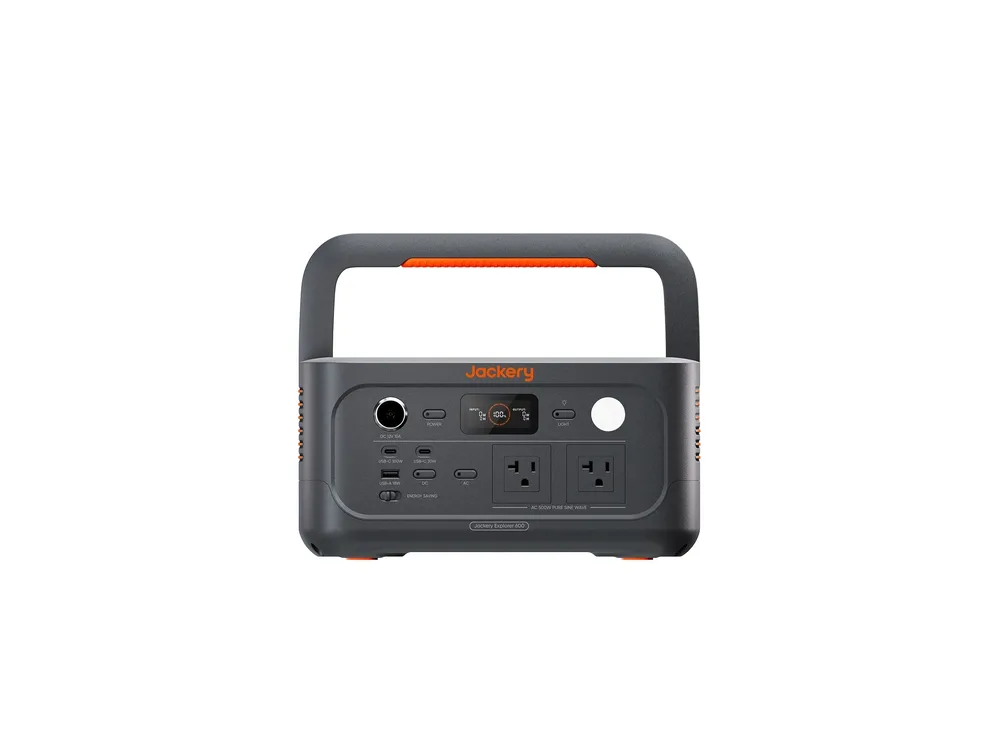
A portable power station is a battery, an inverter and a charger in one case. It stores energy in watt-hours (Wh), delivers it as AC and DC, and refills from a wall outlet, a car or solar panels. What it replaces is usually one of three things: a small gas generator, a long extension cord, or nothing at all — because camping without power used to mean doing without.
The case for buying one rests on those replacements. It can run indoors, unlike a generator, because there are no exhaust fumes. It is silent, lighter than a generator of similar output, and needs no fuel. The case against it is cost: the energy it stores is far more expensive per watt-hour than grid power, and a battery wears out.
The number that decides value: cost per watt-hour
The cleanest value comparison is dollars per watt-hour: list price divided by capacity. In our dataset of 107 models from 12 brands, that figure runs $0.29–$1.51 per watt-hour. The spread is the whole story — the cheapest units cost a fraction of the most expensive per watt-hour, and the difference is rarely just the battery.
A low cost per watt-hour usually means a heavier unit with a lower inverter rating, or a brand with fewer features. A high one usually buys weight savings or a bigger inverter. Neither is automatically better; the question is whether the feature you are paying for is one you will use.
Cycle life is the part the sticker hides
A battery does not last forever, and its rated cycle life is what turns a price into a cost over time. Multiplying capacity by rated cycles gives lifetime throughput: the total energy the vendor claims the pack will deliver. Across the models in our dataset, that ranges from roughly 94 kWh to 20,480 kWh.
The chemistry matters more than the capacity here. Vendors claim 2,000–6,000 cycles for LiFePO4 and 500–2,500 for NMC (lithium-ion). That is their published figure, not a measurement of ours, and it is why two units at the same price can have very different useful lives. LiFePO4 units also carry a weight penalty, which is exactly the trade-off the value calculation has to include.
Where a power station is the wrong tool
It is the wrong tool for running anything with a heating element for long — an electric space heater or a hot plate will flatten most units in under an hour, because resistance heat is the largest load a small battery can face. It is also the wrong tool for a whole-home outage longer than a day unless you have several large units, or for anything that needs more surge watts than the inverter can supply.
And it is the wrong tool if you only need USB charging. A power bank costs less, weighs less and does that job without an inverter you are paying for and never using.
How to decide for your own loads, step by step
- Write down the watts each device draws and the hours per day you will run it.
- Add the running watts of everything that will run at once — that is the continuous output you need.
- Find the single largest starting load, usually a motor or compressor, and check the surge rating against it.
- Turn daily watt-hours into capacity, then add headroom for conversion losses and aging.
- Compare cost per watt-hour and cycle life together, not price alone.
- Check the recharge path: wall, car and solar input together decide how the unit fits your routine.
The verdict, in dataset terms
Across the models we track, 104 publish both a capacity and a price, 83 publish a solar input, and 42 publish a UPS switchover time. Those are the specs that separate a unit you will keep from one you will resell: value per watt-hour, useful life, recharge speed and whether it can carry a critical load through a switch.
A power station is worth it when one of those numbers lines up with a load you actually run. It is not worth it when it is bought as a generic backup for a problem you have not defined.
Frequently asked
Is a portable power station cheaper than a gas generator?
For the same continuous output, usually not on purchase price, and the energy stored is more expensive per watt-hour. It wins on noise, indoor safety, no fuel and no maintenance. If you need days of whole-home power, a generator or a home battery is the right comparison, not a portable station.
How long will a portable power station last?
That depends on the cycle rating and how hard you cycle it. Vendors in our dataset claim 2,000–6,000 cycles for LiFePO4 and 500–2,500 for NMC. At one full cycle a week, the difference between those figures is years of service.
Do I need LiFePO4?
LiFePO4 is the chemistry most buyers who care about lifespan should look at first: vendors claim 2,000–6,000 cycles against 500–2,500 for NMC. The trade-off is weight — LiFePO4 packs are typically heavier for the same capacity, which matters if you carry the unit by hand.
Can a portable power station run a space heater?
It can start one, but the runtime is short because resistance heat draws continuously at a high wattage. Check the heater’s running watts against the station’s continuous output first; a heater is one of the clearest cases where a small station is the wrong tool.