
500Wh vs 1000Wh Power Station: Which Capacity Fits?
The jump from 500Wh to 1000Wh is not about a bigger number — it is about what you can actually run and for how long. This guide matches six stations to the loads they can honestly carry, from CPAP nights to fridge backup.
Updated
What this scenario demands
The question is not which station has the bigger number. It is whether you need to carry it or park it, and whether your critical load is a phone and a CPAP or a fridge and a router. A ~500Wh unit is a personal backup; a ~1000Wh unit is a small-room backup. The gap between them is roughly a day of fridge runtime or a weekend of device charging.
This guide is not for whole-home backup, transfer-switch wiring, or running a 240V well pump. Those jobs need an electrician and a different class of hardware. Here I am matching six portable stations to the loads they can honestly carry, using listing specs and owner themes on file.
Two hard requirements shape every pick. First, continuous AC output must exceed your load's startup draw, not just its running watts. Second, usable capacity is lower than nameplate — inverter idle draw and depth-of-discharge limits eat into the number on the box. I treat nameplate Wh as a ceiling, not a promise.
Disclosure: this article contains Amazon Associates links. Picks are fit-led, not commission-led.
- Critical loads: CPAP (30–60W), router/modem (10–20W), phone/laptop (5–60W), fridge (100–200W running, higher startup).
- Boundary: no 240V appliances, no transfer-switch wiring, no whole-home circuits.
- Usable capacity is below nameplate — plan for inverter idle draw and depth-of-discharge limits.
Quick picks
Top pick for most home-backup buyers: BLUETTI AC180. It has the most capacity and output headroom here, a published 20ms UPS switchover, and the lowest nameplate cost per Wh at $0.43/Wh. The trade-off is 35.3 lb and a 20W idle draw.
Runner-up for portability: Jackery Explorer 1000 v2. At 23.8 lb it is 11.5 lb lighter than the AC180, still delivers 1,500W continuous, and owners report running a fridge and portable AC together. It gives up some output headroom and has no native 12V barrel plug.
Also consider for a small, cheap CPAP-and-router backup: EcoFlow RIVER 2. At 243Wh and 300W it is the smallest station here, but owners report a full night on a CPAP and a one-hour recharge. It is not a fridge backup.
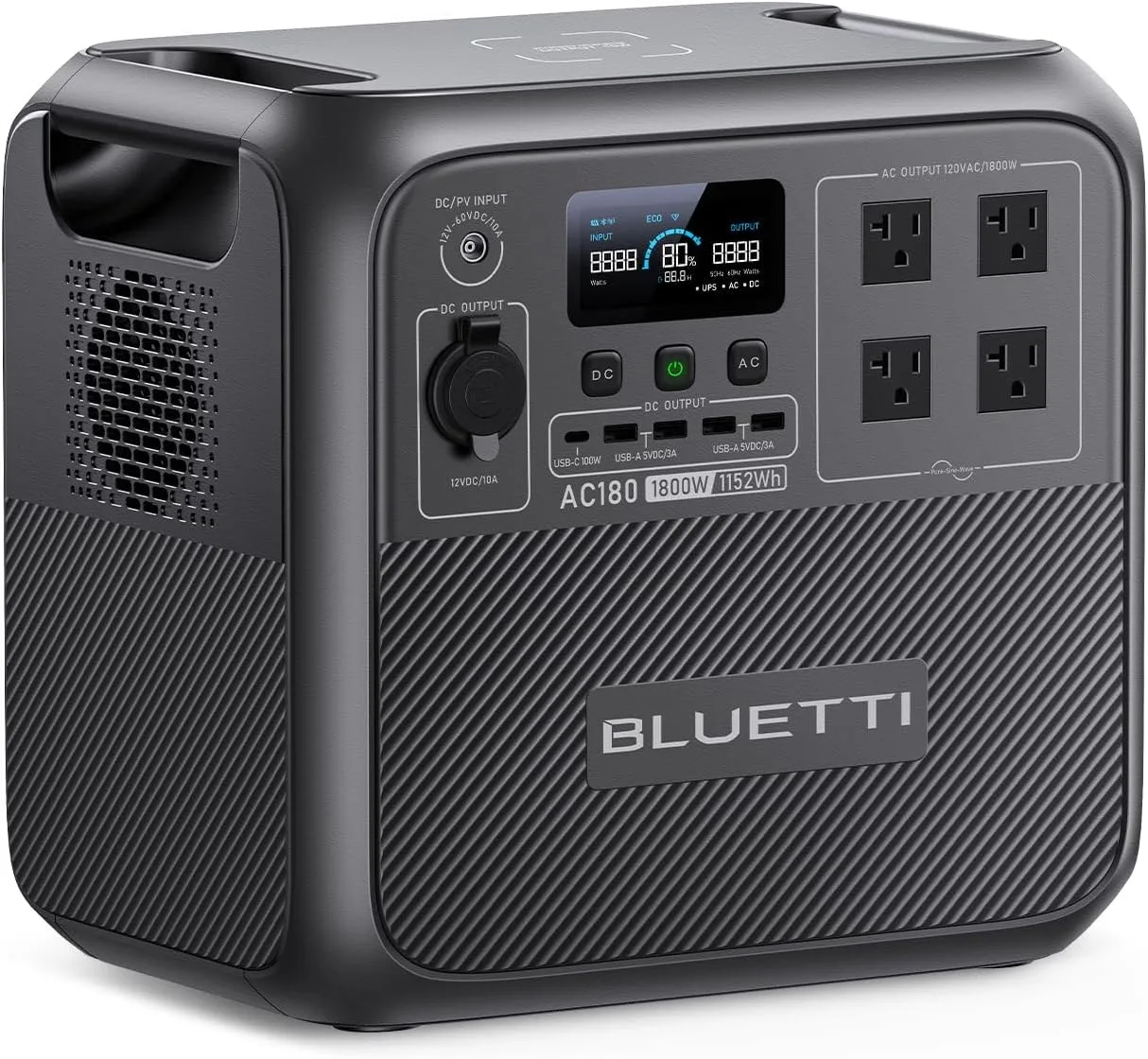
BLUETTI Portable Power Station AC180, 1152Wh LiFePO4 Battery Backup w/ 2 1800W
Highlights
- 1152Wh rated capacity
- 1800W continuous AC
- LiFePO4 chemistry
- Up to 500W solar input
- 35.3 lb (~16.0 kg)
- About $499 list
Best for
- AC180: most Wh per list dollar in mid-size LiFePO4 shortlists (~1152Wh)
- Home essentials when 1800W continuous matters more than a light carry
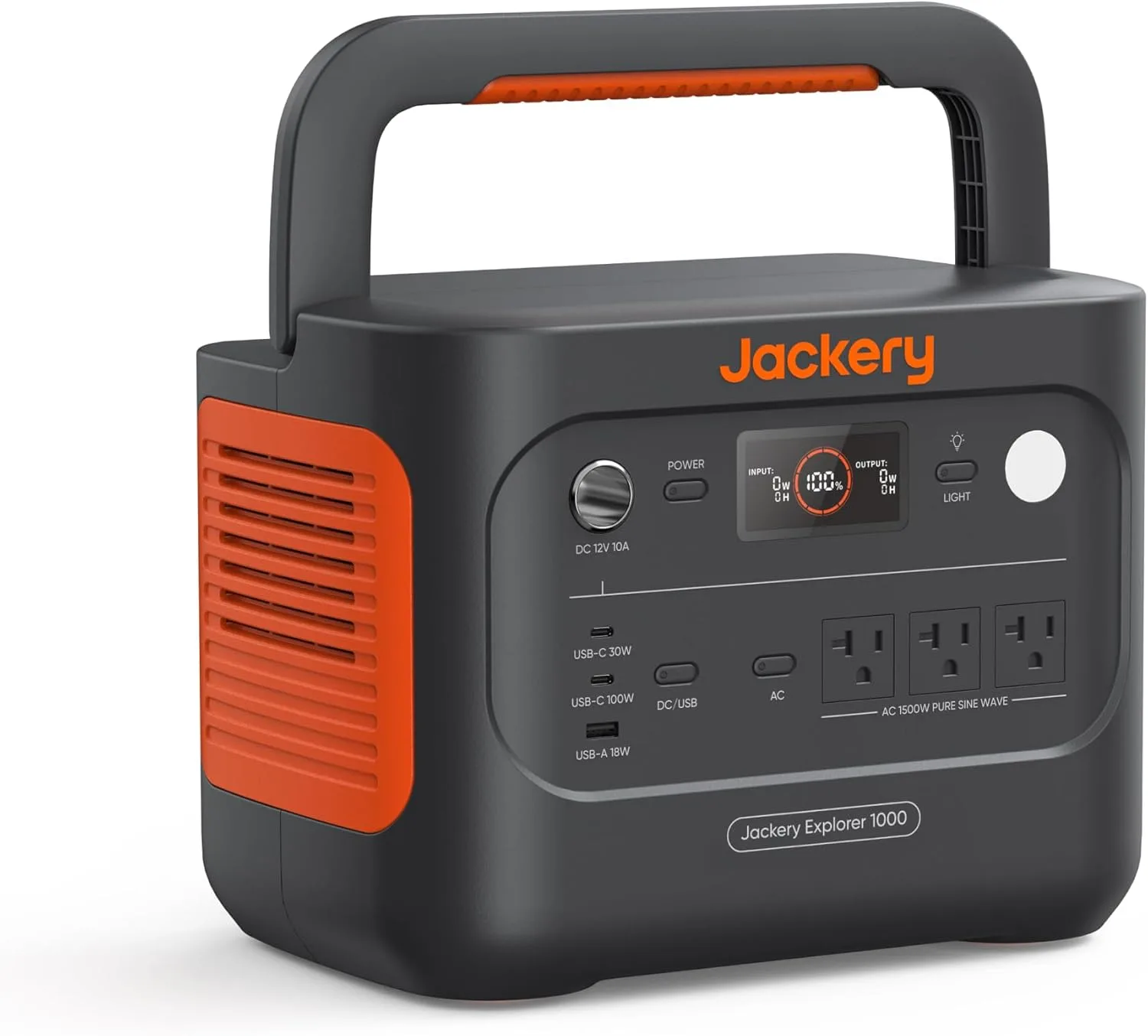
Jackery Explorer 1000 v2 Portable Power Station,1070Wh,1500W
Highlights
- 1070Wh rated capacity
- 1500W continuous AC
- LiFePO4 chemistry
- Up to 400W solar input
- 23.8 lb (~10.8 kg)
- About $559 list
Best for
- Explorer 1000 v2: weekend camping when 23.8 lb carry weight matters as much as 1070Wh
- Essentials bridge at home (fridge cycles, router) when sized to the Wh
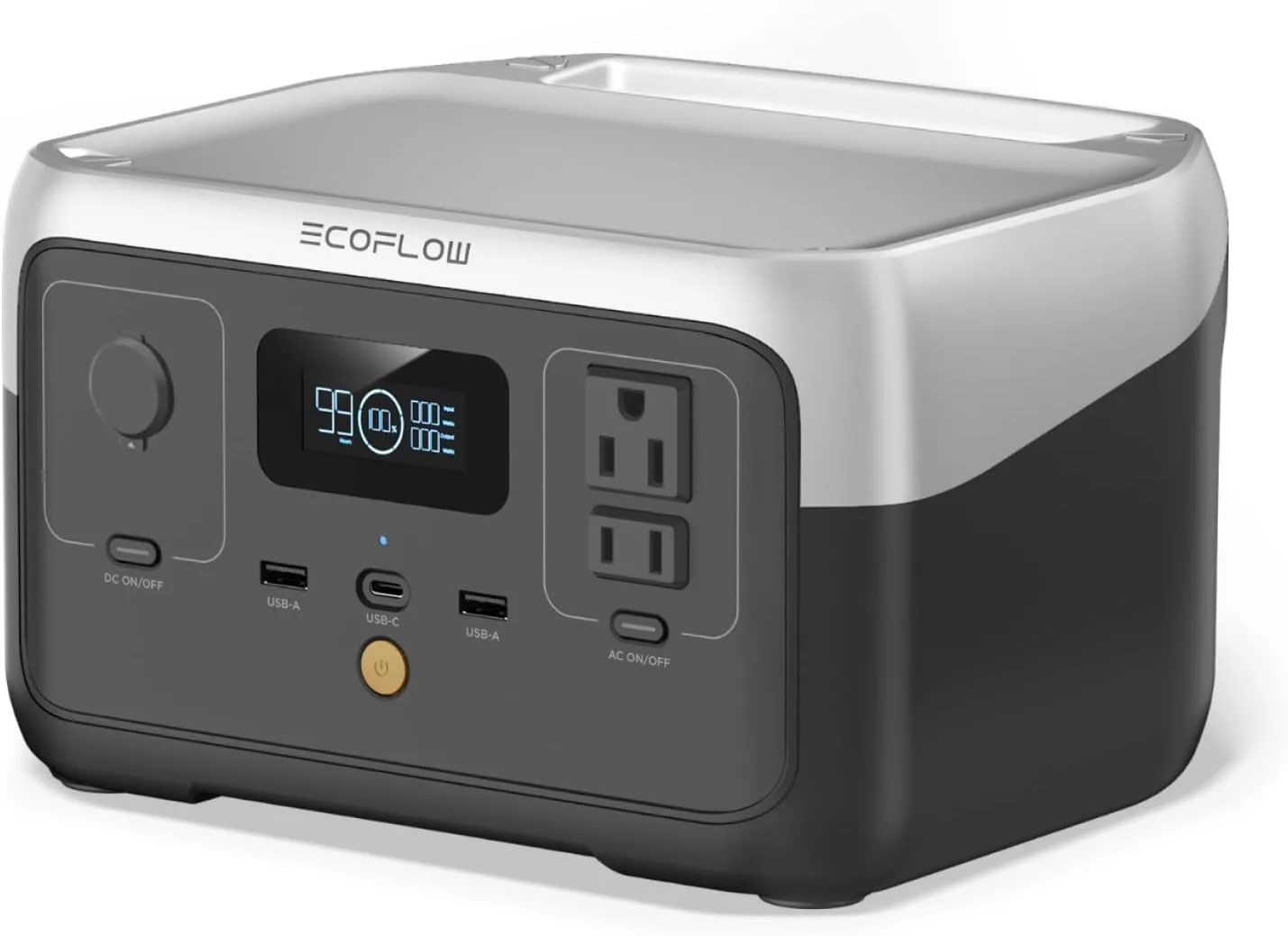
EcoFlow RIVER 2
Highlights
- 243Wh rated capacity
- 300W continuous AC
- 600W surge
- LiFePO4 chemistry
- Up to 110W solar input
- 7.7 lb (~3.5 kg)
Best for
- RIVER 2: phones, cameras and a laptop on short trips
- Travel kits when you need quiet pack power, not appliance runtime
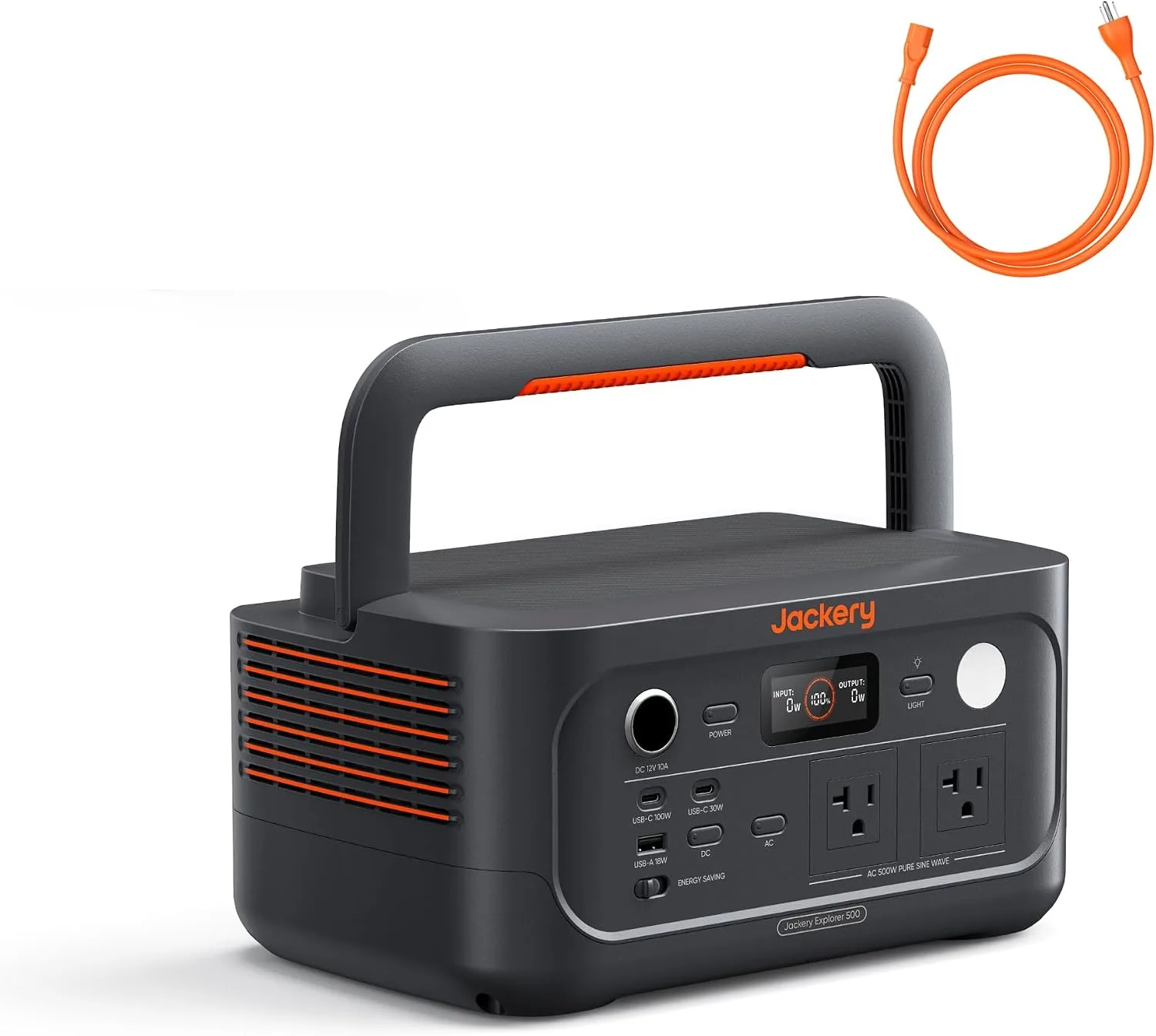
Jackery Explorer 500 v2 Power Station, 512Wh/500W, AC Cable Included
Highlights
- About $399 list
- Jackery catalog listing
- Specs from manufacturer listings
Best for
- Explorer 600 v2: most Wh-per-dollar in this ~500Wh band for weekend fridge/CPAP math
- Car-camp carry at 14.1 lb when review depth matters as much as peak watts
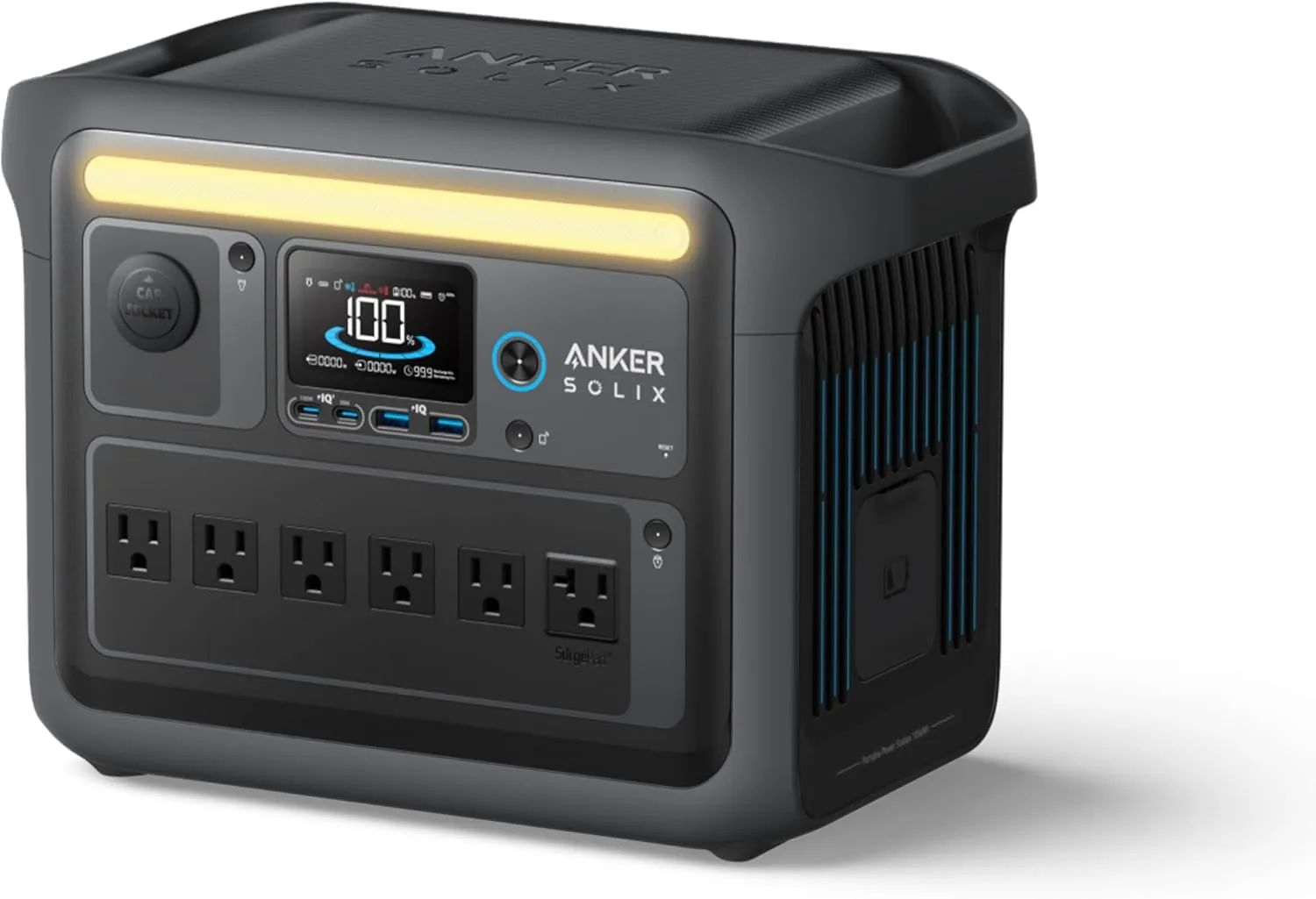
Anker C1000 Portable Power Station with Car Charging Cable, 1,056Wh
Highlights
- 1056Wh rated capacity
- 1800W continuous AC
- LiFePO4 chemistry
- Up to 600W solar input
- 28.4 lb (~12.9 kg)
- About $599.99 list
Best for
- SOLIX C1000: small appliances and tools that need ~1800W continuous, not just phone charging
- Essentials bridge at home (fridge cycles, router) when sized to the Wh
How we weight this job
I score each station on five factors, weighted for a home-backup and light-camping buyer. Usable capacity and honest runtime carry the most weight because that is what an outage actually tests. Continuous output and startup headroom come next, since a station that trips on a fridge compressor is useless for backup. Recharge speed matters when the grid is flaky. Portability and owner-reported reliability round it out.
The percentages: usable capacity and runtime 30%, continuous output and startup headroom 25%, recharge speed 20%, portability and weight 15%, owner themes and reliability 10%. Every percentage is scored in the ranking below.
Why these weights: a 1000Wh station that cannot start a fridge is worse than a 500Wh station that can run a CPAP all night. Output headroom is not a spec-sheet bragging right — it is the difference between a backup that works and one that beeps at you. Recharge speed gets 20% because a station you cannot refill during a multi-day outage is a one-shot tool.
Method line: these are home-user checks grounded in owner themes on file plus listing specs; they are not lab-bench measurements. Prices are list prices from the catalogue, not sale stickers.
Tracing #1 vs #2: the BLUETTI AC180 takes the top spot because it pairs 1,152Wh with 1,800W continuous and a 20ms UPS switchover — the only station here with a published UPS figure that owners describe using as a real transfer backup. The Jackery Explorer 1000 v2 is close on capacity (1,070Wh) and lighter at 23.8 lb, but its 1,500W continuous output and lack of a native 12V barrel plug cost it the edge for fridge-and-router duty. The AC180's 20W idle draw is a real penalty, but its output headroom and UPS behavior outweigh it for this job.
One Amazon Associates disclosure: picks are fit-led, not commission-led. I am Avery Nolan, WattPicks founding editor — portable power capacity, output, and price-per-Wh guidance across the catalogue, no lab claims.
Scenario facts
The table below is the spec snapshot for all six stations. Prices are list prices. Ratings are listing aggregates, not owner proof. Where a spec is not on file, the cell says n/a.
| Product | List price | Capacity (Wh) | Output (W) | Weight (lb) | Rating |
|---|---|---|---|---|---|
| EcoFlow RIVER 2 | $177.65 | 243 Wh | 300 W | 7.7 lb | 4.30 |
| Jackery Explorer 1000 v2 Portable Power Station,1070Wh,1500W | $559 | 1070 Wh | 1500 W | 23.8 lb | 4.75 |
| ALLWEI PPS600-1 | $279 | 512 Wh | 500 W | 13 lb | 4.40 |
| Jackery Explorer 500 v2 Power Station, 512Wh/500W, AC Cable Included | $399 | 640 Wh | 500 W | 14.1 lb | 4.60 |
| Anker C1000 Portable Power Station | $599.99 | 1056 Wh | 1800 W | 28.4 lb | 4.88 |
| BLUETTI AC180 | $499 | 1152 Wh | 1800 W | 35.3 lb | 4.85 |
The ranking
Ranked by the weights above. Prices are list prices. Every station here is a portable power station with published AC output — no solar-panel-only kits.
1. BLUETTI AC180 — $499, 1,152Wh, 1,800W, 35.3 lb. Best for fridge-and-router backup. Highest capacity and output headroom here, plus a published 20ms UPS switchover. Boundary: 20W idle draw and 35.3 lb weight make it a park-it station, not a carry-it one.
2. Jackery Explorer 1000 v2 — $559, 1,070Wh, 1,500W, 23.8 lb. Best for buyers who need to move the station between rooms. 11.5 lb lighter than the AC180 with nearly the same capacity. Boundary: no native 12V barrel plug, and 1,500W continuous is less startup headroom for a fridge.
3. Anker C1000 — $599.99, 1,056Wh, 1,800W, 28.4 lb. Best for owners who want 1,800W output in a lighter package than the AC180. Owners report long fridge runtimes (see the outlier note below) and ~1.5h recharge. Boundary: 28.4 lb, a short AC cable, and a firmware connection issue that owners say was resolved by update.
4. Jackery Explorer 500 v2 — $399, 640Wh, 500W, 14.1 lb. Best for a CPAP-and-router backup with regulated 12V output. Owners praise the regulated 12V for sensitive electronics and report a long fridge run (see outlier note). Boundary: a single AC outlet and 500W continuous — check fridge startup draw before counting on it.
5. ALLWEI PPS600-1 — $279, 512Wh, 500W, 13 lb. Best for a compact, cheap CPAP-and-router backup. Owners like the pass-through charging and USB-C quick charge. Boundary: a non-disableable sleep timer that cuts DC output, and a ~70–80W solar input cap.
6. EcoFlow RIVER 2 — $177.65, 243Wh, 300W, 7.7 lb. Best for the lightest carry and the lowest list price. Owners report a full night on a CPAP and ~1-hour recharge. Boundary: 300W continuous and low-wattage limits — it is not a fridge backup.
Outlier note: owner-reported fridge runtimes for the Anker C1000 and Jackery Explorer 500 v2 are implausibly high against nameplate Wh ÷ load math (e.g., a full-size fridge drawing 100–200W cannot run 36 hours on 1,056Wh; 15 hours on 640Wh is at the extreme edge). Treat these as best-case outliers, not planning figures.
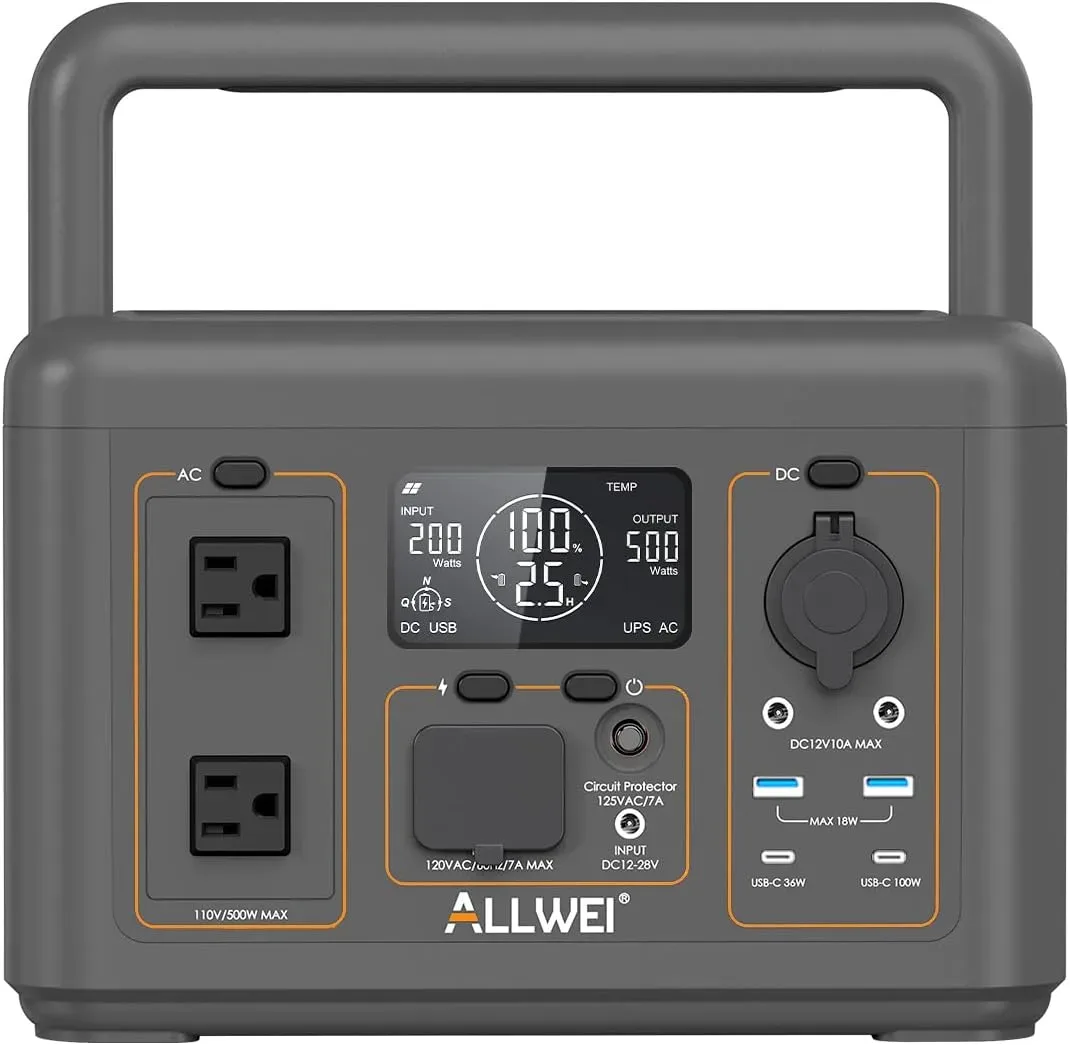
ALLWEI Portable Power Station 500W, 512Wh LiFePO4 Battery UPS Backup Power
Highlights
- 512Wh rated capacity
- 500W continuous AC
- LiFePO4 chemistry
- 13 lb (~5.9 kg)
- About $279 list
Best for
- Portable: weekend camping when 13 lb carry weight matters as much as 512Wh
- Essentials bridge at home (fridge cycles, router) when sized to the Wh
What goes wrong
The most common mistake is buying on nameplate Wh and ignoring idle draw. The BLUETTI AC180 consumes about 20W per hour with the inverter on, per owner reports — that is roughly 480Wh over a day of idle inverter time, nearly half its capacity. If your load is a 15W router, that overhead dominates.
The second mistake is assuming a 500W station will start a fridge. Compressor startup draw can be two to three times running watts. A station rated at 500W continuous may trip on a fridge that runs at 150W. Check startup headroom, not just running watts.
The third is forgetting that recharge speed is part of the backup plan. A station that takes eight hours to refill from solar is a one-outage tool in cloudy weather. The RIVER 2 and AC180 both recharge fast from AC; solar refill depends on panel wattage and sun, which is not a spec-sheet guarantee.
- Idle inverter draw can eat 20–50% of capacity over a day if you leave outputs on.
- Compressor startup draw can trip a station rated for the running watts.
- Solar refill speed depends on panel wattage and weather — not a fixed runtime.
- Sleep timers on some units (ALLWEI PPS600-1) cannot be disabled and will cut DC output.
Who should pick something else
If you need to run a 240V well pump, a central AC, or a whole-home transfer switch, none of these six is the right tool. That is an electrician-and-permit job with a different class of hardware. Look at a home standby generator or a smart-panel installation instead.
If you need a station you can carry on a long hike or toss in a backpack for a day trip, the 1000Wh units here are too heavy. The AC180 is 35.3 lb and the Anker C1000 is 28.4 lb. The RIVER 2 at 7.7 lb is the only one that fits that job, and it will not run a fridge.
If you need native 12V DC barrel output for a CPAP or ham radio without an adapter, the Jackery Explorer 1000 v2 is not the pick — owners note the lack of a 12V barrel plug. The Explorer 500 v2 has a regulated 12V output that owners specifically praise for sensitive electronics.
Owner themes
These are theme summaries from owner reviews on file, not raw review dumps. Listing star averages are aggregate only. Caveats already covered in the ranking are not repeated here; this section focuses on unique owner experiences.
- BLUETTI AC180: owners describe instant UPS switchover for basement outlets, accurate runtime display, and fast AC recharge; caveats include an unreliable wireless charging pad.
- Jackery Explorer 1000 v2: owners report running a fridge and portable AC together, quiet overnight mode, and ~1h40 normal recharge; caveats include high-draw tool limits.
- Anker C1000: owners report ~1.5h recharge; caveats include a short AC cable and a firmware connection issue resolved by update.
- Jackery Explorer 500 v2: owners praise regulated 12V output for sensitive electronics and solar charging; caveats include a slow support case.
- ALLWEI PPS600-1: owners like the compact build, pass-through charging, and USB-C quick charge; caveats include a ~70–80W solar input cap.
- EcoFlow RIVER 2: owners report ~1-hour recharge; caveats include low-wattage limits, a firmware quirk, and one battery-drain outlier.
Frequently asked
How long will the BLUETTI AC180 run a fridge?
Owners report a full-size fridge running for hours, but the exact runtime depends on fridge efficiency, room temperature, and how often the door opens. The AC180's 1,152Wh nameplate is a ceiling; plan for less usable capacity after inverter idle draw and depth-of-discharge limits.
Can the EcoFlow RIVER 2 run a CPAP all night?
Owners report a full night on a single charge, but CPAP power draw varies by model and humidifier use. The RIVER 2 is 243Wh and 300W continuous — check your CPAP's wattage and humidifier draw before relying on it for more than one night.
Which station is cheapest per Wh?
The BLUETTI AC180 at $0.43/Wh nameplate is the lowest nameplate cost per Wh in this shortlist. That is a nameplate figure, not usable-Wh; usable capacity is lower for every station here.
Do I need a 1000Wh station for a router and a CPAP?
No. A ~500Wh station like the ALLWEI PPS600-1 or Jackery Explorer 500 v2 can carry a router and CPAP for a night. The ~1000Wh class is for fridge backup or multi-day device charging.
How do I size solar panels to recharge a 500Wh or 1000Wh station?
Match panel wattage to the station's solar input cap (e.g., the ALLWEI PPS600-1 caps at ~70–80W). A 100W panel in good sun can refill a 500Wh station in roughly a day; a 1000Wh station needs more panel wattage or more time. Cloud and angle cut real-world output.
How much CPAP runtime should I plan for with a humidifier?
Humidifiers can double or triple CPAP draw. For a 243Wh station like the RIVER 2, a heated humidifier may cut a full night to a few hours; check your model's wattage and consider a non-heated setup for backup.
Method and sources
Model names and list prices come from the WattPicks catalog at build time. WattPicks does not run its own laboratory tests on power stations, and nothing on this page is presented as a measured result — it is catalog-backed buying guidance.
Read our methodology for how the catalog is normalized, and about WattPicks for who publishes it.