
Jackery 1500 v2 + 100W Panel: Is the Costco Bundle Worth It?
A Sprinter-Source thread asks whether Costco's Jackery Explorer 1500 v2 + 100W solar bundle is a smart buy for van life. The community's answer: the price is fine, but the panel is too small for serious off-grid loads. Here's the energy-budget math to decide for your own rig.
Updated
At a glance
A Sprinter-Source thread asks whether Costco's Jackery Explorer 1500 v2 + 100W solar bundle is a smart buy for van life. The community's answer: the price is fine, but the panel is too small for serious off-grid loads. Here's the energy-budget math to decide for your own rig.
The Short Answer: Good Price, Wrong Panel for Most Van Lifers
As an Amazon Associate I earn from qualifying purchases. Recommendations here are based on fit and the evidence below — not commission size.
If you're asking whether Costco's Jackery Explorer 1500 v2 + 100W solar panel bundle is a good deal, the forum verdict splits cleanly: the power station itself is solid hardware at a fair price, but the included 100W panel is too small for anything beyond weekend top-ups. For full-time van life—especially with a Starlink dish—you'll likely outgrow the solar side before the battery side.
This page is a math-forward walkthrough of the community's own energy-budget logic, using the Jackery Explorer 1500 v2 Power Station,1536Wh,2000W Output as the concrete anchor. The bundle URL referenced in the thread is Costco's listing; bundle pricing and contents vary by warehouse and season, so check the live Costco listing for the current price and what's included. The station alone lists at $949.
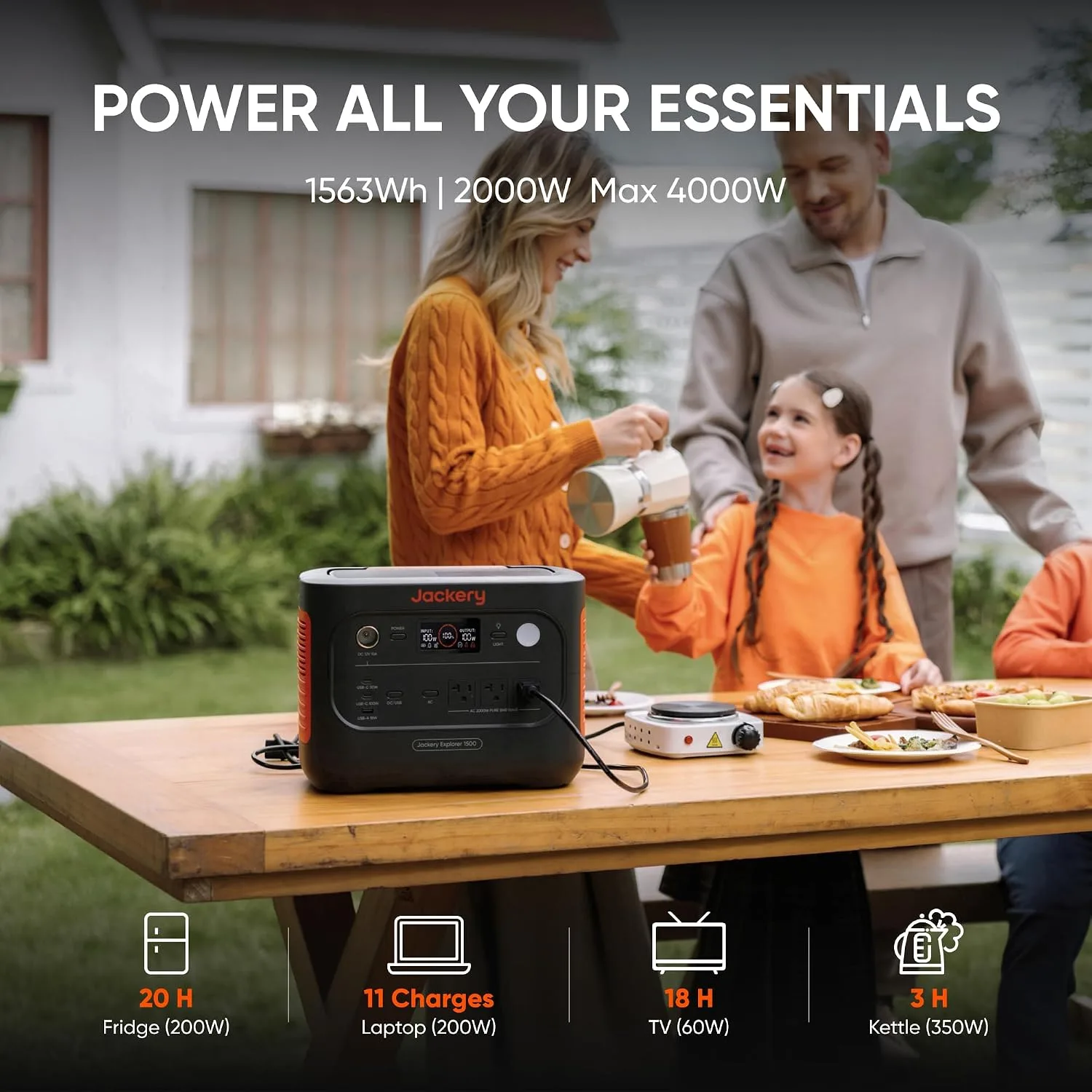
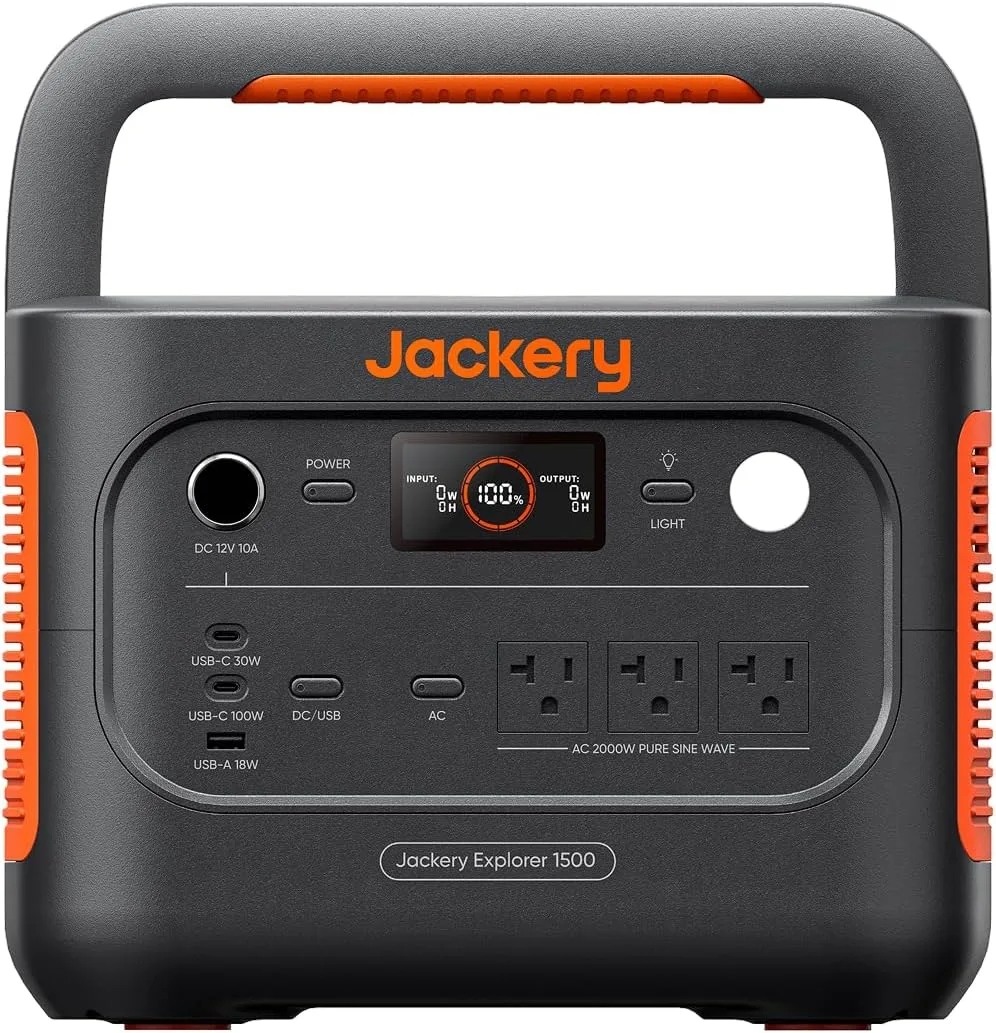
Jackery Explorer 1500 v2 Power Station,1536Wh,2000W Output
Highlights
- 1536Wh rated capacity
- 2000W continuous AC
- 4000W surge
- LiFePO4 chemistry
- 32 lb (~14.5 kg)
Best for
- Explorer 1500 v2: longer outages or higher continuous loads (still not whole-home wiring)
- RV / off-grid days where recharge speed matters as much as Wh
What's in the Costco Jackery 1500 v2 Bundle?
The bundle pairs the Explorer 1500 v2 with a 100W folding solar panel. The station is the headline: 1536Wh of LiFePO4 capacity, 2000W continuous AC output (4000W surge), and a 32 lb body that Jackery markets as the lightest in its class. You get three AC outlets and two USB-C ports; USB-A is not confirmed on the listing, so don't count on it either way.
The panel is where the forum's eyebrows go up. A 100W panel is a trickle charger for a battery this size—useful for maintaining charge on a sunny weekend, not for running a van's daily loads off-grid. One member put it bluntly: 100W is too small for Starlink. That's the tension the rest of this page unpacks.
- Station: 1536Wh LiFePO4, 2000W continuous / 4000W surge, 32 lb
- Ports: AC×3, USB-C×2 (USB-A not confirmed)
- Panel: 100W folding solar (included in bundle)
- List price for station alone: $949 (bundle pricing varies by Costco)
The Forum's Verdict: Price Is Good, Sizing Is the Question
Thread participants generally agreed the bundle price is attractive for what you get—a 1536Wh LiFePO4 station with 2000W output is not cheap hardware, and Costco's bundle pricing tends to undercut buying the pieces separately. But the enthusiasm cools when the conversation turns to the panel. Several members argued that 100W is a token solar input for a battery this size, and that anyone planning to rely on solar for daily recharge should budget for 200W–400W instead.
The original poster ultimately concluded his own use case was 'practically nil'—meaning the bundle didn't fit how he actually camped. That's the honest takeaway: the deal is fine, but the fit depends entirely on your load profile.
Run an Energy Budget Before You Buy
The forum's most useful contribution is a simple energy-budget method: list every appliance you plan to run, note its wattage from the label, multiply by hours per day, and sum to get daily Wh. Then compare that to the station's usable capacity—roughly 80–90% of 1536Wh, so call it 1,200–1,380Wh to be safe.
Here's a worked example for a typical weekend van setup. A 12V fridge pulls about 40–60W when cycling, maybe 30–50% duty cycle, so call it 15–25W average—roughly 360–600Wh per day. Add a laptop charger (60W for 3 hours = 180Wh), phone and camera charging (30Wh), and LED lights (10W for 4 hours = 40Wh). That's 610–850Wh per day. The Jackery 1500 v2 covers one day comfortably, maybe two if you're frugal. Starlink is the wild card: the standard dish draws 50–75W continuous, which is 1,200–1,800Wh per day—enough to drain the station in a single day on its own.
- Formula: appliance watts × hours used = Wh per day
- Usable capacity: ~1,200–1,380Wh (80–90% of 1536Wh)
- Weekend fridge + laptop + lights: ~610–850Wh/day → 1.5–2 days
- Starlink alone: ~1,200–1,800Wh/day → station lasts <1 day
Is 100W of Solar Enough to Recharge the Jackery 1500?
Forum members cited a rule of thumb: a 100W panel delivers about 4.5A in good sun, which translates to roughly 60–70W of real-world charging after losses. To refill 1536Wh from empty, you're looking at 22–26 hours of perfect sunlight—three to four good days, realistically. That's fine if you're parked in the desert and only sipping power; it's hopeless if you're running a fridge and Starlink daily.
The math gets worse when you factor in load. If your daily draw is 800Wh and your panel brings in 300Wh on a decent day, you're net negative by 500Wh—the station drains even while solar is connected. The forum's recommendation to size solar at 200W–400W for van life is grounded in exactly this gap. Keep in mind that panel output varies with angle, shading, and temperature, so real-world harvest can be lower than these estimates.
- 100W panel ≈ 4.5A ≈ 60–70W real-world charge rate
- Full recharge from empty: ~22–26 hours of ideal sun
- Daily solar harvest (5 peak sun hours): ~300–350Wh
- Net negative if daily load exceeds ~300Wh
When 1500Wh Is Enough—and When You Need 2000W+
The 1536Wh class is the sweet spot for weekend car camping and light van use: fridge, lights, laptop, camera gear, maybe a small blender or electric kettle for a few minutes. The 2000W continuous output handles most kitchen appliances short of a full-size microwave or induction cooktop running simultaneously. Surge to 4000W covers motor starts on a small fridge or power tools.
But the forum members who recommended 2000W–3000W minimums were talking about a different job: running a van's electrical system as the primary power source, often with an inverter tied to a larger battery bank. If you're planning to run an induction cooktop (1,800W+), a microwave (1,000–1,500W), or a Starlink dish continuously, the 1500 v2's 1536Wh becomes the bottleneck—not the wattage, but the total energy. You'd be recharging constantly, and 100W of solar won't keep up. In short, inverter wattage needs (can it run this appliance at once?) are separate from total energy needs (how long can it run before recharging?).
- Enough for: weekend fridge, lights, laptop, camera batteries, small appliances
- Not enough for: daily Starlink + fridge + cooking on solar alone
- 2000W continuous handles most single appliances; check startup surge on motors
Ecosystem Lock-In: Jackery vs. EcoFlow and Alternator Charging
One thread participant raised a practical point that has nothing to do with watt-hours: ecosystem. If you're building a van electrical system, the alternator charger is often the real workhorse—driving down the road tops up the battery far faster than solar. EcoFlow sells a dedicated alternator charger that integrates with its stations; Jackery's ecosystem is smaller, and forum members noted that switching brands later means replacing accessories, not just the station.
That's not a knock on the Jackery hardware—the 1500 v2 uses LiFePO4 cells, and the listing does not specify cycle life or UPS switchover time, so don't rely on those figures without checking the product page. If you're planning a full van build with alternator charging as the primary source, price out the whole ecosystem before committing to the bundle.
Who This Bundle Is Actually For (Weekend Car Campers)
Buy this bundle if your typical trip is two to three nights, you're running a 12V fridge and charging devices, and you're parked in sun for at least part of the day. The 100W panel will keep you topped up between weekend trips, and the 1536Wh capacity gives you a comfortable buffer. The 32 lb weight is manageable for one person to move between car and campsite, and the 2000W output covers a coffee maker or electric skillet without drama.
It's also a reasonable emergency-backup purchase for home use—the 4000W surge makes it more capable than a typical UPS for short outages, though 1536Wh won't run a fridge for days.
Who Should Skip It (Full-Time Van Lifers and Starlink Users)
Skip the bundle if you're living in the van full-time, running Starlink, or planning to cook with electric appliances daily. The math doesn't work: Starlink alone can consume the station's usable capacity in a day, and 100W of solar replaces maybe a quarter of that on a good day. You'd be better off buying the station alone (if you want Jackery) and pairing it with 300W–400W of solar, or stepping up to a larger capacity class with an alternator charger as your primary recharge source.
Also skip if you're sensitive to customer-service risk. The one owner review on file is a 1-star complaint about shipping and support, not performance—thin evidence (n=1), but worth noting if after-sales service matters to you. No positive owner themes are on file for this SKU, so treat the rating signal as incomplete.
What Could Go Wrong After 12 Months
Beyond the initial fit, consider long-term ownership. LiFePO4 batteries degrade gradually with cycling and heat; the listing does not publish a cycle-life rating, so check the product page for warranty terms. The folding panel's durability depends on how often it's deployed and stored—treat it as a consumable if you're setting it up daily. And Costco's return window is generous but not infinite; confirm the current policy at the warehouse or on the listing before you rely on it.
Bottom Line: Buy Once, Cry Once—or Skip the Toy?
The Costco Jackery 1500 v2 + 100W panel bundle is a fair price on capable hardware, but the panel is the weak link for anyone serious about off-grid van life. Run the energy budget first: if your daily draw is under ~600Wh and you're mostly weekend camping, the bundle works. If you're running Starlink or cooking electric, budget for more solar or a bigger system—the forum's 2000W–3000W recommendations weren't gatekeeping, they were math.
The original poster's 'practically nil' conclusion is the honest outcome of doing the budget before buying. Do the same, and you'll know whether this bundle is a smart shortcut or a starter kit you'll outgrow in a season.
| Product | Capacity | Continuous Output | Surge | Weight | Chemistry | List Price | $/Wh | Rating |
|---|---|---|---|---|---|---|---|---|
| Jackery Explorer 1500 v2 Power Station,1536Wh,2000W Output | 1536 Wh | 2000 W | 4000 W | 32 lb | LiFePO4 | $949 | $0.52/Wh | 4.32 |
Spec Snapshot: Jackery Explorer 1500 v2
Numbers below are from the product listing and WattPicks catalogue, not from lab testing. The 3.6-star aggregate reflects only three ratings—treat it as thin signal, not a verdict.
- Can the Jackery 1500 v2 run a Starlink dish? Yes, the 2000W output covers the ~50–75W draw, but the 1536Wh capacity lasts less than a day—and 100W of solar won't recharge it fast enough for continuous use.
- How long does the 100W panel take to recharge the station from empty? About 22–26 hours of ideal sunlight, or three to four good solar days.
- Is 1536Wh enough for full-time van life? Only if your daily draw stays under ~600Wh and you have alternate charging (alternator or shore power). For Starlink plus fridge plus cooking, no.
- Does the Jackery 1500 v2 have USB-C? Yes—two USB-C ports are listed. USB-A is not confirmed on the listing.
| Product | Capacity | Continuous Output | Surge | Weight | Chemistry | List Price | $/Wh | Rating |
|---|---|---|---|---|---|---|---|---|
| Jackery Explorer 1500 v2 Power Station,1536Wh,2000W Output | 1536 Wh | 2000 W | 4000 W | 32 lb | LiFePO4 | $949 | $0.52/Wh | 4.32 |
What owners report
Owner evidence for this SKU is thin: a single 1-star review on file, which complains about shipping and customer support rather than performance. No positive owner themes are available, so treat this as an n=1 signal, not a representative sample. We have not conducted independent field checks; this page relies on forum math and listing specs.
- Jackery Explorer 1500 v2 Power Station,1536Wh,2000W Output: One 1-star review cites shipping damage and poor support; no performance complaints on file.
Frequently asked
Can the Jackery 1500 v2 run a Starlink dish?
Yes, the 2000W output covers the ~50–75W draw, but the 1536Wh capacity lasts less than a day—and 100W of solar won't recharge it fast enough for continuous use.
How long does the 100W panel take to recharge the station from empty?
About 22–26 hours of ideal sunlight, or three to four good solar days.
Is 1536Wh enough for full-time van life?
Only if your daily draw stays under ~600Wh and you have alternate charging (alternator or shore power). For Starlink plus fridge plus cooking, no.
Does the Jackery 1500 v2 have USB-C?
Yes—two USB-C ports are listed. USB-A is not confirmed on the listing.
Method and sources
Model names and list prices come from the WattPicks catalog at build time. WattPicks does not run its own laboratory tests on power stations, and nothing on this page is presented as a measured result — it is catalog-backed buying guidance.
Read our methodology for how the catalog is normalized, and about WattPicks for who publishes it.