
DJI Power 1000 V2 vs EcoFlow DELTA 3 Classic: Load Match
Two 1024 Wh stations, $140 apart. One leans on fast UPS switching and high inrush for tools; the other on 1800 W continuous and a lower list price. Here's which room-scale backup fits your actual loads.
Updated
At a glance
Two 1024 Wh stations, $140 apart. One leans on fast UPS switching and high inrush for tools; the other on 1800 W continuous and a lower list price. Here's which room-scale backup fits your actual loads.
- DJI Power 1000 V2: $699, 1024 Wh, 1000 W continuous, 31.3 lb, 4.4 listing aggregate (807 ratings).
- EcoFlow DELTA 3 Classic: $559, 1024 Wh, 1800 W continuous, 26.7 lb, 4.7 listing aggregate (1359 ratings).
Same money, different bets
As an Amazon Associate I earn from qualifying purchases. Recommendations here are based on fit and the evidence below — not commission size.
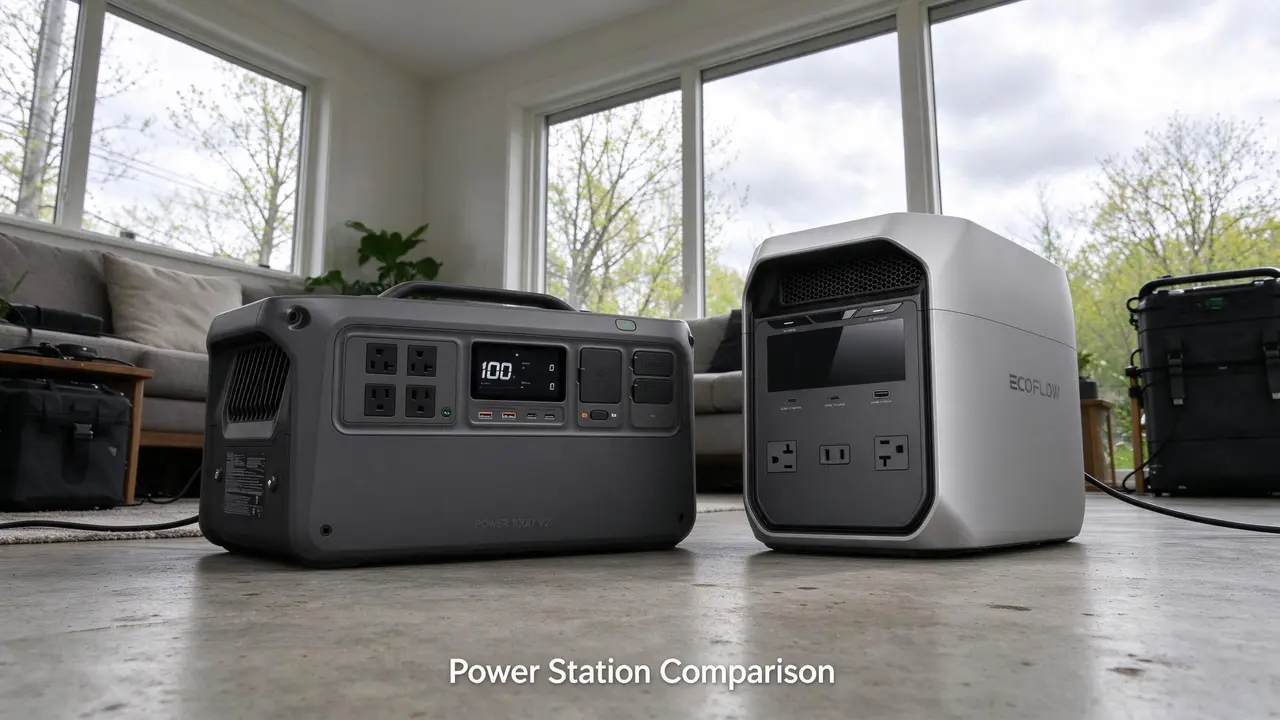
At $699 for the DJI Power 1000 V2 and $559 for the EcoFlow DELTA 3 Classic, you're paying for the same 1024 Wh of LFP capacity but two different ideas about what a backup should do. The DJI bets on fast UPS switching, high inrush for power tools, and app monitoring. The EcoFlow bets on 1800 W continuous output, a lower list price, and a near-instant transfer that owners use to keep fridges and sump pumps alive.
This is not a whole-home backup guide. Neither unit runs a furnace, well pump, and fridge at once without expansion batteries or a transfer switch. Think of them as room-scale UPS units for a handful of essential loads — and the right pick depends on which loads you actually need to keep running.
- DJI Power 1000 V2: $699, 1024 Wh, 1000 W continuous, 31.3 lb, 4.4 listing aggregate (807 ratings).
- EcoFlow DELTA 3 Classic: $559, 1024 Wh, 1800 W continuous, 26.7 lb, 4.7 listing aggregate (1359 ratings).
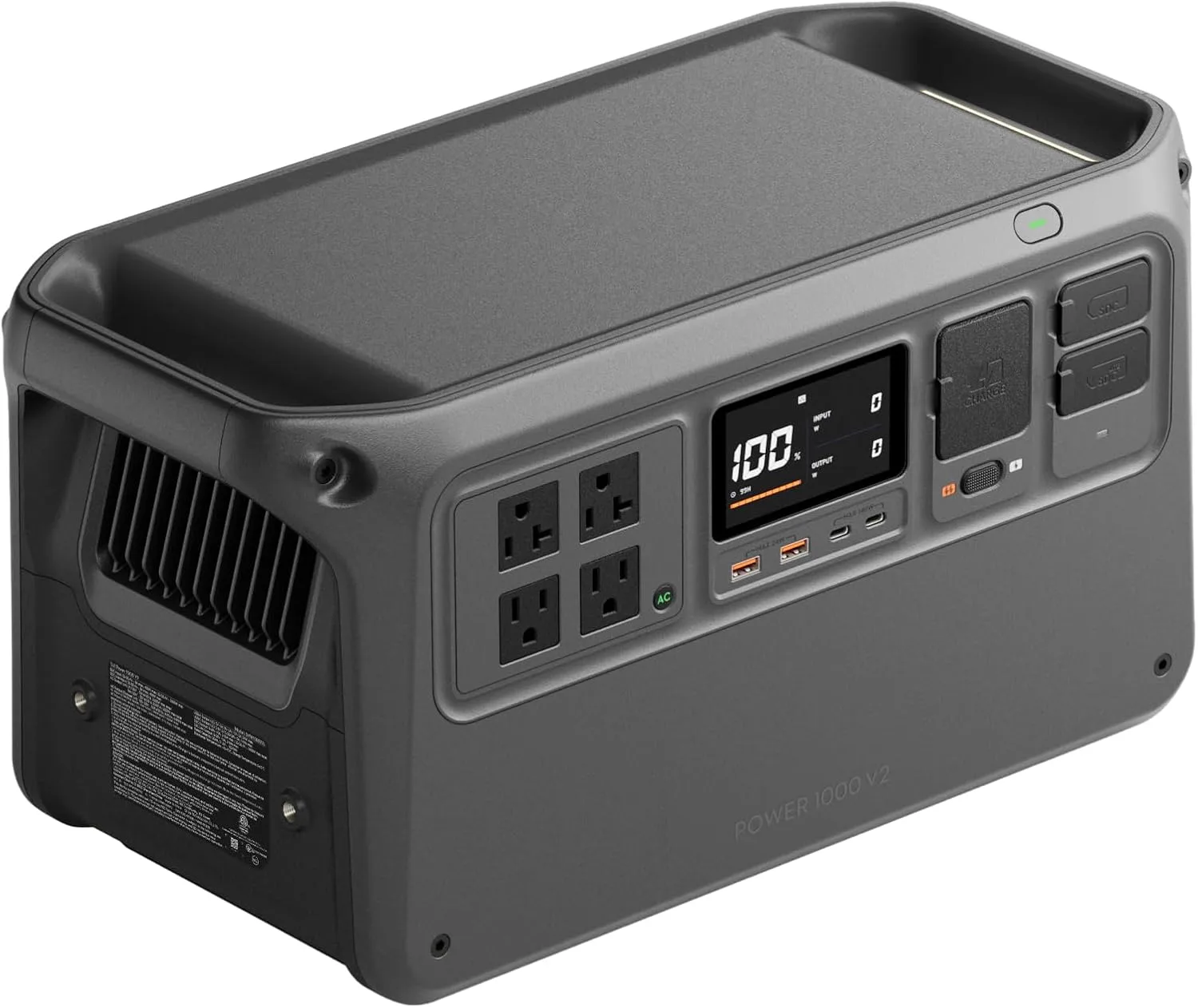
DJI DJI Power 1000 V2
Highlights
- 1024Wh rated capacity
- 1000W continuous AC
- LiFePO4 chemistry
- 31.3 lb (~14.2 kg)
- About $699 list
Best for
- DJI Power 1000 V2: UPS-style bridge for router/desktop through brief outages (10ms class on listing)
- Park-and-use indoor electronics backup at 31.3 lb — not a long hike companion
- Warranty-first buyers who accept accessory-dependent solar/car charging
Strengths
- DJI Power 1000 V2: 1024Wh / 1000W continuous — treat as electronics and light loads, not a tool inverter
- 31.3 lb (~14.2 kg) is a park-and-use chassis — plan a short path, not a trail hike
- DJI Power 1000 V2 uses LiFePO4 — cycle-life claims usually beat older NMC marketing lines
- About $699 list in the Hub catalog — confirm live retail before you buy
Watch-outs · not ideal when
- 31.3 lb (~14.2 kg) is a two-hand lift; skip it if you walk more than a short path to camp
- Usable energy on DJI Power 1000 V2 is below the 1024Wh label once the inverter is working
- DJI Power 1000 V2: solar/car charging is accessory-dependent on the listing — not a built-in published input ceiling
- LiFePO4 helps longevity, but DJI Power 1000 V2 still hates freezing charge temps on winter trips
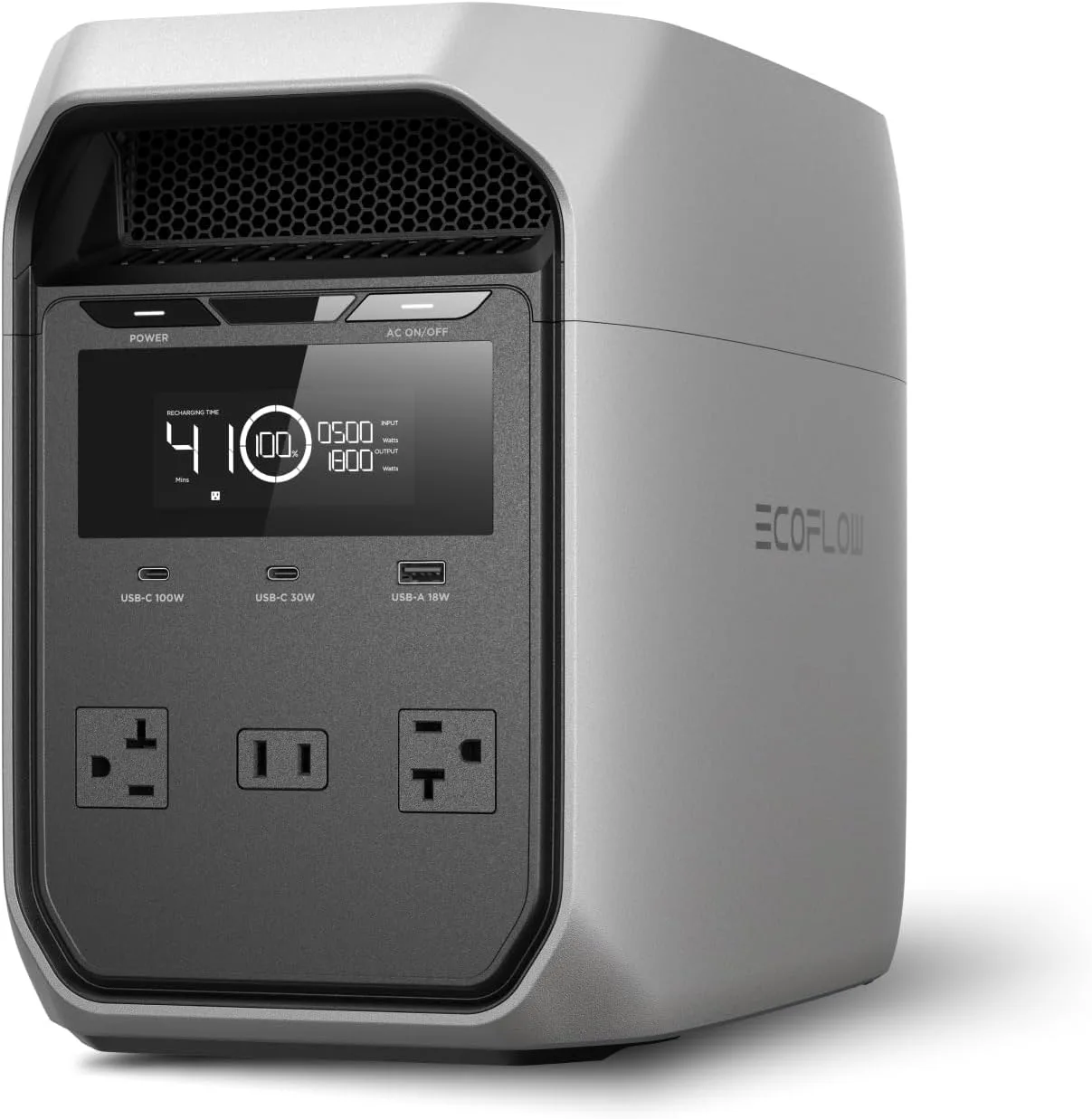
EcoFlow DELTA 3 Classic
Highlights
- 1024Wh rated capacity
- 1800W continuous AC
- 3600W surge
- LiFePO4 chemistry
- Up to 500W solar input
- 26.7 lb (~12.1 kg)
Best for
- DELTA 3 Classic: small appliances and tools that need ~1800W continuous, not just phone charging
- Essentials bridge at home (fridge cycles, router) when sized to the Wh
- Solar top-ups up to ~500W when panels and weather cooperate
Strengths
- DELTA 3 Classic: 1024Wh pack with 1800W continuous / 3600W surge — size loads to both numbers
- 26.7 lb (~12.1 kg) sits in the solo car-camp carry carry band for weekend moves
- 1800W continuous headroom covers more small appliances than 1kW-class inverters
- About $559 list in the Hub catalog — confirm live retail before you buy
Watch-outs · not ideal when
- DELTA 3 Classic is still a bridge for essentials — not a transfer-switch whole-home system
- Usable energy on DELTA 3 Classic is below the 1024Wh label once the inverter is working
- Rated 500W solar on DELTA 3 Classic is optimistic; shade and cables cut real watts
- LiFePO4 helps longevity, but DELTA 3 Classic still hates freezing charge temps on winter trips
Spec snapshot
Prices are list prices from the catalogue, not current sale stickers. Ratings are listing aggregates, not owner proof. Weight is in pounds.
| Product | List price | Capacity (Wh) | Output (W) | Weight (lb) | Rating |
|---|---|---|---|---|---|
| DJI Power 1000 V2 | $699 | 1024 Wh | 1000 W | 31.3 lb | 4.40 |
| EcoFlow DELTA 3 Classic | $559 | 1024 Wh | 1800 W | 26.7 lb | 5.00 |
Where the money went
The DJI's $140 premium over the EcoFlow buys a different mix of features. Start with output: the EcoFlow's 1800 W continuous rating is nearly double the DJI's 1000 W, which matters if you want to run a space heater, a microwave, or a circular saw without tripping the inverter. The DJI counters with a 10 ms UPS switchover (from the listing) and a reputation among owners for handling high inrush current on tools and winches.
Ports are close but not identical. The DJI lists AC×4, USB-C (yes), and USB-A×2. The EcoFlow lists AC×6 and USB-C×2; USB-A count is not on file, so I won't claim it's absent. More AC outlets on the EcoFlow means you can leave more devices plugged in at once, which is a real convenience for a fridge, router, and lamp cluster.
Weight favors the EcoFlow by 4.6 lb — 26.7 lb vs 31.3 lb. Neither is a one-hand carry, but the EcoFlow's integrated top handle and lighter body make it easier to move between rooms or into a van. The DJI's 31.3 lb is manageable but noticeable on stairs.
Recharge speed is a wash on paper: DJI claims 0–80% in 37 minutes from AC, EcoFlow claims 0–80% in 45 minutes. Owners on both sides praise fast AC top-ups. The bigger difference is solar: the DJI requires a separate adapter and cable for solar or car charging (not included), while the EcoFlow lists a 500 W solar input and a 2.5-hour recharge with an optional panel. If you plan to rely on solar, budget for accessories on either side.
- Output: EcoFlow 1800 W continuous vs DJI 1000 W — the EcoFlow can run heavier single loads.
- UPS: both list <10 ms switchover; DJI specifically cites 10 ms, EcoFlow cites <10 ms.
- Ports: EcoFlow has 6 AC outlets and 2 USB-C; DJI has 4 AC, USB-C, and 2 USB-A.
- Weight: EcoFlow 26.7 lb vs DJI 31.3 lb — a 4.6 lb difference that matters on stairs.
- Solar: DJI needs a separate adapter/cable; EcoFlow lists 500 W solar input with an optional panel.
The spec that decides it
For most backup buyers, continuous output is the deciding number. The EcoFlow DELTA 3 Classic's 1800 W rating lets it run a 1500 W space heater or a 1200 W microwave on its own. The DJI Power 1000 V2's 1000 W continuous rating will run a fridge (typically 100–200 W running, with a startup surge), a router, a CPAP, and lights — but it will not comfortably run a full-size microwave or a space heater without risking an overload.
The second deciding factor is UPS behavior. Both list sub-10 ms transfer, and owners on both sides describe seamless switchover for fridges and sensitive electronics. The DJI's app monitoring and the EcoFlow's scheduling and storm alerts are both useful, but they don't change the load math. If your backup plan includes a space heater or power tools, the EcoFlow's higher continuous rating is the safer bet. If your plan is router, CPAP, fridge, and a few lights, both work — and the DJI's lower price on sale can tip it.
Runtime math: what 1024 Wh actually buys you
Capacity alone doesn't tell you how long a load will run. To estimate runtime, divide usable watt-hours by the load's average draw, then adjust for inverter efficiency. Both units list 1024 Wh; assuming about 85% inverter efficiency (a common figure, not a spec-sheet claim), plan on roughly 870 usable Wh. The table below uses that assumption and typical load draws; your actual runtime will vary with startup surges and duty cycles.
A few caveats: a fridge cycles on and off, so its average draw is lower than its running wattage; a space heater runs continuously at full draw; and a CPAP's draw depends on pressure settings and whether the humidifier is on. Use these numbers as planning estimates, not guarantees.
- DJI owner theme: strong for tools and UPS duty; watch for gray-market units and missing solar cable.
- EcoFlow owner theme: reliable for fridges and sump pumps; solar can fall short in cloudy weather; check the seller.
| Load | Typical draw | Est. runtime (870 Wh usable) | Notes |
|---|---|---|---|
| Fridge (100–200 W running, ~50% duty) | ~75–100 W average | ~9–12 hours | Cycling load; startup surge handled by UPS |
| CPAP (no humidifier) | ~30–60 W | ~14–29 hours | Humidifier can double or triple draw |
| Router + LED lights | ~20–40 W | ~22–43 hours | Low-draw essentials; both units handle easily |
| 1500 W space heater | 1500 W | ~35 minutes | EcoFlow only (1800 W continuous); DJI 1000 W cannot run it |
How we compared
This comparison is built from manufacturer spec sheets and listing pages for both units, plus owner themes drawn from listing reviews on file across both SKUs (hundreds of ratings combined) and cross-checked against the spec sheets where possible. We did not run our own lab tests. Where a claim comes only from the listing — such as the DJI's 10 ms UPS switchover and 0–80% in 37 minutes, or the EcoFlow's 500 W solar input and 0–80% in 45 minutes — we label it as a listing claim rather than an independently verified result.
Owner anecdotes are paraphrased from those review notes on file, not independently auditable here. That includes the DJI owner's report of peak inrush up to 4500 W, the EcoFlow owner's two sump pumps running for two days on about half a charge, the 50 Hz gray-market unit, and the $80 solar cable. We include them because they illustrate real use cases, but treat them as one owner's experience, not a guarantee.
Real owner trade-offs
Owner reviews on file show both units doing UPS duty, but with different caveats. For the DJI, the recurring theme is high inrush and tool use: one owner (in the review notes on file) replaced gas generators with these for job sites and ran electric rope winches and high-power tools, citing peak in-rush up to 4500 W. That 4500 W figure is a brief startup surge, not a continuous load — the DJI's 1000 W continuous rating still governs what it can run steadily, so treat the 4500 W as a short-duration peak that the inverter can absorb, not a sign it will run a 4500 W appliance. Another owner used it as a UPS through winter storms and praised the app for remote monitoring. The caveat that shows up is gray-market risk: one unit arrived set for 50 Hz and threw an error code during charging, and warranty replacement depended on the vendor. A separate owner noted the missing solar cable as an $80 extra.
For the EcoFlow, owners describe near-instant switchover between a van and a fridge, two sump pumps running for two days on about half the charge, and full recharge in about an hour. The app's scheduling and storm alerts come up repeatedly. The main caveat is solar dependence in bad weather: two days of clouds left one owner unable to run a fridge overnight on solar alone. A few buyers also reported receiving used or defective units from third-party sellers, so vendor choice matters.
- DJI owner theme: strong for tools and UPS duty; watch for gray-market units and missing solar cable.
- EcoFlow owner theme: reliable for fridges and sump pumps; solar can fall short in cloudy weather; check the seller.
Buy the one that…
Buy the EcoFlow DELTA 3 Classic if you need to run a space heater, microwave, or sump pump on battery alone, or if you want the lower list price and lighter weight. Its 1800 W continuous output and 6 AC outlets make it the more flexible backup for a single heavy load.
Buy the DJI Power 1000 V2 if your backup loads are router, CPAP, fridge, and lights, and you value the app monitoring and high inrush for tools — and you're willing to check the seller carefully to avoid gray-market warranty issues. Skip both if you need whole-home backup; for that, you're looking at a transfer switch and a larger system, not a 1024 Wh portable station.
Who should skip each unit
The DJI Power 1000 V2 is not for you if you need to run a space heater, a full-size microwave, or a circular saw continuously — its 1000 W continuous output will overload on those loads. It's also a poor fit for van lifers who want solar charging out of the box, since the solar adapter and cable are sold separately. And if you're not willing to vet the seller, the gray-market 50 Hz risk is a real downside.
The EcoFlow DELTA 3 Classic is not for you if you need more than 1800 W continuous for a single appliance, or if you plan to rely on solar in cloudy weather without a backup charging method. It's also not ideal if you want the lowest weight for frequent one-hand carrying — at 26.7 lb it's lighter than the DJI but still a two-hand lift for most people. Neither unit is a whole-home solution; if you need to run a furnace or well pump, look at a transfer switch and a larger system.
Frequently asked
Can either unit run a full-size refrigerator?
Yes, both list 1024 Wh and sub-10 ms UPS switching, and owners report running fridges. Runtime depends on the fridge's duty cycle; a typical fridge draws 100–200 W running, so expect roughly 9–12 hours of runtime with other loads off (assuming ~85% inverter efficiency), less with a router and lights.
Will the DJI Power 1000 V2 run a space heater?
No — its 1000 W continuous output is below most space heaters' 1500 W draw. The EcoFlow DELTA 3 Classic's 1800 W continuous rating can handle a 1500 W heater, but runtime will be short (about 35 minutes at full draw, assuming ~85% inverter efficiency).
Which is better for CPAP backup?
Both can run a CPAP; owners report multi-night runtime with the humidifier off. At a typical 30–60 W draw, 1024 Wh translates to roughly 14–29 hours of runtime (assuming ~85% inverter efficiency). The DJI's lower continuous output is not a limitation for CPAP, and its app monitoring is useful for overnight checks.
How long will a router and ONT run on either unit?
A router plus optical network terminal typically draws 20–40 W combined, so either 1024 Wh unit should run them for roughly 22–43 hours (assuming ~85% inverter efficiency). That makes both a good fit for keeping internet alive during an outage.
Method and sources
Model names and list prices come from the WattPicks catalog at build time. WattPicks does not run its own laboratory tests on power stations, and nothing on this page is presented as a measured result — it is catalog-backed buying guidance.
Read our methodology for how the catalog is normalized, and about WattPicks for who publishes it.