
Anker SOLIX C1000 Gen 2 vs EcoFlow DELTA 3: Backup Bet
Same 1,024 Wh on paper, but these two stations spend your money very differently — one on watts and weight, the other on brand ecosystem and charging habits. Here's how to pick when the budget is capped.
Updated
At a glance
Same 1,024 Wh on paper, but these two stations spend your money very differently — one on watts and weight, the other on brand ecosystem and charging habits. Here's how to pick when the budget is capped.
Same money, different bets
As an Amazon Associate I earn from qualifying purchases. Recommendations here are based on fit and the evidence below — not commission size.
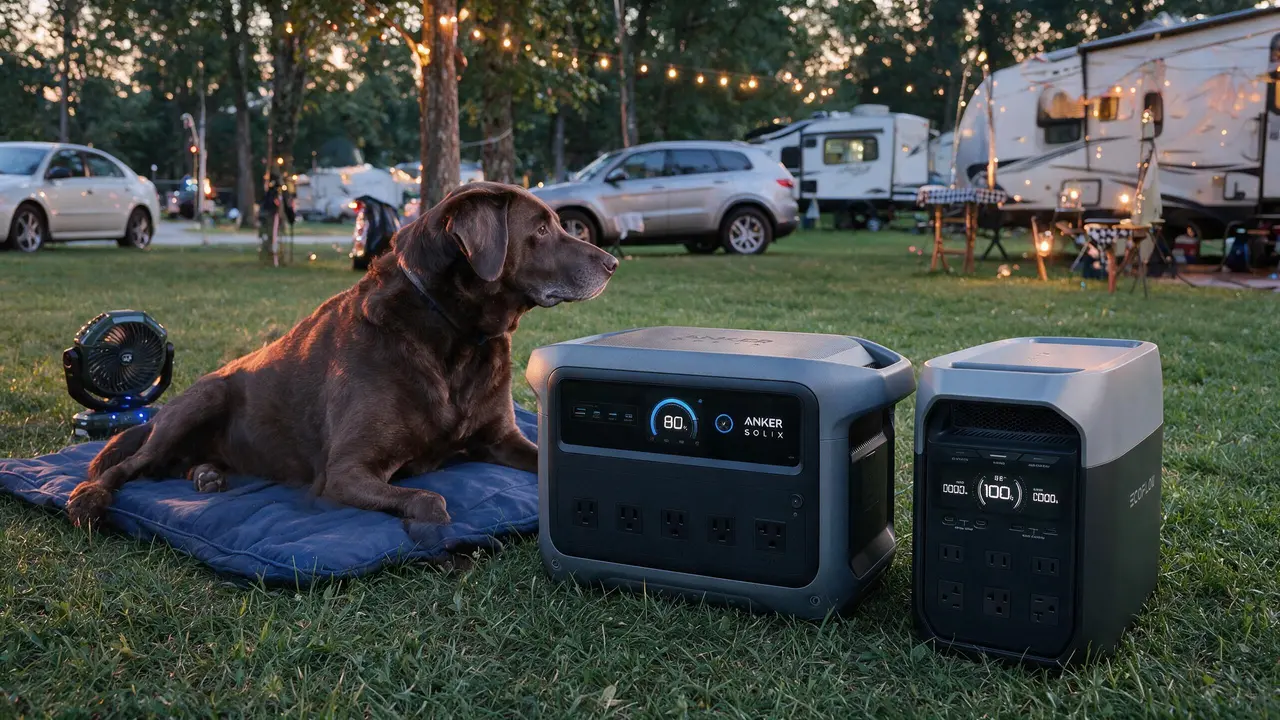
Both of these sit at 1,024 Wh, and both are pitched at the same shopper: someone who wants a fridge, a CPAP, and a few small appliances to survive an outage without buying a $10K standby generator. The decision is not capacity. It's what each brand chose to spend on with the same battery.
Anker's bet is watts and weight: 2,000 W continuous from a 24.9 lb box, listed at $599. EcoFlow's bet is the ecosystem and charging experience: 1,800 W from 27.6 lb, listed at $699, with the DELTA line's accessory and app story behind it. Neither is a whole-home solution — this page is not for anyone sizing a transfer switch or a smart panel. It's for the portable, plug-it-in-yourself tier.
One caveat that applies to both and won't be repeated: inverter losses and optimistic solar ratings mean real runtime lands under the nameplate math. Budget accordingly.
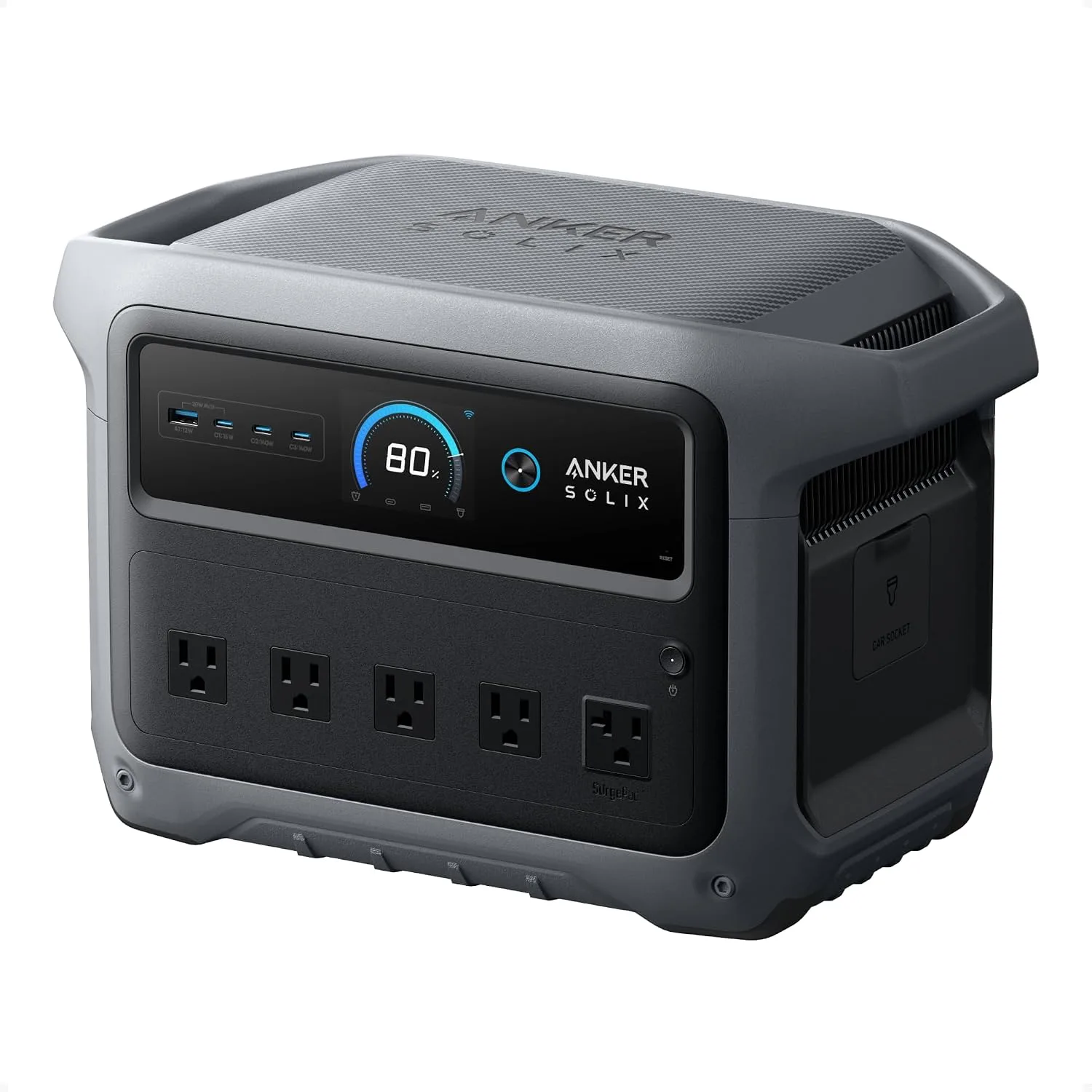
Anker C1000 Gen 2 Portable Power Station
Highlights
- 1024Wh rated capacity
- 2000W continuous AC
- 3000W surge
- LiFePO4 chemistry
- Up to 600W solar input
- 24.9 lb (~11.3 kg)
Best for
- C1000 Gen 2: weekend camping when 24.9 lb carry weight matters as much as 1024Wh
- Essentials bridge at home (fridge cycles, router) when sized to the Wh
- Solar top-ups up to ~600W when panels and weather cooperate
Strengths
- C1000 Gen 2: 1024Wh pack with 2000W continuous / 3000W surge — size loads to both numbers
- 24.9 lb (~11.3 kg) is the lightest-class carry in this band — easier stairs and car packing
- 10ms-class UPS switchover on the listing — useful when a router restart would hurt
- About $799 list in the Hub catalog — confirm live retail before you buy
Watch-outs · not ideal when
- C1000 Gen 2 is still a bridge for essentials — not a transfer-switch whole-home system
- Usable energy on C1000 Gen 2 is below the 1024Wh label once the inverter is working
- Rated 600W solar on C1000 Gen 2 is optimistic; shade and cables cut real watts
- LiFePO4 helps longevity, but C1000 Gen 2 still hates freezing charge temps on winter trips
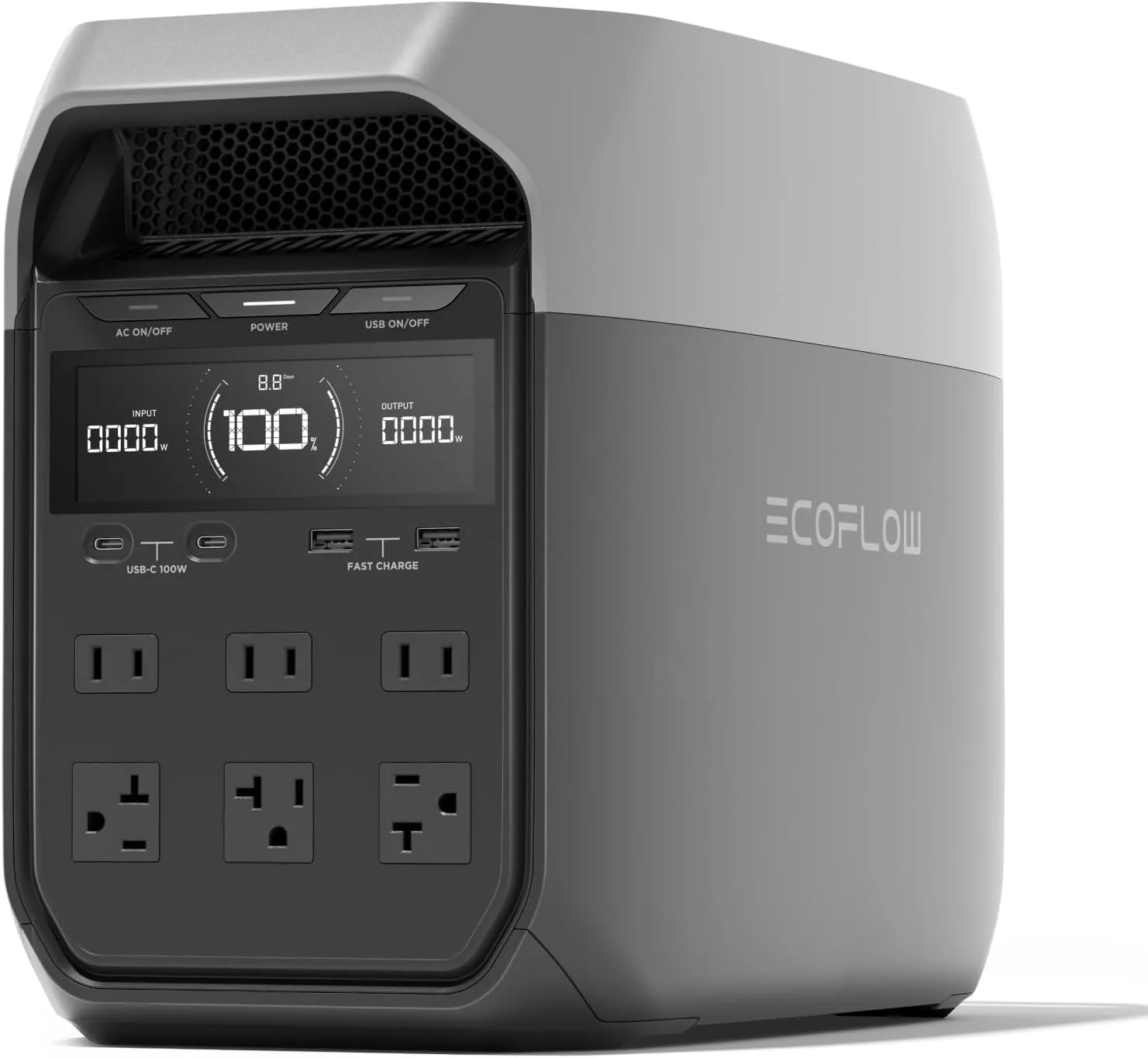
EcoFlow DELTA 3
Highlights
- 1024Wh rated capacity
- 1800W continuous AC
- 3600W surge
- LiFePO4 chemistry
- Up to 500W solar input
- 27.6 lb (~12.5 kg)
Best for
- DELTA 3: small appliances and tools that need ~1800W continuous, not just phone charging
- Essentials bridge at home (fridge cycles, router) when sized to the Wh
- Solar top-ups up to ~500W when panels and weather cooperate
Strengths
- DELTA 3: 1024Wh pack with 1800W continuous / 3600W surge — size loads to both numbers
- 27.6 lb (~12.5 kg) sits in the solo car-camp carry carry band for weekend moves
- 10ms-class UPS switchover on the listing — useful when a router restart would hurt
- About $699 list in the Hub catalog — confirm live retail before you buy
Watch-outs · not ideal when
- DELTA 3 is still a bridge for essentials — not a transfer-switch whole-home system
- Usable energy on DELTA 3 is below the 1024Wh label once the inverter is working
- Rated 500W solar on DELTA 3 is optimistic; shade and cables cut real watts
- LiFePO4 helps longevity, but DELTA 3 still hates freezing charge temps on winter trips
How we compared these two
This is a listing-and-owner-theme comparison, I weighted value per Wh at 35%, continuous output at 25%, portability at 20%, and ecosystem and warranty confidence at 20%. On those weights Anker leads on value and output, EcoFlow leads on ecosystem — which is why the pick-one rules above split by use case rather than declaring a single winner.
As a checklist editor I cover capacity, output, and price-per-Wh across the WattPicks catalogue; I don't run lab tests, and nothing here should be read as a measured score. For the sizing math behind these numbers, see our guide on how to size a portable power station, and for chemistry trade-offs, LiFePO4 vs NMC in portable power stations.
Scoreboard on those weights — Anker SOLIX C1000 Gen 2 (list $599): High where list price and published capacity match the job, Med on continuous watts; EcoFlow DELTA 3 (list $699): High on continuous watts and ports, Med on price. That is why the pick splits by job rather than one universal winner.
Spec snapshot
Prices are list prices from Product data; both listings currently show the same figure, so there's no discount gap to arbitrage here. Ratings are listing ratings, not test scores.
| Product | List price | Capacity (Wh) | Output (W) | Weight (lb) | Rating |
|---|---|---|---|---|---|
| Anker SOLIX C1000 Gen 2 | $799 | 1024 Wh | 2000 W | 24.9 lb | 4.85 |
| EcoFlow DELTA 3 | $699 | 1024 Wh | 1800 W | 27.6 lb | 5.00 |
Where the Anker C1000 Gen 2 wins
Start with the number that decides most close calls: 2,000 W continuous versus 1,800 W. That 200 W gap is the difference between a space heater or a larger coffee maker running and tripping the inverter. If your outage plan includes one high-draw appliance at a time, Anker gives you more headroom for the same battery.
It's also the lighter of the two at 24.9 lb against 27.6 lb — not a hiking difference, but it matters when you're hauling it up from a basement during a storm. And at $599 list it's $100 cheaper for the same 1,024 Wh, which works out to a better price per Wh on paper.
The trade-off owners flag: the Gen 2 dropped the expandability the Gen 1 had. One reviewer who bought it for RV and home-outage duty specifically called out that change. If you were planning to stack extra batteries later, that door is closed on this model.
Where the EcoFlow DELTA 3 wins
EcoFlow's advantage isn't a single spec — it's the surrounding system. The DELTA line has a deeper accessory and app ecosystem, and owners consistently describe fast recharging as the reason they trust it between outages. If your habit is to top the station up in a short window before a storm, that charging behavior is worth more than 200 W of headroom.
The LiFePO4 chemistry is the other quiet win. Owners treat it as a long-term investment rather than a disposable gadget, and LiFePO4 generally carries a higher published cycle life than NMC packs — the buyer impact is fewer replacement cycles to worry about over a decade.
You pay for it: $699 list, 27.6 lb, and 1,800 W continuous. That last figure is still enough for a fridge, a CPAP, and small kitchen appliances — just not the big resistive loads Anker can absorb.
Pick one, or skip both
Buy the Anker C1000 Gen 2 if your outage plan includes one high-draw appliance and you want the most watts and the least weight per dollar at 1,024 Wh. Buy the EcoFlow DELTA 3 if fast recharging, the accessory ecosystem, and LiFePO4 longevity matter more to you than 200 W and $100.
Skip both if you're wiring a transfer switch, a smart panel, or a whole-home backup — these are portable stations, not installed systems, and neither is rated for that job. Skip both, too, if you need expandable battery capacity; the Anker Gen 2 dropped it, and the DELTA 3's expansion path should be confirmed against the current listing before you count on it.
What owners report
- Anker SOLIX C1000 Gen 2: outage and camping duty — owners describe using it through multi-day storm outages and paired with 200 W solar; one notes the Gen 2 lost expandability versus Gen 1.
- EcoFlow DELTA 3: everyday appliance loads — owners cite coffee makers, an electric blanket overnight, and blackout relief abroad, with fast charging and LiFePO4 build quality as recurring praise.
Frequently asked
Which is better for most buyers, the Anker SOLIX C1000 Gen 2 or the EcoFlow DELTA 3?
The C1000 Gen 2 leads 5–2 on shared published metrics. That edge matters when continuous ac output, weight, watt-hours per pound match what you need; otherwise take the DELTA 3.
I care most about carry / camping — which should I buy?
Choose C1000 Gen 2 when you will move the unit often — it leads on weight and watt-hours per pound.
Method and sources
Model names and list prices come from the WattPicks catalog at build time. WattPicks does not run its own laboratory tests on power stations, and nothing on this page is presented as a measured result — it is catalog-backed buying guidance.
Read our methodology for how the catalog is normalized, and about WattPicks for who publishes it.