
Brand comparison
BLUETTI vs Goal Zero: which one is built for you?
BLUETTI is built for the value-and-power buyer who does not mind a heavy box. Goal Zero is built for the outdoor retailer shopper who wants a system they can see in person. The tables below use 12 BLUETTI and 3 Goal Zero stations on file — pick the brand whose buyer story matches yours before you chase $/Wh.
BLUETTI
Maximum capacity and output per dollar, aimed at RV, off-grid and preparedness buyers who will trade weight and polish for power.
- Buyer archetype
- The value-and-power buyer who does not mind a heavy box
- Best for
- Buyers who measure value in watts and watt-hours, not in grams and app screens.
- When not to buy
- Buyers who need the lightest possible unit or the simplest possible interface.
- Models tracked
- 12
Goal Zero
The heritage outdoor-and-solar brand: long-standing retail presence and a broad ecosystem of lights, fridges and panels rather than headline specs.
- Buyer archetype
- The outdoor retailer shopper who wants a system they can see in person
- Best for
- Buyers who value the ecosystem, the retail presence and a familiar outdoor brand.
- When not to buy
- Spec-sheet shoppers optimizing cost per watt-hour.
- Models tracked
- 3
What only each brand brings
BLUETTI
- Elite: The newer LiFePO4 line, positioned as the mainstream offer.
- AC: The long-running mid-range line, including expandable models.
- Who buys: RV owners and full-time van-lifers
- Who buys: Off-grid and preparedness households
Goal Zero
- Yeti: The core portable line, from small units to multi-kWh.
- Yeti X: Higher-output versions of the classic Yeti units.
- Who buys: Outdoor-retail shoppers who want to handle the product before buying
- Who buys: Overlanders, car campers and basecamp users
When not to buy
Skip BLUETTI if…
Buyers who need the lightest possible unit or the simplest possible interface.
Skip Goal Zero if…
Spec-sheet shoppers optimizing cost per watt-hour.
Head to head on value
| Measure | BLUETTI | Goal Zero |
|---|---|---|
| Average $/Wh across range | $0.75 | $1.07 |
| Models in dataset | 12 | 3 |
| LiFePO4 models | 11 | 3 |
| Largest capacity available | 3.84 kWh | 1.50 kWh |
Band by band
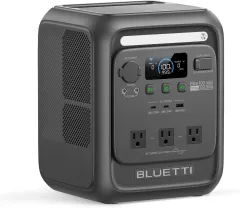
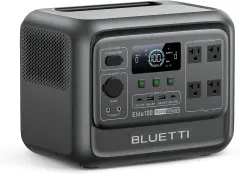
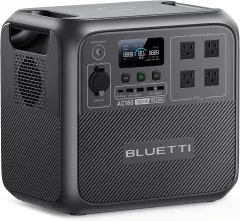
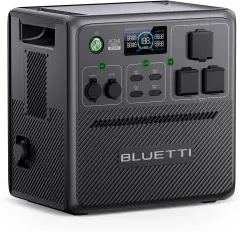
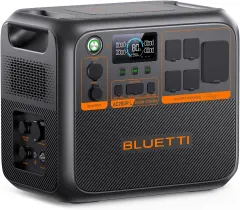
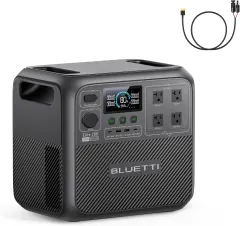
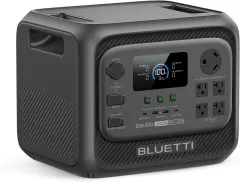
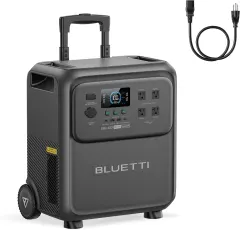
All BLUETTI models
All models →| Model | Capacity | AC output | Weight | List price | $/Wh |
|---|---|---|---|---|---|
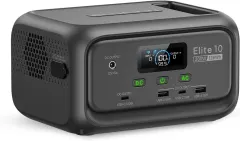
Elite 10 MiniBLUETTI | 128 Wh | 200 W | 4.0 lb | $199 | $1.55 |
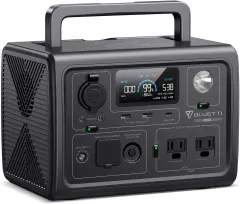
EB3ABLUETTI | 268 Wh | 600 W | 10.1 lb | $219 | $0.82 |
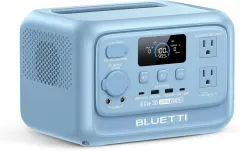
Elite 30 V2BLUETTI | 288 Wh | 600 W | 9.5 lb | $399 | $1.39 |
EB70SBLUETTI | 716 Wh | 800 W | 21.4 lb | $429 | $0.60 |
Elite 100 miniBLUETTI | 1.00 kWh | 700 W | 23.5 lb | $799 | $0.80 |
Elite 100 V2BLUETTI | 1.02 kWh | 1.8 kW | 25.0 lb | $899 | $0.88 |
AC180BLUETTI | 1.15 kWh | 1.8 kW | 35.3 lb | $499 | $0.43 |
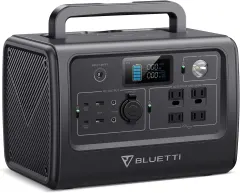
AC240BLUETTI | 1.54 kWh | 2.4 kW | 72.0 lb | $1,133.12 | $0.74 |
AC200LBLUETTI | 2.05 kWh | 2.4 kW | 62.4 lb | $899 | $0.44 |
Elite 200 V2BLUETTI | 2.07 kWh | 2.6 kW | 53.4 lb | $899 | $0.43 |
Elite 300BLUETTI | 3.01 kWh | 2.4 kW | 58.0 lb | $1,699 | $0.56 |
Elite 400BLUETTI | 3.84 kWh | 2.6 kW | 86.0 lb | $1,499 | $0.39 |
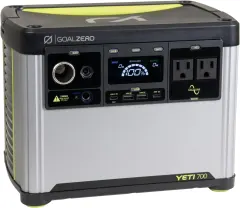
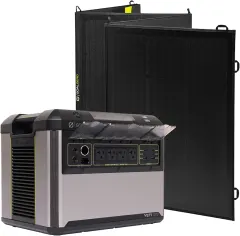
All Goal Zero models
All models →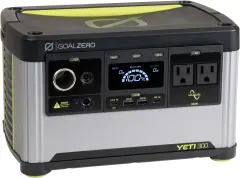
Known trade-offs
BLUETTI
- Weight and bulk — these are not carry-it-to-the-beach units
- Fit, finish and industrial design lag the lifestyle brands
- App and firmware polish is inconsistent across the range
Goal Zero
- Capacity per dollar is generally behind the value brands
- Recharge speeds and solar input can trail the newer competitors
- Generations vary a lot — an older Yeti and a newer one are not comparable
- Line-up has churned, which complicates comparisons across years