
BLUETTI AC240 vs BLUETTI Elite 30 V2: Backup Bet?
A 1,536 Wh BLUETTI AC240 backup anchor versus a 288 Wh BLUETTI Elite 30 V2 grab-and-go UPS. Here is which one actually fits your outage plan — and which one is the wrong buy for most people.
Updated
At a glance
A 1,536 Wh BLUETTI AC240 backup anchor versus a 288 Wh BLUETTI Elite 30 V2 grab-and-go UPS. Here is which one actually fits your outage plan — and which one is the wrong buy for most people.
- AC240 bet: 1,536 Wh and 2,400 W continuous for circuit-level backup
- Elite 30 V2 bet: 288 Wh and 600 W continuous in a 9.5 lb package
- Price gap is $550 — roughly the cost of a second small station
Same brand, two different bets
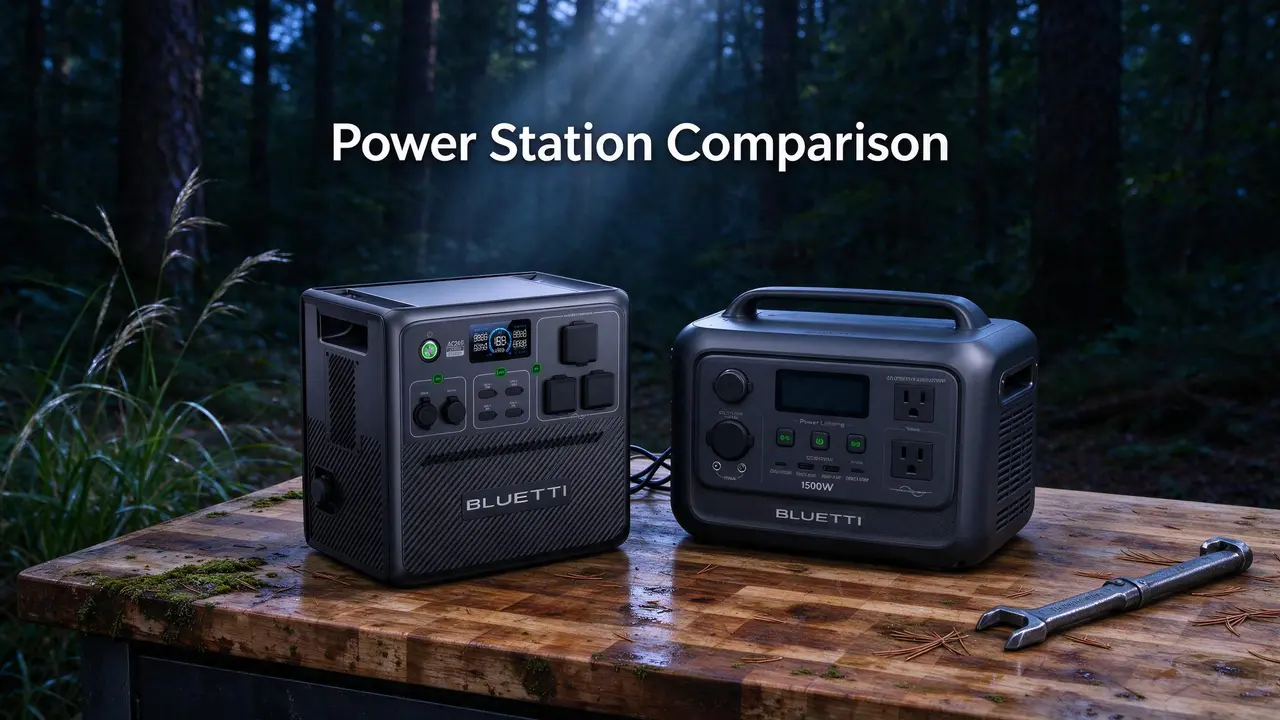
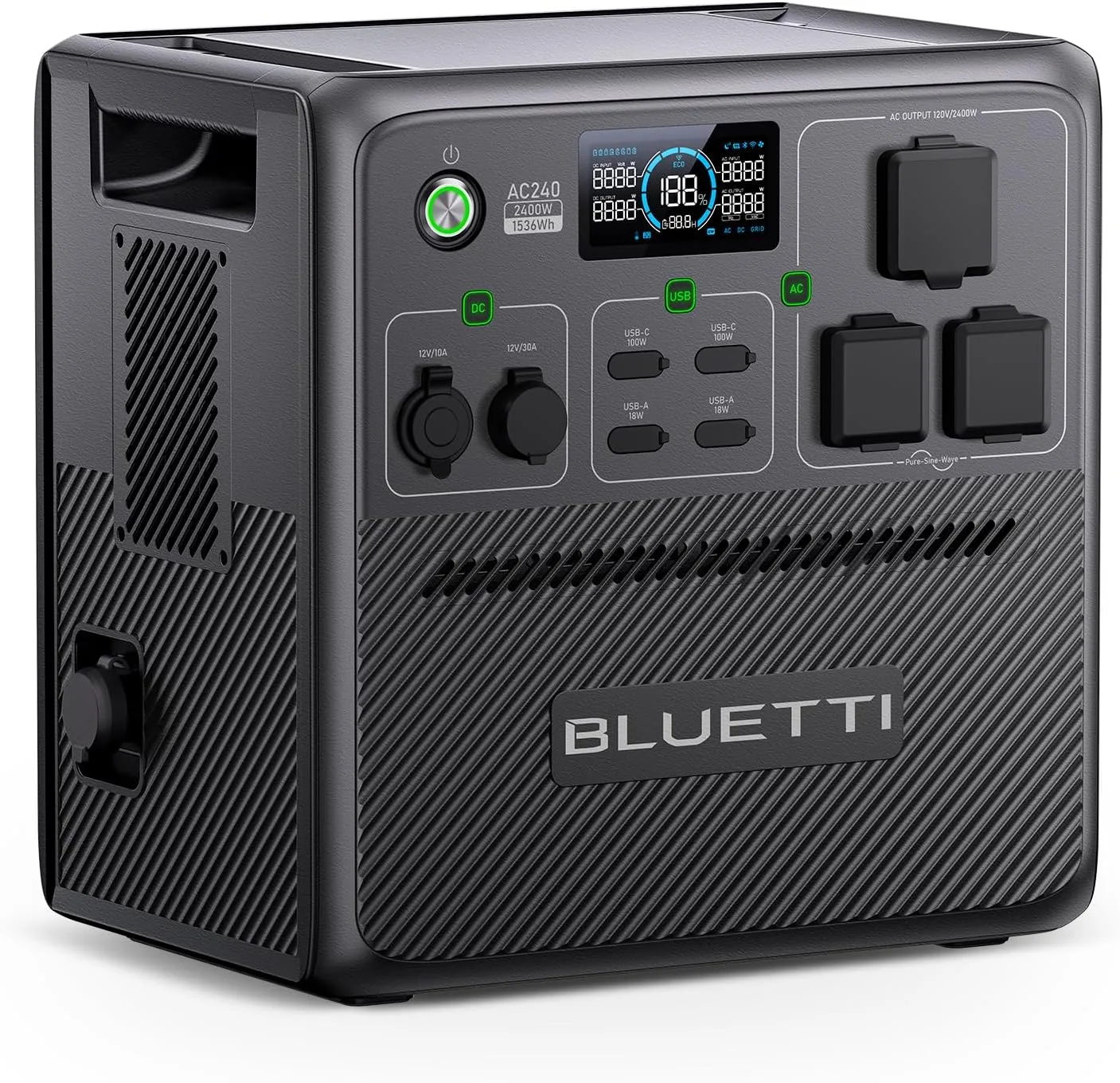
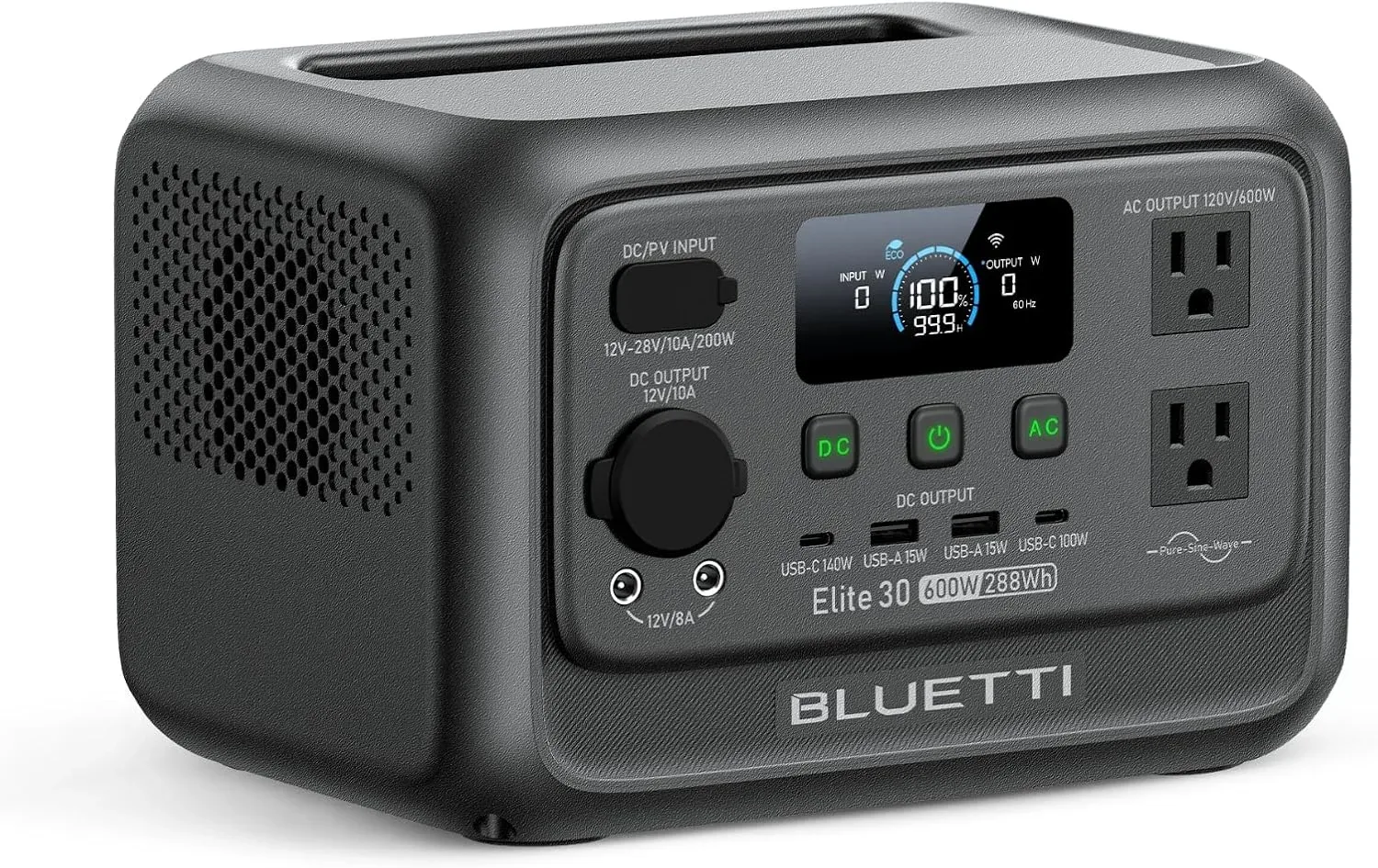
The question that actually matters here is not which station is better. It is whether you are buying an outage anchor or a carry-around UPS. The BLUETTI Pioneer 150 (AC240) at $999 bets that you want to keep a circuit alive — router, lights, a fridge — for hours, and you are willing to park 72 lb in a basement to do it. The Elite 30 V2 at $449 bets the opposite: 9.5 lb you can move room to room, enough to bridge a router or a CPAP through a short cut, and nothing more.
That is the whole trade. One buys capacity and continuous output; the other buys portability and a low entry price. Neither is a bad product — but only one of them is the right buy for your house, and the spec sheet makes that call fairly quickly.
Cheaper is better when your loads are small and short: if you only need to bridge a router, laptop, or CPAP for a couple of hours, the $449 unit is the smarter spend. The $999 AC240 only pays off when you need to carry a compressor or run a circuit for hours.
A boundary up front: this comparison is about home backup and light portable use. If you are sizing a whole-home transfer-switch install, neither of these is the answer — that is a different class of equipment entirely (transfer switch plus inverter/charger).
- AC240 bet: 1,536 Wh and 2,400 W continuous for circuit-level backup
- Elite 30 V2 bet: 288 Wh and 600 W continuous in a 9.5 lb package
- Price gap is $550 — roughly the cost of a second small station
Spec snapshot: the numbers side by side
Everything below comes from the listings on file. Where a figure is not published, it reads n/a rather than a guess. Ratings are the listing aggregate, not owner proof.
Naming note: the $449 unit is the BLUETTI Elite 30 V2 — 288 Wh, 600 W continuous, about 9.5 lb. Any 'boost' / power-lifting phrases in the listing are burst/marketing claims, not a second continuous rating. Whether a DC converter is included is not stated in the listing data on file — check the current listing before buying.
| Product | Price | Capacity (Wh) | Output (W) | Weight (lb) | Rating | Charging (wall) |
|---|---|---|---|---|---|---|
| BLUETTI Pioneer 150 (AC240) | $999 | 1536 Wh | 2400 W | 72 lb | 4.5 | n/a |
| BLUETTI Elite 30 V2 | $449 | 288 Wh | 600 W | 9.5 lb | 4.5 | 0–80% in 45 min (listing claim; owner ~1.5 hr to full) |
Where the money went
The AC240's $999 buys raw capacity first. At 1,536 Wh it holds more than five times the energy of the smaller unit, and the nameplate math works out to about $0.65 per Wh — the cheaper of the two on that measure. The Elite 30 V2 lands near $1.56 per Wh, which is what you pay for shrinking the battery into a 9.5 lb box. But nameplate $/Wh overstates real value: both units lose roughly 10% to usable-capacity limits, so the effective cost is closer to $0.72 vs $1.73 per usable Wh. The AC240 is still the better value per Wh — but that only matters if you actually need the capacity. For small loads, paying for 1,536 Wh you won't use is not a saving.
Output is the second place the money shows. The AC240's 2,400 W continuous is enough to start and run a fridge compressor or a small window AC without flinching. The Elite 30 V2's 600 W continuous is a different job — laptops, routers, lights, a CPAP, a fan. Its listing title advertises 'BLUETTI Elite 30 V2,' but that is a burst/marketing figure, not a second continuous rating; owners report it shutting down on a small heater, so treat it as a narrow exception.
Expandability is the third. The AC240 accepts B210 expansion batteries (the listing data on file does not publish a maximum count or total Wh — check the current listing). The Elite 30 V2 has no published expansion path — 288 Wh is the ceiling.
Charging is where the smaller unit punches back. Its listing title claims 0–80% in 45 minutes on a 380 W wall charge, and owners who tested it describe roughly 1.5 hours to full. The AC240's charging figures are not published in the listing data on file (n/a), so we cannot compare charge times directly. Both are marketed as fast for their class; verify actual charge speed on your unit inside the return window.
- Capacity: 1,536 Wh vs 288 Wh — a 5.3× gap
- Continuous output: 2,400 W vs 600 W
- Weight: 72 lb vs 9.5 lb
- Expansion: B210 batteries supported (max not published) vs none published
- Nameplate $/Wh: about $0.65 vs about $1.56 (usable ~$0.72 vs ~$1.73)
The spec that decides it
If you take one number away, take continuous output. The AC240's 2,400 W is what lets it run the loads people actually care about during an outage — a refrigerator cycling on, a space heater, a microwave for a few minutes. The Elite 30 V2's 600 W continuous covers electronics and small appliances, and that is a real job, but it is not the same job.
Here is the load math that makes the split concrete: a typical fridge draws about 100–200 W running but needs a 1,200–1,500 W surge for a few seconds when the compressor kicks on. The AC240's 2,400 W clears that surge with headroom; the Elite 30 V2's 600 W continuous cannot, which is why owners see it shut down on compressor loads. The 600 W continuous figure comes from the listing spec, not an independent measurement.
The second deciding figure is capacity against idle draw. Owners of the AC240 note the unit pulls roughly 20 W just being on, and only about 90% of the battery is usable, so small loads get less runtime than 1,536 Wh suggests. The Elite 30 V2 has its own overhead — owners describe phantom drain when the AC or DC buttons are left on, and standby draw is listed at 4.5 W. Neither is a flaw unique to these units; it is how power stations behave. It just means you should size up, not down, if runtime is tight.
For a router-plus-laptop bridge through a two-hour outage, 288 Wh is genuinely enough. For a fridge overnight, it is not — and no amount of boost-mode marketing changes that.
What owners actually report
The AC240 reviews skew toward home backup and camping. The recurring theme is seamless switchover: owners describe wiring a basement circuit and having the internet and TV stay up without a reboot when the grid dropped. The runtime display gets consistent praise for making load management teachable. The caveats are equally consistent — the wireless charging pad often quits after a few seconds, the unit is heavy enough to be set-and-stay, and a few owners needed a firmware update plus a full discharge/recharge cycle before charging speeds and runtime estimates looked right.
The BLUETTI Elite 30 V2 reviews skew toward UPS duty and CPAP camping. One owner runs a home server and networking stack on it, citing clean sine output and switchover fast enough that the server does not hiccup. CPAP users report that a DC converter (sold separately; approximate cost not on file — check the listing) roughly halves overnight drain compared with the AC outlet. The critical themes are worth hearing too: boost mode refused to start a small heater, the included solar panel produced around 35 W in real sun, and at least one owner measured wall charging at 200 W rather than the advertised 380 W. Test yours inside the return window.
Both listings show a 4.5 aggregate, but the useful signal is in the themes, not the average. The AC240's complaints cluster around weight and the wireless pad; the Elite 30 V2's cluster around expectations set too high by the boost-mode and charge-time claims.
- AC240 owners: seamless UPS switchover, clear runtime display, heavy, flaky wireless pad
- Elite 30 V2 owners: solid server UPS, CPAP-friendly with a DC converter, boost mode is narrow, test charging speed early
Buy the one that…
Buy the BLUETTI Pioneer 150 (AC240) if you want to keep a circuit — fridge, router, lights — running through a multi-hour outage and you have a spot to leave 72 lb parked. It is the only one of the two that can carry a compressor load, and the B210 expansion path means it can grow with your needs. Skip it if you need to carry your backup up stairs or into a tent; 72 lb is a two-person move, not a grab-and-go.
- Buy AC240 if: circuit-level backup, fridge or small AC load, set-and-stay placement, expansion planned
- Skip AC240 if: you need portability, you are on a tight budget, or you only need to bridge a router
…and the one that fits the other job
Buy the Elite 30 V2 if your outage plan is a router, a laptop, a CPAP, and a few lights for a couple of hours — and you want to carry it to a campsite on the weekend. At 9.5 lb and $449 it is the more flexible object, and the fast wall charge means it recovers quickly between events. Skip it if you expect it to run a fridge overnight or a space heater at all; 288 Wh and 600 W continuous will not do it, and the boost mode is not a substitute.
- Buy Elite 30 V2 if: portable UPS duty, CPAP camping with a DC converter, short outage bridging, low entry price
- Skip Elite 30 V2 if: fridge or heater loads, multi-day off-grid, or you want one station to grow into
The short version
These are not competitors so much as two answers to different questions. If your outage plan involves a fridge, a circuit, and a place to leave a heavy box, the BLUETTI Pioneer 150 (AC240) is the buy — and at about $0.65 per Wh (roughly $0.72 per usable Wh) it is also the better value per unit of capacity, provided you will actually use that capacity. If your plan is a backpack, a CPAP, and a router, the Elite 30 V2 is the right size and the right price, provided you test it early and keep your load expectations honest.
One disclosure: as an Amazon Associate, WattPicks earns from qualifying purchases. Picks here are fit-led, not commission-led. For sizing method and chemistry background, see our guides on how to size a power station for an outage and LiFePO4 vs NMC in portable stations.
Method note: this comparison is grounded in the listing specs on file and owner themes from the review packs — home-user checks, not lab-bench measurements. I am WattPicks' founding editor, covering portable power capacity, output, and price-per-Wh across the catalogue.
BLUETTI Pioneer 150 (AC240)
Highlights
- 1536Wh rated capacity
- 2400W continuous AC
- LiFePO4 chemistry
- Up to 1200W solar input
- 72 lb (~32.7 kg)
- About $999 list
Best for
- AC240: longer outages or higher continuous loads (still not whole-home wiring)
- RV / off-grid days where recharge speed matters as much as Wh
- Best parked near the vehicle or cabin — not a long carry to a tent
Strengths
- AC240: 2400W continuous on a 1536Wh pack — more headroom for small appliances than 1kW-class peers
- 72 lb (~32.7 kg) is a park-and-use chassis — plan a short path, not a trail hike
- 15ms-class UPS switchover on the listing — useful when a router restart would hurt
- Owners on file: Theme: Customers find this power station to be the best they've used, praising its fast charging capability (…
Watch-outs · not ideal when
- At 72 lb (~32.7 kg), AC240 is a poor tent-hike companion — plan a cart or leave it in the vehicle
- High continuous output on AC240 tempts big loads — Wh still runs out on kettles and A/C
- Rated 1200W solar on AC240 is optimistic; shade and cables cut real watts
- LiFePO4 helps longevity, but AC240 still hates freezing charge temps on winter trips
Owner voices
Short takes from public retail reviews — paraphrased or translated when long or non-English; meaning kept close to the original.
“Theme: Customers find this power station to be the best they've used, praising its fast charging capability (reaching 100% in about an hour) and value for money. They appreciate its power capacity, with one customer n…”
“Theme: Refrigerator (87)”
“Theme: Phone Charging (44)”
BLUETTI Elite 30 V2 Portable Power Station 288Wh 600W LFP Solar Generator
Highlights
- 288Wh rated capacity
- 600W continuous AC
- LiFePO4 chemistry
- 9.5 lb (~4.3 kg)
- About $449 list
Best for
- BLUETTI Elite 30 V2 Power Station: phones, cameras and a laptop on short trips
- Travel kits when you need quiet pack power, not appliance runtime
- Brief desk backup for router and lights — not a fridge for days
Strengths
- BLUETTI Elite 30 V2 Power Station: 288Wh / 600W continuous — treat as electronics and light loads, not a tool inverter
- 9.5 lb (~4.3 kg) is the lightest-class carry in this band — easier stairs and car packing
- BLUETTI Elite 30 V2 Power Station uses LiFePO4 — cycle-life claims usually beat older NMC marketing lines
- Owners on file: Theme: Customers find the power station packs a punch with its 600W continuous output and appreciate its port…
Watch-outs · not ideal when
- BLUETTI Elite 30 V2 Power Station's small Wh class empties fast with a kettle, hair dryer or space heater
- Usable energy on BLUETTI Elite 30 V2 Power Station is below the 288Wh label once the inverter is working
- Solar input unpublished for BLUETTI Elite 30 V2 Power Station — do not assume a same-day off-grid refill
- Airline and pack limits may still block BLUETTI Elite 30 V2 Power Station even when the weight looks friendly
Owner voices
Short takes from public retail reviews — paraphrased or translated when long or non-English; meaning kept close to the original.
“Theme: Customers find the power station packs a punch with its 600W continuous output and appreciate its portability, being able to carry it by the handle and fit it in a backpack. They consider it worth the price and…”
“Theme: Phone Charging (50)”
“Theme: Power Outages (40)”
Frequently asked
Can the Elite 30 V2 run a full-size refrigerator?
No. At 600 W continuous and 288 Wh, it can briefly power a fridge but not ride out a multi-hour outage with one. The AC240's 2,400 W and 1,536 Wh are the fit for that load.
Does the AC240 really switch over fast enough for a router?
Owners describe seamless switchover on a basement circuit with no dropped connection. The listing does not publish a millisecond figure, so treat the exact transfer time as n/a (not on file).
How long will the Elite 30 V2 run a CPAP?
Owners report roughly half the battery overnight with a DC converter and the humidifier on, and about a third with the humidifier off. Using the AC outlet drains it much faster.
Is the AC240 worth $550 more?
Only if you need the capacity and continuous output. For router-and-laptop backup, the smaller unit does the job for less.
Method and sources
Model names and list prices come from the WattPicks catalog at build time. WattPicks does not run its own laboratory tests on power stations, and nothing on this page is presented as a measured result — it is catalog-backed buying guidance.
Read our methodology for how the catalog is normalized, and about WattPicks for who publishes it.