
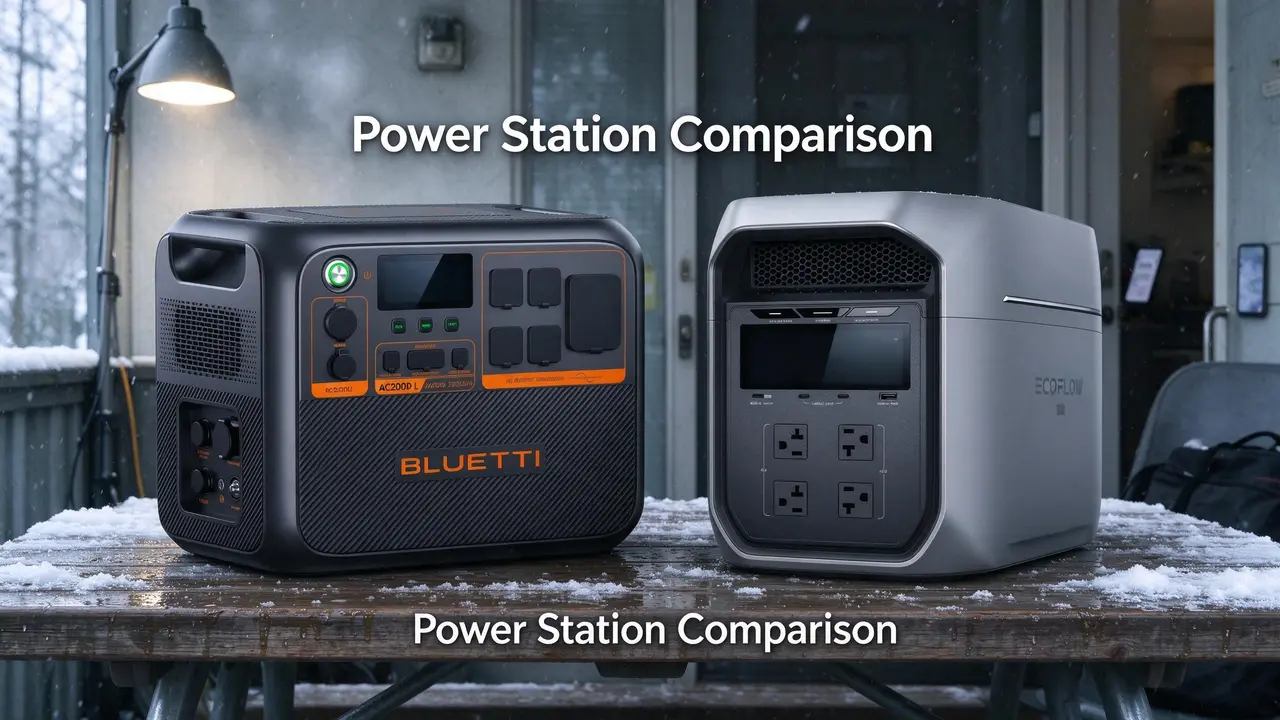
BLUETTI AC200PL vs EcoFlow DELTA 3 Max Plus: Backup Matchup
Two 2,048 Wh stations, two different priorities: the BLUETTI AC200PL leans on outlet count and price, while the EcoFlow DELTA 3 Max Plus buys you output, lighter weight, and expandability. Here's which one fits your outage plan.
Updated
At a glance
Two 2,048 Wh stations, two different priorities: the BLUETTI AC200PL leans on outlet count and price, while the EcoFlow DELTA 3 Max Plus buys you output, lighter weight, and expandability. Here's which one fits your outage plan.
- BLUETTI AC200PL: $899 list, 2,048 Wh, 2,400 W, 62.4 lb, AC×12
- EcoFlow DELTA 3 Max Plus: $1,899 list, 2,048 Wh, 3,000 W, 48.7 lb, AC×4
Same capacity, different priorities
Both of these stations carry 2,048 Wh of LiFePO4 capacity. That's the number that matters for a fridge, a CPAP, or a space heater on a cold night. But the BLUETTI AC200PL and the EcoFlow DELTA 3 Max Plus spend your budget in opposite directions.
The BLUETTI AC200PL prioritizes outlet count and price: twelve AC outlets, a 2,400 W continuous inverter, and a $899 list price. The EcoFlow DELTA 3 Max Plus prioritizes output and portability: 3,000 W continuous, 48.7 lb, and a $1,899 list price. Same battery, different jobs.
This comparison is for households planning for outages — not for campers who need something light enough to carry daily. If you're shopping for a weekend tailgate, neither of these is the right size class.
- BLUETTI AC200PL: $899 list, 2,048 Wh, 2,400 W, 62.4 lb, AC×12
- EcoFlow DELTA 3 Max Plus: $1,899 list, 2,048 Wh, 3,000 W, 48.7 lb, AC×4
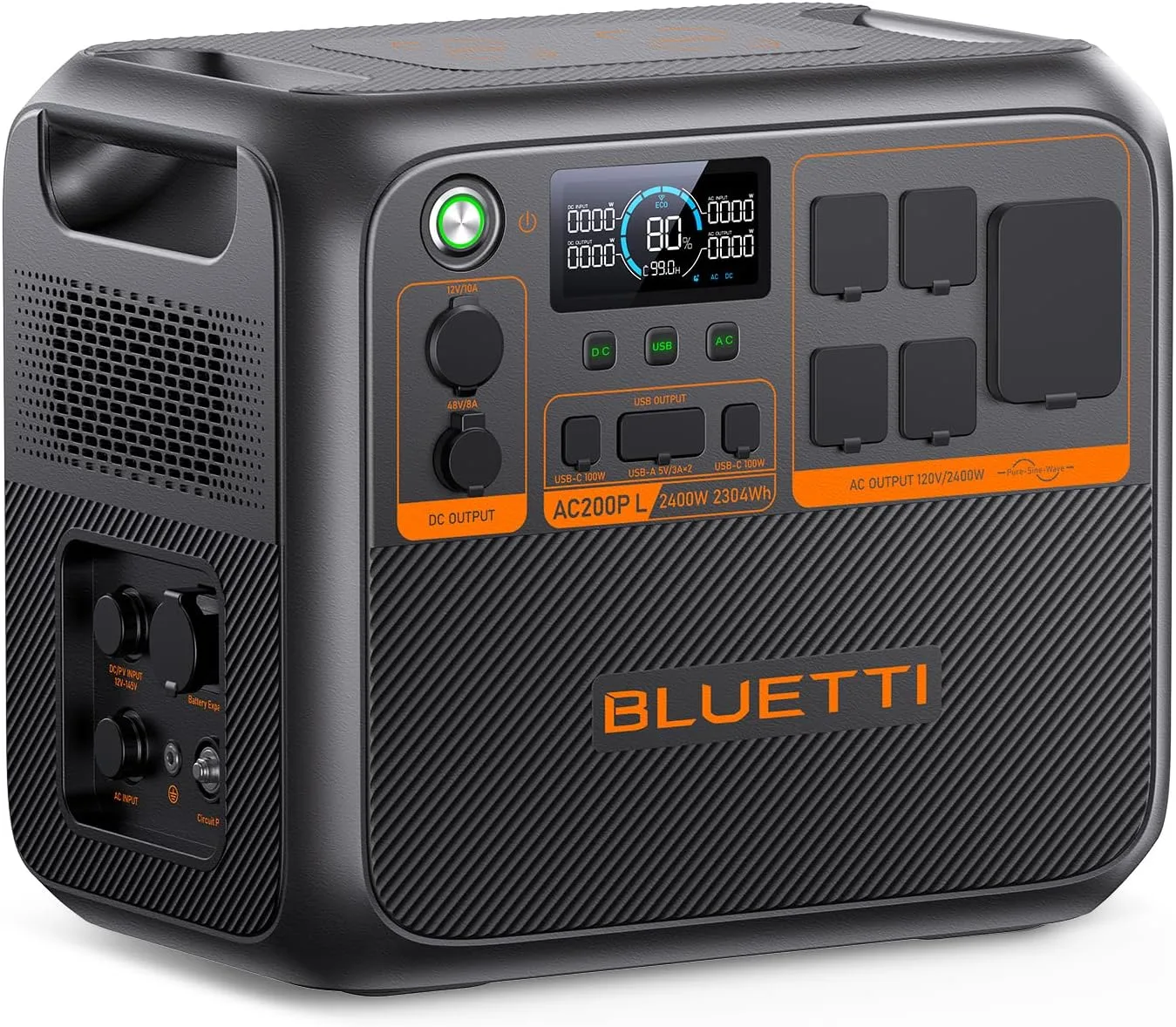
BLUETTI AC200PL
Highlights
- 2048Wh rated capacity
- 2400W continuous AC
- LiFePO4 chemistry
- Up to 1200W solar input
- 62.4 lb (~28.3 kg)
- About $899 list
Best for
- AC200L: longer outages or higher continuous loads (still not whole-home wiring)
- RV / off-grid days where recharge speed matters as much as Wh
- Best parked near the vehicle or cabin — not a long carry to a tent
Strengths
- AC200L: 2400W continuous on a 2048Wh pack — more headroom for small appliances than 1kW-class peers
- 62.4 lb (~28.3 kg) is a park-and-use chassis — plan a short path, not a trail hike
- 2400W continuous headroom covers more small appliances than 1kW-class inverters
- About $899 list in the Hub catalog — confirm live retail before you buy
Watch-outs · not ideal when
- At 62.4 lb (~28.3 kg), AC200L is a poor tent-hike companion — plan a cart or leave it in the vehicle
- High continuous output on AC200L tempts big loads — Wh still runs out on kettles and A/C
- Rated 1200W solar on AC200L is optimistic; shade and cables cut real watts
- LiFePO4 helps longevity, but AC200L still hates freezing charge temps on winter trips
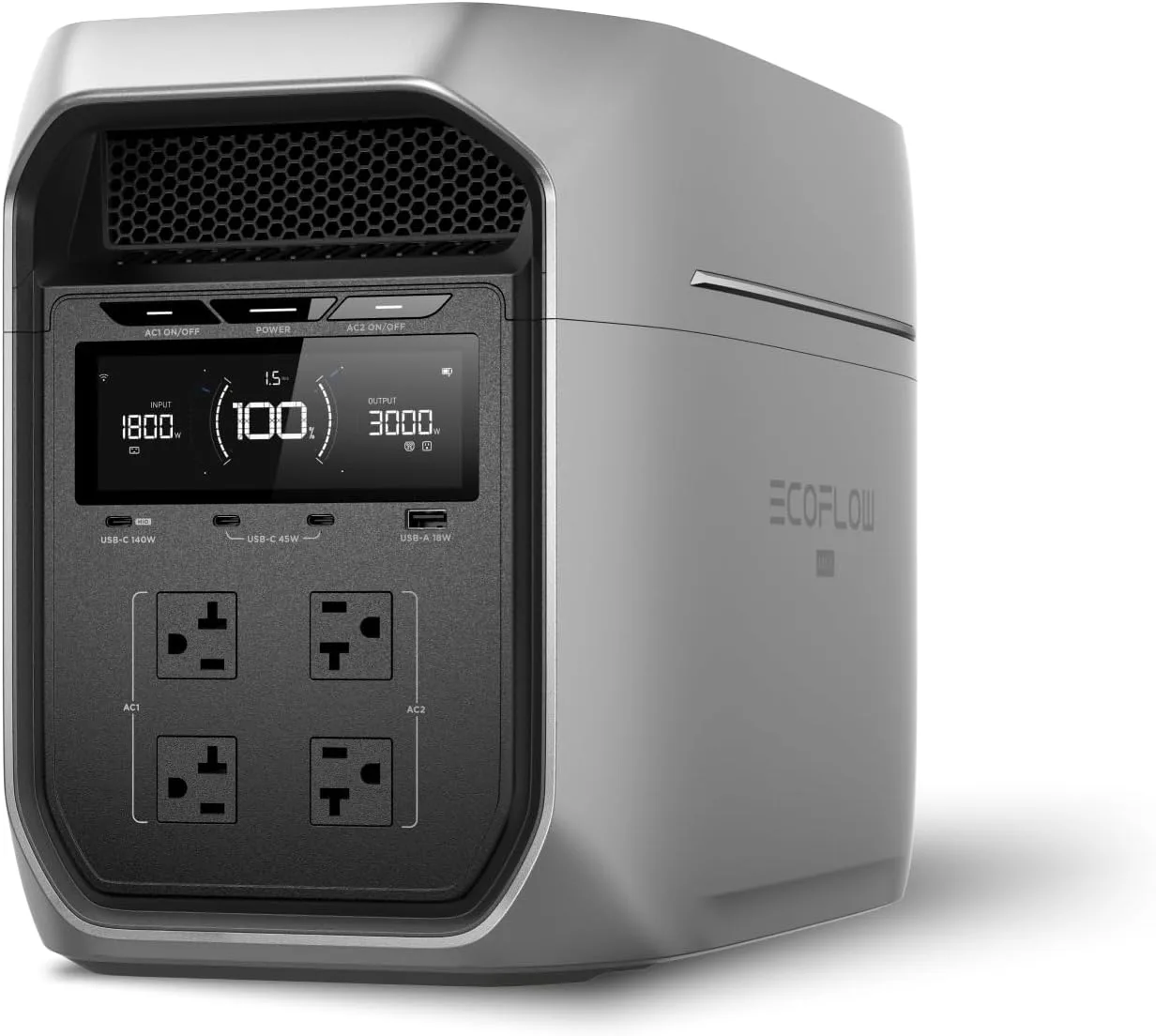
EcoFlow DELTA 3 Max Plus
Highlights
- 2048Wh rated capacity
- 3000W continuous AC
- 6000W surge
- LiFePO4 chemistry
- 48.7 lb (~22.1 kg)
- About $1899 list
Best for
- DELTA 3 Max Plus: longer outages or higher continuous loads (still not whole-home wiring)
- RV / off-grid days where recharge speed matters as much as Wh
- Best parked near the vehicle or cabin — not a long carry to a tent
Strengths
- DELTA 3 Max Plus: 2048Wh pack with 3000W continuous / 6000W surge — size loads to both numbers
- 48.7 lb (~22.1 kg) is a park-and-use chassis — plan a short path, not a trail hike
- 3000W continuous headroom covers more small appliances than 1kW-class inverters
- Owners on file: 5/5 · 6 helpful — I waited a while to leave this review. I bought this power station for one reason which was…
Watch-outs · not ideal when
- At 48.7 lb (~22.1 kg), DELTA 3 Max Plus is a poor tent-hike companion — plan a cart or leave it in the vehicle
- High continuous output on DELTA 3 Max Plus tempts big loads — Wh still runs out on kettles and A/C
- Solar input unpublished for DELTA 3 Max Plus — do not assume a same-day off-grid refill
- LiFePO4 helps longevity, but DELTA 3 Max Plus still hates freezing charge temps on winter trips
Methodology and disclosure
I'm Avery Nolan, WattPicks founding editor. My checks here are home-user comparisons grounded in listing specs and owner themes on file — not lab-bench measurements. I don't claim instrumented testing, and I don't invent scenes. Prices are list prices from the product data; any rating counts or star aggregates mentioned are from the listings, not owner proof.
As an Amazon Associate, WattPicks earns from qualifying purchases. Picks are fit-led, not commission-led — the BLUETTI wins on price and outlets, the EcoFlow wins on output and weight, and the right pick depends on your outage loads.
Scoreboard on those weights — BLUETTI AC200PL (list $899): High where list price and published capacity match the job, Med on continuous watts; EcoFlow DELTA 3 Max Plus (list $1899): High on continuous watts and ports, Med on price. Because the EcoFlow's owner review base is much thinner than the BLUETTI's, I down-weight its owner-theme evidence in the scoreboard — treat those themes as early impressions, not a track record. That is why the pick splits by job rather than one universal winner.
Tracing #1 vs #2: the BLUETTI takes the value and multi-device crown because twelve outlets and a $899 list price cover a typical family-room circuit without a power strip. The EcoFlow takes the high-load crown because 3,000 W continuous runs a space heater or microwave that would crowd the BLUETTI's 2,400 W. Neither wins outright; your load list decides.
Spec snapshot: what the listings say
Prices below are list prices from the product data — not sale stickers. Outlet counts and expansion notes come from the listings and owner themes discussed below.
| Product | List price | Capacity (Wh) | Output (W) | Weight (lb) | AC Outlets | Expansion |
|---|---|---|---|---|---|---|
| BLUETTI AC200PL | $899 | 2048 Wh | 2400 W | 62.4 lb | 12 | Expandable with BLUETTI batteries |
| EcoFlow DELTA 3 Max Plus | $1,899 | 2048 Wh | 3000 W | 48.7 lb | 4 | Expandable with EcoFlow extra batteries |
Where the money went: four configuration calls
The $1,000 gap between these two isn't arbitrary. It shows up in four places that matter during an outage.
Output headroom. The EcoFlow's 3,000 W continuous inverter can run a space heater or a microwave without tripping. The BLUETTI's 2,400 W is plenty for a fridge, router, lights, and a CPAP, but a 1,500 W heater plus a fridge plus lights starts to crowd it. If your outage plan includes any resistive heat, the EcoFlow's extra 600 W is the difference between running and not running.
Outlet count. Twelve AC outlets on the BLUETTI versus four on the EcoFlow. That's not a small thing when you're plugging in a fridge, a router, a lamp, a phone charger, and a CPAP all at once. EcoFlow owners mention using dual-plug cords or power strips to stretch four outlets. BLUETTI owners don't have that problem.
Weight. The EcoFlow is 48.7 lb; the BLUETTI is 62.4 lb. Neither is a carry-daily unit, but 14 lb matters when you're moving it from the garage to the living room during a storm. The EcoFlow is easier to reposition; the BLUETTI is more of a set-and-stay unit.
Expandability. The EcoFlow expands with EcoFlow extra batteries up to a much larger reserve — owners mention pairing it for multi-day plans like a sump pump or boiler. The BLUETTI expands with BLUETTI batteries to a higher ceiling, but the entry price is lower, so you can add capacity later without starting over. Both are expandable; EcoFlow owners describe a smoother expansion path, while the BLUETTI's lower entry price makes it easier to start small.
- Output: 3,000 W (EcoFlow) vs 2,400 W (BLUETTI) — heater headroom favors EcoFlow
- Outlets: AC×12 (BLUETTI) vs AC×4 (EcoFlow) — multi-device setups favor BLUETTI
- Weight: 48.7 lb (EcoFlow) vs 62.4 lb (BLUETTI) — repositioning favors EcoFlow
- Expansion: both expandable; EcoFlow owners describe a smoother path, BLUETTI entry price is lower
The spec that decides it: output vs outlets
If I had to pick one number that splits these two, it's continuous output. The EcoFlow's 3,000 W means you can run a 1,500 W space heater and still have 1,500 W left for a fridge, lights, and electronics. The BLUETTI's 2,400 W means the same heater leaves you 900 W — enough for a fridge and router, but not much more.
The second deciding spec is outlet count. Twelve AC outlets on the BLUETTI means you don't need a power strip to run a normal room. Four on the EcoFlow means you'll be juggling plugs or adding a strip. For a family room circuit — TV, router, lamps, laptops — the BLUETTI's outlet count is the quieter win.
So: heater-heavy outage plan → EcoFlow. Multi-device room without a power strip → BLUETTI.
Real owner trade-offs: what buyers actually report
These are theme summaries from owner reviews on file, not lab measurements. The BLUETTI has a deeper review base than the EcoFlow, so treat the EcoFlow's themes as early impressions rather than a long track record.
BLUETTI AC200PL owners consistently praise the UPS-style switchover — one owner set it up on a basement circuit and the family stayed online during an outage without resetting devices. Setup is basic wiring: keep it plugged into the wall on standby, run a rated cord to the circuit, and the display shows incoming/outgoing watts and hours left. The app over Bluetooth lets you check status and toggle AC/DC from another room.
The caveats are real: with the inverter on, it draws a steady idle trickle, and only about 90% of rated capacity is usable, so small loads get less runtime than the raw math suggests. Several owners also saw underperformance until they updated firmware and ran a full discharge/recharge calibration — do that early. The top wireless charger is unreliable; treat it as a cable-charging unit. And it's heavy enough that you move it and leave it.
EcoFlow DELTA 3 Max Plus owners highlight fast charging and the ability to charge and run a fridge or freezer at the same time. One owner used it as a buffer between a truck's 1,500 W outlets and a camper, setting a charge limit so it pulled only what the truck could supply. Another ran a portable air cooler, big fan, and air purifier for 12 hours and used about 19% of capacity. Expandability is the quiet win: adding batteries gets you to a much larger reserve for multi-day plans.
The caveats: it's heavy (48.7 lb for the unit, plus extra weight per battery), and there are only four front AC outlets, so multi-device setups need dual-plug cords or a strip. The review base is still thin — no high-helpful consensus yet — so weigh these as early owner impressions.
- BLUETTI AC200PL: UPS switchover praised; idle draw and 90% usable capacity are real limits; wireless charger unreliable; heavy
- EcoFlow DELTA 3 Max Plus: fast charging and expandability praised; heavy with extra batteries; only four AC outlets; thin review base
Buy the one that…
Buy the BLUETTI AC200PL if your outage plan is a family room circuit — fridge, router, lights, laptops, a CPAP — and you want twelve outlets without a power strip at the lowest list price. It's also the better fit if you're comfortable doing basic wiring for a UPS-style setup and you'll leave it in place. Cheaper is better when your loads stay under 2,400 W and you don't need to move the unit often.
Buy the EcoFlow DELTA 3 Max Plus if your plan includes a space heater, a microwave, or a sump pump — loads that need more than 2,400 W continuous — or if you want a lighter unit you can reposition and expand with extra batteries for multi-day outages. The $1,000 premium buys output headroom, 14 lb less weight, and a more polished expansion path.
Skip both if you need something you'll carry daily or set up and break down on every camping trip. At 48.7 lb and 62.4 lb, these are home-backup units that stay put.
Frequently asked
Can the BLUETTI AC200PL run a space heater?
A 2,400 W heater uses the full 2,400 W continuous output, leaving no headroom for other devices. A smaller 1,500 W heater leaves about 900 W for a fridge and router. A 3,000 W heater exceeds the BLUETTI's rating.
Can the EcoFlow DELTA 3 Max Plus run a fridge and a heater at the same time?
A 3,000 W heater alone uses the full 3,000 W continuous rating, so adding a 300 W fridge would exceed it. A 2,400 W heater plus a 300 W fridge totals 2,700 W, which fits within 3,000 W. That headroom is the main reason to pay the premium.
How long will either run a fridge on 2,048 Wh?
A typical fridge draws 150–300 W when cycling. At an average 200 W, 2,048 Wh gives roughly 10 hours of run time before inverter losses and the 90% usable-capacity limit — plan for 8–9 hours realistically. Both stations are in the same ballpark here; the difference is what else you can run at the same time.
Method and sources
Model names and list prices come from the WattPicks catalog at build time. WattPicks does not run its own laboratory tests on power stations, and nothing on this page is presented as a measured result — it is catalog-backed buying guidance.
Read our methodology for how the catalog is normalized, and about WattPicks for who publishes it.