
Guide
Can a portable power station jump start a car?
Most portable power stations cannot jump start a car, and the specification that trips people up is the 12V car port. Here is what that port is actually for, and what a genuine jump-start combo has to publish.
Every figure on this page is computed from the WattPicks dataset (107 models from 12 brands, all read from the manufacturers' own product pages). We do not test power stations, so nothing here is a measurement of ours.
A power station and a jump starter are different tools
A portable power station is built around an inverter and a battery, with AC, USB and 12V outputs for small loads. A jump starter is built around a battery and a pair of heavy-gauge clamps that can deliver a short, very high current to a starter motor. The jobs are different, and so are the circuits.
That is why the honest answer to the question is usually no. A station that publishes a 12V car port is offering an output for a cooler, a light or a tire inflator — not a cranking circuit. The port and its wiring are sized for accessories.
What the 12V car port is actually for
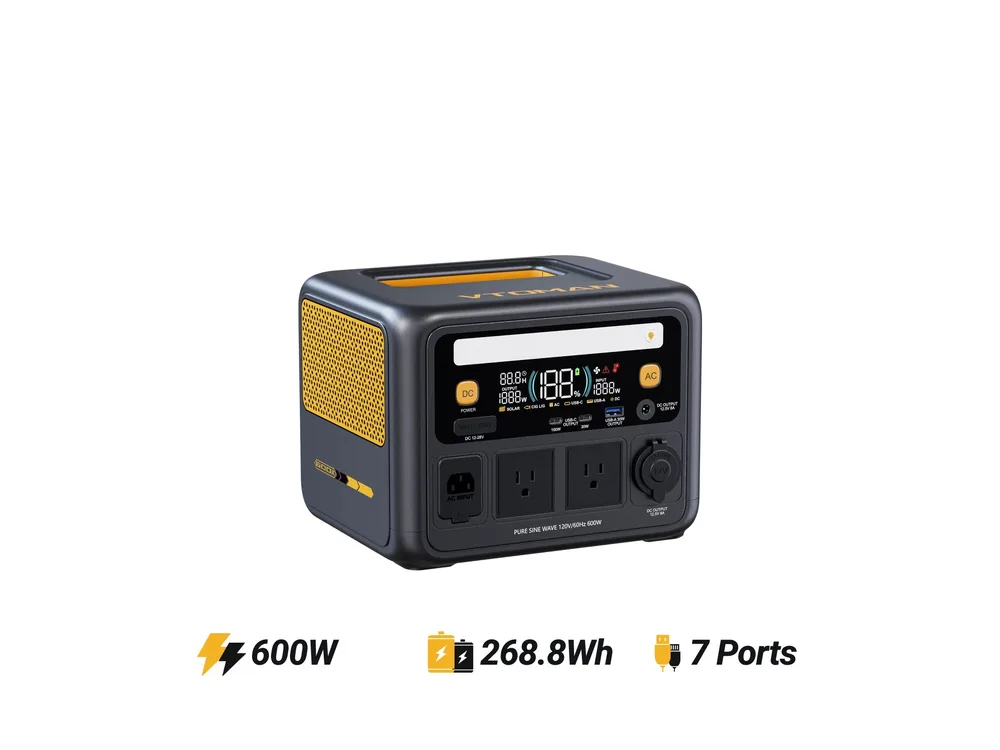
Of the 107 models in our dataset, 42 publish a 12V car port. That figure is a DC output like a cigarette-lighter socket: useful for 12V accessories, and fused for them. It is not the clamp output on a jump starter, and the vendor specifications do not rate it for engine cranking.
If a station is described as having a 12V output and nothing else, treat it as an accessory port until the listing says otherwise. Peak inverter watts are a different figure again: they describe an AC load for a moment, not the DC current a starter draws.
When a station can do it: the combo units
A small number of products are sold as hybrids: a power station and a jump starter in one case. The ones that can genuinely jump start a car are not doing it through the 12V car port — they have a dedicated jump-start output and a published peak-amps rating, the same way a stand-alone jump starter does.
Our normalized dataset records capacity, output, chemistry, ports and weight; it does not record a jump-start amp rating, so we cannot rank models on it. That means the figure has to come from the vendor page. Look for a dedicated jump-start port or clamp lead and a stated peak current, not just a model name or a 12V socket.
Common mistakes
- Buying a power station expecting it to jump start a car, then finding it only has a 12V accessory socket.
- Reading a peak inverter wattage as if it were cranking current — they describe different circuits and different loads.
- Connecting a station's 12V socket to a car battery to crank it. The socket and its fuse are not built for that current.
- Assuming a model name that contains "jump" is proof. The rating, if there is one, is on the vendor page.
- Leaving a hybrid unit discharged. A jump starter that is flat cannot start anything.
- Paying for a combo when a dedicated jump starter plus the station you already own would cost less and do both jobs better.
How to decide for your own car
- If the job is jump starting, buy a jump starter or a combo with a published jump-start rating, and match that rating to your engine — a diesel needs more than a small gasoline four-cylinder.
- If the job is backup power, buy a power station sized from the loads you actually run, and do not pay a premium for a jump feature you will not use.
- If you want both in one case, check the vendor page for a dedicated jump-start port, a stated peak current, and clamps rather than a 12V socket.
- Keep whichever you buy charged. A jump starter is only useful when it holds a charge, and a power station kept at a sensible state of charge lasts longer.
- Read the manual before you connect anything to a battery. Polarity and connection order are the difference between a jump start and a damaged unit.
What the dataset can and cannot tell you
The dataset covers 107 models from 12 brands, all read from the manufacturers' own product pages. It can tell you capacity, continuous and surge AC output, chemistry, ports, weight and price. It cannot tell you a jump-start current, because vendors do not publish that as a field we could normalize and verify.
So this guide does not name a model as jump-start capable. Where a vendor does publish a jump-start rating, that page is the source to check; where it does not, the honest reading is that the unit is a power station, not a jump starter.
Frequently asked
Can a portable power station jump start a car?
Usually no. A power station supplies AC and small DC loads through an inverter and accessory ports. Jump starting needs a dedicated high-current output and clamps, which most stations do not have. A hybrid unit that advertises the feature is the exception, and its vendor page should state the jump-start rating.
Can I use the 12V car port to jump start a car?
No. The 12V car port is an accessory output, like a cigarette-lighter socket, and it is fused for small loads rather than the current a starter motor draws. Connecting it to a car battery to crank the engine is not what it is built for.
What is the difference between a power station and a jump starter?
A jump starter stores energy for one short, very high-current burst into a starter motor. A power station stores energy for hours of lower-power AC and DC use. Some products combine both, but they need separate outputs to do it.
Do any portable power stations have a jump starter built in?
A few are sold as hybrids. To tell whether one can really jump start a car, check the vendor page for a dedicated jump-start port or clamp lead and a stated peak current. A 12V accessory socket is not a jump-start output, and our dataset does not record a jump-start amp rating.