
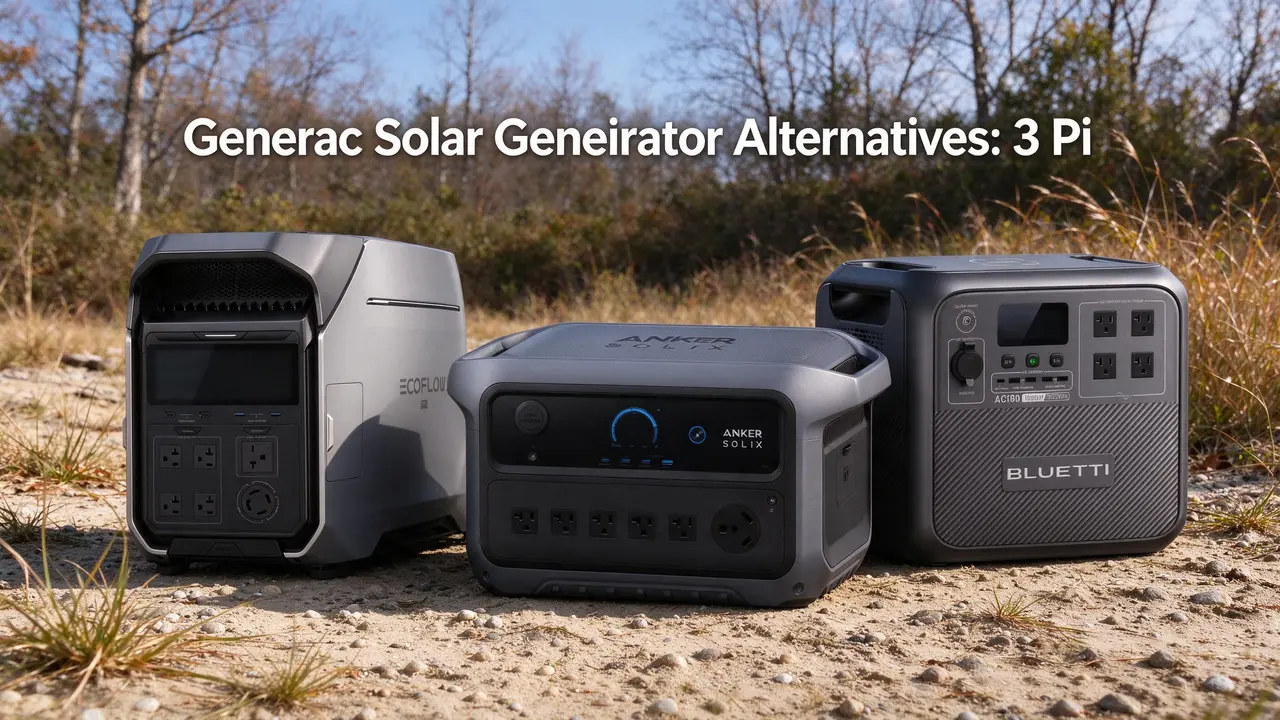
Generac Solar Generator Alternatives: 3 Picks by Use Case
Generac's portable lineup is thin, so most shoppers end up comparing EcoFlow, Anker, and BLUETTI instead. Here are three stations matched to RV, CPAP, home-backup, and weekend-camping duty — with the trade-offs spelled out.
Updated
Who this category is actually for
As an Amazon Associate I earn from qualifying purchases. Recommendations here are based on fit and the evidence below — not commission size.
If you went looking for a Generac solar generator and came up mostly empty, you're not imagining it. Generac's portable power lineup is thin compared with its home standby generators, so the practical move is to compare the stations people actually buy for the same jobs — and match one to how you'll use it, not to a spec sheet.
This page is organized by user, not by wattage. Four groups cover most buyers: RV and van owners who want to run an air conditioner or a 12V fridge off-grid; CPAP and medical users who need overnight runtime plus a clean switchover; home-backup and remote-work folks who want the fridge, router, and a few circuits to survive an outage; and weekend campers who care about weight as much as capacity.
One boundary up front: none of these three is a standby generator, and none replaces a transfer-switch install on its own. They're battery stations. If you need multi-day whole-home coverage, you're really shopping capacity plus an expansion path, and that points at one unit here. If you need to carry power a quarter mile to a tent, it points at another.
A quick note on sourcing: I'm working from the listing specs and the owner themes on file for these three units — home-user checks, not lab-bench measurements. Prices below are list prices, and where a historical low exists I mention it as context, not as the number you'll pay today.
- RV/van: run an AC or 12V fridge off-grid without fumes
- Medical/CPAP: overnight runtime plus fast, clean switchover
- Home backup/remote work: fridge, router, lights through an outage
- Weekend camping: capacity you can actually lift into a trunk
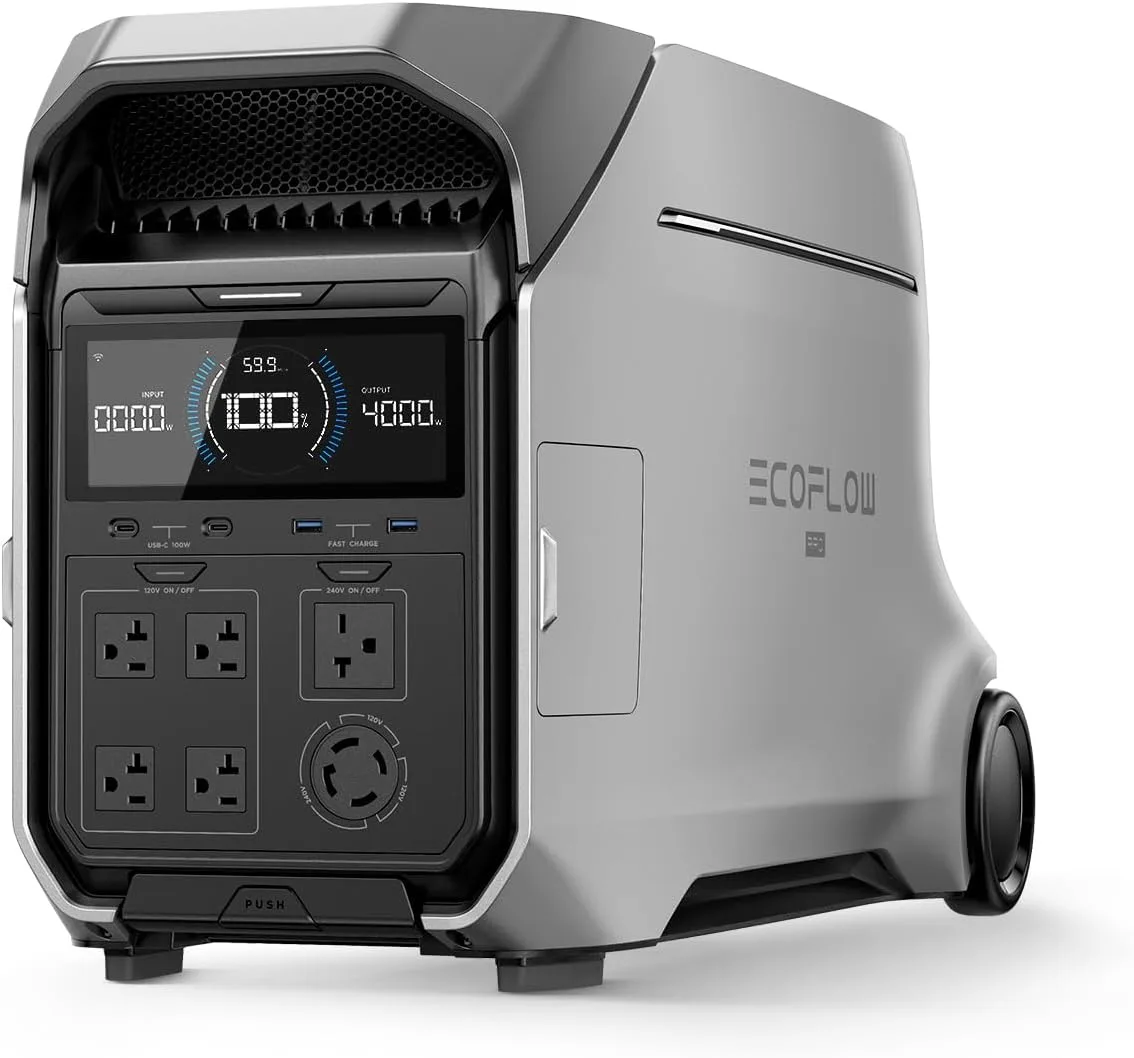
EcoFlow DELTA Pro 3 Portable Power Station, 4096Wh
Highlights
- 4096Wh rated capacity
- 4000W continuous AC
- 8000W surge
- LiFePO4 chemistry
- Up to 2600W solar input
- 113.5 lb (~51.5 kg)
Best for
- DELTA Pro 3: longer outages or higher continuous loads (still not whole-home wiring)
- RV / off-grid days where recharge speed matters as much as Wh
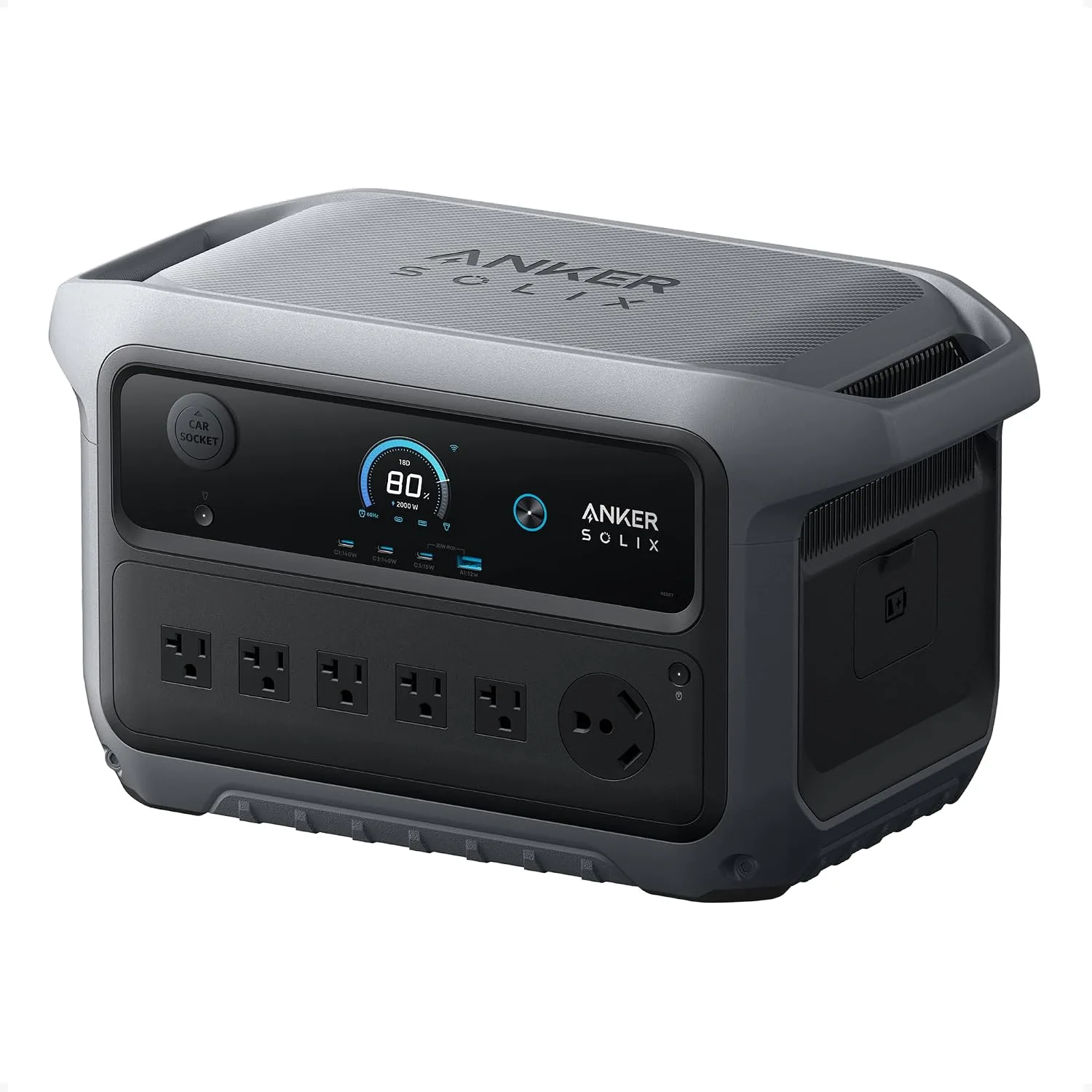
Anker C2000 Gen 2 Portable Power Station, 2,048Wh
Highlights
- 2048Wh rated capacity
- 2400W continuous AC
- 4000W surge
- LiFePO4 chemistry
- Up to 800W solar input
- 41.7 lb (~18.9 kg)
Best for
- C2000 Gen 2: longer outages or higher continuous loads (still not whole-home wiring)
- RV / off-grid days where recharge speed matters as much as Wh
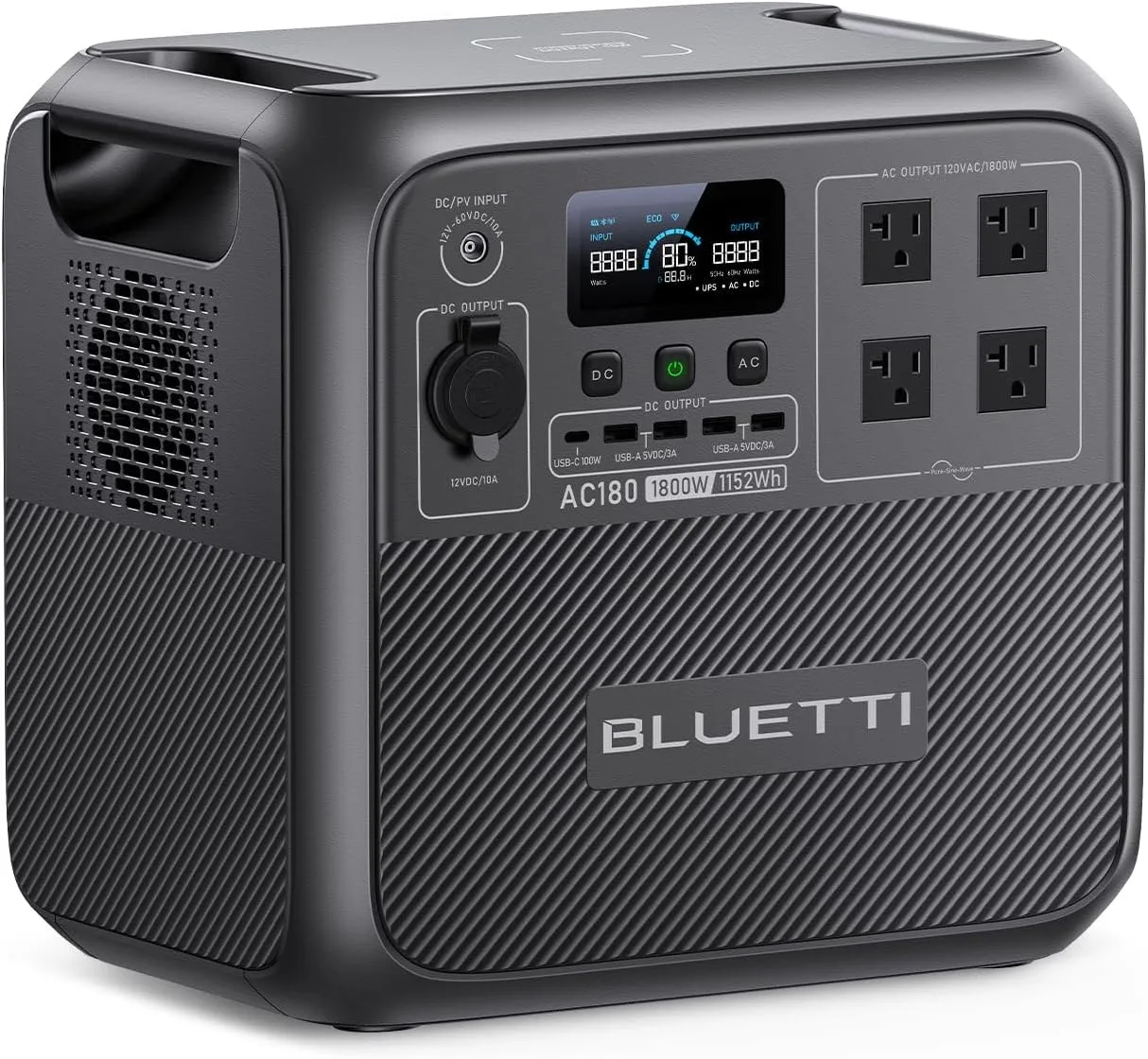
BLUETTI Portable Power Station AC180, 1152Wh LiFePO4 Battery Backup w/ 2 1800W
Highlights
- 1152Wh rated capacity
- 1800W continuous AC
- LiFePO4 chemistry
- Up to 500W solar input
- 35.3 lb (~16.0 kg)
- About $499 list
Best for
- AC180: most Wh per list dollar in mid-size LiFePO4 shortlists (~1152Wh)
- Home essentials when 1800W continuous matters more than a light carry
Quick picks: one station per job
Three stations, three different jobs. The DELTA Pro 3 is the whole-home battery; the Anker C2000 Gen 2 is the quiet indoor/outage workhorse; the BLUETTI AC180 is the affordable first backup that doubles as a camping unit.
Ranking here follows fit to the four use cases above, weighted toward capacity and output for home backup (35%), recharge speed and solar input (20%), portability by weight (20%), UPS/switchover behavior (15%), and owner themes (10%). That's why the heaviest, priciest unit still leads for home backup while finishing last for camping.
| Product | Price | Capacity (Wh) | Output (W) | Weight (lb) | Rating |
|---|---|---|---|---|---|
| EcoFlow DELTA Pro 3 Portable Power Station, 4096Wh | $3699 | 4096 Wh | 4000 W | 113.5 lb | 4.3 |
| Anker C2000 Gen 2 Portable Power Station, 2,048Wh | $1499 | 2048 Wh | 2400 W | 41.7 lb | 4.7 |
| BLUETTI AC180 | $499 | 1152 Wh | 1800 W | 35.3 lb | 4.5 |
How I weighted these picks
I weighted capacity and output for home backup at 35%, recharge speed and solar input at 20%, portability by weight at 20%, UPS/switchover behavior at 15%, and owner themes at 10%. The weights shift by use case, which is why the same three units rank differently depending on the job.
Why the DELTA Pro 3 beats the Anker C2000 Gen 2 for home backup: it doubles the capacity (4096 Wh vs 2048 Wh), doubles the continuous output (4000 W vs 2400 W), and adds 240V split-phase output that the Anker doesn't list. That's a High-confidence win on the 35% capacity/output weight and the 15% UPS weight, even though the Anker wins on weight and recharge speed.
Why the Anker beats the BLUETTI AC180 for RV and CPAP: it has roughly 1.8× the capacity and 1.3× the output, and owners report RV AC startup and two nights of CPAP use that the AC180's 1152 Wh can't match. The AC180 wins on price and weight, which is why it leads for weekend camping.
The method line: home-user checks grounded in owner themes on file plus listing specs — not lab-bench measurements. I'm not scoring these on instrumented tests; I'm scoring them on what owners report and what the listings say.
Scoreboard on those weights — EcoFlow DELTA Pro 3 Portable Power Station, 4096Wh (list $3699): High where list price and published capacity match the job, Med on continuous watts; Anker C2000 Gen 2 Portable Power Station, 2,048Wh (list $1499): High on continuous watts and ports, Med on price. That is why the pick splits by job rather than one universal winner.
- Capacity/output for home backup: 35%
- Recharge speed and solar input: 20%
- Portability by weight: 20%
- UPS/switchover behavior: 15%
- Owner themes: 10%
For RV and van owners
RV owners want two things: enough surge to start an air conditioner, and enough quiet to sleep next to it. The Anker C2000 Gen 2 is the pick here. Owners report starting an RV AC through a 30A adapter with no soft-start kit, and the unit runs silently indoors with no fumes — which matters when you're boondocking in a campground with quiet hours.
The catch is how it takes power in. Plugged into a 15A household outlet it goes into strict pass-through (15A in, 15A out), so if you pull more than 15A from the 30A outlet while it's charging, it trips. You have to unplug to get full output. Solar input is also capped well below the AC output, which owners of a unit this size find limiting for off-grid charging.
The BLUETTI AC180 is the budget RV alternative if you're running a 12V fridge and phones rather than an AC. It carried a portable car fridge through a five-day trip in owner reports and handled power tools. But the honest math bites: the inverter pulls roughly 20W just sitting on, and the manual notes only about 90% of usable capacity, so small loads drain faster than the label suggests.
Skip the DELTA Pro 3 for van life unless it's a permanent install. At 113.5 lb it's a garage fixture, and stacking expansion batteries on top makes it immovable.
- Anker C2000 Gen 2: RV AC startup without a soft-start kit; quiet indoor running
- BLUETTI AC180: 12V fridge and small loads; watch the ~20W idle draw
- DELTA Pro 3: too heavy to be a road-trip unit
For medical and CPAP users
CPAP is a modest, steady load — typically in the 30–60W range depending on humidifier settings — so the question isn't raw capacity, it's whether the switchover is clean and whether you can recharge fast the next morning. The Anker C2000 Gen 2 is the pick: one owner reported two full nights of CPAP use plus a few hours of TV, then a recharge in just over an hour.
The BLUETTI AC180 is the budget option and has a genuine UPS mode with a 20 ms switchover, which owners set up as a basement UPS for a router and TV. For CPAP specifically, the ~20W idle draw and ~90% usable capacity mean you should size up rather than plan to the label.
Important: none of these stations is a certified medical device power supply. If a device is life-sustaining, check with the manufacturer about acceptable backup power and don't rely on a consumer power station as your only line of defense.
The DELTA Pro 3's 10 ms switchover is the fastest of the three on paper, and owners confirmed a desktop didn't reboot when the wall cable was pulled. But at $3699 it's overkill for a CPAP unless you're also backing up the house.
- Anker C2000 Gen 2: two nights of CPAP reported; ~1-hour recharge
- BLUETTI AC180: 20 ms UPS switchover; size up for idle draw
- Not a substitute for a certified medical device power supply
For home backup and remote work
This is where the DELTA Pro 3 earns its price. At 4096 Wh and 4000 W, owners ran a house through a multi-day storm outage with an expansion battery stacked on, keeping the fridge and AC going. It also fed a 240V well pump and a basement circuit from the 30A outlet, recharging from a gas generator for a couple of hours a day.
The UPS handoff is the standout: one owner pulled the wall cable and the desktop never rebooted. Solar plus AC plus generator input can combine for very fast top-ups. The trade-offs are real, though — it's back-breaking to lift, the app splits owners (some love the live data, others find it jumbled with settings that override each other), and one high-helpful report describes a locked BMS and a weeks-long warranty/shipping ordeal because the unit ships as a hazmat-class lithium battery.
The Anker C2000 Gen 2 is the better fit for apartment or remote-work backup. It ran a fridge and standalone freezer easily, and one owner kept a fridge running through a hurricane outage while recharging from 25% to full in about an hour. It's quiet enough to sit behind a chair in the living room.
The BLUETTI AC180 is the entry-level home-backup pick for essentials — router, TV, lights — with instant UPS switchover. It won't carry a fridge for long, and the wireless charging pad on top is unreliable for many owners.
- DELTA Pro 3: whole-home capacity, 240V output, expansion path
- Anker C2000 Gen 2: apartment/remote-work backup; ~1-hour recharge
- BLUETTI AC180: essentials only; instant UPS switchover
For weekend campers
Camping is a weight-and-capacity problem, and the BLUETTI AC180 wins on both. At 35.3 lb and 1152 Wh it's the lightest and cheapest of the three, and owners carried it through five-day trips running a car fridge and phones. It also handled power tools like a miter saw and drill.
The catch is solar reality. Panels rated at 200W delivered well under that on a clear day in owner measurements, and a fraction under cloud, so plan panel headroom. The ~20W idle draw also means you should turn the unit off when you're not using it.
The Anker C2000 Gen 2 is the step-up camping pick if you want to run a small AC or a bigger fridge. At 41.7 lb it's still manageable, and the fast recharge means a lunch stop at a wall outlet gets you back to full.
The DELTA Pro 3 is not a camping unit. At 113.5 lb it's a permanent fixture — owners describe moving it as its own workout.
- BLUETTI AC180: 35.3 lb, 1152 Wh; car fridge for days
- Anker C2000 Gen 2: 41.7 lb; step up for small AC or bigger fridge
- DELTA Pro 3: leave it in the garage
Spec snapshot
List prices only; historical lows are context, not the number you'll pay today. Ratings are listing aggregates, not owner proof.
| Product | Price | Capacity (Wh) | Output (W) | Weight (lb) | Rating |
|---|---|---|---|---|---|
| EcoFlow DELTA Pro 3 Portable Power Station, 4096Wh | $3699 | 4096 Wh | 4000 W | 113.5 lb | 4.3 |
| Anker C2000 Gen 2 Portable Power Station, 2,048Wh | $1499 | 2048 Wh | 2400 W | 41.7 lb | 4.7 |
| BLUETTI AC180 | $499 | 1152 Wh | 1800 W | 35.3 lb | 4.5 |
Where these stations fall short
Every one of these has a caveat worth knowing before you buy. The DELTA Pro 3's app is polarizing — some owners love the live data and scheduling, others find it counter-intuitive with settings that cancel each other and a chatbot that's no help when something like Storm Guard quits. The manual is thin and the ports aren't labeled on the unit.
The Anker C2000 Gen 2's 15A pass-through limit is the one that trips people up. If you're charging from a standard outlet and try to pull more than 15A from the 30A outlet, it trips — you have to unplug to get full output. Solar input is also capped lower than owners of a unit this size would like.
The BLUETTI AC180's real usable capacity is lower than the label. The inverter draws roughly 20W idle and the manual notes only about 90% of capacity is usable, so small loads drain faster than the math suggests. The top wireless charging pad is also unreliable for many owners.
One more: the DELTA Pro 3's high-helpful failure report — a locked BMS and a weeks-long warranty/shipping ordeal because the unit is a hazmat-class lithium battery — is worth knowing before you rely on it as your sole backup. Register it, keep the box, and don't treat it as your only line of defense.
- DELTA Pro 3: app complexity, heavy weight, hazmat shipping friction
- Anker C2000 Gen 2: 15A pass-through limit, solar input cap
- BLUETTI AC180: ~20W idle draw, ~90% usable capacity, flaky wireless pad
Who should walk away
If you need multi-day whole-home coverage and you're not willing to install a transfer switch or smart panel, none of these is the right answer — you're shopping a standby generator, not a battery station.
If you need to carry power more than a few hundred feet, skip the DELTA Pro 3. At 113.5 lb it's a garage fixture.
If you need to run a big appliance for hours, skip the BLUETTI AC180. It's an essentials unit, not a fridge-for-a-day unit.
If you need heavy simultaneous loads while charging from a standard outlet, skip the Anker C2000 Gen 2 — the 15A pass-through limit will trip you.
- Need multi-day whole-home? Shop a standby generator
- Need to carry it far? Skip the DELTA Pro 3
- Need big appliances for hours? Skip the AC180
- Need heavy loads while charging? Skip the Anker C2000 Gen 2
Owner themes on file
Short theme summaries from the review packs, not raw review dumps.
DELTA Pro 3: whole-home backup and 240V output dominate; owners praise the UPS handoff and expansion stacking, and flag the weight, app complexity, and one high-helpful warranty/shipping ordeal.
Anker C2000 Gen 2: fast AC recharge and quiet indoor use lead; owners report fridge/freezer backup and RV AC startup, and flag the 15A pass-through limit and solar input cap.
BLUETTI AC180: UPS switchover and portability lead; owners report car-fridge camping and power-tool use, and flag the ~20W idle draw, ~90% usable capacity, and flaky wireless pad.
Frequently asked
Can the Anker C2000 Gen 2 run a CPAP overnight?
Owners report two full nights of CPAP use plus a few hours of TV, then a recharge in just over an hour. It's not a certified medical device power supply, so check with your device manufacturer if it's life-sustaining.
Does the BLUETTI AC180 really deliver 1152 Wh?
The label says 1152 Wh, but the manual notes only about 90% is usable and the inverter draws roughly 20W idle, so plan on less for small loads.
Can the DELTA Pro 3 run a 240V well pump?
Owners report feeding a 240V well pump and a basement circuit from the 30A outlet, recharging from a gas generator for a couple of hours a day.
Which is cheapest per Wh?
On nameplate $/Wh, the BLUETTI AC180 is the lowest of the three at $0.43/Wh, versus $0.73/Wh for the Anker C2000 Gen 2 and $0.90/Wh for the DELTA Pro 3.
Method and sources
Model names and list prices come from the WattPicks catalog at build time. WattPicks does not run its own laboratory tests on power stations, and nothing on this page is presented as a measured result — it is catalog-backed buying guidance.
Read our methodology for how the catalog is normalized, and about WattPicks for who publishes it.