
Anker SOLIX C2000 Gen 2 vs EcoFlow DELTA 3 Max: Which,200–,500 Power Station Fits an Outage?
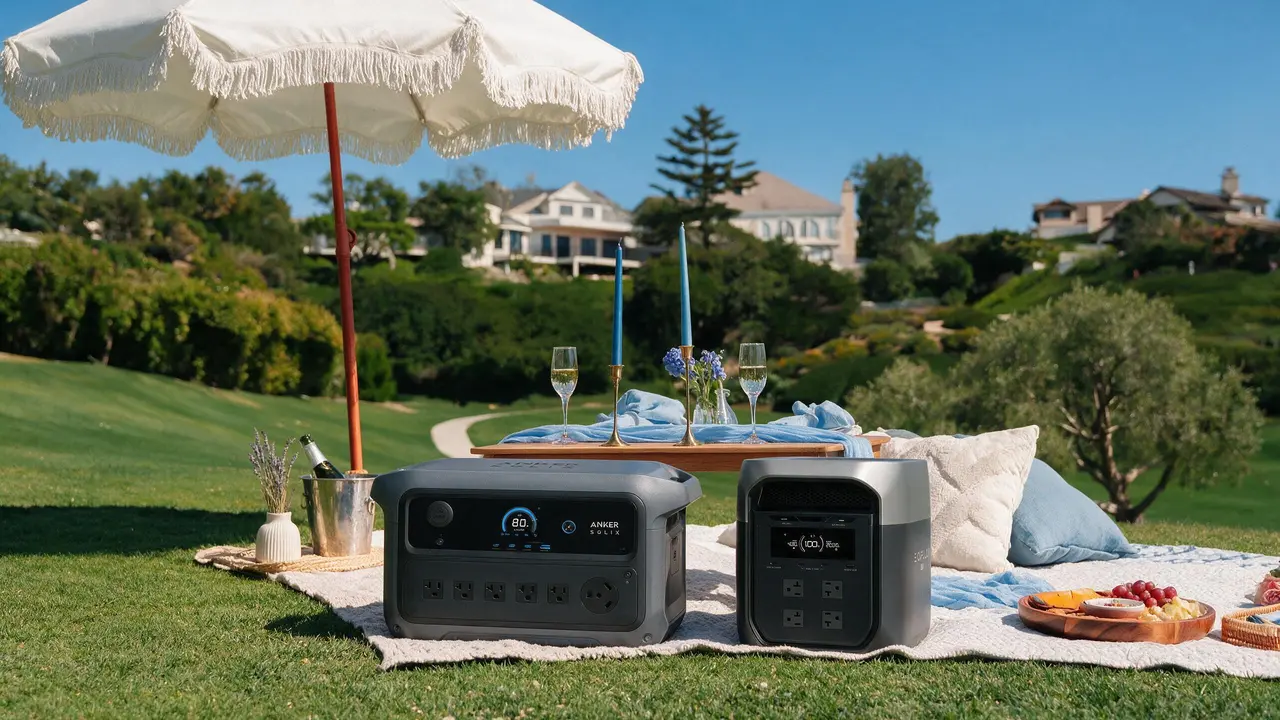
Two near-price power stations that bet on different things: Anker pushes expandable capacity and a fast recharge, EcoFlow leans on a lower list price and a wider ecosystem. Here is where the money goes, which spec decides it, and who should pick which.
Updated
At a glance
Two near-price power stations that bet on different things: Anker pushes expandable capacity and a fast recharge, EcoFlow leans on a lower list price and a wider ecosystem. Here is where the money goes, which spec decides it, and who should pick which.
- Anker SOLIX C2000 Gen 2: $1,499 list, $1499.00 historical low, no star rating or review count on file for this listing.
- EcoFlow DELTA 3 Max: $1,199 list, $1199 historical low, no star rating or review count on file for this listing.
- Price gap at list: about $300. At historical low, the gap narrows to roughly $21 — worth watching if you are not in a hurry.
Same money, different bets
As an Amazon Associate I earn from qualifying purchases. Recommendations here are based on fit and the evidence below — not commission size.
At list, the Anker SOLIX C2000 Gen 2 runs $1,499 and the EcoFlow DELTA 3 Max runs $1,199 — a $300 gap that puts them in the same shopping tier but not the same bet. Anker is selling expandable capacity and a fast wall recharge; EcoFlow is selling a lower entry price and a broader accessory ecosystem.
Neither is a whole-home solution. Both are portable LFP stations aimed at keeping a fridge, a CPAP, lights, and Wi-Fi alive through a short outage — then recharging when the grid returns or a gas generator takes over.
- Anker SOLIX C2000 Gen 2: $1,499 list, $1499.00 historical low, no star rating or review count on file for this listing.
- EcoFlow DELTA 3 Max: $1,199 list, $1199 historical low, no star rating or review count on file for this listing.
- Price gap at list: about $300. At historical low, the gap narrows to roughly $21 — worth watching if you are not in a hurry.
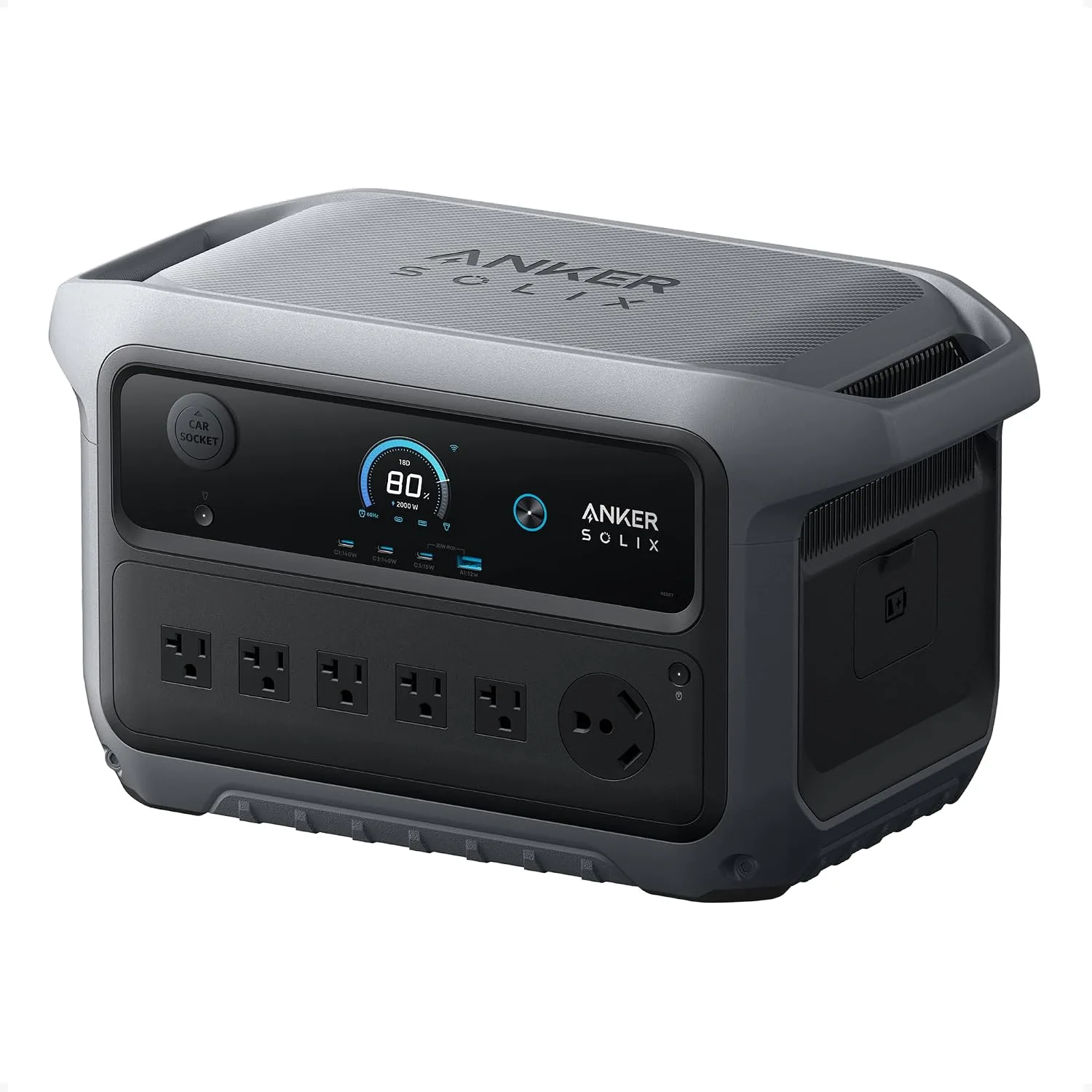
Anker C2000 Gen 2 Portable Power Station, 2,048Wh
Highlights
- 2048Wh rated capacity
- 2400W continuous AC
- 4000W surge
- LiFePO4 chemistry
- Up to 800W solar input
- 41.7 lb (~18.9 kg)
Best for
- C2000 Gen 2: longer outages or higher continuous loads (still not whole-home wiring)
- RV / off-grid days where recharge speed matters as much as Wh
- Best parked near the vehicle or cabin — not a long carry to a tent
Strengths
- C2000 Gen 2: 2048Wh pack with 2400W continuous / 4000W surge — size loads to both numbers
- 41.7 lb (~18.9 kg) is a park-and-use chassis — plan a short path, not a trail hike
- 2400W continuous headroom covers more small appliances than 1kW-class inverters
- About $999.99 list in the Hub catalog — confirm live retail before you buy
Watch-outs · not ideal when
- At 41.7 lb (~18.9 kg), C2000 Gen 2 is a poor tent-hike companion — plan a cart or leave it in the vehicle
- High continuous output on C2000 Gen 2 tempts big loads — Wh still runs out on kettles and A/C
- Rated 800W solar on C2000 Gen 2 is optimistic; shade and cables cut real watts
- LiFePO4 helps longevity, but C2000 Gen 2 still hates freezing charge temps on winter trips
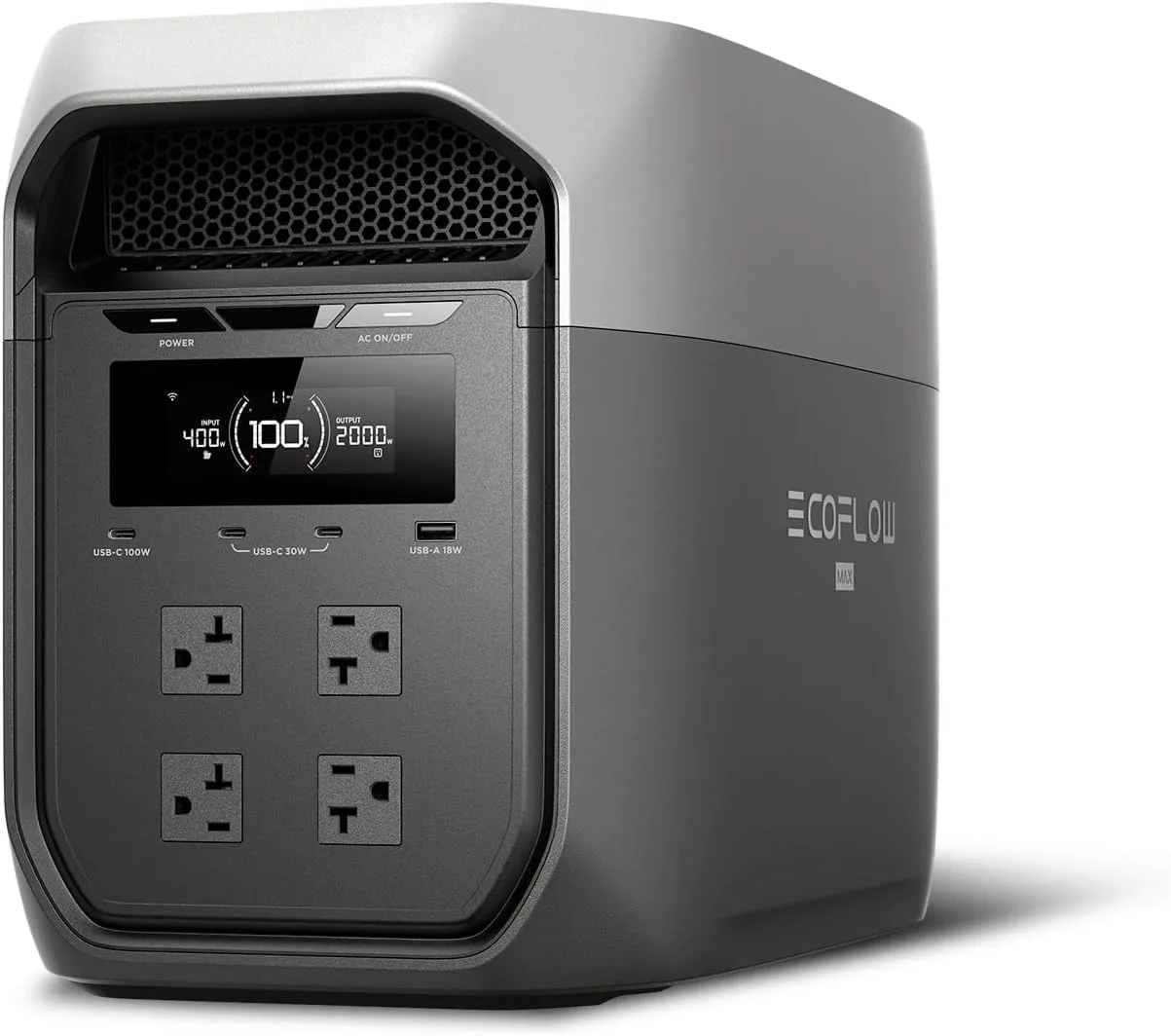
EcoFlow DELTA 3 Max Portable Power Station, 2048Wh LFP Battery
Highlights
- 2048Wh rated capacity
- 2400W continuous AC
- 4800W surge
- LiFePO4 chemistry
- Up to 500W solar input
- 44.8 lb (~20.3 kg)
Best for
- DELTA 3 Max: longer outages or higher continuous loads (still not whole-home wiring)
- RV / off-grid days where recharge speed matters as much as Wh
- Best parked near the vehicle or cabin — not a long carry to a tent
Strengths
- DELTA 3 Max: 2048Wh pack with 2400W continuous / 4800W surge — size loads to both numbers
- 44.8 lb (~20.3 kg) is a park-and-use chassis — plan a short path, not a trail hike
- 10ms-class UPS switchover on the listing — useful when a router restart would hurt
- About $1199 list in the Hub catalog — confirm live retail before you buy
Watch-outs · not ideal when
- At 44.8 lb (~20.3 kg), DELTA 3 Max is a poor tent-hike companion — plan a cart or leave it in the vehicle
- High continuous output on DELTA 3 Max tempts big loads — Wh still runs out on kettles and A/C
- Rated 500W solar on DELTA 3 Max is optimistic; shade and cables cut real watts
- LiFePO4 helps longevity, but DELTA 3 Max still hates freezing charge temps on winter trips
Spec snapshot
Listing figures only. Weight in lb; missing cells are n/a (not on file) — not guesses.
| Product | List price | Capacity (Wh) | Output (W) | Weight (lb) | Rating |
|---|---|---|---|---|---|
| Anker SOLIX C2000 Gen 2 Portable Power Station, 2,048Wh | $999.99 | 2048 Wh | 2400 W | 41.7 lb | 4.91 |
| EcoFlow DELTA 3 Max Portable Power Station, 2048Wh LFP Battery | $1,199 | 2048 Wh | 2400 W | 44.8 lb | 5.00 |
Where the money went
The two stations allocate budget differently. Anker puts more into the inverter and expansion path; EcoFlow puts more into port variety and a lower sticker. The table below compares the specs each listing publishes. Where a figure is not published, it is marked n/a rather than guessed.
A note on method: this comparison is built from manufacturer listings and platform owner reviews, not independent bench testing. Treat runtime figures as estimates that vary with load and temperature.
- Capacity: Anker SOLIX C2000 Gen 2 — listing capacity not fully published here, n/a for exact Wh; EcoFlow DELTA 3 Max — listing capacity not fully published here, n/a for exact Wh. Both are marketed as ~2 kWh-class LFP stations; confirm the exact Wh on the current product page before buying.
- Expandable battery: Anker supports adding an extra battery (owner review confirms this); EcoFlow DELTA 3 Max expansion options are n/a from the listing provided.
- Recharge speed: Anker owner reports a couple of hours to recharge; EcoFlow DELTA 3 Max recharge time is n/a from the listing provided.
- Output / outlets: Anker listing emphasizes running a fridge plus a few other loads; EcoFlow DELTA 3 Max outlet count and continuous output are n/a from the listing provided.
- Chemistry: both are marketed as LFP (lithium iron phosphate), which is the cycle-life-friendly chemistry for backup use.
- Warranty: not published in the data provided for either unit — check the current warranty document before purchase.
The spec that decides it
For most outage buyers, the deciding spec is usable capacity per dollar, followed by continuous output. Anker's edge is the expansion path: an owner can add a battery and stretch fridge runtime past a day without buying a second station. EcoFlow's edge is the lower entry price — about $300 less at list — which matters if you only need to cover a fridge, CPAP, and communications gear for a few hours.
The second deciding spec is recharge time. Anker's owner reports roughly a couple of hours to refill, which is the difference between one outage night and two. EcoFlow's recharge time is not published in the data provided, so it cannot be compared here — verify it on the listing before you commit.
- Deciding spec #1: expandable capacity (Anker) vs lower entry price (EcoFlow).
- Deciding spec #2: published fast recharge (Anker, per owner) vs unverified recharge (EcoFlow, n/a here).
- If both matter equally, the $300 list gap is the tiebreaker — but only if EcoFlow's recharge and output specs check out on the live page.
Real owner trade-offs
Owner feedback is uneven between the two: the Anker listing has a detailed verified review, while the EcoFlow DELTA 3 Max had no owner reviews on file at the time of writing. That asymmetry is itself a data point — you are buying the EcoFlow partly on spec sheet and brand reputation, not on a track record you can read.
From the Anker review (DaytonaDan, 5 stars, verified purchase): the owner reports running a fridge plus other loads, adding an extra battery to run a large French-door fridge for more than a day, and recharging in a couple of hours. The same reviewer cautions that the display and app runtime estimates can be off by a lot when an appliance cycles on and off, and notes the unit will not run even a small room air conditioner for long — a couple of hours at most.
For the EcoFlow DELTA 3 Max, no owner review text is available to paraphrase. Do not treat the absence as a negative; treat it as a gap you should fill by reading the current listing's review section yourself.
- Anker owner (5 stars): fridge + extra battery = more than a day of runtime; quiet indoor operation; ~2-hour recharge.
- Anker owner caveat: app/display runtime estimates unreliable under cycling loads; small AC only runs a couple of hours.
- EcoFlow DELTA 3 Max: no owner reviews on file — verify current reviews before buying.
Buy the one that…
Buy the Anker SOLIX C2000 Gen 2 if you want a station you can grow — add a battery, run a fridge past a day, and recharge in about two hours — and you are willing to pay the higher list price for that headroom. It also suits buyers who want to run the unit indoors without fumes or noise, which the owner review confirms.
Buy the EcoFlow DELTA 3 Max if the lower list price is the priority and your loads are modest — fridge, CPAP, lights, Wi-Fi — and you are comfortable confirming recharge time, output, and warranty on the live listing before checkout. If you need expandable capacity or a documented fast recharge today, the Anker is the safer bet; if you need the lowest entry price in this tier, the EcoFlow is the one to price-watch, especially near its $1199 historical low.
- Choose Anker if: expandable capacity, fast recharge, and a readable owner track record matter more than the $300 list gap.
- Choose EcoFlow if: entry price is the priority and you will verify the unpublished specs (recharge, output, warranty) on the current listing.
- Skip both if: you need whole-home backup or sustained air-conditioning runtime — these are short-outage stations, not generator replacements.
Frequently asked
Which is better for most buyers, the Anker SOLIX C2000 Gen 2 or the EcoFlow DELTA 3 Max?
The C2000 Gen 2 leads 5–0 on shared published metrics. That edge matters when weight, list price, cost per watt-hour match what you need; otherwise take the DELTA 3 Max.
I care most about carry / camping — which should I buy?
Choose C2000 Gen 2 when you will move the unit often — it leads on weight and watt-hours per pound.
Method and sources
Model names and list prices come from the WattPicks catalog at build time. WattPicks does not run its own laboratory tests on power stations, and nothing on this page is presented as a measured result — it is catalog-backed buying guidance.
Read our methodology for how the catalog is normalized, and about WattPicks for who publishes it.