
EcoFlow DELTA 3 Classic vs Anker SOLIX C1000 Gen 2: Which 1kWh Station?
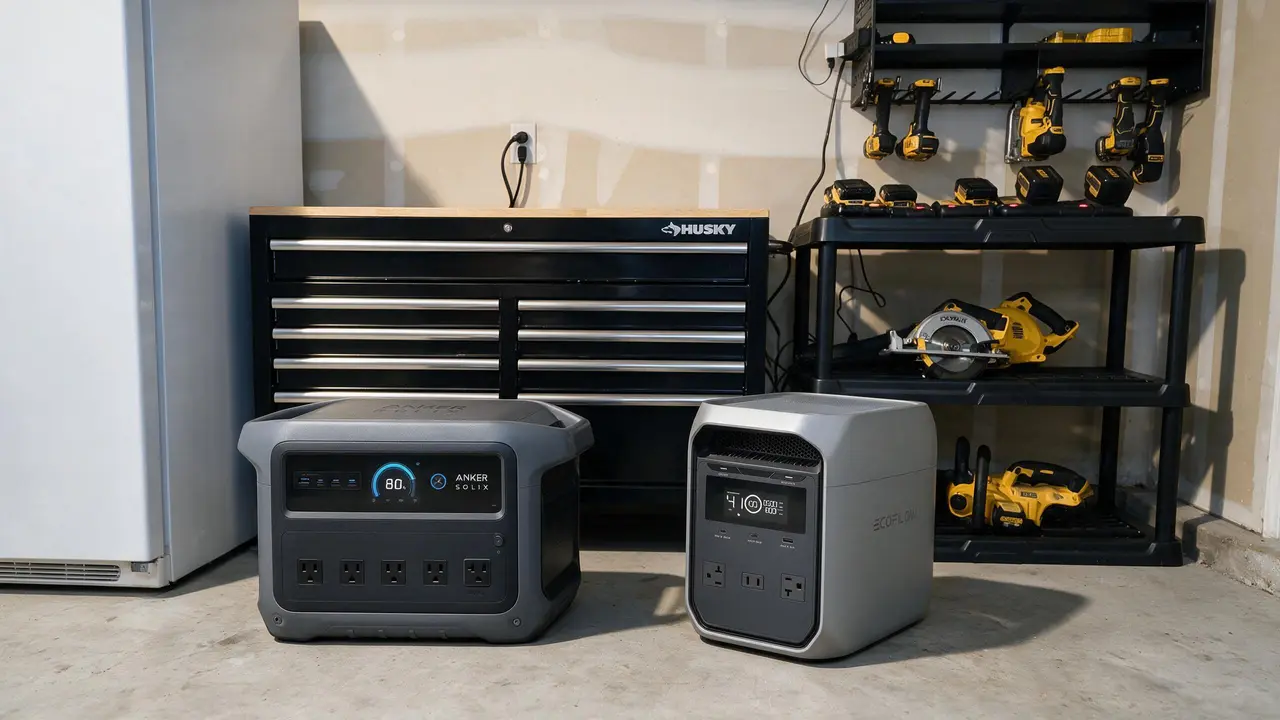
Two 1,024Wh-class stations, two very different bets. The Anker SOLIX C1000 Gen 2 undercuts on price and leans on UPS pass-through; the EcoFlow DELTA 3 Classic charges faster and carries a higher list price. Here is how to pick under a budget ceiling.
Updated
At a glance
Two 1,024Wh-class stations, two very different bets. The Anker SOLIX C1000 Gen 2 undercuts on price and leans on UPS pass-through; the EcoFlow DELTA 3 Classic charges faster and carries a higher list price. Here is how to pick under a budget ceiling.
- Anker SOLIX C1000 Gen 2: $599 list, $599.00 historical low — the budget pick
- EcoFlow DELTA 3 Classic: $899 list, $899 historical low — the premium pick
- Both: 1,1,024Wh, LFP chemistry, home backup and camping intent
Same money, different bets
As an Amazon Associate I earn from qualifying purchases. Recommendations here are based on fit and the evidence below — not commission size.
Both of these stations sit in the 1,1,024Wh, and both are aimed at the same buyer: someone who wants a fridge, a CPAP, and a few small loads to keep running when the grid drops. The difference is where each brand spent the budget.
The Anker SOLIX C1000 Gen 2 bets on price and pass-through. It lists at $599 and has hit a historical low of $599.00, and it is built to sit plugged in as a UPS so your fridge never notices the outage. The EcoFlow DELTA 3 Classic bets on charging speed and port flexibility. It lists at $899 with no discount history in the listing, and it leans on fast recharge and a clean front panel.
If your ceiling is $600, the Anker is the only one of the two that fits. If you can stretch, the EcoFlow is asking you to pay for speed and layout, not capacity.
- Anker SOLIX C1000 Gen 2: $599 list, $599.00 historical low — the budget pick
- EcoFlow DELTA 3 Classic: $899 list, $899 historical low — the premium pick
- Both: 1,1,024Wh, LFP chemistry, home backup and camping intent
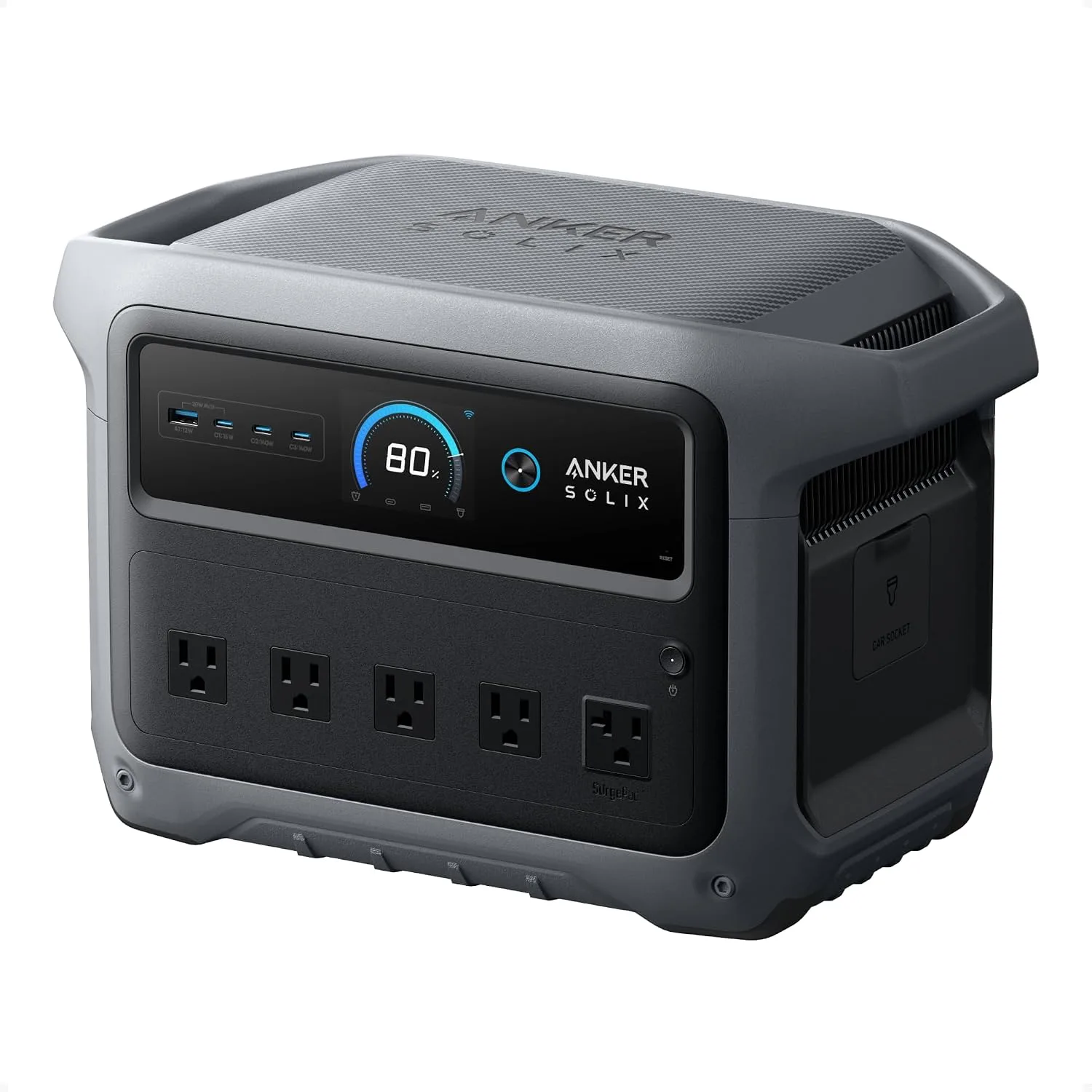
Anker C1000 Gen 2 Portable Power Station
Highlights
- 1024Wh rated capacity
- 2000W continuous AC
- 3000W surge
- LiFePO4 chemistry
- Up to 600W solar input
- 24.9 lb (~11.3 kg)
Best for
- C1000 Gen 2: weekend camping when 24.9 lb carry weight matters as much as 1024Wh
- Essentials bridge at home (fridge cycles, router) when sized to the Wh
- Solar top-ups up to ~600W when panels and weather cooperate
Strengths
- C1000 Gen 2: 1024Wh pack with 2000W continuous / 3000W surge — size loads to both numbers
- 24.9 lb (~11.3 kg) is the lightest-class carry in this band — easier stairs and car packing
- 10ms-class UPS switchover on the listing — useful when a router restart would hurt
- About $799 list in the Hub catalog — confirm live retail before you buy
Watch-outs · not ideal when
- C1000 Gen 2 is still a bridge for essentials — not a transfer-switch whole-home system
- Usable energy on C1000 Gen 2 is below the 1024Wh label once the inverter is working
- Rated 600W solar on C1000 Gen 2 is optimistic; shade and cables cut real watts
- LiFePO4 helps longevity, but C1000 Gen 2 still hates freezing charge temps on winter trips
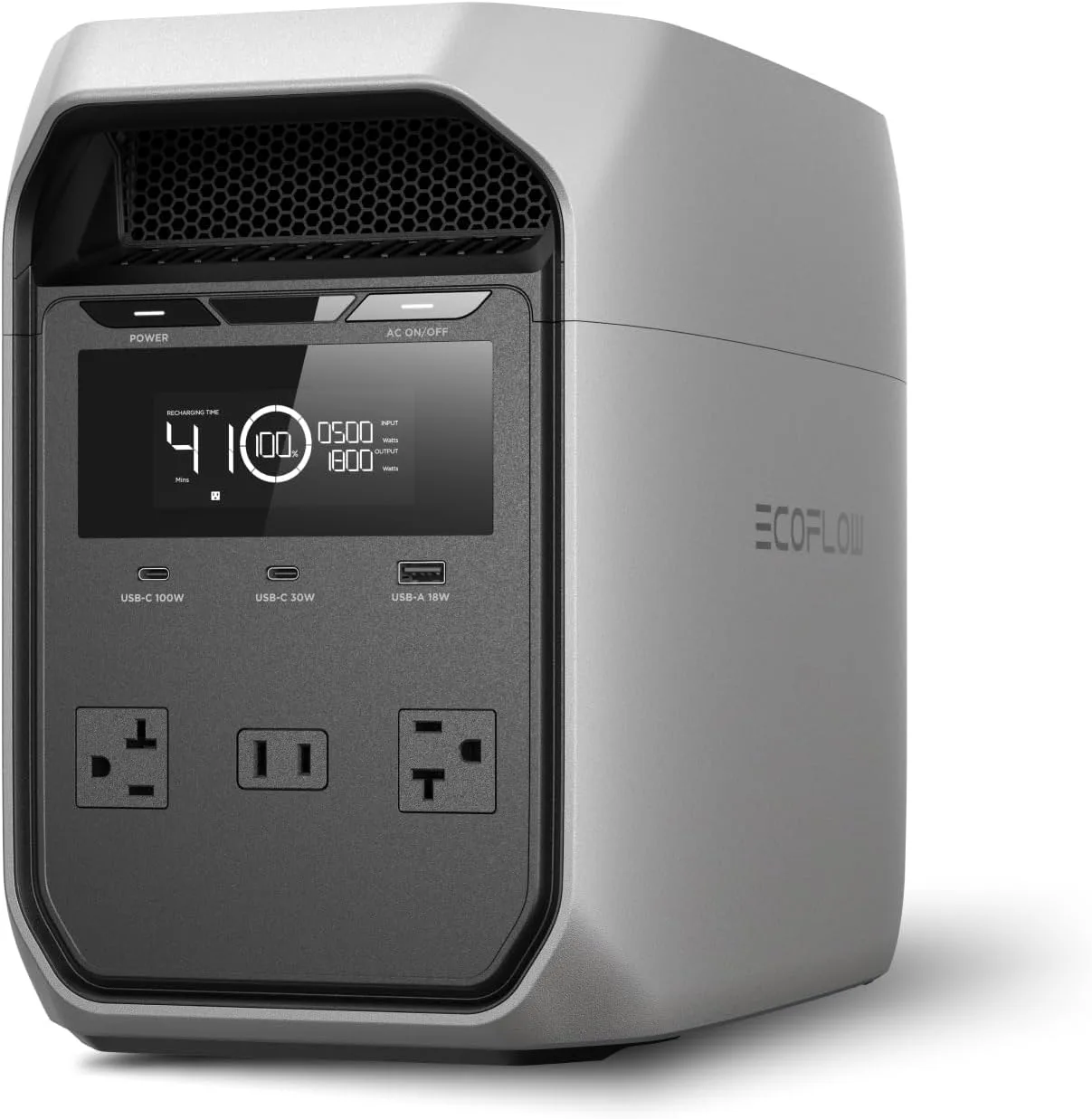
EcoFlow DELTA 3 Classic
Highlights
- 1024Wh rated capacity
- 1800W continuous AC
- 3600W surge
- LiFePO4 chemistry
- Up to 500W solar input
- 26.7 lb (~12.1 kg)
Best for
- DELTA 3 Classic: small appliances and tools that need ~1800W continuous, not just phone charging
- Essentials bridge at home (fridge cycles, router) when sized to the Wh
- Solar top-ups up to ~500W when panels and weather cooperate
Strengths
- DELTA 3 Classic: 1024Wh pack with 1800W continuous / 3600W surge — size loads to both numbers
- 26.7 lb (~12.1 kg) sits in the solo car-camp carry carry band for weekend moves
- 1800W continuous headroom covers more small appliances than 1kW-class inverters
- About $559 list in the Hub catalog — confirm live retail before you buy
Watch-outs · not ideal when
- DELTA 3 Classic is still a bridge for essentials — not a transfer-switch whole-home system
- Usable energy on DELTA 3 Classic is below the 1024Wh label once the inverter is working
- Rated 500W solar on DELTA 3 Classic is optimistic; shade and cables cut real watts
- LiFePO4 helps longevity, but DELTA 3 Classic still hates freezing charge temps on winter trips
Spec snapshot
Listing figures only. Weight in lb; missing cells are n/a (not on file) — not guesses.
| Product | List price | Capacity (Wh) | Output (W) | Weight (lb) | Rating |
|---|---|---|---|---|---|
| Anker SOLIX C1000 Gen 2 | $799 | 1024 Wh | 2000 W | 24.9 lb | 4.85 |
| EcoFlow DELTA 3 Classic | $559 | 1024 Wh | 1800 W | 26.7 lb | 5.00 |
Where the money went
Strip the marketing names and the two stations diverge on four things that matter day to day: price, expandability, pass-through behavior, and recharge speed. Everything else is close enough that it should not decide the purchase.
Expandability is the sharpest split. The Anker SOLIX C1000 Gen 2 dropped battery expansion versus the Gen 1, which an owner flagged directly in a 5-star review: "Be aware G2 has some changes from G1, like no expandability." The EcoFlow DELTA 3 Classic is sold as a standalone unit in this listing, and the listing does not publish an expansion figure, so treat expandability as n/a on both sides unless you confirm it at checkout.
Pass-through is where the Anker earns its keep. The same owner reports running it at 100% charge in a cabinet above the fridge, using UPS pass-through at 1,800W, and catching an outage right before leaving for a concert. That is the exact use case the Anker is priced for.
Recharge speed is where the EcoFlow earns its premium. An owner describes "incredible charging speed" and calls the front ports — high-power USB-C and accessible AC outlets — the standout feature. If you recharge from a wall outlet between trips, that speed is the thing you feel every week.
- Price: Anker $599 list / $599.00 low vs EcoFlow $899 list / $899 low
- Expandability: Anker G2 removed it (owner-reported); EcoFlow listing does not publish a figure — n/a
- Pass-through: Anker owner reports 1,800W UPS pass-through for a fridge; EcoFlow listing does not publish a pass-through rating — n/a
- Recharge speed: EcoFlow owner calls it the standout; Anker listing does not publish a comparable figure — n/a
- Port layout: EcoFlow owner highlights high-power USB-C and front AC outlets; Anker listing does not publish a comparable port map — n/a
- Display: EcoFlow owner reports clear input/output wattage readout; Anker listing does not publish a comparable display spec — n/a
The spec that decides it
For most buyers, the deciding number is not watt-hours — both are 1,1,024Wh — it is the price gap against the pass-through rating. The Anker's owner-reported 1,800W UPS pass-through is the single most useful figure in this comparison, because it tells you the station can sit inline with a refrigerator and switch over without you touching anything.
The second deciding factor is recharge speed on the EcoFlow. If you cycle the station weekly — camping, tailgating, job sites — faster wall recharge means less downtime and fewer excuses to leave it at 40%. If you leave it plugged in as a UPS, recharge speed barely matters and the Anker's lower price wins.
Note that both figures come from the listing and owner reviews, not from independent bench testing. Where a manufacturer has not published a number, this article marks it n/a rather than guessing.
- Deciding spec 1: Anker's owner-reported 1,800W UPS pass-through — matters if the station lives plugged in
- Deciding spec 2: EcoFlow's owner-reported fast recharge — matters if you cycle the station weekly
- Both: 1,1,024Wh, so capacity alone does not separate them
Real owner trade-offs
The Anker review that matters most comes from a 5-star buyer who bought at $400 on Prime Day and installed the unit in a cabinet above the fridge with a hole-saw and vent holes. He reports it sits at 100% charge at 86 degrees and caught a real outage. The trade-off he names is the G2's lost expandability — a real cost if you planned to add batteries later.
On the EcoFlow side, a 5-star owner calls it a "technological marvel" and singles out charging speed, the front port layout, and the display's accuracy for remaining charge and wattage. A second 5-star reviewer echoes reliability. The trade-off is implicit: you are paying $300 more at list for speed and layout, not for more capacity.
Neither review reports a failure, a warranty claim, or a measured runtime. Treat both as owner impressions, not test data.
- Anker (5 stars): fridge UPS install, 1,800W pass-through, 100% charge at 86°F — but no expandability on G2
- EcoFlow (5 stars): fast charging, clear display, strong front ports — at a $300 list premium
- Both: no warranty claim or measured runtime reported in the reviews used
Buy the one that…
Buy the Anker SOLIX C1000 Gen 2 if your budget ceiling is $600 and you want a station that lives plugged in as a fridge UPS. It is the cheaper bet, it has a real discount history at $599.00, and the owner-reported 1,800W pass-through is the feature you will actually use. Skip it if you need to add batteries later — the G2 removed that.
Buy the EcoFlow DELTA 3 Classic if you cycle the station weekly and want the fastest wall recharge and the cleanest port layout in this pair. Skip it if you are shopping strictly under $600, or if you only need UPS pass-through — you would be paying $300 for speed you will not use.
This comparison is based on the two product listings and platform owner reviews, not on independent full testing. Verify current price, warranty terms, and expandability at checkout before you buy.
- Buy the Anker if… you want a sub-$600 fridge UPS and do not need expansion.
- Buy the EcoFlow if… you recharge weekly and will use the faster charging and front ports.
- Skip both if… you need a published, expandable battery ecosystem — confirm that spec first.
Frequently asked
Which is better for most buyers, the Anker SOLIX C1000 Gen 2 or the EcoFlow DELTA 3 Classic?
The C1000 Gen 2 leads 4–2 on shared published metrics. That edge matters when continuous ac output, weight, watt-hours per pound match what you need; otherwise take the DELTA 3 Classic.
I care most about carry / camping — which should I buy?
Choose C1000 Gen 2 when you will move the unit often — it leads on weight and watt-hours per pound.
Method and sources
Model names and list prices come from the WattPicks catalog at build time. WattPicks does not run its own laboratory tests on power stations, and nothing on this page is presented as a measured result — it is catalog-backed buying guidance.
Read our methodology for how the catalog is normalized, and about WattPicks for who publishes it.