
Brand comparison
Jackery vs VTOMAN: which one is built for you?
Jackery is built for the mainstream first-time buyer who wants one simple box. VTOMAN is built for the car owner who wants roadside rescue and backup power in one box. The tables below use 12 Jackery and 3 VTOMAN stations on file — pick the brand whose buyer story matches yours before you chase $/Wh.
Jackery
The outdoor-lifestyle brand that made "portable power station" a mainstream American purchase, and still optimizes for the buyer who does not want to research inverters.
- Buyer archetype
- The mainstream first-time buyer who wants one simple box
- Best for
- A first power station that must be simple, safe and easy to live with.
- When not to buy
- Buyers chasing maximum watt-hours per dollar, or maximum solar input.
- Models tracked
- 12
VTOMAN
Budget hardware with a jump-starter heritage: several units double as car jump starters, which is the brand's clearest differentiator.
- Buyer archetype
- The car owner who wants roadside rescue and backup power in one box
- Best for
- Drivers who mainly want jump-start capability plus basic backup power.
- When not to buy
- Buyers whose priority is a refined, well-supported power station.
- Models tracked
- 3
What only each brand brings
Jackery
- Explorer: The core camping/road-trip line, smallest to largest single units.
- Explorer Plus: Expandable versions for buyers who want to grow capacity later.
- Who buys: US households buying their first power station
- Who buys: Campers, road-trippers and tailgaters who want one box that just works
VTOMAN
- Jump starter combos: Units that also jump-start a car.
- FlashSpeed / V series: Conventional portable stations.
- Who buys: Drivers who want a jump starter that also powers devices
- Who buys: Budget preparedness buyers
When not to buy
Skip Jackery if…
Buyers chasing maximum watt-hours per dollar, or maximum solar input.
Skip VTOMAN if…
Buyers whose priority is a refined, well-supported power station.
Head to head on value
| Measure | Jackery | VTOMAN |
|---|---|---|
| Average $/Wh across range | $0.78 | $0.78 |
| Models in dataset | 12 | 3 |
| LiFePO4 models | 11 | 3 |
| Largest capacity available | 5.04 kWh | 1.41 kWh |
Band by band
| Band | Jackery | VTOMAN | Cheaper per Wh |
|---|---|---|---|
| Compact under 500 Wh | Explorer 300 v2 $1.00/Wh | FlashSpeed 300 $0.87/Wh | VTOMAN |
| Mid-size 500–1,200 Wh | Explorer 1000 v2 $0.52/Wh | no model in band | Jackery |
| Large 1,200–2,500 Wh | Explorer 2000 v2 $0.49/Wh | FlashSpeed 2400 $0.57/Wh | Jackery |
| Extra large 2,500 Wh and up | HomePower 3600 Plus $0.53/Wh | no model in band | Jackery |
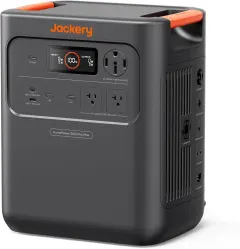
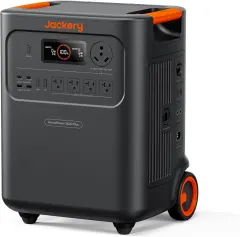
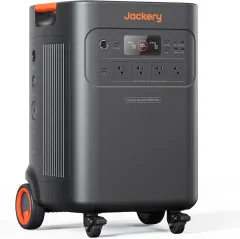
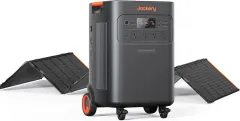
All Jackery models
All models →| Model | Capacity | AC output | Weight | List price | $/Wh |
|---|---|---|---|---|---|
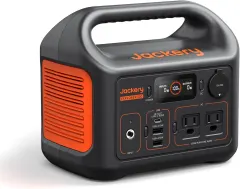
Explorer 300 v2Jackery | 288 Wh | 300 W | 8.2 lb | $289 | $1.00 |
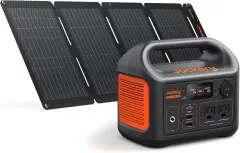
Solar Generator 300 andJackery | 292 Wh | 300 W | 12.9 lb | $379 | $1.30 |
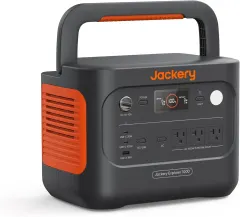
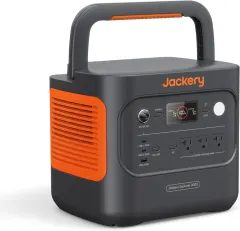
Explorer 1000 v2Jackery | 1.07 kWh | 1.5 kW | 23.8 lb | $559 | $0.52 |
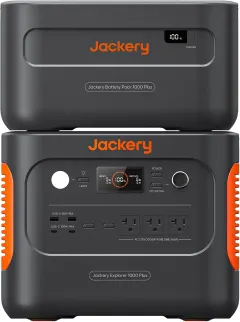
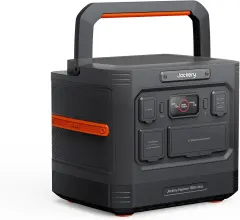
Explorer 1000 PlusJackery | 1.26 kWh | 2 kW | 32.0 lb | $1,589 | $1.26 |
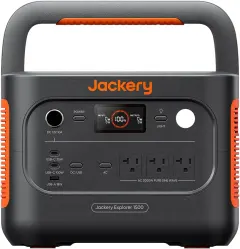
Explorer 1500 UltraJackery | 1.54 kWh | 1.8 kW | 38.6 lb | $1,199 | $0.78 |
Explorer 1500 v2Jackery | 1.54 kWh | 2 kW | 32.0 lb | $949 | $0.62 |
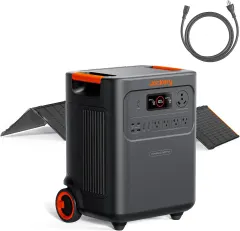
Explorer 2000 v2Jackery | 2.04 kWh | 2.2 kW | 39.5 lb | $999 | $0.49 |
| 3.58 kWh | 3.6 kW | 77.2 lb | $2,729 | $0.76 | |
HomePower 3600 Pro MaxJackery | 3.58 kWh | 4 kW | 74.0 lb | $2,099 | $0.59 |
HomePower 3600 PlusJackery | 3.58 kWh | 3.6 kW | 77.2 lb | $1,899 | $0.53 |
Explorer 5000 PlusJackery | 5.04 kWh | 3.6 kW | 134.5 lb | $3,499 | $0.69 |
JE-5000AJackery | 5.04 kWh | 7.2 kW | 145.0 lb | $4,344 | $0.86 |
All VTOMAN models
All models →| Model | Capacity | AC output | Weight | List price | $/Wh |
|---|---|---|---|---|---|
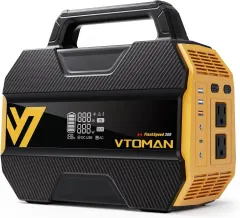
FlashSpeed 300VTOMAN | 230 Wh | 300 W | 9.8 lb | $199.99 | $0.87 |
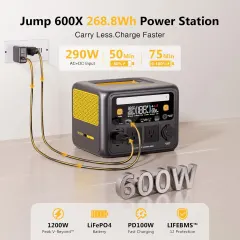
Jump 600XVTOMAN | 269 Wh | 600 W | 9.9 lb | $239.99 | $0.89 |
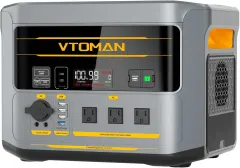
FlashSpeed 2400VTOMAN | 1.41 kWh | 2.4 kW | 41.9 lb | $799.99 | $0.57 |
Known trade-offs
Jackery
- Capacity per dollar is usually mid-pack; the brand premium is real
- Solar input ceilings are often below what rivals allow at the same capacity
- Expandability is limited on the non-Plus units
- Fewer pro features — buyers who want app control, schedules or deep telemetry often look elsewhere
VTOMAN
- Combination units compromise on both jobs
- Support and documentation are limited
- Independent verification of claimed specs is scarce
- App and firmware features lag the mainstream brands