
Brand comparison
Goal Zero vs VTOMAN: which one is built for you?
Goal Zero is built for the outdoor retailer shopper who wants a system they can see in person. VTOMAN is built for the car owner who wants roadside rescue and backup power in one box. The tables below use 3 Goal Zero and 3 VTOMAN stations on file — pick the brand whose buyer story matches yours before you chase $/Wh.
Goal Zero
The heritage outdoor-and-solar brand: long-standing retail presence and a broad ecosystem of lights, fridges and panels rather than headline specs.
- Buyer archetype
- The outdoor retailer shopper who wants a system they can see in person
- Best for
- Buyers who value the ecosystem, the retail presence and a familiar outdoor brand.
- When not to buy
- Spec-sheet shoppers optimizing cost per watt-hour.
- Models tracked
- 3
VTOMAN
Budget hardware with a jump-starter heritage: several units double as car jump starters, which is the brand's clearest differentiator.
- Buyer archetype
- The car owner who wants roadside rescue and backup power in one box
- Best for
- Drivers who mainly want jump-start capability plus basic backup power.
- When not to buy
- Buyers whose priority is a refined, well-supported power station.
- Models tracked
- 3
What only each brand brings
Goal Zero
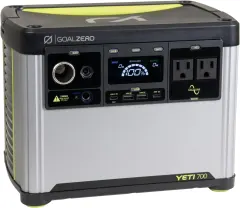
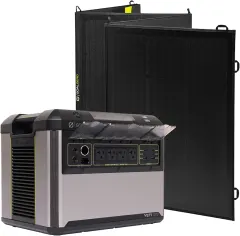
- Yeti: The core portable line, from small units to multi-kWh.
- Yeti X: Higher-output versions of the classic Yeti units.
- Who buys: Outdoor-retail shoppers who want to handle the product before buying
- Who buys: Overlanders, car campers and basecamp users
VTOMAN
- Jump starter combos: Units that also jump-start a car.
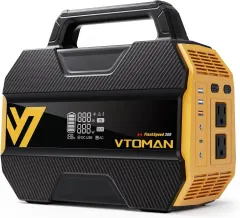
- FlashSpeed / V series: Conventional portable stations.
- Who buys: Drivers who want a jump starter that also powers devices
- Who buys: Budget preparedness buyers
When not to buy
Skip Goal Zero if…
Spec-sheet shoppers optimizing cost per watt-hour.
Skip VTOMAN if…
Buyers whose priority is a refined, well-supported power station.
Head to head on value
| Measure | Goal Zero | VTOMAN |
|---|---|---|
| Average $/Wh across range | $1.07 | $0.78 |
| Models in dataset | 3 | 3 |
| LiFePO4 models | 3 | 3 |
| Largest capacity available | 1.50 kWh | 1.41 kWh |
Band by band
| Band | Goal Zero | VTOMAN | Cheaper per Wh |
|---|---|---|---|
| Compact under 500 Wh | Yeti 300 $1.18/Wh | FlashSpeed 300 $0.87/Wh | VTOMAN |
| Mid-size 500–1,200 Wh | Yeti 700 $1.03/Wh | no model in band | Goal Zero |
| Large 1,200–2,500 Wh | Yeti 1500 $1.00/Wh | FlashSpeed 2400 $0.57/Wh | VTOMAN |
All Goal Zero models
All models →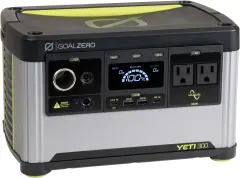
All VTOMAN models
All models →| Model | Capacity | AC output | Weight | List price | $/Wh |
|---|---|---|---|---|---|
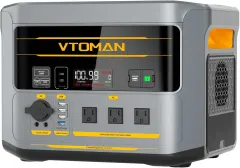
FlashSpeed 300VTOMAN | 230 Wh | 300 W | 9.8 lb | $199.99 | $0.87 |
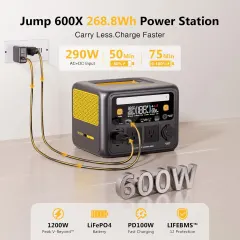
Jump 600XVTOMAN | 269 Wh | 600 W | 9.9 lb | $239.99 | $0.89 |
FlashSpeed 2400VTOMAN | 1.41 kWh | 2.4 kW | 41.9 lb | $799.99 | $0.57 |
Known trade-offs
Goal Zero
- Capacity per dollar is generally behind the value brands
- Recharge speeds and solar input can trail the newer competitors
- Generations vary a lot — an older Yeti and a newer one are not comparable
- Line-up has churned, which complicates comparisons across years
VTOMAN
- Combination units compromise on both jobs
- Support and documentation are limited
- Independent verification of claimed specs is scarce
- App and firmware features lag the mainstream brands