
Brand comparison
GEYOTO vs PECRON: which one is built for you?
GEYOTO: A design-award-flavored challenger brand selling compact solar generators and foldable panels direct to US buyers, leaning on a small, simple lineup rather than a sprawling catalog. Best for buyers who want a simple, good-looking solar generator bundle for camping or light outage backup without wading through a huge catalog. Not for anyone needing large whole-home backup capacity, extensive third-party testing data, or a long-established brand with broad service coverage.
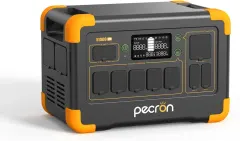
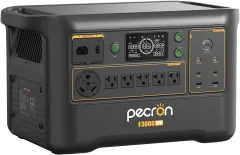
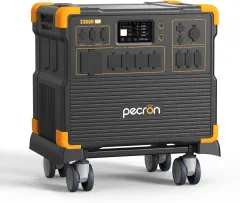
PECRON: LiFePO4 and high inverter output at value pricing — the challenger that competes on chemistry and watts rather than on ecosystem. Best for value buyers who care about chemistry and output more than ecosystem. Not for buyers who need a mature app, dealer support or resale value.
Specs below decide the purchase when those two buyer stories overlap — 3 GEYOTO stations and 4 PECRON stations on file.
GEYOTO
Design-conscious first-time power station buyer who wants a tidy two-box solar setup
- Best for
- Buyers who want a simple, good-looking solar generator bundle for camping or light outage backup without wading through a huge catalog.
- Not for
- Anyone needing large whole-home backup capacity, extensive third-party testing data, or a long-established brand with broad service coverage.
- Models tracked
- 3
PECRON
The informed value buyer who wants LiFePO4 and a big inverter for less
- Best for
- Value buyers who care about chemistry and output more than ecosystem.
- Not for
- Buyers who need a mature app, dealer support or resale value.
- Models tracked
- 4
Head to head on value
Average cost per watt-hour across each brand’s tracked range, and the winner in each capacity band. This is a value comparison only — it says nothing about support, app quality or build, which we cannot measure from a spec sheet.
| Measure | GEYOTO | PECRON |
|---|---|---|
| Average $/Wh across range | $0.81 | $0.41 |
| Models in dataset | 3 | 4 |
| LiFePO4 models | 1 | 4 |
| Largest capacity available | 1.02 kWh | 3.84 kWh |
Band by band
The cheapest option each brand offers in each capacity band. Where a brand has nothing in a band, that band is itself a useful signal.
| Band | GEYOTO | PECRON | Cheaper per Wh |
|---|---|---|---|
| Compact under 500 Wh | 9 Charging Ports with Qi2.2 $0.74/Wh | E300LFP $0.62/Wh | PECRON |
| Mid-size 500–1,200 Wh | 1000-SET $0.41/Wh | E1000LFP $0.39/Wh | PECRON |
| Extra large 2,500 Wh and up | no model in band | F3000LFP $0.29/Wh | PECRON |
All GEYOTO models
All models →| Model | Capacity | AC output | Weight | List price | $/Wh |
|---|---|---|---|---|---|
| 256 Wh | 256 W | 12.4 lb | $329.99 | $1.29 | |
| 256 Wh | 300 W | 7.7 lb | $189.99 | $0.74 | |
1000-SETGEYOTO | 1.02 kWh | 1.8 kW | 25.6 lb | $419.99 | $0.41 |
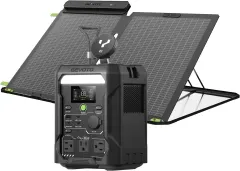
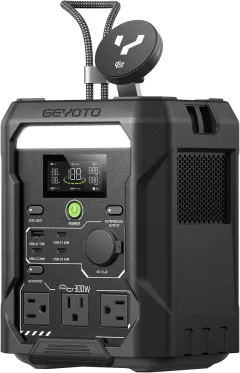
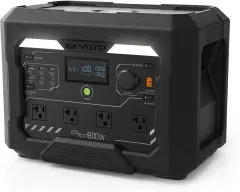
All PECRON models
All models →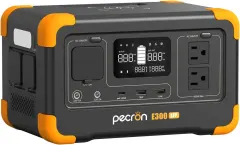
What each brand will not tell you
GEYOTO’s known weaknesses
- Small catalog with only a handful of models, so limited scaling options
- Newer, less-reviewed brand with a thin public track record versus established names
- Marketing leans on design awards rather than deep published spec transparency
- No large whole-home or high-capacity tier in the lineup
PECRON’s known weaknesses
- Brand support and service are less established than the majors
- App and firmware polish is behind EcoFlow and Anker
- Independent long-term durability data is thin
- Frequent model churn makes like-for-like comparison harder