
Brand comparison
CTOLITY vs PECRON: which one is built for you?
CTOLITY: A budget-friendly, Amazon-first portable power station brand selling bundled solar kits around its AP1000 and XP1000 1800W-class units. Best for budget-conscious buyers who want an 1800w-class station and solar panel in one amazon order. Not for buyers who need proven long-term support, app ecosystems, or expandable battery systems.
PECRON: LiFePO4 and high inverter output at value pricing — the challenger that competes on chemistry and watts rather than on ecosystem. Best for value buyers who care about chemistry and output more than ecosystem. Not for buyers who need a mature app, dealer support or resale value.
Specs below decide the purchase when those two buyer stories overlap — 7 CTOLITY stations and 4 PECRON stations on file.
CTOLITY
Value-seeking first-time power station buyer who wants a panel included
- Best for
- Budget-conscious buyers who want an 1800W-class station and solar panel in one Amazon order.
- Not for
- Buyers who need proven long-term support, app ecosystems, or expandable battery systems.
- Models tracked
- 7
PECRON
The informed value buyer who wants LiFePO4 and a big inverter for less
- Best for
- Value buyers who care about chemistry and output more than ecosystem.
- Not for
- Buyers who need a mature app, dealer support or resale value.
- Models tracked
- 4
Head to head on value
Average cost per watt-hour across each brand’s tracked range, and the winner in each capacity band. This is a value comparison only — it says nothing about support, app quality or build, which we cannot measure from a spec sheet.
| Measure | CTOLITY | PECRON |
|---|---|---|
| Average $/Wh across range | $0.57 | $0.41 |
| Models in dataset | 7 | 4 |
| LiFePO4 models | 5 | 4 |
| Largest capacity available | 1.02 kWh | 3.84 kWh |
Band by band
The cheapest option each brand offers in each capacity band. Where a brand has nothing in a band, that band is itself a useful signal.
| Band | CTOLITY | PECRON | Cheaper per Wh |
|---|---|---|---|
| Compact under 500 Wh | no model in band | E300LFP $0.62/Wh | PECRON |
| Mid-size 500–1,200 Wh | ap1000 1800w portable power station $0.39/Wh | E1000LFP $0.39/Wh | PECRON |
| Extra large 2,500 Wh and up | no model in band | F3000LFP $0.29/Wh | PECRON |
All CTOLITY models
All models →| Model | Capacity | AC output | Weight | List price | $/Wh |
|---|---|---|---|---|---|
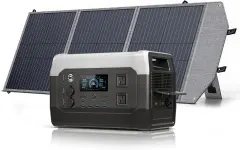
AP1000 + 100W kitCTOLITY | 1.02 kWh | 1.8 kW | 47.4 lb | $579.99 | $0.57 |
AP1000 + 200W kitCTOLITY | 1.02 kWh | 1.8 kW | 55.1 lb | $659.99 | $0.64 |
AP1000 + 400W kitCTOLITY | 1.02 kWh | 1.8 kW | 63.9 lb | $779.99 | $0.76 |
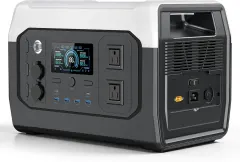
| 1.02 kWh | 1.8 kW | 37.5 lb | $399.99 | $0.39 | |
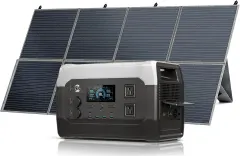
Peak XP1000 + 100W kitCTOLITY | 1.02 kWh | 1.8 kW | 47.4 lb | $589.99 | $0.58 |
XP1000 1800WCTOLITY | 1.02 kWh | 1.8 kW | 37.5 lb | $399.99 | $0.39 |
Peak XP1000 + 400W kitCTOLITY | 1.02 kWh | 1.8 kW | 63.9 lb | $699.99 | $0.68 |
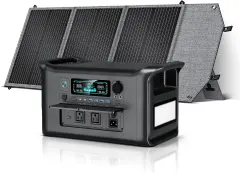
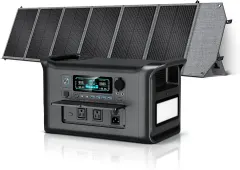
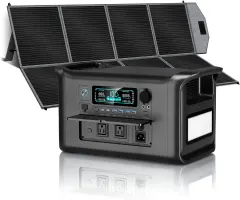
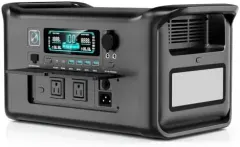
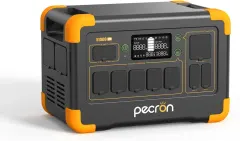
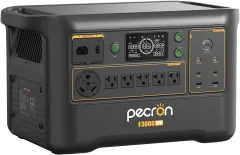
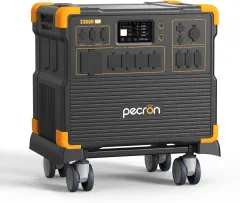
All PECRON models
All models →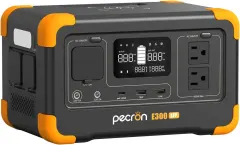
What each brand will not tell you
CTOLITY’s known weaknesses
- Thin public brand footprint and limited documentation compared with established brands
- Support and warranty experience is largely Amazon-mediated and unproven
- Few independent reviews or long-term reliability data
- Model naming (AP1000 vs XP1000) is confusing without close spec comparison
PECRON’s known weaknesses
- Brand support and service are less established than the majors
- App and firmware polish is behind EcoFlow and Anker
- Independent long-term durability data is thin
- Frequent model churn makes like-for-like comparison harder