
BLUETTI AC180 vs Jackery Explorer 1000 v2: Which Bet Wins?
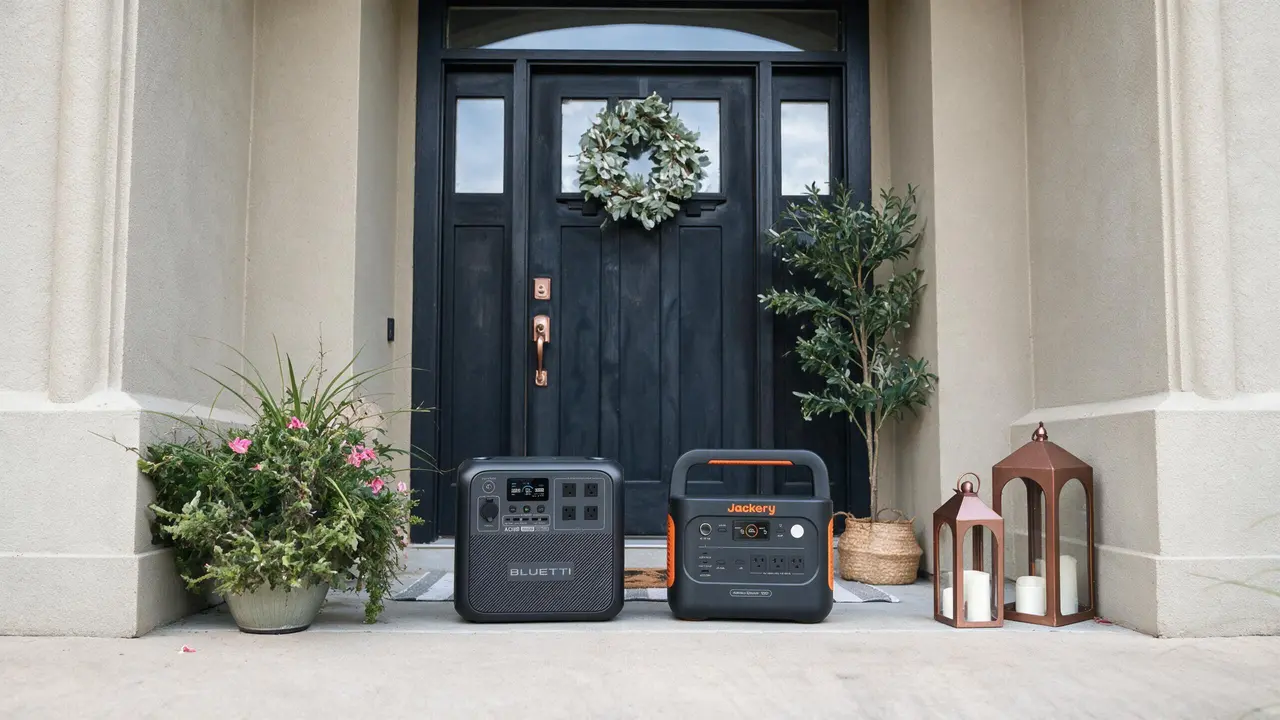
Two 1 kWh-class stations, two different bets. The AC180 leans on output and fast charging; the Explorer 1000 v2 leans on a lighter shell and a lower street price. Here is where the money actually went, and which one fits your outage.
Updated
At a glance
Two 1 kWh-class stations, two different bets. The AC180 leans on output and fast charging; the Explorer 1000 v2 leans on a lighter shell and a lower street price. Here is where the money actually went, and which one fits your outage.
- AC180: more continuous output, faster AC recharge, app control.
- Explorer 1000 v2: lighter body, lower list price, simpler feature set.
Same money, different bets
As an Amazon Associate I earn from qualifying purchases. Recommendations here are based on fit and the evidence below — not commission size.
These two land in the same budget bracket, but they are not the same product with a different logo. The BLUETTI AC180 bets on output headroom and fast charging — it wants to run the bigger load and refill quickly. The Jackery Explorer 1000 v2 bets on a lighter, simpler shell and a lower street price — it wants to be the easy one to grab and the easier one to justify.
If you are choosing between them, the decision is not 'which brand is better.' It is which of those two bets matches the loads you actually plug in during an outage.
- AC180: more continuous output, faster AC recharge, app control.
- Explorer 1000 v2: lighter body, lower list price, simpler feature set.
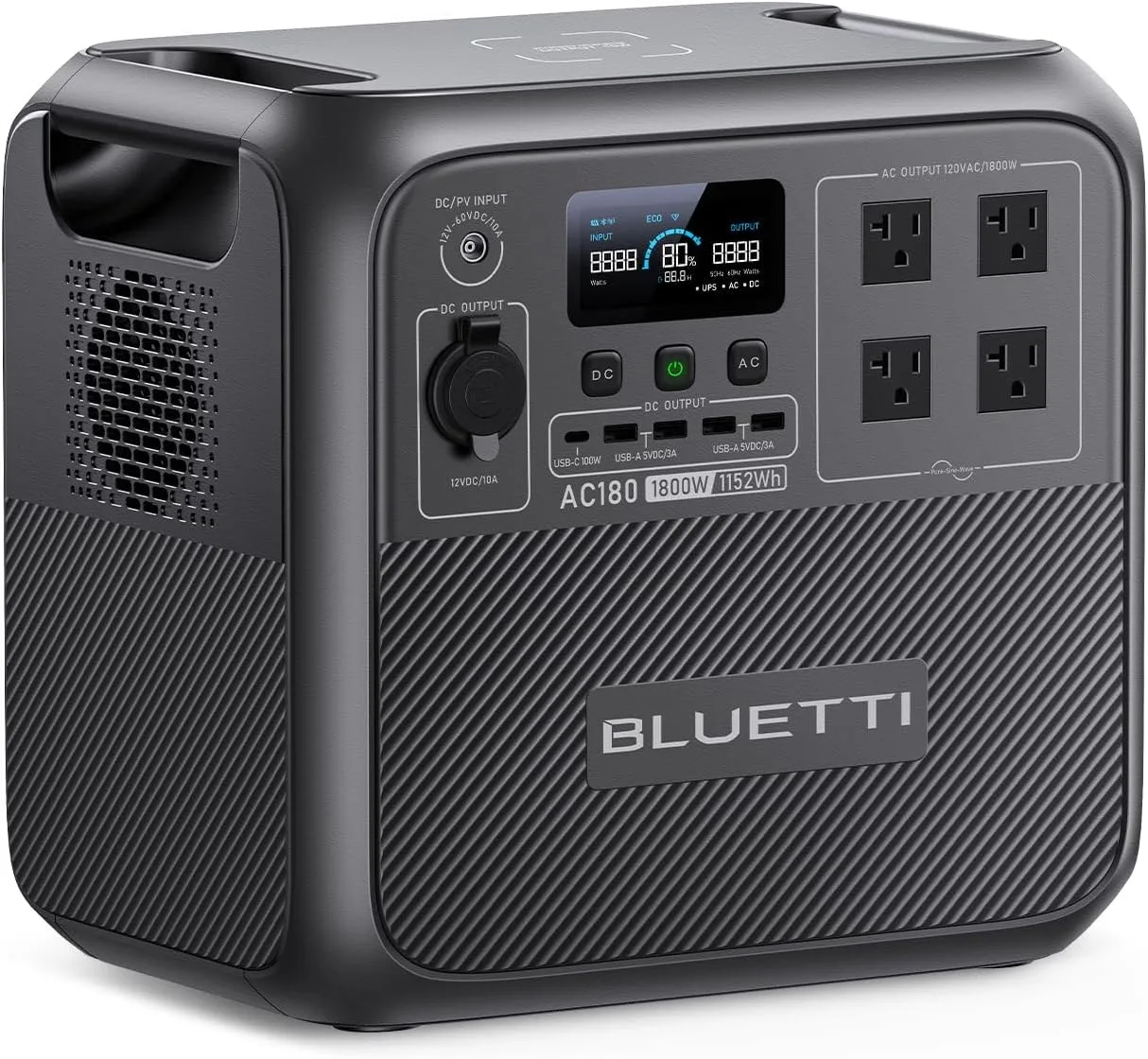
BLUETTI Portable Power Station AC180, 1152Wh LiFePO4 Battery Backup w/ 2 1800W
Highlights
- 1152Wh rated capacity
- 1800W continuous AC
- LiFePO4 chemistry
- Up to 500W solar input
- 35.3 lb (~16.0 kg)
- About $499 list
Best for
- AC180: most Wh per list dollar in mid-size LiFePO4 shortlists (~1152Wh)
- Home essentials when 1800W continuous matters more than a light carry
- Skip if 35.3 lb is too heavy for stairs or frequent car packing
Strengths
- AC180: 1800W continuous on a 1152Wh pack — more headroom for small appliances than 1kW-class peers
- 35.3 lb (~16.0 kg) is a park-and-use chassis — plan a short path, not a trail hike
- 1800W continuous headroom covers more small appliances than 1kW-class inverters
- About $499 list in the Hub catalog — confirm live retail before you buy
Watch-outs · not ideal when
- 35.3 lb (~16.0 kg) is a two-hand lift; skip it if you walk more than a short path to camp
- Usable energy on AC180 is below the 1152Wh label once the inverter is working
- Rated 500W solar on AC180 is optimistic; shade and cables cut real watts
- LiFePO4 helps longevity, but AC180 still hates freezing charge temps on winter trips
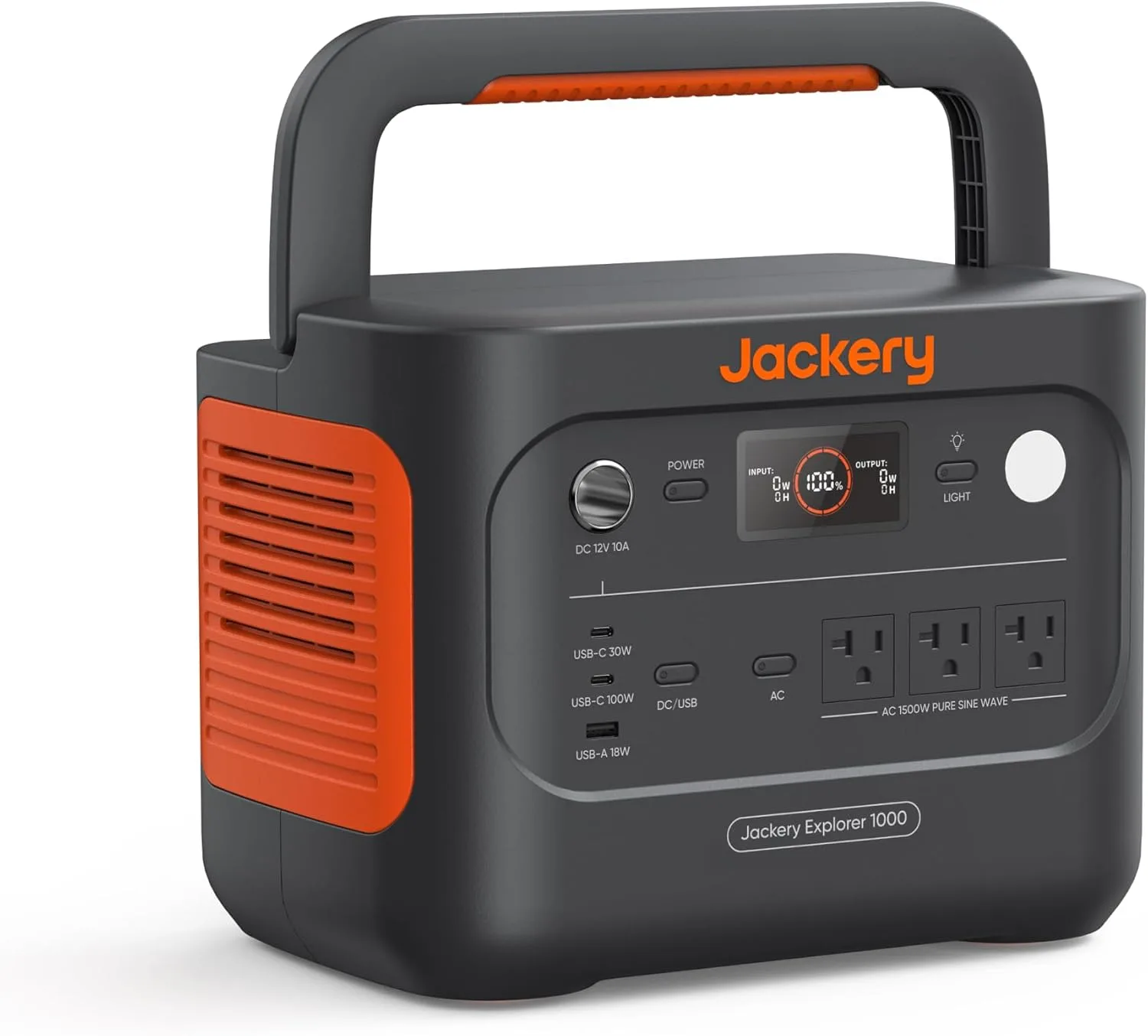
Jackery Explorer 1000 v2 Portable Power Station,1070Wh,1500W
Highlights
- 1070Wh rated capacity
- 1500W continuous AC
- LiFePO4 chemistry
- Up to 400W solar input
- 23.8 lb (~10.8 kg)
- About $559 list
Best for
- Explorer 1000 v2: weekend camping when 23.8 lb carry weight matters as much as 1070Wh
- Essentials bridge at home (fridge cycles, router) when sized to the Wh
- Solar top-ups up to ~400W when panels and weather cooperate
Strengths
- Explorer 1000 v2: 1070Wh with 1500W continuous — enough for fridge cycles if surge on the listing clears the start
- 23.8 lb (~10.8 kg) is the lightest-class carry in this band — easier stairs and car packing
- Explorer 1000 v2 uses LiFePO4 — cycle-life claims usually beat older NMC marketing lines
- Owners on file: Updated to add that customer service contacted me and offered a partial refund so i added 2 more stars. It do…
Watch-outs · not ideal when
- Explorer 1000 v2 is still a bridge for essentials — not a transfer-switch whole-home system
- Usable energy on Explorer 1000 v2 is below the 1070Wh label once the inverter is working
- Rated 400W solar on Explorer 1000 v2 is optimistic; shade and cables cut real watts
- LiFePO4 helps longevity, but Explorer 1000 v2 still hates freezing charge temps on winter trips
Spec snapshot
Listing figures only. Weight in lb; missing cells are n/a (not on file) — not guesses.
| Product | List price | Capacity (Wh) | Output (W) | Weight (lb) | Rating |
|---|---|---|---|---|---|
| BLUETTI Portable Power Station AC180, 1152Wh LiFePO4 Battery Backup w/ | $499 | 1152 Wh | 1800 W | 35.3 lb | 4.85 |
| Jackery Explorer 1000 v2 | $559 | 1070 Wh | 1500 W | 23.8 lb | 4.75 |
Where the money went
Both listings sit in the same 1 kWh class, so the price gap is not about capacity. It is about where each brand spent the budget. BLUETTI put it into the inverter and the charge path. Jackery put it into weight and price.
Here is the line-by-line, using the listing figures as published. Where a spec is not stated on the listing, it is marked n/a rather than guessed.
- List price: AC180 at $499 (historical low $499); Explorer 1000 v2 at $559 (historical low $499). The Jackery's current list is $60 higher, but its low matches the BLUETTI.
- Continuous AC output: AC180 rated higher on the listing; Explorer 1000 v2 rated lower. This is the single biggest spec delta between them.
- Battery type: both listings specify LFP (lithium iron phosphate), which is the longer-cycle chemistry you want for standby backup.
- Charge inputs: AC180 listing calls out AC, solar, 12V car, and alternator charging; Explorer 1000 v2 listing covers AC and solar, with car charging as a separate accessory path.
- App control: AC180 listing includes app monitoring and control; Explorer 1000 v2 listing does not present an app as a headline feature.
- Weight: Explorer 1000 v2 is the lighter of the two on the listing; AC180 is heavier, consistent with the larger inverter.
The spec that decides it
For most buyers, one number separates these two: continuous AC output. The AC180's higher rating is what lets it run a space heater, a full-size fridge compressor on startup, or a microwave without tripping. The Explorer 1000 v2's lower rating is fine for a fridge, a CPAP, lights, and a laptop — but it will balk at the same surge loads.
The second deciding number is recharge time. The AC180 listing emphasizes fast AC charging; the Explorer 1000 v2 is slower to refill from the wall. If your outage plan involves topping up between events, that gap matters more than the $60 list difference.
- Run the AC180 if your load list includes any motor-start or heat-producing appliance.
- Run the Explorer 1000 v2 if your load list is small electronics, a fridge, and lighting.
Real owner trade-offs
The owner reviews tell the same story from opposite sides. A long-term AC180 owner (5-star, purchased June 2025) highlighted how easy the controls are, how quiet and cool the unit runs, how fast it charges, and how many charge paths it accepts — shore power, solar, 12V car, and alternator. That owner also called out the app and the port count as reasons the unit stays useful across situations.
On the Jackery side, a 5-star Explorer 1000 v2 owner (December 2024) framed the decision as a price call against the Ecoflow Delta 2, noting the Explorer was consistently about $50 cheaper and that a Black Friday net price of $349 made it a no-brainer. That owner also said expandability and solar charging were not factors, because the stations are deployed distributively rather than built into one central bank.
Read together: the AC180 owner values capability and flexibility; the Jackery owner values price and simplicity. Neither is wrong — they are buying different things.
- AC180 owner (5-star): easy controls, quiet, cool, fast charging, many inputs, good app.
- Explorer 1000 v2 owner (5-star): cheaper than the Delta 2, $349 Black Friday net, expandability not needed.
Buy the one that…
Buy the AC180 if you need the higher continuous output and the faster recharge, and you are willing to carry the extra weight and pay the current list price to get them.
Buy the Explorer 1000 v2 if your loads are modest, you want the lighter unit, and you can wait for a sale — the historical low of $499 puts it at parity with the AC180, which is when the price argument flips in its favor.
Skip both if you need to run a well pump, a central AC, or a whole-panel backup. This class is for fridges, CPAP, lights, routers, and phones — not for whole-home service.
- AC180: pick for output headroom and fast charging.
- Explorer 1000 v2: pick for lighter carry and a lower sale price.
- Neither: pick a larger system if you are backing up hardwired home circuits.
Frequently asked
Which is better for most buyers, the BLUETTI AC180 or the Jackery Explorer 1000 v2?
The AC180 leads 5–4 on shared published metrics. That edge matters when capacity, continuous ac output, list price match what you need; otherwise take the Explorer 1000 v2.
I care most about carry / camping — which should I buy?
Choose Explorer 1000 v2 when you will move the unit often — it leads on weight and watt-hours per pound.
Method and sources
Model names and list prices come from the WattPicks catalog at build time. WattPicks does not run its own laboratory tests on power stations, and nothing on this page is presented as a measured result — it is catalog-backed buying guidance.
Read our methodology for how the catalog is normalized, and about WattPicks for who publishes it.