
Brand comparison
EcoFlow vs Goal Zero: which one is built for you?
EcoFlow is built for the tech-forward buyer who reads the spec sheet and wants room to grow. Goal Zero is built for the outdoor retailer shopper who wants a system they can see in person. The tables below use 13 EcoFlow and 3 Goal Zero stations on file — pick the brand whose buyer story matches yours before you chase $/Wh.
EcoFlow
An energy-technology company first and an outdoor brand second: the pitch is a smart, expandable energy ecosystem rather than a single box.
- Buyer archetype
- The tech-forward buyer who reads the spec sheet and wants room to grow
- Best for
- Buyers who want one system to grow from camping into home backup.
- When not to buy
- Buyers who want the lowest cost per watt-hour and will never use an app.
- Models tracked
- 13
Goal Zero
The heritage outdoor-and-solar brand: long-standing retail presence and a broad ecosystem of lights, fridges and panels rather than headline specs.
- Buyer archetype
- The outdoor retailer shopper who wants a system they can see in person
- Best for
- Buyers who value the ecosystem, the retail presence and a familiar outdoor brand.
- When not to buy
- Spec-sheet shoppers optimizing cost per watt-hour.
- Models tracked
- 3
What only each brand brings
EcoFlow
- RIVER: Compact units for camping, short outages and light travel.
- DELTA: The mid-to-large workhorse line, including expandable models.
- Who buys: Research-driven buyers who compare spec tables before they buy
- Who buys: Van-lifers and RV owners building a system that can grow
Goal Zero
- Yeti: The core portable line, from small units to multi-kWh.
- Yeti X: Higher-output versions of the classic Yeti units.
- Who buys: Outdoor-retail shoppers who want to handle the product before buying
- Who buys: Overlanders, car campers and basecamp users
When not to buy
Skip EcoFlow if…
Buyers who want the lowest cost per watt-hour and will never use an app.
Skip Goal Zero if…
Spec-sheet shoppers optimizing cost per watt-hour.
Head to head on value
| Measure | EcoFlow | Goal Zero |
|---|---|---|
| Average $/Wh across range | $0.74 | $1.07 |
| Models in dataset | 13 | 3 |
| LiFePO4 models | 11 | 3 |
| Largest capacity available | 4.10 kWh | 1.50 kWh |
Band by band
| Band | EcoFlow | Goal Zero | Cheaper per Wh |
|---|---|---|---|
| Compact under 500 Wh | RIVER 2 $0.73/Wh | Yeti 300 $1.18/Wh | EcoFlow |
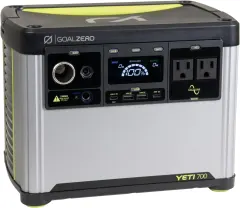
| Mid-size 500–1,200 Wh | RIVER 2 Max $0.49/Wh | Yeti 700 $1.03/Wh | EcoFlow |
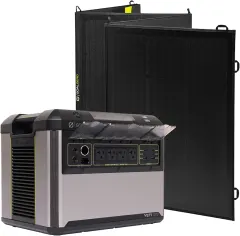
| Large 1,200–2,500 Wh | DELTA 3 Max $0.59/Wh | Yeti 1500 $1.00/Wh | EcoFlow |
| Extra large 2,500 Wh and up | DELTA 3 Ultra $0.52/Wh | no model in band | EcoFlow |
All EcoFlow models
All models →| Model | Capacity | AC output | Weight | List price | $/Wh |
|---|---|---|---|---|---|
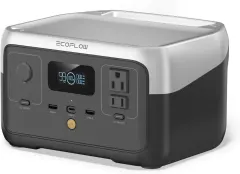
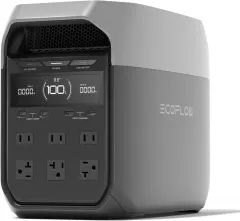
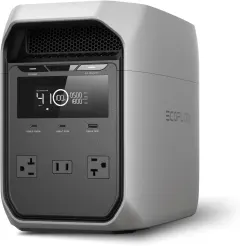
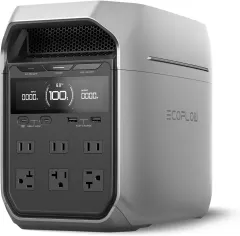
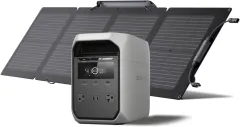
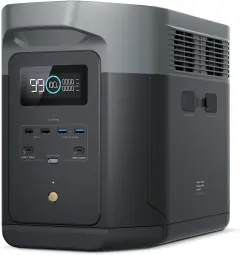
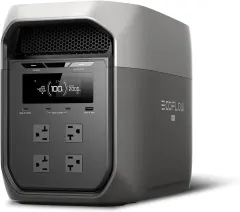
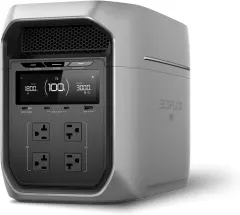
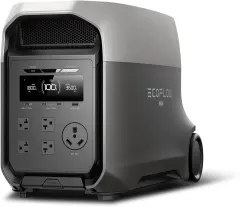
RIVER 2EcoFlow | 243 Wh | 300 W | 7.7 lb | $177.65 | $0.73 |
EFR600+XT60EcoFlow | 243 Wh | 600 W | 7.7 lb | $279 | $1.15 |
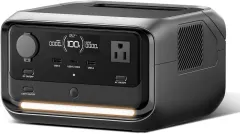
RIVER 3 PlusEcoFlow | 286 Wh | 600 W | 10.4 lb | $299 | $1.05 |
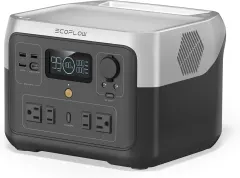
RIVER 2 MaxEcoFlow | 512 Wh | 500 W | 13.4 lb | $249 | $0.49 |
DELTA 3EcoFlow | 1.02 kWh | 1.8 kW | 27.6 lb | $699 | $0.68 |
DELTA 3 ClassicEcoFlow | 1.02 kWh | 1.8 kW | 26.7 lb | $559 | $0.55 |
DELTA 3 PlusEcoFlow | 1.02 kWh | 1.8 kW | 27.6 lb | $649 | $0.63 |
EF-DL3-CEcoFlow | 1.02 kWh | 1.8 kW | 40.4 lb | $749 | $0.73 |
DELTA 2 MaxEcoFlow | 2.05 kWh | 2.4 kW | 50.0 lb | $1,399 | $0.68 |
DELTA 3 MaxEcoFlow | 2.05 kWh | 2.4 kW | 44.8 lb | $1,199 | $0.59 |
DELTA 3 Max PlusEcoFlow | 2.05 kWh | 3 kW | 48.7 lb | $1,899 | $0.93 |
DELTA 3 UltraEcoFlow | 3.07 kWh | 3.6 kW | 72.1 lb | $1,599 | $0.52 |
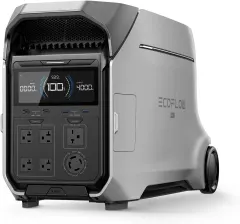
DELTA Pro 3EcoFlow | 4.10 kWh | 4 kW | 113.5 lb | $3,699 | $0.90 |
All Goal Zero models
All models →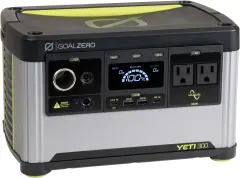
Known trade-offs
EcoFlow
- The ecosystem is the product — accessories are priced accordingly
- App dependency for features buyers may expect on the device
- Line-up churn means similar names differ a lot between generations
Goal Zero
- Capacity per dollar is generally behind the value brands
- Recharge speeds and solar input can trail the newer competitors
- Generations vary a lot — an older Yeti and a newer one are not comparable
- Line-up has churned, which complicates comparisons across years